半导体行业观察

Search documents
苹果传感器的进击
半导体行业观察· 2025-10-05 02:25
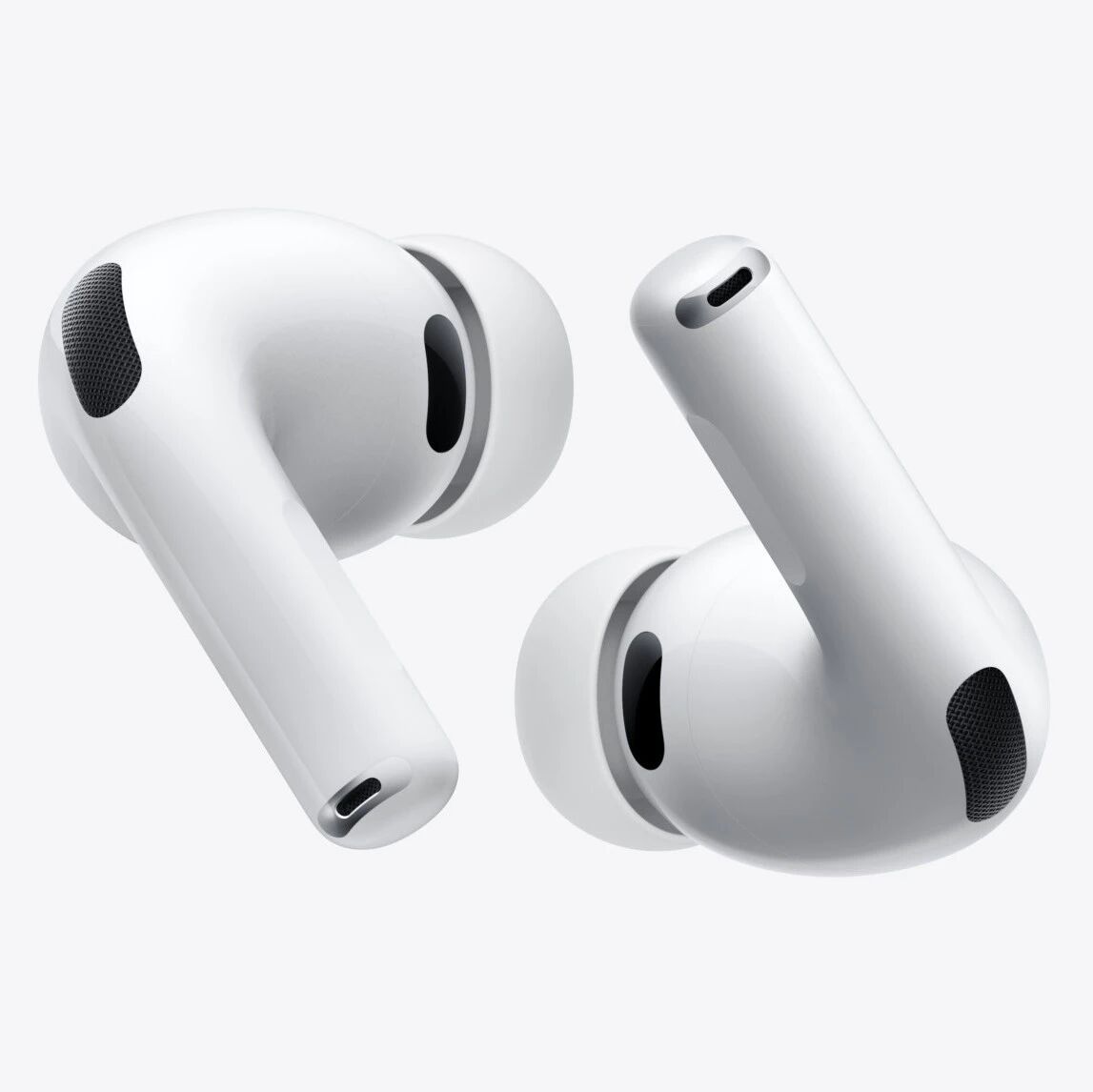
Core Insights - The article discusses the introduction of the heart rate sensor in AirPods Pro 3, highlighting its innovative features and the development process behind it [3][4][5]. Design and Features - AirPods Pro 3 retains the iconic design with redesigned ear tips made of silicone and foam, and a slightly elongated charging case [2]. - The new heart rate sensor allows tracking of 50 different workouts, either independently or in conjunction with the Apple Watch for more accurate readings [2][3]. Development Process - The heart rate sensor is based on a decade of research and development, leveraging knowledge gained from the Apple Watch [4]. - The sensor uses invisible infrared light to measure blood flow in the ear, differing from the green LED used in the Apple Watch [4][5]. Algorithm and Data Processing - The algorithms for heart rate tracking were adapted from the Apple Watch but optimized for the smaller form factor of AirPods [5]. - Extensive testing was conducted on thousands of participants to ensure the sensor works effectively across diverse ear shapes and skin tones [5][7]. Integration with Other Features - The heart rate sensor works in conjunction with accelerometers and gyroscopes to track various workout metrics, including steps, distance, and calories burned [7][8]. - Apple utilized over 50 million hours of workout data to refine the algorithms for AirPods Pro 3 [7]. Accuracy and Validation - Apple employed medical-grade equipment to validate calorie tracking accuracy, ensuring the algorithms are reliable [8]. - The integration of multiple data sources allows for improved accuracy in heart rate readings, comparing signals from both AirPods and Apple Watch [11]. Future Potential - The article suggests that AirPods Pro 3 could be seen as a hybrid device, combining features of high-end headphones and fitness trackers, with ongoing updates expected to enhance functionality [11].


WiFi 7,到底升级了啥?
半导体行业观察· 2025-10-05 02:25
Core Insights - Wi-Fi 7, officially launching in January 2024, promises significant improvements in speed, latency, and efficiency, addressing common issues like buffering and video call interruptions [2][4][11] Technical Definitions - Speed refers to the theoretical maximum data transfer rate under ideal conditions, often misaligned with real-world performance [3] - Bandwidth indicates the maximum capacity of a communication channel, akin to the number of lanes on a highway [3] - Throughput measures the actual data transmitted in real-world scenarios, affected by various factors like congestion and hardware limitations [3] Wi-Fi 7 Technical Advancements - Wi-Fi 7 can achieve theoretical speeds up to 46 Gbps, five times faster than Wi-Fi 6E's 9.6 Gbps [4][8] - It doubles the maximum channel width from 160 MHz in Wi-Fi 6E to 320 MHz, enhancing data transmission capacity [4][8] - The introduction of 4096-QAM modulation allows Wi-Fi 7 to transmit 12 bits per symbol, significantly increasing data density compared to Wi-Fi 6E's 10 bits [4][8] Real-World Implications - Wi-Fi 7's Multi-Link Operation (MLO) enables simultaneous use of multiple frequency bands, improving speed and reliability [5][9] - Enhanced resource allocation through Multi-RU allows for adaptive bandwidth distribution based on device needs, optimizing performance for high-demand applications [6][9] - The upgraded Target Wake Time (TWT) feature improves battery efficiency for IoT devices, reducing charging frequency [6][9] User Experience Enhancements - Faster speeds enable multiple users to stream, game, and video conference simultaneously without issues [9] - Reduced disconnections due to intelligent frequency management and multi-band operation [9] - Smarter resource management ensures all devices receive adequate bandwidth, enhancing overall network performance [9] Performance Testing Results - Real-world tests show Wi-Fi 7 achieving TCP throughput of 3.5 Gbps in a 4500 square foot home, with 2 Gbps maintained at common distances [10] - In enterprise settings, Wi-Fi 7 can sustain 1 Gbps throughput at 40 feet distance on the 6 GHz band, nearly doubling Wi-Fi 6E performance [10] - Consistent low latency and high spectral efficiency were confirmed in various testing environments, indicating robust performance under load [10] Impact on IT and Network Infrastructure - Wi-Fi 7 is designed for future-proofing networks, accommodating bandwidth-intensive applications like AR/VR and smart home devices [11][13] - It requires compatible endpoints and updated infrastructure to fully leverage its capabilities, particularly in the 6 GHz band [12][13] - Awareness of current Wi-Fi standards and their limitations is crucial for effective network planning and upgrades [12][13]

这款光模块,成为数据中心新宠
半导体行业观察· 2025-10-05 02:25
Core Insights - The article discusses the significance of the 400G-SR8 optical module, highlighting its increasing usage in high-speed networking equipment like the MikroTik CRS812 DDQ switch [2][3]. Summary by Sections What is 400G-SR8 Optical Module? - The 400G-SR8 optical module operates at a speed of 400Gbps, designed for short distances of approximately 100 meters, and consists of 8 communication channels, each capable of 50Gbps [3]. Technical Specifications - Each SR8 module requires a total of 16 optical fibers (8 for transmission and 8 for reception) and is compatible with existing LC or MPO-12 cabling, although it necessitates MPO-16 APC cabling for optimal performance [3]. Electrical Characteristics - The SR8 modules typically utilize 56Gbps PAM4 or 50G PAM4 electrical interfaces, which are crucial for designing network connectivity at 400G and beyond [10]. Advantages of SR8 Modules - Compared to earlier generations like QSFP28 100G, the SR8 offers a more cost-effective solution due to its lower channel speed of 50Gbps and the use of separate optical fibers, making it suitable for standardization in most data centers [11]. Testing and Standardization - Initial testing with 400G-SR8 modules revealed that while they are effective, a more standardized approach is beneficial for diverse equipment types in data centers, as SR8 modules meet limited connection requirements effectively [11].

ADI开源GMSL背后:打的什么算盘?
半导体行业观察· 2025-10-05 02:25
Core Insights - The integration of software into various aspects of automobiles has been ongoing since the late 1960s, enhancing driving experiences and safety [2] - The current trend focuses on reducing the number of Electronic Control Units (ECUs) by consolidating functions into a central computer, which can lead to a 70% reduction in cable usage [2][5] - The concept of "vehicle learning" is emerging, where vehicles share insights from their sensors with the cloud for deeper analysis, improving safety and intelligence [3] Group 1: Software-Defined Vehicles (SDVs) - The ideal hardware architecture for SDVs allows maximum data acquisition for each function, utilizing a unified communication protocol across the vehicle [5] - Modern vehicle headlights can automatically adjust based on various data inputs, showcasing the interconnected nature of automotive functions [5][6] - The key to achieving cost-effective SDVs lies in networking, regional aggregation, and a central computing unit acting as an onboard "server" [6] Group 2: Consumer Demand and Industry Standards - There is a growing consumer demand for immersive in-car experiences, necessitating more sensors and higher resolution displays [8] - The establishment of the OpenGMSL Association aims to develop interoperable open standards to shape the future of automotive video and high-speed connectivity technologies [8] Group 3: Connectivity Technologies - Connectivity technologies are categorized into serial links and networks, with serial buses being cost-effective but limited in networking capabilities [9][11] - Automotive Ethernet has emerged as a flexible data transmission technology, capable of routing data to any location, albeit with higher complexity [11][12] Group 4: Future Trends and Integration - There is an anticipated trend towards the fusion of technologies, where serial buses may adopt Ethernet advantages and vice versa [15][17] - The successful integration of these technologies will lead to a unified architecture for SDVs, enhancing user experience and operational efficiency for manufacturers [19]


英伟达最大客户,彻底变心?
半导体行业观察· 2025-10-05 02:25
Core Insights - Microsoft is transitioning its AI workloads from GPUs to self-developed accelerators, aiming for better performance per dollar [2] - The company has launched its first AI accelerator, Maia 100, but it still lags behind competitors like NVIDIA and AMD in performance metrics [2] - Microsoft plans to develop a second-generation Maia accelerator, expected to be more competitive in computing, memory, and interconnect performance [3] Group 1: Transition to Self-Developed Chips - Microsoft has purchased a significant number of GPUs from NVIDIA and AMD but intends to shift most of its AI workloads to in-house chips [2] - The driving force behind this transition is the "performance per dollar" metric, which is crucial for large-scale cloud service providers [2] - Microsoft CTO Kevin Scott confirmed the long-term goal is to primarily use self-developed chips in data centers [2] Group 2: Current and Future Developments - The Maia 100 AI accelerator was introduced in 2023, enabling the migration of OpenAI's GPT-3.5 to Microsoft's chip, freeing up some GPU capacity [2] - The Maia 100 features 800 teraFLOPS of BF16 performance, 64GB of HBM2e memory, and 1.8TB/s memory bandwidth, which is significantly lower than NVIDIA and AMD offerings [2] - Microsoft is also developing a self-designed CPU named Cobalt and various platform security chips for cryptographic processing [3] Group 3: Competitive Landscape - Despite Microsoft's efforts, it is unlikely to completely replace NVIDIA and AMD chips in its data centers, as many customers still require these GPUs [3] - Google and Amazon have deployed thousands of their own accelerators, but still rely heavily on NVIDIA and AMD for large-scale deployments [3]




AMD回应:谣言
半导体行业观察· 2025-10-04 02:14
Core Viewpoint - AMD has denied rumors of a potential partnership with Intel for chip manufacturing, calling the reports "false" and stating that it will not comment on speculation [2][3]. Group 1: AMD's Response - AMD's spokesperson emphasized that the company will not comment on rumors or speculation regarding its manufacturing business [3]. - The extent to which AMD might shift its manufacturing to Intel remains unclear, as AMD currently relies on TSMC for chip production [3]. Group 2: Intel's Position - Intel's stock price surged by 7% following the rumors, while AMD's stock rose by over 1% [2]. - The potential partnership could significantly boost Intel's foundry business, which is actively seeking major clients [2]. - Analysts suggest that securing AMD as a client would allow Intel's foundry to confidently invest in developing its manufacturing technology and send a strong signal about its capabilities to other chip companies [2]. Group 3: Market Context - Since 2025, Intel's stock has increased by nearly 77%, reflecting growing investor confidence in the company's turnaround efforts [2]. - Recent positive developments for Intel include substantial investments from the U.S. government, Nvidia, and SoftBank, which are seen as endorsements of CEO Pat Gelsinger's business strategy [3].


AI芯片大厂,撤回IPO
半导体行业观察· 2025-10-04 02:14
Core Viewpoint - Cerebras Systems has withdrawn its IPO plan shortly after raising $1.1 billion in funding, which increased its post-money valuation to $8.1 billion due to the surging demand for AI inference services [2][9]. Funding and Valuation - The recent funding round was led by Fidelity Management & Research Co. and Atreides Management, with participation from notable venture capital firms such as Tiger Global and Valor Equity Partners, among others [3]. - Cerebras' post-funding valuation reached $8.1 billion following the $1.1 billion raised [2][9]. Technology and Performance - Cerebras is known for its wafer-scale processors designed to accelerate AI training and inference, claiming to be the fastest inference provider globally, outperforming Nvidia's GPUs by over 20 times in benchmark tests [4][7]. - The company demonstrated its system running OpenAI's latest open-source model at a speed of approximately 3,000 tokens per second [3]. Clientele and Market Position - Cerebras has established partnerships with leading AI companies, including Amazon Web Services, Meta Platforms, and IBM, as well as various enterprises and government agencies [7]. - The company processes trillions of tokens monthly through its cloud services and has become a top provider on the Hugging Face platform, handling over 5 million requests each month [8]. Future Plans and Infrastructure - Cerebras plans to use the newly acquired $1.1 billion to expand its AI supercomputer processor designs and enhance manufacturing and data center capacities in the U.S. [8][12]. - The company is deploying its wafer-scale chips in six new cloud data centers across North America and France to meet growing demand [8]. IPO Withdrawal Context - Cerebras has decided to withdraw its IPO application without providing specific reasons, although it still aims to go public in the future [9][10]. - The company shifted its focus from selling systems to providing cloud services, indicating a strategic pivot in its business model [10]. Financial Performance - In the first half of 2024, Cerebras reported revenues of $136.4 million, more than ten times that of the same period last year, while also reducing losses by approximately $10 million [12].

全都在扩产先进封装
半导体行业观察· 2025-10-04 02:14
Core Viewpoint - Advanced packaging has become a critical battleground for wafer foundries and packaging companies, driven by the slowing of Moore's Law and the explosive demand for AI and HPC solutions. Major players globally are accelerating capacity expansion to seize this key industry opportunity [2]. Group 1: Market Trends - The global advanced chip packaging market is expected to grow from $50.38 billion in 2025 to $79.85 billion by 2032, with a compound annual growth rate (CAGR) of 6.8% [2]. - The demand for high-performance, low-power packaging solutions is being fueled by AI large models, autonomous driving, cloud computing, and edge computing [2]. Group 2: TSMC's Strategy - TSMC's advanced packaging revenue is projected to exceed 10% in 2024, surpassing ASE to become the largest packaging supplier globally [4]. - TSMC is investing $100 billion in the U.S. to build three wafer foundries and two advanced packaging plants, with plans to start construction in the second half of next year [6]. - TSMC's advanced packaging technologies include InFO for mobile/HPC chips, CoWoS for logic-HBM integration, and SoW for wafer-level AI systems [4][6]. Group 3: Samsung's Position - Samsung is taking a more cautious approach to advanced packaging, having previously shelved a $7 billion investment plan due to uncertain customer demand [7]. - Recent contracts with Tesla and Apple highlight the necessity for Samsung to reconsider its advanced packaging investments [7][8]. - Samsung's integrated model of "memory + foundry + packaging" is seen as advantageous in the AI era, positioning it to restart large-scale advanced packaging initiatives once customer demand stabilizes [8]. Group 4: ASE's Developments - ASE is enhancing its advanced packaging capabilities in Kaohsiung, focusing on high-end capacities like CoWoS and SoIC [9]. - ASE's new facilities and technology advancements aim to create a flexible multi-package platform to meet diverse customer needs in the AI/HPC wave [10]. Group 5: Amkor's Expansion - Amkor is expanding its advanced packaging facility in Arizona, increasing its land area and total investment to $2 billion, with a focus on high-performance advanced packaging [12]. - The new facility will support TSMC's CoWoS and InFO technologies, crucial for Nvidia and Apple's latest chips [13][14]. Group 6: Domestic Players - Chinese packaging companies like JCET, Tongfu Microelectronics, and Huada Semiconductor are rapidly advancing in the global advanced packaging landscape [16]. - JCET is investing in various advanced packaging technologies and has launched the XDFOI® series for high-density heterogeneous integration [17]. - Tongfu Microelectronics has deepened its partnership with AMD, becoming its largest packaging supplier and achieving significant progress in large-size FCBGA technology [18]. - Huada Semiconductor is exploring CPO packaging technology and has completed various advanced packaging techniques [20]. Group 7: Future Outlook - The focus of competition is shifting from "nano-process" to "system integration," with the U.S. aiming to establish a comprehensive capability in both front-end manufacturing and back-end packaging [22]. - Domestic OSAT companies are transitioning from a "filling" role to a "breakthrough" role, with the potential to compete with international players in specific niches [22].

存储芯片,大反转?
半导体行业观察· 2025-10-04 02:14
Core Viewpoint - The article discusses the rapid price increase of SSDs, DRAM, and HDDs due to surging demand from artificial intelligence and supply constraints, predicting a potential shortage lasting up to ten years [3][4][6]. Group 1: Market Dynamics - The transition from a surplus to a shortage in the memory market is driven by extreme demand from AI and hyperscalers, leading to a broad supply tightening across all categories [4][10]. - NAND flash and DRAM prices, which had reached historical lows in 2023, are now on an upward trajectory as manufacturers cut production to manage excess inventory [5][6]. Group 2: Price Trends - By early 2024, retail prices for SSDs have surged, with Western Digital's 2TB Black SN850X exceeding $150 and Samsung's 990 Pro 2TB rising from approximately $120 to over $175 [5][6]. - Predictions indicate that consumer-grade DDR4 memory prices will rise by 38%-43% quarter-over-quarter by Q3 2025, while server-grade DDR4 will increase by 28%-33% [6][10]. Group 3: AI Demand Impact - The core driver of the current memory shortage is the insatiable demand from AI, with large language model training requiring vast amounts of memory and storage [7][8]. - OpenAI's Stargate project has secured agreements to purchase up to 900,000 DRAM wafers monthly, representing nearly 40% of global DRAM production [7]. Group 4: Supply Chain Constraints - Manufacturers are shifting capital expenditures towards high-bandwidth memory (HBM) and advanced process nodes, leading to reduced investment in NAND and DRAM production [9][10]. - The construction of new wafer fabs is hindered by high costs and long lead times, with new facilities costing billions and taking years to become operational [11][12]. Group 5: Future Outlook - The conservative strategies adopted by manufacturers suggest that high prices for NAND flash, DRAM, and HDDs may persist until at least 2026, impacting both consumers and enterprises [13][14]. - The market may eventually rebalance, but the timeline remains uncertain, with potential government incentives for new fabs and the risk of future supply surpluses if demand wanes [13][14].



台积电2纳米试产成功
半导体行业观察· 2025-10-04 02:14
Core Viewpoint - TSMC has commenced trial production of 2nm chips at its Kaohsiung P1 plant, marking a significant advancement in semiconductor technology in the region [2][4]. Group 1: TSMC's Investment and Production - TSMC's investment in the Kaohsiung facility has progressed ahead of expectations, with the trial production of 2nm chips now underway [4]. - The P1 to P5 plants are expected to establish Kaohsiung as a hub for the most advanced semiconductor processes globally [4]. Group 2: Local Government's Response - Kaohsiung Mayor Chen Chi-mai expressed deep emotions upon receiving the first 2nm chip, highlighting the hard work and dedication of the local government team [4]. - The local government aims to enhance the semiconductor ecosystem in Kaohsiung, connecting advanced equipment and materials to strengthen the region's position in the semiconductor supply chain [4].