
半导体行业观察

Search documents
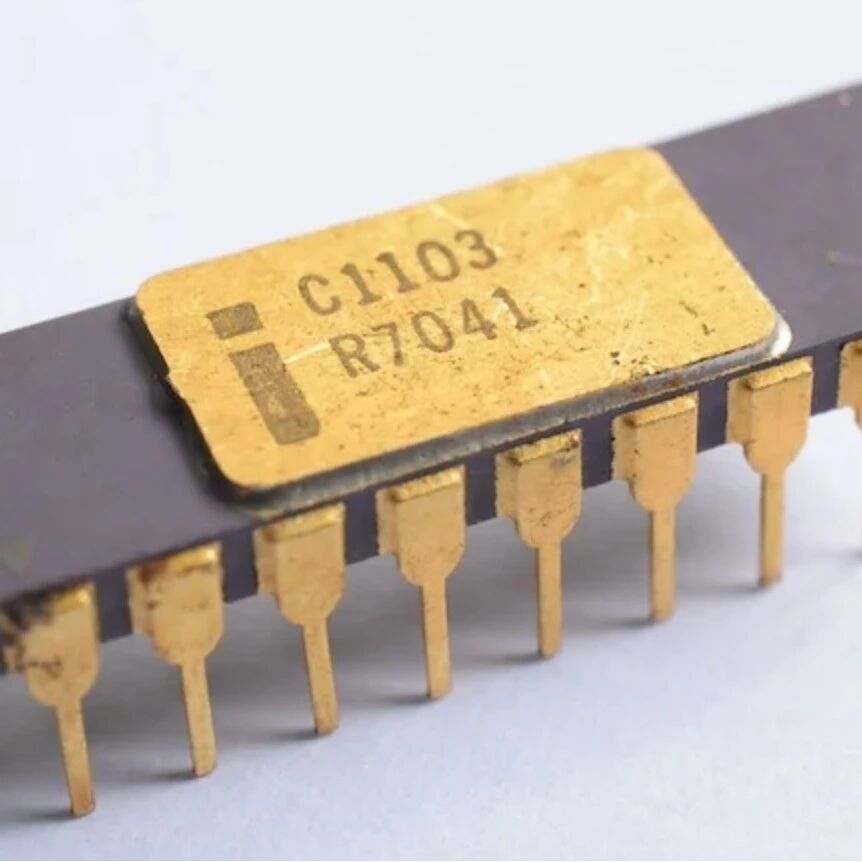
这颗芯片,DRAM的开山鼻祖
半导体行业观察· 2025-09-13 02:48
Core Viewpoint - The Intel 1103 chip was the first commercially successful DRAM chip, marking a significant advancement in semiconductor memory over magnetic core memory in terms of price, density, and logical compatibility [1][2]. Group 1: Historical Context - The Intel 1103 was launched in October 1970, aiming to match and surpass the performance and cost of magnetic core memory, which was prevalent at the time [1]. - By 1971, the 1103 became the best-selling semiconductor memory chip globally, adopted by 14 out of 18 major computer manufacturers within two years [2]. Group 2: Technical Specifications - The 1103 chip encapsulated 1024 bits of data in an 18-pin dual in-line package, utilizing p-MOS technology with an 8-micron silicon gate process [4]. - It featured a 32×32 bit internal array, requiring a refresh of all memory every 2 milliseconds, with many designers employing burst refresh strategies [6]. Group 3: Market Impact and Adoption - Despite its technical limitations, the economic advantages of the 1103 led to its widespread adoption, with major systems like HP's 9800 series and DEC's PDP-11 utilizing it as primary memory [10]. - The introduction of the 1103A variant improved timing margins and reduced power consumption, further facilitating its integration into various systems [10]. Group 4: Legacy and Influence - The Intel 1103 established a foundation for future DRAM technologies, paving the way for single-transistor DRAM and influencing the development patterns of DRAM that persist today [13]. - It serves as a reminder that disruptive designs do not always need to be the most elegant, emphasizing the importance of system-level economics over transistor-level perfection [13].


Arm服务器芯片,太猛了
半导体行业观察· 2025-09-13 02:48
Core Insights - Arm's presence in the server market is rapidly increasing, with its CPU market share reaching 25% in Q2 2025, up from 15% a year prior [1] - The growth is primarily driven by the widespread adoption of Nvidia's Grace-Blackwell architecture-based computing platforms [1][2] Group 1: Grace-Blackwell Platform Impact - Each NVL72 system, consuming 120 kW, is equipped with 72 Blackwell GPUs and 36 Grace CPUs, optimized for data transfer using Nvidia's custom NVLink-C2C interface [2] - The initial systems were shipped in small quantities at the end of last year, with upgraded versions based on Blackwell Ultra architecture starting delivery in Q2 this year [2] - Arm's server market share previously relied heavily on custom cloud chips like AWS Graviton, but now revenue from Grace is comparable to cloud GPUs [2] Group 2: Cloud Vendors and Arm's Strategy - AWS has invested in custom Arm chips since 2018, while Microsoft and Google have recently launched their own Arm CPUs, Cobalt and Axion, respectively [3] - Despite rapid progress, Arm's 25% market share is still significantly below the 50% target set for the end of 2025 [3] Group 3: Future Outlook - Arm's market share is expected to continue growing, with Nvidia developing a new Arm CPU codenamed Vera and Qualcomm and Fujitsu advancing their next-generation server chips [4] - Arm's ambitions extend beyond the server market, with predictions that by 2029, half of all Windows PCs sold globally will be powered by Arm chips [4] Group 4: Market Growth Driven by AI - The server and storage component market is projected to grow by 44% year-on-year by Q2 2025, driven by AI investment expansion [5] - Sales of SmartNICs and Data Processing Units (DPUs) have nearly doubled, benefiting from the trend of AI clusters migrating to Ethernet architectures [5] - Custom AI ASIC shipments have reached parity with GPUs, although GPUs still dominate revenue in the accelerator market [5]



一桩收购,成就甲骨文
半导体行业观察· 2025-09-13 02:48
Core Viewpoint - The acquisition of Sun Microsystems by Oracle in 2009, initially viewed as a poor decision, ultimately provided Oracle with essential system expertise that laid the foundation for its future cloud computing success [1][3][5]. Group 1: Acquisition Context - Oracle acquired Sun Microsystems for $7.4 billion, with a net value of $5.6 billion after accounting for cash and debt [1]. - At the time of acquisition, Sun was losing $100 million per month, and its core Solaris and SPARC server business was being eroded by Linux and x86 [3][4]. - Despite initial negative perceptions, Oracle's total revenue grew by 33% in the first fiscal year post-acquisition, driven primarily by software business [3]. Group 2: Long-term Impact - The acquisition provided Oracle with critical system-level expertise, which became vital for the growth of its Exadata business and future cloud initiatives [3][5]. - Oracle's cloud infrastructure orders surged, with a reported remaining performance obligation (RPO) of $455 billion, primarily driven by AI, which is over four times the amount from the previous year [4][6]. - The integration of hardware and software capabilities allowed Oracle to differentiate its cloud services, leading to significant growth in its multi-cloud database business [6]. Group 3: Strategic Shifts - Larry Ellison's leadership allowed Oracle to pivot from skepticism about cloud computing to actively building a competitive cloud infrastructure [5][6]. - Oracle's Gen 2 cloud infrastructure was launched after a complete overhaul of its initial architecture, focusing on security and performance enhancements [6]. - The company has seen a 15-fold increase in its multi-cloud database business over the past year, showcasing the success of its strategic shifts [6]. Group 4: Future Considerations - Despite the impressive growth in RPO, Oracle's overall scale and revenue remain significantly smaller compared to competitors, necessitating higher capital expenditures [7]. - The reliance on a single client, OpenAI, raises questions about the sustainability of Oracle's current growth trajectory [7]. - The acquisition of Sun Microsystems, once seen as a liability, has transformed Oracle's business model from enterprise software to cloud infrastructure services [7].


一家BLE芯片公司被收购
半导体行业观察· 2025-09-13 02:48
Core Viewpoint - Trackonomy has acquired InPlay, a leader in low-power Bluetooth (BLE) chip technology, which is applicable in various sectors including healthcare, gaming, logistics, and the broader wireless IoT market [2][3]. Group 1: Acquisition Details - The acquisition of InPlay aligns with Trackonomy's recent $250 million funding round from investors such as 8VC, Kleiner Perkins, and Hewlett Packard [3]. - InPlay is recognized for its NanoBeacon system-on-chip (SoC) technology, designed for ultra-low cost and large-scale adoption [2][5]. Group 2: InPlay's Technology and Market Position - InPlay's NanoBeacon technology supports the next generation of smart tags, characterized by ultra-low power consumption, low cost, and scalability [5]. - The CEO of InPlay, Jason Wu, emphasized that with Trackonomy's support, they can better serve existing and future clients while maintaining independent operations [5]. Group 3: Trackonomy's Market Growth - Over the past eight years, Trackonomy has become a "behind-the-scenes innovation engine" for the smart tag market, providing solutions across logistics, healthcare, industrial, and government sectors [6]. - The acquisition enhances Trackonomy's capabilities by providing a chip specifically designed for smart tag applications, which is flexible enough to support diverse wireless IoT applications [6]. - Trackonomy's CEO, Erik Volkerink, stated that the acquisition not only expands their customer base but also accelerates their mission to develop the smart tag ecosystem [6].
HBM,碰壁了
半导体行业观察· 2025-09-13 02:48
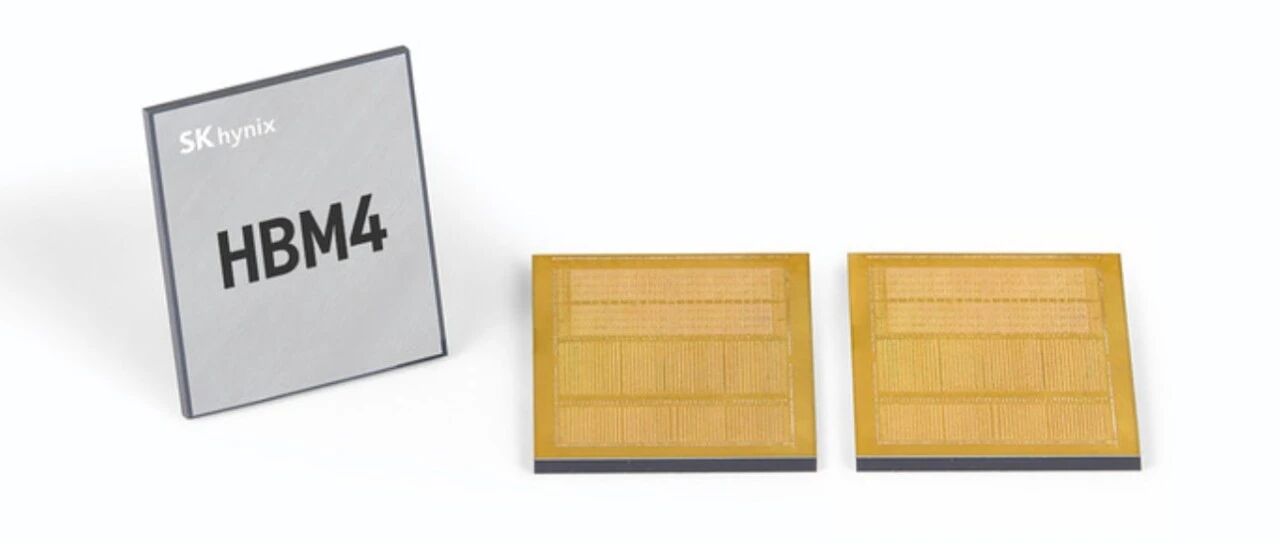
Core Viewpoint - The introduction of NVIDIA's Rubin CPX GPU, which opts for GDDR7 memory instead of the traditional HBM, raises questions about the future of HBM in AI applications and its potential threats from more cost-effective memory solutions [1][7]. Group 1: Rubin CPX GPU Overview - The Rubin CPX GPU was launched on September 10, 2023, specifically designed for long-context AI workloads, emphasizing a new inference acceleration concept called "disaggregated inference" [2]. - This GPU is not a simplified version of the standard Rubin GPU but is deeply optimized for inference performance, indicating a shift in focus from training to inference in AI applications [2][4]. - The Rubin CPX GPU is expected to provide up to 30 PFLOPs of raw computing power with 128 GB of GDDR7 memory, contrasting with the standard Rubin GPU's 50 PFLOPs and 288 GB of HBM4 memory [3]. Group 2: Architectural Differences - The architectural differences between Rubin CPX and standard Rubin GPU highlight a focus on task specialization, with Rubin CPX handling context construction and Rubin GPU managing generation tasks [5][9]. - The overall performance of the system with Rubin CPX is projected to reach 8 ExaFLOPs NVFP4, significantly surpassing previous models [4]. Group 3: Memory Transition and Implications - The shift from HBM4 to GDDR7 is driven by the need to reduce costs while maintaining performance, as GDDR7 provides sufficient bandwidth for the context-building tasks of the Rubin CPX GPU [9]. - This transition is expected to lower the total cost of systems, making AI infrastructure more accessible to a broader range of enterprises [9]. - The demand for GDDR7 is surging, with NVIDIA increasing orders from suppliers like Samsung, which is expanding production capabilities to meet this demand [10][12]. Group 4: Market Dynamics and Future Outlook - The introduction of GDDR7 is seen as a potential threat to HBM, but it also opens new opportunities for memory suppliers, particularly Samsung, which is poised to benefit from increased orders [10][12]. - SK Hynix has announced the completion of HBM4 development, indicating that while GDDR7 is gaining traction, HBM technology continues to evolve and remain relevant in the market [13].
马斯克:AMD相当不错,但是……
半导体行业观察· 2025-09-13 02:48
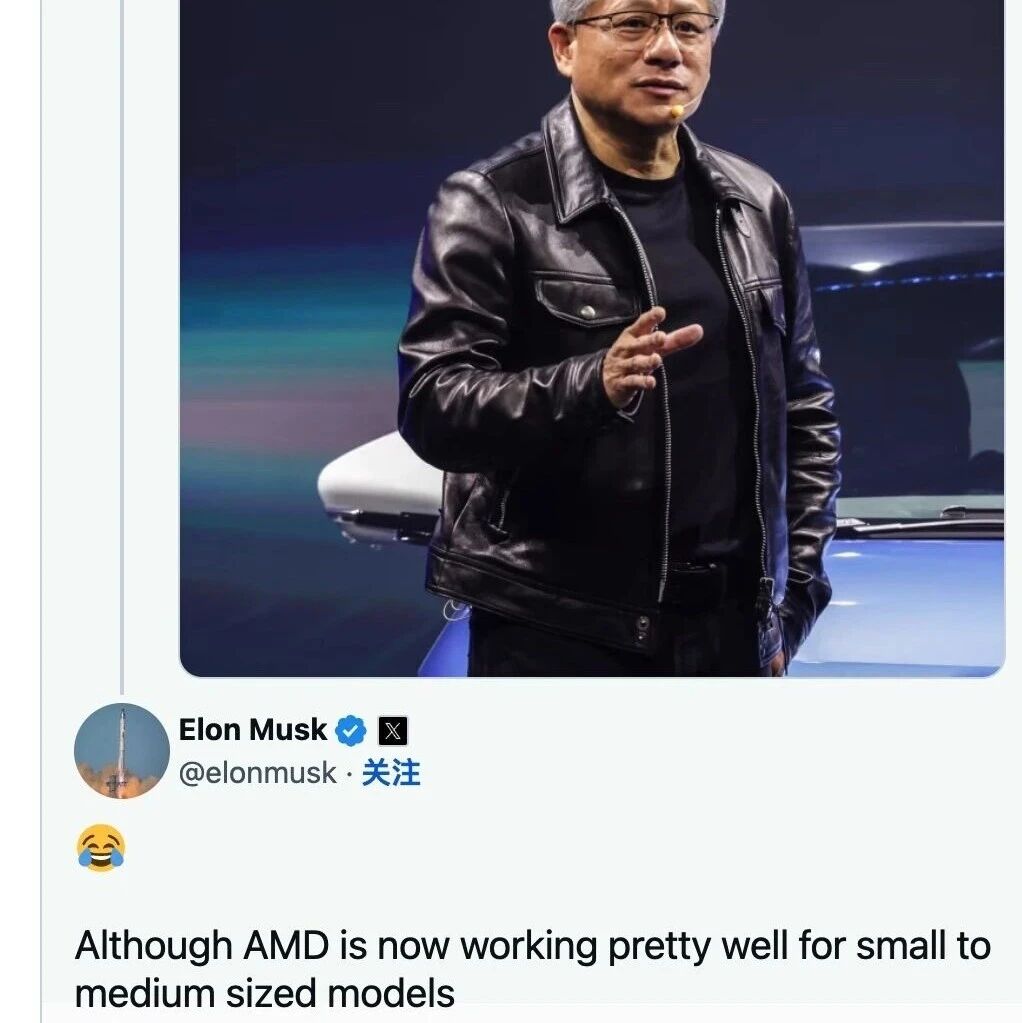
Core Viewpoint - Elon Musk recently acknowledged AMD's AI hardware performance, stating it is sufficient for small to medium AI models, but NVIDIA still holds an advantage in high-end computing tasks [1][8]. Group 1: AMD vs. NVIDIA Competition - The competition between AMD and NVIDIA in the AI industry has multiple dimensions, with NVIDIA having established a strong lead through its CUDA ecosystem, making it difficult for AMD to compete aggressively [7]. - Despite the challenges, AMD has made significant progress in the AI field, as indicated by Musk's endorsement of AMD hardware [7][8]. - AMD's Instinct MI300/MI300X AI accelerator cards are being utilized by Musk's xAI for its AI models, showcasing AMD's growing relevance in specific applications [8]. Group 2: Market Position and Challenges - AMD has not yet penetrated the AI supply chains of major tech companies like Microsoft, Meta, or Google to the extent that NVIDIA has, indicating a need for AMD to increase its visibility and market share [9]. - Musk's public endorsement is expected to provide AMD with new momentum in its efforts to gain attention in the competitive landscape [9]. Group 3: Future Competitive Landscape - AMD's recent initiatives in the AI sector are positioning it as a direct competitor to NVIDIA, with ongoing improvements to its ROCm software stack and hardware products [10]. - The industry anticipates that the competition between AMD and NVIDIA will intensify in the future [10].

国巨,又收购了
半导体行业观察· 2025-09-12 01:14
Core Viewpoint - Kinsus Interconnect Technology Corp. (国巨集团) is making a strategic move to acquire 28.5% of the shares of Maoda Electronics (茂达电子) at a price of NT$229.8 per share, representing a 20% premium, indicating strong intent and attractiveness of the offer [1][2]. Group 1: Acquisition Details - The acquisition is set to be filed with the Financial Supervisory Commission and will take place from September 12, 2025, to October 1, 2025, with a maximum purchase of 21,277,245 shares, which is approximately 28.5% of Maoda's total issued common shares [1]. - The minimum purchase requirement is set at 3,733,000 shares, or about 5% of Maoda's total issued common shares, with the condition that the acquisition must meet this minimum threshold [1]. Group 2: Maoda Electronics Overview - Maoda Electronics specializes in power integrated circuits (Power IC), focusing on mixed-signal power chips and sensors, with key product lines including fan motor driver ICs and power management ICs, applicable in various electronic devices [1][2]. - The company has shown strong operational performance, with August revenue reaching NT$649 million, marking a record high for the same period, and cumulative revenue for the first eight months of the year at NT$4.886 billion, a year-on-year increase of 21.2% [2]. Group 3: Strategic Rationale - Kinsus aims to leverage Maoda's stable profitability and operational performance for long-term investment returns and to establish a collaborative foundation with Maoda's management [2]. - The acquisition is expected to enhance Kinsus's competitive advantage by maximizing synergies through Maoda's existing product lines and Kinsus's global distribution channels [2]. Group 4: Market Performance and Growth - Maoda's performance is anticipated to continue growing, with expectations of double-digit growth in Q3 and potential for annual earnings exceeding one share capital if external economic conditions remain stable [2]. - The growth momentum is driven by the demand for fan motor driver ICs and power management ICs, with increasing orders in multi-fan applications and strong performance in power management ICs across various sectors [3].
英伟达抢进SiC?什么情况
半导体行业观察· 2025-09-12 01:14
Core Viewpoint - NVIDIA is initiating a "power revolution" by increasing the output voltage of AI server chips from 54V to 800V, utilizing Silicon Carbide (SiC) components to enhance power efficiency and performance in server cabinets [1][2]. Group 1: Silicon Carbide (SiC) Overview - Silicon Carbide (SiC) is a compound semiconductor material made from silicon and carbon, offering a wider bandgap than silicon, high-temperature resistance over 200 degrees Celsius, and excellent heat dissipation, making it suitable for high-power applications [1]. - SiC has been used in various applications such as 5G communications, electric vehicles (EVs), charging stations, and renewable energy systems, enhancing energy efficiency and performance [1]. Group 2: NVIDIA's Power Revolution - NVIDIA's new generation processor plans to upgrade the silicon intermediary layer to SiC, aiming for full-scale production of the 800V high-voltage direct current (HVDC) data center architecture by 2027 [2]. - The power consumption of AI servers is expected to increase from kilowatt (KW) levels to 1 million watts (MW), indicating a nearly 100-fold rise in future power demand [2]. - The traditional 54V architecture is nearing its limits in terms of copper loss, space, and conversion efficiency, necessitating the shift to SiC for improved efficiency and power density [2]. Group 3: Challenges and Considerations - While SiC offers significant advantages for high-performance server cabinets, it does not completely replace silicon in chip design and manufacturing, as silicon remains essential for CPU and GPU designs [3]. - The adoption of SiC is hindered by its high cost and the previous low voltage requirements of data centers, which limited the realization of SiC's benefits [4]. - Implementing SiC components requires careful design and wiring, complicating the control and safety verification of power systems, and necessitating an upgrade of the entire supply chain to accommodate the new architecture [4]. Group 4: Industry Implications - SiC is becoming a key material upgrade for power supply manufacturers, who are integrating SiC power components into server power supply units (PSUs) and HVDC distribution modules, highlighting the importance of technical expertise in this transition [5].
英特尔将失去至强首席架构师
半导体行业观察· 2025-09-12 01:14
Core Insights - Intel is experiencing significant leadership changes in its Xeon CPU architecture team, with Ronak Singhal set to leave, marking the second departure in eight months [1][2] - CEO Lip-Bu Tan is implementing transformations to revitalize Intel's data center business, including appointing a new leader for the Data Center Group [3][4] Group 1: Leadership Changes - Ronak Singhal, the Chief Architect for Xeon CPUs, will leave Intel by the end of the month, following the earlier departure of Sailesh Kottapalli in January [1][2] - Singhal has been recognized as a significant contributor to the development of the x86 architecture and has led various CPU architecture developments, including Haswell and Broadwell [2] Group 2: Strategic Initiatives - CEO Lip-Bu Tan has appointed Kevork Kechichian as the new Executive Vice President and General Manager of the Data Center Group, aiming to enhance the server CPU business [3] - The restructuring includes a 15% workforce reduction to accelerate organizational responsiveness and focus on CPU business, amidst increasing competition from AMD and cloud service providers [3] Group 3: Future Directions - Tan emphasized the need for Intel to strengthen its data center products and recruit top talent to transform the company into an engineering-focused organization [4] - The upcoming transition in leadership is seen as a critical opportunity for Intel to advance its technology and market position [5]
CIS,怎么走?
半导体行业观察· 2025-09-12 01:14
Core Insights - The development of image sensors has evolved over the past fifty years, focusing on increasing complexity in manufacturing processes to meet performance, yield, and cost requirements [1][3][5] - Stacking technology has enabled advancements from front-illuminated CCDs to back-illuminated CMOS, enhancing optical response and functionality [5][8] - The trend in interconnect spacing has stabilized post-2020, with TSMC being competitive at 1.4µm spacing, while optimal smartphone image sensor specifications are around 50 million pixels with a pixel pitch of 0.5µm to 0.7µm [10][12] - Innovations in pixel design, such as deep trench isolation and advanced capacitor types, are crucial for enhancing dynamic range and global shutter capabilities [17][20] - The emergence of short-wave infrared (SWIR) imaging requires innovative solutions due to silicon's limitations, highlighting the ongoing need for technological advancements in the industry [26] Group 1 - The trajectory of pixel development has shifted from merely reducing pixel size to adding more functionalities [17] - The use of novel materials and structures, such as AlO/ZrO layers, is essential for improving optical response and reducing dark signal generation [13][16] - The integration of multi-layer stacking with pixel-level interconnects presents opportunities for further advancements in image sensor technology [26] Group 2 - Enhanced image sensor processes have enabled non-photographic imaging applications, such as eye-tracking in augmented reality devices [25] - The first multi-spectral smartphone camera utilizes a 3x3 color filter array, demonstrating innovation in color correction without traditional filters [25] - The industry is no longer limited to a single dominant product, indicating a broad potential for development and innovation in image sensor technology [26]
