日经中文网

Search documents
万斯周围聚集美国新一代保守势力
日经中文网· 2025-12-08 07:55
Core Viewpoint - Vice President Vance is emerging as a strong contender for the next Republican presidential nomination, resonating with a new generation of conservative forces while partially adopting liberal policies [2][4]. Group 1: Political Positioning - Vance's leadership style is seen as relatable, allowing people to feel they could also achieve similar success, contrasting with the heroic image of former President Trump [4]. - The Claremont Institute, which supports Vance, emphasizes a return to Christian-based values and critiques the federal government's focus on liberal ideologies that have undermined traditional moral foundations [4][5]. - Vance's political core is centered on "social unity and community rebuilding," addressing issues like income inequality and drug addiction [5]. Group 2: Personal Background and Influence - Vance's upbringing in Middletown, Ohio, amidst economic decline and family struggles, has shaped his political views, leading him to critique both leftist and rightist ideologies [7]. - His book "Hillbilly Elegy" highlights the realities of white poverty, contributing to his political narrative and public persona [5][7]. Group 3: Policy and Ideological Trends - Vance's policies reflect a blend of conservative cultural values and liberal economic policies, such as increasing taxes on the wealthy and enhancing protections for workers, marking a new trend in the Republican Party known as "reform conservatism" [7][8]. - Support from "tech libertarians," including investor Peter Thiel, indicates a coalition that seeks to innovate through technology while aligning with the MAGA movement [8]. Group 4: Challenges Ahead - Vance faces the challenge of uniting the conservative base while distancing himself from Trump's charismatic influence, which could complicate his appeal to independent voters crucial for electoral success [9].


中国出口额2个月来再次转为增长
日经中文网· 2025-12-08 07:55
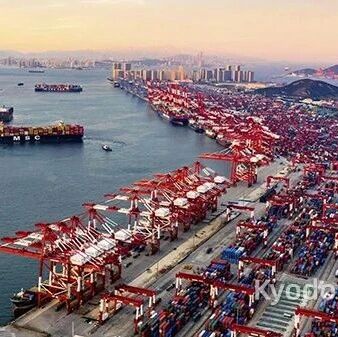
Core Insights - China's exports increased by 5.9% year-on-year in November, reaching $330.3 billion, marking a return to growth after two months of decline [2][4] - Imports grew by 1.9% year-on-year to $218.6 billion, achieving positive growth for six consecutive months [4] - The trade surplus expanded compared to the same period last year, amounting to $111.6 billion, as the growth rate of exports outpaced that of imports [4] Export Performance - The automotive sector saw a significant increase, with exports rising by 50% [4] - Rare earth exports also exceeded the levels of the previous year [4] - Exports of smartphones and personal computers declined compared to the same period last year [4] Export Destinations - Exports to the United States decreased by 28.6% [6] - Exports to ASEAN, the largest export destination, grew by 8.2% [6] - Exports to Japan increased by 4.3%, and exports to the European Union also surpassed last year's figures [6]
全球半导体扶持政策转向
日经中文网· 2025-12-08 02:43
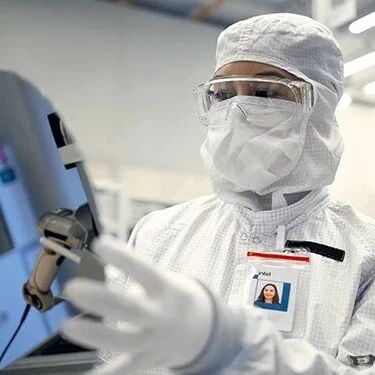
Group 1 - The policy to attract semiconductor manufacturing back to the U.S. officially started after 2022, but there are now delays in the construction of new factories in both Europe and the U.S. due to weak semiconductor demand, except for AI semiconductors [2][10] - The EU is shifting its support focus from attracting foreign companies to funding R&D for domestic firms, with discussions on a budget framework in the trillions of yen [2][4] - The EU Commission is proposing amendments to the European Semiconductor Act and is collecting opinions from industry groups, with a request for a budget of €20 billion to be announced by spring 2026 [4] Group 2 - The EU will prioritize support for regional semiconductor giants like ASML and Infineon Technologies, focusing on R&D and building a domestic semiconductor supply chain in the medium to long term [5] - The U.S. has seen delays in new factory openings, with the Trump administration injecting approximately $8.9 billion into Intel and planning to renegotiate support policies from the Biden administration [7][9] - Weak demand for semiconductors, particularly in personal computers, smartphones, and automotive sectors, is leading companies to scale back new investments to avoid a supply-demand imbalance [10]

FT中文网精选:老旧高层住宅维修为何难解?
日经中文网· 2025-12-08 02:43
日本经济新闻社与金融时报2015年11月合并为同一家媒体集团。同样于19世纪创刊的日本和英国的两家 报社形成的同盟正以"高品质、最强大的经济新闻学"为旗帜,推进共同特辑等广泛领域的协作。此次, 作为其中的一环,两家报社的中文网之间实现文章互换。 编者荐语: 文丨FT中文网专栏作家 刘远举 香港大埔火灾已致159人遇难,79人受伤。痛定思痛,我们不能仅仅停留在火灾问题上,也 不能将之仅仅视为香港的问题。 高层的好处很多,可以享受充足的阳光,欣赏广阔的风景。但高层火灾一直是一个世界性难 题。甚至,香港火灾后有一期节目上防火专家说,这类失火和地震一样,某种程度上,其实 都不用跑。因为小震小火不用跑,大震大火跑不了。 火灾之后,很多人买绳索速降装置,其实也没多大用,装了也只是一个形式。这种装置,安 装了就需要学习、演习,但一般人谁会专门演习?5、6层还勉强用一用,25层,到时候一般 人根本没那个胆子。更何况,那时下降还要穿越火层才能降到地面。 以下文章来源于FT中文网 ,作者刘远举 FT中文网 . 英国《金融时报》集团旗下唯一的中文商业财经网站,旨在为中国商业菁英和决策者们提供每日不可或 缺的商业财经资讯、深度分析以 ...

日美央行政策“逆行”,日元仍难走强?
日经中文网· 2025-12-08 02:43
Core Viewpoint - The article discusses the rare occurrence of the Bank of Japan (BOJ) and the Federal Reserve (Fed) implementing opposite monetary policies in the same month, with Japan expected to raise interest rates while the U.S. is anticipated to lower them, impacting the exchange rate of the yen against the dollar [2][4]. Group 1: Monetary Policy Changes - The Fed is expected to lower interest rates by 0.25 percentage points, with about 90% of market participants anticipating this outcome [4]. - The BOJ is projected to raise interest rates with a probability of approximately 90% for a rate hike in December [4][7]. - This simultaneous policy divergence is noted as unprecedented since the current Bank of Japan Law was enacted in 1998 [2][4]. Group 2: Exchange Rate Dynamics - Despite expectations for the yen to appreciate due to Japan's rate hike and the U.S. rate cut, the yen has remained stable around 155 yen per dollar since late November, indicating a lack of movement in the exchange rate [2][4]. - The actual long-term interest rate differential between Japan and the U.S. has narrowed from around 4% to approximately 2%, yet the yen has not strengthened as anticipated [7]. Group 3: Economic and Inflation Concerns - There are growing concerns about inflation in Japan, driven by the expansionary fiscal policies of the current administration, which may lead to sustained inflationary pressures [7]. - In the U.S., the government is considering measures such as lowering certain tariffs to mitigate inflation impacts [7]. - The market's perception of future interest rate differentials between the two countries is cautious, with expectations that they may not narrow significantly [7]. Group 4: Market Predictions and Diverging Views - Analysts have differing views on the future of the yen, with some predicting it will weaken to 158 yen per dollar by the end of 2026, while others foresee a strengthening to 140 yen per dollar [8]. - The BOJ's upcoming policy meeting is seen as a potential turning point for the yen, with expectations that any signals of continued rate increases could shift market sentiment [8].
日本内阁成员资产:高市排第10,约人民币146万
日经中文网· 2025-12-08 02:43
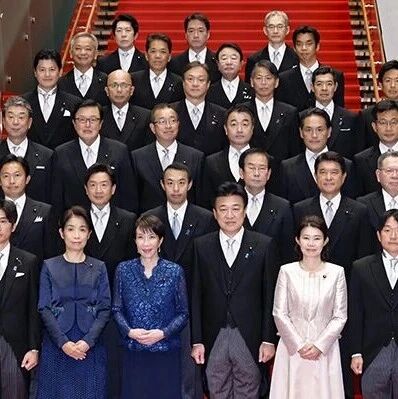
高市内阁成员 Kyodo 版权声明:日本经济新闻社版权所有,未经授权不得转载或部分复制,违者必究。 高市申报了奈良市价值1142万日元的土地和建筑物,以及两辆乘用车。称未持有有价证券及股票。其丈 夫、前众议院议员山本拓公开了福井县鲭江市价值1064万日元的土地和建筑物,以及1000万日元定期存 款等。 小泉的资产全部登记在妻子泷川雅美名下,具体构成为7000万日元国债、7764万日元公债及债券、 1.2484亿日元其他有价证券。同时还申报了700股东京地铁公司(Tokyo Metro)的股票。 排在第二位的是外相茂木敏充,资产为1.9397亿日元,持有1.7894亿日元有价证券等以及栃木县足利市 价值1503万日元的不动产。此外还登记了系统开发企业等5支股票,总数为24.33万股。 排在第三位的是总务相林芳正,资产为1.5088亿日元。除了1.3788亿日元的不动产和1300万日元的存款 之外,还持有高尔夫会员权益及股票。资产最少的是数字相松本尚,仅为550万日元。 包含家人持有的股票在内,共有9名内阁成员持有股票。由于只需要申报股票的标的和数量,不计入资 产总额,因此内阁成员的实际资产高于公开金额。 日本首 ...
日经BP 2026十大预测,AI是就业增长突破口
日经中文网· 2025-12-07 02:13
Group 1 - The core viewpoint is that the AI industry revolution will lead to a shift in labor towards industries with higher production efficiency, ultimately driving economic growth [2][6] - The impact of generative AI on job losses among white-collar workers is outweighed by its ability to create new job opportunities, accelerating the AI industry revolution [4][6] - There will be a labor shortage in sectors that require skills in AI and robotics, particularly in manufacturing and logistics [2][6] Group 2 - The prediction indicates that the geopolitical tensions, particularly between the US and China, will intensify, leading to an irreversible division in the world [6] - Companies need to prepare for unexpected situations and focus on restructuring supply chains around three key regions: the US, China, and the Asia-Pacific [6]

三菱汽车讨论与日产、本田在美国联合生产
日经中文网· 2025-12-07 02:13
Core Viewpoint - Mitsubishi Motors is facing significant challenges in the U.S. market due to high tariffs and lack of local production facilities, prompting discussions for collaboration with Nissan and Honda to enhance cost competitiveness [1][7]. Group 1: Current Situation - Mitsubishi Motors does not have a production base in the U.S., relying entirely on exports from Japan, which is increasing operational costs due to high tariffs [1][7]. - Nissan has factories in the U.S., but low sales are leading to reduced operating rates, negatively impacting profitability [1][7]. - Honda operates five factories in the U.S. but lacks the capacity to increase production due to high utilization rates [1][7]. Group 2: Collaborative Efforts - Mitsubishi's President Takao Kato indicated that discussions are ongoing regarding joint production with Nissan and Honda in the U.S. [3][7]. - The three Japanese automakers are exploring collaboration to improve cost competitiveness in response to high tariffs and market challenges [1][7]. - A joint production initiative for SUVs at Nissan's U.S. factories has already been announced, although specific models and factories have not been detailed [7]. Group 3: Future Plans - Kato emphasized that decisions regarding collaboration will be made before the next mid-term business plan is released, expected in spring of the following year [3]. - Mitsubishi's sales in the U.S. for 2024 are projected at 113,000 units, representing only about 10% of Nissan and Honda's sales [7]. - The three companies collectively hold over 15% of the U.S. new car market share, surpassing Toyota, indicating potential for significant cost advantages through joint production [7]. Group 4: Broader Collaboration - Mitsubishi is also discussing potential collaborations with Nissan and Honda outside the U.S., including production orders in the Philippines and supply agreements in Oceania [8]. - Ongoing negotiations for comprehensive business cooperation among the three companies have been in progress since February 2025, following the breakdown of merger talks between Nissan and Honda [9].

Tokyo Electron高管谈如何弥补中国市场的下滑
日经中文网· 2025-12-07 02:13
Core Viewpoint - Tokyo Electron is experiencing a decline in its sales proportion from the Chinese market, which is expected to drop from 42% in FY2024 to around 35% in FY2025, with uncertainty about whether it will fall below 30% in FY2026. The company plans to compensate for this decline by increasing sales of advanced semiconductor manufacturing equipment for AI servers, aiming for nearly 40% of total sales by FY2026 [2][5][6]. Group 1 - The company plans to expand sales of high-value products aimed at AI, with sales of advanced semiconductor manufacturing equipment for AI servers and devices expected to exceed 30% in FY2025 and reach nearly 40% in FY2026 [6]. - The demand for semiconductor memory is strong due to robust data center investments, leading to significant price increases and higher equipment utilization rates among memory manufacturers [4]. - The company has adjusted its FY2025 performance forecast, reflecting a positive outlook on the semiconductor industry's demand trends, despite facing challenges from local competitors in China [2][5]. Group 2 - The company is focusing on the etching equipment used in the DRAM wiring process, which is crucial for high-bandwidth memory (HBM) that is essential for processing AI data. Sales of etching equipment are projected to reach several hundred billion yen in FY2024, with cumulative sales expected to exceed 500 billion yen by 2030 [6]. - The company is actively working to restore trust with TSMC following an incident involving the illegal acquisition of confidential information, although this issue has not significantly impacted their business relationship [6].