清华金融评论

Search documents
嘉宾金句⑤丨2025清华五道口全球金融论坛
清华金融评论· 2025-05-24 10:37
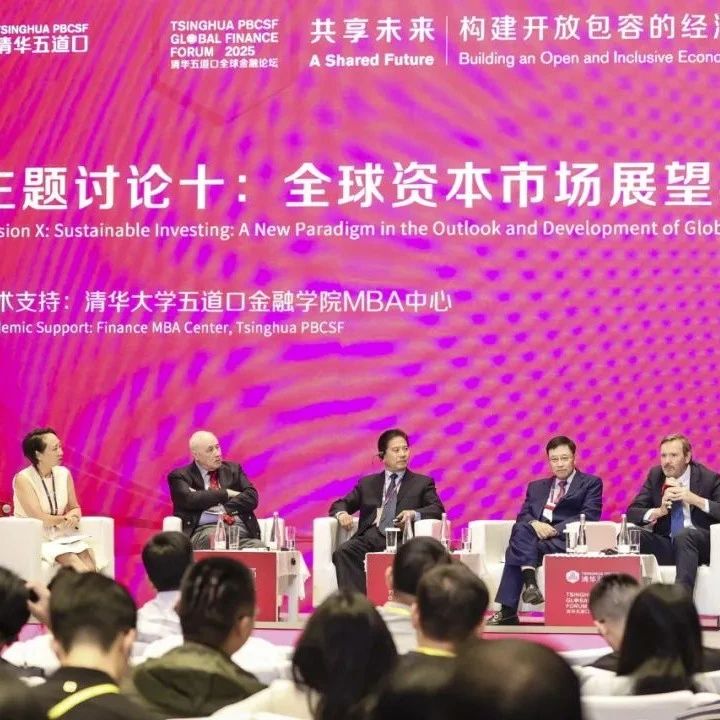
主题讨论九 人工智能时代下的数字金融 中国证券监督管理委员会原主席 5月17日-18日 2025清华五道口全球金融论坛 于深圳盛大召开 汇聚国内外金融界 领袖、学者及行业精英 浓缩思维干货 定位思维坐标 主题九:人工智能时代下的数字金融 主题十:全球资本市场展望与发展 这两场的嘉宾金句干货已打包完毕 快查收↓↓↓ 肖钢 张健华 清华大学五道口金融学院 金融发展与监管科技研究中心主任 莫万贵 中国人民银行金融研究所副所长 李振华 蚂蚁集团研究院院长 张鹏 北京智谱华章科技股份有限公司CEO 王正位 全球资本市场展望与发展 梁定邦 香港执业资深大律师 香港证券及期货事务监察委员会前主席 张慎峰 清华大学五道口金融学院副院长、副教授 主题讨论十 中国国际贸易促进委员会原副会长 聂庆平 中国证券金融股份有限公司原董事长 邓肯・邦菲尔德 国家主权财富基金国际论坛CEO 编辑丨兰银帆 来源丨清华五道口 审核 | 王晗 王娴 清华大学国家金融研究院副院长 清华大学五道口金融学院上市公司研究中心主任 ...

加密货币与金融体系加速融合的趋势与前景|金融与科技
清华金融评论· 2025-05-24 10:37
Core Viewpoint - The article discusses the rapid growth and integration of stablecoins and cryptocurrencies into the traditional financial system, highlighting the ongoing regulatory developments and the increasing adoption of these digital assets by financial institutions and consumers [3][22][27]. Group 1: Trends in Stablecoins and Payment Systems - Stablecoins offer significant advantages in payment time and cost, with cross-border payments completed in under one hour compared to traditional methods that take up to five days [5][6]. - As of April 2025, the market size of stablecoins exceeded $220 billion, with over 240 million active addresses and 1.4 billion payment transactions totaling $6.7 trillion [6][8]. - Major financial institutions are actively exploring stablecoin payment services, enhancing payment efficiency and reducing costs [9][14]. Group 2: Bank and Crypto Institution Collaboration - Banks are increasingly issuing their own stablecoins, with notable examples including JP Morgan Coin and initiatives from Standard Chartered and Itau Unibanco [10][11]. - Financial institutions are expanding their services to include cryptocurrency trading and stablecoin transactions, enhancing liquidity and providing secure entry points for institutional investors [14][20]. Group 3: Capital Market and Crypto Market Integration - The tokenization of financial products is gaining momentum, with significant projects launched by major financial institutions, indicating a doubling of the market size for tokenized real-world assets to over $22 billion [16][19]. - The approval of cryptocurrency ETFs in the US and Hong Kong has opened compliant investment channels for institutional investors, further integrating crypto assets into traditional finance [20][21]. Group 4: Regulatory Policies Supporting Crypto Innovation - The US has shifted its regulatory stance towards supporting innovation in stablecoins and cryptocurrencies, with significant policy changes under the Trump administration [23][24]. - Other countries are following suit, with many accelerating their regulatory frameworks for stablecoins and cryptocurrencies, reducing market uncertainty [24][25][27]. Group 5: Future Outlook - The integration of stablecoins and cryptocurrencies into the financial system is expected to continue, driven by advancements in blockchain technology and regulatory frameworks [29][30]. - Tokenization is seen as a transformative innovation that could revolutionize asset trading and settlement systems, with a growing interest from global financial institutions [31][32].
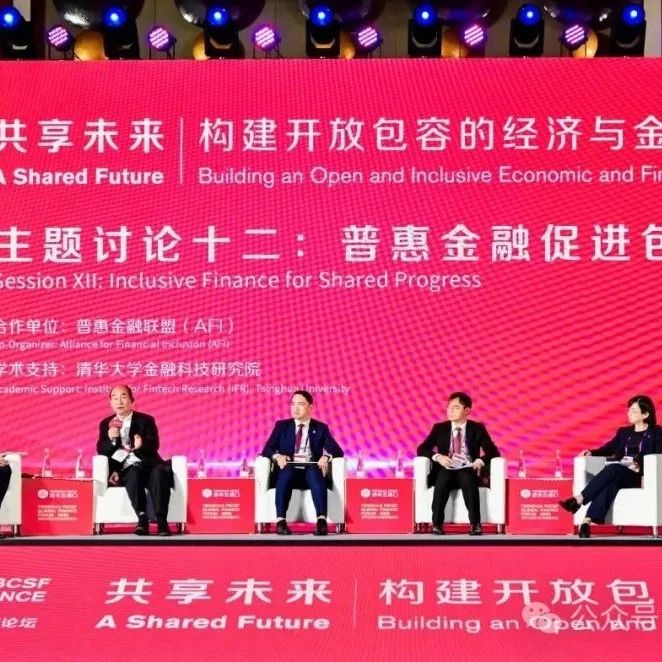
2025清华五道口全球金融论坛主题讨论十二丨普惠金融促进包容共进
清华金融评论· 2025-05-24 10:37
2025年5月17日-18日,2025清华五道口全球金融论坛在深圳市成功召开,本届论坛以"共享未来:构建开 放包容的经济与金融体系"为主题。18日下午,主题论坛十二"普惠金融促进包容共进"顺利举办。 图为会议现场 主题会议以圆桌讨论形式展开,全国社会保障基金理事会原副理事长、深圳市金融稳定发展研究院理事 长王忠民,老挝人民民主共和国银行副行长苏里斯·萨姆努冯,中国人民银行信贷市场司司长彭立峰, AFI副首席执行官兼首席运营官徐淑贤四位嘉宾围绕论坛主题展开讨论,普惠金融联盟政策管理负责人 阿里·基亚祖丁·穆罕默德主持会议。 王忠民 全国社会保障基金理事会原副理事长 深圳市金融稳定发展研究院理事长 王忠民指出,共同发展强调宏观与微观经济主体(如企业、家庭)在普惠与共融中实现 利益最大化。在人工智能时代,这一逻辑体现在三大场景:一是开源技术降低了社会创 新成本;二是云服务共享使中小企业零成本接入,提升了整体收益;三是数字资产收购 与整合创造了"空能生妙有"的价值跃升。此外,普惠金融与金融稳定的协同需技术创新 支撑:区块链保障数据安全,AI监管沙盒平衡创新与风险,例如数字支付赋能家庭和小 微企业的信贷服务。中国社保基 ...
2025清华五道口全球金融论坛主题讨论十三丨金融助力文化和旅游业成为支柱产业
清华金融评论· 2025-05-24 10:37
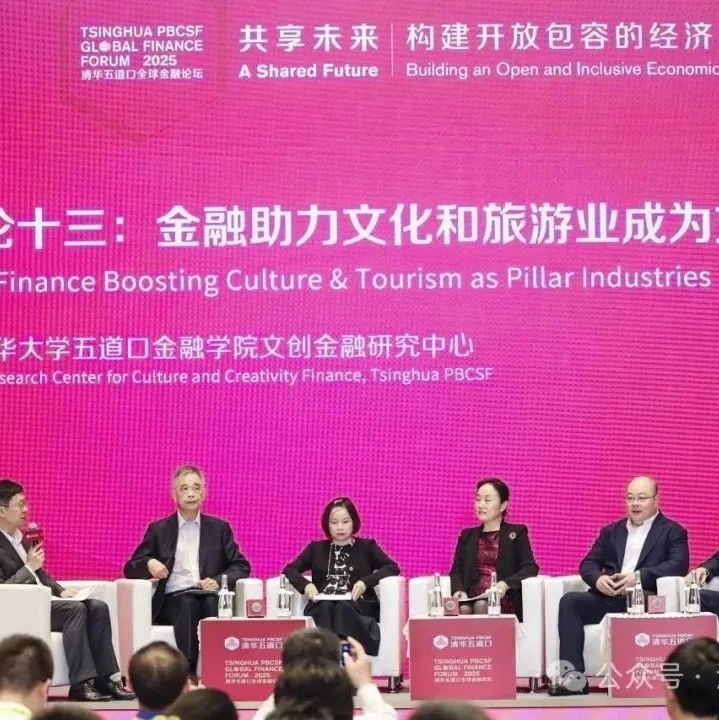
2025年5月17-18日,"共享未来:构建开放包容的经济与金融体系"2025年清华五道口全球金融论坛在广 东省深圳市成功召开。18日下午,主题讨论十三"金融助力文化和旅游业成为支柱产业"顺利举办。 图为圆桌讨论现场 主题会议以圆桌讨论形式展开,中国人民银行原副行长李东荣,世界知识产权组织中国办事处主任刘 华,中国文化产业投资母基金管理有限公司总经理于春玲,中国动漫集团党委副书记、总经理刘鹏, 腾讯云副总裁、腾讯智慧文旅负责人方腾飞围绕金融赋能文化和旅游业展开讨论。清华大学五道口金 融学院文创金融研究中心主任赵岑主持会议。 赵岑 清华大学五道口金融学院文创金融研究中心主任 赵岑表示,把文化旅游业培育成为支柱产业这一重大战略定位的提出,充分地彰显了党 中央的战略思考和战略魄力,提振了市场信心。赵岑指出,从数据来看,我国文化和旅 游业迎开门红。春节假期、"五一"假期,全国国内出游人次和国内游客出游总花费均保 持增长。今年一季度,全国规模以上文化与旅游类企业收入增长6.2%,产业智能化、 数字化发展趋势明显。今年1-4月,文化和旅游业投融资活动出现双回升,反映出这一 领域巨大的增长潜力。赵岑认为,在文化和旅游业发展 ...
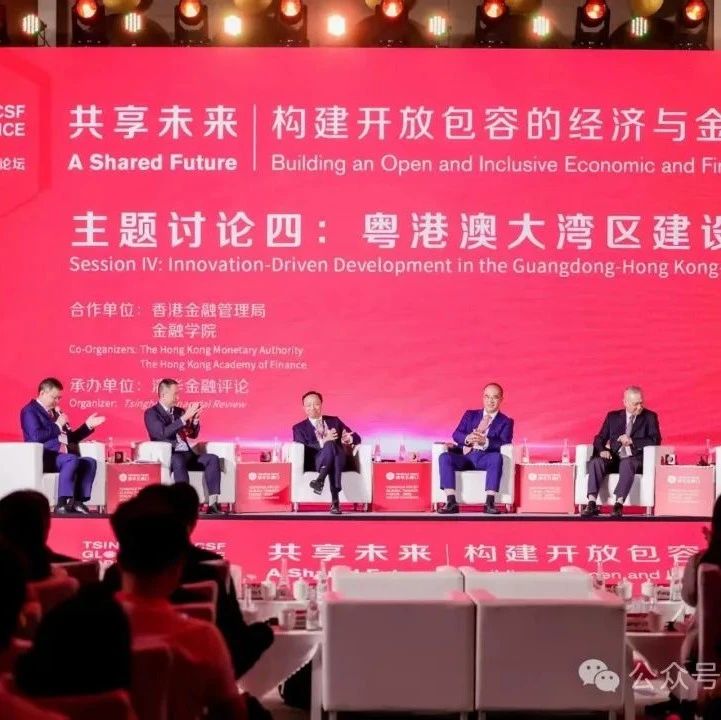
2025清华五道口全球金融论坛主题讨论四丨粤港澳大湾区建设与发展
清华金融评论· 2025-05-23 11:51
Core Viewpoint - The 2025 Tsinghua Wudaokou Global Financial Forum emphasized the importance of building an open and inclusive economic and financial system, particularly focusing on the development of the Guangdong-Hong Kong-Macao Greater Bay Area [1] Group 1: Development Prospects - Despite rising global uncertainties, the development prospects of the Greater Bay Area remain promising, with Hong Kong's status as an international financial center being reinforced [5] - The synergy between Shenzhen and Guangzhou's industrial and technological advantages and Hong Kong and Macao's institutional and financial resources is driving high-quality development in the Greater Bay Area [5] Group 2: Globalization and High-Quality Development - The trend of globalization is irreversible, and the Greater Bay Area should focus on high-quality development by leveraging its manufacturing, financial, and technological strengths [8] - High-level openness is essential, with Hong Kong playing a pivotal role in helping mainland enterprises expand into international markets [8] Group 3: Open Strategies and Innovation - The Greater Bay Area is leading integrated development through openness and innovation, focusing on three major open strategies: consolidating the European and American markets, deepening cooperation in East Asia, and expanding the Belt and Road Initiative [11] - Shenzhen's innovation in industrial clusters and Hong Kong's investment through the Lok Ma Chau Loop and venture capital funds are accelerating this process [11] Group 4: Macau's Role - Macau is actively positioning itself as a "precision contact" for Portuguese-speaking countries, promoting economic diversification and focusing on key industries [14] - The financial sector in Macau aims to enhance connectivity with Hong Kong and the mainland, particularly in bond markets, rapid payment systems, and digital currency [14] Group 5: Measures to Address Challenges - The Greater Bay Area is implementing measures to strengthen its dual circulation hub function, reduce external dependencies, enhance technological self-innovation, and improve the resilience of industrial chains [17] - The area is also deepening institutional openness and promoting pilot programs for cross-border data flow [17] Group 6: Strategic Importance - The construction of the Greater Bay Area is a national strategy personally planned and promoted by President Xi Jinping, with insights shared during the forum being valuable for achieving the strategic positioning of "one point, two places" [20]
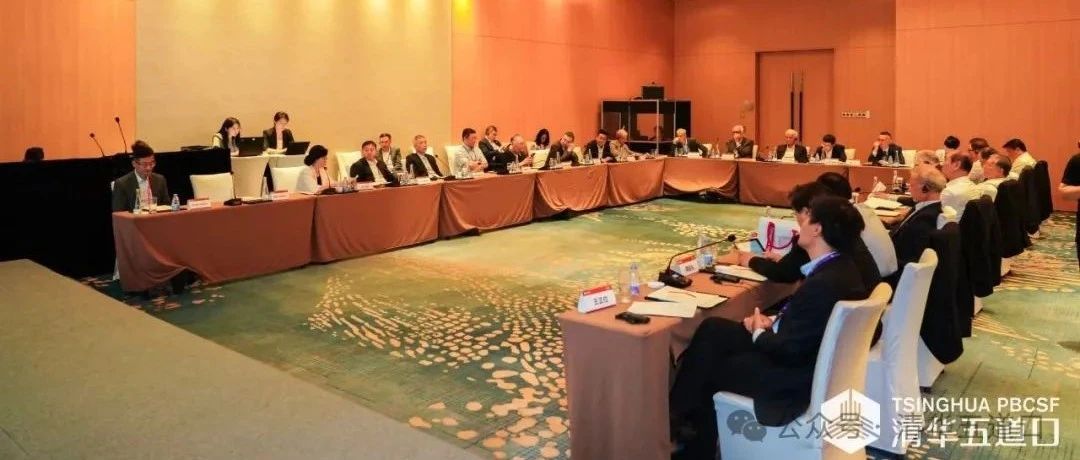
清华大学五道口金融学院国际战略咨询会议成功举行
清华金融评论· 2025-05-23 11:51
Core Viewpoint - The Tsinghua Wudaokou School of Finance aims to become a world-class financial institution with Chinese characteristics, as highlighted during the inaugural International Strategic Consultation Meeting held on May 17, 2025 [1][6]. Group 1: Meeting Overview - The meeting gathered prominent figures from finance, academia, policy, and international sectors, including former leaders and experts from various countries [3]. - Discussions focused on enhancing financial culture, addressing major issues in China's financial sector, and improving international collaboration [5]. Group 2: Recommendations and Future Directions - Participants emphasized the importance of deepening research on financial culture and Chinese financial thought, as well as providing effective policy recommendations for pressing issues like local government debt and real estate market excess [5]. - The need for the school to integrate innovative elements such as fintech and digital currencies into its curriculum was highlighted to adapt to future market changes [5]. - Artificial intelligence's impact on financial education and services was a key discussion point, with suggestions to incorporate AI technology into course design [5]. - The importance of green finance and sustainable development was also underscored, with calls for more research and educational activities in these areas [5]. Group 3: Institutional Commitment - The Tsinghua University administration expressed strong support for the Wudaokou School of Finance's development, aiming for significant contributions to national and global financial progress [6][8]. - The school plans to enhance its teaching quality, research capabilities, and internationalization efforts based on the valuable insights gained from the meeting [6][8].
好书推荐·赠书|《货币之母与风险之锚》
清华金融评论· 2025-05-23 11:51
# 读者福利 , 欢迎留言互动, 5 月 30 日前,平台随机从留言中选取 1 位读者获赠本期推 荐好书! 《货币之母与风险之锚》 刘尚希 等著 中信出版集团 出版 内容简介 解码现代财政金融关系的新逻辑 推动现代财政金融理论发展 服务国家治理能力提升 本书以公共风险为逻辑起点,突破传统理论框架,提出财政与金融关系的全新认 知范式。全书从财政与货币、财政政策与货币政策、财政与央行三个维度展开, 揭示现代经济中财政作为货币基础、政策协同枢纽和公共风险最终承担者的核心 作用。 财政是现代信用货币的母体。国家信用源于国家拥有的征税权,主权货币本质是 国家信用的具象化。财政收支直接嵌入基础货币循环,赤字常态化体现货币的内 生性。国债不仅是融资工具,更是资本市场定价基准和货币政策操作载体。人民 币国际化需依托财政向全球提供无风险资产。 财政政策与货币政策趋向一体化。经济金融化推动需求管理转向公共风险管理。 央行作为"最后贷款人"与财政作为"最后兜底人"只是公共风险治理中的行为分 工,稳估值优先于稳币值。 财政与央行的协同治理逻辑。全球公共风险治理实践显示,央行独立性随着通胀 机理的改变而改变。财政作为国家治理的基础,应 ...

2025清华五道口全球金融论坛主题讨论十一丨全球专家共议老龄化挑战与养老金融创新
清华金融评论· 2025-05-23 11:51
2025年5月17日至18日,2025清华五道口全球金融论坛在深圳隆重召开。作为本届论坛的重要专题之 一,主题论坛十一以"人口老龄化的机遇与挑战"为题,聚焦全球养老金融体系建设,深入探讨人口结构 变化带来的深层影响,以及政策引导与市场机制协同下的制度应对路径。 本场论坛由清华大学五道口金融学院研究员、中国保险与养老金融研究中心主任、金融MBA教育中心主 任魏晨阳主持,并以圆桌讨论的形式展开。 论坛全程以英文进行,吸引了来自不同国家和地区的专家学者积极参与。 图为会议现场 本场论坛邀请了四位海内外嘉宾参与讨论,分别是:日本央行前行长、日本青山学院大学杰出客座教 授白川方明,原中国保险监督管理委员会党委副书记、副主席周延礼,清华五道口养老金融50人论坛 秘书长、中国人民大学公共管理学院、劳动人事学院原院长董克用,以及欧洲保险业联合会前主席塞 尔吉奥·巴比诺特。四位专家围绕养老金制度改革、人口结构变化对金融体系的影响、以及应对全球 老龄化趋势的跨国经验进行了深入研讨与交流。 魏晨阳 清华大学五道口金融学院研究员 日本青山学院大学杰出客座教授 中国保险与养老金融研究中心主任 金融MBA教育中心主任 论坛伊始,主持人魏 ...
熊园:三大维度看,美债抛售风险有多大? | 国际
清华金融评论· 2025-05-23 11:51
Core Viewpoint - The article analyzes the potential risks associated with foreign countries selling U.S. Treasury bonds (T-bonds) in response to tariffs, emphasizing that such actions are unlikely to lead to a significant increase in T-bond yields due to various structural factors in the market [2][26]. Group 1: U.S. Treasury Bond Structure - The maturity structure of U.S. Treasury bonds is categorized into short-term (under 1 year), medium-term (1-10 years), and long-term (over 10 years), with short-term bonds accounting for 21.5%, medium-term for 51.8%, and long-term for 17.2% as of March 2025 [4]. - In terms of issuance, over 80% of new T-bonds issued in 2023 have been short-term, reflecting the government's strategy to manage debt costs based on interest rate conditions [4]. Group 2: Investor Composition - As of December 2024, foreign investors, including foreign institutions and central banks, hold 33.0% of U.S. Treasury bonds, followed by mutual funds at 19.3%, the Federal Reserve at 14.7%, individual investors at 10.3%, and banks at 8.6% [6]. - Among foreign investors, central banks account for approximately 43%, with Japan, the UK, and China being the largest holders [6]. Group 3: Maturity Distribution and Repayment Pressure - The maturity distribution indicates that due to anticipated interest rate cuts by the Federal Reserve, the highest volume of T-bonds maturing will occur in the next 2-3 months, with a total maturity of $12 trillion from January to May 2023, compared to $11.5 trillion in the same period last year [12]. - The U.S. government primarily rolls over maturing debt, but high debt levels and interest rates could create repayment pressures, with net interest payments projected to reach 3.1% of GDP in 2024, nearing historical highs [15]. Group 4: Trading Volume and Foreign Selling Review - Since the Federal Reserve's interest rate hikes in 2022, the average daily trading volume of T-bonds has increased significantly, reaching $1.36 trillion, although the turnover rate has not increased proportionately [17]. - Historical analysis shows that while China has reduced its T-bond holdings from a peak of $1.3 trillion to under $800 billion by March 2025, Japan has experienced periods of reduction but overall maintains a rising trend in T-bond holdings [23][24]. Group 5: Conclusion on Foreign Selling Impact - The article concludes that foreign selling of U.S. Treasury bonds is unlikely to cause significant yield increases due to the large market size, the limited speed of potential selling, and the historical resilience of T-bond yields to foreign selling actions [26]. - Key factors include the improbability of a prolonged government shutdown due to debt ceiling issues, the active trading environment of T-bonds, and the limited alternatives for foreign reserves [27].

央行、证监会等四部门发声,加快构建科技金融体制 | 政策与监管
清华金融评论· 2025-05-23 11:51
Core Viewpoint - The article discusses the recent policy measures introduced by multiple Chinese government departments to enhance the technology finance system, aiming to support high-level technological self-reliance and innovation in the country. Group 1: Policy Measures Overview - The policy measures focus on seven areas including venture capital, monetary credit, capital markets, technology insurance, and bond markets, proposing 15 specific initiatives to upgrade existing policies and introduce new ones [2][5]. - Establishment of a "National Venture Capital Guidance Fund" to encourage early, small, long-term investments in hard technology, enhancing the fundraising and exit channels for venture capital [2][3]. - Utilization of structural monetary policy tools to guide financial institutions in increasing credit support for technology enterprises, particularly for private SMEs [3][4]. Group 2: Capital Market Initiatives - The capital market will play a crucial role in supporting direct financing for technology enterprises, with the introduction of a "green channel" for capital market access and the establishment of a "technology board" in the bond market [4][17]. - The bond market "technology board" will facilitate flexible bond issuance and reduce costs for equity investment institutions, which are vital for early-stage investments in hard technology [17][19]. Group 3: Implementation Expectations - The policy aims to simultaneously address supply and demand sides, focusing on financing needs in key technology innovation areas [8][10]. - Emphasis on a systematic approach to release policy "combinatorial dividends" and promote collaborative development among various stakeholders [8][14]. - Establishment of a long-term financial support mechanism for technology innovation and addressing the financing challenges faced by technology SMEs [9][11]. Group 4: Innovation Scoring System - Introduction of an "Innovation Scoring System" to convert innovation data into financial metrics familiar to financial institutions, enhancing the ability to assess technology enterprises [12][13]. - Plans to optimize the core indicators of the scoring system and expand its application in various financial services [13]. Group 5: Regional Focus and Collaboration - The policy encourages regional collaboration, particularly in key innovation centers like Beijing, Shanghai, and the Guangdong-Hong Kong-Macau Greater Bay Area, to pilot technology finance initiatives [15][14]. - Local governments and financial institutions are urged to explore unique practices that can be replicated and promoted [15]. Group 6: Financial Ecosystem Development - The People's Bank of China emphasizes the need to build a supportive financial ecosystem for technology innovation, enhancing collaboration among banks, insurance, and securities institutions [21][22]. - Continuous improvement of the regulatory environment for technology enterprises, ensuring that fundraising is secure and used appropriately [29][30]. Group 7: Technology Insurance Role - Technology insurance is highlighted as a stabilizing factor for innovation, with measures to enhance compensation mechanisms and support for major technology tasks [36][38]. - The establishment of a risk-sharing mechanism for significant technology projects aims to provide comprehensive risk protection for technology enterprises [38].