清华金融评论

Search documents
关税风暴下的人民币汇率走势前瞻 | 政策与监管
清华金融评论· 2025-05-22 10:56
Core Viewpoint - The article discusses the impact of Trump's tariff policies on the RMB exchange rate, suggesting that despite the intensification of tariffs in the Trump 2.0 era, the RMB has not depreciated as expected, indicating a potential for two-way fluctuations in the exchange rate [1][2]. Tariff Impact on RMB Exchange Rate - During Trump's first term (Trump 1.0), tariffs imposed from 2018 to 2019 caused the RMB to depreciate from 6.28 to around 7.10 against the USD, with a decline of over 10% in both the onshore and offshore markets [2][4]. - In the Trump 2.0 era, tariffs have escalated to a maximum of 145%, leading to a near halt in US-China trade, yet the overall impact on the RMB has been limited [2][4]. Recent Developments - As of April 18, 2025, the onshore RMB midpoint and spot rates have only decreased by 0.07% and 0.26% respectively since the beginning of the year, while the offshore RMB (CNH) has actually increased by 0.46% [4]. - The RMB strengthened in the first quarter of 2025, with the onshore midpoint, spot rate, and CNH rising by 0.14%, 0.65%, and 0.99% respectively, attributed to several factors including lower-than-expected tariffs and positive market sentiment towards Chinese assets [5]. Market Reactions and Economic Outlook - Following the announcement of the third round of tariffs in April 2025, the RMB experienced a decline, with the onshore midpoint and spot rates dropping to new lows since September 2023 [7]. - The aggressive tariff policies have led to a significant depreciation of the USD, with the dollar index falling below 100, which has helped stabilize the RMB [8]. Economic and Policy Divergence - The article highlights that the divergence in economic cycles between China and the US has led to differing monetary policies, contributing to the pressure on the RMB [10]. - The US is facing economic challenges due to Trump's policies, which have increased market uncertainty and the risk of recession, impacting the overall economic outlook for 2025 [11].

2025清华五道口全球金融论坛主题讨论九丨人工智能时代下的数字金融
清华金融评论· 2025-05-22 10:56
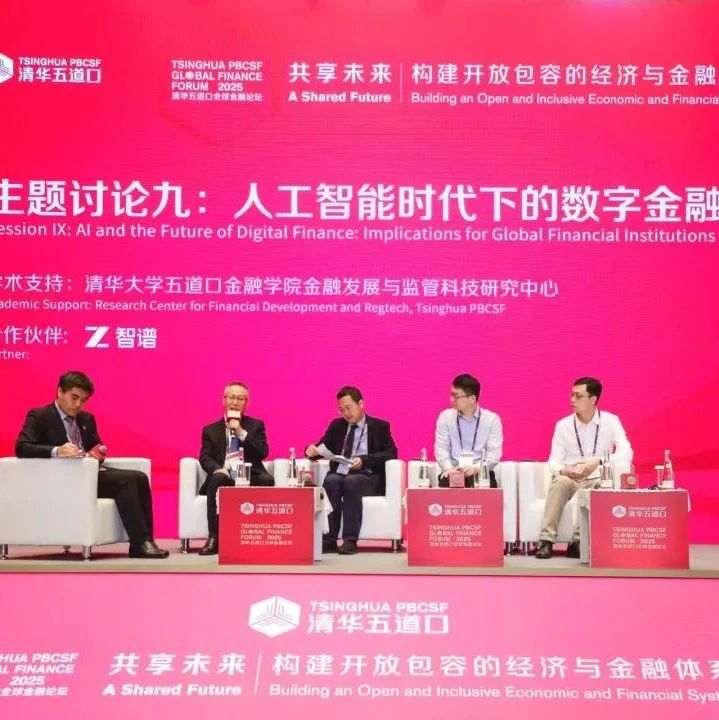
2025年5月17-18日,2025清华五道口全球金融论坛在深圳市盛大召开。18日上午,主题讨论九"人工智能 时代下的数字金融"成功举办。本场主题讨论分为两个环节,首先由中国证监会原主席肖钢发表《数字 金融与数字经济季度形势分析》主题演讲。接下来是圆桌讨论环节,参加圆桌讨论的嘉宾包括清华大学 五道口金融学院金融发展与监管科技研究中心主任张健华、中国人民银行金融研究所副所长莫万贵、蚂 蚁集团研究院院长李振华、北京智谱华章科技有限公司CEO张鹏,清华大学五道口金融学院副院长、副 教授王正位全程主持会议。 图为圆桌讨论环节 肖钢 中国证监会原主席 在主题演讲环节,肖钢指出2025年一季度我国数字经济持续保持良好发展态势,数字经 济核心产业增长超10%,显著高于同期GDP增速,数字制造业和数字服务业均表现亮 眼,数字投资高速增长、数字消费稳中有升,区域分布上东部地区数字经济持续领跑。 数字金融也发展势头良好,特别是De epSe ek的出现实现了AI平权,众多中小金融机构 通过接入De epSe ek等大模型具备了应用AI大模型的能力,金融机构科技投入也更加注 重投入产出比,资金投入呈现出向"精"向"效"的态势,金融 ...
从农田到云端:人保财险全链护航新质生产力四川样本|银行与保险
清华金融评论· 2025-05-22 10:56
Core Concept - The article discusses the concept of "new quality productivity" introduced by Xi Jinping, emphasizing its importance in China's economic transformation and the role of financial support in facilitating high-quality development [2] Group 1: New Quality Productivity - "New quality productivity" is based on China's strong economic foundation and advanced technology, representing a significant leap in productivity [2] - Financial support for the development of new quality productivity is crucial for the transformation and upgrading of the financial industry [2] Group 2: Low-altitude Economy - The low-altitude economy is highlighted as a typical representative of new quality productivity, encompassing various flight activities and types of aircraft [4] - Sichuan Province is focusing on low-altitude economy development, launching 12 key tasks and 16 policy measures to support this sector [6] - Sichuan has successfully implemented innovative applications of drones, significantly improving logistics efficiency in remote areas [6][9] Group 3: Insurance Industry's Role - The insurance industry is actively engaging in supporting the low-altitude economy, with companies like People's Insurance Company of China (PICC) customizing risk protection plans for drone companies [9] - PICC has provided over 37 million yuan in insurance coverage for various drone operations, enhancing operational safety and reducing costs for companies [9] Group 4: New Energy Industry - Sichuan's new energy industry has reached an output value of approximately 600 billion yuan, focusing on building a comprehensive energy system [11] - PICC has issued a green building performance liability insurance policy for a major solar materials project, facilitating 700 million yuan in financing support [11][12] - Collaborations with industry leaders like CATL have led to innovative insurance products that address specific risks in the new energy sector [12] Group 5: Technology Financial Services - PICC has developed comprehensive insurance solutions for technology companies at various growth stages, addressing their unique risks [14][15] - The company has established a national-level intellectual property insurance service platform, providing over 27.2 billion yuan in risk coverage for intellectual property [16] Group 6: Rural Revitalization - The article emphasizes the importance of high-quality agricultural development and the role of insurance in managing risks associated with agricultural infrastructure projects [18][20] - PICC has introduced a quality defect liability insurance for high-standard farmland construction, providing over 1.2 billion yuan in risk coverage across multiple regions [20][21]

2025清华五道口全球金融论坛主题讨论十丨全球资本市场展望与发展
清华金融评论· 2025-05-22 10:56
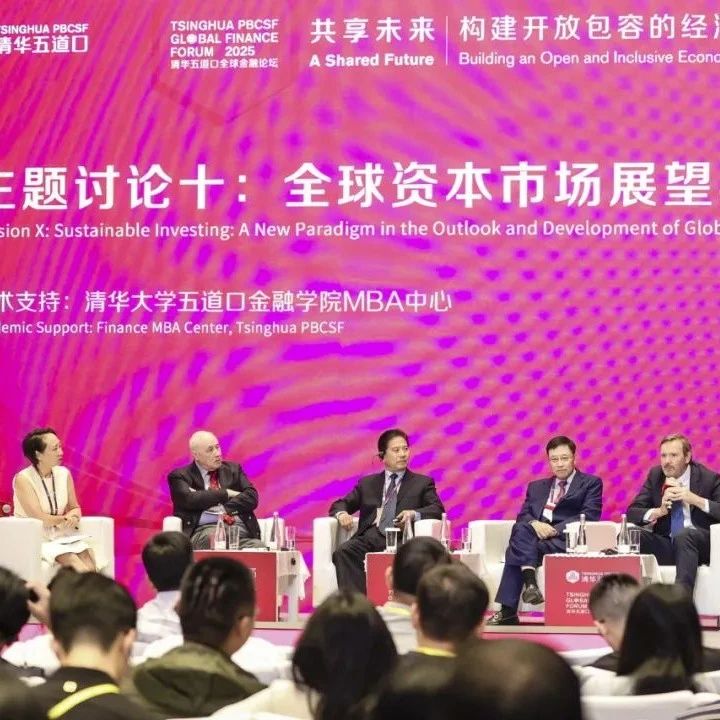
Core Viewpoint - The forum focused on the outlook and development of global capital markets, featuring insights from various experts on the current state and future trends of these markets [1][3]. Group 1: Global Capital Market Insights - The globalization of capital markets has evolved slowly, with significant developments occurring since the 1970s, highlighting the interplay between scientific regulation and political-economic factors [6]. - The U.S. stock market has shown strong long-term growth despite facing short-term shocks, while other markets like Germany and India exhibit varying degrees of resilience and volatility [9]. - The Chinese A-share market is characterized by rapid development but also significant volatility, necessitating attention to key valuation indicators [9][12]. Group 2: Perspectives on International Rules and Regulations - The concept of international rules is often dominated by developed countries, which can disadvantage developing nations; a more rational view of globalization and international regulations is necessary [12]. - The U.S. market faces challenges such as manufacturing hollowing and high national debt, leading to caution regarding U.S. asset valuations [12]. Group 3: Long-term Investment Strategies - Sovereign wealth funds are positioned as patient capital, focusing on long-term economic trends rather than short-term market fluctuations, emphasizing the importance of global capital markets despite current challenges [15]. - The Chinese capital market is viewed as an undervalued investment opportunity with strong long-term policy support, suggesting a shift towards value investing [12][15]. Group 4: Discussion on Globalization and Tariff Disputes - The roundtable discussion addressed the profound impacts of de-globalization and tariff disputes on capital markets, with experts providing diverse perspectives on current challenges and future trends [18].
2025清华五道口全球金融论坛主题讨论八丨金融赋能科技创新与发展
清华金融评论· 2025-05-21 10:20
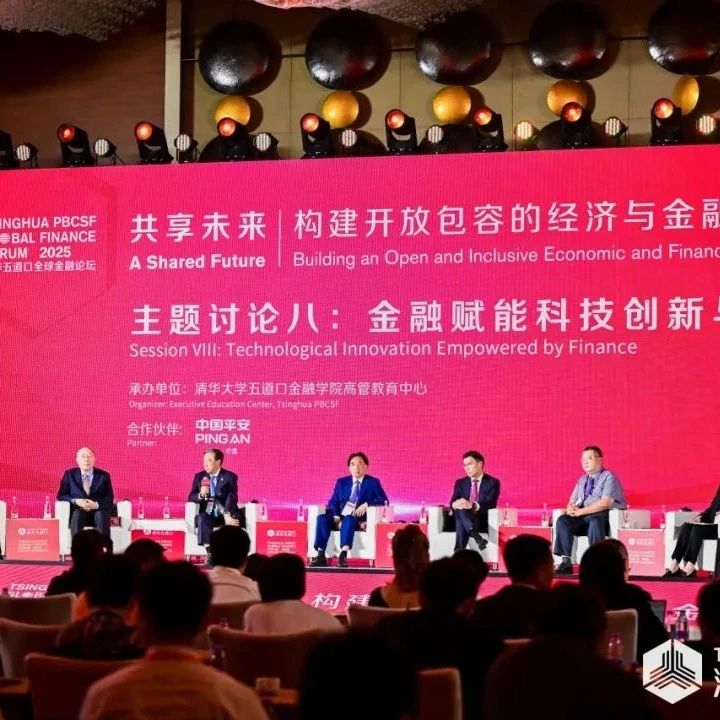
Core Viewpoint - The 2025 Tsinghua Wudaokou Global Financial Forum focused on how finance can better empower technological innovation and development, addressing current pain points in the fintech sector [1][2]. Group 1: Financial Technology and Innovation - Huang Qifan emphasized that fintech has evolved through stages, with the current phase being Industry Internet Finance 3.0, which is crucial for solving financing difficulties faced by SMEs [6]. - The "1+10" industrial chain cluster model, which includes manufacturing and ten related service industries, is essential for creating a comprehensive digital platform using technologies like big data and AI [6]. - Huang highlighted that Industry Internet can enhance value and create multiple economic function centers, thus addressing the financing challenges of SMEs [6]. Group 2: Government and Policy Support - Ma Weihua discussed the need for continuous reform of government-guided funds to improve the success rate of technology transfer, noting that China's technology conversion rate reached about 35% in 2024, still lagging behind developed countries [9]. - He identified issues such as the disconnect between the innovation chain and funding chain, valuation misalignment, and the need for a more effective risk management mechanism [9]. - Ma suggested that government funds should play a coordinating role in mobilizing social resources for tech enterprises [9]. Group 3: Investment Strategies and Market Dynamics - Ni Zewang analyzed the current challenges in the venture capital industry, including the tightening of IPOs and the need for patient capital to help startups cross the "valley of death" [12]. - He noted that many funds established since 2015 have a return on investment (DPI) of less than 0.5, indicating a lack of profitability in the sector [12]. - Ni proposed policy adjustments to lower tax burdens and encourage long-term capital from various sources to enter the venture capital space [12]. Group 4: Regional Development and Talent Acquisition - Qiu Dageng highlighted Hong Kong's initiatives in upstream R&D, talent acquisition, and institutional innovation to support fintech development [15]. - The Hong Kong government has invested 10 billion yuan to commercialize university research and attract top talent in the tech field [15]. - Qiu emphasized the importance of regulatory innovation in areas like Web3 and digital assets to enhance the competitiveness of tech enterprises [15]. Group 5: Risk Management and Collaboration - Guo Jian discussed the need for deep collaboration between financial institutions and tech companies, emphasizing the shift from catch-up to leading-edge R&D in China [17]. - He pointed out that innovative technologies can enhance risk management capabilities in financial institutions, which is crucial for supporting high-risk tech startups [17]. - Guo advocated for the use of digital technologies to improve financial risk prediction and management [17]. Group 6: Comprehensive Financial Support System - The forum concluded with discussions on building a more effective financial support system for tech innovation, emphasizing the need for institutional innovation, technological application, and regional collaboration [21]. - Huang Qifan suggested that the operation of Industry Internet would lead to resource and value aggregation, benefiting the overall tech finance landscape [21]. - The participants agreed on the importance of creating a controllable risk and shared benefit ecosystem for tech finance [21].
2025清华五道口全球金融论坛主题讨论七丨2025中国经济展望暨《中国金融政策报告2025》发布
清华金融评论· 2025-05-21 10:20
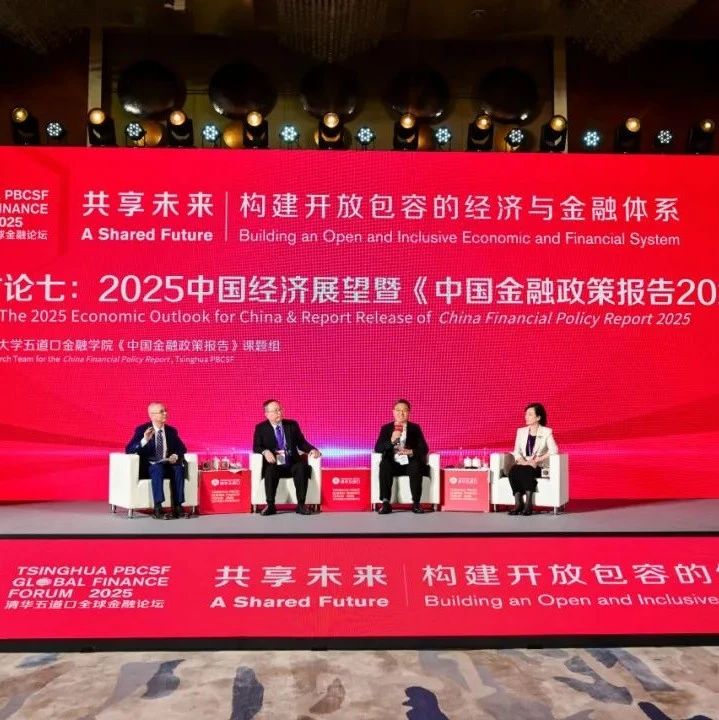
Core Viewpoint - The 2025 Tsinghua Wudaokou Global Financial Forum focused on the release of the "China Financial Policy Report 2025," discussing the path and strategies for achieving a strong financial nation and promoting high-quality economic development in China [1][5]. Summary by Sections Overview of the Report - The "China Financial Policy Report" project was established by Tsinghua Wudaokou Financial School and the Chinese Academy of Social Sciences, aiming to reflect major themes and policy dynamics in China's financial sector over the past 15 years [3]. - The report has been published annually in both Chinese and English, gaining recognition for its comprehensive introduction to China's financial policy [3]. Key Themes of the 2025 Report - The report's theme is "Continuously Deepening Financial System Reform and Accelerating the Construction of a Modern Financial System with Chinese Characteristics," analyzing challenges and opportunities in China's financial development [5][6]. - It highlights the need for reform in the financial system to enhance resilience amid internal and external pressures, including global economic fluctuations and domestic demand instability [6]. Achievements in 2024 - The report reviews significant achievements in establishing a scientific and stable financial regulation system, a well-structured financial market, and a collaborative financial institution system [7][8]. - It emphasizes the importance of a diversified and specialized financial product and service system, as well as the development of secure and efficient financial infrastructure [8]. Future Directions - Future reforms should focus on optimizing financial resource allocation, enhancing the central bank's system, and strengthening financial stability guarantees [8]. - The report stresses the importance of maintaining a balance between development and security while deepening reforms to support China's modernization [8]. Roundtable Discussions - Discussions included the impact of tariff wars on China's economic and financial development, emphasizing the need for structural adjustments in response to external pressures [10][11]. - The importance of enhancing the efficiency of cross-border payment systems for the renminbi was highlighted, along with the need for unified approaches to stabilize the currency system [12]. - Local financial strategies were discussed as crucial for supporting national financial goals, focusing on emerging industries, green finance, and digital finance [16].
嘉宾金句④丨2025清华五道口全球金融论坛
清华金融评论· 2025-05-21 10:20
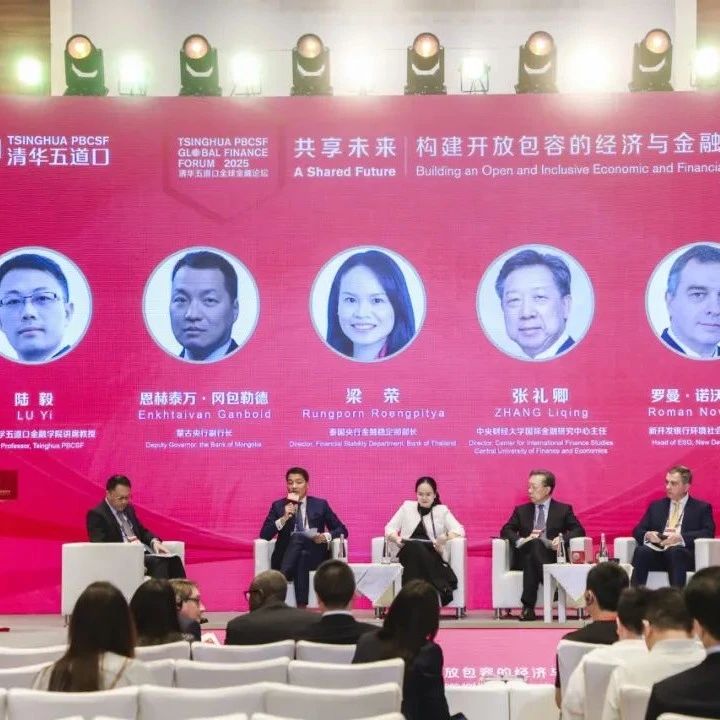
Group 1 - The 2025 Tsinghua Wudaokou Global Financial Forum was held in Shenzhen on May 17-18, gathering leaders, scholars, and industry elites from the financial sector [1] - The forum focused on key themes including opportunities and challenges in green development, as well as the debt crisis in emerging markets and financial governance [1] Group 2 - Theme discussion five addressed the opportunities and challenges of green development, featuring prominent speakers such as Ju Jiandong, a chair professor at Tsinghua University, and representatives from various international organizations [4][8] - Theme discussion six focused on the debt crisis in emerging markets and financial governance, with contributions from officials like the Deputy Governor of the Mongolian Central Bank and the Minister of Financial Stability from the Bank of Thailand [15][17]
金价重返3300美元直接原因,2025前景如何?|国际
清华金融评论· 2025-05-21 10:20
Core Viewpoint - The recent surge in gold prices to $3,300 per ounce is primarily driven by geopolitical tensions, particularly the potential military action by Israel against Iran's nuclear facilities, alongside expectations of economic slowdown and inflation in the U.S. which are favorable for gold [1][4]. Factors Influencing Gold Prices - The main factors affecting gold prices include: - **Dollar Exchange Rate and Interest Rate Policy**: A weaker dollar enhances gold's appeal as a safe-haven asset. The current dollar index is around 100, providing support for gold prices. Expectations of interest rate cuts by the Federal Reserve in 2025 (projected cuts of 75-100 basis points) reduce the opportunity cost of holding gold, benefiting its price [7]. - **Geopolitical Tensions and Safe-Haven Demand**: Recent fluctuations in U.S. tariff policies and uncertainties surrounding the Russia-Ukraine ceasefire have heightened risk aversion. Historical data indicates that geopolitical conflicts typically boost gold prices by approximately 12% [7]. - **Inflation Outlook**: Gold is known for its anti-inflation properties. As a non-fiat currency, its scarcity and stability make it a valuable asset during periods of declining purchasing power of paper currency. For instance, during the high inflation period of the 1970s in the U.S., gold prices soared from $35 to $800 per ounce [7]. - **Central Bank Purchases and Supply-Demand Dynamics**: In 2024, global central banks are expected to net purchase 1,045 tons of gold, reflecting a continued trend of de-dollarization in emerging markets [7]. 2025 Gold Price Outlook - Currently, gold prices are experiencing high-level fluctuations, with resistance at $3,500 per ounce and support between $2,900 and $3,200 per ounce. Financial institutions predict that gold prices may exceed $4,000 per ounce by 2026, driven by global debt expansion, with U.S. debt projected to reach $44 trillion, and potential restructuring of the monetary system [9]. - Gold is increasingly viewed as a viable asset allocation option, with recommendations suggesting that gold should not exceed 20% of household assets. A diversified approach involving gold ETFs, physical gold bars, and mining stocks is advised to mitigate risks. Gold serves as a long-term tool against credit depreciation, despite experiencing a prolonged bear market from 2011 to 2015 [9]. - Short-term fluctuations in gold prices are likely influenced by Federal Reserve policies and geopolitical developments, but the long-term outlook remains positive due to weakening dollar credit and global debt risks [9].

2025清华五道口全球金融论坛主题讨论六丨新兴市场债务危机与金融治理
清华金融评论· 2025-05-20 10:30
Core Viewpoint - The article discusses the emerging market debt crisis and financial governance, highlighting various countries' approaches and policies to address the issue, as presented during the Tsinghua Wudaokou Global Financial Forum held in Shenzhen [1]. Group 1: Mongolia's Experience - Mongolia's central bank vice governor shared the country's experience in managing its debt crisis, noting that government debt reached 90% of GDP in 2016, prompting international concern [6]. - The Mongolian government implemented measures such as a legal cap on external debt at 88% of GDP and established a transparent debt disclosure mechanism, enhancing market confidence [6]. - These actions reduced government debt to 60% of GDP and improved Mongolia's sovereign credit rating to B+, serving as a model for other emerging markets [6]. Group 2: Thailand's Debt Situation - Thailand's central bank official pointed out that debt levels had been rising even before the pandemic, exacerbated by COVID-19 and inflation, leading to increased debt among households and businesses [9]. - The country has initiated measures like a "prudent borrowing plan" and debt consolidation schemes to manage household debt, which is notably higher than in comparable countries [9]. - The official emphasized the challenges of achieving "healthy deleveraging" in a highly uncertain environment, complicating policy coordination and assessment [9]. Group 3: Global Debt Landscape - The director of the International Finance Research Center highlighted the severe global debt situation, with total debt expected to reach a record $318 trillion by 2024, and emerging market debt exceeding $105 trillion [12]. - Factors such as trade tensions, economic slowdown, and reduced international aid have significantly increased debt risks in emerging markets, with 15% of low-income countries already in debt distress [12]. - Recommendations include restoring international trade, enhancing G20 dialogue, and improving sovereign debt restructuring mechanisms to alleviate the debt burden on low-income countries [13]. Group 4: New Development Bank's Role - The New Development Bank, established by emerging market countries, focuses on sustainable development financing, emphasizing innovative financing models and project selection [15]. - The bank has increased the proportion of loans in local currencies to mitigate exchange rate risks and supports projects that promote both economic growth and environmental sustainability [15]. - Future plans include expanding local currency financing and directing resources towards climate adaptation and energy transition, aiming for a fair and inclusive international financial system [15].
盛松成:消费如何促进投资并形成良性循环 | 宏观经济
清华金融评论· 2025-05-20 10:30
Core Viewpoint - The article emphasizes the importance of increasing consumption rates in China to promote stable economic growth and enhance investment efficiency, highlighting the interdependent relationship between consumption and investment [1][10]. Group 1: Relationship Between Consumption and Investment - The traditional "three drivers" model (consumption, investment, net exports) often leads to a fragmented view of the relationship between consumption and investment, which are actually interrelated and should not be viewed in isolation [3][5]. - In the short term, consumption and investment may appear to compete for resources, but over the long term, investment can enhance future consumption by creating jobs and increasing income [6][10]. - The article argues that consumption is the ultimate goal of economic activity, as it relates to national welfare and the pursuit of a better life, thus reinforcing the need for a balanced approach to consumption and investment [5][10]. Group 2: Causal Relationship and Economic Models - The article discusses how investment can stimulate consumption by creating jobs and increasing disposable income, while strong consumer demand can drive investment decisions by businesses [6][21]. - It highlights that the relationship between consumption and investment can change over time, particularly in the context of China's economic transition from a planned to a market economy [10][22]. - Economic growth models, such as the Solow model, emphasize the importance of both consumption and investment, suggesting that an optimal balance is necessary for sustainable growth [12][13]. Group 3: Comparison of Consumption and Investment in China and the U.S. - Data from the World Bank indicates that China's capital formation as a percentage of GDP has fluctuated significantly, peaking at 46.7% in 2011, while U.S. capital formation has remained relatively stable between 20% and 26% [14][16]. - The article notes that during economic downturns, U.S. consumption tends to increase as investment declines, contrasting with China's rising capital formation during similar periods [16][17]. - The current consumption rate in China is still below the optimal level, indicating a need for a shift in the economic growth model from investment-driven to consumption-driven [17][22]. Group 4: Promoting a Positive Cycle Between Consumption and Investment - The 2023 Central Economic Work Conference report suggests two methods to promote a virtuous cycle between consumption and investment: stimulating potential consumption and expanding effective investment [19][20]. - The article asserts that consumption is crucial for economic stability, as it tends to be more stable than investment, especially during periods of economic uncertainty [21][22]. - It concludes that fostering a positive interaction between consumption and investment is essential for both short-term economic growth and long-term sustainable development [22].