雷峰网

Search documents
MaaS做到第一后,火山下一步怎么走?
雷峰网· 2025-12-19 04:55
Core Viewpoint - The article discusses the competitive landscape of cloud service providers, emphasizing the emergence of AI-driven models and the introduction of the AgentKit platform by Volcano Engine as a strategic move to capitalize on the AI market and enhance developer engagement [2][3][4]. Group 1: Market Dynamics - The cloud market is currently facing intense competition characterized by price wars and challenges in standardization, making it difficult for companies to scale effectively [2]. - The introduction of large models has created new opportunities for cloud providers, with Volcano Engine leading the market in model-as-a-service (MaaS) by capturing a significant share of the public cloud model invocation market [5][6]. - Volcano Engine's market share reached 49.2% in the first half of 2023, indicating its dominance in the AI infrastructure space [5]. Group 2: Strategic Developments - Volcano Engine has transitioned from traditional cloud services to an AI-native model, focusing on selling tokens instead of computing power, which allows for a more sustainable business model [6][7]. - The company has significantly reduced the pricing of its models, with a price drop of 99.3%, to encourage widespread adoption and increase invocation rates, thereby enhancing model evolution through user feedback [7][8]. - The launch of the AgentKit platform aims to provide developers with the necessary tools to create and manage AI agents effectively, addressing the challenges faced in deploying AI solutions [9][18]. Group 3: AgentKit Features - AgentKit is designed to cover the entire lifecycle of agent application deployment, providing a comprehensive solution that addresses the real challenges enterprises face in implementing AI agents [18][19]. - The platform includes modules for identity management, security, and operational efficiency, ensuring that agents can operate safely and effectively within enterprise environments [22][23][24]. - AgentKit also features observation and evaluation capabilities, allowing for transparent decision-making processes and performance assessments of agents, which are crucial for enterprise adoption [30][31]. Group 4: Future Outlook - The article suggests that the future of cloud service providers lies in their ability to adapt to AI-driven models and infrastructure, with a focus on building robust AI-native architectures [33]. - Volcano Engine's AgentKit is positioned as a key player in the agent development space, aiming to attract professional developers and enhance user engagement, ultimately driving growth in the AI cloud market [36][37].


微分智飞高飞:我们正处于通用飞行智能爆发前夜丨GAIR 2025
雷峰网· 2025-12-19 04:55
Core Viewpoint - The article discusses the advancements and challenges in the field of intelligent flying robots, emphasizing the potential of embodied intelligence and the need for decentralized systems in drone technology [2][4][22]. Group 1: Vision and Evolution of Flying Robots - The vision for intelligent flying robots is to create autonomous platforms that can operate safely and intelligently in complex environments, leveraging AI for decision-making [7][10]. - The evolution of drone technology has transitioned from manual control to autonomous capabilities, with significant milestones achieved since 2015, including obstacle avoidance and autonomous navigation [9][10]. Group 2: Challenges in Sky-End Embodied Intelligence - Unique challenges for flying robots include limited data availability for training, as collecting high-precision flight data is impractical due to safety risks and the need for skilled pilots [12][14]. - The complexity of environments where drones operate necessitates algorithms that can generalize across diverse scenarios, requiring advanced environmental modeling [14][15]. - Drones are susceptible to disturbances and have zero tolerance for errors during flight, making robust dynamic response capabilities essential [15][16]. Group 3: Team's Focus and Industry Progress - The team's work is categorized into several areas: environmental perception, control systems, decision-making, group collaboration, and integrated flight operations [18][20]. - The goal is to overcome traditional flight control limitations and achieve high dynamic limits for drone operations, enabling real-time decision-making and adaptability [20][21]. Group 4: Five-Dimensional Technology System - The development of a lightweight, multi-tasking control system is underway, utilizing simulation-to-reality techniques to enhance drone performance in real-world scenarios [25][27]. - The team is focused on creating a generalizable decision-making framework that can adapt to various drone types and operational contexts, aiming for cross-domain applicability [30][31]. Group 5: Applications and Future Directions - The article highlights the potential applications of flying robots in complex environments, such as autonomous exploration and data collection without GPS or human intervention [33][35]. - The emphasis on distributed systems allows for flexible and adaptive group behaviors, ensuring that individual drones can operate independently while contributing to collective goals [37][38]. - Future developments aim to enhance the interaction capabilities of drones, enabling them to perform tasks that require both mobility and manipulation, such as delivering items [42][43].
RockAI CMO 邹佳思:端侧智能如何通过「原生记忆」与「自主学习」,完成从工具迈向伙伴的人机关系丨GAIR 2025
雷峰网· 2025-12-19 04:55
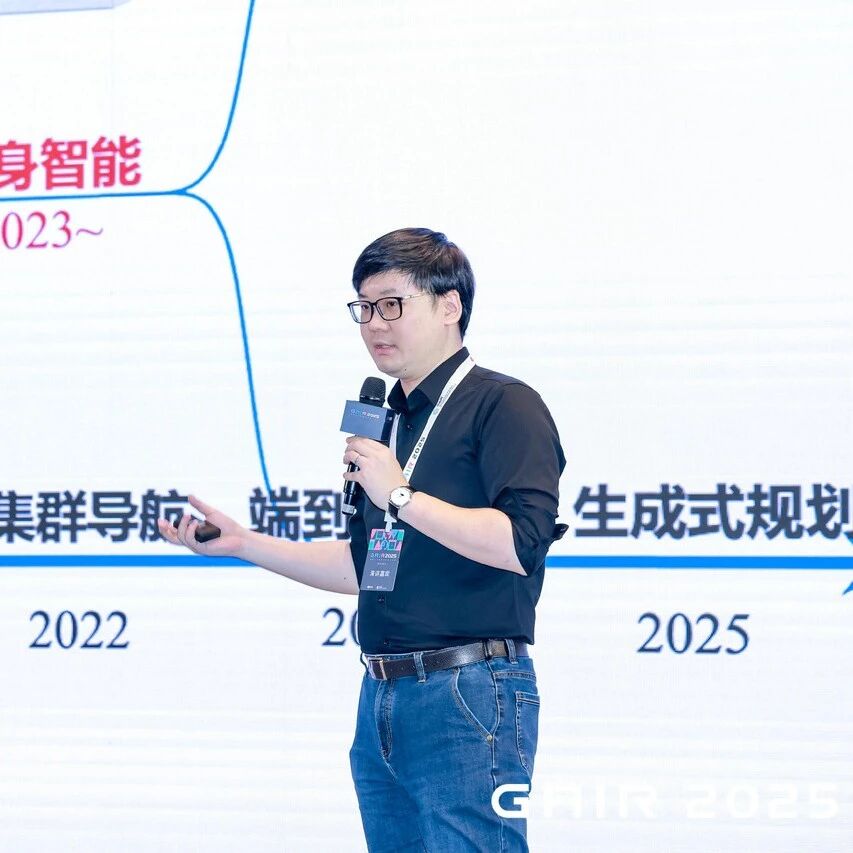
Core Viewpoint - The article discusses the potential of edge intelligence as an alternative path for AI development, especially as the limitations of Transformer models become apparent [1]. Group 1: Conference Overview - The 8th GAIR Global Artificial Intelligence and Robotics Conference was held in Shenzhen, focusing on AI's evolution and its impact on various sectors [2][3]. - The conference featured notable speakers, including CMO of RockAI, who emphasized the need to move beyond the constraints of Transformer models [3]. Group 2: Edge Intelligence Concept - Edge intelligence allows for local deployment of AI models, enabling devices to operate without cloud involvement, thus enhancing privacy and reducing costs [4][9]. - The current cloud model, which relies on token payments, is criticized for being inefficient, with over 50% of token consumption deemed wasteful [4][9]. Group 3: Challenges and Innovations - Transitioning to edge intelligence faces challenges such as limited computational resources and the need for devices to possess learning capabilities [13][15]. - RockAI aims to develop non-Transformer models that incorporate native memory and autonomous learning, fostering a "collective intelligence" ecosystem [4][23]. Group 4: Future Directions - The future of AI hardware should focus on real-time learning and adaptability, moving away from static knowledge bases [21][19]. - The development of RockAI's Yan model, which integrates memory modules and selective activation mechanisms, represents a significant step towards achieving these goals [23][31]. Group 5: Practical Applications - Edge models can facilitate complex interactions between devices, enhancing user experience in everyday scenarios, such as smart home automation [27][29]. - The integration of edge intelligence in consumer electronics is expected to lead to more personalized and emotionally aware devices [29][31]. Group 6: Collective Intelligence - The concept of collective intelligence suggests that interconnected devices can collaborate to solve problems, similar to human cooperation [33][35]. - The article posits that as the limitations of large-scale models become evident, innovation in architecture is necessary to avoid stagnation in AI development [35].

极数迭代CEO佟显乔:具身智能的数据工程解决方案思考丨GAIR 2025
雷峰网· 2025-12-19 00:28
具身智能作为连接虚拟模型与物理世界的核心赛道,正成为行业竞逐的焦点。而第八届 GAIR 全球人工智 能与机器人大会,便聚焦人工智能与机器人领域的前沿突破与产业落地,于日前圆满落幕。 本次大会上,深圳极数迭代科技创始人 佟显乔 博士,带来了关于具身智能数据领域的深度分享。 在语言大模型凭借海量数据实现爆发式增长的背景下,具身智能与机器人领域却面临着数据供给的显著缺 口 —— 现有数据集规模仅达数千至十几万小时,与语言模型的海量数据储备相去甚远。数据作为具身智 能发展的核心基石,其稀缺性、高成本与碎片化问题,已成为制约机器人泛化能力提升的关键瓶颈。 " 具身数据是未来几年一个较有确定性的好赛道。 " 作者丨高景辉 编辑丨马晓宁 而佟显乔博士结合自身深耕行业的实践经验,从具身智能数据的核心价值、当前行业面临的三大瓶颈、数 据工程的系统属性,到针对性的产品解决方案展开全面阐述,为行业破解数据难题、推动具身智能规模化 发展提供了极具参考价值的思路。 以下为佟显乔博士的演讲内容,雷峰网做了不改变原意的编辑。 01 具身智能的数据价值 首先,既然大家都来到GAIR大会数据专场,就应该知道从上一波语言大模型的发展来看,数据的 ...

本田在华工厂将停产;广汽集团内部人事重要调整!涉及3人;女网红「半藏森林」转行互联网产品经理;赔偿N+3!索尼关闭广东惠州工厂
雷峰网· 2025-12-19 00:28
Group 1 - Honda plans to suspend production at its factories in China and Japan due to semiconductor shortages, with a five-day shutdown starting December 29 at its joint venture with GAC Group [5][6] - NIO is implementing a new channel cooperation model where users can open stores without authorization, with sales consultants present to sell cars, marking a shift from traditional sales models [10] - GAC Group announced significant internal personnel changes, including the establishment of a new business unit for its brands Aion and Haobo, aiming for a comprehensive integration of sales channels by March 31 [11] Group 2 - Xiaomi is set to launch the Xiaomi 17 Ultra next week, featuring a new optical system developed in collaboration with Leica, aiming to enhance its position in the high-end smartphone market [12][33] - Sony has closed its factory in Huizhou, Guangdong, providing substantial severance packages to employees, as part of a strategic shift in its operations in China [23] - iRobot has filed for bankruptcy, citing inability to compete with Chinese brands, with its largest creditor being a Chinese company, indicating a significant shift in the competitive landscape of the home robotics market [40][41] Group 3 - Volkswagen has confirmed it will no longer produce new small fuel vehicles, focusing solely on electric models, as part of its strategy to comply with stricter emissions regulations [36] - Micron Technology reported strong earnings driven by high demand for AI-related products, projecting significant revenue growth in the upcoming quarters [42][43] - Nvidia has reached a settlement with Valeo regarding a former employee's theft of trade secrets, highlighting ongoing issues related to intellectual property in the tech industry [44]






AI浪潮下,10年后的顶尖高校拼什么?丨GAIR 2025
雷峰网· 2025-12-19 00:28
Core Viewpoint - The article discusses the transformative impact of AI on education, emphasizing the need for universities to adapt and redefine their roles in preparing students for the future [2][4][6]. Group 1: AI and Education Transformation - AI is accelerating a global reshaping of education, prompting discussions on whether Chinese universities can "overtake" their Western counterparts in the next decade [2][4]. - The panelists agree that the emergence of AI tools like ChatGPT enhances educational autonomy, requiring students to discover their own paths [6][24]. - The importance of humanistic education is highlighted, suggesting that students should not only focus on technology but also develop as well-rounded individuals [7][31]. Group 2: University Expectations and Student Development - There is a consensus that societal expectations of universities are excessively high, with parents often viewing schools as "infinite responsibility companies" [16][17]. - The discussion includes the necessity of a natural selection process in education, where students find their fit rather than being forced into specific paths [20][19]. - The concept of "experiencing" is emphasized as a crucial element of education that AI cannot replace, advocating for experiential learning over rote memorization [36][37]. Group 3: Future Skills and University Competitiveness - Key survival skills for future university students include strong communication abilities and creativity, with an emphasis on the ability to work with AI [25][26]. - The core competitiveness of universities will hinge on their ability to cultivate talent, focusing on both students and faculty [27][30]. - The article posits that the best academic disciplines in the future will likely center around mathematics and language skills, rather than solely on technology fields like computer science [30][31].

赛马会「软性材料应用机器人」创科实验室总监小菅一弘:如何借助 AI 机器人变革服装生产流程?丨GAIR 2025
雷峰网· 2025-12-18 12:05
Core Insights - The garment industry faces a paradox of a trillion-dollar market with low automation levels, where only 157 industrial robots were used in the garment sector in China compared to 11,700 in total across industries [5][11] - 80% of production time and costs in the garment industry are wasted on material handling, with 67% of labor used for pre-sewing preparation tasks like organizing and folding fabric [12] Group 1: Industry Challenges - The garment manufacturing industry struggles with the automation of flexible and deformable materials, which is a global challenge [5] - Traditional automation relies on rigid fixtures that cannot adapt to the rapid changes in garment styles, leading to high costs and poor versatility [5][12] - Many processes in garment production, such as cutting and sewing, still heavily depend on skilled labor, with automation only partially implemented [12][13] Group 2: Technological Innovations - The development of soft material robots aims to mimic skilled workers in handling flexible fabrics, with a focus on applications in the automotive seating market [5][24] - Key technologies being developed include adaptive grippers for separating and picking fabric layers, and AI-based visual detection systems for real-time monitoring and quality control [14][18] - The integration of AI and robotics in sewing processes aims to achieve precise control over sewing machine movements, allowing for complex stitching patterns [19][21] Group 3: Market Opportunities - The automotive seating industrial sewing equipment market is projected to reach $3.63 billion by 2028, presenting a significant opportunity for automation solutions [5][24] - The European market is particularly promising due to high labor costs, making automation essential for maintaining competitiveness in local manufacturing [24]

外卖战场:什么变了,什么没变
雷峰网· 2025-12-18 12:05
Core Viewpoint - The article discusses the prolonged profit recovery period for food delivery platforms after incurring losses exceeding 100 billion yuan, highlighting the competitive landscape changes and strategic adjustments by major players like Meituan and Taobao Flash Buy [1][4]. Group 1: Market Dynamics - Meituan and Taobao Flash Buy currently hold a market share ratio of 55:45 in order volume, with their overall GMV market share at 6:4 [2]. - Meituan aims to maintain a 70% market share among high-value customers, focusing on orders above 15 yuan and 30 yuan, where it holds over two-thirds and 70% market shares respectively [3]. - The competitive landscape has shifted significantly, with Meituan losing 15% to 20% of its market share over the past two quarters, now retaining around 55% [13]. Group 2: Financial Performance - In Q3, the losses for Taobao Flash Buy, Meituan, and JD's food delivery services exceeded 100 billion yuan, with Taobao Flash Buy alone accounting for over 500 billion yuan in losses [4][5]. - Meituan reported an adjusted EBITA loss of 148 billion yuan in Q3, a significant increase from the previous year, while its food delivery business alone incurred losses of approximately 180 to 190 billion yuan [5][6]. - Taobao Flash Buy's average unit economics (UE) loss is projected to be around 4 yuan in Q4, while Meituan's UE loss is estimated between 1.6 to 2 yuan [8][9]. Group 3: Strategic Adjustments - Taobao Flash Buy has unified its branding and is focusing on stabilizing market share while optimizing losses, indicating a long-term investment strategy [3]. - Meituan has paused its B2C e-commerce business to concentrate on its food delivery and retail strategies, including a partnership with celebrity Jay Chou to enhance its delivery service image [3][11]. - Both platforms are expected to enter a phase of gradual loss reduction, with projections indicating that the recovery of profitability may take until 2027 [19][20]. Group 4: Operational Efficiency - The delivery capabilities of both platforms have improved, with Taobao Flash Buy's logistics costs decreasing by 0.5 yuan compared to pre-competition levels, narrowing the gap with Meituan [22]. - Meituan's average order value (AOV) is currently 1.5 times that of its competitors, which is crucial for maintaining a competitive edge in subsidy efficiency [22]. - The operational strategies of both companies are evolving, with Meituan focusing on high-quality orders and Taobao Flash Buy adjusting its key performance indicators (KPIs) to balance growth and operational efficiency [15][16].


诺亦腾机器人戴若犁:跳出遥操作,构建以人为中心的数据路径丨GAIR 2025
雷峰网· 2025-12-18 12:05
" 既要又要的结果就是勺叉,咱不当勺叉,咱们当一个好用的叉子 就行。 " 作者丨刘欣 编辑丨高景辉 在机器人产业蓬勃发展的浪潮下,具身智能已然成为驱动产业变革的核心赛道,而高质量数据的缺失与不 足,正是制约其发展的关键瓶颈。 在此背景下,诺亦腾机器人(Noitom Robotics)作为目前中国唯一一家明确以"数据"为交付界面的公 司,凭借着其在动作捕捉技术上的积累为机器人数据提供关键支撑。 作为诺亦腾机器人(Noitom Robotics)创始人的戴若犁博士在2025年12月13日雷峰网举办的第八届 GAIR全球人工智能与机器人大会现场上,做了题为《用动作捕捉技术构建具身智能数据工厂》的分享。 他指出,人形机器人所代表的具身智能,正在成为一个天花板足够高、且对高质量数据有强烈需求的新赛 道。由于遥操作的一些现实痛点,行业开始将视角逐步拓展至以人为中心(human-centric)的数据路 径,尝试构建不与单一机器人本体强绑定的数据体系。 以下为他的演讲内容,雷峰网做了不改变原意的编辑: 大家好,今天早晨我是从北京坐飞机赶过来,早晨出门的时候是北京今年的第一场雪,大概零下七八度, 而深圳非常温暖,也让我非常开 ...
OpenAI缺场景,谷歌弱履约,阿里试图用生态突围AI之战
雷峰网· 2025-12-18 10:10
Core Viewpoint - The competition in the AI industry has entered a critical phase where mere technological superiority or scenario advantages are insufficient to determine the ultimate victor [1][15]. Group 1: Transition from Model to Application - The AI industry is transitioning from a "model-centric" phase focused on technical performance to a "value realization" phase that emphasizes the adaptability of models to real-world scenarios and the construction of commercial closed loops [5][15]. - OpenAI has established a technological lead with its GPT series but faces challenges in commercializing its offerings due to a lack of native application scenarios, resulting in a stagnation of subscription service growth in key European markets [5][15]. - Google’s AI strategy, while technically impressive, suffers from a disconnect between its capabilities and the execution of real-world tasks, limiting its ability to convert model advantages into tangible user value [6][7]. Group 2: Alibaba's Unique Advantage - Alibaba has developed a robust ecosystem that integrates technical capabilities with application scenarios, creating a positive feedback loop that enhances both technology and user experience [7][15]. - The integration of the Qianwen APP with Gaode Map exemplifies Alibaba's approach to embedding AI technology into high-frequency scenarios, leveraging real-world data to optimize model performance [3][13]. - Alibaba's comprehensive technical infrastructure, including its leading AI models and cloud computing capabilities, positions it uniquely in the market, making it difficult for competitors to replicate its success [10][11][12]. Group 3: Data-Driven Optimization - Alibaba's ecosystem generates rich, user-behavior-driven data that continuously feeds back into the model, allowing for ongoing optimization and improvement of AI capabilities [13][15]. - The ability to create a closed-loop data system, where user interactions inform model adjustments, is a significant advantage over competitors who rely on publicly available data [13][15]. - The successful integration of AI into various sectors, such as e-commerce and office productivity, demonstrates the potential for Alibaba's AI solutions to enhance user experience and operational efficiency [12][13].