高工锂电

Search documents
欧洲电动车补贴卷土重来
高工锂电· 2025-07-26 05:48
Core Viewpoint - The UK government is implementing new electric vehicle (EV) subsidies and infrastructure investments to boost EV sales, indicating a renewed commitment to promoting electric mobility in the country [2][5][11]. Group 1: UK Government Initiatives - The UK government has announced a total electric vehicle subsidy plan worth £650 million, providing up to £3,750 for qualifying models priced below £37,000 [2]. - An investment of £63 million is allocated for the construction of charging stations, focusing on residential areas without driveways and logistics warehouse charging facilities [3]. - The government is also investing £4.05 million to support Jaguar Land Rover's battery recycling project [4]. Group 2: Market Performance and Trends - Despite previous slow growth in the UK's electric vehicle market, there are signs of a new growth phase, with the expectation of increased sales [5][7]. - As of April 2025, only 20.4% of new car registrations were battery electric vehicles (BEVs), falling short of the targets set by the Zero Emission Vehicle (ZEV) Act [6]. - The UK is recognized as one of the largest EV markets in Europe, with Chinese EV brands like BYD and MG seeing significant sales increases [8]. Group 3: European Market Developments - Other European countries, such as Spain, are also reviving EV subsidy programs, with Spain extending its "Moves III" plan until December 2025, offering up to €7,000 for private buyers and €9,000 for commercial vehicles [9]. - In the first quarter of this year, Spain's EV sales surged by 69%, nearing 20,000 passenger cars [10]. - In the first half of the year, the core 14 European countries saw EV sales reach 927,966 units, a year-on-year increase of 5.93% [12]. Group 4: Opportunities for Chinese Companies - The resurgence of subsidies in Europe presents new opportunities for Chinese automakers, despite potential local biases in subsidy allocation [13]. - Chinese brands have been increasing their market share in Europe, with BYD's sales in the first half of 2025 reaching 19,390 units, a staggering 567.7% year-on-year increase [8]. - Chinese automakers are adopting localized production strategies, such as BYD's new headquarters in Hungary and partnerships for local assembly, enhancing their competitive edge in the European market [13][14]. Group 5: Supply Chain and Market Dynamics - The localization of production by Chinese battery companies in Europe is transforming the supply chain landscape, with companies like CATL and others establishing manufacturing bases [14]. - The EU's requirement for a 70% localization rate for EV batteries by 2027 is being addressed by Chinese firms through local manufacturing, which helps to mitigate trade barriers [15]. - The vertical integration of the supply chain from resource extraction to battery manufacturing is reducing risks for Chinese EV companies operating in Europe [15].

高工深度|建交50年之际,中欧新能源走向深度竞合
高工锂电· 2025-07-26 05:48
Core Viewpoint - The article discusses the evolving dynamics of the renewable energy market between China and Europe, highlighting the complexities of trade relations, particularly in the electric vehicle (EV) sector, amidst geopolitical tensions and market shifts [1][2][10]. Group 1: Trade Relations and Market Dynamics - The EU has implemented temporary anti-subsidy tariffs on electric vehicles imported from China, signaling a protective stance for its automotive industry against subsidized Chinese products [2][4]. - Despite the tariffs, Chinese exports of plug-in hybrid electric vehicles (PHEVs) to Europe surged by nearly 600% year-on-year by June 2025, indicating a shift in export strategies to capitalize on lower tariffs [5][6]. - The market share of Chinese brands in the European automotive sector doubled in the first half of the year, reflecting a significant adjustment in the competitive landscape [6]. Group 2: Historical Context and Competitive Landscape - The historical context of Sino-European automotive relations is marked by a cooperative model, exemplified by Volkswagen's joint ventures in China since 1984, which facilitated technology transfer and market access [7][8]. - The emergence of BYD as a leading automotive brand in China, surpassing Volkswagen in sales, signifies a shift in competitive dynamics, with Chinese manufacturers now possessing strong R&D capabilities [8][9]. Group 3: Internal European Considerations - European countries exhibit differing approaches to trade policy, with France favoring protectionism for its automotive sector while Germany adopts a cautious stance due to its extensive business ties with China [10]. - The EU's long-term climate goals necessitate a balance between protecting local industries and ensuring the affordability of electric vehicles for consumers, complicating the tariff strategy [10]. Group 4: Future Cooperation and Competition - The interaction between China and Europe in the renewable energy sector extends beyond automobiles, with increasing collaboration in energy storage technologies, as evidenced by China's growing lithium battery exports to Germany and other European countries [13]. - Innovative partnerships, such as the collaboration between Octopus Energy and BYD in the UK for vehicle-to-grid solutions, illustrate the evolving role of Chinese companies as technology providers in the European energy landscape [13][14]. - The future of Sino-European relations in the renewable energy sector will likely focus on deeper integration and cooperation, moving beyond simple trade disputes to encompass regulatory standards and supply chain security [15].

每日速递 | 国轩高科启动全固态电池量产线设计
高工锂电· 2025-07-25 10:22
Battery - The second-generation Longlin Jia battery from Hive Energy officially launched on July 22, featuring the world's largest mass-produced 800V ternary hybrid battery with a capacity of 65KWh and 5C ultra-fast charging capability, enhancing user charging experience [2][3] - Tesla reported a decline in both revenue and profit for Q2 2025, with revenue at $22.496 billion, down 12% year-on-year, and net profit at $1.172 billion, down 16% year-on-year [4][5] - Ruipu Lanjun's heavy-duty truck battery installation volume surged in the first half of 2025, achieving a market share of 7.5% in the new energy heavy truck battery sector and 18% in battery swapping, both ranking second nationally, indicating strong competitiveness in the heavy truck market [6][7] - Tesla plans to build its third energy storage super factory near Houston, Texas, with the first lithium iron phosphate battery factory expected to be operational by the end of the year [8][9] - Guoxuan High-Tech has initiated the design of the first-generation all-solid-state battery production line, with its Jinshi battery currently in the pilot production stage [10][12] Materials - Zhejiang YouShan New Materials is set to invest in a project in Bijie City, Guizhou Province, to produce 600,000 tons of phosphoric iron annually, along with supporting water treatment facilities [14][15] Overseas - German startup Vulcan received €104 million in government funding for a zero-carbon lithium project, with a total investment of €690 million, aiming for production by the end of 2026 with an annual output of 24,000 tons to meet the demand of 500,000 electric vehicles [16][17] - The Argentine government approved Galan Lithium's $217 million lithium mining project to join the "Large Investment Incentive Program," while China's Ganfeng Lithium's Mariana project was rejected for not meeting criteria [18][20]




从1.2万亿雅江水电动工,看中国工程机械的“零碳”雄心
高工锂电· 2025-07-25 10:22
Core Viewpoint - The article emphasizes the transition of China's construction machinery industry into an "electric era," driven by significant projects like the Yajiang hydropower project, which is expected to create a substantial demand for electric machinery and promote a green revolution in construction processes [1][2]. Group 1: Market Demand and Economic Drivers - The Yajiang hydropower project, with an investment of 1.2 trillion RMB, is projected to generate a demand for construction machinery worth between 120 billion to 180 billion RMB, as equipment investment typically accounts for 10% to 15% of total project costs [1]. - The unique challenges of the Yajiang project, such as high altitude and stringent environmental requirements, are expected to increase the actual value of equipment demand, favoring the use of new energy and unmanned equipment [1][2]. - Electric mining trucks have a significant advantage over traditional diesel trucks, as they can recover over 30% of potential energy during downhill operations, leading to reduced energy consumption and extended operational efficiency [2]. Group 2: Market Trends and Sales Data - In the first half of 2025, the loader market saw total sales of 64,769 units, with electric loaders accounting for 13,953 units sold, reflecting a year-on-year growth of 173.84% and a penetration rate of 21.54% [3]. - The excavator market, while larger, is slower in electric adoption, with only 140 electric excavators sold in the same period, but showing a growth rate exceeding 150% [3]. - The electric mining truck market is growing rapidly, with sales increasing by over 70% in 2024 and a penetration rate exceeding 13% [3]. Group 3: Industry Transformation and Collaboration - Major global construction machinery companies are accelerating their electric transition and forming deep partnerships with battery and electric control system firms, exemplified by SANY's collaboration with CATL and XCMG's joint venture with BYD [4]. - BHP, the world's largest mining company, has signed memorandums with CATL and BYD to develop integrated electrification solutions for mining equipment, indicating a global recognition of electric solutions validated in the Chinese market [4]. - The industry faces challenges such as a lack of collaboration within the supply chain and the need for a more integrated solution encompassing solar, storage, and charging systems [4][5]. Group 4: Market Concentration and Future Outlook - The concentration of the domestic construction machinery market is increasing, with the top four companies holding a market share of 68.4% in 2023, and the top five companies exceeding 75% in the electric sector [6]. - The successful implementation of the "zero-carbon transport system" in extreme conditions like those in Yajiang could lead to broader adoption in China's western regions and along the Belt and Road Initiative, as well as in extreme mining areas in Africa and Latin America [6]. - The ultimate goal of electric construction machinery is to surpass traditional diesel machinery through the integration of intelligent technologies, marking the beginning of a significant transformation in the industry [6].

H1电动重卡电池装机同比增长230%,瑞浦兰钧装机排名升至第二
高工锂电· 2025-07-25 10:22
Core Viewpoint - The domestic sales of new energy heavy trucks reached approximately 79,000 units in the first half of 2025, marking a year-on-year increase of 185%, nearing the total sales of the previous year [1][3]. Group 1: Market Trends - The electrification of heavy trucks is accelerating, with new energy heavy truck sales hitting a new high and penetration exceeding 20% [2]. - The rapid growth of new energy heavy trucks has driven the corresponding installation of power batteries to approximately 31.7 GWh, a year-on-year increase of 230% [4]. - The sales of battery-swapping heavy trucks reached 25,000 units in the first half of the year, reflecting a year-on-year growth of 141% [14]. Group 2: Technological Innovations - Ultra-fast charging technology is becoming a core focus in the competition for heavy truck electrification, significantly enhancing the sales of charging heavy trucks [5][12]. - The new energy heavy truck battery from Ruipu Lanjun, the 324Ah Pro, has an energy density of 198 Wh/kg and a lifecycle of over 10,000 cycles, making it suitable for demanding operational conditions [10]. - The design of the rear stacking battery pack by Ruipu Lanjun has improved energy capacity to 680 kWh while reducing the height by 16%, enhancing vehicle stability and driver visibility [15][16]. Group 3: Competitive Landscape - Ruipu Lanjun holds a 7.5% market share in battery installations with a total installation volume of 2.38 GWh, showing steady growth compared to the first half of 2024 [5][7]. - The company has secured orders from major clients including SANY, Dongfeng, and Heavy Truck, expanding its customer base to include various manufacturers [8]. - The innovation in battery swapping and the establishment of a robust battery-swapping network are expected to continue driving the growth of new energy heavy truck sales [8].

当特斯拉卖不出电车,锂电应该担心需求吗?
高工锂电· 2025-07-25 10:22
Core Viewpoint - Tesla is facing significant challenges, with a notable decline in its automotive business and overall revenue, indicating a shift in its growth narrative from a solely electric vehicle manufacturer to a broader "physical AI" company [1][2][3] Group 1: Financial Performance - In Q2 of fiscal year 2025, Tesla's revenue decreased by 12% year-over-year to $22.5 billion, marking the largest decline in a decade [1] - The core automotive business revenue fell by 16%, and free cash flow was only $146 million, significantly below expectations [1] - Global vehicle deliveries dropped by 13.5% year-over-year to 384,000 units, with a total delivery decline exceeding 13% in the first half of the year [2] Group 2: Market Challenges - Sales in the U.S. decreased by 13% in the first half of the year, with California experiencing seven consecutive quarters of decline [2] - The European market saw a drastic 33% drop in sales during the same period, while sales in China fell by 12% due to intense competition from local brands like BYD and Xiaomi [2] Group 3: Strategic Shift - Tesla is pivoting its focus towards future technologies such as Robotaxi, humanoid robots (Optimus), and artificial intelligence, moving away from immediate sales figures [2][3] - The introduction of Robotaxi is seen as a short-term bet, while Optimus represents a long-term vision, with production expected to start in 2026 [4] Group 4: Battery Technology and Production - The shift in vehicle utilization necessitates a fundamental change in battery technology, emphasizing longevity and reliability over traditional metrics [4] - The demand for specialized lithium iron phosphate batteries is expected to rise, as Optimus robots will create a stable internal demand for Tesla's battery production [4] Group 5: Energy Storage and Manufacturing - Tesla is expanding its energy storage business, with the Megapack system experiencing strong growth, which serves as a hedge against policy risks [5] - The company is investing in domestic manufacturing, with plans for a lithium iron phosphate factory and a new energy storage super factory by 2026 [5] Group 6: Implications for the Lithium Battery Industry - Short-term, Tesla's slowing vehicle sales may pressure the lithium battery supply chain [6] - Long-term, Tesla's strategic transformation could create new, potentially larger demand spaces for lithium batteries, moving towards a diversified demand matrix [7]

小米狂飙“牵引” 上半年纯电增速赶超增混
高工锂电· 2025-07-24 11:58
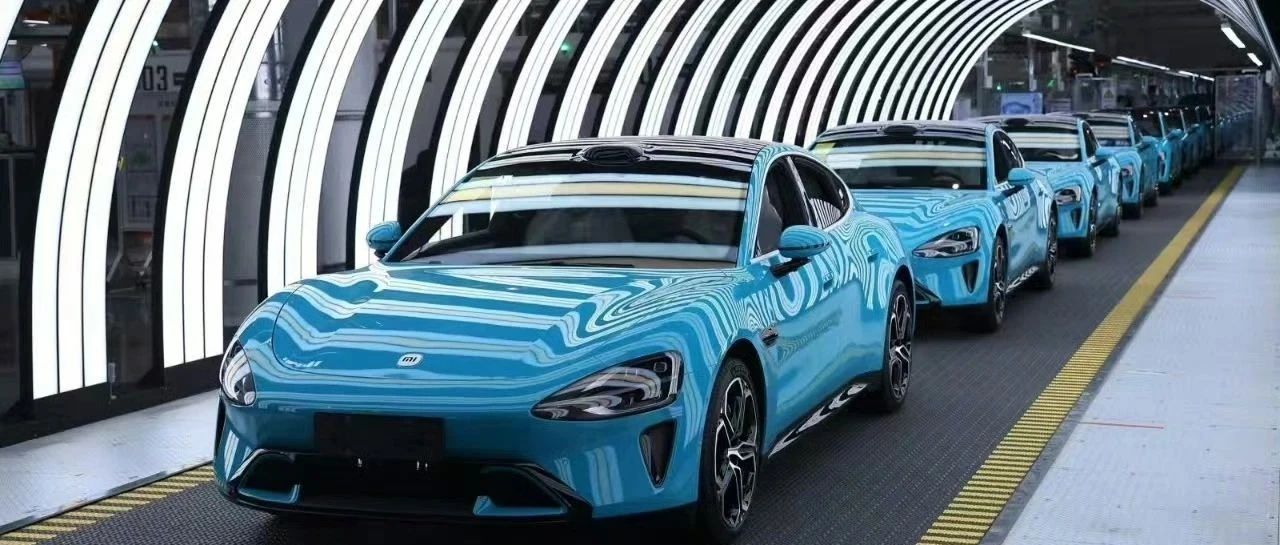
Core Viewpoint - The pure electric vehicle (EV) market has regained growth momentum, with significant sales increases and a shift in market dynamics, particularly driven by new entrants like Xiaomi and established players enhancing their offerings [10][11]. Group 1: Market Dynamics - The pure electric vehicle segment is experiencing a resurgence, with sales in the first half of 2025 reaching 4.415 million units, a year-on-year increase of 46.2%, surpassing the growth rates of plug-in hybrid vehicles [8][10]. - Xiaomi's SU7 and YU7 models have demonstrated remarkable market appeal, with YU7 selling 200,000 units in just three minutes, marking a significant shift in market sentiment [6][5]. - The previous dominance of plug-in hybrids, which saw growth rates of 140% to 84.5% from 2021 to 2024, has been overturned, with pure electric vehicles now leading the growth narrative [8][9]. Group 2: Collaborative Efforts - The recovery of the pure electric market is attributed to the collaborative efforts of new car manufacturers, traditional automakers, and joint ventures, creating a comprehensive competitive landscape [11][19]. - New entrants like Xiaopeng Motors are leveraging technological advancements to capture niche markets, with models like the P7+ achieving a range of 700 kilometers and rapid charging capabilities [12]. - Traditional automakers, such as BYD and GAC Aion, are utilizing established supply chains to stabilize growth in the pure electric segment, with BYD's Dolphin model seeing significant sales increases [15][16]. Group 3: Battery Supply Chain - The surge in sales of pure electric vehicles has positively impacted battery manufacturers, with leading companies forming strategic partnerships with popular models to capitalize on market growth [21][22]. - CATL has become a key supplier for Xiaomi, with the latter becoming CATL's largest customer in April 2025, significantly boosting CATL's battery installation volumes [23]. - Firms like Fudi Battery are expanding their market share through both internal supply and external partnerships, with models like BYD's Dolphin and Xiaomi's vehicles driving demand [26][27]. Group 4: Market Positioning - The competitive landscape is further enhanced by joint ventures adapting to consumer preferences and technological trends, with brands like Nissan and Volkswagen successfully re-entering the pure electric market [17][18]. - The overall market for pure electric vehicles is now characterized by a diverse range of participants, which has amplified total market volume and consumer choice [19].

锰系电池走向锂电“第三极”
高工锂电· 2025-07-24 11:58
Core Viewpoint - Manganese-based batteries are systematically returning to the industry spotlight, emerging as a "third pole" in the lithium battery landscape, alongside lithium iron phosphate and ternary materials [2][4][14]. Group 1: Manganese Battery Technology Advancements - Star Power has achieved a breakthrough in the mass production of single crystal manganese lithium materials, enhancing structural stability and overall battery performance [3][6]. - The "golden dual-core" battery system, combining single crystal manganese lithium and lithium manganese phosphate, has demonstrated significant improvements in cycle life and low-temperature performance, with a normal temperature cycle life exceeding 3000 times and high-temperature cycle life over 1500 times [8][16]. - The new generation of manganese-based materials is being developed, including MnFeNi and low-pressure lithium manganese, aiming to cover multiple voltage ranges and adapt to various scenarios [15][16]. Group 2: Market Expansion and Applications - The manganese battery family is expanding with new members like lithium manganese phosphate and lithium-rich manganese, which are gaining traction in the market [9][14]. - CATL's M3P battery, based on lithium manganese phosphate, has been adopted in high-end models such as Chery's Star Era ES and Tesla's Model Y [10]. - Star Power has shipped over 10 million units of its second-generation lithium manganese phosphate battery, leading the industrialization process [11]. - General Motors and LG Energy are collaborating on lithium-rich manganese batteries expected to commercialize by 2028, while Ford plans to launch related products by 2030 [12][13]. Group 3: Competitive Landscape and Future Outlook - The industry is witnessing a collective push from companies like Star Power, CATL, LG, and Ford towards lithium manganese phosphate and lithium-rich materials, indicating a significant shift in the battery technology landscape [14]. - Manganese-based batteries are expected to extend their applications from light electric vehicles to mainstream power systems and energy storage markets, with potential advantages in cost and low-temperature performance compared to lithium iron phosphate [15][16].
硅基负极动力应用“破晓”
高工锂电· 2025-07-24 11:58
Core Viewpoint - The application of silicon-based anodes in power batteries is entering a significant phase of commercialization, moving from theoretical performance to deliverable products, particularly in the aerospace and automotive sectors [2][4]. Group 1: Aerospace Sector - Amprius has delivered its SiCore battery with an energy density of 450 Wh/kg to Airbus subsidiary AALTO, marking a breakthrough in silicon-based anode technology [2]. - The successful performance validation of Amprius's technology in the aerospace sector, particularly through continuous flight tests with Airbus's "X-Wing" drone, underscores its commercial reliability [2]. - The delivery of standardized SiCore batteries indicates a shift towards sustainable commercial supply, moving closer to large-scale industrialization [2]. Group 2: Automotive Sector - The new silicon-carbon anode company "Wuke Jinsui" has secured strategic financing led by Yucai Fund, with historical investments from major automotive players like Geely Capital and Qingliu Capital [3]. - The involvement of leading automotive companies signals that silicon-based anodes are no longer a distant future technology but a critical deployment for next-generation electric vehicles [3]. - Wuke Jinsui's strategy focuses on scalable industrialization by adopting a more easily mass-producible silicon-carbon anode route, gaining recognition and orders from top domestic battery manufacturers [3]. Group 3: Industry Trends - Both Amprius's advancements in aerospace and Wuke Jinsui's preparations for mass production in automotive highlight a decisive movement of silicon-based anodes from laboratory settings to commercial applications [4]. - The combined efforts in both sectors demonstrate that "scale industrialization" is not just a vision but a rapidly advancing reality in the power battery field [4].

每日速递 | 2025年H1重卡动力电池装机量约31.7GWh,同比增长230%
高工锂电· 2025-07-24 11:58
Battery - Fudi Technology's semi-solid state battery has a cost that is only 5%-10% higher than liquid batteries, demonstrating good economic viability and market competitiveness, with GWh-level shipments already achieved [3] - Prit's first batch of square 314Ah semi-solid state batteries has been successfully delivered, making it the first domestic company to transition this technology from laboratory to mass production, positively impacting its semi-annual performance [6] - In the first half of 2025, China's new energy heavy truck sales are expected to reach approximately 79,000 units, a year-on-year increase of 185%, driving the installation of heavy truck power batteries to about 31.7GWh, a year-on-year growth of 230% [7] Materials - Oke Technology signed a 176 million yuan contract for two wet-process diaphragm production lines, which accounts for 40.51% of the company's audited revenue for the past year [11] - A new lithium battery anode material project with an annual production capacity of 100,000 tons has been accepted for environmental impact assessment in Guizhou, indicating ongoing technological upgrades [13] - Sanfu New Materials' 3D composite copper foil is currently in the sample testing phase for downstream battery manufacturers, with applications in high-end consumer electronics and high-end new energy vehicle power batteries [14] - CATL's subsidiary in Qinghai has commenced construction on a pole piece project with a total investment of 5 billion yuan, aiming to establish a complete production process chain [16]