是说芯语

Search documents
卢特尼克两次对华芯片不同表态
是说芯语· 2025-08-27 02:29
Core Viewpoint - The article discusses the evolving U.S. policy on semiconductor exports to China, highlighting two key statements made by U.S. Commerce Secretary Gina Raimondo that reflect a shift from a comprehensive blockade to a more targeted control strategy [1][3][5]. Group 1: First Statement Context - The first statement occurred between April and August 2025, during which the Trump administration continued its comprehensive blockade on semiconductor exports to China. Raimondo stated that the U.S. would not sell high-quality products to China, even limiting third-tier products, with the core aim of making Chinese companies dependent on U.S. technology [1]. - This statement was made shortly after the U.S. government suspended NVIDIA's export license for the H20 chip to China, indicating a continuation of the "one-size-fits-all" tech blockade strategy aimed at stifling China's industrial upgrade [1]. Group 2: Second Statement Context - The second statement was made in mid-August 2025, after the Trump administration approved NVIDIA's export license for the H20 chip. Raimondo adjusted her stance, suggesting that the U.S. would sell products to China that were "just enough" for their needs, aiming to make developers dependent on U.S. technology stacks [3]. - This change in policy was marked by NVIDIA and AMD agreeing to pay 15% of their sales revenue from China to the U.S. government in exchange for the restoration of export licenses, indicating a shift from "comprehensive blockade" to "precise control" [3]. Group 3: Implications of the Statements - Both statements were made through CNBC, showcasing the U.S. government's use of mainstream financial media as a tool for public discourse. The ongoing blockade has led to significant risks for companies like NVIDIA, which face potential market share losses in China [5]. - The performance breakthroughs of domestic Chinese chips, such as those from Huawei and Cambrian, have rendered the blockade increasingly ineffective, forcing the U.S. government to reconsider its strategy [5]. Group 4: Future Strategies - To achieve the goal of providing products that are "just enough" without exceeding limitations, the U.S. is likely to accelerate the implementation of a "chip governance mechanism." Reports suggest that NVIDIA's chips may soon include tracking and remote shutdown features, potentially enforcing geographical restrictions on their use [5][6]. - The U.S. may also strengthen the binding effect of the CUDA system, which is relied upon by over 4 million developers globally. This could involve limiting access to high-level API interfaces and delaying critical updates, creating a dependency trap for Chinese companies in AI model training [6]. Group 5: Speculative Measures - There is speculation that China may require all imported chips to undergo "backdoor clearance" certification, enforcing mandatory technical reviews on critical components. Companies that refuse to comply could be placed on an "unreliable entity list," creating a regulatory deterrent [7].



CSEAC 2025 大餐已妥等您就位!
是说芯语· 2025-08-26 23:33
2025年9月4日至6日,第十三届半导体设备与核心部件及材料展(CSEAC 2025) 将在无锡太湖国际博览中心 隆重召开。 6万平方,五大展区,七馆联动1130家展商 ,CSEAC汇聚国内外知名企业,同期20+专业论坛、多 场圆桌对话、上下游企业对接、新品发布,30所高校、100多家展商校企互动,更完整呈现半导体行业最新动 态,更及时把握当下行业发展趋势,更好应对未来的挑战并把握新机遇! | | | △ 长按识别/扫描上方二维码,免费报名 △ CSEAC 2025 同期论坛总览 | | 9月4日 | | --- | --- | | 09:30-12:00 | 集成电路(无锡)创新发展大会 | | 14:00-17:45 | 2025年中国电子专用设备工业协会半导体设备年会 | | 09:30-17:00 | 半导体制造与设备及核心部件董事长论坛 | | 09:30-12:10 | 制造工艺与半导体设备产业链联动发展论坛(上) | | 13:30-17:00 | 半导体制造与材料董事长论坛 | | --- | --- | | 09:30-12:00 | 智感芯未来—半导体设备高精传感技术协同创新发展论坛 | ...

三年零突破!北京芯片设计公司的上市路为何这么 “难”?堪称 地狱级!
是说芯语· 2025-08-26 12:52
Group 1 - The article highlights the disparity between Beijing's status as a technology innovation hub and the lack of successful IPOs for chip design companies in the region over the past three years [5][9] - Notable companies such as Beijing Junzheng Integrated Circuit Co., Ltd. and Beijing Yandong Microelectronics Co., Ltd. have faced challenges in their IPO journeys, with the last successful listing being in December 2022 [5][6] - The article discusses various companies attempting to go public, including Beijing Angrui Microelectronics and Beijing Xianxian Mobile Multimedia Technology Co., Ltd., which face hurdles such as regulatory changes and market competition [6][8] Group 2 - The competitive landscape in the chip design industry is described as highly intense, with many companies struggling to achieve profitability due to high R&D costs [8][9] - The Science and Technology Innovation Board (STAR Market) has become a preferred platform for semiconductor companies seeking to list, with a significant number of semiconductor-related firms already listed [8][9] - The article notes that since the STAR Market's inception, the number of listed companies has fluctuated, with a peak of 162 in 2021 and a decline in recent years, reflecting broader economic and industry challenges [9] Group 3 - Factors hindering the IPO success of Beijing chip design companies include insufficient technological innovation, inadequate R&D investment, poor financial health, and intense market competition [9] - The article emphasizes that external factors such as supply chain risks and international trade tensions also complicate the listing process for these companies [9] - The stringent requirements of the STAR Market regarding innovation attributes, profitability, and growth prospects present additional challenges for Beijing's chip design firms [9]

国产新一代5nm GPU即将面世!
是说芯语· 2025-08-26 07:16
Core Viewpoint - The article discusses the dramatic turnaround of the domestic GPU company, Xiangdixian, which faced severe financial distress but managed to secure new funding and technological breakthroughs, highlighting the resilience of the Chinese semiconductor industry amidst external pressures [1][3][4]. Group 1: Company Challenges - In September 2024, Xiangdixian was on the brink of collapse due to failing to meet a financing agreement, leading to lawsuits from shareholders and account freezes, putting hundreds of employees in a precarious situation [1]. - The company, once valued at 15 billion yuan, was struggling with a broken funding chain and a loss of market confidence, particularly as its "Tianjun" series products had not yet achieved mass production [1]. Group 2: Recovery and Funding - A turning point occurred in February 2025 when Xiangdixian announced the completion of a new financing round worth several hundred million yuan, involving A-share listed company Anfu Technology and several venture capital firms, which alleviated its financial troubles [3]. - This new funding not only resolved the account freeze but also provided essential capital for advancing technology research and market expansion [3]. Group 3: Technological Advancements - The recovery was supported by several factors, including the U.S. tightening semiconductor export controls, which accelerated the need for domestic chip alternatives, creating a favorable policy environment for local GPU companies [4]. - Xiangdixian's core team preserved the research achievements of the Fuxi architecture during the crisis, achieving a breakthrough in 5nm process validation, with a computing power of 160 TFLOPS for FP32 and progress in adapting to the game "Black Myth: Wukong" [4]. - The company’s 12nm Tianjun series GPUs have already been delivered in bulk to the trusted computing market, demonstrating validated hardware performance and software ecosystem through practical applications [4]. Group 4: Strategic Partnerships - Anfu Technology's deep involvement was crucial, as its capital strength and industry resources not only alleviated financial pressure but also supported supply chain management, clearing obstacles for future mass production [6]. - The upcoming launch of the new generation Fuxi architecture GPUs is a direct result of this rescue operation, showcasing the collaboration between capital and industry in overcoming critical technological challenges in China [6].
英伟达 Thor 芯片叩关中国,中国公司抢滩背后的 “后门” 警报
是说芯语· 2025-08-26 02:52
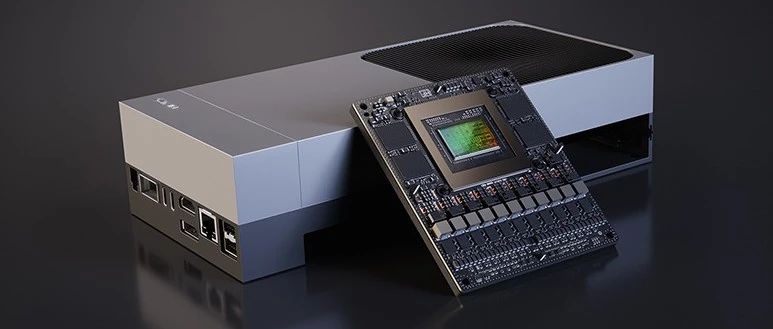
Core Viewpoint - The introduction of NVIDIA's Thor chip marks a significant advancement in AI computing power for humanoid robots, addressing the industry's demand for enhanced performance while raising concerns about security risks associated with chip technology [1][2][9]. Group 1: Technological Advancements - NVIDIA's Thor chip, launched on August 25, boasts a peak computing power of 2070 TFLOPS, which is 7.5 times more powerful than its predecessor, the Orin chip, and offers a 3.5 times improvement in energy efficiency [1][2]. - The chip integrates 2560 CUDA cores and 96 fifth-generation Tensor cores, enabling real-time processing of multi-modal sensor data with a latency of under 10 milliseconds, essential for the autonomous functions of robots like Walker S2 [2][6]. - Chinese companies such as Yushutech and Zhiyuan Robotics are adopting the Thor chip, leveraging its capabilities to close the technology gap with competitors like Boston Dynamics [8]. Group 2: Security Concerns - The H20 chip incident, which raised alarms about potential backdoor vulnerabilities, has cast a shadow over the release of the Thor chip, leading to public skepticism regarding its security [9][10]. - Despite NVIDIA's assurances that the Thor chip does not contain backdoors or monitoring software, concerns persist due to the closed nature of chip design, complicating external audits and national security assessments [9][10]. - The U.S. government's push for compliance measures, including potential backdoors in exported chips, adds to the apprehension surrounding the use of foreign technology in critical applications [10][11]. Group 3: Industry Implications - The dilemma faced by companies like UBTECH highlights the tension between adopting advanced technology for competitive advantage and the associated security risks, as seen with the H20 chip's impact on NVIDIA's revenue [11][12]. - The rapid development of domestic alternatives, such as CloudMatrix's 384 single-cluster computing power reaching 300 PFlops, indicates a growing push for self-sufficiency in the tech sector, although challenges in software ecosystem maturity remain [11]. - The ongoing competition between technological advancement and security measures will shape the future trajectory of China's robotics industry, necessitating a careful balance between innovation and safety [12].
突发!汇顶总裁被立案,涉嫌内幕交易
是说芯语· 2025-08-25 23:03
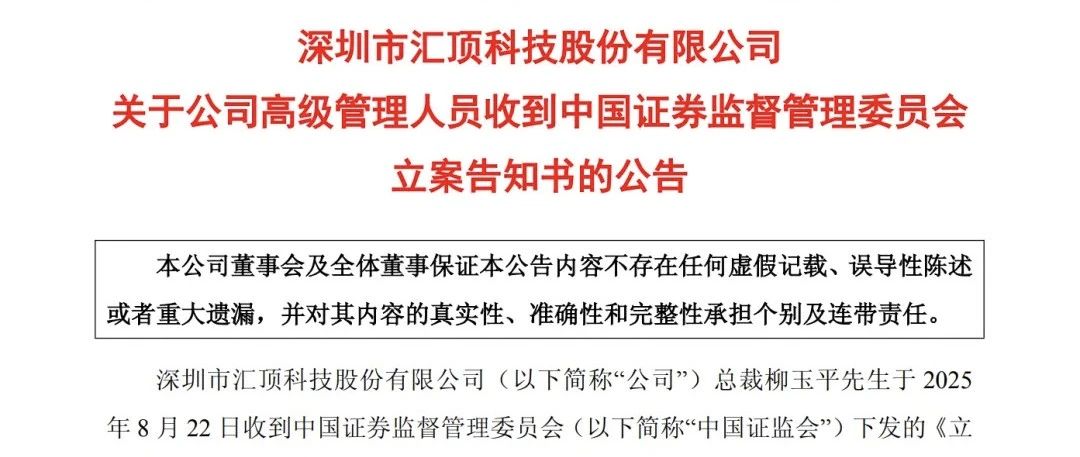
Core Viewpoint - The announcement regarding the investigation of Liu Yuping, the president of Huida Technology, for insider trading raises concerns about the company's market reputation, despite the investigation being unrelated to the company's daily operations and management [1][4]. Group 1: Company Background - Huida Technology appointed Liu Yuping as president on March 21, 2025, after he held various positions within the company since 2005, including roles in research and development, project management, and supply chain [5]. - The company is a leading player in the domestic fingerprint recognition chip sector, with products that include sensors, touch controls, audio, security, and wireless connectivity [5]. Group 2: Financial Performance - In the first half of 2025, Huida Technology reported a revenue of 2.251 billion yuan, a slight decrease of 0.2% year-on-year, while the net profit attributable to shareholders was 431 million yuan, reflecting a significant increase of 35.74% [5]. - The company plans to distribute a cash dividend of 0.15 yuan per share (before tax) to all shareholders [5].


突发!汇顶科技总裁被立案!
是说芯语· 2025-08-25 11:25
Core Viewpoint - The announcement regarding the investigation of Liu Yuping, the president of Huida Technology, for insider trading does not impact the company's operations or business activities [1][2]. Group 1: Company Overview - Huida Technology is a leading company in the domestic fingerprint recognition chip sector, with products including sensors, touch controls, audio, security, and wireless connectivity [3]. - The company appointed Liu Yuping as president on March 21, 2025 [3]. Group 2: Financial Performance - In the first half of 2025, Huida Technology reported a revenue of 2.251 billion yuan, a slight decrease of 0.2% year-on-year [3]. - The net profit attributable to shareholders was 431 million yuan, reflecting a significant increase of 35.74% year-on-year [3]. - The basic earnings per share were reported at 0.94 yuan, and the company plans to distribute a cash dividend of 0.15 yuan per share (including tax) to all shareholders [3].
台积电2nm产线全面“去大陆化”
是说芯语· 2025-08-25 10:14
Core Viewpoint - TSMC is halting the use of chip manufacturing equipment from mainland China in its advanced 2nm chip factory to avoid potential disruptions from U.S. restrictions [1][3] Group 1: TSMC's Production Plans - TSMC's 2nm production line is set to begin mass production this year, starting in Hsinchu City, Taiwan, followed by Kaohsiung City [1] - The company is also constructing a third factory in Arizona, USA, which will eventually produce these advanced chips [1] Group 2: Impact of U.S. Regulations - The decision to stop using mainland Chinese equipment is influenced by a potential U.S. regulation that may prohibit chip manufacturers receiving U.S. funding from using equipment from "foreign entities of concern," interpreted to include mainland China [3] - The proposed Chip EQUIP Act aims to restrict companies benefiting from U.S. federal support from purchasing equipment from these entities [3] Group 3: Supply Chain Strategy - TSMC is investigating all chip manufacturing materials and chemicals used to reduce reliance on mainland Chinese products [3] - The company plans to collaborate more closely with local suppliers in mainland China to enhance supply chain resilience and increase local procurement where possible [3] Group 4: Industry Trends in Mainland China - Leading chip manufacturers in mainland China are increasing the use of domestic equipment, with significant progress in developing local solutions, although lithography equipment remains dominated by ASML [4] - Northern Huachuang, the largest semiconductor equipment manufacturer in mainland China, has risen to become the sixth-largest globally, following major players like ASML and Applied Materials [4] Group 5: TSMC's Procurement Strategy - TSMC emphasizes a global procurement strategy focused on robust risk management and close collaboration with suppliers to develop diversified multi-source supply solutions [4]


美国商务部:中国高端芯片只是“实验室里给领导看的”,封锁一天不松,他们就造不出能用的高端芯片!
是说芯语· 2025-08-25 05:16
Core Viewpoint - The article argues that the advancements in China's semiconductor industry, particularly in 7nm and 5nm chip technologies, are significant and not merely experimental, countering claims made by U.S. officials about China's capabilities [1][3][6]. Group 1: 7nm Chip Technology - SMIC has made notable progress in its N+2 process technology, achieving a yield rate exceeding 70%, which is a substantial step towards mass production, challenging the notion that these are just "laboratory samples" [3]. - The domestic semiconductor supply chain is improving, with enhanced purity of semiconductor-grade silicon wafers and photoresists, reducing chip failure rates and supporting the mass production of 7nm chips [3]. - Huawei's Mate60 series smartphones demonstrate the successful commercialization of 7nm chips, with strong sales reflecting consumer acceptance and market performance [3]. Group 2: 5nm Chip Technology - Chinese researchers have innovatively utilized DUV lithography combined with self-aligned quadruple patterning (SAQP) to achieve 5nm-level precision, overcoming the limitations posed by the lack of EUV technology [5]. - The collaboration of high-resolution photoresists and carbon-based semiconductor materials has led to a 30% increase in transistor density and doubled heat dissipation efficiency, laying the groundwork for 5nm chip performance optimization [5]. - SMIC's advancements in 5nm technology and the establishment of multiple 5nm wafer fabs in the Yangtze River Delta are expected to boost domestic chip self-sufficiency to over 45% by 2025, with automotive-grade chip installation rates nearing 50% [5]. Group 3: U.S. Response and Implications - The U.S. attempts to isolate China's technology sector may backfire, potentially leading to scenarios where American industries need to source 28nm chips from China due to global oversupply of mature chips [6]. - The reliance on Chinese resources such as rare earths and gallium may expose vulnerabilities in the U.S. supply chain, particularly in military and renewable energy sectors [6]. - The comments made by U.S. officials are seen as an effort to rally domestic support while misleading international opinion to hinder China's semiconductor industry collaboration [6].


近33亿!晶丰明源出手!
是说芯语· 2025-08-25 02:41
Core Viewpoint - The article discusses the acquisition of Easy Charge Technology by Shanghai Jingfeng Mingyuan Semiconductor Co., Ltd. for 3.283 billion RMB (approximately 457 million USD) to enhance its product portfolio and competitiveness in the semiconductor industry [3][8]. Group 1: Company Overview - Shanghai Jingfeng Mingyuan, established in 2008, specializes in power management and control driver chips, with applications in various sectors including home appliances, mobile phones, and automotive [5][7]. - Easy Charge Technology, founded in 2016, is a leading provider of power management solutions, focusing on high-performance analog chips and mixed-signal integrated circuits, including wireless charging chips [5][10]. Group 2: Acquisition Details - The acquisition aims to strengthen Jingfeng Mingyuan's position in the "hard technology" sector and enhance its international competitiveness by integrating Easy Charge's resources [8][19]. - The transaction is characterized by a high premium, with an estimated valuation of Easy Charge at 3.29 billion RMB, reflecting a premium rate of 260.08% [16][17]. Group 3: Financial Performance - Easy Charge has reported losses in recent years, with projected losses of 502 million RMB and 512 million RMB for 2023 and 2024, respectively, totaling over 1 billion RMB in losses [14][16]. - Jingfeng Mingyuan has also faced profitability challenges, with net losses reported in the past three years, although it achieved a revenue of 1.504 billion RMB in 2024, a year-on-year increase of 15.38% [18]. Group 4: Strategic Implications - The acquisition is expected to enhance product offerings in wireless charging and automotive electronics, leveraging Easy Charge's established customer base, including major brands like Samsung and BYD [19][20]. - Performance commitments have been set for Easy Charge's business segments from 2025 to 2027, ensuring minimum net profits and revenues, which may provide a framework for long-term value realization [20][21].