材料汇

Search documents
重磅!全球关键电子材料应用进展与我国未来发展方向(23000字)
材料汇· 2025-12-23 15:04
Core Viewpoint - The article emphasizes the importance of electronic materials in various high-tech industries, highlighting the need for innovation and domestic production capabilities to enhance China's competitiveness in the global market [7][9]. Group 1: Industry Overview - Electronic materials are crucial for manufacturing electronic devices, integrated circuits (ICs), and optoelectronic devices, directly impacting product functionality and efficiency [7]. - The global semiconductor industry is projected to reach a total sales of $526.8 billion in 2023, with IC electronic materials accounting for approximately 12.7% of this market [7]. - The demand for electronic materials is increasing in sectors such as ICs, display technology, photovoltaic energy, and high-end capacitors/resistors, driven by advancements in information technology and communication [7][9]. Group 2: Key Electronic Materials - **Semiconductor Materials**: Silicon (Si) is the primary material used in over 95% of semiconductor devices, with a market dominated by companies like Shin-Etsu Chemical and Sumco, holding over 90% market share in 8-12 inch wafers [11][15]. - **Electronic Specialty Gases**: The market for electronic specialty gases is highly concentrated, with major players like Air Products and Linde holding over 80% market share. The largest category, NF3, has a market size of $8.8 billion [16][18]. - **Photoresists**: The photoresist market is critical for IC manufacturing, with costs accounting for about 35% of total chip manufacturing costs. The development of EUV photoresists is essential for advanced nodes below 7nm [19][21]. - **Wet Electronic Chemicals**: The global market for wet electronic chemicals was valued at 639.1 billion yuan in 2022, with a projected growth rate of 8.9% annually [25]. - **CMP Materials**: Chemical Mechanical Polishing (CMP) materials are vital for achieving high precision in wafer manufacturing, with the global market for CMP pads and slurries growing significantly from 2016 to 2021 [28][29]. - **Third-Generation Semiconductor Materials**: Materials like SiC and GaN are gaining traction due to their superior properties for high-frequency and high-power applications, with China's market for these materials reaching approximately 85.4 billion yuan in 2023 [30][31]. Group 3: Market Dynamics and Trends - The electronic materials industry is characterized by a high degree of international competition, with the U.S., Europe, Japan, South Korea, and China being the main players [8]. - The ongoing technological revolution and industrial transformation present both challenges and opportunities for the electronic materials sector, necessitating advancements in material performance to meet the demands of emerging technologies like 6G and quantum computing [8][9]. - The article highlights the need for China to enhance its domestic production capabilities and innovation in electronic materials to ensure supply chain security and reduce reliance on foreign imports [9].


人工智能赋能材料科学关键技术实践
材料汇· 2025-12-23 15:04
Core Viewpoint - The article announces the organization of a senior training course focused on the application of artificial intelligence in materials science, aiming to cultivate innovative talents for future development in this field [2][16]. Group 1: Training Content - The training will cover the application and development of cutting-edge technologies in materials science empowered by artificial intelligence, including challenges, data standards, intelligent extraction, and new material discovery [3][17]. - Practical applications will include programming basics, high-dimensional data modeling, machine learning, and deep learning applications in materials science [4][5][17]. - The course will also feature on-site teaching at leading projects to enhance practical skills and clarify development paths [6][17]. Group 2: Participants - The training is targeted at leaders, researchers, and technical personnel from enterprises, research institutes, and universities engaged in materials science, as well as individuals interested in the field [7][17]. Group 3: Schedule and Location - The seventh session is scheduled from January 8 to 11, 2026, in Chongqing, with online participation available. The eighth session will take place from January 29 to February 1, 2026, in Shanghai, also with online options [8][18]. Group 4: Experts and Costs - Experts from renowned institutions such as the Chinese Academy of Sciences and Tsinghua University will be invited to teach [8][18]. - The cost for participation is 4,980 yuan per person, with a discount for group registrations. Accommodation is not included [9][18].

1300+份新材料报告下载:做新材料领域的「攻坚者」
材料汇· 2025-12-22 14:13
点击 最 下方 关注《材料汇》 , 点击"❤"和" "并分享 添加 小编微信 ,寻 志同道合 的你 正文 材料汇文章标签汇总 如何下载(加入知识星球-材料汇) 材料汇部分文章 未来40年材料强国革命:这13大领域将重塑人类文明! 国产替代爆发!14种卡脖子的先进封装材料,百亿赛道谁将突围? | 先进封装材料 | 全球市场规模 | 中国市场规模 | 国外企业 | 国内企业 | | --- | --- | --- | --- | --- | | PSPI | | | 微系统、AZ电子材料 | 鼎龙股份、国风新材、三月科 | | | | 5.28亿美元(23年 7.12亿元(21 | Fujifilm, Toray, HD | 技、八亿时空、强力新材、瑞 | | | 全球) . 预计 | 年中国)、预 | | 华泰、诚志殷竹、艾森股份、 | | | 2028年将达到 | 汁到2025年增 | | 奥采德:波米科技、明士新材 | | | 20.32亿美元 | 长至9.67亿元 | 、旭化成 | 、东阳华芯、上海玟昕、理硕 | | | | | | 科技等 | | 光敏绝缘 | 2020年:0.1亿 | | | | | ...

电子行业2026年投资策略:AI全面共振、国产加速出击(附70页PPT)
材料汇· 2025-12-22 14:13
点击 最 下方 关注《材料汇》 , 点击"❤"和" "并分享 添加 小编微信 ,寻 志同道合 的你 正文 投资建议一聚焦三大主线 | > 主线一:AI服务器一算力芯片+光模块+光芯片+PCB+存储+CPU+液冷 | | --- | | 理由:( )Al大碰型上线后需求暴增,大量资本开支用于Al服务器建设:〔 2 ) Al产业规模与AI服务器未来5年或继续保持高速增长; | | ( 3 ) 我国AI服务器产业链企业既受益全球AI产业高速发展也受益于国产替代的加速红利。 | | 关注: 算力芯片(寒武纪、摩尔线程)、光模块(中际旭创、光迅科技、新易盛、天孚通信)、光芯片(源杰科技、长光华芯)、PCB j | | (胜宏科技、沪电股份、深南电路、生益科技、东山精密)、存储(潮起科技、江波龙、德明利、佰维存储、兆易创新、北京君正)、 | | CPU(海光信息、龙芯中科)、液冷(英维克、中石科技、飞荣达、思泉新材) | | > 主线二:Al端侧-AIOT产业相关的WiFi、蓝牙、SoC、视频芯片 | | 理由:(1)AI由云端到消费端的产品陆续推出,AI PC与AI 手机在云端接入大模型,端侧实现部分本地Al运算,驱动 ...

产能大爆发,原料国产化:尼龙66行业正迎来“黄金十年”?
材料汇· 2025-12-22 14:13
Core Viewpoint - The nylon 66 (PA66) industry is at a pivotal turning point in 2024, driven by domestic technological breakthroughs and the planning of million-ton production capacity, which is expected to dissolve the long-standing foreign monopoly on key raw materials like adiponitrile [2]. Industry Overview - Nylon 66, known as the "king of engineering plastics," is a semi-crystalline thermoplastic resin produced from adipic acid and hexamethylenediamine, characterized by its symmetrical molecular structure that provides high crystallinity and excellent physical properties [4][6]. - The historical development of PA66 reflects significant advancements in synthetic materials, starting from its invention by DuPont in the 1930s to its strategic military applications during World War II, and its subsequent industrial expansion [8][12][14]. - PA66's unique properties, such as high melting point (approximately 260°C), mechanical strength, self-lubrication, and chemical resistance, make it irreplaceable in various applications [18][19][20][21]. Industry Positioning - The PA66 industry is classified as both technology-intensive and capital-intensive, previously dominated by global giants like Invista, Ascend, and BASF. However, with China's advancements in adiponitrile technology, the industry is transitioning from a "noble plastic" to a more generalized engineering plastic [33]. Supply Chain Analysis - The nylon 66 supply chain is characterized by a "sandglass" structure, with numerous participants upstream and a highly concentrated midstream focused on adiponitrile production, which is critical for PA66 manufacturing [40][43]. - Adiponitrile is the key intermediate in the production of nylon 66, and its production technology is complex, with only a few companies globally mastering commercial production [48]. - The global supply landscape for adiponitrile has shifted from a triopoly dominated by Invista, Ascend, and Solvay to a more competitive environment, with China's self-sufficiency in adiponitrile rapidly increasing [51]. Market Analysis - The global nylon 66 market has historically been oligopolistic, with pricing heavily influenced by raw material costs and supply disruptions. However, the market is evolving towards a more competitive landscape as domestic production stabilizes [63][64]. - China's nylon 66 industry is experiencing a significant capacity expansion, transitioning from a net importer to a potential global manufacturing hub, with projections indicating a rise in domestic production capacity to over 200,000 tons by 2027 [69][72]. - The demand for nylon 66 is expected to grow, particularly in the high-end textile market, as price reductions due to increased supply make it more competitive against alternatives like nylon 6 [75]. Technical Analysis - The production process of nylon 66 is shifting towards continuous polymerization methods, particularly using vertical reactors, which enhance efficiency and reduce energy consumption [82][97]. - Continuous polymerization allows for a more stable production process, minimizing quality fluctuations and improving overall yield, which is crucial for meeting the growing demand [90][101]. Downstream Application Analysis - The downstream consumption of nylon 66 is highly concentrated, with engineering plastics accounting for approximately 57% and synthetic fibers for about 40% of the market [109].



先进功能性金属材料创新应用趋势(8431字)
材料汇· 2025-12-21 13:39
点击 最 下方 关注《材料汇》 , 点击"❤"和" "并分享 添加 小编微信 ,寻 志同道合 的你 正文 摘要 金属材料具备优异的机械性能、轻量化、耐腐蚀、磁屏蔽、可循环等功能特性。随着全球产业发展正朝 着环境可持续、5G通信发展、航天科技等方向推进,以新能源汽车为例,其结构件需同时具备轻量 化、高强度及减震特性,以实现减轻车身重量、提升安全性、延长续航里程以及大功率快速充放电等效 果。 本文收集整理了国内外先进金属材料的发展需求及应用趋势,助力产学研相关研发人员快速明确新材料 研究方向,精准把握未来新兴产业的应用发展需求。 一、前言 随着全球变暖引发日益严重的极端气候——例如强度不断升级的台风/飓风、愈发频繁的干旱与野火、 强度加剧的强降雨,以及南北极升温导致极地涡旋稳定性下降引发的暴风雪等,国际社会的环保意识逐 步觉醒,普遍呼吁产业发展需加速布局绿能领域,减少温室气体排放并推进节能降耗,推动各国实现 2030 年减碳50%、2050年达成碳中和的目标。 可持续发展已成为当前产业发展的核心考量议题,而轻 量化则是金属产业现阶段的主要发展方向 。 钢材可应用于环境温度-196℃~650℃、机械强度100~50 ...

全球及中国高分子材料市场分析:预计2029年市场规模达到近57万亿
材料汇· 2025-12-20 15:15
Group 1: Overview of Global and Chinese Polymer Materials Market - The global polymer materials market is projected to grow from RMB 298,900 billion in 2020 to RMB 456,148 billion by 2024, with a compound annual growth rate (CAGR) of 11.1% from 2020 to 2024 [10] - China's polymer materials market is expected to expand from RMB 110,800 billion in 2020 to RMB 162,800 billion by 2024, reflecting a CAGR of 10.1% [11] Group 2: Definition and Classification of Polymer Materials - Polymer materials are high molecular weight compounds synthesized from one or more monomers through polymerization, characterized by excellent mechanical strength, chemical resistance, and processing capabilities [2] - They are classified based on their physicochemical properties, modification state, and biodegradability [2] Group 3: Industry Chain Analysis - The upstream of the polymer materials industry consists of petrochemical companies that catalyze the cracking of oil, coal, or natural gas [6] - The midstream includes production enterprises of polymer and modified materials, which are categorized into rubber, fibers, plastics, and other polymer materials based on their physical and chemical properties [7] - The downstream comprises end-user companies that utilize polymer materials in various applications, including home appliances, automotive, and renewable energy sectors [7] Group 4: Market Size of Organic Polymer Modified Materials - The global market for organic polymer modified materials is expected to grow from RMB 848.1 billion in 2020 to RMB 1,503.8 billion by 2024, with a CAGR of 15.4% [17] - China's market for these materials is projected to rise from RMB 303.8 billion in 2020 to RMB 544.8 billion by 2024, reflecting a CAGR of 15.7% [17] Group 5: Application Areas of Organic Polymer Modified Materials - In 2024, the home appliance industry is expected to contribute the highest to the application of organic polymer modified materials, accounting for approximately 38.2% [20] - The automotive sector is projected to account for 17.9%, while electronics and office equipment will contribute 7.8% and 6.9%, respectively [20] Group 6: Driving Factors for the Market - The rapid development of new energy vehicles in China is driving the demand for supporting modified materials, with sales expected to grow from 1.3 million units in 2020 to 12.9 million units by 2024, a CAGR of approximately 77.5% [21] - The need for performance improvement in high-performance engineering plastics in China is also a significant driver for the market [21] Group 7: Industry Development Trends - There is a trend of vertical integration in the organic polymer modified materials sector, with leading companies expanding upstream to enhance the stability and controllability of raw material supply [23] - Companies are also pursuing international expansion to meet the needs of global clients by establishing localized R&D centers and production bases [23] Group 8: Price Analysis of Raw Materials - The prices of general resins, key raw materials for organic polymer modified materials, increased significantly from 2020 to 2022, with prices for polystyrene (PS), polypropylene (PP), and acrylonitrile-butadiene-styrene (ABS) rising substantially [24][25] - Prices are expected to stabilize due to the rapid expansion of resin production capacity in China, with minimal impact from geopolitical factors [27]

如何做好研究与投资?
材料汇· 2025-12-19 15:08
Core Insights - The article emphasizes the importance of time management in research and investment, highlighting that time is the most scarce asset for individuals [3] - It advocates for focusing on significant issues and understanding the macro, industry, business, and financial logic to make informed decisions [5][6] - The essence of industries and their core drivers should be grasped, especially during critical changes, to identify investment opportunities [7][8] Group 1: Research and Investment Insights - Time management is crucial; individuals should prioritize researching significant issues over minor details [3] - Research should focus on major problems, industry directions, and high-probability outcomes [3] - A scientific and rational research methodology should be established and continuously optimized [4] Group 2: Analytical Frameworks - Four logical frameworks for analyzing important issues include macro logic, industry logic, business logic, and financial logic [5] - Macro logic considers economic factors, societal trends, and geopolitical relationships that influence industries [5] - Industry logic examines how core drivers and competitive factors change across different development stages [6] Group 3: Industry Characteristics and Changes - Understanding the essence of different industries is vital; for example, the stability of the water and electricity industry versus the rapid changes in technology-driven sectors [7] - Key drivers of industry growth and company success must be identified, such as product strength in consumer goods [8] - Recognizing critical changes at inflection points in industries, like the end of the smartphone boom, is essential for strategic investment [8] Group 4: Core Competencies and Business Models - Companies should align their business models with societal trends and human development to ensure sustainability [9] - The importance of a strong governance structure and entrepreneurial spirit in driving a company's core competitiveness is emphasized [10] - Sustainable competitive advantages can be built through strong systems, R&D capabilities, and brand loyalty [10] Group 5: Industry-Specific Analysis - In the consumer goods sector, the disappearance of demographic dividends and the rise of the middle class will shift market dynamics [11] - The service industry is expected to grow as consumer preferences shift towards experience and service consumption [14] - Manufacturing in China retains competitive advantages due to its comprehensive capabilities and large domestic market [18] Group 6: Research Methodology - Research involves three processes: induction, deduction, and empirical validation, which should be interlinked for effective analysis [24] - Induction requires organizing fragmented information to identify key issues, while deduction involves formulating hypotheses based on this information [24] - Empirical research validates hypotheses and can lead to new insights, enhancing understanding and decision-making [25] Group 7: Characteristics of Successful Researchers - Curiosity and a strong desire to learn are essential traits for effective researchers [26] - Honesty and self-reflection are critical for recognizing biases and improving research quality [29] - Independent thinking allows for clearer analysis and the development of a unique research framework [30] Group 8: Daily Work Recommendations - Establishing a personal network of experts can enhance research quality and provide diverse perspectives [33] - Continuous learning and broad reading are vital for staying informed and developing a comprehensive understanding of industries [35] - Structuring research documentation can improve efficiency and facilitate future analysis [37]

光刻胶技术发展与国产化:如何从树脂到光刻胶,构建自主产业链
材料汇· 2025-12-17 15:57
Core Viewpoint - The article emphasizes the critical role of photoresists in the semiconductor industry, particularly in the lithography process, and highlights the challenges and opportunities in domestic production and innovation in this field [2][3][5]. Group 1: Development and Importance of Photoresists - Photoresists are likened to a "brush" in the semiconductor industry, essential for transferring circuit patterns onto silicon wafers, with advancements in materials directly influencing the continuation of Moore's Law [2][3]. - The evolution of photoresist technology has seen a transition from early DNQ-phenolic resin systems to chemically amplified photoresists and now to metal cluster photoresists for EUV technology, showcasing the need for continuous innovation [2][3]. Group 2: Current Market and Competitive Landscape - The global photoresist market is projected to grow from $10.8 billion in 2024 to $12.5 billion by 2027, with the semiconductor photoresist market expected to reach $2.8 billion by 2027, reflecting a compound annual growth rate of 4% [65]. - The market is dominated by Japanese and American companies, with the top five firms holding 85% of the market share, indicating significant barriers to entry for domestic players [69]. Group 3: Challenges in Domestic Production - The path to domestic production of photoresists is complex, requiring advancements in molecular design, formulation development, and supply chain security, which involves a complete overhaul of capabilities from molecular design to customer validation [3][74]. - Domestic companies are making strides in the photoresist market, with some achieving breakthroughs in specific areas, but they still face significant challenges in high-end markets where competition is fierce [71][74]. Group 4: Technical Aspects and Performance Indicators - The article outlines the technical evolution of photoresists, detailing the importance of wavelength in determining material selection and the mechanisms of various types of photoresists, such as chemically amplified positive and negative photoresists [23][36][44]. - Key performance indicators for photoresists include sensitivity, contrast, resolution, and etch resistance, which are critical for meeting the demands of advanced semiconductor manufacturing processes [59][61]. Group 5: Future Directions and Innovations - The article suggests that the future of photoresist technology will depend on the collaborative evolution of materials, equipment, and processes, emphasizing the need for a systemic approach to overcome existing bottlenecks in the industry [16][87]. - Innovations in photoresist formulations and the development of new materials will be essential to meet the increasing demands for higher resolution and efficiency in semiconductor manufacturing [20][86].

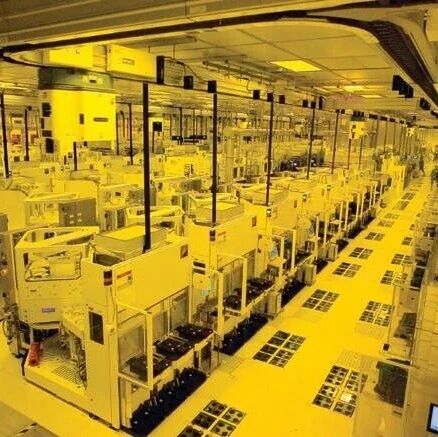
2026晶圆代工:先进制程受益AI浪潮,成熟制程开启国产替代新周期(附PPT)
材料汇· 2025-12-17 15:57
Group 1 - Advanced process: Demand recovery, AI and mainstream consumption drive high growth [3][30] - Global foundry market revenue is expected to grow YoY by 27% in 2025, driven by GPU/ASIC demand and stable consumer electronics orders [6][30] - The advanced process segment is experiencing a significant increase in wafer consumption due to the complexity of high-end chips [7][9] Group 2 - Mature process: Strong expansion, localization, and specialty processes seek incremental growth [3][30] - Chinese fabs are benefiting from the recovery in consumption, with some wafer manufacturing prices increasing, indicating a shift away from price competition [31][33] - By 2030, China's mature process capacity is expected to exceed half of the global market share [34][41] Group 3 - Key targets and valuations: SMIC is maintaining an aggressive expansion pace, with plans for new factories and increased monthly capacity [55] - The domestic AI chip market in China is projected to grow over 60% by 2026, with local companies increasing their market share significantly [18][20] - The local supply chain is expected to strengthen as international IDM companies collaborate with domestic fabs, enhancing their technological capabilities [42][47]