美股IPO

Search documents
诺和诺德Ozempic完胜礼来Trulicity,股价创一个月来最大涨幅
美股IPO· 2025-09-19 00:24
Core Viewpoint - Novo Nordisk's Ozempic shows a 23% lower risk of heart attack, stroke, and death compared to Eli Lilly's Trulicity, significantly impacting the competitive landscape in diabetes and weight loss medications [1][2]. Group 1: Study Results - A Medicare study involving nearly 60,000 patients indicates that patients using Ozempic have a 23% lower risk of heart-related issues compared to those using Trulicity [2]. - Novo Nordisk presented these findings at the European Association for the Study of Diabetes meeting, highlighting the importance of this data in countering Eli Lilly's market share gains with Mounjaro and Zepbound [2][5]. Group 2: Market Impact - Following the announcement of the study results, Novo Nordisk's stock surged over 7%, marking its largest increase in a month, after a 56% decline over the past year due to various clinical and commercial setbacks [2]. - The competitive landscape is intensifying, with both companies releasing comparative data to persuade healthcare providers to choose their products [5]. Group 3: Ongoing Research and Development - Novo Nordisk is advancing a higher dose of Rybelsus, which has shown stronger weight loss effects and has been approved in Europe for diabetes treatment [6]. - Eli Lilly's Mounjaro has shown similar efficacy to Trulicity in reducing heart-related risks, but this trial is not directly comparable to the Ozempic-Trulicity study, which reflects real-world outcomes [6]. Group 4: Physician Considerations - Physicians are encouraged to consider individual patient circumstances when choosing between Mounjaro and Trulicity, as Mounjaro offers additional benefits such as greater weight loss and improvements in obesity-related conditions [7]. - Novo Nordisk focuses on demonstrating its drugs' effectiveness in real-world settings, including studies on its weight loss injection Wegovy's ability to suppress intrusive food thoughts [7].



50亿美元!GPU巨头英伟达牵手CPU老将意图几何?
美股IPO· 2025-09-19 00:24
Core Viewpoint - Nvidia's investment of $5 billion in Intel positions it as one of Intel's largest shareholders, marking a significant shift in the competitive landscape of the semiconductor industry [2][5]. Investment Details - Nvidia will acquire Intel shares at $23.28 each, slightly below Intel's previous closing price, but above the price at which the U.S. government acquired Intel shares [2]. - The partnership will focus on co-developing chips for PCs and data centers, specifically custom CPUs and AI GPUs, enhancing competitiveness against rivals like AMD and Broadcom [2][3]. Implications for Intel - Analysts view the investment as a "timely rain" for Intel, providing a chance to regain its footing in the AI sector [5]. - The collaboration is expected to enhance Intel's credibility in AI chip development and stabilize its long-term prospects [5]. - Despite the cash influx, Intel's balance sheet remains under pressure with net debt nearing $29.6 billion [5]. Implications for Nvidia - The investment is seen as a strategic move to alleviate monopoly concerns and open pathways for collaboration in chip production [5]. - Nvidia's CEO emphasized the importance of this partnership in expanding their ecosystem and enhancing competitiveness in the new computing era [3][5]. Market Reactions - Following the announcement, Intel's stock surged over 30% in pre-market trading, while Nvidia's stock rose by over 3% [2][3]. - AMD's stock fell nearly 4%, and TSMC's stock dropped by 2%, indicating market shifts in response to the news [3]. Industry Dynamics - The collaboration is viewed as a significant step for the U.S. semiconductor industry, potentially reshaping competitive dynamics [7]. - Analysts suggest that while the partnership may pressure TSMC, its advanced manufacturing capabilities are unlikely to be easily replaced [8]. - The alliance could intensify competition for AMD, particularly in the data center and customer markets [8].


加密货币ETF迎来分水岭:美国首只狗狗币ETF获批上市
美股IPO· 2025-09-19 00:24
Core Viewpoint - The approval of the Rex-Osprey Dogecoin ETF by the SEC marks a significant shift in regulatory policy towards cryptocurrency, indicating a potential surge in cryptocurrency ETFs with 90 to 100 applications awaiting approval [1][3][4] Group 1: SEC Policy Shift - Under the leadership of Paul Atkins, the SEC has fundamentally changed its stance on cryptocurrency, approving new simplified listing standards for cryptocurrency ETFs [3][4] - The approval of the Dogecoin ETF is seen as a watershed moment for the SEC's support of cryptocurrency, contrasting sharply with the previous administration's hardline approach [3][4] - Analysts expect a wave of new products tracking digital currencies to be released next month, following the SEC's new regulatory environment [4] Group 2: Market Dynamics - The Dogecoin ETF will begin trading with a management fee of 1.5%, while the upcoming XRP ETF will have a lower fee of 0.75%, both listed on the Cboe exchange [3] - Currently, Bitcoin and Ethereum ETFs have attracted over $175 billion in funds, with major asset management firms like BlackRock and Fidelity leading the market [4] - The approval of meme coins like Dogecoin raises concerns among analysts about the normalization of collectibles, which may mislead investors regarding their economic value [4][5] Group 3: Industry Perspectives - Rex Financial's CEO Greg King defends the ETF's launch, stating that it provides exposure to popular digital assets under the protection of the Investment Company Act of 1940 [6] - Eric Trump suggests that the growing demand for cryptocurrency could attract global investment into the U.S., potentially "saving the dollar" amidst concerns over U.S. debt and economic stability [7][8] - The Trump family's involvement in cryptocurrency includes investments in various meme coins and a Bitcoin ETF linked to their media group, emphasizing the entertainment aspect of these digital assets [9]

暴涨22.77%!黄仁勋称同英特尔协议侧重定制芯片,否认特朗普政府参与,郭明錤称台积电风险可控
美股IPO· 2025-09-19 00:24
Core Viewpoint - The collaboration between NVIDIA and Intel is expected to open new opportunities in the laptop market for NVIDIA, positioning it as a major customer for Intel's server CPUs, with a potential market opportunity of $25 billion to $50 billion [3][4][9]. Group 1: Collaboration Details - The partnership focuses on the development of custom chips, with NVIDIA gaining access to x86 architecture, enhancing its capabilities in supercomputing and gaming markets [6][9]. - NVIDIA plans to integrate Intel's custom x86 CPUs into its AI infrastructure, while Intel will create systems-on-chip (SoCs) that combine NVIDIA's RTX GPUs for various PCs [7][9]. - The collaboration is seen as a significant moment in the tech industry, leveraging the core strengths of both companies to benefit the broader technology sector [6][9]. Group 2: Market Reactions - Following the announcement, Intel's stock surged by approximately 22.8%, marking its largest single-day gain since October 1987, while TSMC's stock experienced a slight increase [4][14]. - NVIDIA's stock also saw a rebound, rising by about 3.5% after the announcement, while its competitor AMD's stock faced a decline [14]. Group 3: Impact on TSMC and AI Chips - Analysts believe that the collaboration poses manageable risks for TSMC, which is expected to maintain its leading position in advanced processes until at least 2030, with AI chip orders remaining unaffected [4][10]. - The partnership is anticipated to create significant synergies in the x86/mid-range/inference AI server sectors, leveraging Intel's extensive distribution channels and NVIDIA's technological advantages [9][10]. Group 4: Political Context - NVIDIA's $5 billion investment in Intel is viewed by some as a strategic move to align with political interests, particularly in light of previous investments from other tech firms aimed at gaining favor with the Trump administration [7][8]. - The nature of the collaboration raises questions about whether it is primarily politically motivated or indicative of a broader strategic partnership [8]. Group 5: Commitment to Arm Architecture - NVIDIA's commitment to its Arm architecture roadmap remains unchanged despite the new collaboration, with assurances that the development of Arm-based chips will continue [11][12].
英特尔暴涨30%!英伟达斥资50亿美元入股英特尔,联手开发PC与数据中心芯片
美股IPO· 2025-09-18 11:53
Core Viewpoint - The unexpected collaboration between Intel and Nvidia marks a significant shift in the computing industry, with Nvidia investing $5 billion in Intel to jointly develop chips for PCs and data centers, highlighting the changing competitive landscape [3][6]. Group 1: Investment and Market Impact - Nvidia will purchase Intel shares at $23.28 each, a 6.5% discount from the previous closing price, resulting in Nvidia holding less than 5% of Intel, which has a market capitalization of approximately $116 billion [3][4]. - Following the announcement, Intel's stock surged by 30% in pre-market trading, while AMD, a competitor of Nvidia, saw its stock drop by over 4% [4]. Group 2: Strategic Collaboration - The partnership will integrate Nvidia's graphics processing technology into Intel's next-generation PC chips and provide processor support for Nvidia's data center products [3][7]. - Intel aims to enhance its competitiveness against AMD by incorporating Nvidia's GPU technology into its PC chips, while also supplying general-purpose processors for Nvidia's AI clusters [7]. Group 3: Financial Significance for Intel - The investment from Nvidia is crucial for Intel, which has struggled in the high-performance chip market and has been unable to independently fund advanced process research and development [6]. - Intel has recently received support from the U.S. government, strategic investments from SoftBank, and has accelerated financing through asset sales, with Nvidia's investment further solidifying its financial stability [6]. Group 4: Future Outlook - Under the leadership of new CEO Lip-Bu Tan, Intel is adopting a more open strategy, actively seeking partnerships and opening its factory capacity to external companies, with the collaboration with Nvidia seen as a pragmatic step in its transformation [9]. - Nvidia's revenue is projected to reach $200 billion this year, with its data center business surpassing the total sales of any other chip company, while Intel lags in AI computing and advanced processes [8].
大摩:大厂“AI烧钱大战”:当下规模被低估,未来折旧被低估,最早2027年爆发价格战
美股IPO· 2025-09-18 11:53
Core Viewpoint - Major tech companies are entering an unprecedented AI infrastructure arms race, with capital expenditure intensity nearing the peak levels seen during the internet bubble, indicating a potential underestimation of current AI investment and future depreciation costs [3][4][11] Group 1: Capital Expenditure Trends - Morgan Stanley predicts that by 2027, capital expenditure as a percentage of revenue for major players like Amazon, Google, Meta, Microsoft, and Oracle will reach 26%, close to the 32% peak during the internet bubble and exceeding the 20% during the shale oil boom [3][4] - The actual scale of investment is underestimated due to the increasing use of off-balance-sheet tools like financing leases, which allow companies to accelerate data center expansion without fully reflecting these investments in traditional capital expenditure data [5][7] - Microsoft and Oracle's capital intensity is expected to rise significantly when financing leases are accounted for, with Microsoft's capital expenditure to sales ratio projected to jump from 28% to 38% by FY2026, and Oracle's from 41% to 58% [7] Group 2: Impact of Construction in Progress - A significant amount of capital is currently tied up in "Construction in Progress" (CIP), which does not incur depreciation until the assets are operational, meaning the financial impact on profits has yet to be realized [9] - Google, Amazon, Meta, and Oracle have seen substantial increases in their CIP balances, with Amazon's growing by approximately 60% ($17 billion) and Google's by about 40% ($15 billion) over the past year [9] Group 3: Future Depreciation Costs - Analysts at Bank of America highlight that Wall Street is underestimating future depreciation costs, with significant discrepancies expected by 2027: $7 billion for Alphabet (Google), $5.9 billion for Amazon, and $3.5 billion for Meta, totaling nearly $16.4 billion in expected shortfall [11] - The rapid technological advancements in AI hardware, such as GPUs, may lead to shorter asset lifespans, with Amazon already reducing the expected lifespan of some servers from six years to five due to accelerated technology development [13] Group 4: Potential Market Risks - Bank of America warns that the AI infrastructure market may face a repeat of historical patterns where aggressive investment leads to overcapacity and pricing pressures, with the risk of a price war emerging as early as 2027 if supply outstrips demand [14] - Major tech companies are ramping up AI infrastructure investments, which could result in a scenario where the supply of computing power exceeds the demand for high-value AI services, potentially leading to aggressive pricing strategies to maintain utilization rates [14]






穆迪下调甲骨文评级至负面,称其3000亿美元大单存在风险
美股IPO· 2025-09-18 11:53
穆迪主要担忧甲骨文过度依赖少数客户产生的对手风险。该机构预计,甲骨文的债务增速将超过EBITDA增速, 杠杆率或升至4倍,自由现金流在较长时期内可能为负。目前,甲骨文的穆迪信用评级为Baa2,位于投资级低 端。 "自由现金流很可能在达到盈亏平衡之前的较长时期内保持负值。" 穆迪分析师周三在报告中指出,虽然这些合同凸显了甲骨文AI基础设施业务的"巨大潜力", 但也带来了显著的 财务风险。分析师特别关注甲骨文过度依赖少数AI公司大额承诺的商业模式所产生的对手风险。 该评级机构 预计甲骨文的债务增长将超过EBITDA增速,杠杆率将达到4倍的高位,自由现金流可能在较长时期 内保持负值。 甲骨文目前的穆迪发行人评级为Baa2,处于投资级信用评级的较低端。 巨大合同背后的集中度风险 穆迪分析师在周三的报告中强调,甲骨文面临的最主要风险来自其对少数大型AI客户的高度依赖。分析师将甲 骨文的数据中心建设项目描述为"实际上是世界上最大的项目融资之一"。 "对手风险始终是任何类型项目融资的关键考量,特别是在高度依赖单一对手方收入的情况下。" 穆迪评级机构对甲骨文公司近期签署的3000亿美元人工智能合同发出风险警告,重申该软件巨头 ...

花旗:美联储的焦点政策,不只是降息,还有缩表
美股IPO· 2025-09-17 23:28
Core Viewpoint - Citigroup indicates that as the U.S. Treasury rebuilds its cash account, the reverse repo balance is being consumed, leading to a decline in bank reserves and increased pressure in the repo market, which may prompt Federal Reserve officials to discuss the balance sheet issue in their upcoming meeting [1][3][9] Group 1: Federal Reserve's Balance Sheet Reduction - The Federal Reserve's balance sheet reduction is nearing its final phase, with signs of liquidity tightening in the market [3][9] - According to Citigroup, the Fed's holdings of Treasury securities have decreased from approximately $5.8 trillion to $4.2 trillion, and mortgage-backed securities (MBS) have dropped from about $2.7 trillion to $2.1 trillion [4] - The Fed's balance sheet liabilities have shifted liquidity from reverse repos and bank reserves to the U.S. Treasury cash account, which has increased to about $680 billion and is expected to rise to around $850 billion [4][6] Group 2: Repo Market Pressure - As the reverse repo balance approaches zero, additional liquidity flowing into the Treasury cash account will primarily come from bank reserves, which are expected to decline to approximately $2.8 to $2.9 trillion by year-end [6] - The Secured Overnight Financing Rate (SOFR) has been above the Interest on Reserve Balances (IORB) for most of September, exceeding IORB by 11 basis points recently, indicating rising repo market pressure [6][8] - Despite the increased pressure in the repo market, the effective federal funds rate remains relatively stable, with a slight risk of rising in relation to reverse repo rates in the coming months [8] Group 3: Implications for Investors - Citigroup expects that if repo market pressures persist, the Federal Reserve may end its balance sheet reduction by the end of the year, although a specific timeline may not be immediately announced [9] - The change in the Fed's balance sheet reduction pace could impact short-term interest rate markets and the yield curve, potentially stabilizing market liquidity and supporting risk assets while exerting downward pressure on short-term rates [9]


重磅!美联储降息25基点!鲍威尔强调就业下行风险,预计年内还降两次,中国资产大涨!
美股IPO· 2025-09-17 23:28
Core Viewpoint - The Federal Reserve has initiated its first interest rate cut in nine months, aligning with market expectations, and is projected to lower rates further in the coming months [3][6]. Summary by Sections Interest Rate Decisions - The Federal Reserve's decision to cut rates by 25 basis points to a target range of 4.00% to 4.25% was anticipated by investors, with a 96% probability indicated in futures markets prior to the announcement [6][12]. - The median forecast from Federal Reserve officials now suggests a total of three rate cuts for this year, an increase from the previous estimate of two [5][20]. - The dot plot indicates that while nine officials expect two more cuts this year, this does not constitute a majority, as six officials predict no further cuts [21][20]. Economic Outlook - The Federal Reserve has revised its GDP growth forecasts upward for the next three years, while also adjusting unemployment rate expectations downward for the same period [23][24]. - The PCE inflation expectations have been raised for the next two years, with a target of returning to 2% by 2028 [23][27]. Employment and Risks - The latest statement highlights a slowdown in job growth and a slight increase in the unemployment rate, indicating rising risks in the labor market [4][9]. - The shift in focus from inflation concerns to employment risks provides a rationale for the Federal Reserve's decision to implement a modest rate cut [6][8]. Voting Dynamics - In the recent vote, only one member, newly appointed Stephen Miran, opposed the decision, advocating for a more aggressive 50 basis point cut [12][14]. - The voting results indicate a less divided stance among Federal Reserve officials compared to previous meetings, suggesting a consensus on the current economic strategy [15][12]. Future Projections - The updated projections show a median federal funds rate of 3.6% by the end of 2025, down from previous estimates, with expectations of further cuts in the following years [17][20]. - The anticipated rate cuts are expected to total 125 basis points from September 2023 to the end of 2027, which is significantly lower than the 300 basis points previously suggested by former President Trump [17][20].
和美联储库克同款“污点”?美财长被曝有类似抵押贷款申报
美股IPO· 2025-09-17 23:28
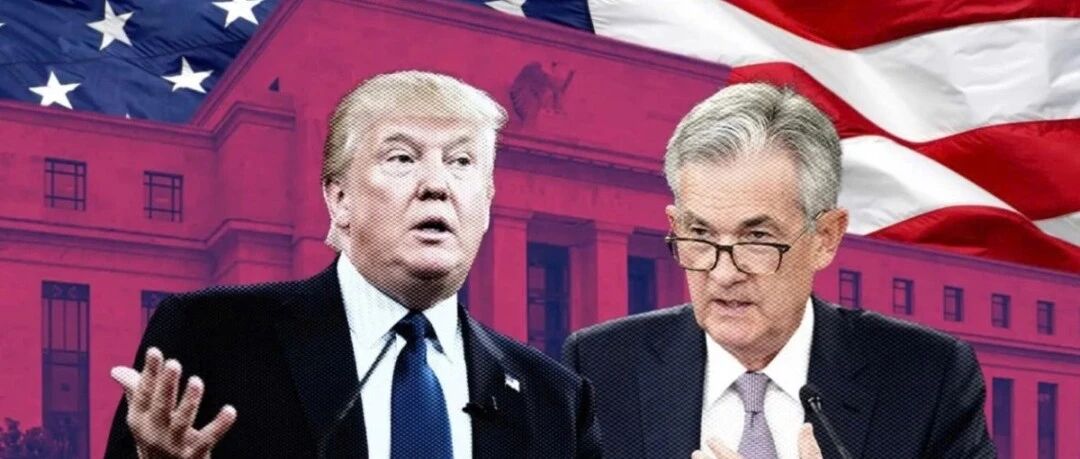
贝森特和库克均曾将两处不同的房产申报为主要居所,但库克的贷款来自两家不同银行,在不同时间执行相关贷款协议,贝森特的两笔贷款均来 自美银,且由律师同一天代签,贷款方被欺骗的可能性低。代签的律师称美银完全了解实情。抵押贷款专家认为贝森特的行为并无不当迹象。此 案例说明房贷文件的不一致之处未必构成欺诈证据。 最新爆料显示,美国财长贝森特有和美联储理事库克一样涉嫌抵押贷款欺诈的"污点"。因为贝森特曾将两个不同地区的房产均申报为"主要居 所",这与美国总统特朗普试图罢免库克所引用的理由类似。 美东时间17日周三,媒体援引的抵押贷款文件显示,2007年9月20日,贝森特认同,他在纽约Bedford Hills购买的一座庄园将在此后一年里成 为他的"主要居所"。同一天,他对马萨诸塞州Provincetown的一处别墅也做出了同样的主要居所承诺。这两份自相矛盾的协议都由拥有代表贝 森特签字授权书的律师Charles Rich签署。 媒体的发现为特朗普政府在抵押贷款合规问题上的复杂性增添了新的维度,也令外界质疑特朗普政府指控库克存在房贷欺诈存在双标。毕竟, 有证据表明,贷款机构当时知晓贝森特和库克各自对相关房产的实际使用计划。 ...