美股IPO

Search documents
下一任美联储主席候选人哈赛特生变?华尔街亮态度!摩根大通CEO戴蒙支持沃什,而非哈赛特
美股IPO· 2025-12-13 11:14
Core Viewpoint - Jamie Dimon, CEO of JPMorgan Chase, supports Kevin Warsh for the position of Federal Reserve Chair, warning that Kevin Hassett may be too compliant with the White House's interest rate reduction desires, potentially harming the Fed's independence and leading to increased long-term borrowing costs [2][3]. Group 1: Dimon's Analysis - Dimon argues that if Hassett is elected, he is likely to quickly lower short-term interest rates to align with President Trump's economic demands, but the Fed can only control short-term rates while long-term rates are determined by the market [4]. - Concerns arise that aggressive rate cuts under Hassett could ignite inflation expectations, causing long-term rates, such as the 10-year Treasury yield, to rise due to investor sell-offs [4]. Group 2: Market Reactions - Since media reports in late November indicated Hassett as a frontrunner, the 10-year U.S. Treasury yield has increased from 4.0% to 4.2%, reflecting market pricing of the associated risks [5]. - There is growing anxiety among bond market traders regarding inflation, as indicated by a rise in the 5-year forward inflation swap rate, which recently increased by 0.06 percentage points to a one-month high [5]. Group 3: Political Dynamics - Concerns about Hassett's political ties have been voiced by senior investors managing a $30 trillion U.S. Treasury market, questioning his close alignment with Trump and its potential impact on the credibility of monetary policy [7]. - President Trump has expressed dissatisfaction with current Fed Chair Jerome Powell's reluctance to implement significant rate cuts, emphasizing loyalty and willingness to lower rates as key criteria for his selection [8]. Group 4: Candidate Profiles - Kevin Hassett is viewed as a top contender, having publicly supported aggressive rate cuts and previously suggested that the reduction should be double the current level, although he claims to uphold central bank independence [10]. - Kevin Warsh, a former Fed governor and economist at the Hoover Institution, has received backing from Wall Street figures like Dimon, despite his past criticisms of the Fed and being perceived as overly hawkish before the 2008 financial crisis [10].


盘后又暴涨51%!AI“鬼故事”不断!热门数据中心概念股Fermi差点“一日腰斩”,其联创系前特朗普政府能源部长
美股IPO· 2025-12-13 11:14
Core Viewpoint - Fermi, a prominent AI energy infrastructure company, experienced a significant stock price drop due to the announcement that its major client would withdraw from a $150 million investment commitment, raising concerns about the company's financial stability and future projects [3][6]. Group 1: Client Withdrawal Impact - Fermi's first tenant has terminated a $150 million investment agreement intended for the construction of a large AI park in West Texas, leading to a stock price drop of up to 46% during trading [3][6]. - Following the announcement, Fermi's stock has retraced approximately 70% from its peak since its IPO in October, indicating severe market reaction to the news [6]. Group 2: Management Response and Market Sentiment - Fermi's management attempted to reassure investors by stating that negotiations regarding leasing terms are ongoing and have not completely broken down, despite the withdrawal of funding [6]. - Investment firms covering Fermi have maintained a "buy" rating, while approximately 38% of the company's float has been borrowed for short selling, indicating mixed market sentiment [8]. Group 3: Political Connections and Ambitious Plans - Fermi has strong political ties, co-founded by former Energy Secretary Rick Perry, and has plans to name its energy center after Donald Trump, highlighting its political significance [9]. - The company aims to build the world's largest energy and data park in Amarillo, Texas, with an estimated cost exceeding $50 billion, including the construction of four Westinghouse AP1000 nuclear reactors, which would provide a total capacity of 11 gigawatts [9].

英国《金融时报》年度人物:黄仁勋
美股IPO· 2025-12-13 03:29
Core Viewpoint - Jensen Huang, CEO of Nvidia, is recognized as the Financial Times Person of the Year for his pivotal role in the AI revolution and the significant investment plans that support the U.S. economy and stock market [3][4]. Group 1: Nvidia's Market Position - Nvidia is currently the highest-valued company globally, having briefly surpassed a market capitalization of $5 trillion this year, with a current valuation of $4.4 trillion [4]. - Huang's personal net worth is projected to exceed $160 billion by the end of 2025, placing him among the top ten wealthiest individuals globally [4]. Group 2: AI and Chip Manufacturing - Nvidia's leading position in AI chip manufacturing has shown remarkable resilience, even amidst competition from companies like Huawei and Google [5]. - The demand for AI is driving a significant increase in data center construction, contributing substantially to U.S. GDP growth, with Nvidia being a major supplier of AI chips [5][6]. Group 3: Investment Strategy - Huang has invested billions into other AI companies, which some critics view as a potential conflict of interest, but he argues that these investments are too small to significantly impact overall demand [6][7]. - Nvidia has committed to investing up to $100 billion in OpenAI over the coming years, despite growing concerns about an AI bubble [6][7]. Group 4: Leadership and Management Style - Huang's leadership style is characterized by a flat organizational structure, with 50 to 60 executives reporting directly to him, fostering a culture of resilience and collaboration [13][15]. - He is known for his intense focus on work, stating that his life revolves around family and work, with no hobbies [13][15]. Group 5: Vision for AI - Huang views the next phase of AI as an engineering challenge, focusing on how to adapt technologies like ChatGPT for broader applications across various industries [17][18]. - He dismisses both dystopian and overly optimistic views of AI, emphasizing a pragmatic approach to its development and application [17][18].

《时代》周刊2025年度人物:人工智能的缔造者
美股IPO· 2025-12-13 03:29
Core Insights - The article discusses the transformative impact of AI on the global economy, with Nvidia's CEO Jensen Huang asserting that AI could quintuple global GDP from $100 trillion to $500 trillion [7][9]. Group 1: Nvidia and AI Leadership - Nvidia has become the world's most valuable company, largely due to its dominance in advanced chip technology that powers the AI revolution [6][9]. - Huang is portrayed as a key figure in the AI landscape, with significant influence in both technology and geopolitics, as evidenced by his interactions with political leaders [6][9]. - The company has significantly exceeded Wall Street's earnings expectations, highlighting its pivotal role in the AI sector [7]. Group 2: AI's Economic and Social Implications - AI is seen as the most influential technology today, with applications across various industries, prompting companies to reassess their strategies to avoid obsolescence [7][9]. - OpenAI's ChatGPT has become the fastest-growing consumer application in history, with over 800 million weekly users, showcasing the rapid adoption of AI technologies [7][9]. - The article notes a growing concern about AI's potential to spread misinformation and manipulate public perception, raising ethical questions about its deployment [7][9]. Group 3: Competitive Landscape and Investment - Major tech companies are heavily investing in AI infrastructure, with significant funding directed towards data centers and AI-related projects [12][26]. - The competition between the U.S. and China in AI development is intensifying, with Chinese companies rapidly closing the gap in AI capabilities [16][20]. - The article highlights the urgency for the U.S. to accelerate its AI initiatives in response to breakthroughs from Chinese firms [16][20]. Group 4: Future of Work and AI Integration - There is a belief that AI will enhance productivity across various sectors, potentially creating new job categories while displacing some existing roles [30][36]. - Companies are increasingly integrating AI tools into their operations, with many small businesses expected to adopt AI chatbots by 2025 [30][31]. - The article discusses the dual nature of AI's impact, where it can provide emotional support and practical assistance, but also poses risks related to mental health and dependency [32][34]. Group 5: Regulatory and Political Dynamics - The U.S. government is shifting its approach to AI regulation, with significant funding and policy changes aimed at fostering AI development [17][25]. - There is a growing public concern about the implications of AI, with many Americans preferring a cautious approach to its deployment [18][19]. - The political landscape is evolving, with candidates who support AI regulation gaining traction, reflecting a broader societal debate on the technology's risks and benefits [40].

一条消息引爆狂抛,甲骨文债券遭垃圾债待遇,CDS爆表至2009年来最高
美股IPO· 2025-12-13 02:19
Core Viewpoint - Oracle is becoming a key indicator for measuring AI risks in the credit market due to its weaker credit rating and expanding debt, which has drawn market attention [1][11][10] Group 1: Market Reactions - A report about Oracle's data center delays triggered significant volatility in AI infrastructure-related stocks and bonds, with the Philadelphia Semiconductor Index dropping over 5%, marking its largest decline in two months [3][6] - Oracle's stock price fell by nearly 4.5% after the report, accumulating a total drop of 14.8% over two trading days [3][12] - The panic spread across the tech sector, affecting major companies like Nvidia and CoreWeave, with Nvidia's stock down over 3% and CoreWeave down 11% [5][6] Group 2: Bond Market Impact - Oracle's investment-grade bonds faced severe sell-offs, with its 5.2% coupon bond maturing in 2035 seeing its yield rise to 5.9%, surpassing the average yield of the highest-rated junk bonds at 5.69% [5][8] - Investors in Oracle's $18 billion investment-grade bonds issued in September are facing paper losses totaling approximately $1.35 billion [8] - The credit default swap (CDS) spreads for Oracle surged, indicating heightened concerns about potential debt defaults, reaching levels not seen since the 2009 financial crisis [8][12] Group 3: AI Infrastructure Concerns - The market's concerns about the sustainability of AI infrastructure spending were exacerbated by disappointing earnings from Broadcom, which revealed that AI order backlogs did not meet high expectations [7][10] - Oracle is a core participant in the "Stargate" project, which aims to invest $500 billion in AI infrastructure, further increasing its debt exposure [10][11] - The uncertainty surrounding the future of data centers and the potential for oversupply due to more efficient chips raises alarms for credit investors [12]


“中国可能都做不到”!AI泡沫充斥得州:超220GW大项目申请到2030年入电网
美股IPO· 2025-12-13 02:19
Core Viewpoint - Texas is experiencing a significant surge in data center construction, with over 220 GW of large projects applied for connection to the Texas grid by 2030, primarily driven by the AI boom, raising concerns about a potential bubble in the industry [1][3][7]. Group 1: Project Capacity and Demand - The total capacity of large projects applying for connection to the Texas grid has exceeded 220 GW, more than double the state's peak summer demand of approximately 85 GW [2][8]. - Over 70% of the projects are data centers, with more than half, approximately 128 GW, yet to be submitted for ERCOT review [1][2][8]. - The number of large projects applying for power connection in Texas has nearly quadrupled this year [1][8]. Group 2: Industry Concerns and Risks - Experts warn that the scale of applications is unsustainable, with insufficient infrastructure to meet such high demand, leading to concerns about potential oversupply and financial instability in the sector [3][7][9]. - The Texas Public Utility Commission has implemented measures to differentiate serious data center projects from speculative ones, requiring developers to pay significant fees and demonstrate site control [11]. - The risk of overbuilding is compounded by rising infrastructure costs, as data centers compete for the same limited resources [12][13]. Group 3: Financial Market Dynamics - The financing environment for data centers is characterized by aggressive lending practices, with some borrowers seeking loans exceeding project costs, raising concerns about the formation of a financial bubble [14][15]. - There have been at least $175 billion in credit transactions related to data centers in the U.S. this year, indicating a robust but potentially risky investment climate [15]. - Regulatory scrutiny is increasing, particularly in the UK, regarding the levels of spending and financing for data centers [15].
担忧雪上加霜!甲骨文被爆部分数据中心推迟至2028年竣工,AI股大跌
美股IPO· 2025-12-13 02:19
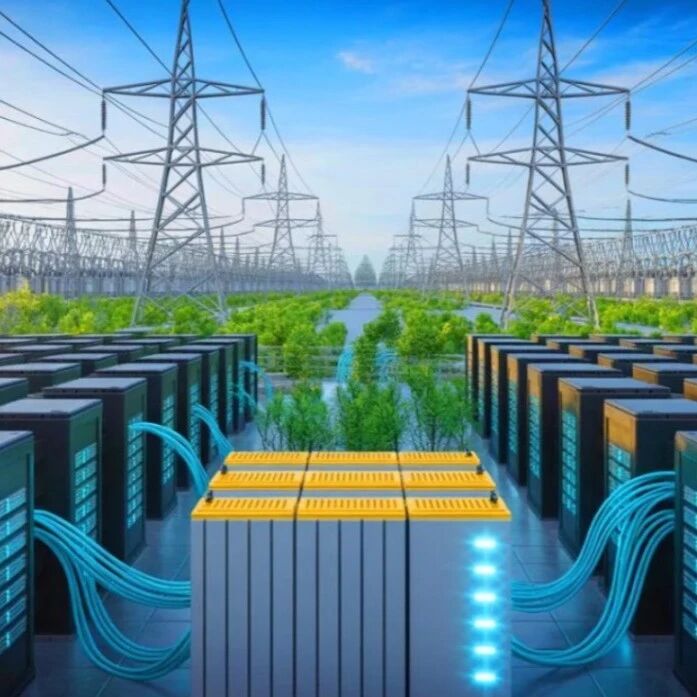
在甲骨文AI支出激增、博通业绩电话会未达投资者高预期后,媒体称,甲骨文将部分为OpenAI开发的数 据中心竣工日期从2027年推迟至2028年。甲骨文盘中跌超6%,抛售甚至波及电力股。后公司否认消 息,称所有合约数据中心均未出现延误,股价收跌4.5%。 继甲骨文和博通的业绩表现引发投资者担忧后,周五甲骨文传出的数据中心延期消息令AI概念股雪上加 霜,投资者对人工智能(AI)领域泡沫的疑虑加剧。 美东时间12日周五美股早盘,媒体报道称,甲骨文将部分为OpenAI开发的数据中心竣工时间从2027年 推迟至2028年。美股午盘时段,甲骨文否认此消息,该司发言人在电邮中表示: "选址和交付时间表是在与OpenAI签署协议后密切协调制定,并经双方共同商定。所有履行合同义务所需的 (数据中心)地址均未出现延误,有望按计划达成所有里程碑。" 甲骨文和OpenAI均拒绝对周五的数据中心消息置评。 周五当天,甲骨文盘中跌幅一度扩大至6%以上,进一步加剧了前一日业绩公布后暴跌11%后的颓势, 甲骨文否认媒体消息后,午盘跌幅还超过4%,收跌近4.5%,公布财报后两日累跌14.8%。截至周五收 盘,股价已较9月10日的巅峰跌去40% ...


华尔街日报:中国的AI大招,来自全球最大电网的廉价电力
美股IPO· 2025-12-13 02:19
Core Viewpoint - China is leveraging its vast electricity resources and the world's largest power grid to gain a competitive edge in the global AI race, with electricity costs significantly lower than those in the U.S. [4][5][10] Group 1: Electricity Advantage - China's electricity generation has grown more than the total of other regions from 2010 to 2024, with last year's output being over twice that of the U.S. [4] - The cost of electricity for data centers in China can be as low as 3 cents per kilowatt-hour, compared to 7 to 9 cents in the U.S. [13] - Morgan Stanley predicts that by 2030, China will invest approximately $560 billion in power grid projects, a 45% increase from the previous five years [6]. Group 2: Data Center Development - Inner Mongolia is transforming with thousands of wind turbines and over 100 data centers operational or under construction, driven by the "East Data West Computing" initiative [5][8]. - The region's GDP has grown by 50% over the past five years, with electricity consumption for data centers and IT services increasing by over 700% from 2019 to last year [18]. - By 2030, China's data centers are expected to consume electricity equivalent to the total consumption of France [10]. Group 3: AI and Chip Development - Chinese AI companies, such as DeepSeek, are developing high-quality AI models at lower costs due to cheaper electricity, helping to mitigate challenges posed by domestic chip performance [6][24]. - Huawei's CloudMatrix 384 system, integrating 384 Ascend chips, reportedly has 66% higher computing power than NVIDIA's flagship system but consumes four times the power [22][24]. - The complexity of operating bundled systems and the need for advanced networking technology pose challenges for the efficient collaboration of numerous chips [24]. Group 4: Future Outlook and Challenges - The U.S. faces a potential power shortfall of 44 gigawatts for data centers in the next three years, which could hinder its AI ambitions [6]. - Both China and the U.S. are grappling with the high electricity consumption of data centers, with the demand for power being unpredictable [9][10]. - The Chinese government is prioritizing the development of data centers in designated areas to manage regulatory approvals and land acquisition more efficiently [18].
特朗普或大幅放宽大麻限制,大麻股暴涨
美股IPO· 2025-12-13 02:19
Core Viewpoint - The article discusses the anticipated executive order by President Trump to reclassify cannabis from Schedule I to Schedule III, which is expected to significantly relax regulations and encourage investment in the cannabis industry [1][6][7]. Group 1: Regulatory Changes - The expected executive order will allow cannabis businesses to benefit from different tax rules and facilitate banking services for the industry [3][8]. - The reclassification is seen as a positive development for the cannabis sector, with expectations that the Drug Enforcement Administration (DEA) will establish proposed rules for reclassification by next summer [8]. Group 2: Market Reaction - Following the news, cannabis stocks experienced substantial gains, with Tilray Brands rising by 44% and Canopy Growth soaring by 53% during the trading session [4]. - The Amplify Seymour Cannabis ETF surged over 54%, marking its best single-day performance in history [4]. Group 3: Industry Sentiment - The CEO of Tilray expressed increased optimism about the cannabis market, noting that the stock has struggled since the pandemic despite a previous peak of over $2140 in September 2018 [9].

未上调2026财年指引”不是大问题,高盛:越来越相信博通的AI业务
美股IPO· 2025-12-12 07:34
高盛表示,博通第四财季业绩强劲、AI收入大增,但因未上调2026财年全年指引,短期或承压。该行仍坚持"买入",认为其在定制芯片领域 地位稳固,AI业务增速被低估,预计中长期持续跑赢。订单积压达730亿美元,新客户与大额订单强化增长动能。 尽管博通未能如部分投资者预期那样上调2026财年的全年业绩指引,并在短期内可能面临股价回调压力,但高盛依然重申了对该公司 的"买入"评级。这家华尔街大行认为,博通在定制芯片领域的统治地位正在增强,其AI业务的基本面从未如此稳固。 博通公布了一份表现强劲的第四财季业绩,其营收录得180亿美元,超出市场预期的175亿美元。更为关键的是,公司给出的2026财 年第一季度营收指引达到191亿美元,同样显著高于分析师预期的183亿美元。这一增长主要得益于AI半导体收入的激增,该板块在 第四财季实现了74%的同比增长。 然而,市场对这份财报的反应可能夹杂着失望情绪。高盛分析师James Schneider团队在最新发布的研报中指出,尽管业绩强劲且第 一季度展望乐观,但管理层并未更新或上调其此前发布的2026财年全年AI营收增长指引。考虑到投资者在财报发布前已持乐观看涨的 仓位,且AI业务 ...