CHINA UNICOM(00762)

Search documents
苹果“引爆”eSIM手机商用,国产芯片供应企业:合作模式还待清晰|eSIM重返系列观察②
Mei Ri Jing Ji Xin Wen· 2025-10-20 15:08
Core Viewpoint - The approval of eSIM commercial trials by China's three major telecom operators marks a significant step towards the widespread adoption of eSIM technology in smartphones, with the iPhone Air leading the charge in the domestic market [1][2]. Group 1: eSIM Commercialization - China Mobile, China Unicom, and China Telecom have received approval to conduct eSIM commercial trials across all 31 provinces in China, allowing users to register for networks without a physical SIM card [1]. - The iPhone Air, set to launch on October 22, is the first smartphone in China to support only eSIM, achieving over 100 million yuan in sales within one second during pre-sales [1]. - Domestic manufacturers like Huawei and OPPO are expected to follow suit by launching their own eSIM-enabled smartphones [1]. Group 2: Supply Chain and Technology - The supply of domestic eSIM chips is still in the early stages, with companies like Unisoc and Tongfu Microelectronics being key players in the supply chain [1][3]. - Unisoc has developed eSIM chip technology that is compatible with over 400 global operators, but the final selection of domestic operators and partners remains unclear [1][6]. - The eSIM chip supply process is hindered by the need for clear operational protocols and collaboration models between telecom operators and smartphone manufacturers [6]. Group 3: Industry Development and Future Prospects - The eSIM market in China has experienced various phases, including exploration, trial, suspension, and re-initiation, with significant advancements made since 2015 [2][3]. - Companies like Huada Semiconductor and Changdian Technology are actively developing new technologies and expanding their market presence in the eSIM sector [4][5]. - The future of the eSIM market is contingent on the successful establishment of a collaborative ecosystem among industry players, as emphasized by the three major telecom operators [7].




三大运营商eSIM商用启幕 哪些产业链企业受益?
Mei Ri Jing Ji Xin Wen· 2025-10-20 14:16
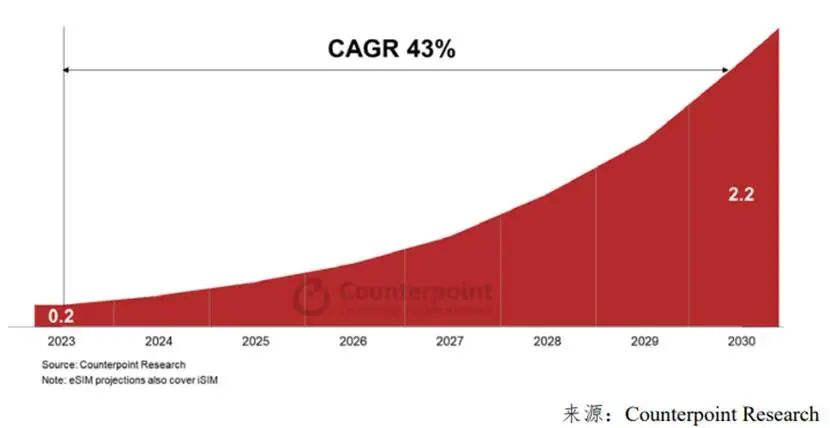
Core Insights - The three major telecom operators in China have officially launched eSIM mobile services, marking a significant advancement in the eSIM technology for smartphones and creating new growth opportunities for the eSIM industry chain [1] Industry Overview - The global eSIM chip shipment reached 446 million in 2023, covering various products including smartphones and automotive devices. By the end of 2025, the number of global eSIM smartphone connections is expected to reach 1 billion, increasing to 6.9 billion by 2030, which will account for three-quarters of total smartphone connections [1][6] - The eSIM technology is centered around the embedded Universal Integrated Circuit Card (eUICC) chip, which allows for remote SIM configuration and management, enhancing user experience and security [2] Market Dynamics - The demand for eUICC chips is anticipated to grow significantly due to the commercial launch of eSIM services by the three major telecom operators, with the number of domestic eSIM users reaching 3.62 million in 2023, 90% of which are smartwatch users [3] - Domestic companies like Unisoc and Huada Semiconductor are emerging in the eSIM chip design sector, with products widely used in global consumer electronics and IoT devices [2] Supply Chain Opportunities - The etching lead frame, a key material for eSIM chip packaging, has substantial potential for domestic substitution, with the demand for this material expected to rise as eSIM applications accelerate [4] - The WLCSP (Wafer-Level Chip Scale Package) technology is crucial for miniaturizing eSIM chips and is already adopted by major international manufacturers like Apple and Samsung [5] Strategic Positioning - Companies that proactively invest in technology development and establish strong ties with terminal manufacturers and telecom operators are likely to gain competitive advantages in the evolving eSIM industry [6]

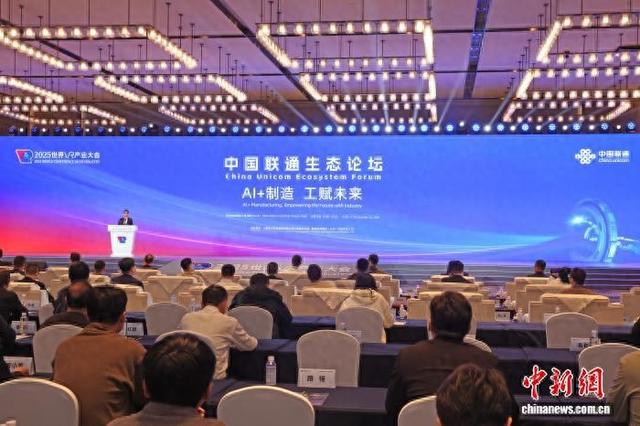
专家学者江西南昌探讨“AI+制造”赋能产业转型升级
Zhong Guo Xin Wen Wang· 2025-10-20 13:04
Core Insights - The 2025 World VR Industry Conference "China Unicom Ecological Forum" was held in Nanchang, Jiangxi, focusing on the integration of industrial sectors with AI and VR/AR technologies [1][2][3] Group 1: Event Overview - The theme of the conference was "VR Makes the World More Exciting - VR+AI Opens a Smart Future," emphasizing the fusion of cutting-edge technology and industry [2] - The event attracted numerous experts, scholars, and key guests to discuss innovative paths and lead new directions in the industry [2] Group 2: Regional Advantages - Jiangxi's advantages in location, policy, and hosting the World VR Industry Conference have made it an ideal place for enterprises, projects, research platforms, and professionals to gather [2] - The region is positioning itself as a hub for industrial development through the convergence of various advantages [2] Group 3: Company Initiatives - China Unicom is playing a significant role in the integration of "AI+Manufacturing," contributing to the advancement of new industrialization through infrastructure, software and hardware support, platform services, and industry applications [2] - The company aims to empower more industries through the combination of "5G+VR+AI," contributing to the sustainable development of the digital economy [2] Group 4: Technological Integration - The integration of artificial intelligence with the digital transformation of manufacturing is generating new application scenarios, becoming a vital carrier of the digital economy [2] - Experts at the forum discussed the core technologies, industry practices, cutting-edge trends, and future prospects necessary for the deep integration of AR and AI in the industrial sector [2] Group 5: Collaboration and Innovation - During the forum, China Unicom announced the launch of its innovation capabilities and ecological system, along with the "Ge Wu Industrial·Intelligent Manufacturing Vertical Model" [2] - The company signed cooperation agreements with several enterprises, including Jiangling Holdings, to integrate resources across production, education, research, and application, aiming to promote industrial transformation and upgrading [2]


7天6板,600403,最新人气王!国内首款eSIM手机将发售,多家A股公司已抢先布局
Zheng Quan Shi Bao Wang· 2025-10-20 10:45
Core Insights - eSIM technology is entering a new commercial phase in China, with major telecom operators officially launching eSIM services for mobile phones, marking a significant shift in the industry [2][3] - The adoption of eSIM is expected to expand beyond mobile phones into various sectors, including consumer electronics and the Internet of Things (IoT), driven by technological advancements and policy support [3][4] Industry Developments - Apple has announced the launch of the iPhone Air, the first eSIM-only phone in China, set to be released on October 22 [2] - Domestic brands like OPPO and vivo are quickly following suit, with OPPO already launching an eSIM-compatible model and others expected to release their versions soon [2][3] - eSIM technology is anticipated to enhance device capabilities, such as waterproofing and shock resistance, while also allowing for multiple SIM profiles [3] Market Performance - eSIM concept stocks have shown strong performance, with an average increase of 42.42% year-to-date, significantly outperforming the Shanghai Composite Index [5] - Six stocks in the eSIM sector have seen gains exceeding 50%, including Hengbao Co., Dongxin Peace, and Meige Intelligent [5] - Despite the overall positive trend, some stocks have experienced significant pullbacks, with several dropping over 30% from their year-to-date highs [8] Company Strategies - Several A-share companies are actively investing in eSIM technology, including Unisoc, which has launched multiple eSIM products, and Eastcompeace, which has developed an embedded operating system for eSIM management [4] - Megmeet has established a mature eSIM solution and is producing large volumes of 4G/5G chips, while Chutianlong has received product approval from China Unicom for its eSIM offerings [4] Future Projections - GSMA Intelligence forecasts that by the end of 2025, global eSIM smartphone connections will reach 1 billion, and by 2030, this number is expected to rise to 6.9 billion, representing 76% of total smartphone connections [3]

手机eSIM商用启动,推动物联网eSIM加速实施
3 6 Ke· 2025-10-20 10:40
除手机外,蜂窝物联网也是eSIM应用的另一个主战场,而且是发展更为迅速的一个领域。目前,eSIM已广泛应用于 智能穿戴、智能表计、车联网、工业互联网等领域,为物联网各类场景网络接入提供便捷手段。从用户视角看,物联 网eSIM需求更强烈,对场景的支持更加明显。本次在对手机eSIM启动全面商用,支持eSIM整个产业链加速完善,客 观上也推动物联网eSIM进一步发展。 物联网eSIM对用户的价值明显 近期,针对eSIM的宣传较多,对于eSIM基本概念已有大量普及。eSIM作为蜂窝通信设备用户身份识别模块新的形 态,相对于实体Sim卡有多重显著优势,一个看得见的优势是支持取消卡槽,为各类终端节省出一定空间,为设备的 小型化设计、散热等带来实实在在的好处;另外,传统Sim卡依赖金属触点,在频繁震动、高温高湿、盐雾等恶劣场 景下,容易造成Sim卡接触不良或氧化,从而导致通信中断,而eSIM作为嵌入式的模组,在这方面可靠性大大提升。 除了这些显而易见的好处外,eSIM还有诸多隐形优势,节约供应链物流成本较为典型,因为无需实体Sim卡,可以大 大简化卡片的制作、包装、物流、库存等环节,节约相关厂商成本。用户也可以获得"无感" ...
港股、海外周观察:多事之秋,反弹不畅
Soochow Securities· 2025-10-20 09:23
Group 1 - The report indicates that recent events suggest short-term volatility in the Hong Kong stock market may not have ended, but the long-term upward trend remains unchanged [1] - Economic data, US-China tariff news, US tech earnings, and the Fourth Plenary Session are expected to influence trading patterns and styles in the Hong Kong market [1][2] - The technology sector is facing increased volatility risks, with US tech earnings impacting the trading rhythm of Chinese tech stocks [1][2] Group 2 - The report highlights that the US stock market showed resilience despite concerns over US-China tensions and credit worries, with the Nasdaq leading gains at 2.1% [1][4] - Federal Reserve Chairman Powell's dovish stance suggests a likelihood of maintaining the current policy path, with a potential rate cut in October being the optimal solution [1][5] - The report notes that the average win rate for October over the past decade is low, while the advantages of November and December are relatively prominent [1][23] Group 3 - The report discusses the ongoing US government shutdown, which has entered its third week, potentially exacerbating negative impacts on the economy [3] - Concerns over credit quality in regional banks have emerged, but these are viewed as isolated incidents rather than indicative of a broader liquidity crisis [2][3] - The report emphasizes the importance of monitoring US-China trade relations, as further escalation could negatively impact the US economy and inflation risks [3][4] Group 4 - The report notes that developed markets saw an increase of 1.4% while emerging markets declined by 0.3% during the week [4][12] - The Hang Seng Tech Index fell by 8.0%, and the Hang Seng Index dropped by 4.0%, with public utilities leading sector gains [4][12] - The report highlights significant inflows into financials and non-essential consumer sectors, while the information technology sector experienced outflows [4][12] Group 5 - The report indicates that global stock ETFs saw a net inflow of $446.43 billion, with the US stock ETFs leading at $231.7 billion [7][49] - The technology sector was the top recipient of inflows among global stock ETFs, while the communication sector experienced the most significant outflows [7][51] - The report also notes that institutional investors marginally increased their holdings in gold, with significant inflows into major gold ETFs [6][54]



十五五信息通信规划展望
HUAXI Securities· 2025-10-19 13:37
Investment Rating - Industry Rating: Recommended [4] Core Insights - The report emphasizes the importance of information communication as a critical infrastructure for the new round of technological upgrades, focusing on three major infrastructure networks: AI computing power infrastructure, integrated space-ground communication networks, and high-speed data circulation infrastructure [1][34] - The report highlights the rapid development of satellite internet and low-altitude economy, with a focus on the integration of satellite communication networks and the establishment of low-altitude economic networks [3][19] - The data element construction is crucial for building high-speed interconnected data circulation infrastructure, with significant growth expected in the data industry [24][27] - AI empowerment is seen as a key driver for industrial upgrades, with applications in various sectors including advanced manufacturing and smart manufacturing [29][30] Summary by Sections 1. Investment in Computing Power Infrastructure - Significant capital expenditure growth in computing power infrastructure, with major telecom operators increasing their investments [12][14] - Key beneficiaries include companies involved in AI chips, optical communication, and data center services [2][14][15] 2. Satellite and Low-Altitude Communication Infrastructure - The rapid deployment of satellite internet and the establishment of low-altitude economic networks are highlighted, with various companies benefiting from this trend [16][19][21] - Key beneficiaries include companies involved in satellite communication and low-altitude network equipment [6][23] 3. Data Element Construction - The data industry is projected to grow significantly, with a focus on building a robust data infrastructure to support data circulation [24][25][26] - Key beneficiaries include telecom operators and companies providing data platforms and security solutions [27][28] 4. AI Empowerment for Industrial Upgrades - AI is driving the transformation of traditional manufacturing into smart manufacturing, with a focus on enhancing productivity and efficiency [29][30][31] - Key beneficiaries include companies involved in AI applications across various sectors [35][36]
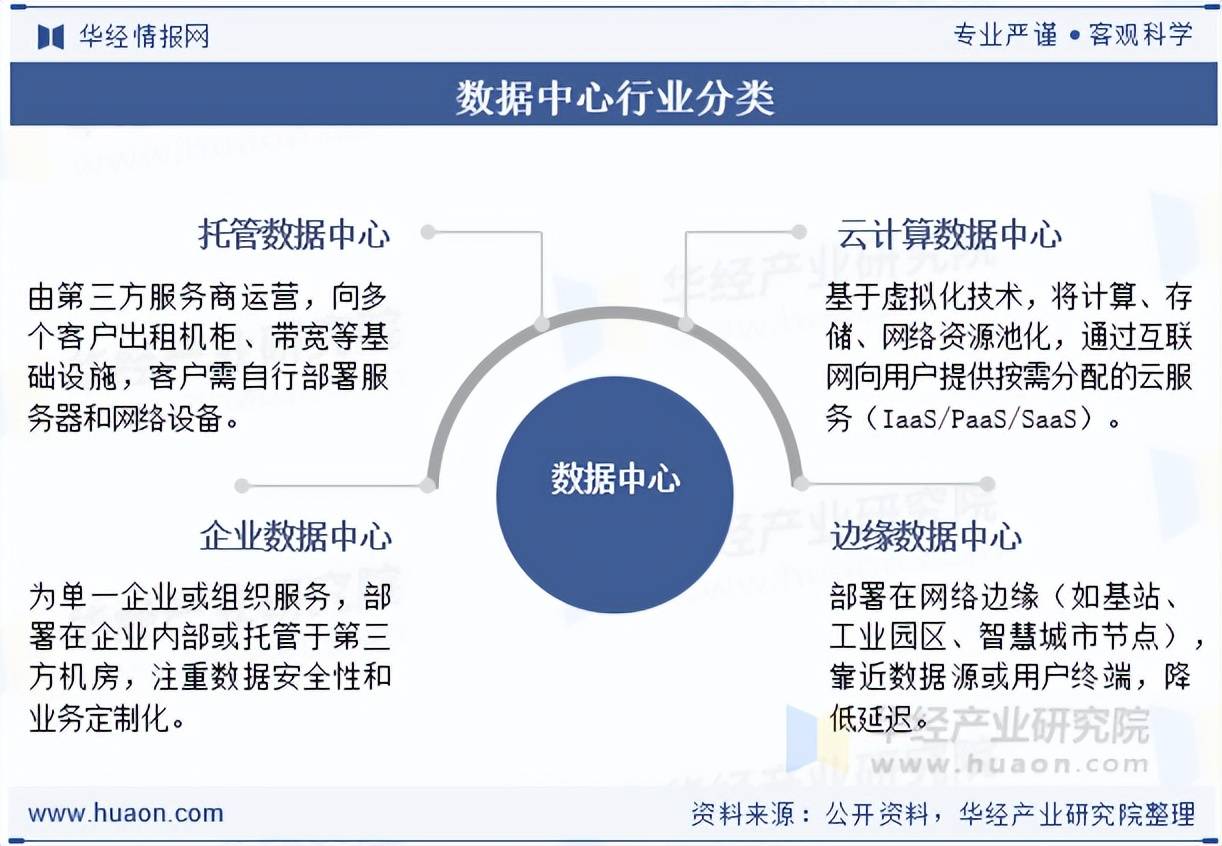
2025年中国数据中心行业分类、相关政策、市场规模及竞争格局分析
Sou Hu Cai Jing· 2025-10-19 07:24
Core Insights - The data center industry is experiencing robust growth driven by emerging technologies such as 5G, cloud computing, and artificial intelligence, with the market size reaching 507.83 billion yuan in 2023 [6]. Policy Support - The development of the data center industry is supported by various policies at both national and local levels, focusing on layout optimization, green development, technology upgrades, and financing channels [4]. - Key policies include the "2030 Carbon Peak Action Plan" aimed at promoting energy-saving and carbon reduction in data centers [5], and the "New Type Data Center Development Three-Year Action Plan (2021-2023)" which outlines six key tasks for quality upgrades [5]. Market Structure - The competitive landscape of the data center industry is diverse, with major players including Alibaba Cloud, Tencent Cloud, and Huawei Cloud in the first tier, and third-party service providers like GDS Services, Century Internet, and DataPort in the second tier [8]. - The industry is characterized by a multi-tier structure, with significant contributions from both cloud service providers and telecommunications operators [8]. Industry Growth - The data center market is projected to continue its growth trajectory, supported by the increasing demand for digital services and the ongoing digital transformation across various sectors [6]. - The industry is moving towards a more integrated, large-scale, green, and intelligent development model [4]. Company Strategies - Major companies are expanding their data center footprints across key regions, with Century Internet and GDS Services actively developing data centers in first-tier cities and strategic locations [10]. - Companies like Alibaba Cloud and Tencent Cloud are establishing large-scale data centers in multiple regions, enhancing their service capabilities [10].


三大运营商eSIM商用启幕 哪些产业链企业受益?|eSIM重返系列观察①
Mei Ri Jing Ji Xin Wen· 2025-10-17 15:32
Core Insights - The three major telecom operators in China have officially launched eSIM mobile services, marking a significant advancement in the eSIM technology for smartphones and creating new growth opportunities for the eSIM industry chain [1] Industry Overview - The global eSIM chip shipment reached 446 million in 2023, with predictions of 1 billion eSIM smartphone connections by the end of 2025 and 6.9 billion by 2030, accounting for three-quarters of total smartphone connections [1][6] - The eUICC chip is central to eSIM technology, enabling remote SIM configuration and management, which enhances user experience and positions the industry chain for growth [2] Market Dynamics - The demand for eUICC chips is expected to surge due to the commercial launch of eSIM services by telecom operators, with 3.62 million eSIM users in China as of 2023, predominantly in smartwatches [3] - The eSIM technology is anticipated to drive supply chain optimization within the telecommunications industry [1] Company Developments - New Henghui, a semiconductor packaging and testing company, has the capability to adapt its existing IoT eSIM packaging technology for smartphones and other devices, indicating a broad application potential [1][5] - Huada Electronics has developed an eSIM operating system in collaboration with a global eSIM service provider, achieving GSMA eUICC Security Assurance certification, which enhances its market position [2] Technical Advancements - The etching lead frame is a critical material for eSIM chip packaging, with significant potential for domestic substitution as eSIM applications accelerate [4] - The WLCSP (Wafer-Level Chip Scale Package) technology is crucial for miniaturizing eSIM chips and is already adopted by major international manufacturers like Apple and Samsung [5] Future Outlook - Companies that proactively invest in technology development and establish strong ties with terminal manufacturers and telecom operators are likely to gain competitive advantages in the evolving eSIM industry [6]
港股通央企红利ETF天弘(159281)跌1.29%,成交额5386.25万元
Xin Lang Cai Jing· 2025-10-17 10:02
Core Viewpoint - The Tianhong CSI Hong Kong Stock Connect Central State-Owned Enterprises Dividend ETF (159281) experienced a decline of 1.29% in its closing price on October 17, with a trading volume of 53.86 million yuan [1] Group 1: Fund Overview - The Tianhong CSI Hong Kong Stock Connect Central State-Owned Enterprises Dividend ETF was established on August 20, 2025, with an annual management fee of 0.50% and a custody fee of 0.10% [1] - As of October 16, the fund had a total of 320 million shares and a total size of 324 million yuan [1] - The fund's performance benchmark is the adjusted return of the CSI Hong Kong Stock Connect Central State-Owned Enterprises Dividend Index [1] Group 2: Liquidity and Trading Activity - Over the last 20 trading days, the ETF recorded a cumulative trading amount of 1.048 billion yuan, with an average daily trading amount of 52.41 million yuan [1] Group 3: Fund Management - The current fund manager is He Yuxuan, who has managed the fund since its inception, with a return of -0.15% during the management period [1] Group 4: Top Holdings - The ETF's top holdings include: - COSCO Shipping Holdings (0.85% holding, 218,000 shares, market value of 2.9175 million yuan) - Orient Overseas International (0.40% holding, 10,500 shares, market value of 1.3717 million yuan) - China Foreign Transport (0.33% holding, 270,000 shares, market value of 1.1396 million yuan) - China Petroleum (0.32% holding, 162,000 shares, market value of 1.0973 million yuan) - CITIC Bank (0.32% holding, 175,000 shares, market value of 1.1136 million yuan) - CNOOC (0.29% holding, 58,000 shares, market value of 1.0041 million yuan) - China Shenhua Energy (0.29% holding, 30,500 shares, market value of 982,600 yuan) - China Pacific Insurance (0.29% holding, 164,000 shares, market value of 1.0107 million yuan) - China Unicom (0.28% holding, 104,000 shares, market value of 952,800 yuan) - Agricultural Bank of China (0.27% holding, 189,000 shares, market value of 933,900 yuan) [2]