
CNOOC(00883)

Search documents
智通AH统计|11月17日
智通财经网· 2025-11-17 08:17
Core Insights - The article highlights the top and bottom AH share premium rates, indicating significant discrepancies in market valuations between H-shares and A-shares for various companies [1][2][3]. Group 1: Top AH Share Premium Rates - Northeast Electric (00042) leads with a premium rate of 815.25%, followed by Hongye Futures (03678) at 277.62% and Sinopec Oilfield Service (01033) at 276.83% [1][2]. - The premium rates for the top three companies indicate a strong market preference for their H-shares compared to A-shares [2]. Group 2: Bottom AH Share Premium Rates - Contemporary Amperex Technology (03750) has the lowest premium rate at -7.20%, with China Merchants Bank (03968) at -0.80% and Heng Rui Medicine (01276) at 4.11% [1][3]. - The negative premium for Contemporary Amperex Technology suggests a potential undervaluation of its H-shares relative to A-shares [3]. Group 3: Premium Deviation Values - Zhongwei New Materials (02579) has the highest deviation value at 77.12%, indicating a significant difference from its historical average premium rate [1][4]. - The lowest deviation values are seen in Northeast Electric (00042) at -22.71%, suggesting a consistent underperformance compared to its historical premium [1][5].

秦文彩:新中国海洋石油事业的开创者
Zhong Guo Hua Gong Bao· 2025-11-17 03:02
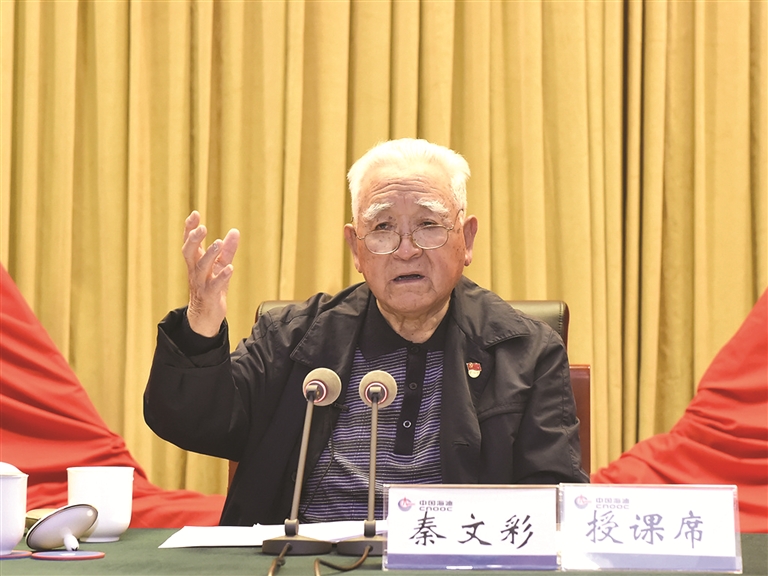
Core Viewpoint - The article pays tribute to Qin Wencai, the former general manager of China National Offshore Oil Corporation (CNOOC), highlighting his significant contributions to the development of China's offshore oil industry over his 35-year career in the oil sector [1][19]. Group 1: Early Life and Military Service - Qin Wencai was born in February 1925 and joined the Communist Party at the age of 16, participating in the Anti-Japanese War and the Liberation War [2][3]. - He self-taught Japanese to aid in the war effort and quickly became an exemplary Communist Party member [2]. Group 2: Contributions to Oil Industry - From 1952, Qin Wencai worked in the oil industry, transitioning from military service to becoming a key figure in China's oil exploration and production [11][12]. - Under his leadership, the oil production in China increased significantly, with national crude oil output surpassing 1 million tons by the late 1970s [14]. Group 3: Establishment of CNOOC - CNOOC was established in February 1982, with Qin Wencai as its first general manager, marking the beginning of China's offshore oil exploration and international cooperation [21][25]. - By 1986, CNOOC had signed 33 oil contracts with foreign companies, significantly increasing its operational capacity and foreign investment [25]. Group 4: Technological Advancements - Qin Wencai emphasized technological innovation, leading to the development of various drilling techniques and the establishment of a marine oil research center [24]. - By 1985, CNOOC had mastered 70 foreign technologies and initiated multiple projects to enhance its technological capabilities [24]. Group 5: Economic Impact - By the end of 1986, CNOOC's crude oil production had risen from 90,000 tons in 1982 to nearly 380,000 tons, with total assets increasing from 2.8 billion yuan to 5.3 billion yuan [25]. - The company contributed significantly to the national economy, with foreign companies paying approximately $100 million in taxes and CNOOC itself contributing nearly 50 million yuan in taxes by 1986 [25].

智通港股通持股解析|11月17日
智通财经网· 2025-11-17 00:31
Core Insights - The top three companies by Hong Kong Stock Connect holding ratios are China Telecom (00728) at 72.08%, Green Power Environmental (01330) at 69.17%, and COSCO Shipping Energy (01138) at 68.32% [1][2] - Xiaomi Group-W (01810), CNOOC (00883), and Pop Mart (09992) saw the largest increases in holding amounts over the last five trading days, with increases of +2.869 billion, +2.096 billion, and +1.690 billion respectively [1][2] - Alibaba-W (09988), Hua Hong Semiconductor (01347), and Xpeng Motors-W (09868) experienced the largest decreases in holding amounts, with decreases of -5.993 billion, -1.618 billion, and -1.248 billion respectively [1][3] Hong Kong Stock Connect Holding Ratios - The latest holding ratios for the top 20 companies show that China Telecom leads with 100.04 million shares and a holding ratio of 72.08% [2] - Other notable companies include China Shenhua (01088) with 23.05 billion shares at 68.23% and Da Zhong Gong Yong (01635) with 3.64 billion shares at 68.19% [2] Recent Increases in Holdings - The top three companies with the largest increases in holdings over the last five trading days are: - Xiaomi Group-W (01810): +2.869 billion with an increase of 67.73 million shares - CNOOC (00883): +2.096 billion with an increase of 93.55 million shares - Pop Mart (09992): +1.690 billion with an increase of 7.81 million shares [2] Recent Decreases in Holdings - The top three companies with the largest decreases in holdings over the last five trading days are: - Alibaba-W (09988): -5.993 billion with a decrease of 38.68 million shares - Hua Hong Semiconductor (01347): -1.618 billion with a decrease of 20.94 million shares - Xpeng Motors-W (09868): -1.248 billion with a decrease of 12.64 million shares [3]



我国海洋装备产业有效专利全球占比超5成 为建设海洋强国筑牢专利根基
Zhong Guo Chan Ye Jing Ji Xin Xi Wang· 2025-11-16 22:12
Core Viewpoint - China's shipbuilding industry is making significant advancements in marine equipment technology, breaking foreign monopolies and achieving notable milestones in patent innovation and application [1][2][5]. Group 1: Patent Innovations and Achievements - China's shipbuilding industry has developed high-precision marine measurement instruments, marking a breakthrough in high-end ship types and breaking the long-standing foreign supplier monopoly [1]. - The effective patent count in the global marine equipment industry has reached 306,400, with China holding approximately 166,600 patents, accounting for 54.4% of the global total [1]. - Since 2015, global marine equipment patent applications have exceeded 490,000, with China's annual patent application growth rate at 12.6%, significantly higher than the global average of 5.8% [2]. Group 2: Technological Focus Areas - Key technological directions in marine equipment innovation include green technology, intelligent vessels, polar equipment, and deep-sea resource development [4]. - Green power technology has seen a shift since 2021, with related patents surpassing traditional marine power patents, focusing on multiple fuel technologies such as LNG, ammonia, methanol, and hydrogen [4]. - The deep-sea resource development sector has experienced explosive patent growth since 2020, with China, the U.S., Japan, and Australia being the main innovators [4]. Group 3: Industry Development and Trends - The marine equipment sector is witnessing a transformation towards high-end, intelligent, and green projects, with significant developments in large cruise ships, LNG vessels, and deep-sea exploration [5]. - Emerging marine industries are accelerating, with new vessels like the 150,000-ton large aquaculture vessel "Guoxin 1" entering operation [6]. - The marine tourism market in China has seen a value increase to 771.8 billion yuan, driven by favorable policies and rising consumer interest [6]. Group 4: Strategic Insights - As China advances its marine power strategy, the industry is at a critical juncture, emphasizing the need for a robust patent ecosystem to support innovation and competitiveness [7].

俄乌互相打击对方能源设施,俄油出口受阻支撑油价
Ping An Securities· 2025-11-16 09:00
Investment Rating - The report maintains a "Strong Outperform" rating for the oil and petrochemical sector [1]. Core Viewpoints - The ongoing conflict between Russia and Ukraine has led to mutual attacks on energy facilities, causing disruptions in Russian oil exports and supporting oil prices. Recent data shows WTI crude futures prices increased by 0.17% and Brent crude futures by 0.85% during the week of November 7-14, 2025 [6]. - The geopolitical tensions have heightened concerns over Russian oil export disruptions, particularly with the New Novorossiysk port's daily export capacity of approximately 2.2 million barrels, which accounts for 2% of global supply [6]. - OPEC's latest report indicates a decrease in oil production from OPEC and non-OPEC countries, with a daily output of 43.02 million barrels in October, down by 73,000 barrels from the previous month. However, due to unexpected increases in U.S. oil production, the global market has shifted from a shortage of 400,000 barrels per day to a surplus of 500,000 barrels per day, indicating a structural oversupply [6]. - The International Energy Agency forecasts that global oil surplus could reach a record level of 4 million barrels per day by 2026, posing significant downward pressure on medium to long-term oil prices [6]. - The U.S. economy is showing signs of weakness, with the IMF noting a decline in GDP growth expectations for the fourth quarter below the previously predicted 1.9% [6]. Summary by Sections Oil and Petrochemicals - The report highlights the impact of the Russia-Ukraine conflict on oil prices and exports, with significant military actions affecting energy infrastructure [6][7]. - Current oil market dynamics show a transition from a supply shortage to a surplus, influenced by OPEC production adjustments and U.S. output increases [6][7]. Fluorochemicals - The market for popular fluorinated refrigerants, such as R32 and R134a, continues to thrive, with prices stabilizing at high levels due to supply constraints and strong demand from the air conditioning and automotive sectors [6][7]. - The report anticipates a recovery in air conditioning production rates towards the end of the year, with expected increases in production of 4.2%, 8.6%, and 34.5% for the months of October to December 2025 [6]. Investment Recommendations - The report suggests focusing on the oil and petrochemical sector, fluorochemicals, and semiconductor materials. It emphasizes the resilience of major oil companies in the face of price volatility and recommends monitoring companies like China National Petroleum, Sinopec, and CNOOC for their strong earnings potential [7]. - In the fluorochemical sector, it advises attention to leading companies in the production of third-generation refrigerants and upstream fluorite resources [7]. - For semiconductor materials, the report notes a positive trend in inventory reduction and a gradual recovery in end-market fundamentals, recommending companies involved in domestic substitution and growth [7].
机构本周首次青睐88只个股



Di Yi Cai Jing· 2025-11-16 03:07
Core Viewpoint - Institutional investors have shown renewed interest in 88 stocks this week, with 11 stocks receiving target prices from various securities firms [1] Group 1: Stock Ratings and Target Prices - Longxin General received a "Buy Over Market" rating from Guosen Securities, with a target price of 15.80 to 16.70 CNY, while the latest closing price was 13.16 CNY [1] - BYD was rated "Buy" by Southwest Securities, with a target price of 120.30 CNY, compared to its latest closing price of 98.37 CNY [1] - China National Offshore Oil Corporation (CNOOC) received a "Buy" rating from Guojin Securities, with a target price of 32.88 CNY, while the latest closing price was 29.02 CNY [1] - Other stocks such as Xinwangda, Huamao Technology, and Gaode Infrared have also gained initial attention from institutions this week [1]
上市公司全年纳税近4万亿元,前10名是这几家→
第一财经· 2025-11-15 12:46
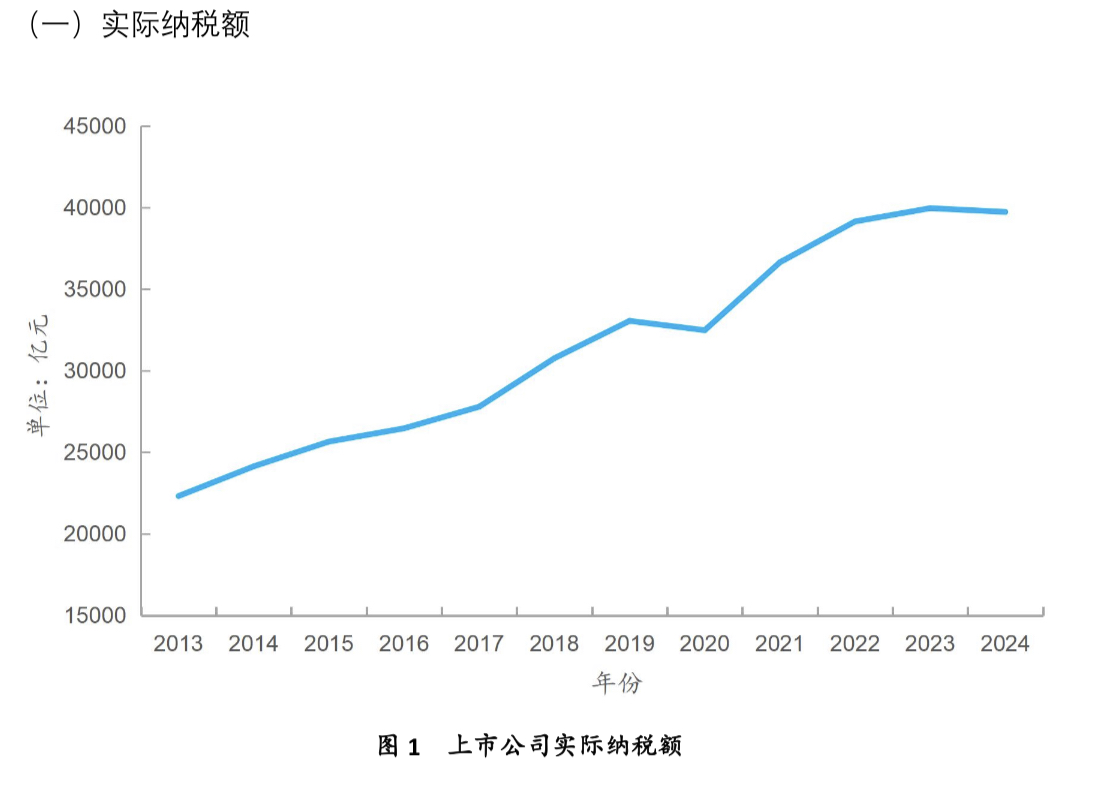
Core Insights - The report reveals that in 2024, 5,091 listed companies in China contributed approximately 39,727 billion yuan in actual tax payments, remaining stable compared to 2023, accounting for about 22.7% of the national tax revenue [3][4]. Group 1: Tax Contributions and Distribution - The top 100 listed companies contributed around 73% of the total tax payments, indicating a significant concentration of tax contributions among a small number of firms [5]. - Major contributors include China National Petroleum (3,961 billion yuan) and Sinopec (3,313 billion yuan), with several banks and other companies also exceeding 1,000 billion yuan in tax payments [5]. - The average tax payment per listed company was 7.8 million yuan, with a median of 0.53 million yuan [6]. Group 2: Industry Contributions - The mining, financial, and manufacturing sectors accounted for nearly 77% of the total tax contributions from listed companies, with mining alone contributing about 1 trillion yuan [8]. - The manufacturing sector saw the highest growth in tax contributions, increasing by approximately 22.6 billion yuan, while the real estate sector experienced the largest decline at around -28% [12]. Group 3: Ownership Structure and Tax Burden - State-owned enterprises represented about 30% of listed companies but contributed nearly 80% of the total tax payments, highlighting the dominance of state-owned firms in tax contributions [12]. - The average tax burden for listed companies has decreased over the years, with the tax payment per 100 yuan of revenue dropping to approximately 5.6 yuan in 2024 [13]. - The mining and financial sectors had the highest tax payment per 100 yuan of revenue at around 12 yuan, while the manufacturing sector had a lower tax burden of about 4 yuan [14].



上市公司贡献全国两成多税收,采矿、金融、制造行业贡献最大
Sou Hu Cai Jing· 2025-11-15 11:22
Core Insights - The report from Southwest University of Finance and Economics reveals the tax contributions of listed companies in China for 2024, indicating a total actual tax payment of approximately 39,727 billion yuan, which remains stable compared to 2023 [1] Group 1: Tax Contributions - A total of 5,091 listed companies contributed an actual tax amount of about 39,727 billion yuan in 2024, accounting for approximately 22.7% of the national tax revenue [1] - The top 100 listed companies contributed around 73% of the total actual tax payments made by all listed companies [1] Group 2: Industry Contributions - The industries with the highest tax contributions are concentrated in mining, finance, and manufacturing [1] - China National Petroleum Corporation and Sinopec ranked first and second in actual tax payments, contributing 3,961 billion yuan and 3,313 billion yuan, respectively [1] - Major banks such as Industrial and Commercial Bank of China, China Construction Bank, Agricultural Bank of China, and Bank of China each contributed over 1,000 billion yuan, ranking third to seventh [1] - Kweichow Moutai, China State Construction Engineering, and China Mobile each contributed over 500 billion yuan, ranking eighth to tenth [1]
上市公司贡献全国两成多税收,平均综合税负约5.6%
Di Yi Cai Jing· 2025-11-15 10:16
Core Insights - The report reveals that in 2024, 5,091 listed companies in China contributed approximately 39,727 billion yuan in actual tax payments, remaining stable compared to 2023, accounting for about 22.7% of the national tax revenue [1][2] Group 1: Tax Contributions and Distribution - The top 100 listed companies contributed around 73% of the total tax payments, indicating a significant concentration of tax contributions among a small percentage of companies [3] - Major contributors include China National Petroleum (3,961 billion yuan) and Sinopec (3,313 billion yuan), followed by major banks and companies like Agricultural Bank of China and China Mobile, each exceeding 1,000 billion yuan in tax payments [3] - The average tax payment per listed company was 7.8 million yuan, with a median of 0.53 million yuan [4] Group 2: Industry Contributions - The mining, financial, and manufacturing sectors accounted for nearly 77% of the total tax contributions from listed companies, with the mining sector alone contributing about 1 trillion yuan [4][9] - The manufacturing sector saw the highest growth in tax contributions, increasing by approximately 226 million yuan, while the real estate sector experienced the largest decline at -28% [9] Group 3: Ownership Structure and Tax Burden - State-owned enterprises represented about 30% of listed companies but contributed nearly 80% of the total tax payments, highlighting the dominance of state-owned firms in tax contributions [9] - The average tax burden for listed companies has decreased to approximately 5.6% in 2024, down from 8.9 yuan per 100 yuan of revenue in 2015, reflecting the impact of tax reduction policies [10] - The mining and financial sectors had the highest tax burden per 100 yuan of revenue, at around 12 yuan, while the manufacturing sector had a lower burden of about 4 yuan [10] Group 4: Emerging Sectors - Companies related to digital currency and digital government concepts had relatively low tax contributions, indicating potential for growth in tax contributions from these sectors [11]
驻里约热内卢总领事田敏出席领区中资企业安全工作座谈会

Shang Wu Bu Wang Zhan· 2025-11-15 03:15
Core Viewpoint - The meeting highlighted the importance of safety, compliance, and social responsibility among Chinese enterprises operating in Brazil, emphasizing the need for enhanced political awareness and risk management [1][2]. Group 1: Meeting Overview - The Consul General of China in Rio de Janeiro, Tian Min, attended a safety work seminar for Chinese enterprises in the region, with over 30 representatives participating both online and offline [1]. - Key representatives from major companies such as State Grid, PetroChina, Sinopec, CNOOC, China Development Bank, Bank of Communications, BYD, XCMG, and China National Materials reported on their safety and compliance efforts [2]. Group 2: Company Responsibilities - Companies were encouraged to deepen their understanding of the spirit of the 20th Central Committee's Fourth Plenary Session, improve their political stance, and integrate business development with safety measures [2]. - Attendees committed to adhering to the meeting's directives, emphasizing legal compliance, safety risk prevention, and fulfilling social responsibilities, aiming to be storytellers of China's narrative and promoters of China-Brazil friendship [2].
