
LENOVO GROUP(00992)

Search documents
2025《财富》中国最受赞赏的中国公司榜发布,联想构建科技与人文的时代典范
Jiang Nan Shi Bao· 2025-12-30 03:04
Core Insights - The 2025 Fortune magazine list of "Most Admired Chinese Companies" highlights the increasing importance of corporate "soft power," emphasizing that companies treating employees well achieve both reputation and commercial success [1][2] - Lenovo Group exemplifies this new era by excelling in corporate culture, talent development, technological innovation, and social responsibility [1][3] Importance of Corporate Culture - Corporate culture is the soul of a company, shaping its brand image and providing shared beliefs and behavioral guidelines for employees [2] - A strong corporate culture enhances employee satisfaction and loyalty, attracting and retaining top talent [2] - Companies with a people-oriented culture that serves societal values can achieve sustainable development [2] Lenovo's Corporate Culture Practices - Lenovo's culture is rooted in its founding ideal of "serving the country through industry," evolving to a mature value system centered on "pragmatism, progress, and people-oriented" principles [3][4] - The company emphasizes work-life balance, rejecting excessive overtime practices, which has earned it accolades such as "Forbes China's Best Employer" for three consecutive years [4] Technological Innovation and Globalization - Lenovo believes that true competitiveness comes from technological innovation rather than internal strife, successfully navigating the PC industry's price wars and increasing profit margins by over three times [5] - The company has doubled its R&D team to nearly 19,000, with over 38,000 global patents, showcasing its innovation capabilities [5] - Lenovo has introduced hybrid AI technology and a range of innovative products, aiming to make AI accessible to everyone [5] Social Responsibility and Cultural Heritage - Lenovo's "AI Smart County Wooden Pagoda" project won the SABRE Awards, demonstrating the integration of technology and culture [6] - The company has received recognition for its contributions to ecological and cultural heritage protection, showcasing its global corporate responsibility [6] Talent Development Initiatives - Lenovo launched a global learning center in July 2025, aiming to train over 100,000 "dual-capable" talents in globalization and intelligent transformation over three years [7] - The center collaborates with top universities to develop high-quality training programs, enhancing industry talent cultivation [7] Conclusion on Lenovo's Corporate Culture - Lenovo's recognition as one of the "Most Admired Chinese Companies" stems from its robust corporate culture that combines commercial success with humanistic care [8] - The company's achievements in employee satisfaction and social responsibility reflect its commitment to a people-oriented culture [8][9]

联想集团中国首席战略官:个人AI是下一个阶段创新和普惠的关键方向
Xin Hua Cai Jing· 2025-12-30 03:04
Core Insights - Personal AI is identified as a key direction for innovation and inclusivity, requiring collaboration across the entire industry chain for scalable, trustworthy, and sustainable evolution [2][3] - The current AI product and service architecture is primarily based on cloud-based large models, which lack capabilities for continuous perception, long-term memory, and autonomous decision-making, thus failing to create a truly personalized service loop [2] - The white paper released by Lenovo and IDC defines the current AI form as "Public AI," which significantly lowers the usage threshold and enhances efficiency, but still provides average services rather than personalized support [2] Industry Trends - Personal AI will adopt a hybrid architecture of edge and cloud to address user trust, cost control, response speed, and continuous companionship issues [3] - The rise of personal AI is reshaping the industry structure into a distributed three-layer architecture centered around individuals, consisting of integration, service, and capability layers [3] - Major companies like Intel, AMD, Qualcomm, MediaTek, Apple, and NVIDIA are launching next-generation chips optimized for AI inference, providing the necessary computational power for multimodal, continuous memory, and personalized services [3] Company Developments - Lenovo is actively developing and iterating its Tianxi personal super intelligent system (Tianxi AI) and various smart terminals embedded with Tianxi AI to enhance user experience [4] - The Tianxi AI has been upgraded to version 3.5 and is rapidly iterating, contributing to significant growth in Lenovo's AI mobile phones and tablets, with growth rates exceeding 90% and 100% respectively [4] - The AIoT product line is expanding with new categories such as AI glasses, AI headphones, and AI home products being introduced [4]

下周“科技春晚”CES开幕,英伟达们要向市场证明AI能卖得动
Hua Er Jie Jian Wen· 2025-12-29 15:53
Core Insights - The upcoming CES in Las Vegas will serve as a critical test for tech giants like Nvidia, Samsung, and Lenovo to demonstrate the market viability of AI hardware, moving beyond mere concept showcases to actual consumer demand [1] Group 1: AI Hardware Focus - AI-driven consumer products will be prominently featured, with Nvidia's CEO showcasing foundational AI technologies and other companies like Samsung and Lenovo presenting AI-centric devices [1] - The event will highlight AI smart glasses, humanoid robots, and wearable devices, indicating a strong industry focus on AI integration in consumer technology [1] - Previous failures of AI hardware products, such as Humane AI Pin and Rabbit R1, underscore the need for companies to prove their offerings can succeed in the market [1] Group 2: Smart Glasses - Smart glasses are expected to be a key highlight, with companies like Snap and Apple planning to launch their products by the end of 2026, continuing the momentum initiated by Meta [2] - Emerging brands such as Xreal, Vuzix, and Halliday Global are anticipated to showcase new AI-driven eyewear, while Meta may focus on software updates rather than new hardware [2] - The event will also feature other AI hardware forms, such as rings, designed to allow users to access AI assistant functions without relying on smartphones [2] Group 3: Humanoid Robots - Humanoid robots will be a significant focus, with a dedicated exhibition space showcasing various applications from home services to industrial uses [3] - Companies like Artly Coffee and VenHub Global will demonstrate AI-driven solutions in coffee shops and convenience stores, while Tombot will introduce a companion robot for elderly and cognitively impaired individuals [3] - The industry is moving towards demonstrating robots capable of complex, multi-step tasks, with major firms like LG expected to unveil new concepts [3] Group 4: Television and Mobile Innovations - Major brands including Samsung, LG, TCL, and Hisense will showcase their flagship television models, while Sony has shifted its new product launches to spring [4] - As high-end televisions meet consumer demands for brightness and resolution, manufacturers are focusing on advancements in color accuracy and realistic image rendering [4] - Motorola, under Lenovo, may introduce a foldable screen phone, marking a new direction after years of focusing on flip-style devices [5] Group 5: Wearable Devices - Wearable technology is evolving beyond fitness tracking to integrate features typically found in medical devices, with innovations like smart night guards that monitor various health metrics [6] - The industry is expected to focus on women's health management, continuous glucose monitoring, advanced cardiovascular tracking, longevity technology, and chronic disease management [6] - This shift indicates a move towards making wearable devices comprehensive tools for daily health monitoring and management rather than just fitness accessories [6]


Lenovo names Amit Luthra as One Lenovo commercial leader for India
BusinessLine· 2025-12-29 12:40
Leadership Appointments - Lenovo has announced key leadership appointments in India, with Amit Luthra becoming the One Lenovo Commercial Leader effective March 1, 2026, to drive integrated enterprise growth [1] - Srinivas Rao has been appointed as Managing Director of the Infrastructure Solutions Group (ISG) in India, expanding his leadership role [3] - Kaman Chawla has been appointed as Director of Consumer Business, responsible for leading the consumer business across PCs and smart devices [3] Financial Performance - In Q2 FY25/26, Lenovo India recorded a 23% year-on-year growth, reaching $1.2 billion, with expectations that leadership changes will further strengthen this momentum [2] Leadership Experience - Amit Luthra has over three and a half years of leadership experience at Lenovo India, significantly contributing to the scaling of the ISG business [2] - Kaman Chawla brings over 25 years of leadership experience from various sectors, including his recent role at HP Inc. [4] Strategic Focus - Lenovo aims to sharpen its focus on solution-led growth, with Amit's understanding of enterprise needs being critical for this strategy [5] - The company emphasizes the importance of infrastructure in enterprise transformation, with Srinivas's leadership expected to enhance infrastructure capabilities amid increasing AI adoption [5]


联想:天禧AI生态月活跃用户已突破 2.8亿,开发者注册人数超23万
Xin Lang Cai Jing· 2025-12-29 12:17
Core Insights - Lenovo has established a consensus with numerous AI developers that personal AI is a key direction for future innovation and inclusivity. The company's strategy in the personal AI sector is "Tianxi AI One Body Multi-End," aiming to provide every individual with their own AI Twin, which acts as a personalized AI companion [1][4]. Group 1: Strategic Vision and Implementation - Lenovo's vision for personal AI includes four main aspects: a human-centered approach with Tianxi AI representing individual interests; a new hybrid architecture of "AI terminal + trusted personal cloud" to address user trust, cost, and response speed; cross-platform ecosystem and OS connectivity to break service barriers; and a focus on "personal AI sovereignty" ensuring data, knowledge, and memory belong to the individual, with elastic computing power and encrypted processing [1][4]. Group 2: Ecosystem Growth and User Engagement - Over the past three years, the Tianxi AI ecosystem has grown significantly, with monthly active users surpassing 280 million, primarily consisting of university students aged 18-24 and working professionals aged 25-34, who together account for over 70% of the user base. The distribution volume is expected to exceed 4 billion by 2025 [2][5]. - The developer community has also expanded, with over 230,000 registered developers, including 1,800 new AI developers, leading to the creation of more than 5,000 intelligent agents and AI applications [2][5]. Group 3: Technological Advancements - Tianxi AI has been upgraded to version 3.5, achieving three major advancements: personalized responses through "always-on proactive memory" technology combined with a comprehensive knowledge base; enhanced action capabilities via collaborative multi-agent systems; and improved user interaction experiences with multi-end collaborative perception and a unified AUI [2][5]. Group 4: Developer Support Initiatives - Lenovo, in collaboration with Volcano Engine, launched the "Tianxi AI Ecosystem Intelligent Agent Pilot Program," offering early-stage developers attractive support, including 100 million tokens for development and a guarantee that all profits generated by intelligent agents will go to developers for the next 12 months. Partnerships have been established with major platforms such as Douzi, Baidu Wenxin, and Orion [3][6].
从“水疗数据中心”到“太空服务器”:能源危机正在重构云计算产业
Hua Er Jie Jian Wen· 2025-12-29 10:18
Core Insights - The explosive growth of AI workloads is challenging traditional digital infrastructure, necessitating a rethinking of data center designs to address energy and physical limits [1] - The industry is approaching a "critical point" where existing data center architectures will no longer suffice, prompting tech giants and infrastructure developers to seek "plug-and-play" solutions to alleviate grid pressure and meet sustainability goals [1][2] Ground Infrastructure Reconstruction - Traditional data centers are failing to effectively support AI workloads and meet sustainability requirements, with only 46% of IT decision-makers believing their current designs can achieve sustainability goals [3] - Lenovo, in collaboration with architectural firm Mamou-Mani and engineering company AKT II, proposed radical design concepts such as "data villages" and "data center spas" to utilize excess heat for community benefits [3][4] - Existing practices of heat reuse have been implemented, such as Equinix using waste heat for the Paris Olympics swimming pool and Microsoft deploying underwater data centers for cooling [4] Space-Based Initiatives - The competition to deploy servers in orbit is intensifying, with projects like Google's "Suncatcher," Alibaba's "Three-Body Computing Constellation," and Nvidia-supported Starcloud exploring the potential of space environments [5] - Starcloud has already sent a chip into space, achieving performance 100 times greater than previous on-orbit GPU capabilities, highlighting the appeal of vacuum cooling and continuous solar energy in space data centers [5] Challenges and Barriers - The commercial viability of near-Earth data center deployment remains uncertain due to high launch costs, radiation protection requirements, and maintenance difficulties [6] - Regulatory barriers and cost considerations are significant challenges for both ground innovations and space initiatives, with the U.S. having a more favorable regulatory environment compared to Europe [7] - The need for regulatory adjustments to keep pace with technological innovations is critical, as simply renovating old facilities may not be effective [7]
现在,哪些芯片厂商已经开始涨价了?(附最新涨价汇总)
芯世相· 2025-12-29 07:48
Price Increases in the Chip Industry - The chip industry is experiencing a significant price increase trend, with various manufacturers announcing price hikes due to rising raw material costs and supply chain pressures [3][4] - Major companies such as TSMC, SMIC, Samsung, and Micron have implemented or are expected to implement price increases across their product lines [12][13][14][19] Raw Material and PCB Price Increases - Jiantek announced a second price increase in December, raising prices for its copper-clad laminates by 5% to 10% due to escalating raw material costs [9] - Nanya Plastics raised prices for all CCL products and PP by 8% starting November 20, citing increases in copper prices and other raw materials [10] Semiconductor Price Adjustments - TSMC has informed clients of a price increase for advanced technology nodes (5nm to 2nm) over the next four years, with expected increases of 8% to 10% for 5nm and up to 50% for 2nm wafers [12] - SMIC has raised prices for some of its production capacity by approximately 10% [13] Memory Chip Price Surge - Samsung has notified clients of a price increase for DRAM and NAND Flash products, with increases of 15% to 30% for certain DRAM types and 5% to 10% for NAND products [14] - Micron has announced a price increase of 20% to 30% for its storage products, effective from September 12 [16] Passive Component Price Increases - Multiple passive component manufacturers have joined the price increase trend, with companies like KEMET and Yageo announcing price hikes of 20% to 30% due to raw material cost pressures [30][33] - Panasonic has raised prices for certain tantalum capacitor models by 15% to 30% [35] Power Device Price Adjustments - China Resources Microelectronics confirmed a price increase for some IGBT products, driven by rising raw material costs and strong order performance [45] - Jingdao Microelectronics has raised prices for certain product series by 10% to 15% due to the increase in raw material prices [46] End-User Impact - Major PC manufacturers like Lenovo, Dell, and HP are planning to raise prices by up to 20% due to ongoing storage price increases [66] - Several smartphone manufacturers have paused procurement of storage chips, facing challenges with rising prices from suppliers [68]




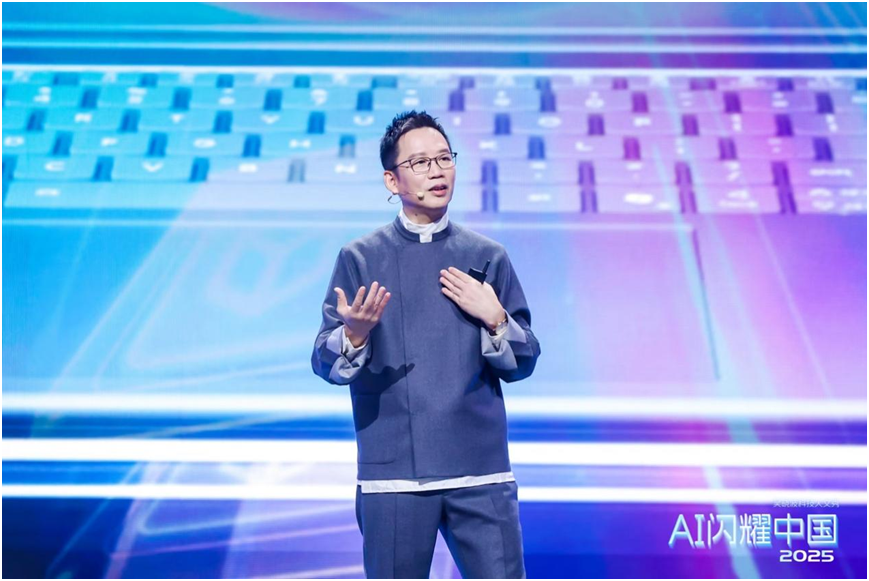
吴晓波:打造“端云一体”AI体验,才能真正构建个人超级智能体
Huan Qiu Wang· 2025-12-29 06:39
Core Insights - The event "AI Shining China 2025" highlighted the importance of creating an "end-cloud integration" AI experience to build personal superintelligent agents [1] Group 1 - Wu Xiaobo emphasized the need for seamless interaction and local processing capabilities in AI PCs, showcasing Lenovo's first AI PC with five key features that exceed expectations in response speed [3] - Lenovo has established over 30 manufacturing bases globally to rapidly develop AI products in the AI era [3] Group 2 - The Tianxi personal superintelligent agent (Tianxi AI) is embedded in various devices such as AI PCs, smartphones, tablets, and AIoT, utilizing a personal model and a comprehensive knowledge base [3] - Tianxi AI can record user interactions across different devices, deeply understand user habits, and autonomously manage tasks and execution [3] - The Tianxi AI 3.5 personal knowledge base enhances fragmented information into a unified personal knowledge graph through precise content extraction and intelligent knowledge association [3]
联想申请一种检索方法及装置专利,在图像库中检索目标图像
Jin Rong Jie· 2025-12-29 04:25
Group 1 - Lenovo (Beijing) Co., Ltd. has applied for a patent titled "A Retrieval Method and Device," with publication number CN121210698A, and the application date is October 2025 [1] - The patent abstract reveals a retrieval method that includes obtaining a query statement, extracting target word text features from the query, acquiring local image features matching the target word text features from a feature library, and retrieving target images from an image library based on local image features [1] - Lenovo (Beijing) Co., Ltd. was established in 1992 and is located in Beijing, primarily engaged in the manufacturing of computers, communications, and other electronic devices, with a registered capital of 565 million HKD [1] Group 2 - According to Tianyancha data analysis, Lenovo (Beijing) Co., Ltd. has invested in 107 companies, participated in 5,000 bidding projects, and has 1,751 trademark information entries and 5,000 patent information entries [1] - The company also holds 238 administrative licenses [1]
吴晓波:联想布局全球制造,才能在AI时代第一时间打造AI产品
Xin Lang Cai Jing· 2025-12-29 04:19
Core Insights - The event "AI Shining China 2025" featured a speech by Wu Xiaobo, emphasizing the importance of creating an "end-cloud integrated" AI experience to build personal superintelligent agents [1][3] - Wu Xiaobo highlighted his firsthand experience with Lenovo's AI PC, which possesses five key features, showcasing intuitive natural interaction and local document summarization without relying on the cloud [1][3] - Lenovo has established over 30 manufacturing bases globally, enabling it to rapidly develop AI products in the AI era [1][3] - The company has a 40-year history of leading PC generational upgrades and aims to integrate intelligence into everyday life through personalized user experiences [1][3] - The Tianxi AI is expected to evolve into an expert-level intelligent agent, ultimately achieving a fully autonomous AI twin that surpasses human expertise [1][3] Company and Industry Summary - Tianxi personal superintelligent agent (Tianxi AI) is embedded in various devices such as AI PCs, smartphones, tablets, and AIoT, utilizing a personal model and a comprehensive knowledge base [2][4] - Tianxi AI can record user interactions across different devices in real-time, deeply understand user habits, and autonomously manage tasks [2][4] - The super connectivity of Tianxi AI breaks device boundaries, allowing for real-time transfer of files, data, and information, and manages the entire lifecycle of a "personal knowledge base" [2][4]