
LENOVO GROUP(00992)

Search documents
独家|AMD苏姿丰到访中国
Di Yi Cai Jing· 2025-12-16 07:18
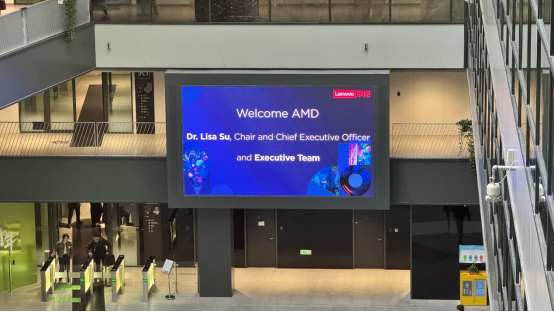
第一财经记者独家获悉,12月16日,美国超威半导体公司(AMD)董事会主席兼首席执行官苏姿丰率 高管团队造访联想集团位于北京的全球总部。在联想集团多位高管陪同下,AMD一行参观了包括人形 机器人在内的多项联想最新产品与技术成果。(第一财经记者 刘佳) 第一财经记者独家获悉,12月16日,美国超威半导体公司(AMD)董事会主席兼首席执行官苏姿丰率 高管团队造访联想集团位于北京的全球总部。在联想集团多位高管陪同下,AMD一行参观了包括人形 机器人在内的多项联想最新产品与技术成果。(第一财经记者 刘佳) ...


AMD苏姿丰到访联想集团全球总部
Zheng Quan Shi Bao Wang· 2025-12-16 07:17
Core Insights - AMD's CEO, Dr. Lisa Su, visited Lenovo's global headquarters in Beijing on December 16, highlighting the collaboration between the two companies in the semiconductor and technology sectors [1] Group 1 - The visit included a tour of Lenovo's latest products and technological achievements, including humanoid robots [1]
AMD总裁苏姿丰率高管团队造访联想集团 双方AI领域合作或将升级
智通财经网· 2025-12-16 07:09
Group 1 - AMD's CEO, Lisa Su, visited Lenovo's global headquarters in Beijing, showcasing Lenovo's latest products and technologies, including humanoid robots [1] - AMD has rapidly enhanced its strategic position in the AI computing market over the past two years, becoming the second-largest player in the global AI chip industry, following NVIDIA [3] - The collaboration between AMD and Lenovo in the AI PC sector was previously announced, with both companies serving major cloud computing and AI cluster clients like Microsoft, Meta, and Oracle [3] Group 2 - Lenovo is set to hold a technology innovation conference on January 6, 2026, in Las Vegas, where it will unveil its latest products and services in the AI field [4] - The competition between NVIDIA and AMD in the data center and GPU chip sectors extends beyond performance to include platform capabilities, software ecosystems, and system-level delivery efficiency [5] - Lenovo aims to transition from a traditional hardware manufacturer to an AI computing and service integrator, leveraging its hybrid AI strategy to build a global AI infrastructure ecosystem centered on edge devices [5]

联想与杭州上城区携手,正式开启“产业-创新”双向赋能新范式
3 6 Ke· 2025-12-16 06:44
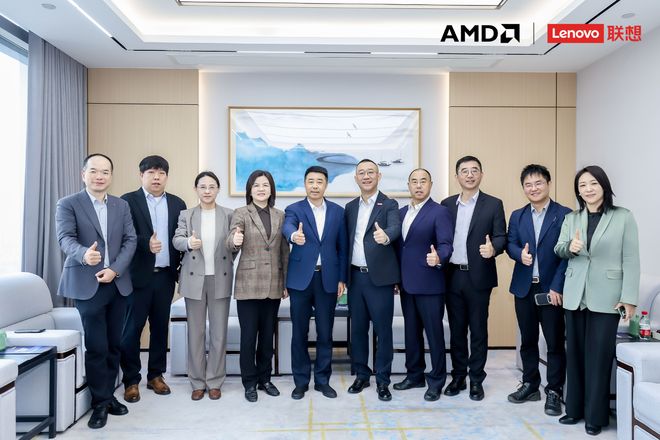
Core Insights - The event in Hangzhou marked a significant collaboration between government and leading enterprises to explore sustainable development paths in the AI industry, emphasizing the importance of innovation and ecosystem building [2][3]. Group 1: Event Overview - The "New Business Innovation Ecosystem Roadshow Season" in Hangzhou concluded successfully, showcasing technological advancements and collaborative efforts between government and enterprises [2]. - The event served as a platform for demonstrating technology and fostering innovation, highlighting the role of Lenovo in supporting small and medium enterprises through its "Lenovo Innovation Accelerator" [2][3]. Group 2: Strategic Collaborations - A memorandum of understanding was signed between Lenovo and local government officials to promote strategic collaboration in building an industrial ecosystem and resource sharing [3]. - The "Lenovo Innovation Accelerator - Hangzhou Ecological Innovation Center" was inaugurated, aimed at providing comprehensive support to regional SMEs and fostering innovation [3]. Group 3: AI Industry Insights - The Hangzhou government is actively transitioning from a "Central Business District" to a "Central Innovation District," identifying 77 AI-related opportunities to drive innovation [4]. - Lenovo's strategy focuses on "hybrid AI," integrating personal, enterprise, and public intelligence to create practical AI solutions [4]. Group 4: Entrepreneurial Engagement - Ten high-potential projects were selected to participate in the roadshow, covering various cutting-edge fields such as smart hardware and AI-driven industry solutions [8]. - The top three projects received significant support from Lenovo, including expert consulting, project participation opportunities, and access to Lenovo's commercial ecosystem [8][15]. Group 5: Entrepreneur Perspectives - Entrepreneurs expressed the importance of collaboration with leading companies like Lenovo to overcome industry barriers and enhance market competitiveness [9][11][15]. - Various startups shared their experiences and expectations regarding technology implementation and market collaboration, emphasizing the need for ecosystem synergy [15].
2026年科技股策略:锚定恒生科技优质标的 财通证券推荐了这20只股
Ge Long Hui· 2025-12-16 02:29
Core Viewpoint - The report by Haitao Securities emphasizes the importance of identifying stocks with potential short-term or long-term performance discrepancies or surprises in AI advancements as a core task for 2026 [1] Group 1: Investment Strategy - The main investment strategy is to focus on value investing in the Hang Seng Technology Index, leveraging volatility from the Hong Kong stock market and short-selling mechanisms [1] - The key to successful operations lies in selecting fundamentally strong companies with sustainable development capabilities [1] Group 2: Recommended Stocks for 2026 - Stocks currently at the bottom or adjusting, with a high likelihood of fundamental reversal in 2026: Meituan, Xiaomi Group (planning next vehicle), BYD Electronics [2] - Stocks expected to benefit from EPS gains and potential valuation uplift: Tencent Holdings, Trip.com Group, JD Health, Lenovo Group [2] - Stocks with controllable elasticity: Alibaba, Baidu Group, SMIC, Hua Hong Semiconductor [2] - AI elastic stocks: Kuaishou, Bilibili, Kingdee International, Horizon Robotics, Xpeng Motors, Yueda Group, NetEase, Sunny Optical Technology, UBTECH [2] - Potential small-cap companies: Inspur Digital Enterprise, Xindong Company, Huiliang Technology [2] Group 3: Individual Stock Insights - Kuaishou, Bilibili, Horizon Robotics, Xpeng Motors, Sunny Optical Technology, UBTECH are highlighted as key stocks with positive outlooks [2] - Inspur Digital Enterprise and Huiliang Technology are noted as quality small-cap stocks with promising prospects [2] - Tencent Holdings is identified as a top pick due to its strong research framework [2] - Alibaba is considered a leading asset in AI technology [2] - Lenovo Group is expected to achieve profitability in its server business next year due to accelerated AIPC penetration [2] - Trip.com Group is positioned well for growth driven by domestic stability and overseas acceleration [2] - JD Health is recognized as a leading player in internet healthcare with a clear growth path [2] - Meituan is noted for its resilience and potential turning point in competitive landscape [2] - Kingdee International's growth is constrained by macroeconomic factors, but AI and overseas expansion provide additional elasticity [2] - Xiaomi Group is expected to see improvements as negative factors gradually clear [2] - SMIC is experiencing an increase in advanced manufacturing proportion and continuous technological breakthroughs [2] - Hua Hong Semiconductor is benefiting from growth driven by computing and consumer electronics [2] - Yueda Group focuses on IP as a core asset, with expectations for further expansion and monetization [2] - NetEase is anticipated to enter a new product cycle with upcoming releases [2] - BYD Electronics is expected to see growth from Apple's foldable phone production and has significant potential in the new energy vehicle and data center sectors [2] - Xindong Company is driven by gaming and Taptap, with expectations for the launch of an overseas version [2]



这样疯狂的买芯片,会持续多久?
半导体行业观察· 2025-12-16 01:22
Core Insights - The article discusses the significant rise in server spending during the AI boom, comparing it to the internet bubble era, highlighting the differences in scale and market dynamics [2][4][5] Server Market Trends - IDC has ceased quarterly reporting of server data since Q4 2023, which raises concerns about transparency and the motivations behind this decision [4] - Server spending has not returned to the peak levels seen during the internet bubble, despite a brief recovery in proprietary systems spending [5][6] - The market has experienced fluctuations due to various economic factors, including the 2008 recession and the COVID-19 pandemic, which impacted server sales [5][6][7] Current Market Dynamics - Current server spending is significantly higher than in 1999, driven by GPU and XPU systems, with quarterly sales reaching $100 billion or more [7][10] - There is uncertainty regarding the sustainability of this spending, as many companies have yet to demonstrate revenue that matches the scale of their server investments [7][11] Future Projections - IDC's forecasts suggest that total server spending could reach approximately $3 trillion from 2014 to 2029, with AI-related server spending accounting for $21.8 billion [10] - The article emphasizes the challenges in chip production and the need for evidence of investment returns to support such high levels of spending [11] Company Performance - Dell Technologies leads the market with a revenue of $9.3 billion in Q3 2025, while ODM vendors have captured nearly 60% of global server revenue [12][14] - X86 server sales reached $76.3 billion, growing by 32.8%, while non-X86 server sales surged by 192.7% to $36.2 billion, indicating a shift towards Arm servers in large data centers [13]





ThinkPad首次公开招募创新生态伙伴|在深圳,与硬核创新正面交锋
3 6 Ke· 2025-12-15 11:19
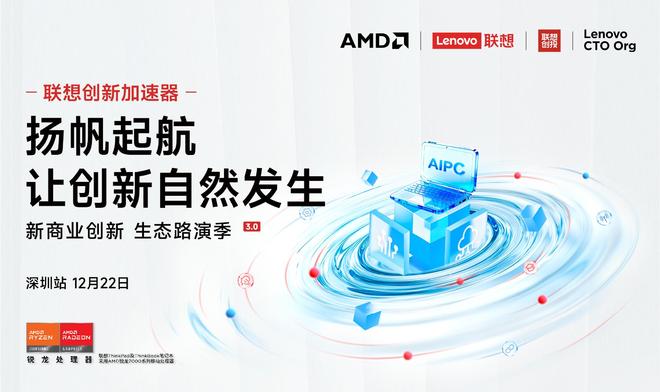
Core Insights - Lenovo is hosting the ThinkPad special event on December 22 in Shenzhen, providing a unique opportunity to engage with ThinkPad product leaders and explore AI application frontiers [1][3]. Group 1: Event Overview - The event is part of Lenovo's "New Business Innovation Ecosystem Roadshow Season," focusing on AI edge chips, new interaction and perception technologies, and smart voice and acoustic solutions [3]. - This marks the first public recruitment of innovation ecosystem partners for ThinkPad, aiming to open a trillion-level commercial ecosystem for top technologies and products [5]. Group 2: Market Position and Performance - ThinkPad has established itself as a benchmark in the high-end business PC sector, trusted by over 100 million users globally, and has a strong supply chain backing from Lenovo [4]. - According to IDC, Lenovo achieved a global PC market share of 25.5% in Q3 2025, maintaining its position as the market leader, with AI PC shipments accounting for over 30% of total PC shipments [4]. Group 3: Innovation and Collaboration - The event will feature projects with cutting-edge technology and clear industry pathways, providing a platform for direct dialogue with Lenovo executives and ThinkPad business leaders [5]. - Participants will have access to resources covering the entire production chain, including opportunities for significant investments and project collaborations [5]. Group 4: Featured Technologies - Various innovative companies will showcase their technologies, such as Chengdu Qiying Tailun's AI voice chips, Fabfun's fabric keyboard, and Guangzhou Weiyi's AI headphones, highlighting advancements in AI and human-computer interaction [8][9][10]. - Shenzhen Ruimeng Semiconductor is focusing on active cooling micro-systems for AI chips, while Shenzhen Lingkong Zhidu is developing gesture interaction technologies [11][13].
国产打印机用近二十年突破垄断
Di Yi Cai Jing· 2025-12-15 10:09
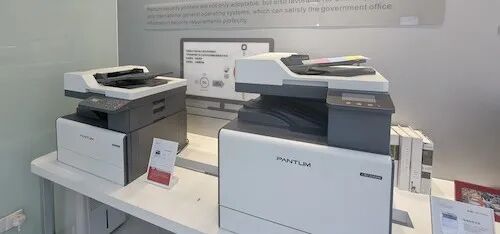
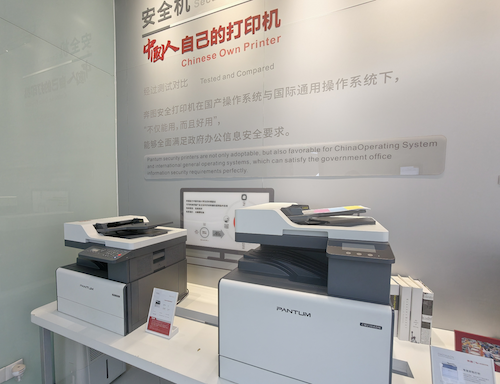
Core Insights - Canon's decision to close its printer factory in Zhongshan, China by the end of 2025 marks a significant shift in the global laser printer market, dominated for decades by Japanese and American brands like Canon and HP [2] - The market landscape is changing, with domestic brands increasing their market share from approximately 10% in 2010 to over 40% today, while foreign brands have seen their share drop below 60% [2][10] - Canon's market share has decreased from 7.7% in 2018 to 3.9% in the first three quarters of 2025, while domestic brand BenQ has captured significant market shares of 23.5%, 25.8%, and 21.3% in the same period [2] Domestic Brand Growth - BenQ's entry into the printer market was driven by long-term commercial prospects and national strategic needs, particularly concerning supply chain and information security risks [3] - The company initially focused on consumables but soon recognized the limitations and shifted towards printer manufacturing, launching its first A4 monochrome laser printer in 2010 [4] - Despite facing aggressive pricing strategies from competitors, BenQ managed to grow its output from 53,000 units in May 2011 to over one million units by 2019, achieving an average annual growth rate of about 50% [4] Technological Advancements - BenQ has made significant strides in developing core components such as the laser scanning unit (LSU) and main control SoC chips, achieving independent research and development of these critical modules by 2018 [6][7] - The company has accumulated over 6,000 patents, establishing a technological moat that supports its competitive position in the market [7] - Lenovo has also transitioned from imitation to independent innovation, increasing its self-developed printer revenue share from less than 10% to 50% [7] Market Dynamics - The printer industry's business model relies on a "razor-and-blades" strategy, where original consumables generate ongoing revenue, with hardware sales often only breaking even [8] - Despite a decline in overall printer sales from 10 million units in 2000 to about 7 million units recently, domestic brands have continued to expand their market presence [9] - The shift in the global industrial landscape is evident as foreign brands relocate some production capacity, allowing domestic brands to take the lead in the supply chain [10] Competitive Landscape - Domestic brands are gaining market share due to lower prices (20%-30% cheaper than foreign brands) and features tailored to local needs, such as remote printing and Bluetooth/NFC connectivity [12] - The penetration rate of home printers in China is only about 10%, indicating significant growth potential as demand for home and small business printing continues to rise [14] - The competitive environment is intensifying, with profit margins shrinking and companies investing heavily in research and development to innovate and meet market demands [14] Future Outlook - Domestic brands are expected to focus on high-end products, AI ecosystems, and international expansion, particularly in Southeast Asia [13] - The industry is entering a phase of stock or even declining competition, with foreign giants like HP and Canon facing challenges [15] - The rise of Chinese printer brands is attributed to continuous innovation in core technologies, establishing independent intellectual property, and enhancing supply chain security [15]
打印机十年攻防战:奔图联想突破垄断,佳能惠普退守
Di Yi Cai Jing· 2025-12-15 07:07
Core Insights - The rise of Chinese printer brands is not merely a result of low pricing or market exchange for technology, but rather a complex evolution involving core technology innovation and the establishment of independent intellectual property rights [16] Market Dynamics - Canon's decision to close its printer factory in Zhongshan, China by the end of 2025 symbolizes a significant shift in the global laser printer market, which has been historically dominated by Japanese and American brands like Canon and HP [2] - According to IDC, the market share of domestic brands in China's laser printer market has increased from approximately 10% in 2010 to over 40% today, while foreign brands' share has decreased to below 60% [2] - Canon's market share has declined from 7.7% in 2018 to 3.9% in the first three quarters of 2025, while domestic brand BenQ's market share has fluctuated between 21.3% and 25.8% during the same period [2] Competitive Landscape - The competition in the printer market has intensified, with domestic brands like BenQ and Lenovo gaining ground by focusing on supply chain security and addressing information security risks associated with networked printers [4][9] - BenQ has developed over 6,000 patents, creating a technological moat that supports its competitive position [8] Innovation and Development - BenQ's entry into the printer market in 2007 was driven by the long-term commercial prospects of printers and national strategic needs, leading to significant investments in R&D and supply chain development [4][5] - The company achieved a breakthrough in core components like the laser scanning unit (LSU) and SoC chips, enabling it to produce competitive products domestically [7] Pricing and Cost Structure - The pricing strategy of domestic brands is significantly lower than that of foreign brands, with original consumables from US brands priced around 300 RMB, while similar products from Lenovo are priced at approximately 100 RMB [10] - The cost of printing has decreased from 0.2-0.3 RMB per A4 page to 0.07-0.08 RMB due to the integration of supply chain and technological innovations [10] Future Outlook - The domestic printer market is expected to continue growing, with a current household penetration rate of only 10%, compared to 30%-40% in Western countries [15] - Domestic brands are focusing on high-end markets, AI ecosystems, and international expansion, particularly in Southeast Asia, to navigate patent barriers and enhance their market presence [13][16]


益起联想 与AI相伊|伊利与联想打造“生态解法”新实践
Quan Jing Wang· 2025-12-15 05:16
Core Viewpoint - The collaboration between Yili Group and Lenovo Group aims to enhance the nutritional support for students in Hohhot through the "Yili Nutrition 2030" public welfare project, demonstrating a commitment to community and youth development [1][4][6]. Group 1: Donation and Support - Yili Group announced a donation of 160,000 boxes of student milk to provide stable nutritional support for students in Tumotezuoqi [1]. - This initiative is part of Yili's ongoing commitment to the Third School of Hohhot, where it has provided nutritional support for many years [6]. Group 2: Technological Integration - The event featured Lenovo's first silicon-based employee, "LeXiang YiHao," engaging with students, showcasing the integration of technology in educational activities [7][8]. - Students participated in interactive activities, including AI-assisted learning sessions led by a lecturer from Tsinghua University, which brought traditional culture to life through technology [11]. Group 3: Sustainable Social Value Ecosystem - The joint action represents a step forward in Yili's understanding of future public welfare models, as it aligns with the establishment of a "Sustainable Social Value Ecosystem" with partners like Tencent and Lenovo [12][13]. - The collaboration aims to create a synergistic effect through the combination of nutrition and technology, contributing to a community of shared social value [13]. Group 4: Future Collaboration and Vision - Following the event, Yili and Lenovo engaged in discussions about digitalization, smart manufacturing, and green low-carbon initiatives, exploring further possibilities for collaboration [14]. - The overarching goal is to leverage nutrition and technology to foster sustainable development in education and society, with a commitment to extending this vision further [14].

