KUAISHOU(01024)

Search documents
商品卡销售占比超30%,金稻借势快手商品卡川流计划激发泛货架增量
Sou Hu Wang· 2025-12-22 09:22
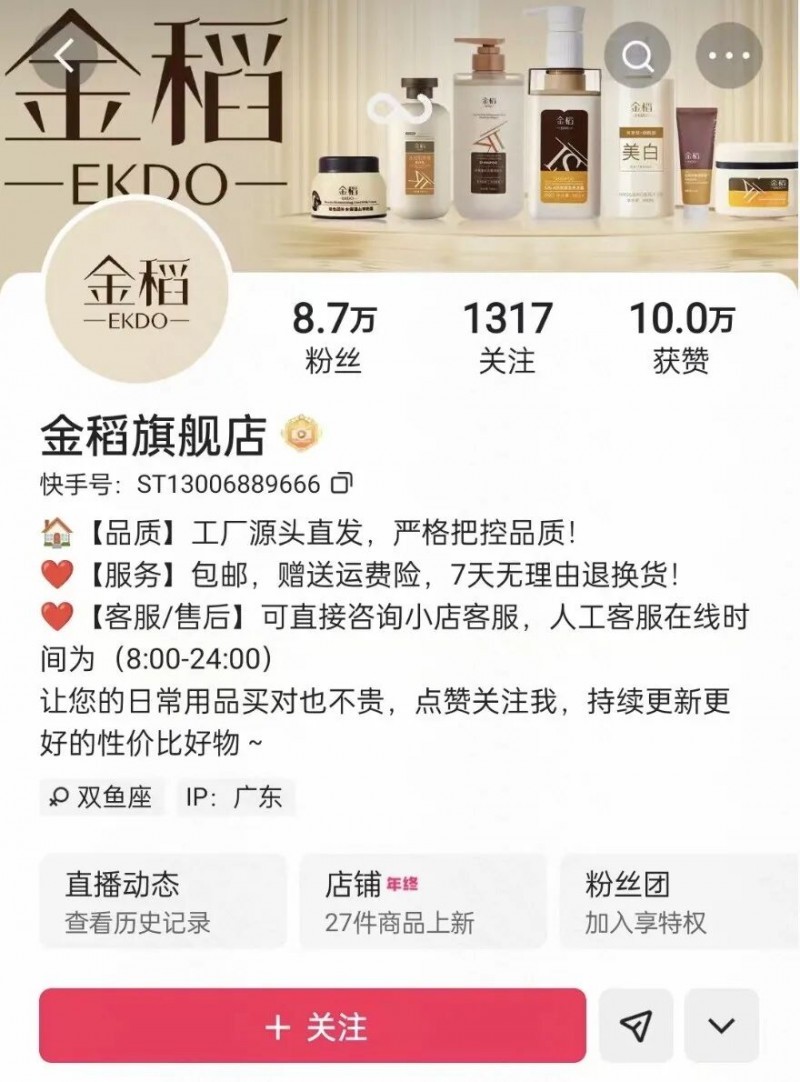
一路走来,金稻扎根快手电商生态,持续升级经营策略。入驻快手之初,金稻便看到了快手电商信任生 态的巨大商机,与平台主播建联,通过达人分销合作,快速提升品牌知名度和影响力,打开广阔的生意 空间。同时,金稻品牌充分利用达人切片进行持续性种草和转化,促进用户资产快速沉淀,带动产品销 售持续增长。 聚焦直播场域,金稻重点搭建品牌运营团队,加强@金稻旗舰店 等官号直播能力建设,形成自播和达 播双轮驱动,并依托快手用户与品牌目标人群的高度重合,不断将平台流量转化为品牌用户,持续扩大 经营规模。 在平台全域经营生态下,快手电商流量扶持专项"商品卡川流计划"助力众多品牌商家在商城场域收获精 准曝光和高效转化,解锁更多生意增量。专业洗护品牌金稻依托商品卡川流计划赋能,实现泛货架生意 规模快速增长,商品卡在品牌总GMV中的占比已超30%。 经营升级驱动持续增长 品牌在快手平台年GMV超8000万 多年来,金稻不断深化多渠道布局,2021年正式进入快手,由此迎来品牌业绩的持续增长。发展至今, 快手电商已成为金稻最主要的销售渠道。2025年,金稻GMV规模超亿元,其中超8000万来自快手电 商。 作为快手电商面向具备内容场销售能力和商 ...

研报掘金丨中金:内地在线平台股吸引力增强 建议关注快手、赤子城科技、哔哩哔哩等
Xin Lang Cai Jing· 2025-12-22 09:04
Group 1 - The overall market sentiment has recently declined, leading to a correction in the online platform sector, with current valuations between the mean and the 25th percentile [1] - The sector's fundamentals remain robust, with healthy growth in key areas such as advertising and gaming, and major companies like Tencent showing improved profit margins and operational leverage [1] - AI is still in a phase of rapid development, and compared to aggressive capital expenditures by overseas tech giants, domestic internet companies are making more practical and sustainable investments, indicating that AI will be a significant growth opportunity for some internet companies in the future [1] Group 2 - Overall, the fundamentals are stable, AI potential remains, but valuations are decreasing, which enhances the attractiveness of the sector [1] - The core recommendation is Tencent Holdings, with additional attention suggested for Kuaishou, NetEase, Zhiyuan Technology, and Bilibili [1]

智通港股回购统计|12月22日





Zhi Tong Cai Jing· 2025-12-22 01:42
Summary of Key Points Core Viewpoint - A total of 40 companies conducted share buybacks on December 19, 2025, with Tencent Holdings (00700) leading in both the number of shares repurchased and the total amount spent on buybacks. Group 1: Buyback Details - Tencent Holdings (00700) repurchased 1.038 million shares for a total of 636 million yuan, with a year-to-date cumulative buyback of 95.679 million shares, representing 1.041% of its total share capital [2]. - Xiaomi Group-W (01810) repurchased 3.75 million shares for 152 million yuan, with a cumulative buyback of 127 million shares, accounting for 0.490% of its total share capital [2]. - China Merchants Industry Holdings (01919) repurchased 3.9655 million shares for 53.6689 million yuan, with a cumulative buyback of 105 million shares, representing 3.635% of its total share capital [2]. Group 2: Other Notable Buybacks - Kuaishou-W (01024) repurchased 755,000 shares for 49.9509 million yuan, with a cumulative buyback of 13.2687 million shares, accounting for 0.310% of its total share capital [2]. - China Feihe (06186) repurchased 8.529 million shares for 35.7702 million yuan, with a cumulative buyback of 251 million shares, representing 2.765% of its total share capital [2]. - Geely Automobile (00175) repurchased 907,000 shares for 15.2602 million yuan, with a cumulative buyback of 18.012 million shares, accounting for 0.179% of its total share capital [2]. Group 3: Additional Companies - Other companies that conducted buybacks include Mengniu Dairy (02319), which repurchased 200,000 shares for 3.0643 million yuan, and Beike-W (02423), which repurchased 560,400 shares for 3 million yuan [2]. - The buyback activities reflect a strategic move by these companies to enhance shareholder value and signal confidence in their business prospects [1][2].
12月19日港股回购一览
Zheng Quan Shi Bao Wang· 2025-12-22 01:32
证券时报·数据宝统计显示,12月19日有54家香港上市公司进行了股份回购,合计回购3380.52万股,回 购金额10.12亿港元。 腾讯控股回购数量103.80万股,回购金额6.36亿港元,回购最高价为617.000港元,最低价为607.000港 元,年内累计回购金额762.23亿港元;小米集团-W回购数量375.00万股,回购金额1.52亿港元,回购最 高价为40.560港元,最低价为40.420港元,年内累计回购金额55.40亿港元;中远海控回购数量396.55万 股,回购金额5366.89万港元,回购最高价为13.730港元,最低价为13.470港元,年内累计回购金额66.68 亿港元。 以金额进行统计,12月19日回购金额最多的是腾讯控股,回购金额为6.36亿港元;其次是小米集团- W,回购金额为1.52亿港元;回购金额居前的还有中远海控、快手-W等。回购数量上看,12月19日回购 股数最多的是中国飞鹤,当日回购量为852.90万股;其次是中远海控、小米集团-W等,回购数量分别 为396.55万股、375.00万股。 值得关注的是,本次回购6.36亿港元的腾讯控股,年内则进行多次回购,合计回购金额为7 ...
港股公告掘金 | 中国神华拟约1335.98亿元向控股股东收购资产并募集配套资金不超过200亿元 华芢生物、南华期货股份等4只新股明日上市
Zhi Tong Cai Jing· 2025-12-21 12:18
New IPOs - Nanhua Futures (02691) received 1.91 times subscription in the Hong Kong public offering with a share price of HKD 12 [1] - Mindray Hospital (02581) received 6.28 times subscription in the Hong Kong public offering with a share price of HKD 9.34 [1] - Huazhang Biotech-B (02396) had a limited price offering with 791.95 times subscription in the Hong Kong public offering [1] - Impression Dahongpao (02695) received 3397.48 times subscription in the Hong Kong public offering with a share price of HKD 3.6 [1] Major Events - China Shenhua (01088) plans to acquire assets from its controlling shareholder for approximately CNY 133.598 billion and raise up to CNY 20 billion in supporting funds, upgrading its full industry chain layout [1] - China Shenhua (01088) intends to increase capital by CNY 6 billion to the State Energy Group Financial Company [1] - Sichuan Chengyu Expressway (00107) subsidiary plans to acquire 85% equity of Hubei Jingyi Expressway Co., Ltd. for CNY 2.409 billion [1] - Chongqing Steel (01053) plans to issue shares worth CNY 1 billion to Huabao Investment [1] - China Nonferrous Mining (01258) further acquires 55% equity of Kazakhstan's SM Minerals, increasing its stake to 70% [1] - Qingdao Port (06198) plans to invest CNY 6.615 billion in the construction of Dongjiakou General Terminal Project [1] - Qingdao Port (06198) also plans to invest approximately CNY 9.097 billion in the first phase of the Dongjiakou Container Terminal Project [1] - Yanda Pharmaceutical (00512) successfully achieved the primary clinical endpoint in the Phase III clinical study of the innovative radioactive nuclide conjugate drug TLX591-CDx for prostate cancer diagnosis [1] Financial Data - SF Express (06936) reported a total revenue of CNY 27.173 billion from its express logistics, supply chain, and international business in November, representing a year-on-year growth of 7.85% [2] Share Buybacks - Tencent Holdings (00700) repurchased 1.038 million shares for HKD 636 million on December 19 [2] - Xiaomi Group-W (01810) repurchased 3.75 million shares for HKD 152 million on December 19 [2] - COSCO Shipping Holdings (01919) repurchased 396.55 thousand shares for HKD 53.6689 million on December 19 [2] - Kuaishou-W (01024) repurchased 75.5 thousand shares for HKD 49.9509 million on December 19 [2]

降息预期升温+AI进展催化
Xin Lang Cai Jing· 2025-12-21 11:31
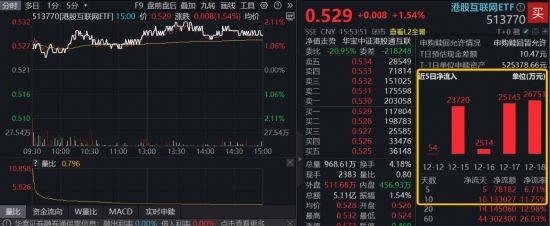
Core Viewpoint - The Hong Kong stock market is experiencing a rebound, driven by expectations of interest rate cuts from the Federal Reserve and advancements in AI technology, leading to significant gains in major internet stocks [3][4]. Group 1: Market Performance - On December 19, the Hang Seng Index and the Hang Seng Tech Index rose by 0.75% and 1.12% respectively, with major internet companies like Tencent, Kuaishou, and Meituan all gaining over 1% [1]. - The Hong Kong Internet ETF (513770) saw a high opening and increased by 1.54%, with a peak gain of over 2% during trading [1]. Group 2: Economic Indicators - The latest U.S. core CPI for November increased by 2.6% year-on-year, marking the lowest level since 2021, indicating signs of cooling inflation [3]. - Market expectations for aggressive interest rate cuts by the Federal Reserve in 2026 have risen, with traders anticipating two rate cuts totaling 50 basis points next year [3]. Group 3: AI Developments - Meituan has launched and open-sourced its virtual human video generation model, LongCat-Video-Avatar, which supports various core functions including Audio-Text-to-Video [3]. - Tencent has released its Mix Universe Model 1.5, allowing users to create interactive worlds from text or images, and has open-sourced a comprehensive real-time world model framework [3]. Group 4: Investment Insights - The Hong Kong Internet ETF (513770) has attracted a net inflow of 1.33 billion yuan over the past 10 days, indicating strong investor interest [4]. - Dongwu Securities suggests that the current market position is attractive for long-term investment in technology growth stocks, anticipating a rebound in the Hong Kong market [4]. - CITIC Securities remains optimistic about the internet sector's cyclical properties combined with the upward trend of AI, viewing major internet companies as potential beneficiaries [4].



腾讯大模型团队架构调整,字节跳动发布Seed1.8
GF SECURITIES· 2025-12-21 10:13
Core Insights - The report maintains a "Buy" rating for the internet media sector, highlighting strong performance in social entertainment media and internet healthcare, while noting challenges in e-commerce and short video segments [4][11]. E-commerce - The report indicates a decline in the year-on-year growth rate of physical e-commerce sales as per the National Bureau of Statistics, suggesting a weak overall sales outlook for Q4 [4][15]. - Alibaba's AI application, Qianwen, has integrated with Gaode Map, marking a significant step in its ecosystem [12]. Social Entertainment Media - Bilibili and Tencent's advertising performance continues to outperform the market, with Tencent's gaming fundamentals showing upward momentum [4][16]. - Tencent's new game, "Delta Action," is expected to become a major title alongside "Honor of Kings" and "Peacekeeper Elite" [4][16]. Internet Healthcare - JD Health and Alibaba Health are leveraging their leading platform advantages to deepen collaborations with upstream pharmaceutical manufacturers, resulting in strong revenue and profit growth [4][16]. Short Video - The report notes a recent decline in stock prices for AI application-related companies due to market sentiment, but maintains a positive outlook on Kuaishou's core business stability [4][16]. IP and Trendy Toys - Pop Mart's new flagship store in Shanghai is expected to enhance interactive space and expand its presence, with new IPs like 1001moons and supertutu being launched [4][16]. Long Video - The report suggests monitoring investment opportunities in iQIYI and Mango TV, as regulatory changes are expected to improve the long video sector's commercial model [4][17]. Music Streaming - TME and NetEase Music reported stable performance in Q3, although concerns about competition have led to a valuation adjustment [4][18]. Gaming Sector - The domestic gaming industry remains highly prosperous, with continued recommendations for leading companies like Tencent and NetEase, and a focus on companies with improving product trends [4][19]. Advertising - Focus Media has shown strong growth in non-recurring revenue, with a significant increase in advertising spending from internet advertisers in Q3 [4][19]. Publishing - Some publishing companies are facing challenges due to negative impacts from educational reforms, leading to delays in revenue recognition [4][19]. Film and Television - The report highlights the potential for recovery in the long video industry, with a focus on companies with strong production capabilities and project pipelines [4][20]. AI Applications - The report emphasizes the importance of AI in various sectors, including advertising and healthcare, suggesting a growing trend towards AI integration in business models [4][20].
新银发力量:活力、悦己、得劲——2025快手新银发人群洞察报告
艾瑞咨询· 2025-12-20 00:03
Core Insights - The "new silver-haired population" aged 45 and above has grown from 460 million in 2020 to 660 million in 2023, becoming a significant driver of the consumption market, shifting from "basic elderly care" to "quality living" [1] - The report by iResearch and Kuaishou reveals that the consumption needs of this demographic are evolving from basic utility to a pursuit of quality and peace of mind, aligning well with Kuaishou's content and e-commerce ecosystem [1] Group 1: New Silver-Haired Population Characteristics - The new silver-haired population is characterized by "vitality, value, and a comfortable lifestyle," breaking traditional stereotypes and creating an economic system that balances family responsibilities with self-actualization [2] - Four typical user groups have been identified: Practical, Vitality, Calm, and Zen, each contributing uniquely to their "comfortable life" [2] Group 2: Market Size and Growth Potential - The population aged 45 and above has increased its share from 42.2% to 44.7% from 2019 to 2023, indicating a significant market opportunity with a consumption scale exceeding 14 trillion yuan, projected to expand towards 20 trillion yuan due to policy support [4] - Kuaishou's platform has about 1 billion new silver-haired users, with 25% of daily active users belonging to this demographic, showcasing their strong engagement and purchasing power [6] Group 3: Consumption Preferences and Trends - The new silver-haired population prioritizes health, personal interests, and self-sufficiency, with 74% focusing on health reserves and 62% on personal interest development, indicating a shift from traditional family-oriented consumption [8] - Key consumption categories include health and wellness products, travel and leisure experiences, fashion, home improvement, and educational entertainment, reflecting a diverse range of needs [13] Group 4: Kuaishou's Ecosystem Adaptation - Kuaishou's content e-commerce ecosystem is tailored to meet the values and needs of the new silver-haired population, providing practical knowledge, interest-based content, and skill learning opportunities [8][28] - The platform emphasizes a seamless user experience, ensuring safety and trust through features like fraud prevention and easy-to-use interfaces, which are crucial for this demographic [25][30] Group 5: Future Trends in Consumption - The consumption mindset of the new silver-haired population is transitioning from "survival needs" to "quality self-enjoyment," focusing on product quality, brand value, and emotional attachment [38] - There is a growing trend towards a family-oriented consumption model, where decisions often encompass multiple family members' needs, indicating a shift towards comprehensive family solutions [41]

解读:《新银发力量:活力、悦己、得劲——2025快手新银发人群洞察报告》
艾瑞咨询· 2025-12-20 00:03
Core Insights - The "new silver-haired population" aged 45 and above has grown from 460 million in 2020 to 660 million in 2023, becoming a significant driver of the consumer market, shifting from "basic elderly care" to "quality living" [1] - The report by iResearch and Kuaishou reveals that the consumption needs of this demographic are evolving from basic utility to a pursuit of quality and peace of mind, aligning well with Kuaishou's content and e-commerce ecosystem [1] Industry Trends - The consumption scale of the 45 and above demographic in China has exceeded 14 trillion, with a yearly increase in consumption proportion, driven by policies like the "Silver Economy 26 Articles" and an increase in average life expectancy to 79 years [2] - The new silver-haired market is rapidly expanding, becoming a key force in driving domestic demand [2] Digital Empowerment - Digital platforms like Kuaishou are becoming central to the lifestyle and consumption of the new silver-haired population, who are actively embracing online life [4][5] Demographic Breakdown - The new silver-haired population can be categorized into four groups: Practical, Vitality, Calm, and Zen, each with distinct attitudes and consumption preferences [7] - The Vitality group (45% of the population) is the main driver of "self-satisfying consumption," while the Practical group (18.6%) balances family and self, and the Calm group (22.8%) focuses on stable and practical consumption [10] Core Consumption Scenes - Health, travel, and fashion are identified as the three core scenes for achieving a "comfortable" life, with a shift from basic functionality to quality experiences [11] - Health is the foundation of a comfortable life, with 50.1% of users repeatedly watching health content and 61.7% having made related purchases [13] Travel Preferences - 40.9% of users frequently browse travel content, with the Vitality group showing a high conversion rate for travel products, emphasizing comfort and security in their travel choices [15][16] Fashion Consumption - Approximately 64.8% of the new silver-haired population purchases clothing, with a shift in focus from durability to aesthetics and comfort [18] Kuaishou's Ecological Advantages - Kuaishou leverages diverse content formats to engage users, with 90% actively searching for short dramas and 80% regularly engaging in live broadcasts [20] - Trust is a significant factor for this demographic, with concerns about safety in health products and transparency in pricing for travel and fashion [21][28] Future Trends - The market is expected to evolve towards "comfort, ease, and satisfaction," with products transitioning from basic functionality to enhanced user experience [24][25] - Services are expanding from single offerings to multi-faceted ecosystems, integrating health, travel, and home services for a seamless user experience [26] Conclusion - The pursuit of a "comfortable" life is a fundamental aspect of the new silver-haired population's lifestyle, driving the transformation of the silver economy from survival to quality living [29]

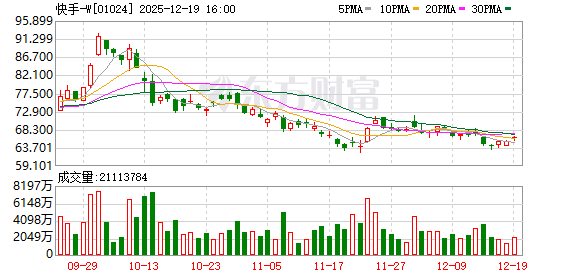
快手-W(01024.HK)12月19日回购4995.09万港元,已连续5日回购
Zheng Quan Shi Bao Wang· 2025-12-19 14:47
证券时报·数据宝统计,快手-W在港交所公告显示,12月19日以每股65.400港元至66.600港元的价格回 购75.50万股,回购金额达4995.09万港元。该股当日收盘价66.300港元,上涨1.45%,全天成交额13.96 亿港元。 自12月15日以来公司已连续5日进行回购,合计回购555.81万股,累计回购金额3.59亿港元。 其间该股 累计下跌1.70%。 快手-W回购明细 | 日期 | 回购股数(万股) | 回购最高价(港元) | 回购最低价(港元) | 回购金额(万港元) | | --- | --- | --- | --- | --- | | 2025.12.19 | 75.50 | 66.600 | 65.400 | 4995.09 | | 2025.12.18 | 123.50 | 65.600 | 64.350 | 8021.93 | | 2025.12.17 | 128.30 | 65.550 | 63.900 | 8303.70 | | 2025.12.16 | 182.31 | 64.400 | 63.050 | 11582.10 | | 2025.12.15 | 46.20 | 6 ...