
CSPC PHARMA(01093)

Search documents
歌礼石药专利对垒,GLP-1赛道风云再变
2 1 Shi Ji Jing Ji Bao Dao· 2025-07-01 12:20
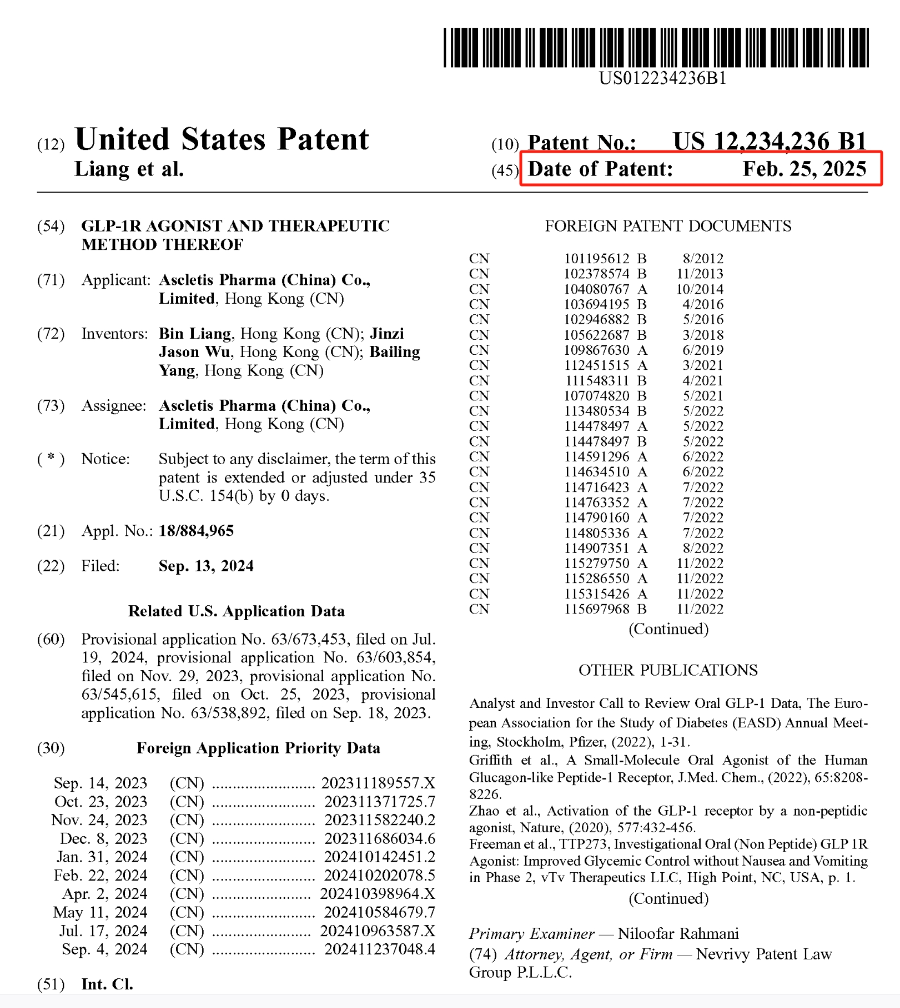
Core Viewpoint - The GLP-1 sector is witnessing an intense patent battle, particularly between Gilead Sciences and CSPC Pharmaceutical Group, highlighting the competitive landscape of domestic innovative pharmaceutical companies transitioning from local market competition to global patent disputes [1][12]. Group 1: Patent Dispute Details - CSPC's subsidiary has filed a review application with the USPTO, challenging the validity of Gilead's US patent (No. 12,234,236), which is crucial for its GLP-1R agonist candidate ASC30 [1][2]. - Gilead's patent is set to expire in 2044 and is based on proprietary technology that has undergone rigorous USPTO scrutiny, emphasizing its novelty and innovation [2][7]. - The timing of the patent applications is critical, with Gilead's application being filed over three months earlier than CSPC's, which may influence the USPTO's decision [3]. Group 2: Market Context and Implications - The global market for GLP-1 drugs is projected to grow significantly, with estimates suggesting it could exceed $27.01 billion by 2031, making it one of the fastest-growing segments in the pharmaceutical industry [12]. - The Chinese GLP-1 weight loss drug market is expected to surpass 15 billion yuan by 2025, with penetration rates increasing from under 5% in 2023 to 18%-20% [12]. - Major pharmaceutical companies are shifting their focus towards small molecule GLP-1 drugs due to their advantages in oral bioavailability and lower production costs, indicating a potential reshaping of the global pharmaceutical landscape [12]. Group 3: Competitive Dynamics - The patent dispute reflects a broader trend of domestic pharmaceutical companies moving from defensive strategies to actively leveraging patent systems to gain market share and negotiate collaborations [13][14]. - The competition in the GLP-1 market is intensifying, with multiple companies, including Hengrui Medicine and Innovent Biologics, entering the fray, increasing the likelihood of patent conflicts [14]. - The focus on core compound patents rather than peripheral patents indicates a heated "positioning battle" among companies targeting similar therapeutic areas [13][14].

歌礼制药:因化合物分子结构一致,石药集团附属公司对一项已获授权专利提出质疑
Cai Jing Wang· 2025-07-01 03:27
Core Viewpoint - The company has disclosed that it is currently undergoing a review by the USPTO regarding the validity of a patent held by its subsidiary, which has been challenged by a related company, CSPC Baike. The outcome of this review may have implications for the company's intellectual property rights and ongoing drug development efforts [1][2]. Group 1 - The review initiated by CSPC Baike questions the validity of a patent held by the company's subsidiary, which is currently under examination by the USPTO [1][2]. - The compound in question, Compound 1, is identical to CSPC Baike's Compound 10, but the company's patent application was submitted over three months earlier than CSPC's [1]. - The company has expressed confidence in the validity of its patent and is prepared to take necessary legal actions to defend its intellectual property rights if the review proceeds [2]. Group 2 - The patent in question is based on proprietary technology developed by the company and is currently being utilized in the research and development of its candidate drug ASC30 [2]. - The USPTO granted the patent to the company's subsidiary on February 25, 2025, based on its novelty and non-obviousness compared to existing technologies [2]. - The company asserts that the ongoing review does not currently impact its business operations or overall group performance [2].
速递|GLP-1药物专利战打响!石药向歌礼美国专利发起挑战
GLP1减重宝典· 2025-06-30 07:46
Core Viewpoint - The article discusses the ongoing patent dispute between Songlei and Conjupro Biotherapeutics, a subsidiary of CSPC Pharmaceutical Group, regarding the validity of a US patent held by Songlei, which is currently under review by the USPTO [1][3]. Group 1: Patent Dispute Details - On June 30, Songlei announced that it was informed on June 24 about Conjupro's request for a Post Grant Review at the USPTO, questioning the validity of specific claims in Songlei's US patent (Patent No: 12,234,236) [1]. - Conjupro's application for "Compound 10" is claimed to be structurally identical to Songlei's "Compound 1," with Songlei asserting that its patent application was submitted over three months prior to Conjupro's [1]. - As of the announcement, the review request is still under examination by the USPTO [1]. Group 2: Background and Implications - Songlei noted that it could not ascertain the specific reasons behind Conjupro's review request, but highlighted that Conjupro had previously sought global licensing discussions for the GLP-1R agonist Compound 1, which Songlei declined [3]. - The patent in question is based on proprietary technology developed by Songlei and is currently being utilized in the development of the candidate drug ASC30, with multiple related molecules protected under various patent systems [4]. - The USPTO officially granted the patent rights to Songlei on February 25, 2025, citing its innovation and non-obviousness compared to existing technologies [4].

国产减肥药获批上市,港股创新药ETF(513120)连续14天累计“吸金”超31亿元
Xin Lang Cai Jing· 2025-06-30 07:09
Core Insights - The Hong Kong Innovation Drug Index (931787) has shown a positive performance, with significant increases in constituent stocks such as Zai Lab (11.01%) and Cloudmed (9.27%) [1] - The Hong Kong Innovation Drug ETF (513120) has experienced active trading, with a turnover of 33.61% and a total transaction volume of 4.472 billion [1] - The ETF has seen a continuous net inflow of funds over the past 14 days, totaling 3.159 billion [1][2] Market Performance - As of June 27, the Hong Kong Innovation Drug ETF has achieved a net value increase of 86.07% over the past year, ranking 1st out of 120 in QDII equity funds [2] - The ETF's highest monthly return since inception was 23.82%, with the longest consecutive monthly gain being 4 months and a maximum cumulative increase of 44.08% [2] - The average monthly return during the rising months is 7.59% [2] Valuation Metrics - The latest price-to-earnings ratio (PE-TTM) for the Hong Kong Innovation Drug ETF is 32.62, which is below the 83.82% historical level over the past five years, indicating a low valuation [2] - The ETF closely tracks the Hong Kong Innovation Drug Index, which includes up to 50 listed companies primarily engaged in innovative drug research and development [2] Industry Developments - The top ten weighted stocks in the Hong Kong Innovation Drug Index account for 71.99% of the index, with notable companies including Innovent Biologics and BeiGene [3] - The approval of a new drug by the National Medical Products Administration (NMPA) for long-term weight control in adults marks a significant development in the industry [3] - Recent reports suggest that China's innovative drug sector is becoming a global supplier of innovative therapies, driven by high efficiency and low-cost development advantages [4] Investment Opportunities - The Hong Kong Innovation Drug ETF provides exposure to leading companies in the innovative drug sector, such as Innovent Biologics and CanSino Biologics [4] - The ETF supports T+0 trading, enhancing liquidity and allowing investors to conduct multiple transactions within a trading day [4]




荣昌、石药接连斩获大单背后:中国药企半年吸金近500亿美元,跨国巨头为何疯狂“扫货”|创新药观察
Hua Xia Shi Bao· 2025-06-26 07:58
Core Insights - Global pharmaceutical giants are increasingly turning Chinese laboratories into new drug "arsenals" as evidenced by significant licensing deals and collaborations with Chinese biotech firms [2][3][4] Group 1: Licensing Deals and Collaborations - Rongchang Biopharma licensed its self-developed product Taitasip to Vor Biopharma for $45 million upfront and potential total payments of up to $4.23 billion [2] - CSPC Pharmaceutical Group announced a strategic R&D collaboration with AstraZeneca, receiving $110 million upfront with potential total revenue reaching $5.33 billion [2] - In May alone, at least six Chinese pharmaceutical companies announced major business development (BD) deals, indicating a surge in interest from global players [3] Group 2: Market Growth and Trends - The total value of BD transactions in China's pharmaceutical sector reached $63.5 billion in 2024, a 22.59% increase from 2023, with 24 major deals accounting for $43 billion [3][4] - China's share of global BD transactions with upfront payments over $50 million surged from 5% in 2021 to 42% in the first five months of 2025 [4] - The trend indicates that Chinese innovative drug assets are becoming increasingly attractive to multinational corporations due to their high cost-effectiveness [8] Group 3: Competitive Advantages - Chinese drug development costs are significantly lower, with recruitment costs for clinical trials being one-third of those in Western countries, leading to faster drug development timelines [9] - The increasing number of original innovative drugs entering clinical trials in China, which reached 704 in 2024, positions China as a global leader in new drug development [10] Group 4: Future Outlook - The growth of BD transactions in China is expected to continue, driven by the need for innovative drugs amid the looming "patent cliff" faced by many global pharmaceutical companies [9][10] - Structural changes in the BD landscape are evident, with ADCs and bispecific/multispecific antibodies emerging as leading technologies in international markets [7][11]

港股创新药ETF(159567)换手率超30%,荣昌生物涨超4%,机构:全年维度创新药作为医药板块的投资主线不会变化
2 1 Shi Ji Jing Ji Bao Dao· 2025-06-25 02:14
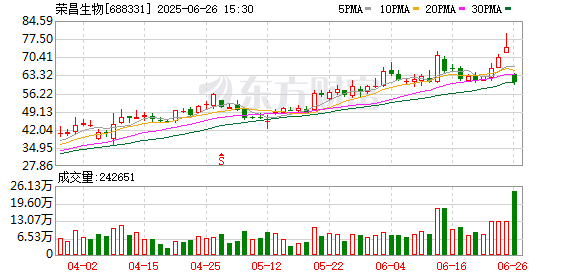
Group 1 - The Hong Kong stock market experienced a collective rise, with the Hang Seng Index up by 0.83% and the Hang Seng Tech Index up by 1.15% [1] - The Hong Kong Innovative Drug ETF (159567) increased by 0.97%, with a turnover rate exceeding 30% and transaction volume quickly surpassing 700 million yuan, indicating active trading [1] - Major stocks within the ETF, such as Rongchang Biopharmaceuticals and Cloudtop New Medicine, saw significant gains, with Rongchang Biopharmaceuticals rising over 4% and Cloudtop New Medicine rising over 2% [1] Group 2 - Recent reports highlight substantial external licensing deals by Chinese innovative pharmaceutical companies, including a deal by 3SBio worth over 6 billion USD, with a record upfront payment of 1.25 billion USD [1] - Another significant deal was announced by CSPC Pharmaceutical Group in collaboration with AstraZeneca, totaling 5.33 billion USD, showcasing the increasing value of Chinese innovative drug products [1] - The narrative of "China R&D, overseas licensing" is gaining recognition, marking a transition for the Chinese innovative drug industry from a "follower" to a "contributor" in the global market [1] Group 3 - Aijian Securities suggests a focus on "hard technology" and "strong demand" in the domestic market, maintaining a bullish outlook on the Chinese innovative drug sector's international expansion [2] - The sector is viewed as having clear industrial trends and future growth potential, with innovative drugs expected to remain the main investment theme within the pharmaceutical sector [2] - Recommendations include focusing on high-quality innovative drug stocks and companies with business development (BD) or data catalysts, as well as monitoring AI healthcare and pharmaceutical companies showing positive changes [2]
医药生物买全球最好的中国创新药
Tianfeng Securities· 2025-06-24 12:14
Investment Rating - The industry investment rating is maintained at "Outperform the Market" [3][82]. Core Viewpoints - The report emphasizes the significant progress of Chinese innovative drugs, highlighting their emergence as a global force in the pharmaceutical industry, supported by a solid industrial foundation, policy backing, and capital support [4][5]. - The gap between Chinese and global innovative drugs has narrowed significantly, with the time to market for first-in-class drugs reduced from over 10 years to within 1-5 years [4]. - The report indicates that Chinese companies now account for over 30% of global clinical trials, with more than 60% of popular targets being pursued by Chinese firms [35][38]. Summary by Sections Breakthrough Therapies - The development of innovative drugs in China is underpinned by a robust industrial base, supportive policies, and substantial capital investment, leading to rapid growth in the ADC market and next-generation therapies [4][12]. - Key drugs such as Keytruda and Semaglutide are projected to generate sales of $29.482 billion and $29.296 billion respectively in 2024, showcasing the potential of innovative therapies [4][12]. Achievements - Chinese innovative drugs have made significant strides, with the clinical trial participation rate increasing from 9.7% in 2016 to 28.2% in 2023 [35]. - The report notes that the number of Chinese companies involved in clinical trials for oncology drugs has risen from 15% in 2016 to 35.5% in 2023, indicating a strong focus on cancer therapies [35]. Leading Trends - The rapid growth of License Out transactions has provided substantial cash flow for innovative drug companies, facilitating their expansion into international markets [5][66]. - The report highlights that the Chinese market is still dominated by foreign patented drugs, but there is significant potential for domestic innovative drugs to capture market share, especially as many foreign drugs face expiration of patents [70][72].

河北石家庄以创新为引领打造生物医药产业高地
Zhong Guo Jing Ji Wang· 2025-06-24 08:21
Group 1 - The core viewpoint of the news is the strategic R&D cooperation agreement between CSPC Pharmaceutical Group and AstraZeneca, with a total contract value of $5.33 billion for the discovery and development of new oral small molecule drug candidates using AI technology [1] - CSPC has previously licensed 11 products overseas, with a total contract value exceeding $7.3 billion, indicating a strong track record in international collaborations [1] - CSPC currently has over 200 innovative drug projects under research and ranks 19th in the global pharmaceutical R&D pipeline scale as of 2025 [1] Group 2 - Shijiazhuang City is actively promoting high-quality development in the biopharmaceutical industry, implementing comprehensive support measures across the entire lifecycle of the industry [1] - The city has revised and issued measures to support breakthroughs in the new generation of electronic information and biopharmaceutical industries, providing a total of 290 million yuan in rewards to biopharmaceutical companies since 2021, including 79.25 million yuan to CSPC [1] - Shijiazhuang City is committed to optimizing the business environment and has implemented targeted support for leading enterprises, addressing over ten operational issues for CSPC this year [1][2]
港股创新药ETF(159567)涨2.25%,成交额23.73亿元
Xin Lang Cai Jing· 2025-06-24 07:10
Core Viewpoint - The Hong Kong Innovative Drug ETF (159567) has shown significant growth in both share volume and fund size since its inception, indicating strong investor interest in the innovative drug sector [1]. Group 1: Fund Performance - As of June 24, the Hong Kong Innovative Drug ETF (159567) closed with a gain of 2.25% and a trading volume of 2.373 billion yuan [1]. - The fund was established on January 3, 2024, with a management fee of 0.50% and a custody fee of 0.10% [1]. - The latest share count reached 1.478 billion, with a total fund size of 2.217 billion yuan as of June 23, reflecting a 273.92% increase in shares and a 486.71% increase in size since December 31, 2024 [1]. Group 2: Liquidity and Trading Activity - Over the last 20 trading days, the ETF recorded a cumulative trading amount of 38.434 billion yuan, averaging 1.922 billion yuan per day [1]. - Year-to-date, the ETF has seen a total trading amount of 79.325 billion yuan over 113 trading days, averaging 0.702 billion yuan per day [1]. Group 3: Fund Management - The current fund manager is Ma Jun, who has managed the fund since its inception, achieving a return of 49.94% during the management period [1]. Group 4: Top Holdings - The ETF's top holdings include WuXi Biologics (11.47%), BeiGene (10.87%), and Innovent Biologics (9.60%), among others, with significant market values attributed to each [2].
南向资金今日成交活跃股名单(6月23日)
Zheng Quan Shi Bao Wang· 2025-06-23 15:15
Core Viewpoint - On June 23, the Hang Seng Index rose by 0.67%, with southbound funds totaling a transaction amount of HKD 98.834 billion, resulting in a net inflow of HKD 7.895 billion [1]. Group 1: Southbound Fund Transactions - The total transaction amount for southbound funds was HKD 98.834 billion, with buy transactions amounting to HKD 53.365 billion and sell transactions amounting to HKD 45.470 billion, leading to a net buy of HKD 7.895 billion [1]. - The cumulative transaction amount for the Stock Connect (Shenzhen) was HKD 36.039 billion, with net buying of HKD 3.506 billion, while the Stock Connect (Shanghai) had a cumulative transaction amount of HKD 62.795 billion, with net buying of HKD 4.389 billion [1]. Group 2: Active Stocks - The most actively traded stock by southbound funds was SMIC, with a total transaction amount of HKD 48.21 billion, followed by Xiaomi Group-W and Alibaba-W, with transaction amounts of HKD 46.63 billion and HKD 45.52 billion, respectively [1]. - Among the net buying stocks, Meituan-W had the highest net inflow of HKD 15.15 billion, with a closing price increase of 2.18%. Other notable net buying stocks included China Construction Bank with HKD 8.44 billion and SMIC with HKD 6.78 billion [1]. - Alibaba-W experienced the highest net outflow of HKD 12.86 billion, with a closing price decrease of 0.81%. Other stocks with significant net outflows included China National Offshore Oil Corporation and Xiaomi Group-W, with net outflows of HKD 3.27 billion and HKD 3.18 billion, respectively [1]. Group 3: Continuous Net Buying and Selling - Two stocks, China Construction Bank and SMIC, saw continuous net buying for more than three days, with China Construction Bank having a total net buy of HKD 58.54 billion over nine days and SMIC with HKD 12.36 billion over three days [2]. - Three stocks experienced continuous net selling, with Tencent Holdings and Alibaba-W leading in net outflows, totaling HKD 187.31 billion and HKD 19.98 billion, respectively [2].




