BYD(01211)

Search documents
中国汽车出海调研简报-20260313
Tou Bao Yan Jiu Yuan· 2026-03-13 11:58
Investment Rating - The report indicates a strong investment outlook for the Chinese automotive industry in the UK market, particularly for electric vehicles and SUVs, highlighting significant growth potential and competitive advantages [2]. Core Insights - Chinese automotive exports to the UK have seen a remarkable increase, with sales reaching 142,684 units from January to September 2025, representing a year-on-year growth of 91%, significantly outpacing the overall UK market growth of 4.2% [6][7]. - The market share of Chinese cars in the UK has risen from 5% at the beginning of the year to 12.4% by September 2025, making China the second-largest source of cars in the UK, following Germany [6][7]. - Key factors driving this growth include a strong advantage in electric vehicle offerings, competitive pricing (15-20% cheaper than European counterparts), and a diverse product matrix catering to various market segments [7]. Summary by Sections Sales Performance - In the first nine months of 2025, Chinese automotive exports to the UK totaled 142,684 units, with a record monthly sales of 40,729 units in September, marking a 235% year-on-year increase [4][6]. - The sales performance has been characterized by a steady increase in market share, with significant monthly fluctuations reflecting market dynamics and brand strategies [7]. Market Segmentation - The electric vehicle segment dominates Chinese automotive sales in the UK, with over 70% of exported models being electric, compared to approximately 45% in the overall UK market [8]. - SUVs represent a growing segment, increasing from 55% to 60% of sales from January to September 2025, with Chinese brands becoming the second-largest SUV suppliers in the UK [8][10]. Competitive Landscape - The competitive landscape is highly concentrated, with MG, BYD, and Chery dominating the market. MG leads with 71,017 units sold, followed by BYD with 35,474 units, and Chery with a focus on differentiated SUV offerings [13][14]. - The report outlines a tiered competitive structure, with MG targeting the mainstream market, BYD positioned as a leader in the new energy sector, and Chery focusing on high-end SUVs [11][14]. Future Trends - The report anticipates a shift towards higher-end models, with BYD and Chery planning to introduce premium electric vehicles priced above £50,000, directly competing with established European brands [18]. - The evolution of business models is highlighted, moving from vehicle exports to local assembly and technology licensing, indicating a strategic shift towards integrating into the UK automotive ecosystem [19].

报名通道 | 2026高工固态电池技术与应用峰会倒计时41天
高工锂电· 2026-03-13 11:05
Core Viewpoint - The solid-state battery industry is entering a critical year in 2026, transitioning from technology validation to large-scale production, driven by policies, technology, capital, and application scenarios [2][3]. Group 1: Industry Development - The standard system for solid-state batteries has been established, marking the end of conceptual confusion, with the Ministry of Industry and Information Technology identifying solid-state batteries as a core breakthrough direction [2]. - The focus of the industry has shifted from basic research to production, with semi-solid batteries entering testing and commercial validation phases, while full solid-state batteries face significant challenges in stability and yield [3]. - The mainstream research direction is now focused on sulfide electrolytes due to their high ionic conductivity, while other routes like oxides and polymers are pursuing differentiated strategies [3]. Group 2: Application Scenarios - High-end passenger vehicles remain the primary market for solid-state battery deployment, while new applications in eVTOL, humanoid robots, AIDC data centers, commercial aerospace, and low-altitude economies are emerging [3]. - The industry is developing a multi-dimensional application landscape, with consumer electronics like two-wheelers and wearables seeing increased adoption of solid-state batteries [3]. Group 3: Industry Collaboration - Competition in the solid-state battery sector is evolving from individual companies to a collaborative ecosystem involving materials, equipment, cells, vehicles, resources, and applications [3]. - Vertical integration within the supply chain is becoming more pronounced, with automakers and upstream resource giants accelerating their involvement [3]. Group 4: Cost and Supply Chain - Solid-state batteries currently cost over 30% more than traditional lithium batteries, with low yield rates and shortages of high-end materials posing significant production challenges [4]. - The industry is shifting its focus from competing on technical parameters to creating value throughout the entire lifecycle, emphasizing collaborative innovation across the supply chain [4]. Group 5: Summit Highlights - The 2026 Solid-State Battery Technology and Application Summit will feature over 200 key enterprises and 300 industry leaders, facilitating technical exchanges and new product showcases [7]. - The agenda includes discussions on overcoming production bottlenecks, core material breakthroughs, and the impact of national standards on industry dynamics [8]. Group 6: Invited Enterprises - Notable companies in the battery sector include CATL, BYD, and Guoxuan High-Tech, while material and equipment sectors feature firms like Tianqi Lithium and Liyuan Technology [9].





多氟多/鹏辉/楚能/蓝京/创明/小鲁/利维能/联动天翼/大族锂电/嘉智信诺/亿鑫丰/孚悦/华普森/鹏锦智能等邀您共聚起点锂电圆柱电池技术论坛
起点锂电· 2026-03-13 10:27
Group 1 - The core theme of the forum is "Full-Tab Technology Leap, Leading the Large Cylindrical Market," focusing on the technological breakthroughs and market opportunities in the cylindrical battery industry [3][12]. - The cylindrical battery industry is expected to experience explosive growth in 2025, with a reported year-on-year increase of over 15% in China's cylindrical battery shipments, and a remarkable growth rate of over 40% for large cylindrical batteries [5]. - Key players in the industry, such as EVE Energy, Dodo New Energy, and Penghui Energy, are facing continuous demand that exceeds supply, particularly for large cylindrical products used in electric two-wheelers, household energy storage, and automotive power [5]. Group 2 - The forum will feature three core sessions: 1. Cylindrical Battery Technology and Applications, which will release the "2026 China Cylindrical Battery White Paper" and discuss the competitive landscape [7]. 2. New Materials and New Processes, focusing on the mass production of high-nickel cathodes and silicon-based anodes, as well as breakthroughs in thermal management and intelligent manufacturing solutions [7]. 3. Full-Tab Large Cylindrical Battery Technology Innovation, addressing the production challenges of 46 series full-tab cells and exploring applications in AI robotics and drones [7]. - The event will gather over 600 industry elites, including top battery manufacturers, downstream application giants, and leading equipment companies, creating a comprehensive platform for collaboration across the entire industry chain [9][12]. Group 3 - The forum will provide various participation options, including SVIP and VIP tickets, with benefits such as access to industry maps, presentations, and networking opportunities [10][20]. - The event is scheduled for April 10, 2026, at the Venus Royal Hotel in Shenzhen, with a registration deadline of March 31, 2026 [11][23]. - The agenda includes keynote speeches, specialized sessions, and roundtable discussions on critical topics such as market entry barriers and emerging application markets for cylindrical batteries [13][14].



比亚迪发行50亿元人民币270天期科创债
Ge Long Hui· 2026-03-13 10:10
格隆汇3月13日|公告显示,比亚迪3月12日发行了"26比亚迪SCP001(科创债)",规模50亿元人民币,债 券期限为270日,票面利率为1.5%。 ...
保时捷营业利润暴跌超九成;理想交出2025成绩单;奔驰全新纯电MPV来了;阿维塔06T即将上市;比亚迪计划进军F1?马斯克蝉联全球首富...
Sou Hu Cai Jing· 2026-03-13 09:43
Group 1: Porsche Performance - Porsche reported a significant decline in 2025 performance, with total revenue of €36.3 billion, down 9.5% year-on-year, and operating profit of €413 million, down 92.7% [2] - The operating sales return rate fell from 14.1% to 1.1%, attributed to product strategy adjustments, company scale optimization, additional costs from battery-related businesses, and U.S. tariffs [2] - Global vehicle deliveries decreased to 279,000 units, a 10% decline year-on-year, with significant drops in key markets such as China (26% decline) and Germany (16% decline) [2] Group 2: Li Auto Performance - Li Auto reported a total vehicle delivery of 406,300 units for 2025, with Q4 deliveries reaching 109,000 units, a 17.1% increase quarter-on-quarter [4] - The company achieved annual revenue of ¥112.3 billion and a net profit of ¥1.1 billion, marking it as the only new energy vehicle company in China to achieve over ¥100 billion in revenue for three consecutive years [4] - For Q1 2026, Li Auto expects deliveries between 85,000 to 90,000 units, a year-on-year decline of 3.1% to 8.5%, with revenue projected to drop by 16.7% to 21.3% [4] Group 3: Mercedes-Benz New Launch - Mercedes-Benz unveiled the all-new electric MPV VLE, which will be produced by Fujian Benz [8] - The vehicle features two distinct styles, advanced interior technology, and a high-capacity 115 kWh battery offering a range of up to 700 km [8] - The new model includes smart driving assistance systems and aims to compete in the high-end business vehicle market [8] Group 4: BYD's F1 Ambitions - BYD is reportedly planning to enter the Formula 1 racing scene, potentially competing alongside legendary teams like Ferrari and McLaren [11] - The company may either establish a new team or acquire an existing one, with interest in purchasing the Renault-owned Alpine team to expedite its entry into F1 [13] Group 5: Global Billionaires List - Forbes reported a record 3,428 billionaires in 2023, with a total wealth of $20.1 trillion, an increase of $4 trillion from the previous year [16] - Elon Musk retained the title of the world's richest person with a net worth of approximately $839 billion, benefiting from the rising valuations of Tesla and SpaceX [16]

大和:市况波动 呼吁转投被低估价值股 推荐比亚迪潍柴(02338)等
Zhi Tong Cai Jing· 2026-03-13 08:53
Group 1 - The core viewpoint of the article is that due to the recent volatility in the market caused by the Middle East conflict and changing policy directions, investors are advised to avoid stocks affected by this tension, such as shipping and airline stocks [1] - The report suggests that investors should take this opportunity to buy undervalued stocks [1] - Recommended stocks include BYD Company Limited (01211), Weichai Power Co., Ltd. (02338), Minth Group Limited (00425), JD Logistics, Inc. (02618), and Zoomlion Heavy Industry Science and Technology Co., Ltd. (01157) [1]

【月度排名】2026年2月厂商销量排名快报
乘联分会· 2026-03-13 08:38
Core Viewpoint - The domestic narrow passenger car market in China experienced a significant decline in sales in February 2026, with a year-on-year decrease of 25.4% and a month-on-month decrease of 33.1%. The cumulative sales for January and February also fell by 18.9% compared to the previous year. This downturn is attributed to multiple factors, including the extended Spring Festival holiday, which affected production and market activity. However, this is considered a short-term fluctuation and not indicative of long-term market trends. Upcoming local subsidy policies, spring auto shows, and new product launches are expected to revitalize the market and promote stable industry growth [2][4]. Sales Data Summary February 2026 Sales - The total retail sales of narrow passenger cars reached 1.034 million units, down 25.4% year-on-year and down 33.1% month-on-month [2]. - Major manufacturers' sales figures for February 2026 include: - Geely Auto: 206,160 units, down 23.7% month-on-month, up 0.6% year-on-year, with a market share of 13.6% [5]. - BYD Auto: 187,782 units, down 8.6% month-on-month, down 41.0% year-on-year, with a market share of 12.4% [5]. - Chery Auto: 155,779 units, down 19.7% month-on-month, down 10.3% year-on-year, with a market share of 10.3% [5]. - Changan Auto: 92,006 units, up 34.5% month-on-month, down 2.2% year-on-year, with a market share of 6.1% [5]. - Tesla China: 58,599 units, down 15.2% month-on-month, up 91.0% year-on-year, with a market share of 3.9% [5]. January-February 2026 Cumulative Sales - Cumulative wholesale sales for January and February 2026 show: - Geely Auto: 476,327 units, up 1.0% year-on-year, with a market share of 13.6% [6]. - BYD Auto: 393,300 units, down 36.0% year-on-year, with a market share of 11.3% [6]. - Chery Auto: 349,748 units, down 11.2% year-on-year, with a market share of 10.0% [6]. - Volkswagen: 186,228 units, down 17.7% year-on-year, with a market share of 5.3% [6]. New Energy Vehicle (NEV) Sales - February 2026 NEV sales data indicates: - BYD Auto: 187,782 units, down 8.6% month-on-month, down 41.0% year-on-year, with a market share of 26.0% [9]. - Geely Auto: 117,488 units, down 5.4% month-on-month, up 19.4% year-on-year, with a market share of 16.3% [9]. - Tesla China: 58,599 units, down 15.2% month-on-month, up 91.0% year-on-year, with a market share of 8.1% [9]. NEV Cumulative Sales (January-February 2026) - Cumulative NEV sales for January and February 2026 show: - BYD Auto: 393,300 units, down 36.0% year-on-year, with a market share of 24.7% [11]. - Geely Auto: 241,740 units, up 10.1% year-on-year, with a market share of 15.2% [11]. - Tesla China: 127,728 units, up 36.0% year-on-year, with a market share of 8.0% [11].



大和:市况波动 呼吁转投被低估价值股 推荐比亚迪潍柴等
Zhi Tong Cai Jing· 2026-03-13 08:36
Core Viewpoint - The report from Daiwa suggests that due to the ongoing Middle East conflict and frequent policy changes by related leaders, the overall market has experienced significant volatility. Investors are advised to avoid stocks affected by the Middle East tensions, such as shipping and airline stocks, and instead consider buying undervalued stocks [1] Group 1: Investment Recommendations - Recommended stocks include BYD Company Limited (002594), Weichai Power Co., Ltd. (000338), Minth Group Limited (00425), JD Logistics, Inc. (02618), and Zoomlion Heavy Industry Science and Technology Co., Ltd. (000157) [1]
市值近400亿,江苏常州冲出一家IPO,给比亚迪、奇瑞汽车供货
3 6 Ke· 2026-03-13 08:27
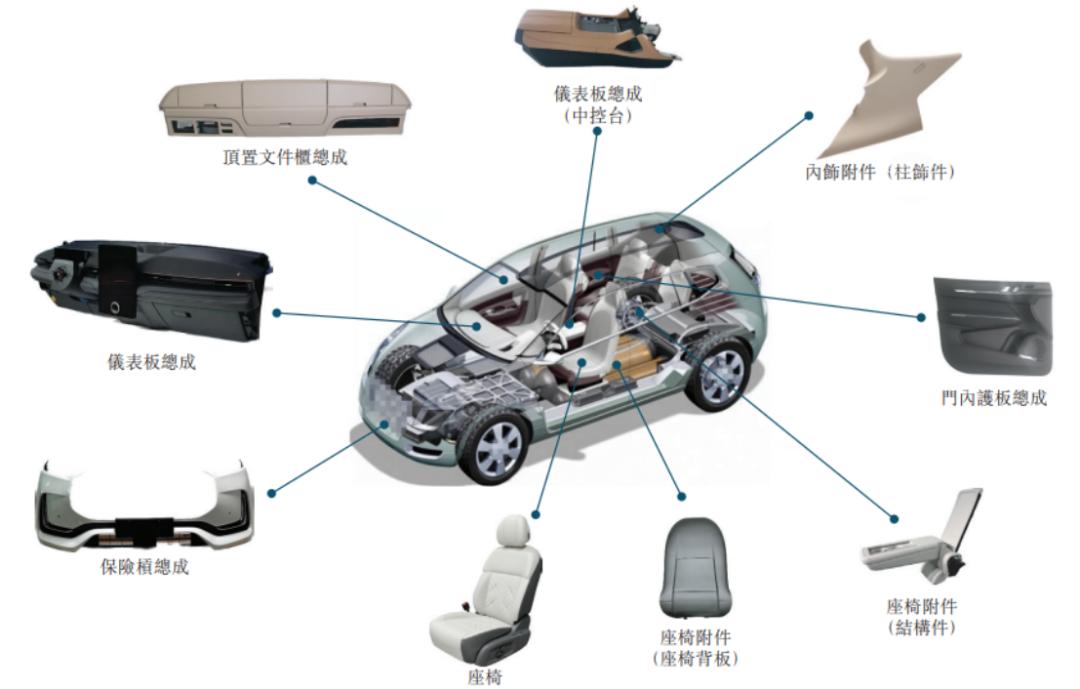
汽车已成为日常生活中常见的交通工具,2024年全球汽车产量近9267万辆。作为全球最大的汽车市场,2024年中国汽车总产量超过3128万辆,且中国在电 动汽车领域优势明显,同期中国电动汽车总产量约占全球市场的70%。 整车由大量零部件组成,过去,整车厂通常采购零散零部件自行组装,这不仅增加其工作量,还存在零部件不匹配、质量波动及供应链复杂性风险。后 来,整车厂逐渐将饰件总成的设计、研发、生产等工作委托给专业供应商。 如今就有给比亚迪、奇瑞汽车等车企供应汽车内饰产品的公司冲击IPO。格隆汇获悉,近期,江苏新泉汽车饰件股份有限公司(简称"新泉股份")向港交 所递交招股书,拟在香港主板上市,中信证券为其独家保荐人。 新泉股份的主要解决方案包括内饰系统解决方案(涵盖仪表板总成、顶置文件柜总成、门内护板总成及内饰附件),外饰系统解决方案(涵盖保险杠总成 及外饰附件),座椅及座椅附件解决方案,产品应用于商用车、乘用车领域。 图片来源于招股书 具体来看,2023年、2024年、2025年1-9月(简称"报告期"),新泉股份超过80%的收入来自内饰系统解决方案,其中,仪表板总成贡献了约60%的收 入,门板总成的收入占比在16 ...

比亚迪将在埼玉川越开设关东地区最大门店
日经中文网· 2026-03-13 08:00
Core Viewpoint - BYD is expanding its presence in Japan by opening a large dedicated store in Kawagoe, Saitama, which will enhance customer service through a one-stop shop model that includes vehicle display and maintenance services [2][4]. Group 1: Store Opening Details - The "BYD AUTO Kawagoe" store will open on April 3, showcasing up to 6 vehicles and featuring a maintenance facility [2]. - The store will display all current models, including the plug-in hybrid vehicle "Sealion 6," set to launch in December 2025, and the Japan-exclusive electric light vehicle "Racco," expected in summer 2026 [4]. Group 2: Expansion Strategy - BYD aims to establish a network of 100 stores in Japan, with the Kawagoe location being the 50th official store [4]. - Including preparation rooms for test drives and purchase consultations, BYD has a total of 69 outlets in Japan [4][5]. - The company is also planning to open smaller stores in local cities to promote the sales of electric light vehicles beyond the 100-store framework [5].