
XIAOMI(01810)

Search documents
小米集团(01810) - 翌日披露报表
2026-01-19 10:09
FF305 翌日披露報表 (股份發行人 ── 已發行股份或庫存股份變動、股份購回及/或在場内出售庫存股份) 表格類別: 股票 狀態: 新提交 公司名稱: 小米集团 (於開曼群島註冊成立以不同投票權控制的有限公司) 呈交日期: 2026年1月19日 如上市發行人的已發行股份或庫存股份出現變動而須根據《香港聯合交易所有限公司(「香港聯交所」)證券上市規則》(「《主板上市規則》」)第13.25A條 / 《香港聯合交易所有限公司GEM證券 上市規則》(「《GEM上市規則》」)第17.27A條作出披露,必須填妥第一章節 。 | 第一章節 | | | | | | | | | | --- | --- | --- | --- | --- | --- | --- | --- | --- | | 1. 股份分類 | 不同投票權架構公司普通股 | | 股份類別 B | | 於香港聯交所上市 | 是 | | | | 證券代號 (如上市) | 01810 | 說明 | | | | | | | | 多櫃檯證券代號 | 81810 | RMB 說明 | | | | | | | | A. 已發行股份或庫存股份變動 | | | | | | | ...
北水动向|北水成交净买入22.92亿 内资继续加仓芯片股 增持中芯国际(00981)超4亿港元
智通财经网· 2026-01-19 10:00
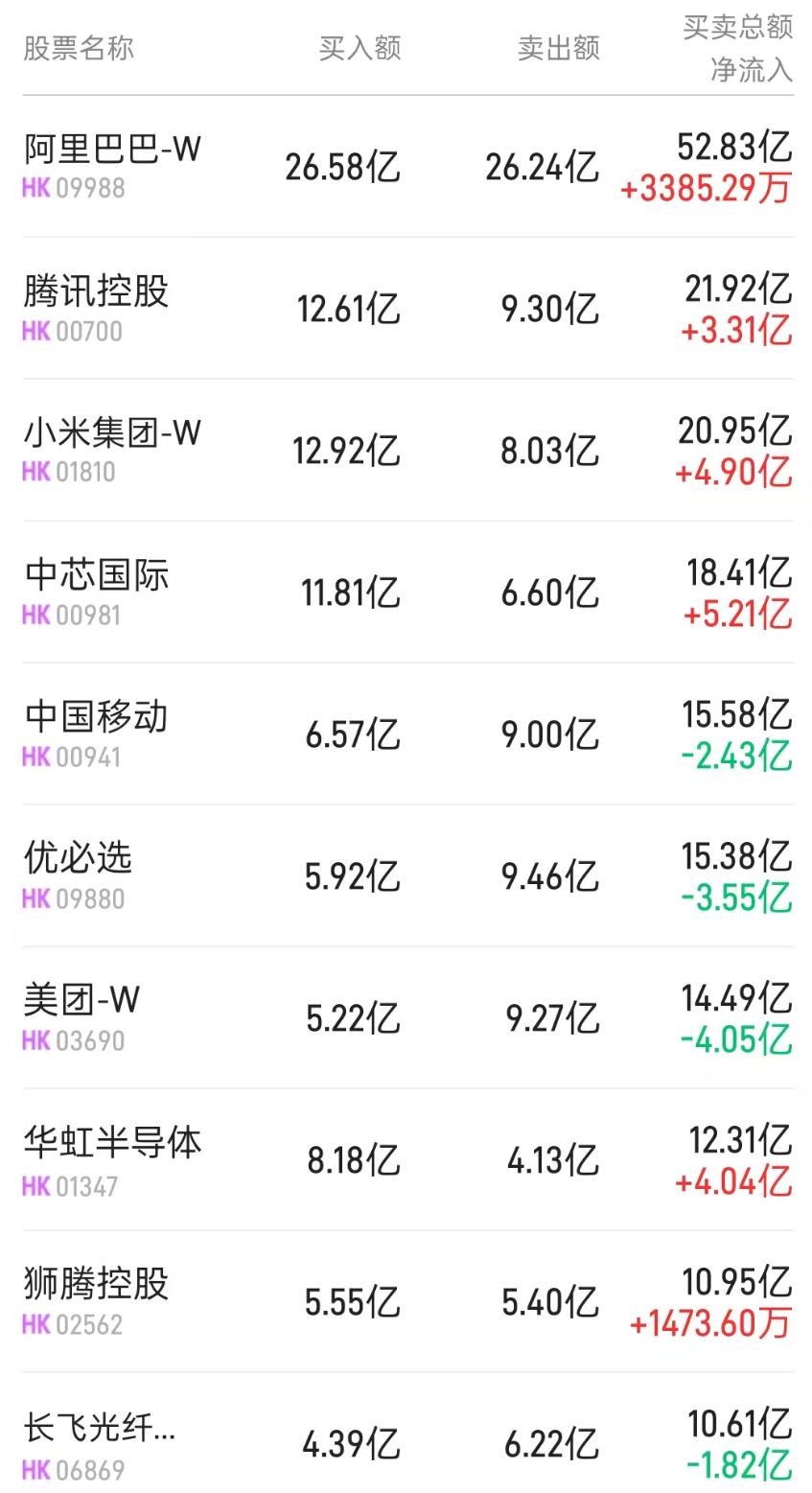
Group 1: Market Overview - Northbound trading recorded a net buy of HKD 22.92 billion, with HKD 30.42 billion net buying through Shanghai Stock Connect and HKD 7.5 billion net selling through Shenzhen Stock Connect [1] - The most bought stocks by northbound investors included SMIC (00981), Hua Hong Semiconductor (01347), and Tencent (00700), while China Mobile (00941) saw the highest net sell [1] Group 2: Individual Stock Performance - Alibaba (09988) had a net inflow of HKD 26.58 billion in buying and HKD 26.24 billion in selling, totaling HKD 52.83 billion [2] - Tencent Holdings (00700) recorded a net buy of HKD 12.61 billion against HKD 9.30 billion in selling, resulting in a total of HKD 21.92 billion [2] - Xiaomi Group (01810) saw a net buy of HKD 12.92 billion with HKD 8.03 billion in selling, totaling HKD 20.95 billion [2] - SMIC (00981) had a net buy of HKD 11.81 billion and HKD 6.60 billion in selling, resulting in a total of HKD 18.41 billion [2] - China Mobile (00941) experienced a net sell of HKD 6.57 billion against HKD 9.00 billion in selling, totaling HKD 15.58 billion [2] Group 3: Analyst Insights - TSMC raised its capital expenditure guidance for 2026 to USD 52-56 billion, indicating strong long-term demand driven by AI [4] - DRAM prices are on the rise, with certain DDR4 models seeing weekly increases exceeding 12%, and Micron noted that AI demand now accounts for 50-60% of the DRAM market [4] - Nomura forecasts Tencent's revenue to grow by 12% year-on-year to RMB 193.5 billion, with non-IFRS net profit expected to rise by 15% to RMB 63.9 billion [5] - Alibaba's new app, Qianwen, integrates various services within its ecosystem, enhancing its competitive edge in AI and consumer markets [5] - Bubble Mart (09992) is projected to have multiple growth drivers, including monetization of existing IPs and new IP launches targeting overseas markets [6]




港股收评:恒指跌超1%,科技、金融股齐受挫,航空板块逆势活跃
Ge Long Hui· 2026-01-19 08:59
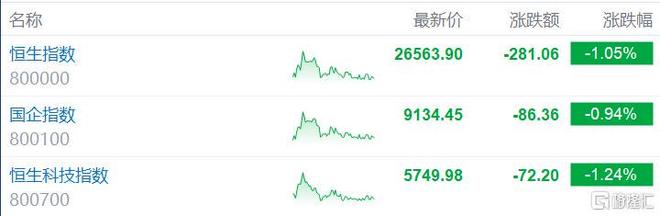
Market Overview - The Hong Kong stock market indices showed weakness on January 19, with the Hang Seng Index down by 1.05%, the Hang Seng China Enterprises Index down by 0.94%, and the Hang Seng Tech Index down by 1.24, influenced by tariffs and geopolitical risks [1] Technology Sector - Major technology stocks, which serve as market indicators, performed poorly, with Alibaba down by 3.49%, and other notable declines including Meituan, JD.com, and Tencent, each falling over 1% [3][5] - AI application concept stocks continued to decline, particularly in the AI healthcare sector, with significant drops in stocks like Baidu and iFlytek [6][7] Healthcare Sector - AI healthcare concept stocks saw substantial declines, with Baidu down over 8%, and iFlytek and other related stocks also experiencing drops exceeding 5% [7] - Biopharmaceutical stocks collectively fell, with notable declines in stocks like Kelun-B and WuXi Biologics, each dropping over 4% [8] Education Sector - Education stocks faced declines, with Dadi Education down over 9% and several others like Australia Chengfeng Higher Education and Excellence Education Group dropping over 3% [9] Copper and Mining Sector - Copper stocks experienced a pullback, with Jin Xun Resources down by 6.81% and Jiangxi Copper falling over 3% [11] Financial Sector - Chinese brokerage and insurance stocks showed weak performance, with Shenwan Hongyuan down over 3% and several others like China Galaxy and China Pacific Insurance also declining [12] Consumer Sector - The aviation industry showed a strong recovery trend, with China Eastern Airlines rising over 9%, supported by positive forecasts for passenger transport during the upcoming Spring Festival [16][17] Energy Sector - Electric power equipment stocks rose, with Dongfang Electric up over 6% and Harbin Electric up over 5%, driven by significant investment plans from the State Grid Corporation [18] - Oil stocks also saw gains, with China Petroleum and Chemical Corporation up over 3% [22] Precious Metals - Gold and precious metals performed actively, with gold prices reaching historical highs due to geopolitical tensions and increased demand for safe-haven assets [21][22] Investment Outlook - Analysts suggest that the technology sector remains a long-term investment focus, with potential for upward movement due to multiple favorable factors including price increases in the supply chain and accelerated AI applications [25]
苹果手机单季在华销量大增28%,份额突破20%
Guan Cha Zhe Wang· 2026-01-19 08:34
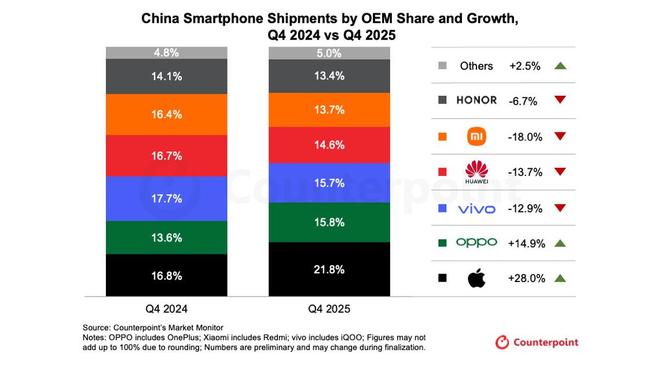
Core Insights - Counterpoint Research reports a 1.6% year-on-year decline in China's smartphone shipments for Q4 2025, with an overall annual decrease of 0.6% [1] - Apple leads the domestic market with a 21.8% market share in Q4, followed by OPPO at 15.8% and vivo at 15.7% [1] - Huawei maintains the top position for the entire year with a 16.9% market share, closely followed by Apple (16.7%) and vivo (16.4%) [1] Group 1: Market Performance - Apple's Q4 shipments surged by 28% year-on-year, driven by strong demand for the iPhone 17 series and increased supply [4] - OPPO achieved a 15% year-on-year growth in Q4, supported by strong demand for the Reno series and contributions from the newly launched Find X9 and OnePlus 15 series [5] - Huawei's mid-to-high-end models performed well after price promotions, despite a decline in the second half of the year [5] Group 2: Product Insights - The iPhone Air's late launch and design compromises have led to a slow start, but it is expected to have a long-term impact on the eSIM smartphone market [5] - Vivo's iQOO 15 offers strong value among devices with Qualcomm's latest flagship chip, while Xiaomi's 17 series has gained attention for its Pro model's unique back screen [6] - Honor's X70 and 400 series maintained steady demand, with the new WIN series noted for its cooling performance [6] Group 3: Industry Outlook - Counterpoint Research anticipates a 40%-50% increase in storage prices in Q1 2026, followed by an additional 20% rise in Q2 [6] - The low-end market (under $200) has been significantly impacted, with a 20%-30% increase in Bill of Materials (BoM) costs since the beginning of the year [7] - Global smartphone shipments are projected to decline by 2.1% in 2026, with an expected average selling price increase of 6.9% due to cost adjustments [7]

小米官宣2026全网首个“测到死”直播:Turbo 5 Max以9000mAh硬刚10000mAh
Xin Lang Cai Jing· 2026-01-19 06:40
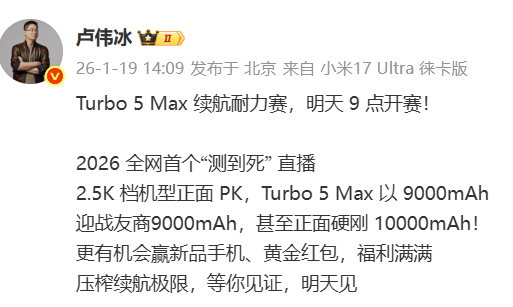
Group 1 - The core announcement is about the "Turbo 5 Max endurance test" live event scheduled for January 20, 2026, where the Turbo 5 Max will compete with other smartphones featuring 9000mAh and even 10000mAh batteries [1][3][5] - The live broadcast will start at 9 AM and will last all day, with the company offering incentives such as a new phone for every minute won during the test and doubling the rewards if the Turbo 5 Max loses [1][3][5] - Additionally, there will be a giveaway of 100 gold red envelopes for viewers participating in the event [1][3][6]
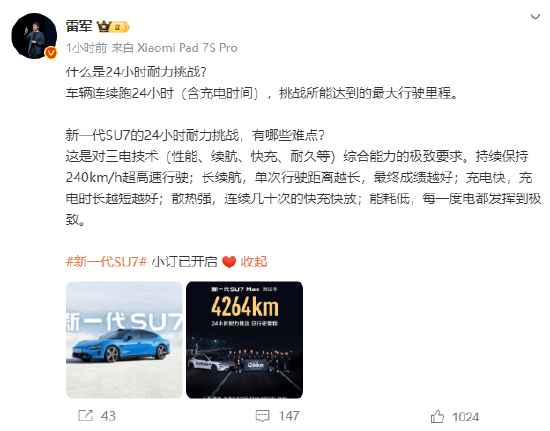
小米集团CEO雷军:新SU7的24小时耐力挑战是对三电技术的极致要求!能耗低,每一度电都发挥到极致
Sou Hu Cai Jing· 2026-01-19 06:25
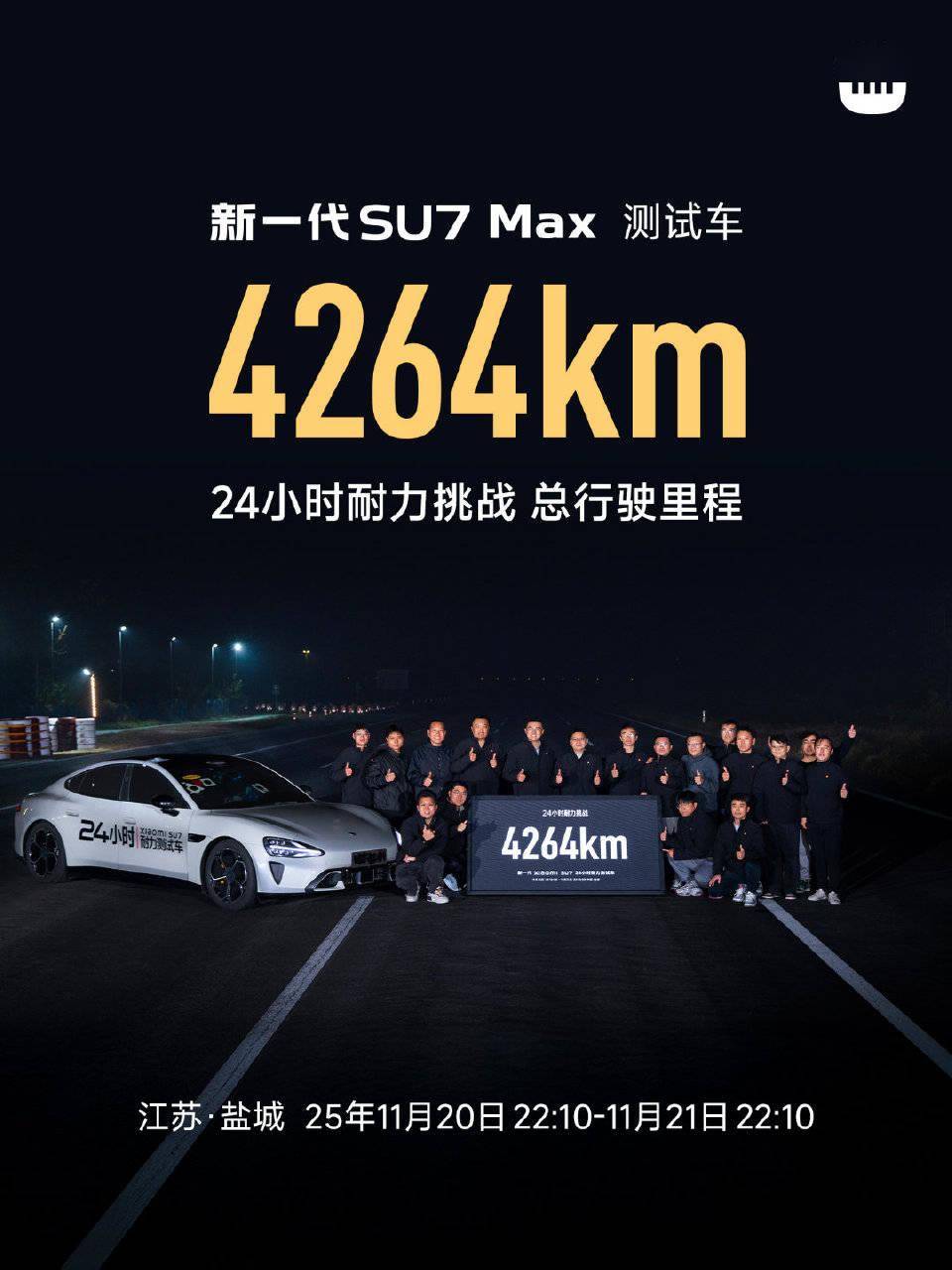
Group 1 - The core message emphasizes the extreme requirements for the comprehensive capabilities of the three electric technologies (performance, endurance, fast charging, durability) in the new generation SU7 [1] - The SU7 Max achieved a total driving distance of 4264 km in a 24-hour endurance challenge, showcasing its performance and long-range capabilities [2] - The endurance challenge involved continuous driving for 24 hours, including charging time, aimed at providing users with enhanced performance, longer endurance, and a more reliable driving experience [2]
雷军:新SU7的24小时耐力挑战是对三电技术的极致要求
Xin Lang Cai Jing· 2026-01-19 06:07
Group 1 - The core message emphasizes the extreme requirements of the new SU7's 24-hour endurance challenge, focusing on the comprehensive capabilities of the three electric technologies: performance, endurance, fast charging, and durability [1][4] - The vehicle maintained a high-speed driving of 240 km/h, highlighting the importance of long-range driving, fast charging, strong heat dissipation, and low energy consumption [1][4] Group 2 - Xiaomi's automotive division announced that the new SU7 Max achieved a total driving distance of 4264 km during the 24-hour endurance challenge, described as "running a marathon at sprinting speed" [3][6] - The endurance challenge involved continuous driving for 24 hours, including charging time, to test the maximum achievable driving range, aimed at providing users with enhanced performance, longer endurance, and a more reliable driving experience [3][6]
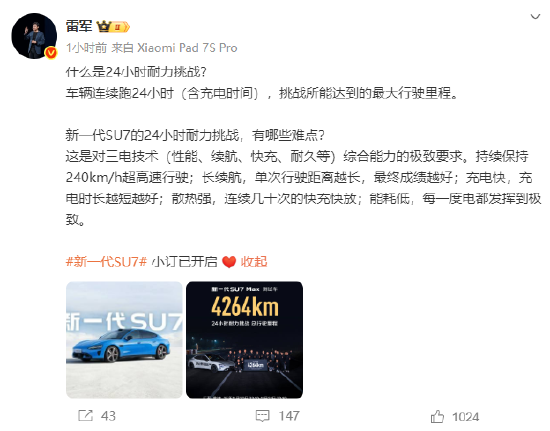
小米雷军:新一代 SU7 的 24 小时耐力挑战是对三电技术综合能力的极致要求
Sou Hu Cai Jing· 2026-01-19 05:57
Group 1 - The core message of the article highlights that Xiaomi's new generation SU7 Max achieved a total driving distance of 4264 km in a 24-hour endurance challenge, emphasizing its performance capabilities [1] - Xiaomi's founder and CEO Lei Jun provided insights into the endurance challenge, explaining that it tests the comprehensive capabilities of the vehicle's three electric technologies, including performance, range, fast charging, and durability [1] - The challenge involved maintaining a high-speed driving rate of 240 km/h, achieving long-range travel, minimizing charging time, ensuring effective heat dissipation during multiple fast charges, and optimizing energy consumption [1]
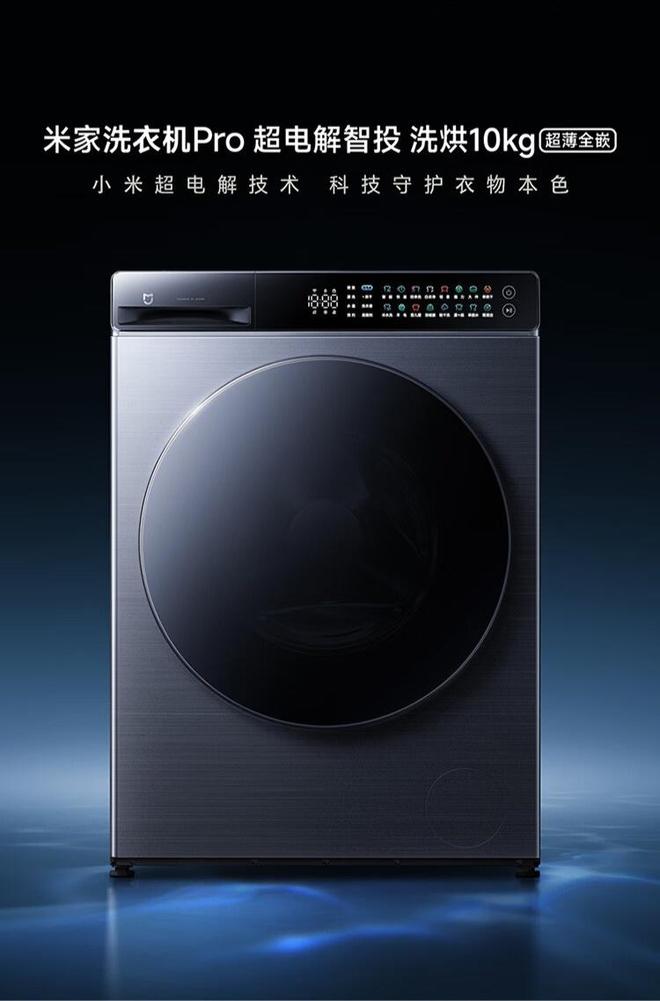
小米米家洗衣机Pro超电解智投洗烘10kg上架,预售价3293元
Xin Lang Cai Jing· 2026-01-19 05:48
Core Viewpoint - Xiaomi's new MiJia Washing Machine Pro features advanced electrolysis technology, designed to effectively remove 20 types of stains and enhance washing efficiency, with a pre-sale price of 3,293 yuan [1]. Product Features - The washing machine utilizes Xiaomi's electrolysis technology to eliminate stains from soy sauce, juice, and blood, and can whiten yellowed clothes in one wash [5][7]. - It offers 4 times color protection and boasts a 99.99% natural sterilization rate through its full water route [5][7]. - The machine supports dual intelligent dispensing, accurately sensing the weight of clothes to control the amount of detergent and fabric softener used, sufficient for a month with one addition [7]. - It features a "pre-mixed quick wash" function, achieving a 69-minute washing effect in just 36 minutes [7]. Technical Specifications - Rated drying capacity: 7 kg [9] - Rated dehydration speed: 1200 rpm [9] - Rated input power: 1800 W [9] - Rated drying power: 1500 W [9] - Rated voltage: 220 V~ [9] - Rated frequency: 50 Hz [9] - Working water pressure: 0.05 MPa~0.8 MPa [9]
多家机构看好港股成长板块回撤买入机会!恒生互联网ETF(513330)连续4日净流入
Mei Ri Jing Ji Xin Wen· 2026-01-19 03:04
Group 1 - The core viewpoint of the articles suggests that institutions are recommending attention to the Hong Kong stock growth sector, which has seen relatively less increase in the current rally, indicating potential buying opportunities during suitable pullbacks [1] - Financial conditions are generally loose, with foreign capital and southbound flows returning, and earnings expectations being revised upward, making Hong Kong stocks more attractive in terms of value compared to A-shares [1][2] - The sentiment indicators for Hong Kong stocks have moved out of panic territory, with a noticeable decline in short positions, indicating a potential right-side harvesting period [1] Group 2 - As of last week, foreign net inflows into Hong Kong stocks reached $2.82 billion, compared to $1.54 billion the previous week, with active foreign funds turning into net inflows of $160 million, marking the largest weekly net inflow since September 2024 [2] - Southbound capital saw a net inflow of approximately HKD 10.05 billion last week, primarily flowing into sectors such as media, computing, and retail, with Tencent Holdings, Alibaba, Kuaishou, and Xiaomi Group receiving the most inflows [2] - The Hang Seng Internet ETF has seen net inflows for four consecutive days, being the largest ETF tracking the Hang Seng Internet Technology Index, which focuses on sectors like internet, media, and computing [2]

