GWMOTOR(02333)

Search documents
长城汽车申请屏幕共享状态下的语音控制方法专利,实现可见即可说在共享屏幕状态下能正常使用
Jin Rong Jie· 2026-01-29 01:16
Group 1 - The core point of the article is that Great Wall Motors Co., Ltd. has applied for a patent related to a voice control method and system for screen sharing in vehicles, which aims to enhance user experience by allowing voice commands to be executed while the screen is in a shared state [1] Group 2 - The patent application, titled "Voice Control Method and System under Screen Sharing State, Storage Medium, Vehicle," was published with the number CN121415775A and was filed on October 2025 [1] - The method involves registering keywords in response to user voice commands when the first screen is in a shared state, allowing for voice control commands to be matched and executed accordingly [1] Group 3 - Great Wall Motors was established in 2001 and is located in Baoding City, primarily engaged in the automotive manufacturing industry [1] - The company has a registered capital of approximately 8.56 billion RMB and has invested in 75 enterprises, participated in 2,962 bidding projects, and holds 5,000 trademark and patent records, along with 640 administrative licenses [1]

崔东树:2025年1-12月俄罗斯的中国自主车企份额回升到57.2%
智通财经网· 2026-01-28 12:26
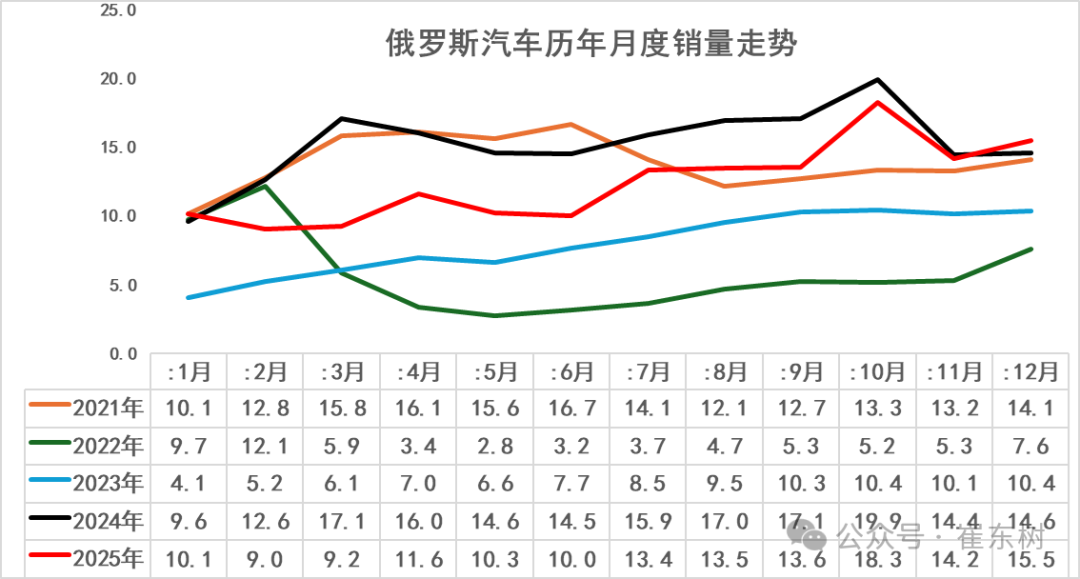
Group 1 - The core viewpoint of the articles indicates that the Russian automotive market is experiencing a complex recovery, with significant fluctuations in sales and a notable increase in the market share of Chinese automotive brands [1][8][14] - In December 2025, Russian automotive sales are projected to reach 150,000 units, reflecting a year-on-year increase of 6%, while the total sales for the year are expected to decline by 19% to 1.49 million units [1][8] - Chinese automotive companies have significantly increased their market share in Russia, reaching 57.2% in December 2025, with a notable recovery from previous lows [1][16] Group 2 - The Russian automotive market has shown volatility, with sales dropping to around 30,000 units during the peak of the Ukraine crisis in 2022, but recovering to approximately 100,000 units per month in 2023 [5][8] - The market is undergoing a transformation due to policy changes, including increased import tariffs and local production incentives, which have reshaped the competitive landscape [6][12] - Chinese automotive companies are adapting to the Russian market by enhancing local production, improving supply chain resilience, and developing products suited for extreme weather conditions [2][12] Group 3 - The sales of Chinese automotive brands in Russia have surged from 157,000 units in 2021 to 1.28 million units in 2024, indicating a strong response to the market gap left by exiting foreign brands [11][14] - The local production strategy has been emphasized, with Chinese companies establishing regional production bases and increasing local parts sourcing to mitigate tariff impacts [2][12] - The overall market dynamics are shifting towards lower-powered models and domestic brands due to the rising costs of imported vehicles and changing consumer preferences [6][12]




创近五年新低 2025年汽车行业销售利润率仅4.1%
经济观察报· 2026-01-28 12:24
Core Viewpoint - The automotive industry is experiencing a significant decline in profitability, with upstream components showing steady growth, while vehicle manufacturing and downstream dealerships face considerable pressure [1][2]. Group 1: Profitability Trends - In 2025, the automotive industry achieved a profit of 461 billion yuan, a year-on-year increase of 0.6%, but the sales profit margin dropped to 4.1%, lower than the average of 5.9% for downstream industrial enterprises [2]. - The profit margin for the automotive industry fell to 4.1% in 2025, marking a five-year low, with December profits plummeting to 20.7 billion yuan, a year-on-year decrease of 57.4% [2][3]. - The overall profit margin for the automotive industry in December 2025 was the lowest in five years, with a significant decline from 4.1% in December 2024 to 1.8% [2]. Group 2: Performance of Different Segments - Among 129 A-share automotive parts companies, 80 reported a year-on-year profit increase, indicating over 60% had both revenue and profit growth [3]. - In the vehicle manufacturing segment, 16 out of 22 A-share car manufacturers were profitable, but major players like BYD and GAC Group saw significant profit declines, with GAC Group's profit dropping by 3691.33% [3]. - The downstream dealership segment is under severe pressure, with only 28% meeting sales targets and a loss rate climbing to 55% [3]. Group 3: Cost Pressures - The overall unit cost for industrial enterprises has increased significantly, with lithium carbonate prices doubling and raw material costs rising for midstream and downstream sectors [3][4]. - The cost of a typical mid-sized smart electric vehicle has increased by 4,000 to 7,000 yuan due to rising prices of lithium, aluminum, and copper, which are difficult for manufacturers to pass on to consumers [4]. - Starting in 2026, a 5% purchase tax on new energy vehicles and changes to subsidy policies will further increase consumer costs, complicating demand and supply dynamics in the automotive market [4]. Group 4: Strategic Responses - Some automotive companies are accelerating collaboration with upstream suppliers to address challenges, as seen in the strategic discussions between China Aluminum Group and China FAW Group [5].


创近五年新低 2025年汽车行业销售利润率仅4.1%
Jing Ji Guan Cha Wang· 2026-01-28 07:36
Core Viewpoint - The Chinese automotive industry is facing significant profit declines, with 2025 projected profits at 461 billion yuan, a mere 0.6% increase year-on-year, and a sales profit margin of 4.1%, which is below the average of 5.9% for downstream industrial enterprises [2] Group 1: Profit Trends - The automotive industry's profit margin is expected to drop to 4.1% in 2025, marking a five-year low, following a decline to 4.3% in 2024 [2] - In December 2025, the automotive industry reported profits of 20.7 billion yuan, a year-on-year decrease of 57.4%, with a profit margin of 1.8%, significantly lower than the 4.1% in December 2024 [2] - Excluding the pandemic-affected April 2022, December 2025's profit margin is the lowest in five years [2] Group 2: Industry Performance - The automotive supply chain shows a mixed performance, with upstream parts manufacturers experiencing stable growth, while vehicle manufacturing and downstream dealerships face significant challenges [3] - Among 22 A-share automotive companies, 16 reported profits, but major players like BYD and GAC Group saw substantial profit declines, with GAC Group's profit dropping by 3691.33% [3] - The dealership segment is under severe pressure, with only 28% meeting sales targets and a loss rate climbing to 55% [3] Group 3: Cost Pressures - The automotive industry is experiencing increased cost pressures, with lithium carbonate prices doubling and overall raw material costs rising, impacting profit margins [3][4] - The cost of a typical electric vehicle has increased by 4,000 to 7,000 yuan due to rising prices of lithium, aluminum, and copper, which manufacturers struggle to pass on to consumers [4] - Starting in 2026, a 5% tax on new energy vehicle purchases and changes to subsidy policies will further increase consumer costs, complicating demand and supply dynamics [4][5] Group 4: Future Outlook - The China Automotive Industry Association forecasts total vehicle sales to reach 34.75 million units in 2026, a 1% year-on-year increase, with new energy vehicles projected to grow by 15.2% to 19 million units [5] - Some automotive companies are accelerating collaborations with upstream suppliers to address these challenges, focusing on strategic partnerships and new material development [5]

港股汽车股午后持续走高,理想汽车(02015.HK)、比亚迪股份(01211.HK)涨超4%,蔚来汽车(09866.HK)涨近4%,小鹏汽车(09868...
Jin Rong Jie· 2026-01-28 06:57
本文源自:金融界AI电报 港股汽车股午后持续走高,理想汽车(02015.HK)、比亚迪股份(01211.HK)涨超4%,蔚来汽车(09866.HK) 涨近4%,小鹏汽车(09868.HK)、长城汽车(02333.HK)涨超2%。 ...


港股汽车股午后持续走高,理想汽车(02015.HK)、比亚迪股份(01211.HK)涨超4%,蔚来汽车(09866.HK)涨近4%,小鹏汽车(09868.HK)、长城汽车(02333.HK)涨超2%。
Jin Rong Jie· 2026-01-28 06:49
港股汽车股午后持续走高,理想汽车(02015.HK)、 比亚迪股份(01211.HK)涨超4%,蔚来汽车 (09866.HK)涨近4%,小鹏汽车(09868.HK)、 长城汽车(02333.HK)涨超2%。 ...
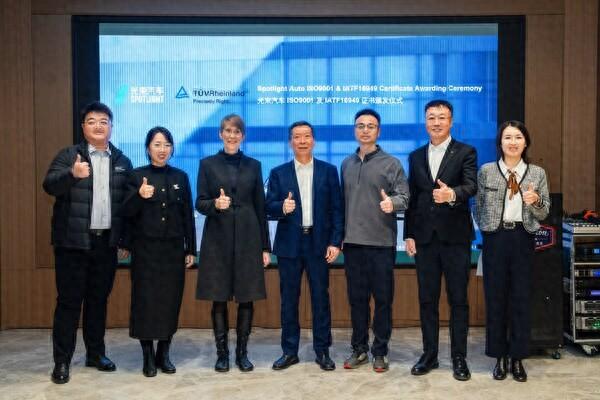
TÜV莱茵为光束汽车颁发ISO 9001及IATF 16949认证证书
Huan Qiu Wang· 2026-01-28 06:46
Core Viewpoint - TÜV Rheinland has awarded Beam Automobile Co., Ltd. with ISO 9001:2015 and IATF 16949:2016 certifications, indicating that the company's quality management systems meet international standards [1][4]. Group 1: Certification Details - The certifications signify a milestone in Beam Automobile's quality management system, affirming the company's previous efforts and motivating future development [5]. - TÜV Rheinland's certification process is based on over a century of experience in the automotive testing and certification field, providing comprehensive services across the automotive industry [7]. Group 2: Company Background - Beam Automobile is a joint venture between Great Wall Motors and BMW Group, with both parties holding a 50:50 share, adhering to a management philosophy of equality and balance [7]. - The company integrates research and development, production, and logistics, aiming to sell products globally under the model of "joint R&D, made in China, serving global customers" [7].

谁杀死了毫末智行?
雷峰网· 2026-01-28 04:34
Core Viewpoint - The article discusses the rise and fall of Haomo Zhixing, a subsidiary of Great Wall Motors, highlighting its initial promise and subsequent failures due to internal conflicts, management issues, and technological missteps [3][6][60]. Group 1: Company Background - Haomo Zhixing was established on November 29, 2019, as part of Great Wall Motors, with its actual control held by Chairman Wei Jianjun, who owns approximately 37% of the shares [8]. - The company aimed to become a global parts supplier, allowing Great Wall Motors to focus on vehicle manufacturing, inspired by the operational models of global automotive giants [8][12]. - Initially, Haomo Zhixing experienced rapid growth, with Great Wall Motors achieving a sales volume of 1.1116 million vehicles in 2020, marking a 4.8% year-on-year increase [9]. Group 2: Strategic Initiatives - In 2020, Great Wall Motors launched its "331" strategy for intelligent driving, aiming to become a leader in the autonomous driving sector within three years [9][12]. - The company planned to achieve L3 autonomous driving capabilities and the first deployment of laser radar in 2021, further enhancing its technological ambitions [12]. - By December 2021, Haomo Zhixing secured nearly 1 billion yuan in Series A funding from various investors, indicating strong initial market confidence [18]. Group 3: Challenges and Failures - Internal management issues became apparent when a whistleblower reported recruitment violations and a lack of collaboration between teams in Beijing, Shanghai, and Baoding, leading to a loss of trust from Great Wall Motors [4][6]. - Haomo Zhixing faced repeated failures to deliver on promises, including the inability to launch its city NOA (Navigation on Autopilot) system as scheduled, which was attributed to internal chaos and poor technical direction [32][46]. - The company's dual leadership structure, with both a chairman and CEO making decisions without a CTO, led to confusion and inefficiencies, ultimately hindering its technological progress [32][36]. Group 4: Market Position and Future Prospects - By the end of 2023, Great Wall Motors began collaborating with other companies like Yuanrong and Zhuoyu for advanced driving projects, effectively sidelining Haomo Zhixing [49][50]. - Despite having opportunities for an IPO in 2023, the process was halted due to external shareholders' concerns over market conditions and valuation expectations [51][52]. - As of late 2024, Haomo Zhixing's operations were severely impacted, leading to a freeze on its bank accounts and uncertainty for its employees, reflecting a significant decline from its initial promise [54][58].

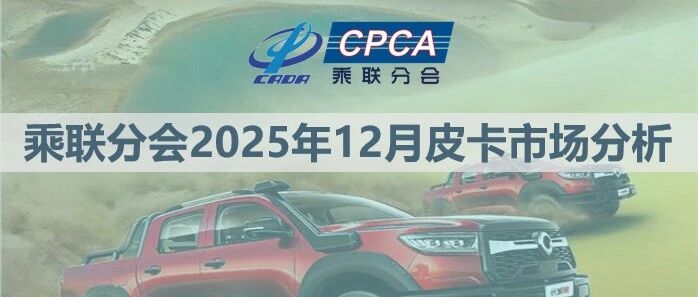
【乘联分会论坛】2025年12月皮卡市场分析
乘联分会· 2026-01-27 09:00
Core Viewpoint - The pickup truck market in China is experiencing growth, with significant increases in both sales and exports, particularly in the southwestern and northwestern regions, while facing challenges in the eastern developed areas [2][3][5]. Group 1: Overall Market Analysis - In December 2025, the pickup truck market sold 52,000 units, a year-on-year increase of 8.8%, marking a high point in the last five years. For the entire year, sales reached 589,000 units, up 11.8% [2][5]. - The production of pickup trucks in December 2025 was 48,000 units, a 5.2% increase year-on-year, with total production for the year at 575,000 units, up 14% [2][5]. - The market is characterized by a strong performance from leading companies like Great Wall Motors, Changan Automobile, and SAIC Maxus, with a continued "one strong, many strong" competitive landscape [2][5][20]. Group 2: Export Performance - In December 2025, China exported 28,000 pickup trucks, a 12% increase year-on-year, although it represented a 13% decrease from the previous month. Total exports for the year reached 300,000 units, up 21% [3][8]. - The export share of pickups is significant, with 45% of total sales in 2024 and 54% in December 2025, indicating a strong international demand for Chinese-made pickups [3][8]. Group 3: New Energy Pickup Trucks - In December 2025, sales of new energy pickups were 6,000 units, a decrease of 3% year-on-year and 30% month-on-month. However, total sales for the year reached 73,000 units, a remarkable increase of 243% [3][10]. - The new energy pickup market is expected to grow rapidly, driven by increasing consumer interest and the introduction of models from companies like BYD and Geely [10][13]. Group 4: Regional Market Characteristics - The main demand for pickups is concentrated in the southwestern and northwestern regions, accounting for 46% of total demand in December 2025. In contrast, the eastern regions are showing weaker performance [12][15]. - The market dynamics are influenced by economic activities in these regions, with a notable demand for pickups in rural and small-town markets, while larger cities are experiencing stagnation [15][17]. Group 5: Competitive Landscape - Great Wall Motors continues to dominate the domestic pickup market with nearly 50% market share, while other brands like Jiangling Motors and Zhengzhou Nissan maintain strong positions [20][22]. - The competitive landscape is evolving, with increased pressure on smaller manufacturers as larger companies expand their export capabilities and product offerings [20][25].
智通港股沽空统计|1月27日
智通财经网· 2026-01-27 00:24
Group 1 - The top short-selling ratios are recorded for China Resources Beer (100.00%), Anta Sports (100.00%), and Li Ning (100.00%) [1][2] - The highest short-selling amounts are for Pop Mart (1.209 billion), Xiaomi Group (1.075 billion), and Alibaba (0.974 billion) [1][2] - The highest deviation values are for CRRC (42.51%), Li Ning (38.82%), and Ping An Insurance (30.07%) [1][2] Group 2 - The top short-selling amounts list includes Pop Mart (1.209 billion), Xiaomi Group (1.075 billion), and Alibaba (0.974 billion) with respective short-selling ratios of 28.53%, 19.43%, and 8.66% [2] - The top short-selling ratio rankings show China Resources Beer, Anta Sports, and Li Ning all at 100.00% with short-selling amounts of 19.28 thousand, 9.50 thousand, and 10.09 thousand respectively [2] - The deviation values indicate that CRRC has a significant deviation of 42.51%, followed by Li Ning at 38.82% and Ping An at 30.07% [2][3]