MEITUAN(03690)

Search documents
南向资金今日成交活跃股名单(11月24日)
Zheng Quan Shi Bao Wang· 2025-11-24 13:53
Core Insights - The Hang Seng Index rose by 1.97% on November 24, with southbound trading totaling HKD 102.72 billion, resulting in a net inflow of HKD 8.57 billion [1][2] Trading Activity - Southbound trading saw a total turnover of HKD 1,027.23 million, with buy transactions amounting to HKD 556.47 million and sell transactions at HKD 470.76 million, leading to a net buy of HKD 85.71 million [1] - The Hong Kong Stock Connect (Shenzhen) recorded a total turnover of HKD 437.54 million, with net buying of HKD 64.94 million, while the Hong Kong Stock Connect (Shanghai) had a turnover of HKD 589.69 million and a net buy of HKD 20.78 million [1] Active Stocks - Alibaba-W was the most actively traded stock with a total turnover of HKD 167.75 million and a net buy of HKD 40.66 million, closing up by 4.67% [1][2] - Other notable stocks included Tencent Holdings with a net buy of HKD 11.67 million and Kuaishou-W with a net buy of HKD 8.19 million [1] - Semiconductor company SMIC saw the highest net sell of HKD 10.24 million, closing down by 1.09% [1][2] Continuous Net Buying - Alibaba-W, Southern Hang Seng Technology, and Tencent Holdings experienced continuous net buying for 8, 5, and 3 days respectively, with Alibaba-W leading in net buy amount at HKD 173.86 million [2]





11月24日南向资金净买入85.71亿港元
Zheng Quan Shi Bao Wang· 2025-11-24 13:53
Market Overview - On November 24, the Hang Seng Index rose by 1.97%, closing at 25,716.50 points, with a net inflow of HKD 8.571 billion through the southbound trading channel [1][3] - The total trading volume for the southbound trading on that day was HKD 102.723 billion, with a net buy of HKD 8.571 billion [1] Southbound Trading Details - The Shanghai Stock Exchange's southbound trading had a total transaction amount of HKD 58.969 billion, with a net buy of HKD 2.078 billion [1] - The Shenzhen Stock Exchange's southbound trading had a total transaction amount of HKD 43.754 billion, with a net buy of HKD 6.494 billion [1] Active Stocks - Alibaba-W was the most actively traded stock, with a transaction amount of HKD 96.853 billion on the Shanghai Stock Exchange and HKD 70.891 billion on the Shenzhen Stock Exchange, resulting in a net buy of HKD 8.823 billion and HKD 31.84 billion respectively, with a closing price increase of 4.67% [2] - Semiconductor Manufacturing International Corporation (SMIC) had the highest net sell amount of HKD 4.83 billion, with a closing price decrease of 1.09% [1][2] - Other notable stocks included Xiaomi Group-W and Tencent Holdings, with transaction amounts of HKD 24.54 billion and HKD 21.19 billion respectively, and closing price increases of 1.52% and 2.38% [2]

美团旗下昆明团骑信息科技公司注册资本增至7000万美元
Zheng Quan Ri Bao Wang· 2025-11-24 13:48
本报讯(记者袁传玺)天眼查工商信息显示,近日,昆明团骑信息科技有限公司发生工商变更,注册资本 由4000万美元增至7000万美元。股东信息显示,该公司由美团旗下Xigua Limited全资持股。 ...

港股AI,中国科技突围的“新大陆”!
券商中国· 2025-11-24 12:54
Core Viewpoint - The article highlights the dominance of global tech giants, particularly in the AI sector, which is driving significant market performance and reshaping investment landscapes across various regions [2][4][9]. Group 1: Global Tech Market Performance - Nvidia reached a market capitalization of $5 trillion on October 29, while Microsoft briefly surpassed $4 trillion, showcasing the strength of U.S. tech giants [2]. - The AI industry is transitioning from concept to reality, with rapid monetization in areas like large model training, cloud services, and computing power [2][4]. - The S&P 500 index is experiencing unprecedented shifts in sector weightings, with technology and communication services reaching record highs [4][5]. Group 2: Asian Market Dynamics - The MSCI Asia-Pacific index has risen by 26% this year, indicating strong performance driven by regional economic recovery and tech stock momentum [5]. - In Hong Kong, southbound capital has shown strong buying interest, with nearly HKD 400 billion purchased in the last three months, and a net inflow of HKD 1.26 trillion for the year [2][9]. - The Hong Kong market is seen as a key observation window for China's tech industry, reflecting both the rise and challenges of the AI sector [9][11]. Group 3: AI Investment Trends - Bloomberg Economics predicts that by 2030, tech giants will invest up to $4 trillion in AI infrastructure, likening it to the 19th-century railway investment boom [5]. - The capital flow is being re-evaluated based on new metrics such as computing power scale and data barriers, as traditional valuation models struggle to quantify AI's disruptive potential [6][12]. - Major Chinese tech firms are increasingly investing in AI, with significant capital expenditures narrowing the gap with U.S. counterparts [9][10]. Group 4: Hong Kong Internet Sector - The Hong Kong internet sector is undergoing a transformation, with companies like Alibaba, Tencent, and Meituan actively investing in AI infrastructure and adjusting their business models [14][15]. - The performance of Hong Kong internet companies has led to a rapid reassessment of their valuations, transitioning from e-commerce to tech-centric narratives [14][15]. - The Hong Kong Stock Connect Internet ETF (159792) has seen significant growth, reaching a size of HKD 885.03 billion, reflecting strong investor interest in AI-related opportunities [15][16].


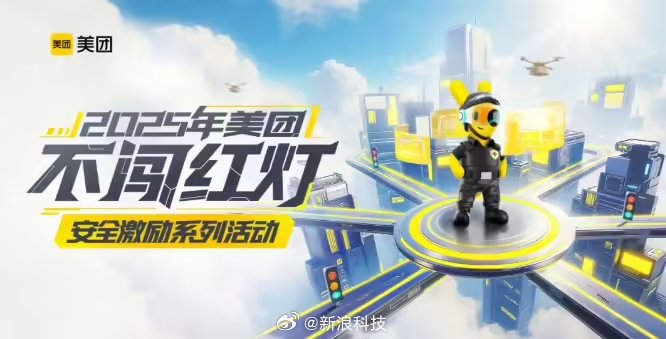
美团200城推骑手零闯灯日奖,百万骑手可获现金装备
Xin Lang Ke Ji· 2025-11-24 12:24
Core Points - Meituan's delivery riders will receive cash rewards for maintaining a zero traffic light violation record, starting from December 2, coinciding with National Traffic Safety Day [1] - The initiative has expanded from major cities to nearly 200 cities nationwide, targeting both dedicated and crowd-sourced riders, with an estimated 1 million riders expected to participate [1] - The reward system has been enhanced to include various cash incentives based on the number of deliveries, with top-performing riders eligible for additional prizes such as helmets and winter gear [1]
清华-美团配送联合课程沉淀为教材 构建AI教育“第二课堂”
Zhong Guo Qing Nian Bao· 2025-11-24 12:24
Core Insights - The textbook "Artificial Intelligence in Instant Delivery" co-authored by Tsinghua University and Meituan has been officially published and included in the Ministry of Education's strategic emerging fields "14th Five-Year Plan" higher education series [1] - The textbook systematically outlines key methods and practical experiences of AI technology in instant delivery, covering areas such as delivery network planning, scheduling optimization, smart pricing, big data forecasting, digitalization, and algorithm engineering [1] Summary by Sections - **Textbook Development**: The textbook is a result of a graduate course on AI technology in instant delivery jointly launched by Tsinghua University and Meituan since 2022, emphasizing a field-oriented approach rather than a purely theoretical one [1] - **Course Focus**: The course addresses real-time scheduling of massive orders, dynamic responses to adverse weather and emergencies, global planning of delivery networks, challenges in big data forecasting, and the engineering issues of algorithm implementation [1] - **Educational Impact**: Since its inception, the course has trained hundreds of AI talents with both academic depth and practical skills, providing a comprehensive technical perspective from laboratory to production environment [1] - **Industry Relevance**: The published textbook serves as a systematic summary of the course content and offers reusable technical methodologies for students and industry technical researchers in AI, automation, and logistics [1]
帮助用户辨别渠道医美, 美团发布“渠道医美避坑指南”
Zhong Guo Zhi Liang Xin Wen Wang· 2025-11-24 12:24
Core Insights - Recent reports by CCTV have highlighted issues in the "channel medical beauty" sector, where consumers are referred to medical beauty institutions through intermediaries like beauty salon staff, leading to high commission payments and potential risks to consumer safety [1][2]. Group 1: Industry Issues - The "channel medical beauty" model is characterized by high commission rates, often resulting in inflated service prices, with some procedures marked up from 10,000 to 30,000 [1]. - There are significant concerns regarding the qualifications of personnel performing medical procedures, with unqualified individuals potentially using counterfeit or substandard products, jeopardizing consumer safety [1]. - Some intermediaries may refer consumers to institutions lacking proper medical qualifications, further endangering consumer interests and safety [1]. Group 2: Company Initiatives - Meituan Medical Beauty has launched a "channel medical beauty avoidance guide" to help consumers navigate these risks, promoting direct customer acquisition models and compliance within the industry [2]. - The "放心美" (Safe Beauty) project by Meituan has provided over 10 million verification services and installed more than 5,000 self-developed AIoT verification devices across 2,300 medical beauty institutions in 126 cities by October 2025 [2]. - Consumers are encouraged to verify the qualifications of medical institutions and practitioners, and to choose those with the "放心美" label or those listed on the "北极星医美榜" (North Star Medical Beauty List), which features only 152 institutions and 240 doctors nationwide as of 2025 [2][4].

每经热评︱外卖大战硝烟散去,生态修复要从“争输赢”转向“求共赢”
Mei Ri Jing Ji Xin Wen· 2025-11-24 11:59
Core Insights - The takeaway from the articles is that the intense competition in the food delivery industry, characterized by aggressive subsidy wars among major internet platforms, has led to a troubling situation for merchants, who are experiencing increased order volumes but declining revenues and profits [1][2]. Group 1: Industry Competition - Since April, the food delivery industry has seen a fierce "subsidy war" as major platforms use financial advantages to capture market share through significant subsidies and discounts [1] - A study of over 40,000 restaurant merchants revealed that while total daily orders increased by an average of 7% since July, the average daily revenue for merchants decreased by approximately 4% [1] - The average profit from food delivery and dine-in combined dropped by about 1.7% during the competition period, with the decline expanding to 8.9% as competition intensified [1] Group 2: Merchant Challenges - Merchants are caught in a "growth without profit" dilemma, where they must continue to offer discounts to maintain visibility on platforms, leading to a cycle of increasing orders but shrinking profits [1] - This situation not only squeezes profit margins but also diminishes merchants' ability to invest in product innovation and service improvement [1] Group 3: Platform Impacts - Platforms themselves are suffering significant losses, facing a dilemma where not providing subsidies risks losing users, while continuous subsidies exacerbate financial losses [2] - The focus of the market has shifted from service quality and consumer experience to capital consumption, leading to resource wastage and undermining the industry's innovative potential [2] Group 4: Regulatory Response - In response to these issues, regulatory bodies have begun to intervene, conducting discussions with major platforms like JD.com, Meituan, and Ele.me to promote fair competition and responsible promotional practices [2] - The goal is to create a win-win ecosystem for consumers, merchants, delivery personnel, and platforms, moving away from the current unsustainable subsidy-driven competition [2] Group 5: Future Directions - To build a sustainable ecosystem, the industry must shift from a focus on traffic to an ecological logic, emphasizing service experience, merchant profitability, and the dignity of delivery personnel [3] - Expanding market reach is essential, with platforms like Meituan and Alibaba exploring international markets to grow their user base [3][4] - Innovation must be prioritized, leveraging unique strengths to enhance product and service quality, while also improving the welfare of merchants and delivery personnel [4][5]
智通港股通活跃成交|11月24日
智通财经网· 2025-11-24 11:07
Core Insights - On November 24, 2025, Alibaba-W (09988), SMIC (00981), and Xiaomi Group-W (01810) were the top three companies by trading volume in the southbound trading of the Stock Connect, with trading amounts of 9.685 billion, 4.391 billion, and 2.454 billion respectively [1] - In the Shenzhen-Hong Kong Stock Connect, Alibaba-W (09988), SMIC (00981), and Tencent Holdings (00700) also ranked as the top three, with trading amounts of 7.089 billion, 4.143 billion, and 2.119 billion respectively [1] Southbound Trading Activity - **Top Active Companies in Southbound Trading (Shanghai-Hong Kong)** - Alibaba-W (09988): Trading amount of 9.685 billion, net buying of 0.882 billion [2] - SMIC (00981): Trading amount of 4.391 billion, net selling of 0.483 billion [2] - Xiaomi Group-W (01810): Trading amount of 2.454 billion, net buying of 0.107 billion [2] - Other notable companies include Hua Hong Semiconductor (01347) with 2.341 billion and Tencent Holdings (00700) with 2.145 billion [2] - **Top Active Companies in Southbound Trading (Shenzhen-Hong Kong)** - Alibaba-W (09988): Trading amount of 7.089 billion, net buying of 3.184 billion [2] - SMIC (00981): Trading amount of 4.143 billion, net selling of 0.541 billion [2] - Tencent Holdings (00700): Trading amount of 2.119 billion, net buying of 1.054 billion [2] - Other significant companies include Hua Hong Semiconductor (01347) with 1.997 billion and Xiaomi Group-W (01810) with 1.443 billion [2]
透视外卖账本:京东被「暴击」,阿里方向转移
雷峰网· 2025-11-24 10:57
Core Viewpoint - The fierce competition in the food delivery and instant retail sectors has led to significant financial losses for major players like Alibaba and JD.com, raising questions about the sustainability of their business models and strategies [2][5][6]. Group 1: Financial Performance and Losses - JD.com's new business segment reported a loss of 157 billion yuan in Q3, with daily losses in the food delivery sector reaching approximately 1.5 to 1.6 billion yuan [6][8]. - Alibaba's flash purchase segment is expected to incur losses of 350 to 400 billion yuan in Q3, contributing to an overall loss of around 450 billion yuan for the quarter [8][9]. - Analysts predict that Alibaba's overall EBITA will decline by 80% year-on-year, with significant losses in its instant retail segment [9][10]. Group 2: Market Dynamics and Competition - The competition has intensified, with Alibaba's GMV growth lagging behind that of Pinduoduo and Douyin, indicating a lack of synergy in its e-commerce operations [4][6]. - The market share for JD.com's instant retail has dropped from 11% to 8% within a quarter, highlighting the challenges it faces in maintaining its position [7][8]. - The food delivery market has seen a shift in dynamics, with Alibaba's aggressive subsidy strategy narrowing the market share gap with Meituan, although concerns remain about the sustainability of this approach [11][21]. Group 3: Strategic Implications - Alibaba's long-term goal is to generate an additional 1 trillion yuan in annual transactions through instant retail, but the effectiveness of its subsidy strategy remains uncertain as user engagement metrics show signs of slowing [15][23]. - The competition is expected to continue, with both Alibaba and Meituan focusing on high-value customers as the key battleground for profitability [22][24]. - Analysts suggest that the future of the food delivery war will depend on the ability of these companies to optimize their cost structures and improve operational efficiencies [19][26].