MEITUAN(03690)

Search documents
山姆、盒马、叮咚集体通知:春节调价
Sou Hu Cai Jing· 2026-02-10 07:27
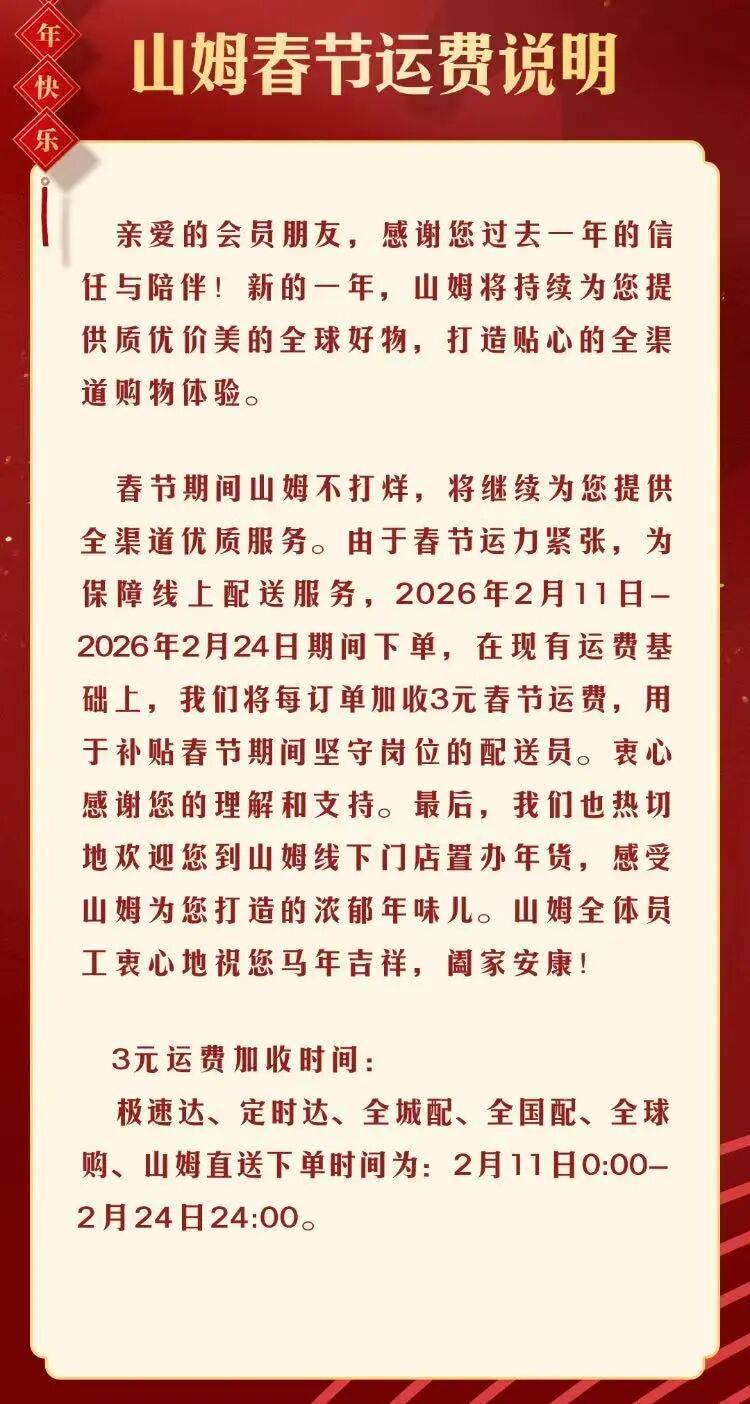
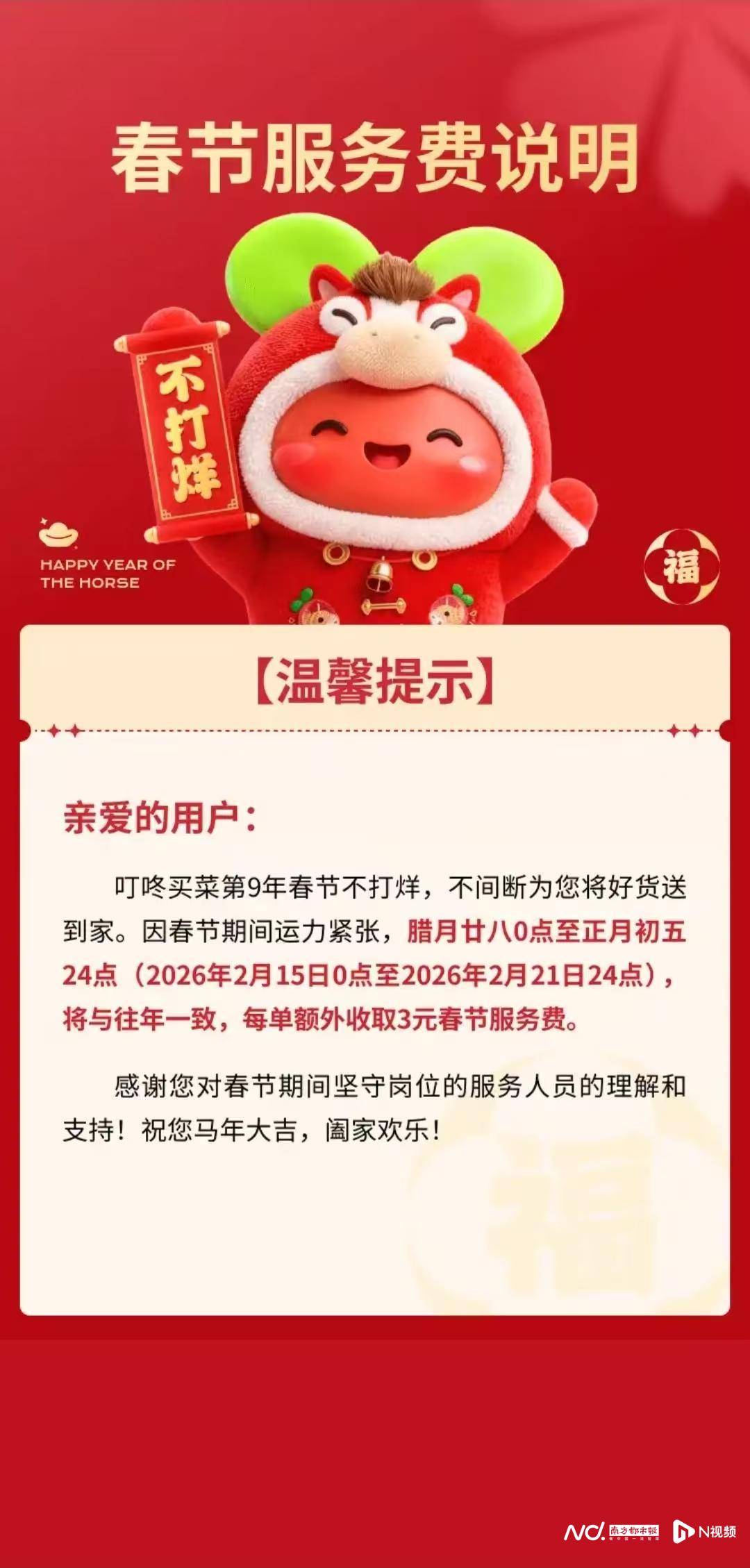
Core Viewpoint - Major online platforms are announcing adjustments to delivery fees during the upcoming Spring Festival, with some platforms implementing additional charges to support delivery personnel during this busy period [1][3][6]. Delivery Fee Adjustments - Sam's Club will charge an additional 3 yuan per order for online deliveries from February 11 to February 24, 2026, due to tight delivery capacity during the Spring Festival [1]. - Hema will charge a base delivery fee of 6 yuan per order for all users from February 14 to February 21, 2026, regardless of order amount, with additional charges for overweight items [3][4]. - Dingdong Maicai will also impose an extra 3 yuan service fee for orders during the period from February 15 to February 21, 2026, due to delivery capacity constraints [6]. Platforms Maintaining Current Fees - Meituan Waimai will not increase delivery fees during the Spring Festival, focusing instead on subsidizing riders through cash incentives and other benefits [7]. - Taobao Shanguo plans to invest nearly 2 billion yuan in rider incentives during the Spring Festival, but consumer delivery fees will remain unchanged [7]. - JD.com announced it will invest over 1.3 billion yuan in employee welfare during the Spring Festival [8]. Courier Services - Several courier companies, including SF Express and JD Logistics, are committed to ensuring package delivery during the Spring Festival while implementing resource adjustment fees due to increased demand [9][10]. - SF Express will charge a resource adjustment fee of 0.1 to 1.5 yuan per kilogram for certain shipments from January 19 to February 15, 2026, and additional fees during the Spring Festival [10]. - DeBang Express will also implement dynamic adjustment fees for deliveries during the Spring Festival, with specific charges based on customer agreements [11][13].






小象、叮咚、盒马、山姆春节期间集体加收配送费,最高为6元
Sou Hu Cai Jing· 2026-02-10 07:09
Core Viewpoint - During the Spring Festival, major instant retail platforms for fresh produce, including Dingdong Maicai, Xiaoxiang Supermarket, Sam's Club, and Hema, announced an increase in delivery fees to support delivery personnel working during the holiday period [1][9]. Group 1: Delivery Fee Increases - Sam's Club will charge an additional 3 yuan for delivery from February 11 to February 24, 2026, on top of existing delivery fees [9]. - Dingdong Maicai will impose an extra 3 yuan service fee per order from February 15 to February 21 [10]. - Xiaoxiang Supermarket will also charge an additional 3 yuan per order for deliveries made between February 14 and February 21 [10]. Group 2: Specific Fee Structures - Hema will charge a base delivery fee of 6 yuan for all orders during the period from February 14 to February 21, regardless of the order amount [10]. - Hema's fee structure applies to various platforms, including its app and mini-programs, while certain services like Hema Global Purchase will follow regular fee standards [10]. - The earliest implementation of the increased delivery fee was by Sam's Club on February 11, with Hema having the highest additional fee of 6 yuan per order [10]. Group 3: Industry Context - The increase in delivery fees during the Spring Festival is a common practice among fresh produce platforms due to typically tight delivery capacity during the holiday [10]. - Many consumers have expressed understanding of the fee increases, noting that holiday work often comes with higher wages [10].
山姆、盒马、叮咚买菜等官宣
Sou Hu Cai Jing· 2026-02-10 07:03
Core Viewpoint - Major online shopping platforms are announcing that they will remain operational during the Spring Festival, with adjustments to delivery fees due to increased demand and limited delivery capacity during this period [1][3][5]. Delivery Fee Adjustments - Sam's Club will charge an additional 3 yuan per order for online deliveries from February 11 to February 24, 2026, to support delivery personnel during the Spring Festival [1]. - Hema will implement a flat delivery fee of 6 yuan per order for all users from February 14 to February 21, 2026, regardless of order amount, with additional charges for overweight items [3][5]. - Dingdong Maicai will also charge an extra 3 yuan service fee for orders placed from February 15 to February 21, 2026, due to tight delivery capacity [7]. Other Platforms' Strategies - Meituan will not increase delivery fees during the Spring Festival, focusing instead on subsidizing riders through cash incentives and other benefits [9]. - Taobao Shanguo plans to invest nearly 2 billion yuan in rider incentives from February 4 to March 3, 2026, while keeping consumer fees unchanged [9]. - JD.com announced a 1.3 billion yuan investment in employee welfare during the Spring Festival [10]. Courier Services - Several courier companies, including SF Express and JD Logistics, will implement resource adjustment fees during the Spring Festival due to increased demand and operational challenges [10][12]. - SF Express will charge a resource adjustment fee of 0.1 to 1.5 yuan per kilogram for certain shipments from January 19 to February 15, 2026, and additional fees during the Spring Festival [10]. - DeBang Express will also charge a dynamic adjustment service fee for certain customers and products during the same period [12]. Consumer Awareness - Consumers are advised to plan ahead for shipping, especially to remote areas, and to consider additional time for delivery during the Spring Festival [17].
山姆、盒马等平台宣布:春节期间运费调整
新华网财经· 2026-02-10 06:35
Core Viewpoint - Multiple well-known brands have announced price increases during the Spring Festival period due to tight delivery capacity [1][14]. Group 1: Delivery Fee Adjustments - Sam's Club will charge an additional 3 yuan per order as a Spring Festival delivery fee from February 11 to February 24, 2026, to subsidize delivery personnel [2]. - Hema will implement a flat delivery fee of 6 yuan per order for all users from February 14 to February 21, 2026, regardless of order amount, with additional charges for overweight items [5]. - Dingdong Maicai will also charge an extra 3 yuan service fee per order during the Spring Festival period from January 28 to February 5, 2026 [7]. Group 2: No Fee Adjustments - Meituan Waimai will not increase delivery fees during the Spring Festival, focusing on subsidizing riders through cash incentives and other benefits [12]. - Taobao Shanguo plans to invest nearly 2 billion yuan in rider incentives from February 4 to March 3, 2026, while keeping consumer fees unchanged [12]. - JD.com announced it will invest over 1.3 billion yuan in employee welfare subsidies during the nine-day Spring Festival period [13].

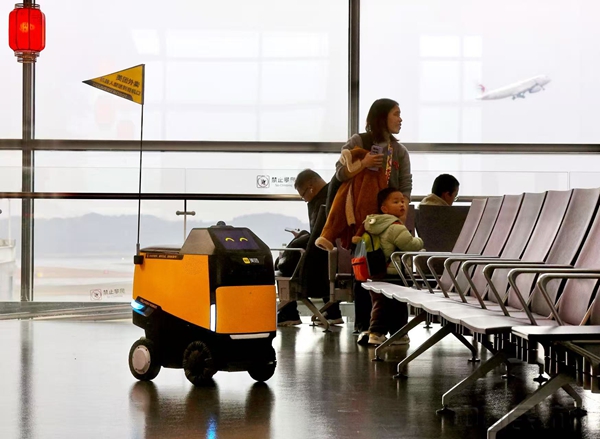
“小黄蜂”穿梭航站楼,外卖直达登机口
Nan Jing Ri Bao· 2026-02-10 04:58
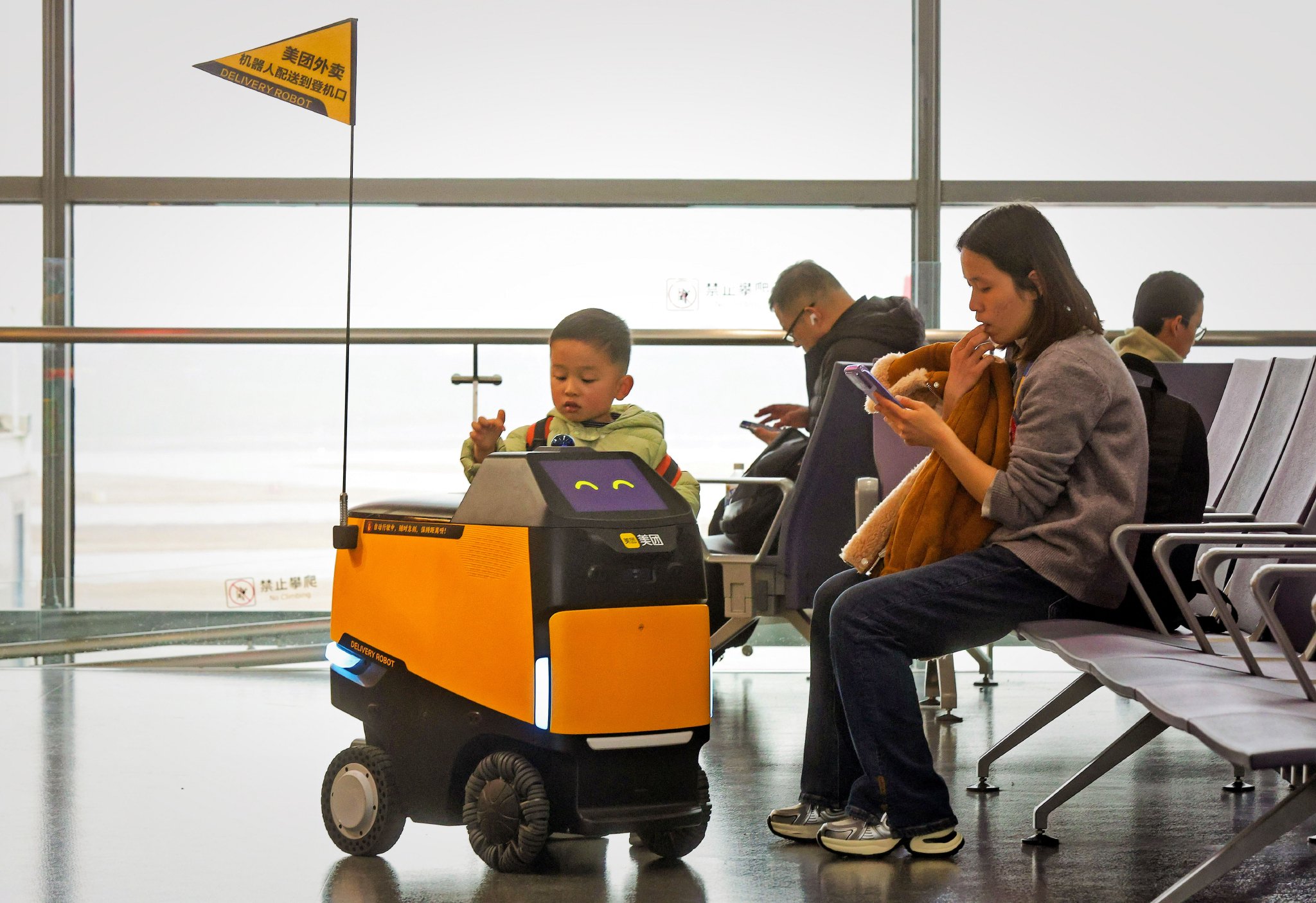
Core Viewpoint - The introduction of five "Little Bee" smart delivery robots at Nanjing Lukou International Airport marks a significant advancement in airport services, allowing passengers to order food directly to their boarding gates, enhancing convenience during the busy Spring Festival travel period [3][4][6]. Group 1: Implementation of Smart Delivery Robots - Five smart delivery robots, named "Little Bee," have been deployed at Nanjing Lukou International Airport's T1 terminal, providing food delivery services to passengers [3][4]. - This initiative represents the first implementation of Meituan's unmanned delivery service in an airport setting in East China [3][4]. - The robots are designed to navigate through crowds and deliver food from popular vendors like KFC and Starbucks directly to passengers at the boarding gates [3][4][6]. Group 2: Operational Efficiency and Passenger Experience - During the Spring Festival, the airport expects to handle approximately 3.8 million passengers, averaging over 95,000 daily [4]. - Passengers often face challenges in finding food options without straying far from their boarding gates; the robot service alleviates this issue by allowing them to order food without leaving their seats [4][7]. - The "Little Bee" robots can save passengers an average of 20 minutes in food retrieval time, effectively addressing the "last mile" delivery challenge in airport dining [6][7].
恒生指数午盘涨0.54%,恒生科技指数涨0.84%
Mei Ri Jing Ji Xin Wen· 2026-02-10 04:15
Group 1 - The Hang Seng Index rose by 0.54% at midday on February 10 [1] - The Hang Seng Tech Index increased by 0.84% [1] - CSPC Pharmaceutical Group saw a significant increase of 6% [1] - WuXi Biologics experienced a rise of 5.6% [1] - Innovent Biologics rose by 5.27% [1] - New Oriental Education & Technology Group declined by 4.71% [1] - Meituan saw a decrease of 3.02% [1]
美团:收购叮咚买菜中国业务
2026-02-10 03:24
Summary of Meituan's Acquisition of Dingdong China Business Company and Industry Overview - **Company**: Meituan (3690.HK) - **Industry**: China Internet and Other Services, specifically focusing on on-demand grocery delivery Key Points from the Conference Call Acquisition Details - Meituan announced the acquisition of Dingdong China business for a total of **US$717 million**, which includes **US$150 million** in net cash from Dingdong [3][5] - Dingdong will become an indirect wholly-owned subsidiary of Meituan and will be consolidated into Meituan's financials [3] Dingdong's Business Model - Dingdong operates as a leading fresh grocery e-commerce player under a **1P business model** with over **1,000 front warehouses (dark stores)** in China [4] - The company provides **30-minute delivery** to households within a **1 km radius**, covering **25+ cities** with a core focus in Eastern China [4] - Dingdong has over **7 million monthly transacting users**, with a significant presence in Shanghai [4] Financial Metrics - The deal implies Dingdong's enterprise value (EV) at approximately **US$570 million** or **Rmb4 billion**, with an estimated LTM EBITDA of **Rmb400 million**, resulting in a **10x EV/EBITDA** ratio [5][11] - Dingdong has shown sustained profitability over the last **12 quarters** on a non-GAAP basis [5] Strategic Implications for Meituan - The acquisition is viewed positively as it creates synergies with Meituan's existing **Xiaoxiang Supermarket** franchise, which is a top player in online grocery [6][11] - Xiaoxiang Supermarket operates around **1,000 dark stores** across **20+ cities** in China, with a strong presence in Beijing and Shenzhen [6] - The acquisition is expected to widen Meituan's footprint in Eastern China and secure market share in the **1P on-demand grocery delivery** segment, although the market size is noted to be smaller compared to the **3P model** [6] Market Position and Future Outlook - Meituan's stock rating is currently **Overweight** with a price target of **HK$120.00**, indicating a potential upside of **28%** from the current price of **HK$93.80** [8] - The company is positioned to benefit from an uptrend in the food delivery market, with expectations of margin improvement and further monetization of merchant ARPU [16] Risks Identified - Potential risks include intensified competition in food delivery and quick commerce, low visibility on loss-making initiatives, and weaker-than-expected macroeconomic conditions [16] Additional Important Information - The acquisition is subject to regulatory approval, and the timeline for completion is not specified [3] - Meituan's market capitalization is currently **US$74,744 million** with an average daily trading value of **US$875 million** [8]

华东首例 南京机场“小黄蜂”机器人将外卖直送登机口
Zhong Guo Min Hang Wang· 2026-02-10 03:15
Core Insights - The introduction of Meituan's "Little Yellow Bee" smart delivery robots at Nanjing Lukou International Airport marks a significant advancement in the construction of "smart airports" in the East China region, enhancing end-service capabilities [1][4] Group 1: Implementation of Smart Delivery Robots - Five "Little Yellow Bee" robots have been deployed at the T1 terminal of Nanjing Lukou International Airport to provide instant delivery services for food from brands like KFC and Starbucks [1][2] - Passengers can place orders via the Meituan app, allowing the robots to autonomously navigate and deliver food to designated boarding gates, significantly improving the dining experience at the airport [2][4] Group 2: Benefits for Passengers - The introduction of these robots addresses common passenger issues during peak travel times, such as the inconvenience of purchasing food far from boarding gates [2][4] - On average, passengers can save nearly 20 minutes in food retrieval time, transforming the process from "people finding food" to "food finding people" [4] Group 3: Technological Validation - The deployment of the robots in a complex environment like an airport demonstrates the maturity and safety of Meituan's delivery technology, as it successfully navigates high foot traffic and dynamic conditions [4] - The successful operation of these robots at Nanjing Airport follows their implementation in two airports in South China, marking another milestone in Meituan's expansion [4] Group 4: Future Developments - Nanjing Airport plans to deepen its collaboration with Meituan to expand the range of merchants and service scenarios, aiming to enhance passenger travel experiences through technological empowerment [7]

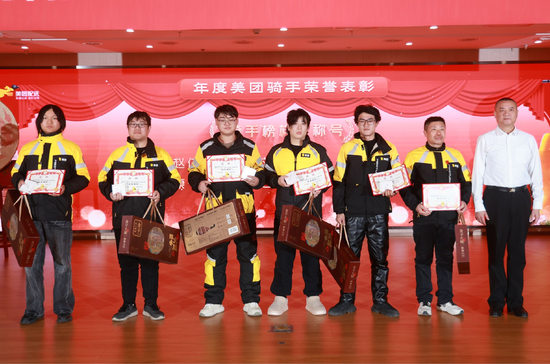
从城市摆渡人到“平凡英雄” 310位见义勇为骑手获美团新春表彰
Xin Lang Cai Jing· 2026-02-10 03:03
Core Viewpoint - The article highlights the recognition and rewards given to delivery riders by Meituan for their acts of bravery and community service, emphasizing the importance of these riders in urban society and their role in social governance [1][2][4][5]. Group 1: Recognition and Rewards - Meituan has organized over 5,000 Spring Festival events across nearly 200 cities, providing special incentives worth over 1 million yuan to 310 riders recognized for their good deeds in 2025 [1][15]. - Riders can receive a new electric vehicle, cash, and family care packages valued at approximately 5,000 yuan starting February 10 [1][15]. - The platform has established long-term reward programs for "good deeds" and "bravery," with the highest awards reaching up to 100,000 yuan for significant contributions [4][18]. Group 2: Community Engagement and Training - Meituan encourages riders to participate in community governance and has partnered with emergency response and medical organizations to provide ongoing safety and skills training, reaching over 5 million riders [8][21]. - The company has built over 4.5 million "friendly communities" across 279 cities, improving delivery efficiency and rider experience [6][19]. Group 3: Welfare and Support Systems - The company has upgraded its "Rider Major Illness Care Plan," offering free hospitalization coverage for riders and their immediate family members, marking a significant step in industry welfare [12][24]. - The major illness care program has assisted over 7,570 riders and their families, distributing over 210 million yuan in care funds [12][24]. - Meituan aims to create a comprehensive social security system for its riders, enhancing their sense of security and belonging [13][25].
全球大公司要闻 | 特斯拉FSD落地稳步推进;Alphabet发债获千亿认购
Wind万得· 2026-02-10 00:55
Group 1 - Tesla's Elon Musk announced that SpaceX is shifting focus to building a "self-sustaining city" on the Moon, with plans to initiate a Mars colonization project within the next 5-7 years [2] - Alphabet raised $20 billion through a bond issuance, exceeding the initial target of $15 billion, with over $100 billion in subscription orders [2] - TSMC plans to increase its investment in the Kumamoto plant in Japan to $17 billion for mass production of 3nm technology, marking a significant step in the semiconductor supply chain and geopolitical landscape [2] Group 2 - OpenAI's CEO Sam Altman reported strong growth, with ChatGPT's monthly growth rate surpassing 10%, and the launch of the new Codex model GPT-5.3-Codex [2][3] - Alibaba revealed its new model Qwen3.5, which features a novel mixed attention mechanism and is likely to be a vision-language model [3] Group 3 - Pop Mart aims to sell over 400 million products globally by 2025, with the THE MONSTERS product line expected to exceed 100 million units [5] - Zhongke Shuguang plans to raise up to 800 million RMB through convertible bonds for AI-related projects, including advanced computing systems and next-generation AI training machines [5] - 16 companies, including Meituan and JD, are receiving guidance from government departments to improve labor management and protect workers' rights [6] Group 4 - Nvidia's CEO Jensen Huang stated that AI infrastructure capital expenditures could exceed $600 billion by 2026 due to strong demand for computing power [8] - Apple's CEO Tim Cook emphasized that AI will be a core pillar for the future, acknowledging user feedback issues with Apple Intelligence [8] - Amazon's Q4 results showed increased capital expenditures impacting short-term profits, but AWS continues to grow strongly [9]