
NONGFU SPRING(09633)

Search documents
员工因反对穿超短裙发奖品被辞退?猿辅导:因工作不达标;农夫山泉股价大涨近6%;宇树最新款人形机器人,3.99万元起丨邦早报
创业邦· 2025-07-26 01:02
Group 1 - The core viewpoint of the article discusses the results of a driving assistance test conducted by Dongche Di, which has sparked controversy among various car manufacturers, particularly regarding the performance of Tesla vehicles [2][3] - The test involved nearly 40 models from over 20 brands, simulating 15 types of high-risk accident scenarios in urban and highway settings [2] - Tesla's Model 3 and Model X achieved a 100% pass rate, making them the only models to pass all tests, which has led to responses from other car manufacturers highlighting common technical challenges in the industry [2] Group 2 - Nongfu Spring's stock price surged nearly 6%, reaching a peak of 47.4 HKD, marking a new high since January 2022, with a market capitalization of 523 billion HKD [6] - Huang Renxun confirmed the existence of a "secret option pool" for rewarding outstanding employees, emphasizing immediate rewards without lengthy approval processes [8] - The company plans to utilize machine learning to review compensation for its 42,000 employees, focusing on employee welfare as a priority [8] Group 3 - BOSS Zhipin responded to a controversy regarding a job seeker's resume being inappropriate, stating that the involved account has been permanently banned from the platform [13] - Xiaopeng Robotics established a new department focused on multi-modal robotics, indicating a strategic shift towards advanced AI applications [13] - Chery clarified its collaboration with JSW Group, stating that it only involves parts supply and does not extend to technology transfer [16] Group 4 - Tesla's Optimus robot production is significantly behind schedule, with only a few hundred units produced this year, far from the 5,000-unit target set by CEO Elon Musk [24] - Google CEO Sundar Pichai's personal wealth has surpassed 1 billion USD, marking a rare achievement for a non-founder CEO [24] - Shentong Express announced plans to acquire Daniao Logistics for 362 million CNY, which will become a wholly-owned subsidiary post-transaction [25] Group 5 - Sony plans to acquire 2.5% of Bandai Namco's shares to jointly develop and promote anime IPs [25] - NewPrinces is set to acquire Carrefour's Italian business for nearly 1 billion EUR, aiming to become the second-largest food and beverage group in Italy [25] - AI startup Anthropic is negotiating to raise its valuation to over 150 billion USD in a new funding round, significantly increasing from its current valuation of 61.5 billion USD [25] Group 6 - OSL Group completed a 300 million USD equity financing, marking the largest public equity financing in Asia's digital asset sector [25] - Shanghai Guotou will participate in a new funding round for the AI startup Jiyue Xingchen, with expected funding exceeding 500 million USD [25] - Yuzhi Tongxing completed a multi-million angel round financing, focusing on AI technology integration [26] Group 7 - Unitree Technology launched its third humanoid robot, UnitreeR1, priced from 39,900 CNY, featuring multi-modal capabilities [26] - Neuralink is collaborating on clinical trials for smart bionic eyes, aiming to assist the visually impaired [28] - Volvo's 2026 S60 model was launched with upgraded features, including a 360-degree panoramic camera and adaptive cruise control, priced from 306,900 CNY [28]



国常会:逐步推行免费学前教育;20万元/㎡!全国单价地王纪录刷新;“6名大学生遇难”细节披露;德国大众:美关税导致损失15亿美元丨每经早参
Mei Ri Jing Ji Xin Wen· 2025-07-25 22:56
Group 1 - The State Council of China is implementing measures to gradually promote free preschool education, emphasizing its importance for long-term development and the well-being of families [4] - The meeting highlighted the need for local governments to detail work plans and ensure timely funding allocation while considering demographic changes and financial conditions [4] - The focus is on improving infrastructure, teacher compensation, and the overall quality of preschool education [4] Group 2 - The U.S. stock market saw all three major indices rise, with the Dow Jones up 0.47%, Nasdaq up 0.24%, and S&P 500 up 0.4%, driven by gains in popular tech stocks [4] - International oil prices fell, with WTI crude oil down 1.45% to $65.07 per barrel, and Brent crude down 1.16% to $67.57 per barrel [6] - Major European stock indices showed mixed results, with Germany's DAX down 0.32% and France's CAC40 up 0.21% [7] Group 3 - China's fiscal expenditure for the first half of 2025 reached 14.1271 trillion yuan, a year-on-year increase of 3.4%, while fiscal revenue decreased by 0.3% to 11.5566 trillion yuan [9] - The issuance of government bonds reached a record high for the same period, totaling 7.88 trillion yuan, up 35.28% year-on-year [9] - The issuance of new local government bonds amounted to 2.6 trillion yuan, supporting major projects [10] Group 4 - The People's Bank of China is establishing a unified management framework for cross-border fund pools, integrating both domestic and foreign currency operations [11] - The China Securities Regulatory Commission is focused on stabilizing the market and enhancing the vitality of multi-level markets through reforms [11] - A new governance standard for listed companies is being proposed to improve the regulatory framework for directors and senior management [12] Group 5 - Nongfu Spring's stock price surged to a 42-month high, with a market capitalization increase of over 80 billion yuan in two weeks [18] - Unitree Technology launched a new bipedal robot, Unitree R1, priced from 39,900 yuan, showcasing advanced movement capabilities [19] - JD.com reported a potential intellectual property infringement case involving its former team members now at Jiushi Intelligent [20] Group 6 - Jiyue Star released a new foundational model, Step3, aiming for a revenue target of 1 billion yuan for the year [22] - Alibaba's new Qianwen3 reasoning model has been recognized as one of the strongest open-source models globally [24] - Guotai Junan Asset Management has agreed to merge with Haitong Asset Management, indicating a trend of consolidation in the asset management industry [26]




【财经早晚报】北京上调最低工资标准;A股回调半日缩量94.5亿;金饰克价2天跌去21元
Sou Hu Cai Jing· 2025-07-25 09:26
Group 1: Apple and Technology Updates - Apple has released the public beta version of iOS 26, featuring a new design language called "Liquid Glass," marking the largest interface overhaul since 2013 [6] - Intel plans to lay off 15% of its workforce and shift focus towards the AI chip market, canceling plans for new chip factories in Europe [6][7] Group 2: Market Movements - The ChiNext 50 Index rose over 2%, driven by a surge in chip stocks, with companies like Cambrian Technology increasing by over 10% [4] - Farmer Spring's stock price increased by over 5%, reaching a market capitalization of over 530 billion HKD [4] Group 3: Corporate Scandals - The former CEO of Ele.me was found to have hidden over 40 million yuan in bribes in rental properties, involving a scheme to help suppliers gain logistics qualifications [5]


港股收盘(07.25) | 恒指收跌1.09%止步五连涨 半导体股午后走强 维立志博-B(09887)首挂飙涨91%
智通财经网· 2025-07-25 08:43
Market Overview - The Hong Kong stock market experienced a decline, with the Hang Seng Index dropping over 1%, ending a five-day winning streak, closing at 25,388.35 points, down 1.09% or 278.83 points, with a total turnover of 281.77 billion HKD [1] - Despite the decline, the Hang Seng Index saw a weekly increase of 2.27%, while the Hang Seng China Enterprises Index and the Hang Seng Tech Index rose by 1.83% and 2.51% respectively [1] Blue Chip Performance - WuXi Biologics (02269) led the blue-chip stocks, rising 5.53% to 31.5 HKD, contributing 9.65 points to the Hang Seng Index, following a profit warning indicating a projected 16% revenue growth in the first half of 2025 [2] - Other notable blue-chip performances included SMIC (00981) up 4.98%, Nongfu Spring (09633) up 3.56%, while New Oriental (09901) and Shenzhou International (02313) saw declines of 3.36% and 2.94% respectively [2] Sector Highlights - Large tech stocks generally declined, with Alibaba down nearly 2% and Tencent over 1% [3] - Semiconductor stocks saw a rally, with Hua Hong Semiconductor rising 9% and SMIC up nearly 5% [3] - The pharmaceutical sector experienced gains, driven by a shift towards value assessment in drug procurement, with notable increases in stocks like Kanglong Chemical (03759) up 7.71% and Zhaoyan New Drug (06127) up 7.02% [4] - Airline stocks were active, with China Eastern Airlines (00670) up 3.69% and Air China (00753) up 3.68%, supported by strong summer travel demand [6][7] Regulatory Developments - The National Healthcare Security Administration announced changes to the 11th batch of centralized procurement, moving away from a simple lowest price reference, which is expected to curb vicious price competition and promote a shift towards value-based competition in the pharmaceutical industry [5] - The introduction of new policies aimed at supporting innovative drugs and medical devices was discussed in a recent meeting, indicating a focus on enhancing the clinical application of high-level technological innovations [5] Notable Stock Movements - Valiant Biopharma (09887) saw a significant increase of 91.71% on its debut, closing at 67.1 HKD, following a successful IPO [9] - Jihong Holdings (02603) rose 15.31% after announcing a projected net profit increase of 97.25% to 108.21% for the first half of 2025 [10] - COSCO Shipping Ports (01199) reached a new high, up 9.31%, amid reports of potential acquisitions of port assets [11] - Kintor Pharmaceutical (00148) announced a profit warning, leading to an 8.29% increase in stock price, with expected profits rising over 70% [12] - Lingbao Gold (03330) also saw gains, up 5.89%, with projected revenue growth of 75% to 85% for the first half of 2025 [13]

农夫山泉_2025 年上半年展望_预计各品类随净利润率扩大实现 DD% 增长;2025 年下半年有望更光明;买入评级Nongfu Spring (9633.HK)_ 1H25 Preview_ Expect DD% growth across categories with NPM expansion; Potentially brighter 2H25; Buy
2025-07-25 07:15
Nongfu Spring (9633.HK) Conference Call Summary Company Overview - **Company**: Nongfu Spring (9633.HK) - **Industry**: Beverage Industry Key Financial Metrics - **1H25E Sales**: Rmb 25.4 billion, up 15% YoY - **1H25E Net Income**: Rmb 7.3 billion, up 17% YoY - **NPM**: Expected to expand to 28.7% from 28.1% in 1H24 [1][9][14] Sales Growth Drivers - **Juice and Tea**: Both categories expected to grow by 18% YoY in 1H25, driven by strong consumer demand and new product launches [1][9] - **Packaged Water**: Anticipated recovery with 13% YoY growth, rebounding from a low base of -18% YoY in 1H24 [1][9] - **Functional Drinks**: Expected to grow by 10% YoY, benefiting from new flavors and product introductions [1][9] Market Position and Competitive Landscape - **Market Share Recovery**: Nongfu Spring is focusing on regaining market share for its flagship red-bottle water product, with positive results noted since April [1][9] - **Competitor Dynamics**: Potential consumer migration opportunity from Wahaha, which gained 8-10 percentage points in market share in 2024 but is currently facing publicity issues [1][9] Outlook for 2H25 - **Continued Improvement**: Anticipated growth driven by a lower comparative base, especially in the water segment [1][9] - **Product Innovation**: Nongfu's strong product innovation and effective marketing strategies are expected to adapt to changing consumer preferences towards healthier drinks [1][9] Margin Expansion - **Gross Profit Margin (GPM)**: Expected improvement due to lower raw material prices and a favorable product mix [1][9] - **Operating Profit Margin (OPM)**: Anticipated better expansion compared to NPM, influenced by social responsibility donations [1][9] Earnings Forecast and Price Target - **Revenue Estimates**: Increased by 1-3% for 2025-27E, reflecting improved consumption sentiments and successful product launches [9][14] - **Earnings Growth**: Projected 3-9% higher earnings in 2025-27E, with 17%/20% YoY sales/NP growth in 2025 and 14%/16% in 2026 [9][14] - **12-Month Price Target**: Increased from HK$43.6 to HK$48.0, with a reiteration of "Buy" rating [9][14] Additional Insights - **Consumer Trends**: Increasing health awareness among consumers is driving growth in juice and functional drinks [1][9] - **Promotional Campaigns**: Successful campaigns, such as QR code promotions for sugar-free tea, have expanded the consumer base [1][9] Summary of Key Drivers - **Total Revenue Growth**: Expected to reach Rmb 50.1 billion in 2025, with a YoY growth of 16.9% [13][14] - **Segment Performance**: Packaged drinking water, tea, functional beverages, and juice are all expected to contribute positively to overall revenue growth [13][14] This summary encapsulates the key points from the conference call regarding Nongfu Spring's performance, outlook, and strategic positioning within the beverage industry.
恒生指数早盘跌1.11% CRO板块延续强势
Zhi Tong Cai Jing· 2025-07-25 04:11
Group 1: Market Overview - The Hang Seng Index fell by 1.11%, down 284 points, closing at 25,383 points, while the Hang Seng Tech Index dropped by 1.69% [1] - The early trading volume in Hong Kong stocks reached 151 billion HKD [1] Group 2: Medical Sector - Medical device stocks rose in early trading, with the national drug procurement policy indicating a move away from internal competition, leading institutions to view this as a turning point for the industry [1] - Aikang Medical (01789) increased by 7.93%, and Weigao Group (01066) rose by 4.37% [1] - Yongsheng Medical (01612) saw a surge of over 27% following a profit warning, with sales orders increasing and expected mid-term net profit growth exceeding 50% year-on-year [2] - CRO concept stocks continued to rise, with Citigroup noting that the CXO sector is gaining market attention ahead of earnings season [2] - Kanglong Chemical (300759) (03759) rose by 8.4%, while Zhaoyan New Drug (603127) (06127) increased by 5.7%, and WuXi Biologics (02269) rose by 4.5% [2] Group 3: Consumer Sector - Nongfu Spring (09633) increased by over 3.56%, reaching a three-and-a-half-year high, with institutions expecting the company's first-half revenue growth to exceed market expectations [3] Group 4: Other Notable Stocks - Jihong Co., Ltd. (002803) (02603) rose by 16%, with two main business segments performing well, and expected first-half net profit growth of up to 65% [4] - China Merchants Port (01199) increased by over 4%, following reports that China Merchants Group plans to acquire assets from Cheung Kong Ports [5] - Guichuang Tongqiao (02190) rose by 2.6%, with expected mid-term net profit growth of 66.9%, as the company embraces procurement and actively expands overseas [6] Group 5: Lithium and Duty-Free Sector - News of supply disruptions in the lithium market led to Tianqi Lithium (002466) (09696) rising by 3.6% [7] - China Duty Free Group (601888) (01880) fell by over 6%, with pending details on Hainan's duty-free policies, and institutions noting that the closure operations have a dual impact on offshore duty-free business [7] Group 6: Technology Sector - Qianxun Technology (01640) fell by over 3%, having retreated 23% from its previous high, with recent comments from Yu Weiwen emphasizing the need to avoid excessive speculation on stablecoins [8]



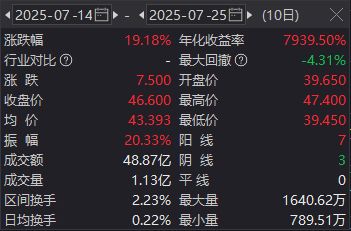
“豪门内斗”成对手东风?娃哈哈舆情风暴以来农夫山泉股价大涨20%,盘中市值重回5300亿港元大关,创2022年1月以来新高
Jin Rong Jie· 2025-07-25 04:04
Group 1 - The core point of the article highlights the unexpected surge in popularity and price of the "Red Scream" beverage from Nongfu Spring, which has transformed from a poorly rated drink to a highly sought-after product, referred to as "liquid gold" [1][3] - The beverage was initially sold at 75 yuan per box (5 yuan per bottle) and quickly sold out, leading to a dramatic price increase on secondary markets, with prices reaching up to 8,900 yuan per box, representing a 118-fold markup [3][4] - The stock price of Nongfu Spring rose significantly, reaching 47.4 HKD, a 5.57% increase, and the market capitalization surpassed 530 billion HKD, marking a new high since January 2022 [1][5] Group 2 - Nongfu Spring's revenue for the first half of the year is expected to grow by 18% year-on-year, with profits increasing by 20%, driven by strong performance in tea and juice segments [5][6] - The company has successfully shifted its product strategy, with tea beverage revenue surpassing bottled water for the first time, and new flavors contributing to over 20% growth in the tea segment [6][7] - The competitive landscape has shifted due to the internal family dispute at Wahaha, leading to a decline in Wahaha's market share, which Nongfu Spring is poised to benefit from [7]
农夫山泉、伊利、蒙牛集体押注的冰杯,有人说它是门“成瘾性”生意?
创业邦· 2025-07-25 03:11
Core Viewpoint - The ice cup market is experiencing significant growth and innovation, with major players like Yili, Mengniu, and Nongfu Spring entering the space, leading to a competitive landscape that transcends traditional product boundaries [4][7][29]. Group 1: Market Trends and Innovations - In 2025, the ice cup market has become more vibrant, with new products and flavors emerging, such as Ulong tea, guava, and various fruit flavors [9][12]. - The variety of ice cup shapes has increased, moving from basic forms to more unique designs like cylindrical and crescent shapes [12]. - The pricing of ice cups has shown significant differentiation, with some basic ice cups priced around 0.5 yuan, while premium options exceed 10 yuan [15][16]. Group 2: Consumer Behavior and Demand - Consumer acceptance of ice cups has evolved, with a growing preference for flavored options that offer more than just plain ice [21][22]. - The demand for ice cups is driving sales in related beverage categories, with a reported 350% increase in ice cup delivery orders compared to the previous year [26][28]. - The trend indicates that ice cups are becoming a staple in convenience stores, enhancing the overall consumer experience and increasing average transaction values [49][57]. Group 3: Competitive Landscape - The entry of major brands has intensified competition, with established players like Nongfu Spring and Yili expanding their ice cup offerings [30][34]. - Early entrants in the ice cup market, such as Xiaode and Ice Power, are adapting their strategies in response to the influx of larger brands [31][36]. - The market is witnessing a shift where traditional ice manufacturers are pivoting to ice cup production, leveraging existing infrastructure to meet rising demand [30][41]. Group 4: Future Outlook - The ice cup segment is projected to grow significantly, with estimates suggesting that the instant retail market for ice products could quadruple by 2026, reaching over 63 billion yuan [52]. - Innovations in ice cup design and flavoring are expected to continue, with new brands exploring unique offerings to differentiate themselves in a crowded market [55][56]. - The trend of ice cups as a complementary product in beverage sales is likely to persist, with potential for further integration into various retail and dining experiences [49][57].


中金:维持农夫山泉“跑赢行业”评级 升目标价至54港元
Zhi Tong Cai Jing· 2025-07-25 02:05
Core Viewpoint - 中金上调农夫山泉盈利预测和目标价,预计公司在未来两年的收入和利润将持续增长,主要受益于茶饮和果汁的良好表现 [1] Group 1: Revenue Growth - 公司预计2025年上半年收入同比增长18%,主要由于包装水、茶饮和果汁的强劲表现 [2] - 包装水在去年舆情影响下的低基数上实现双位数增长,市场份额逐月恢复 [2] - 茶饮预计增长略超20%,受益于新口味和市场活动的推动 [2] - 果汁预计同比增长超过20%,主要由水溶C100和100%果汁的强劲表现驱动 [2] Group 2: Profitability - 公司预计2025年上半年毛利率持续提升,受益于原材料价格下行和产品结构优化 [3] - 销售费用率保持平稳微跌,整体运营利润率呈提升态势 [3] - 预计净利润同比增长20%,尽管有额外开支 [3] Group 3: Future Outlook - 公司下半年收入增速有望改善,基于低基数和消费者回流的预期 [4] - 无糖茶和果汁、功能饮料等产品预计将继续表现亮眼 [4] - 公司在市场竞争加剧的背景下,产品力和渠道力的提升将巩固长期竞争力 [4]