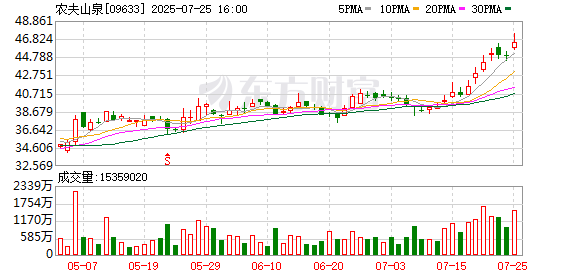
NONGFU SPRING(09633)

Search documents
食品饮料周报:把握白酒相对底部机会,关注板块季报催化-20250729
Tianfeng Securities· 2025-07-29 14:15
Investment Rating - Industry Rating: Outperforming the market (maintained rating) [4] Core Viewpoints - The liquor sector is showing signs of recovery as companies actively launch new products to adapt to changing consumer demands. The current PE-TTM for the Shenwan liquor index is 18.51X, which is at a reasonable low level compared to the past decade [2][11] - The beverage sector, particularly beer and soft drinks, is expected to benefit from upcoming consumption promotion policies and adjustments to alcohol bans, which will drive sales recovery [3][12] - The pre-processed food and seasoning sectors are leading the market, with a focus on companies that can enhance efficiency and market share through cost reduction and product diversification [13][19] Summary by Sections Market Performance Review - From July 21 to July 25, the food and beverage sector increased by 0.74%, while the Shanghai Composite Index rose by 1.69%. Notable increases were seen in pre-processed foods (+1.97%) and health products (+1.88%) [1][20] Liquor Sector Insights - The liquor sector increased by 0.94%, outperforming the overall food and beverage sector. Key players like Tianyoude Liquor saw significant gains, potentially linked to local infrastructure investments [2][11] - Recommendations include strong alpha companies such as Shanxi Fenjiu and Guizhou Moutai, as well as beta companies like Luzhou Laojiao and Wuliangye [2][19] Beer and Beverage Sector Insights - The beer sector rose by 1.06%, with Budweiser Asia and Chongqing Beer leading the gains. Management changes at Zhujiang Beer are expected to positively impact the company [3][12] - The soft drink sector also performed well, with notable increases from brands like Nongfu Spring (+8.1%) [3][14] Investment Recommendations - For the liquor sector, strong alpha companies benefiting from market concentration include Shanxi Fenjiu and Guizhou Moutai [19] - In the consumer goods sector, companies that align with cost reduction and market share enhancement strategies are recommended, including Dongpeng Beverage and Nongfu Spring [19] Sector and Individual Stock Performance - The food and beverage sector's dynamic PE ratio is 21.1X, ranking it 21st among primary industries. The highest valuations are seen in other liquor (55.83X) and health products (48.77X) [26][27]




冰杯市场迎来农夫山泉、伊利、蒙牛等多方巨头,这个夏天又卖爆了
Xi Niu Cai Jing· 2025-07-29 06:42
Core Insights - The ice cup market is experiencing intense competition with numerous brands entering the space, including Yuanqi Forest, Yili, Mengniu, and others, all of which have found success in this segment [2] - The price of ice cups has increased significantly, with some products priced at nearly three times the cost of the water used to make them, indicating a shift in consumer willingness to pay for convenience and novelty [2] - Consumer habits are evolving, with ice cups becoming a popular choice for refreshing drinks during summer, leading brands to capitalize on this trend by enhancing their ice cup offerings [3] Market Dynamics - The ice cup market has seen a dramatic increase in sales, with a reported growth rate exceeding 300% over the past two years, particularly in first-tier cities where the average annual consumption is 48 cups per person [3] - The future growth of ice products in instant retail channels is projected to reach 39% over the next three years, significantly outpacing the overall channel growth of 8% [3] - Despite the current dominance of plain water ice cups, there is potential for flavor diversification, which could become a key competitive factor in the market [3] Consumer Behavior - Ice cups are increasingly viewed as a solution for consumers seeking convenience, especially in scenarios where traditional ice acquisition is difficult, thus enhancing the appeal of these products [3] - The emotional value and experiential aspect of ice cups are driving consumer interest, as they cater to modern consumers' desires for personalized and immediate consumption experiences [4] - The seasonal nature of ice cups presents challenges, with potential sales peaks followed by periods of low demand, indicating a need for brands to innovate and maintain consumer engagement year-round [3][4]


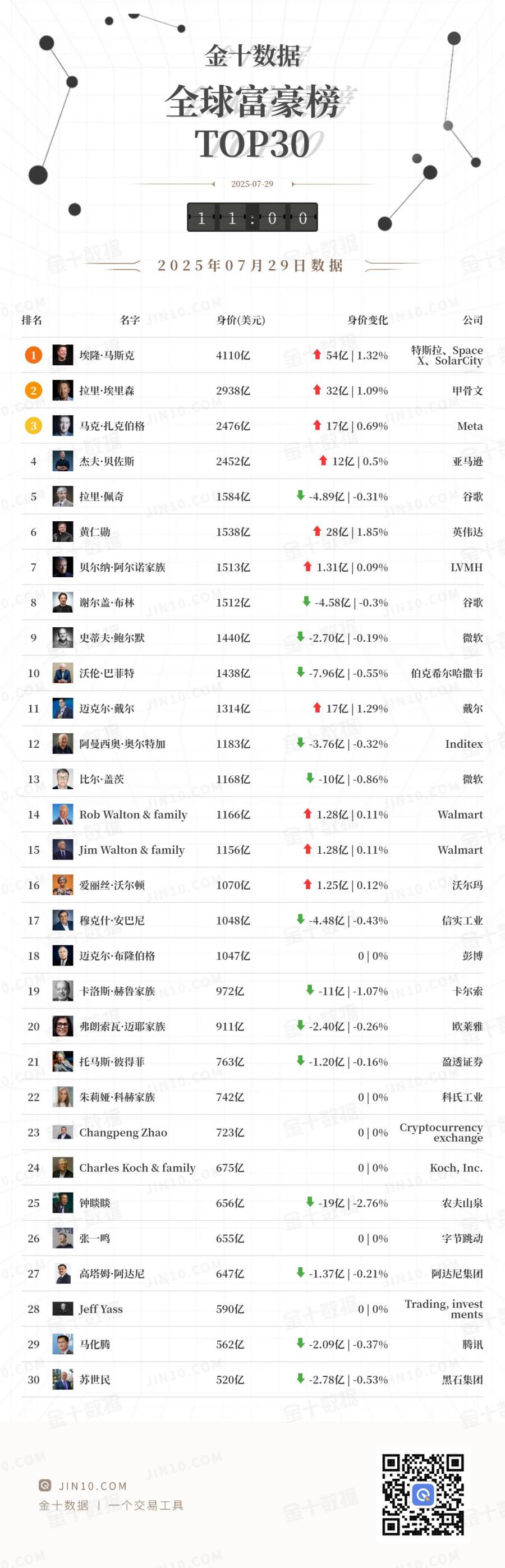
金十图示:2025年07月29日(周二)全球富豪榜
news flash· 2025-07-29 03:02
Group 1 - Elon Musk remains the richest person in the world with a net worth of $411 billion, experiencing an increase of $1.54 billion or 1.32% [2] - Larry Ellison ranks second with a net worth of $293.8 billion, up by $1.32 billion or 1.09%, associated with Oracle [2] - Mark Zuckerberg's net worth is $247.6 billion, increasing by $1.7 billion or 0.69%, linked to Meta [2] - Jeff Bezos follows closely with a net worth of $245.2 billion, up by $1.2 billion or 0.5%, from Amazon [2] - Larry Page's net worth is $158.4 billion, decreasing by $489 million or -0.31%, related to Google [2] Group 2 - Jensen Huang has a net worth of $153.8 billion, increasing by $1.28 billion or 1.85%, associated with Nvidia [2] - The Bernard Arnault family has a net worth of $151.3 billion, up by $131 million or 0.09%, linked to LVMH [2] - Sergey Brin's net worth is $151.2 billion, decreasing by $458 million or -0.3%, related to Google [2] - Steve Ballmer has a net worth of $144 billion, decreasing by $270 million or -0.19%, associated with Microsoft [2] - Warren Buffett's net worth stands at $143.8 billion, decreasing by $796 million or -0.55%, linked to Berkshire Hathaway [2] Group 3 - Michael Dell's net worth is $131.4 billion, increasing by $1.17 billion or 1.29%, associated with Dell [2] - Amancio Ortega has a net worth of $118.3 billion, decreasing by $376 million or -0.32%, linked to Inditex [3] - Bill Gates' net worth is $116.8 billion, decreasing by $1 billion or -0.86%, associated with Microsoft [3] - The Walton family members, including Rob Walton and Jim Walton, have net worths of $116.6 billion and $115.6 billion respectively, both increasing by $1.28 million or 0.11% [3] - Mukesh Ambani's net worth is $104.8 billion, decreasing by $448 million or -0.43%, linked to Reliance Industries [3]




中证中国内地企业全球主要消费综合指数报8671.19点,前十大权重包含农夫山泉等
Jin Rong Jie· 2025-07-28 09:36
金融界7月28日消息,上证指数高开震荡,中证中国内地企业全球主要消费综合指数(CN消费综合, H30379)报8671.19点。 从指数持仓来看,中证中国内地企业全球主要消费综合指数十大权重分别为:贵州茅台(26.08%)、 五粮液(6.78%)、伊利股份(4.97%)、牧原股份(3.67%)、温氏股份(2.71%)、泸州老窖 (2.63%)、山西汾酒(2.59%)、农夫山泉(2.29%)、海天味业(1.85%)、东鹏饮料(1.69%)。 从中证中国内地企业全球主要消费综合指数持仓的市场板块来看,上海证券交易所占比53.35%、深圳 证券交易所占比35.01%、香港证券交易所占比11.16%、北京证券交易所占比0.31%、纽约证券交易所占 比0.14%、纳斯达克证券交易所(Consolidated Capital Market)占比0.01%、纳斯达克全球精选市场证券交 易所(Consolidated Issue)占比0.00%、纳斯达克股票市场证券交易所(Consolidated Large Cap)占比0.00%。 从中证中国内地企业全球主要消费综合指数持仓样本的行业来看,酒占比48.53%、食品占比20 ...



花旗:升农夫山泉(09633)目标价至53.3港元 料上半年纯利增22%
智通财经网· 2025-07-28 09:03
智通财经APP获悉,花旗发布研报称,鉴于近期(7月初以来)其主要竞争对手的负面新闻,预期农夫山泉 (09633)的瓶装水业务复苏在2025年下半年将加速,且茶及功能饮料的强劲销售增长将在今年下半年持 续。花旗将农夫山泉目标价从38.6港元上调至53.3港元,并启动30天正面催化剂观察,维持"买入"评 级。 此外,鉴于其对纯净水产品销售费用的同比削减,花旗预测其2025年上半年销售费用比率同比下降30个 基点。因此,花旗预期其息税前利润率同比扩大100个基点,集团息税前利润在今年上半年同比增长 23%。鉴于净财务收入同比减少,花旗预测其净利润在今年上半年同比增长22%,净利润率同比改善50 个基点(至28.6%)。花旗对农夫山泉2025至27年各年净利润预测,分别上调6%、6%及7%,销售额预测 则分别上调3%、5%及6%。 花旗表示,料农夫山泉上半年净利润同比增长22%,高于市场预期8%,其中预期销售额同比增长20% (亦高于市场预期8%),且得益于其所有主要类别的直销销售额增长,花旗预测其瓶装水、茶、功能饮 料、果汁销售额在2025年上半年分别同比增长16%、25%、16%、15%。该行又预期,集团毛利率在 ...
农夫山泉20250727
2025-07-28 01:42
Summary of Nongfu Spring Conference Call Company Overview - Nongfu Spring is recognized as a leading brand in the beverage industry, with significant brand value acknowledged by authoritative institutions like AC Nielsen and Kantar Group. The Ministry of Industry and Information Technology has listed it as an international Chinese consumer brand, highlighting its strong brand influence [2][5]. Financial Performance - The company has surpassed a scale of 40 billion RMB, making it the second-largest soft drink company in China, with expectations to become the largest within the next two years. From 2020 to 2023, it achieved a compound annual growth rate (CAGR) of 23%, with profit margins exceeding 28%, leading the industry [2][5]. - Revenue projections for 2025, 2026, and 2027 are 51.7 billion, 60.4 billion, and 70.5 billion RMB, respectively, with net profits of 14.9 billion, 17.7 billion, and 21 billion RMB [4][23]. Growth Strategy - Nongfu Spring has transitioned from a single bottled water company to a platform enterprise driven by both bottled water and various beverages. The company has launched innovative products like C100, Power King, and Tea π, successfully creating multiple flagship products [2][7][8]. - The company has a leading position in three major beverage segments: bottled water, tea beverages, and juice drinks, with the highest market share in bottled water and unsweetened tea [9]. Market Dynamics - The bottled water market in China has significant growth potential, with per capita consumption at 37.5 liters in 2023, which is notably lower than developed countries. The packaging rate in mainland China is only about 15%, indicating room for growth [10]. - The tea beverage sector has become the largest sub-category in soft drinks, with a market share of 21.1% in 2023. Nongfu Spring's tea beverage business has shown a CAGR of 52% from 2020 to 2024 [15]. Competitive Advantages - Nongfu Spring's competitive edge lies in its extensive network of 15 high-quality water sources, ensuring product quality and supply chain efficiency. The company has also optimized its management and supply chain capabilities, achieving the lowest comprehensive costs and highest operational efficiency in the industry [6][11][12]. - The brand's strong marketing focus on health has cultivated consumer recognition of its premium products, maintaining brand vitality for over a decade [6]. Future Outlook - Nongfu Spring's long-term growth potential remains robust, with expectations to continue expanding its market share in bottled water and tea products. The company is also focusing on enhancing its juice business, which is still in the cultivation stage in China [19][20]. - The company is exploring potential growth areas beyond its main segments, including sports drinks and coffee [24]. Key Takeaways - Nongfu Spring's strong brand recognition and innovative product offerings position it well for future growth in the competitive beverage market. The company's strategic focus on health, quality, and market expansion is expected to drive continued success and profitability [2][4][23].
除了让时间说话,农夫山泉做对了什么
Mei Ri Jing Ji Xin Wen· 2025-07-27 13:48
Core Viewpoint - The stock price of Nongfu Spring has surged by 5.57%, reaching a 42-month high and a market capitalization of 523 billion HKD, amidst a reversal of public sentiment following the "Zong family inheritance" controversy [1] Group 1: Brand Defense Strategies - The founder, Zhong Shanshan, actively engaged in public discourse by addressing rumors and participating in interviews to clarify the company's position [2] - The company utilized legal measures to counteract negative publicity, exemplified by a swift response to a consumer report from the Hong Kong Consumer Council [3] - Zhong Shanshan adopted a humble approach in public discussions, criticizing online bullying while maintaining a focus on product quality [4] Group 2: Public Perception and Market Position - The public began to reassess the company's image, recognizing the complexity of entrepreneurs and the importance of their contributions to society despite personal controversies [5] - The turnaround in Nongfu Spring's market position is attributed not only to improved public relations but also to strong product offerings, including the launch of new beverage lines [5]
一周新消费NO.319|GODIVA歌帝梵与LABUBU联名冰品发布;日本运动品牌鬼塚虎跨界推出香水系列
新消费智库· 2025-07-27 13:05
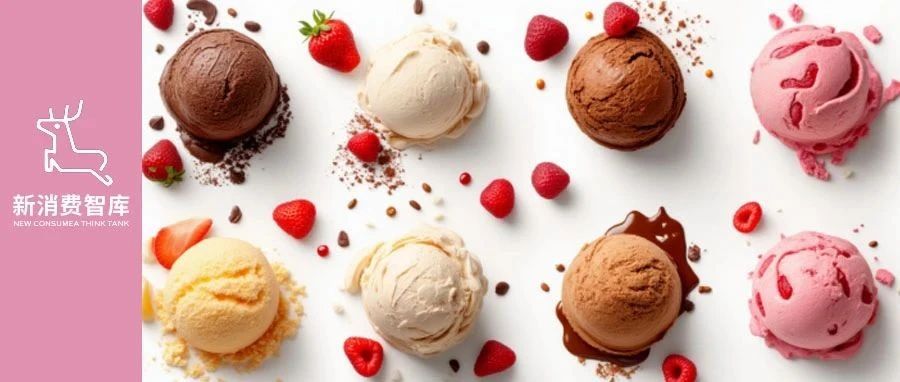
New Consumption Highlights - WonderLab launched a new probiotic chewing gum product, combining probiotics and postbiotics with mint and green coffee complex [2][3] - MANNER collaborated with Shanghai Pudong Art Museum to introduce a new iced Americano inspired by Van Gogh's artwork [5] - Mengniu introduced a new live bacteria yogurt ice cream, made with at least 65% fresh milk and 100% live bacteria fermentation, recently awarded a silver prize for health innovation [3][5] - PepsiCo announced a new prebiotic soda, marking the first new flavor addition in 20 years, available in original and cherry vanilla [3] - Sun Valley launched a new fried product series, including flavors like crayfish and honey onion chicken sticks [3] - Asahi Group began trial sales of a yeast-based non-dairy milk product, LIKE MILK, which is free from 28 common allergens [7] - Xueji Chaohuo partnered with Yili to launch a new yogurt product made with fresh milk from Yili's farms [7] - Fi xXBody introduced a new air-puffed rice snack available in sea salt and barbecue beef flavors, containing a mix of ten grains and seeds [7] - Lee Kum Kee launched a low-sodium soy sauce with 25% less salt content, suitable for dipping and cooking [7] Industry Events - GODIVA announced a collaboration with LABUBU to launch a new ice cream series featuring various chocolate flavors [10] - Northeast retail giant Biyoute partnered with RELEX Solutions for supply chain planning [10] - Nike announced Karina from Aespa as a new brand ambassador, emphasizing diversity and female representation [10] - Keen launched its first trail running shoe, Seek, after two years of development [10] - Italian sportswear brand Hydrogen is entering the Chinese market, set to launch in Spring/Summer 2026 [10][13] - Taiwanese matcha brand "Yuqian Shangcha" opened its first store in Shanghai, focusing on high-end matcha products [10] - PAGEONE bookstore opened its first store in Jiangsu, continuing its expansion in China [10] - Popeyes announced the opening of five new stores in Shanghai [10] - Baosheng became the general agent for DYNAFIT in China, enhancing its outdoor brand portfolio [10] Investment and Financing Trends - Yangtuo Technology Inc., a maternal and infant e-commerce platform, applied for an IPO on the Hong Kong Stock Exchange [16] - Little Sesame, a US hummus brand, completed an $8.5 million Series A financing round [16] - Theo Health, a Scottish smart sportswear company, raised £1.2 million in funding [16] - Tianwei Food's major shareholder transferred 21.2 million shares, representing 1.99% of the company's total shares [18] - XPeng Huitian completed a $250 million Series B financing round to accelerate the development of its flying car [20] - Korean makeup brand Jungsaemmool received investment from CLSA Capital Partners, amounting to 500 million KRW (approximately 26 million RMB) [20] - Ulta Beauty is set to acquire UK beauty retailer Space NK, with the deal exceeding £300 million (approximately 2.9 billion RMB) [20] - Chanel acquired a 20% stake in Italian leather manufacturer Nuova Impala, strengthening its investment in the Italian supply chain [22] Food Industry Developments - Nongfu Spring's parent company launched "Birch Tree Juice," a 100% natural juice product sourced from high-quality birch trees [23] - Emerging health brand Ozzi introduced a natural drink aimed at controlling evening appetite [23] - if launched a limited edition jasmine rice-flavored coconut water to celebrate the 50th anniversary of China-Thailand diplomatic relations [24] - Qiaqia partnered with Taier to launch a new flavor of sunflower seeds inspired by sour fish soup [24] - UK candy brand Ruly introduced a caffeine-infused candy series [24] - Shiyan Studio launched new spicy flavors of crispy corn chips [24] - Yili's subsidiary Xu Jinhui collaborated with Haier Brothers to launch a new ice cream product [25] - Ganyuan introduced a Sam's Club exclusive freeze-dried hazelnut product [25] - Asahi launched Japan's first yeast-based milk product, LIKE MILK, with a 38% reduction in fat content [25] - Buzhu launched a new mint-flavored electrolyte water [25] Beauty Industry Updates - Chinese makeup brand Ju Duo plans to launch its first nourishing foundation line [28] - Tatcha is entering the Spanish market through Sephora [28] - Amorepacific's Ryo brand released a new scalp essence product [28] - Louis Vuitton introduced a new signature handbag, Express, in its Fall/Winter 2025 collection [28] - Aveda opened its first concept flagship store in China, located in Shanghai [32] - JD Health launched its first offline medical beauty clinic in Beijing [32] - Jaeger-LeCoultre released a new dating series watch featuring intricate floral designs [32] - Tiffany & Co. opened its largest flagship store in Asia in Tokyo [32] - Zhenyan launched a multi-dimensional protein repair system for skincare [32] - Onitsuka Tiger announced the launch of a new perfume series, marking its entry into the beauty sector [32]



食品饮料周观点:关注中报成长标的,白酒底部看绝对价值-20250727
GOLDEN SUN SECURITIES· 2025-07-27 10:46
Investment Rating - The report maintains an "Increase" rating for the food and beverage industry, indicating a positive outlook for the sector [5]. Core Views - The liquor industry is strengthening its internal capabilities, with companies focusing on management, product, and channel improvements. The industry is currently at a low valuation and is expected to stabilize as sales pressure eases [2]. - In the beer and beverage sector, East Peak Beverage reported impressive mid-year results, while the industry continues to show high growth potential despite intense competition [3]. - The report highlights the ongoing transformation in product selection at Sam's Club, emphasizing operational efficiency through local supply chain adjustments [4]. Summary by Sections Liquor Industry - The liquor sector is in a phase of continuous improvement, with major companies like Guizhou Moutai and Shanxi Fenjiu enhancing their management and product offerings. The industry is currently experiencing a seasonal downturn, but valuations are low, suggesting potential for recovery [2]. Beer and Beverage Sector - The beer segment is advised to focus on high-growth products and structural performance, with companies like Yanjing Beer and Zhujiang Beer being highlighted. East Peak Beverage's revenue for the first half of 2025 reached 10.737 billion yuan, a year-on-year increase of 36.37% [3]. Food Sector - Sam's Club is undergoing a significant product selection transformation, with a shift towards national best-selling items to improve operational efficiency. The report notes that the low-temperature dairy market is performing better than the ambient temperature segment [4][7].

农夫山泉市值重回5200亿港元
2 1 Shi Ji Jing Ji Bao Dao· 2025-07-26 11:50
Core Viewpoint - The stock price of Nongfu Spring has begun to rebound, reaching a new high since January 2022, with a market capitalization of HKD 522.4 billion as of July 25 [2] Group 1: Stock Performance - Since July 13, 2024, Nongfu Spring's stock price has increased by over 20%, adding more than HKD 82 billion to its market capitalization [5] - The stock price experienced significant volatility over the past year, influenced by public sentiment, dropping to HKD 23.04 in September 2024 before recovering [5][6] Group 2: Company Financials - In the first half of 2024, Nongfu Spring's bottled water business revenue was HKD 8.531 billion, a year-on-year decline of 18.3%, with its revenue share dropping from 51% in 2023 to 38.5% [7] - The company implemented various changes to adapt to market conditions, including launching a low-priced product to stabilize market share and expanding into non-water beverage categories [7] - For the full year 2024, Nongfu Spring reported a revenue of HKD 42.896 billion, a slight increase of 0.5%, and a net profit of HKD 12.123 billion, also up by 0.4% [7]