
XPENG-W(09868)

Search documents
何小鹏:小鹏春节服务不打烊,保障一路安心
Xin Lang Cai Jing· 2026-02-11 05:24
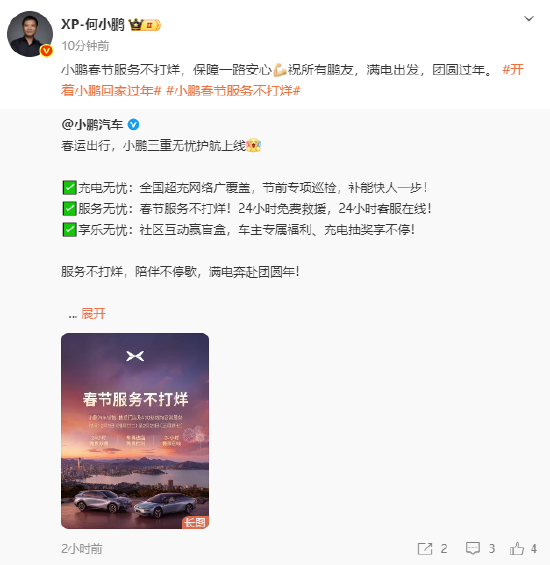
Core Viewpoint - Xiaopeng Motors emphasizes its commitment to customer service during the Spring Festival, ensuring a worry-free travel experience for its users [1][2][3]. Group 1 - Xiaopeng Motors announces that its services will remain operational during the Spring Festival, providing continuous support for customers [2][5]. - The company introduces the "Threefold Worry-Free Escort Rights" during the Spring Festival travel period, which includes extensive coverage of its nationwide supercharging network, pre-holiday inspections, 24-hour free roadside assistance, and 24-hour customer service availability [2][5].


国内乘用车市场分析:区域篇
3 6 Ke· 2026-02-11 05:09
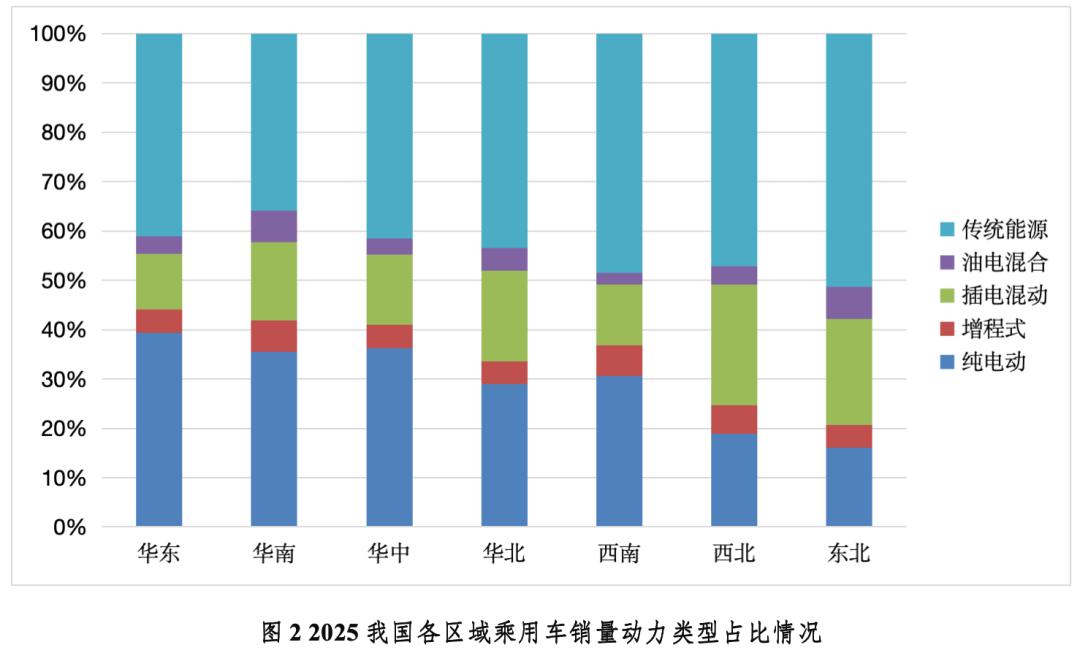
Core Insights - The article analyzes the regional development paths of new energy passenger vehicle sales in China, focusing on market potential in lower-tier cities and development models in typical cities [1] Regional Development Characteristics - China's new energy vehicle (NEV) industry shows a clear regional development pattern, starting from the southeastern coastal areas and expanding to core economic regions like the Pearl River Delta, Yangtze River Delta, Beijing-Tianjin-Hebei, and Sichuan-Chongqing [2] - The penetration rate of NEVs is highest in East and South China, accounting for approximately 54%, while North and Southwest China follow in the second tier. The Northwest and Northeast regions have lower penetration rates due to cold winter climates [2] Market Potential in Western and Northeast Regions - The western and northeastern regions still hold significant growth potential for NEVs, requiring differentiated promotion strategies based on regional resources and climate characteristics [5] - In high-altitude areas, range-extended electric vehicles are more suitable due to their ability to avoid power performance issues caused by thin air [5] - The Northeast faces challenges in NEV promotion due to harsh climates and insufficient charging infrastructure, suggesting the need for regional tax incentives and infrastructure improvements [5] Downstream Market Development Potential - Lower-tier markets are becoming the main driver of growth in China's NEV market, with first and second-tier cities reaching saturation [7] - The penetration rate of NEVs in first and second-tier cities has surpassed 55%, while it remains below 40% in third-tier and below cities, indicating strong growth potential [7] Company Strategies in Lower-tier Markets - Companies are accelerating their focus on lower-tier markets, with brands like Wuling deriving nearly 70% of their sales from these areas [11] - BYD, Geely, and Changan are launching models tailored to the needs of lower-tier markets, achieving rapid sales growth [11] Development Models in Typical Cities - Cities like Guangzhou, Beijing, Chengdu, Shanghai, and Shenzhen are projected to lead NEV sales from 2024 to 2025, each following distinct growth models [14] - The industrial-driven model, represented by Guangzhou, relies on local automakers to create market advantages [17] - The environment-driven model, exemplified by Shenzhen, focuses on building supportive infrastructure for NEVs [20] - The consumption-driven model, as seen in Chengdu, benefits from strong consumer policies and demographic advantages [21] - The policy-driven model in cities like Beijing and Shanghai is closely tied to regulations affecting fuel vehicles and incentives for NEVs [22] Recommendations for Expanding Automotive Consumption - To enhance automotive consumption, it is essential to eliminate unreasonable local restrictions and promote a unified national market [25] - Accelerating the construction of charging infrastructure and upgrading existing facilities is crucial for improving the automotive ecosystem [25] - Engaging in automotive cultural activities can stimulate market vitality and drive consumer demand [25] - Companies should leverage local market advantages to build brand recognition and trust among consumers [25]


平安证券(香港)港股晨报-20260211
Ping An Securities Hongkong· 2026-02-11 03:45
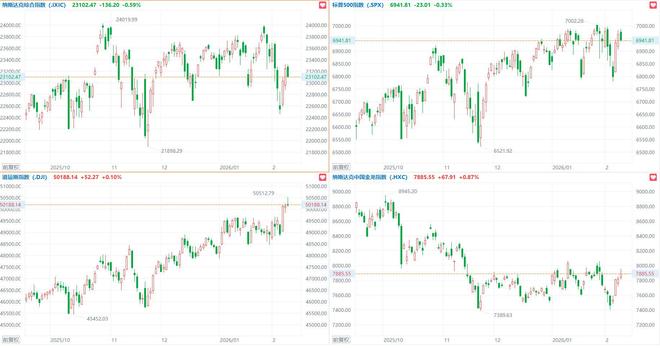
Market Overview - The Hong Kong stock market experienced fluctuations, with the Hang Seng Index closing at 23,831 points, down 145 points or 0.61% [1] - The market turnover decreased to 82.799 billion HKD, with net inflows of 484 million HKD recorded in the Hong Kong Stock Connect [1] - The US stock market showed mixed results, with the Dow Jones rising 0.1% to a new closing high, while the S&P 500 and Nasdaq fell by 0.33% and 0.59% respectively [2] Sector Performance - In the Hong Kong market, local real estate, software, and 5G sectors saw significant declines, while gold stocks performed well [1] - Biotechnology and cultural media sectors were active, with the Hang Seng Index rising 0.58% and the Hang Seng Technology Index increasing by 0.62% [1] - Notable stock performances included a 5.5% increase for CSPC Pharmaceutical Group and a 15.4% rise for China Literature [1] Investment Opportunities - The report emphasizes the importance of "technological self-reliance" and AI applications as key themes for future growth in the Hong Kong market, suggesting that leading companies in these sectors may benefit from long-term development opportunities [3] - The report recommends focusing on sectors supported by policies aimed at expanding domestic consumption, such as sports apparel and non-essential services [3] - It highlights the value of investing in state-owned enterprises with relatively low valuations and high dividends across various industries [3] Company Highlights - ByteDance's subsidiary Doubao launched a New Year campaign, distributing red envelopes and promoting AI applications, which may boost demand for upstream GPU and AI chips [9] - Innovent Biologics announced a strategic partnership with Eli Lilly, with a total transaction value of up to 8.85 billion USD, indicating strong market confidence in China's innovative drug pipeline [9] - The report suggests monitoring leading companies in the domestic semiconductor foundry industry, such as Hua Hong Semiconductor and SMIC, as they are expected to benefit from favorable policies [9]

超长车贷成车企标配“低月供”之下隐忧浮现
Jing Ji Wang· 2026-02-11 02:55
Core Viewpoint - The automotive industry is experiencing an intense competition with the introduction of "7-year ultra-low interest" car loans by companies like Tesla, NIO, and Xiaomi, alongside Nissan's "0 down payment, 8-year loan" scheme, reflecting the anxiety and strategic shifts in the market as the penetration rate of new energy vehicles exceeds 54% [1][3]. Group 1: Loan Offerings - Dongfeng Nissan has launched a "0 down payment, 8-year ultra-long low-interest loan" for its Tianlai model, with a total cost of approximately 140,000 yuan and a monthly payment of around 55 yuan [2]. - The 8-year loan option has been extended to all models in Dongfeng Nissan's lineup, with the lowest daily payment for the Xuan Yi model being 27 yuan [2]. - Other automotive companies, including Tesla, NIO, and Xiaopeng, have also begun offering similar long-term loan options, breaking away from the traditional 1 to 5-year loan terms [2][3]. Group 2: Market Dynamics - The shift to ultra-long-term low-interest loans is a response to fierce market competition and reflects traditional automakers' anxiety during the critical transition to new energy vehicles [3]. - By 2025, new energy vehicles are projected to account for 50.8% of domestic car sales, indicating a significant market shift [3]. - The regulatory environment has also facilitated longer loan terms, allowing banks to extend personal consumption loans from a maximum of 5 years to 7 years for long-term consumers [3]. Group 3: Risks and Concerns - The ultra-long car loans are primarily offered through financing leasing companies rather than traditional bank loans, which raises potential legal and financial risks for consumers [5][6]. - Consumers may not legally own the vehicle until all payments are made, leading to a situation where they could lose both the vehicle and their payments if they default [6]. - The depreciation of electric vehicles poses a risk, as the residual value may fall below the outstanding loan balance, creating a "negative equity" situation for consumers [6][7].


小鹏汽车全国最大销售服务中心落地广州
Ge Long Hui A P P· 2026-02-11 02:50
格隆汇2月11日|小鹏汽车董事长何小鹏在社交媒体上宣布,小鹏汽车全国最大的销售服务中心正式焕 新开业。该中心位于广州黄埔区,占地2.5万平方米,本次升级新增标准化售后中心。 ...
美股三大指数收盘涨跌不一,闪迪跌超7%,中概指数涨0.87%
Ge Long Hui A P P· 2026-02-10 22:25
Core Viewpoint - The U.S. stock market showed mixed results with the Dow Jones increasing by 0.1%, while the Nasdaq and S&P 500 indices decreased by 0.59% and 0.33% respectively [1] Group 1: Stock Performance - Major technology stocks experienced varied performance, with Oracle rising over 2% and Tesla increasing more than 1%, while Google and Broadcom fell over 1% [1] - The residential construction, railway transportation, and tourism sectors saw significant gains, with Marriott Hotels rising over 8%, Hilton Hotels increasing over 3%, and Union Pacific up over 2% [1] - Storage and cryptocurrency-related stocks faced notable declines, with Western Digital dropping over 8%, SanDisk down over 7%, and Seagate Technology falling over 6% [1] Group 2: Chinese Stocks - The Nasdaq Golden Dragon China Index rose by 0.87%, with popular Chinese stocks such as Li Auto increasing by 2.9%, and BYD and Alibaba both rising over 2% [1] - Other Chinese companies like NIO, Xpeng, New Oriental, and JD.com saw increases of over 1%, while Tencent fell by 1.4% and Meituan dropped by 2.8% [1]

纳斯达克金龙中国指数初步收涨0.9%
Mei Ri Jing Ji Xin Wen· 2026-02-10 21:17
Group 1 - The Nasdaq Golden Dragon China Index has seen a preliminary increase of 0.9% [2] - Notable Chinese concept stocks include: - Autohome rising over 4% - Tencent Music increasing by more than 3% - Li Auto up nearly 3% - Alibaba gaining over 2% - Xpeng Motors, NIO, and JD.com each rising by more than 1% [2]


超长车贷成车企标配 “低月供”之下隐忧浮现
Shang Hai Zheng Quan Bao· 2026-02-10 18:09
Core Viewpoint - The automotive industry is experiencing an intense competition with companies like Tesla, NIO, and Xiaomi launching "7-year ultra-low interest" car loan schemes, while Dongfeng Nissan has introduced a "0 down payment, 8-year loan" plan, reflecting the anxiety and strategic shifts in the market as the penetration rate of new energy vehicles exceeds 54% [1][3]. Group 1: Loan Offerings - Dongfeng Nissan announced a "0 down payment, 8-year ultra-long low-interest loan" for its Tianlai model, with a price of 129,900 yuan and an interest rate of 4.88%, resulting in a monthly payment of approximately 55 yuan [2]. - The ultra-long loan scheme has been extended to all models in Dongfeng Nissan's lineup, with the lowest daily payment for the Xuan Yi model being 27 yuan [2]. - Other companies, including Tesla, NIO, and Xiaopeng, have also begun offering similar 7-year low-interest loan options, breaking away from the traditional 1 to 5-year loan terms [2][3]. Group 2: Market Dynamics - The shift to ultra-long low-interest loans is a response to fierce market competition and reflects traditional automakers' anxiety during the critical transition to new energy vehicles [3]. - Data from the China Automobile Industry Association indicates that by 2025, new energy vehicles will account for 50.8% of domestic car sales, highlighting the growing importance of this segment [3]. - The regulatory environment has also facilitated longer loan terms, allowing banks to extend personal consumption loans from a maximum of 5 years to 7 years for customers with long-term consumption needs [3]. Group 3: Risks and Concerns - The majority of ultra-long loan schemes are not traditional bank mortgages but rather financing leases, which introduce unique legal and financial risks [5]. - Consumers under financing leases do not legally own the vehicle until all payments are made, which can lead to potential loss of both the vehicle and the money paid if payments are missed [6]. - The depreciation of electric vehicles poses a significant risk, as the residual value may fall below the outstanding loan balance, leading to financial difficulties for consumers and asset security concerns for financial institutions [6][7].
小鹏汽车(XPEV):GX车型即将发布,物理AI应用产品加速落地
Huajing Securities· 2026-02-10 11:32
Investment Rating - The report maintains a "Buy" rating for the company with a target price of US$23.80, indicating a potential upside of 36% from the current price of US$17.54 [1][2]. Core Insights - The report highlights that despite short-term sales fluctuations, the overall growth trend for the year remains intact, with expectations of a 126% year-over-year increase in total vehicle sales for 2025 [6]. - The company is set to launch multiple new models and advance its physical AI applications in 2026, positioning itself as a leader in the autonomous driving and robotics sectors [7]. - The earnings forecasts have been revised downward due to anticipated sales pressure in Q1 2026, with a significant reduction in expected EPS for 2026 [8]. Financial Summary - The projected revenue for 2026 is RMB 100,770 million, reflecting a 36.3% year-over-year increase, while the expected gross margin is adjusted to 17.9% [9][10]. - The company anticipates delivering 509,000 vehicles in 2026, which is an 18.5% increase from the previous year [10]. - The report indicates a Non-GAAP net profit of RMB 890 million for 2026, a significant decrease of 64.6% from prior estimates [8][10].
小鹏汽车在合肥成立销售服务新公司,含二手车相关业务
Zhong Guo Neng Yuan Wang· 2026-02-10 06:19
天眼查工商信息显示,近日,合肥鹏绍汽车销售服务有限公司成立,法定代表人为陈志远,注册资本 500万人民币,经营范围含汽车销售、新能源汽车整车销售、新能源汽车电附件销售、机动车充电销 售、电池零配件销售、商务代理代办服务、信息咨询服务、二手车经纪等。股权全景穿透图显示,该公 司由合肥鹏智汽车销售服务有限公司全资持股,后者为小鹏汽车销售有限公司全资子公司。 ...