BABA(09988)

Search documents
阿里巴巴被传列入美国国防部制裁名单 美股跌超3%
Xin Lang Cai Jing· 2026-02-13 15:08
受此消息影响,阿里巴巴美股下跌2%,报155.55美元;港股当日亦跌2%,收报155.4港元。 来源:观点地产网 观点网讯:2月13日,据媒体报道,美国特朗普政府最快将于当地时间2月13日将阿里巴巴等多家中国企 业列入"1260H清单"。 最新消息显示,除阿里巴巴外,百度、比亚迪、华虹半导体等共8家中国企业亦在此次拟列入名单之 列。 免责声明:本文内容与数据由观点根据公开信息整理,不构成投资建议,使用前请核实。 根据公开资料整理,美国国防部的1260H清单虽未直接实施制裁,但会向美国政府机构及供应商传递对 相关企业的风险提示。 此前腾讯、宁德时代已被列入该名单。 ...
Alibaba stock nosedives as Pentagon scrutinizes its ties to the Chinese military
Finbold· 2026-02-13 15:04
Core Viewpoint - Alibaba's shares fell over 5% in pre-market trading due to news of the U.S. government expanding a Pentagon list of companies allegedly supporting the Chinese military, which raises national security concerns for U.S. partners [1][2] Group 1: Stock Performance and Market Reaction - Alibaba's stock price is currently at $149.92, reflecting investor uncertainty following the Pentagon's report [2] - The timing of the Pentagon's report is particularly unfortunate as Alibaba is set to release its quarterly earnings on February 19, which could impact investor sentiment [7] - Despite the recent stock decline, Alibaba's shares have rallied nearly 50% over the past year, indicating mixed signals regarding investor confidence in AI-driven commerce and cloud monetization [8] Group 2: Earnings Forecast and Analyst Ratings - Alibaba is expected to report higher revenue but lower pre-tax profit and earnings per share (EPS) compared to the same period last year, raising questions about sustainable growth [8] - Wall Street remains generally positive on Alibaba, with Citigroup and Weiss giving the stock a 'Buy' rating, while Jefferies and Morgan Stanley have lowered their price targets [9] - The stock enjoys 18 'Buy' ratings against one 'Hold' and one 'Sell' recommendation, with an average price target of $203, suggesting a 30% upside potential [9] Group 3: Broader Implications - The inclusion of companies like Alibaba on the Pentagon's list could strain commercial partnerships and increase compliance risks, contributing to overall market uncertainty [2][6] - Updates to the list may also affect U.S.-China relations, potentially jeopardizing the trade truce established in the previous quarter [6]

美股三大指数集体低开,中概股普跌,阿里巴巴、百度跌超3%
Feng Huang Wang Cai Jing· 2026-02-13 14:49
Group 1 - US stock indices opened lower, with Nasdaq down 0.16%, Dow Jones down 0.04%, and S&P 500 down 0.01% [1] - Chinese concept stocks fell, with Alibaba and Baidu dropping over 3%. However, Applied Materials rose over 11% due to better-than-expected Q1 earnings. Rivian surged 26% after projecting a 53% increase in delivery volume by 2026 [1] Group 2 - Eli Lilly's acquisition of Ventyx Biosciences has received approval from the US Federal Trade Commission, with a cash purchase price of $14 per share, totaling approximately $1.2 billion. The deal is expected to close in the first half of 2026 [2] Group 3 - Moderna reported Q4 revenue of $678 million, a 30% year-over-year decline, while the market had expected $625.1 million. The company posted a Q4 loss of $2.11 per share, an improvement from a loss of $2.91 per share in the same period last year [3] Group 4 - SoftBank's PayPay has officially submitted an IPO application in the US, reporting a profit of 103.3 billion yen and revenue of 278.5 billion yen for the nine months ending December 31 [4] Group 5 - TrendForce forecasts that HBM4 validation will be completed by Q2 2026, driven by growing GPU demand due to AI infrastructure expansion. Major memory manufacturers are nearing the end of the HBM4 validation process, with Samsung expected to lead, followed by SK Hynix and Micron [5]
美股低开 纳斯达克中国金龙指数跌超1% 阿里巴巴、百度跌超3%
Ge Long Hui· 2026-02-13 14:41
Market Overview - The three major U.S. stock indices opened lower, with the Nasdaq down 0.16%, the Dow Jones down 0.04%, and the S&P 500 down 0.01% [1] Chinese Stocks - The Nasdaq Golden Dragon China Index fell over 1%, with Century Internet down 8.30%, Baidu down 3.91%, Kingsoft Cloud down 3.30%, Lufax Holdings down 3.26%, and Alibaba down 3.09% [1] Company Performances - Applied Materials saw an increase of over 11%, as the company's first fiscal quarter performance exceeded expectations [1] - Rivian experienced a significant rise of 26%, following the company's forecast of a 53% increase in delivery volume by 2026 [1] - DraftKings, a sports betting operator, dropped 12.0% due to revenue outlook for 2026 falling short of expectations [1]

美股异动 | 阿里巴巴(BABA.US)盘前跌逾3% 官方引导互联网平台防范反垄断合规风险
智通财经网· 2026-02-13 14:00
Core Viewpoint - Alibaba's stock dropped over 3% to $158.73 following the release of new antitrust compliance guidelines by the State Administration for Market Regulation on February 13, aimed at promoting innovation and healthy development in the platform economy [1] Group 1: Antitrust Compliance Guidelines - The guidelines provide clear instructions for platform operators on antitrust compliance, focusing on four types of monopolistic risks: monopoly agreements, abuse of market dominance, concentration of operators, and abuse of administrative power to eliminate or restrict competition [1] - Eight new types of monopolistic risks are identified, including algorithm collusion between platforms, facilitating monopolistic agreements among operators, unfair high pricing, below-cost sales, banning or blocking, "choose one from two" practices, "lowest price on the entire network," and differential treatment by platforms [1] - The guidelines offer actionable recommendations for platform operators to enhance their antitrust compliance management [1]
大厂AI竞速,争抢超级入口|TMT年度盘点
Jing Ji Guan Cha Wang· 2026-02-13 13:17
Core Insights - In 2025, the technology and internet sectors are experiencing rapid changes, with major companies competing fiercely in computing power and large model applications, while also navigating regulatory challenges in e-commerce [2] - The era of easy financing through simple presentations is over, and companies must focus on technology, commercialization, and ecosystem advantages to survive [2] Group 1: Major Companies and Their Strategies - Tencent, Alibaba, and ByteDance are re-engaging in a traffic war, utilizing cash incentives to integrate AI into their platforms, with Tencent distributing 10 billion cash red envelopes and Alibaba offering 30 billion in incentives [2] - Alibaba plans to invest 380 billion yuan over the next three years, exceeding its total investment in the past decade, while ByteDance's capital expenditure is projected to reach 150 billion yuan in 2025 [4] - Tencent is heavily investing in NVIDIA and domestic GPUs, establishing AI research centers, and has ambitions to explore super entry points despite facing challenges with its red envelope strategy [4] Group 2: Technological Developments and Market Trends - The competition in AI is shifting from a focus on computing power to a more nuanced understanding of AI application value, with companies like Huawei proposing a critical point for AI application value to exceed energy costs [5] - Open-source models are becoming standard in 2025, with Alibaba's Qwen3 generating over 170,000 application scenarios globally, indicating a shift towards ecosystem vitality over mere user metrics [5] - The year 2026 is anticipated to be a turning point, with a few multi-modal foundational models likely to dominate the market, leading to the emergence of an intelligent agent internet [6]


被约谈!6家!
Xin Lang Cai Jing· 2026-02-13 13:12
Core Viewpoint - The financial regulatory authorities in China have conducted discussions with six travel platform companies regarding issues related to their collaboration with financial institutions in lending services, emphasizing the need for compliance and consumer protection [1] Group 1: Regulatory Actions - The financial regulatory authority, in conjunction with the market regulatory authority and the People's Bank of China, has engaged with Ctrip, Amap, Tongcheng Travel, Fliggy, Hanglv Zhongheng, and Qunar regarding their lending practices [1] - The companies are required to standardize their marketing behaviors and refrain from using misleading promotional language [1] Group 2: Consumer Protection Measures - Companies must clearly disclose the names of lending institutions and information about credit products to consumers [1] - There is an emphasis on providing clear warnings to borrowers about rational borrowing practices [1] - Companies are instructed to improve customer complaint channels, ensuring timely responses and proper handling of consumer disputes [1]

US expected to add Alibaba and others to list of firms allegedly aiding China's military, sources say
Reuters· 2026-02-13 13:08
Core Viewpoint - The Trump administration is expected to add Alibaba and other Chinese firms to a list of companies allegedly aiding China's military, which could impact their future contracts with the U.S. government [1]. Group 1: Companies Involved - Alibaba is among the companies expected to be added to the Pentagon's 1260H list, which includes major firms like Tencent Holdings and CATL [1]. - Other firms mentioned for potential inclusion are AI firm DeepSeek, smartphone maker Xiaomi, and electronic display maker BOE Technology [1]. Group 2: Implications of the List - Being added to the list does not impose formal sanctions but prevents the Pentagon from contracting with these companies in the future [1]. - The update to the list may strain U.S.-China relations, especially following a recent trade truce between Xi Jinping and Donald Trump [1].
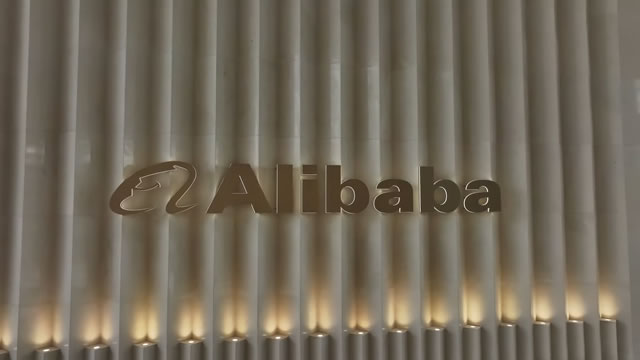
打败你(恒生科技)的不是天真,是字节
Xin Lang Cai Jing· 2026-02-13 13:02
Core Viewpoint - The article discusses the dominance of ByteDance in the tech industry, particularly in the context of the Hang Seng Tech Index, highlighting how its aggressive strategies and innovative approaches have outpaced traditional competitors like Tencent and Alibaba [1][19][22]. Group 1: Competitive Landscape - ByteDance is described as a formidable competitor that has effectively created a "red ocean" in various sectors, challenging established players without being a publicly listed company [1][19]. - Among the top 10 companies in the Hang Seng Tech Index, 6 are in direct competition with ByteDance, collectively holding a 40% weight in the index [2]. - The article emphasizes that ByteDance's approach to competition is not merely about financial strength but about its relentless drive and adaptability in the market [1][19]. Group 2: Market Disruption - ByteDance's entry into e-commerce through Douyin (TikTok) has significantly impacted Alibaba, with Douyin's GMV projected to approach 4 trillion yuan by 2025, capturing a substantial market share [6][9]. - The article argues that ByteDance's innovative model of combining content with e-commerce is more effective than Alibaba's traditional search-based approach, leading to a shift in consumer behavior [6][9]. - The dominance of ByteDance in various sectors, including short videos, news, and AI, is highlighted, indicating its broad market influence [7][9]. Group 3: Management and Leadership - The core competitive advantage of ByteDance is attributed to its founder, Zhang Yiming, whose unique management style and continuous learning mindset set the company apart from its competitors [11][12]. - Zhang's approach to management emphasizes equality, flexibility, and a focus on talent density, allowing for a more dynamic and innovative corporate culture [12][13]. - The article suggests that ByteDance's ability to maintain efficiency and cross multiple sectors is a testament to its superior management capabilities compared to other tech giants [13][19]. Group 4: Industry Implications - The article posits that the ongoing competition in the tech industry is not just between companies but also a challenge for companies to adapt and innovate continuously [22][23]. - It warns that companies in the Hang Seng Tech Index must either learn from ByteDance's strategies or risk being outpaced and potentially eliminated from the market [22][23]. - The narrative concludes that the future of the tech industry will be shaped by companies that embrace change and innovation, with ByteDance leading the charge [22][23].