
BABA(09988)

Search documents
从技术走向生活,投融界观察AI普及潮下的创业新航道
Sou Hu Cai Jing· 2026-02-13 12:46
Core Insights - The article highlights two significant events in the AI sector: ByteDance's Seedance 2.0 and Alibaba's Qianwen App, indicating a shift from showcasing technological possibilities to integrating AI into everyday life [1][2] Group 1: Technological Breakthroughs - Seedance 2.0 represents a leap from being a "material splicer" to a collaborator with "director thinking," enabling coherent storytelling and professional editing in video creation [1] - Qianwen's success in managing complex scenarios during the Spring Festival demonstrates AI's advancement in understanding ambiguous human intentions and efficiently coordinating various life services [1][2] Group 2: Life Transformation - The advancements in AI are democratizing creative expression, allowing individuals to become "directors" of their lives through tools like Seedance 2.0, significantly lowering the cost and skill requirements for video creation [4] - The way people access life services is becoming more "invisible" and "automated," with AI acting as an invisible assistant to manage daily tasks, thus enhancing overall life efficiency [4] Group 3: Entrepreneurial Opportunities - Entrepreneurs can find opportunities in the gaps created by major platforms, focusing on vertical niches that require deep industry knowledge, such as specialized fitness guidance and mental health support [5] - The creative industry can leverage tools like Seedance to build niche content libraries and optimize AI-generated content, positioning themselves as essential players in the new content ecosystem [5] - Traditional industries can benefit from "AI + SaaS" solutions to enhance digital transformation, helping small businesses and local services utilize AI for various operational efficiencies [5]



智能硬件公司觉得自己无所不能|TMT年度盘点
Jing Ji Guan Cha Wang· 2026-02-13 12:40
Core Insights - The technology and internet sectors are experiencing rapid changes in 2025, with companies aggressively competing in computing power and large model applications, while e-commerce is reshaping its foundations amidst regulatory pressures [2][3] - The era of easy financing through simple presentations is over; companies must demonstrate technological, commercial, and ecological advantages to survive in the TMT industry [3] Industry Dynamics - The smart hardware industry is characterized by a collective confidence among manufacturers, leading to innovations such as multifunctional cleaning robots and cross-industry expansions by companies like DJI and others [4][6] - The underlying logic for the explosive growth in the smart hardware sector is the urgent need for AI to find physical world applications, prompting a re-evaluation of all product categories in the AI era [5][6] Strategic Shifts - Major hardware companies are increasingly diversifying their product lines, with firms like DJI and others venturing into new markets, including automotive and robotics, reflecting a trend of "not sticking to one's main business" [6][7] - The competitive landscape is marked by a rush to establish ecosystems, with companies striving to integrate their core technologies into various electronic devices [6][7] Investment Trends - The influx of capital into the smart hardware sector is driven by a belief that hardware is essential for AI applications, leading to a surge in investments from various funding sources [8][9] - Startups emerging from established companies are attracting significant investment, with former employees of leading firms being particularly sought after for their experience and potential [8][9] Competitive Environment - The competition in the smart hardware industry has intensified, with companies employing unconventional strategies, including aggressive marketing tactics and patent disputes [10][11] - The market for smart rings and AI glasses has become saturated, leading to fierce price wars and diminishing profit margins, with some products seeing prices drop significantly [11]



《寻找白龙马》2025年度AI投融资回顾
Sou Hu Cai Jing· 2026-02-13 12:03
Core Insights - In 2025, China's artificial intelligence (AI) sector experienced a significant transformation characterized by a shift from "burning money" to a focus on technological barriers, commercialization pathways, and supply chain security, driven by macroeconomic and geopolitical influences [2] - AI financing surged from 22.206 billion yuan in 2022 to 73.399 billion yuan in 2025, with its market share increasing from 2.65% to 10.86%, making it the only industry to show continuous growth over three years [2] - The embodiment intelligence sector saw explosive growth in financing, rising from 6.657 billion yuan in 2024 to 47.371 billion yuan in 2025, marking a year-on-year increase of 612% [2] Investment Landscape - The number of investment institutions in the AI sector reached 1,336, with notable players like Sequoia China, CICC Capital, Hillhouse Capital, and IDG Capital among the top investors [3] - The investment landscape is predominantly market-driven, contrasting with the state-owned institutions that dominate other sectors [3] Major Financing Events and Sector Analysis - The foundational model sector is consolidating, with significant investments directed towards established players like Moonshot AI, which raised $500 million at a valuation of $4.3 billion [5] - Domestic AI chips and computing power have become focal points for investment, with companies like Wallen Technology and Moore Threads receiving substantial backing [6][7] - Vertical AI applications, particularly in healthcare and enterprise automation, are gaining traction, with significant funding directed towards companies that demonstrate clear revenue and cost-saving capabilities [9] Trends in AI Investment - Investment strategies are shifting towards established companies with existing products and revenue, making early-stage financing more challenging [13] - State-owned and industrial capital are increasingly influential in the AI hard tech sector, focusing on both financial returns and industrial chain security [14] - The valuation metrics are evolving, with a greater emphasis on revenue and gross margins rather than user scale [15] - Opportunities are emerging in AI applications that integrate with traditional industries, such as manufacturing and finance, rather than standalone AI platforms [16] - The IPO landscape remains cautious, with many companies opting for mergers or acquisitions instead of pursuing public listings due to stringent regulatory requirements [17] Summary - The year 2025 marks a pivotal moment for China's AI industry, transitioning from a phase of intense competition in model development to a focus on "hard power" and practical applications [18]

携程、高德、同程、飞猪、航旅纵横、去哪儿,被集体约谈
2 1 Shi Ji Jing Ji Bao Dao· 2026-02-13 11:55
Core Viewpoint - The financial regulatory authorities in China have conducted discussions with six travel platform companies regarding issues related to their lending practices in collaboration with financial institutions, emphasizing the need for compliance and consumer protection [1] Group 1: Regulatory Actions - The financial regulatory bureau, in conjunction with the market regulatory bureau and the People's Bank of China, has engaged with Ctrip, Amap, Tongcheng Travel, Fliggy, Hanglv Zhongheng, and Qunar regarding their lending operations [1] - The companies are required to standardize their marketing behaviors and refrain from using misleading promotional language [1] Group 2: Consumer Protection Measures - Companies must clearly disclose the names of lending institutions and the details of credit products offered [1] - There is an emphasis on providing clear warnings to borrowers about rational borrowing practices [1] - The companies are instructed to enhance customer complaint channels, ensuring timely responses and proper handling of consumer disputes to improve service quality and protect consumer rights [1]

金融监管总局、央行等出手,携程旅行、高德地图、同程旅行、飞猪旅行、航旅纵横、去哪儿旅行,被约谈
Zhong Guo Ji Jin Bao· 2026-02-13 11:52
Core Viewpoint - The financial regulatory authorities have conducted discussions with six travel platform companies regarding issues related to their collaboration with financial institutions in lending activities [1] Group 1: Regulatory Actions - The financial regulatory bureau, in conjunction with the market regulatory bureau and the People's Bank of China, has held talks with Ctrip, Gaode Map, Tongcheng Travel, Fliggy, Hanglv Zongheng, and Qunar Travel [1] - The discussions focused on the need for these companies to standardize their marketing practices and avoid misleading promotional language [1] - Companies are required to clearly disclose the names of lending institutions and credit product information, as well as to provide clear reminders to borrowers about responsible borrowing [1] Group 2: Consumer Protection - The regulatory bodies emphasized the importance of establishing smooth customer complaint channels and ensuring timely responses to consumer disputes [1] - There is a strong focus on improving service quality to effectively safeguard consumer rights [1]
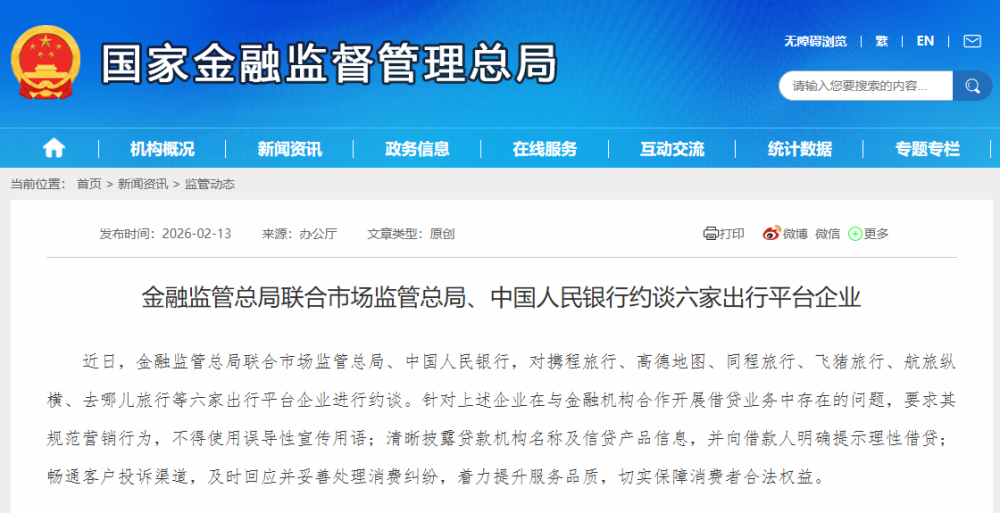
金融监管总局联合市场监管总局、央行约谈六家出行平台企业:包括携程、高德、同程、飞猪、航旅纵横、去哪儿
Xin Lang Cai Jing· 2026-02-13 11:02
Core Viewpoint - The Financial Regulatory Administration, in collaboration with the Market Regulatory Administration and the People's Bank of China, has conducted discussions with six travel platform companies regarding issues related to their lending practices [1][2]. Group 1: Regulatory Actions - The six travel platform companies involved are Ctrip, Gaode Map, Tongcheng Travel, Fliggy, Hanglv Zhongheng, and Qunar [1][2]. - The regulatory bodies have mandated these companies to standardize their marketing practices, prohibiting misleading promotional language [1][2]. - Companies are required to clearly disclose the names of lending institutions and credit product information, as well as to provide clear reminders to borrowers about rational borrowing [1][2]. Group 2: Consumer Protection - The regulatory authorities emphasized the importance of establishing accessible customer complaint channels, ensuring timely responses, and effectively handling consumer disputes [1][2]. - There is a focus on improving service quality to safeguard consumers' legal rights [1][2].
智通港股通活跃成交|2月13日





智通财经网· 2026-02-13 11:02
Group 1 - Tencent Holdings (00700), Alibaba-W (09988), and Meituan-W (03690) ranked as the top three companies in terms of trading volume on the Hong Kong Stock Connect (southbound) on February 13, 2026, with transaction amounts of 4.301 billion, 3.680 billion, and 3.169 billion respectively [1] - Tencent Holdings (00700), Alibaba-W (09988), and Meituan-W (03690) also led the trading volume on the Shenzhen-Hong Kong Stock Connect (southbound) with transaction amounts of 3.563 billion, 2.870 billion, and 1.460 billion respectively [1] Group 2 - The top ten active companies on the Hong Kong Stock Connect (southbound) included Tencent Holdings (00700) with a net buy of 1.426 billion, Alibaba-W (09988) with a net buy of 1.143 billion, and Meituan-W (03690) with a net sell of 0.368 billion [2] - On the Shenzhen-Hong Kong Stock Connect (southbound), Tencent Holdings (00700) had a net buy of 0.837 billion, Alibaba-W (09988) had a net buy of 1.156 billion, and Meituan-W (03690) had a net buy of 0.611 billion [2]
月活破1.2亿!AI教育频繁出错,学生被错误答案误导谁来负责?
Sou Hu Cai Jing· 2026-02-13 10:53
Core Insights - The education sector is experiencing renewed interest from major tech companies, with ByteDance and Alibaba launching AI-driven educational tools to capture market share [1][2] - The AI education market in China has seen significant growth, with monthly active users of AI education apps surpassing 120 million, a 340% year-on-year increase as of Q3 2025 [1] - The competition is primarily between tech giants leveraging their existing user bases and traditional education companies with established research capabilities [2] Group 1: Market Dynamics - The AI education landscape is dominated by three main players: tech giants like ByteDance and Alibaba focusing on rapid iteration and user acquisition, traditional education firms like Yuanfudao and Zuoyebang enhancing their services with AI, and smaller startups targeting niche markets [2] - Major companies are pursuing three business lines: AI problem-solving tools, AI teaching assistants for schools, and AI-driven personalized learning, with varying degrees of market maturity and profitability [3][4] Group 2: Competitive Advantages - Major tech companies benefit from the reuse of large model technologies, existing user traffic, and lower development costs due to economies of scale [4] - However, their fast-paced, traffic-driven strategies may conflict with the slower, more methodical nature of the education sector, potentially hindering long-term success [4] Group 3: Product Differentiation - There are notable differences in user experience among AI education products, with tech giants offering integrated AI assistants that streamline user interaction, while traditional education apps maintain a more segmented approach [6][7] - The interaction styles of AI explanations vary significantly, with tech companies focusing on real-time analysis and engagement, contrasting with traditional firms that rely on pre-existing content and less interactive formats [10][12] Group 4: Challenges and Future Outlook - Major tech companies face challenges in educational content development due to a lack of deep educational research compared to traditional players, which may affect the quality and trustworthiness of their offerings [14] - The sustainability of the business model for tech giants remains uncertain, as they currently offer AI features for free without clear monetization strategies, raising questions about long-term profitability [15][16] - Future opportunities may lie in targeting specific segments such as B2B solutions for schools and adult education, where demand is stable and user willingness to pay is higher [16]

北水动向|北水成交净买入202.19亿 北水抢筹港股ETF及科技股 全天加仓盈富基金(02800)超36亿港元
智通财经网· 2026-02-13 09:57
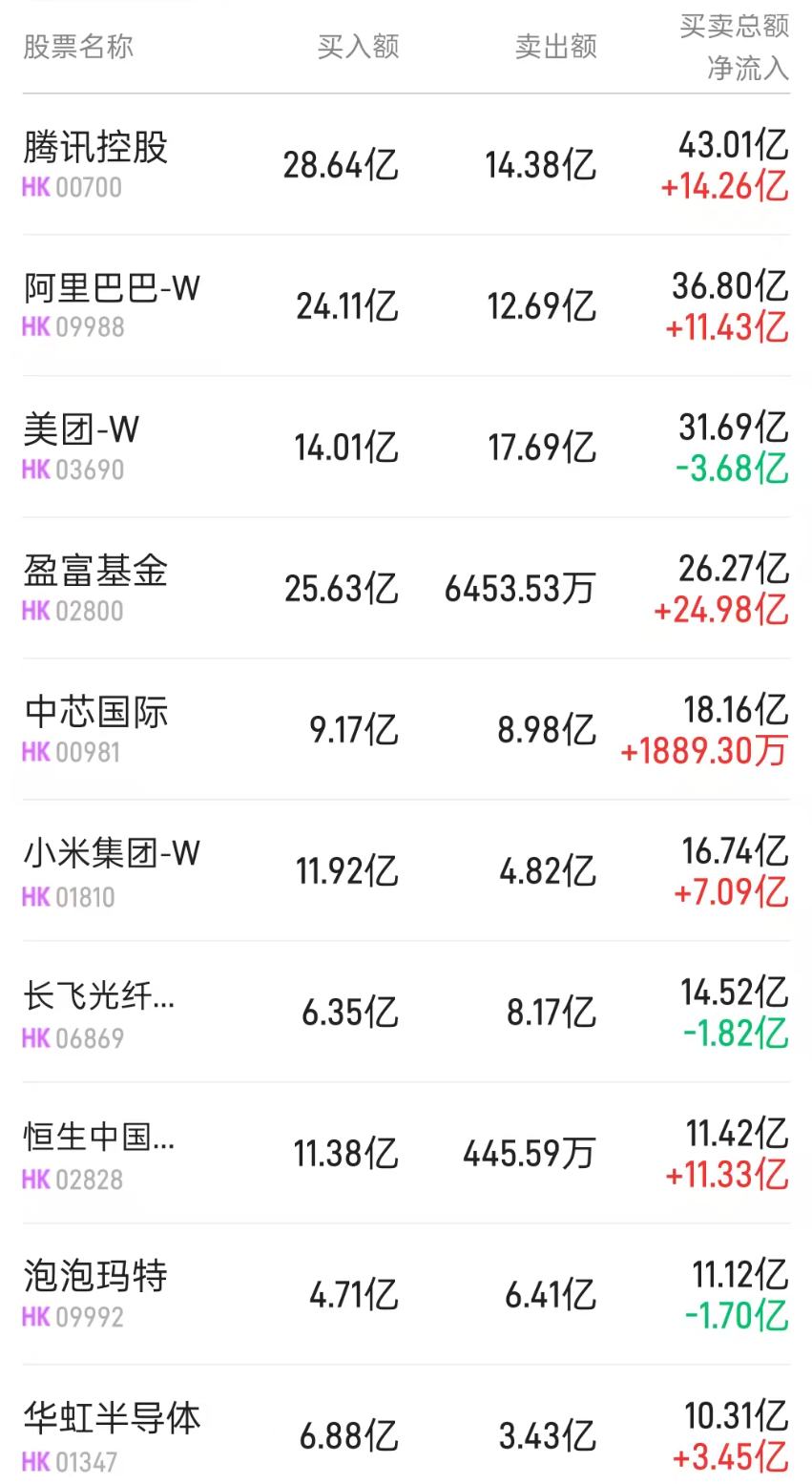
Group 1 - The Hong Kong stock market saw a net inflow of 202.19 billion HKD from northbound trading, with 114.77 billion HKD from Shanghai and 87.43 billion HKD from Shenzhen [1] - The most bought stocks included the Tracker Fund of Hong Kong (02800), Alibaba-W (09988), and Tencent (00700) [1] - The most sold stocks were Changfei Optical Fiber (06869) and CNOOC (00883) [1] Group 2 - Tencent Holdings received a net inflow of 28.64 billion HKD, with a total buy amount of 43.01 billion HKD and sell amount of 14.38 billion HKD [2] - Alibaba-W had a net inflow of 24.11 billion HKD, with total buys of 36.80 billion HKD and sells of 12.69 billion HKD [2] - Meituan-W saw a net inflow of 14.01 billion HKD, with total sells of 17.69 billion HKD [2] Group 3 - The Tracker Fund of Hong Kong (02800) had a net inflow of 25.63 billion HKD, with total buys of 26.27 billion HKD and sells of 645.53 million HKD [2] - Semiconductor stocks like Huahong Semiconductor (01347) and SMIC (00981) received net inflows of 8.46 billion HKD and 5.73 billion HKD respectively [6] - CNOOC experienced a net outflow of 1.43 billion HKD amid geopolitical tensions affecting oil prices [6] Group 4 - Xiaomi Group-W received a net inflow of 12.11 billion HKD, with a notable sales performance in January [5] - The Tracker Fund of Hong Kong, Hang Seng China Enterprises (02828), and Southern Hang Seng Technology (03033) saw significant net inflows of 36.75 billion HKD, 11.33 billion HKD, and 11.23 billion HKD respectively [4] - Changfei Optical Fiber (06869) faced a net outflow of 1.48 billion HKD [7]

阿里巴巴申请公布大型语言模型训练相关专利
Qi Cha Cha· 2026-02-13 09:53
Core Viewpoint - Alibaba (China) Limited has applied for a patent related to a method, device, and equipment for training large language models based on a thinking chain, aiming to enhance the interpretability and review accuracy of these models [1] Group 1: Patent Details - The patent involves obtaining multiple initial sampling data, which includes images, auxiliary textual information, and standard review results of the images [1] - It describes generating thinking chain data from the initial sampling data and determining a collection of thinking chain data [1] - The method includes fine-tuning a foundational large language model using the thinking chain data collection to create an intermediate large language model [1] Group 2: Methodology - The process iteratively generates multiple intermediate thinking chain data based on the intermediate large language model and the initial sampling data [1] - A pre-set reward function is used to determine the reward values for each of the intermediate thinking chain data [1] - The final step involves using a Group Relative Policy Optimization (GRPO) algorithm for reinforcement learning to establish the target large language model [1]