Baosteel(600019)

Search documents
视频丨近零碳钢铁是怎样炼成的?独家探访绿色钢铁“梦工厂”
Xin Lang Cai Jing· 2025-12-25 13:18
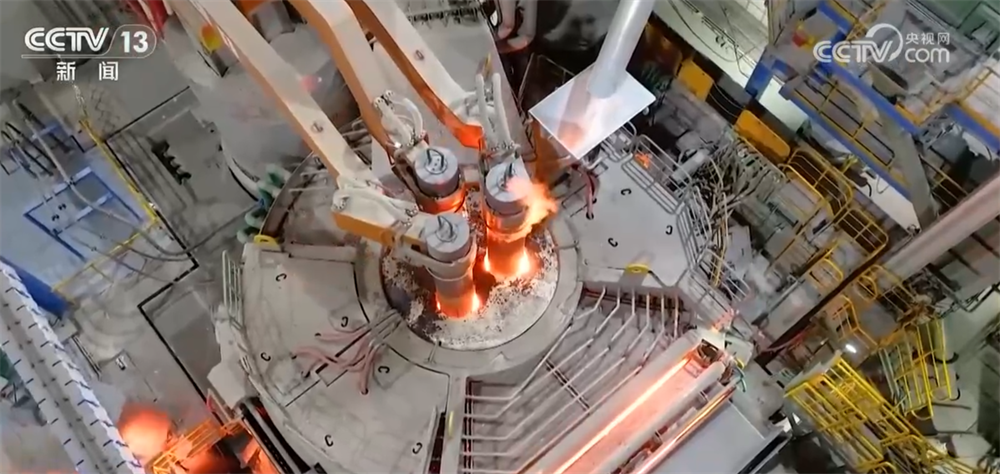
Core Viewpoint - The establishment of China's first million-ton near-zero carbon steel production line in Zhanjiang marks a significant breakthrough in the green and low-carbon development of the steel industry [1][3]. Group 1: Technological Advancements - The production line utilizes advanced hydrogen metallurgy and electric melting technology, replacing traditional coke with hydrogen, significantly reducing carbon emissions [3]. - Compared to traditional processes, this production line can achieve a carbon reduction of 50% to 80% [3]. - The hydrogen-based steelmaking technology transforms the high-energy consumption and pollution of traditional steelmaking methods into a greener and low-carbon process [3][6]. Group 2: Environmental Impact - The million-ton near-zero carbon steel production line can reduce carbon emissions by over 3.14 million tons annually, equivalent to creating 2,000 square kilometers of forest [5]. - The production process can eliminate 2,500 tons of CO2 emissions per day, making it the most environmentally friendly and lowest carbon steelmaking process currently available [6]. - The electric furnace used in the production can smelt 220 tons of steel at once, producing 80,000 amperes of current and reaching temperatures of up to 5,000°C, while reducing carbon emissions by over 80% compared to traditional methods [8]. Group 3: Industry Development - The "14th Five-Year Plan" is a critical period for the steel industry to achieve high-quality development, with green transformation becoming a prominent theme [11]. - The number of new green factories in the steel industry is increasing annually, with a total of 126 new green factories expected from 2021 to 2024 [13]. - Key enterprises in the steel industry have significantly reduced pollutant emissions, with SO2, particulate matter, and NOx emissions decreasing by 28%, 26.7%, and 36.5% respectively by the end of Q3 2025 compared to the end of 2021 [13]. Group 4: Resource Efficiency - Water resource utilization efficiency in the steel industry has improved, with the water consumption per ton of steel decreasing from 2.50 cubic meters in 2021 to 2.33 cubic meters in 2024, a reduction of 6.8% [15]. - The steel industry is expected to achieve a total energy saving of approximately 10.5 million tons of standard coal and a carbon reduction of about 27.5 million tons by 2024 [16].


马钢股份:公司已完成钢铁主业资产权属变更并收到宝钢股份第二笔股权转让款
Zheng Quan Ri Bao Zhi Sheng· 2025-12-25 12:49
证券日报网讯 12月25日,马钢股份在互动平台回答投资者提问时表示,公司已完成将相关钢铁主业资 产增资注入至马钢有限涉及的经营资质转移、承接工作,基本完成资产权属变更转移手续。目前公司已 收到宝钢股份受让马钢有限股权的第二笔股权转让款。 (编辑 丛可心 袁冠琳) ...

马钢股份(600808.SH):目前公司已收到宝钢股份受让马钢有限股权的第二笔股权转让款
Ge Long Hui· 2025-12-25 10:41
格隆汇12月25日丨马钢股份(600808.SH)在投资者互动平台表示,目前公司已收到宝钢股份受让马钢有 限股权的第二笔股权转让款。 ...
钢铁行业 2026 年度投资策略:中流击水,奋楫者进
Changjiang Securities· 2025-12-25 05:13
Core Insights - The steel industry is expected to recover in 2025 after three years of decline, driven by improvements in cost and supply sides [4][7][16] - The majority of profits in the black industrial chain are captured by iron ore, with profit shares of 72% for iron ore, 6% for coking coal, and 22% for steel [4][7] - The West Manganese project is seen as a potential solution to redirect profits back to the domestic steel industry [4][7] Profitability - In Q4 2025, prices for rebar, hot-rolled, iron ore, and coking coal decreased by 7.1%, 6.0%, 1.0%, and 12.5% year-on-year, respectively, with coking coal showing a significant price drop [7][18] - The decline in coking coal prices has alleviated cost pressures for steel companies, leading to a rebound in profitability [18][21] - The overall profit for the steel industry is expected to improve as demand stabilizes and costs decrease [7][21] Supply - The actual crude steel production in 2025 is expected to remain flat year-on-year, despite improved profitability encouraging production [20][21] - The supply side has not yet contracted as expected, with administrative production limits still pending implementation [16][20] - The discrepancy in production statistics indicates that crude steel output may be underestimated due to reporting practices [21][23] Demand - Steel inventory has been successfully reduced to low levels, indicating a stabilization in apparent consumption [26][27] - The demand structure shows a decline in rebar consumption by 5.4%, while hot-rolled and cold-rolled products saw increases of 1.2% and 1.5%, respectively [30][31] - Strong external demand, particularly in machinery and equipment exports, is expected to support steel demand [31][40] Outlook for 2026 - Steel demand is anticipated to remain stable, supported by infrastructure and manufacturing investments as outlined in the 14th Five-Year Plan [42][46] - The decline in new housing starts is expected to moderate, reducing the negative impact on steel demand from the real estate sector [46][48] - Global monetary and fiscal policies are expected to become more accommodative, further supporting steel demand through improved economic conditions [48][49] Policy and Regulation - The introduction of export license management for certain steel products aims to curb low-end exports and improve market stability [51][52] - The focus on "graded management" policies is expected to lead to a reduction in outdated production capacity, benefiting compliant and high-quality steel producers [52]


“航贸链”加快覆盖上海辐射长三角 大宗商品可信数据流通体系助力区域贸易 向年规模超10万亿元目标迈进
Jie Fang Ri Bao· 2025-12-25 01:36
Core Viewpoint - The introduction of blockchain technology is fundamentally transforming the bulk commodity trade in the Yangtze River Delta, enhancing efficiency and transparency in operations [1][2]. Group 1: Industry Overview - A group of large oil tankers is efficiently transferring oil products at Ningbo, Zhejiang, utilizing dedicated pipelines and advanced blockchain technology for order verification and registration [1]. - The Yangtze River Delta accounts for over one-third of China's total import and export trade, with key commodities like crude oil, iron ore, and non-ferrous metals playing a crucial role in national resource security and supply chain stability [1]. Group 2: Technological Impact - Blockchain technology is shifting the commodity trade from reliance on corporate credit to "physical credit" based on the status and ownership of goods, enabling full traceability and multi-party collaboration [2]. - The "航贸链" (Shipping Trade Chain) is facilitating the digital transformation of bulk commodity trade in Shanghai, with various stakeholders including storage institutions, registration platforms, exchanges, banks, and tax authorities achieving trusted collaboration [2].

为中国式现代化建设贡献更大力量——习近平总书记重要指示激励中央企业砥砺前行、奋发有为
Ren Min Ri Bao· 2025-12-25 00:41
Group 1 - General Secretary Xi Jinping emphasized the importance of central enterprises in serving the Party and the country's work, promoting high-quality economic and social development, and contributing to the modernization of China [1][2] - Central enterprises are encouraged to focus on their main responsibilities and continuously optimize the layout of state-owned economy to enhance core functions and competitiveness [2][3] - The State-owned Assets Supervision and Administration Commission (SASAC) plans to implement the "14th Five-Year Plan" for central enterprises, aiming for a comprehensive optimization of the state-owned economy [2] Group 2 - Companies like China Southern Power Grid and China Huaneng Group are committed to fulfilling their economic, political, and social responsibilities while ensuring energy supply and supporting national energy security [2][3] - China Railway Engineering Corporation is focused on integrating into national strategies and promoting the transformation and upgrading of the construction industry [3] - The aviation and energy sectors, represented by China Aviation Industry Corporation and China Dongfang Electric Corporation, are prioritizing technological innovation and deep integration of technology and industry [4] Group 3 - The need for further reform and improvement of the modern enterprise system with Chinese characteristics is highlighted, aiming to build world-class enterprises [6][7] - China Energy Construction Group is focusing on reform to stimulate corporate vitality and enhance operational efficiency [6] - China Changan Automobile Group is committed to transforming into a smart low-carbon travel technology company, aiming for global competitiveness [7]

为中国式现代化建设贡献更大力量
Ren Min Ri Bao· 2025-12-24 22:32
Group 1 - General Secretary Xi Jinping emphasized the importance of central enterprises in serving the Party and the country's work, contributing to high-quality economic and social development, and fulfilling social responsibilities for the modernization of China [1] - Central enterprises are urged to focus on their main responsibilities and continuously optimize the layout of state-owned economy to enhance core functions and competitiveness [2] - China Southern Power Grid is committed to fulfilling economic, political, and social responsibilities while ensuring electricity supply for over 270 million people [2] - China Huaneng Group aims to maintain energy security and innovate in energy technology to better support the modernization process [2] - China Railway Engineering Group is focused on integrating into national strategies and promoting the transformation and upgrading of the construction industry [3] Group 2 - Xi Jinping called for strengthening key core technology research and promoting deep integration of technological and industrial innovation [4] - China Aviation Industry Corporation is focusing on independent innovation and advanced manufacturing to enhance capabilities and stabilize growth [4] - China Baowu Steel Group has achieved significant milestones in low-carbon products and aims to strengthen its steel business while integrating technology and industry [4] Group 3 - Xi Jinping highlighted the need for further reform to establish a modern enterprise system and improve corporate governance structures to build world-class enterprises [5] - China Energy Construction Group is committed to deepening reforms to enhance corporate vitality and improve management efficiency [6] - China CRRC Corporation is accelerating the application of new high-speed train technologies to enhance its global competitiveness [6] - China Changan Automobile is focused on transforming into a smart low-carbon mobility technology company while adhering to the Party's directives [6] Group 4 - The China Enterprise Confederation is working to optimize evaluation indicators and expand the range of evaluated enterprises to support central enterprises in building world-class status [7]


百万吨级!我国首条,全线贯通
中国能源报· 2025-12-24 12:04
来源:央视新闻客户端 End 欢迎分享给你的朋友! 出品 | 中国能源报(c n e n e rg y) 中国宝武宝钢股份湛江炼钢项目组长王洪亮介绍,百万吨级近零碳钢铁产线每年可减碳超 3 1 4万吨,相当于再造2000平方公里的森林,为钢铁企业的低碳转型提供了示范,为钢铁 行业的高质量发展贡献力量。 责编 | 李慧颖 我国首条百万吨级近零碳钢铁产线全线贯通。 1 2月23日从中国宝武获悉,我国首条百万吨级近零碳钢铁产线在湛江全线贯通,这标志 着我国钢铁行业在绿色低碳发展领域取得重大突破。 这条产线采用先进的氢冶金电熔炼工艺技术路径,用氢气当"主角",取代了传统的焦炭, 大大减少了碳排放,为我国钢铁行业摆脱传统化石能源的深度依赖提供了一条全新路径。 核心氢基竖炉产出的直接还原铁,金属化率达到预期目标;高效绿色的电炉等设施,进一 步提升了能源利用效率。与传统工艺相比,这条产线可降碳5 0%—8 0%。这种氢基炼钢的 技术,颠覆了传统钢铁高耗能高污染的冶炼工艺,让钢铁变得越来越绿色低碳。 ...
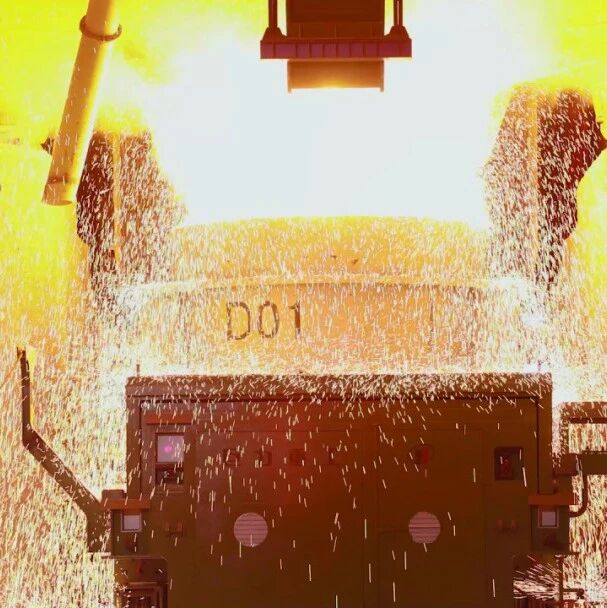
国内首条百万吨级近零碳钢铁产线在湛江全线贯通 预计每年减排超300万吨
Nan Fang Ri Bao Wang Luo Ban· 2025-12-24 08:00
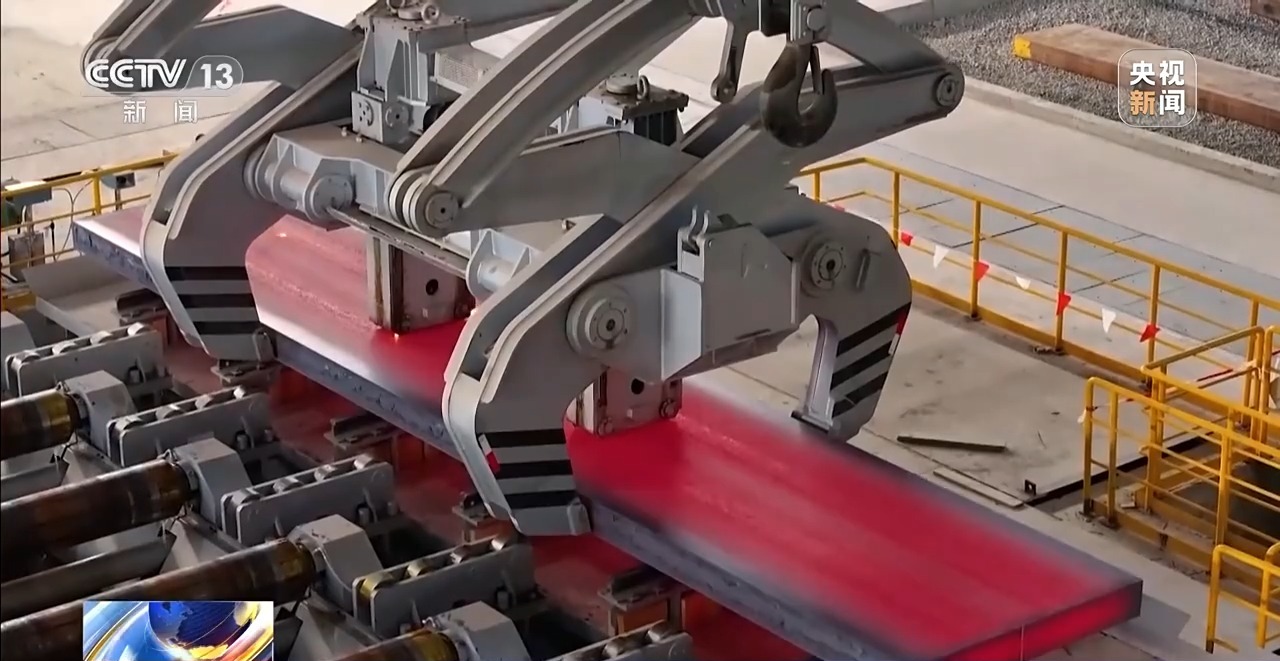
Core Viewpoint - The first million-ton near-zero carbon steel production line in China has been fully connected at Baosteel's Zhanjiang Steel, utilizing innovative hydrogen metallurgy technology to achieve a complete low-carbon production process [1] Group 1: Project Overview - The near-zero carbon production line relies on the HyRESP technology path developed by China Baowu, enabling a short-process production of zero-carbon high-grade steel products [1] - The first slab from the near-zero carbon production line was successfully produced on the same day the line was fully connected [1] Group 2: Production Process - The production process will primarily use "hydrogen-based vertical furnace direct reduction iron + scrap steel" as raw materials to produce low-carbon emission slabs [1] - The complete low-carbon metallurgy process includes "hydrogen-based vertical furnace reduction—efficient electric furnace smelting—low-carbon rolling" [1] Group 3: Environmental Impact - Compared to traditional "blast furnace + converter" long-process methods, the project is expected to achieve a carbon reduction of 50% to 80% [1] - The project has the potential to reduce carbon dioxide emissions by over 3.14 million tons annually [1]
“数”里行间透视“十四五”期间中国钢铁向“绿”而兴发展轨迹
Yang Shi Wang· 2025-12-24 02:34
Core Viewpoint - The establishment of China's first million-ton near-zero carbon steel production line in Zhanjiang marks a significant breakthrough in the green and low-carbon development of the steel industry, utilizing advanced hydrogen metallurgy technology to replace traditional coke and significantly reduce carbon emissions [1][4]. Group 1: Production Technology and Environmental Impact - The new production line employs hydrogen as the main reducing agent, achieving a carbon reduction of 50% to 80% compared to traditional methods [1]. - The hydrogen-based vertical furnace produces direct reduced iron with a metalization rate that meets expected targets, while efficient electric furnaces enhance energy utilization [1]. - The facility can reduce carbon dioxide emissions by 2,500 tons per day, making it the most environmentally friendly and lowest carbon emission smelting process currently available [3]. Group 2: Annual Carbon Reduction and Industry Contribution - The million-ton near-zero carbon steel production line is expected to reduce carbon emissions by over 3.14 million tons annually, equivalent to creating 2,000 square kilometers of forest [4]. - This project serves as a model for low-carbon transformation in the steel industry and contributes to high-quality development [4]. Group 3: Industry Trends and Goals - During the "14th Five-Year Plan" period, the steel industry is focusing on green transformation, with a significant increase in the number of green factories, totaling 126 new green factories from 2021 to 2024 [11]. - Key pollutants such as sulfur dioxide, particulate matter, and nitrogen oxides have seen significant reductions, with respective decreases of 28%, 26.7%, and 36.5% by the end of Q3 2025 compared to the end of 2021 [11]. - Water resource efficiency in the steel industry has improved, with water consumption per ton of steel decreasing from 2.50 cubic meters in 2021 to 2.33 cubic meters in 2024, a reduction of 6.8% [14]. Group 4: Energy Efficiency and International Competitiveness - The steel industry has initiated an extreme energy efficiency project, aiming for a total energy saving of approximately 10.5 million tons of standard coal and a carbon reduction of about 27.5 million tons by 2024 [16]. - The launch of the environmental product declaration platform for the steel industry has registered over 9,000 users, enhancing the international competitiveness of Chinese steel products by breaking down foreign green trade barriers [19].