
CNRE(600111)

Search documents
8月7日杠杆资金净买入前十:寒武纪(5.33亿元)、北方稀土(4.07亿元)



Jin Rong Jie· 2025-08-08 02:58
作者:金股通 本文源自:金融界 沪深两市数据显示,8月7日,融资净买入前十的股票分别为:寒武纪(5.33亿元)、北方稀土(4.07亿 元)、硕贝德(2.95亿元)、东山精密(2.57亿元)、太辰光(2.02亿元)、东方财富(2.01亿元)、博 瑞医药(1.90亿元)、西部证券(1.81亿元)、盛和资源(1.80亿元)、东信和平(1.69亿元)。 ...
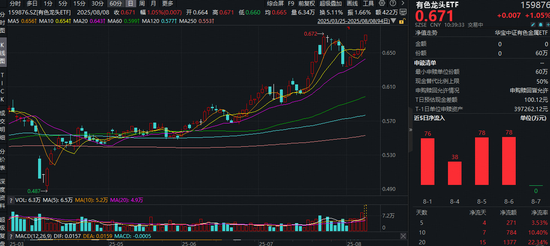
金价再创历史新高!花旗此前神预测!中国央行连续9个月增持黄金,有色龙头ETF(159876)逆市涨超1%
Xin Lang Ji Jin· 2025-08-08 02:56
Group 1: Gold Market Insights - COMEX gold prices reached a new high of $3534.1 per ounce as of August 8, driven by increased demand for safe-haven assets amid expectations of U.S. interest rate cuts and geopolitical tensions [1] - China's central bank reported a gold reserve of 73.96 million ounces as of the end of July, marking a 6,000-ounce increase from June, continuing a nine-month trend of gold accumulation [1] - Citigroup, previously known for its bearish stance on gold, has shifted to a bullish outlook, predicting that gold prices may rise due to a weakening dollar and ongoing inflation concerns related to tariffs [1] Group 2: Rare Earth Market Dynamics - China's rare earth exports in July totaled 5,994.3 tons, a 23% decrease from the previous month, ending a record high trend [1] - Pacific Securities highlighted China's leading position in the rare earth industry, both in scale and technology, and its international pricing power [1] - The demand for high-performance rare earth permanent magnets is expected to grow significantly, driven by advancements in humanoid robots and electric vertical takeoff and landing (eVTOL) technologies [1] Group 3: Non-Ferrous Metals Sector Outlook - The non-ferrous metals sector is projected to benefit from U.S. interest rate cuts and a weakening dollar, with copper prices expected to rise due to constrained supply and resilient demand [4] - As of July 31, 2023, the non-ferrous metals sector has seen a cumulative increase of 24.91% year-to-date, making it the top-performing sector among 31 major industries [5] - The sector is also experiencing a valuation recovery, with the average price-to-book ratio at 2.36, indicating a historically low valuation level [5] Group 4: Investment Opportunities in Non-Ferrous Metals - The Ministry of Industry and Information Technology plans to introduce a growth stabilization plan for key industries, including non-ferrous metals, which is seen as a continuation of supply-side reforms [5] - Among 60 listed companies in the non-ferrous metals index, 22 have forecasted profit growth for the first half of 2025, showcasing operational resilience [5] - The non-ferrous metals index includes a diversified portfolio with significant weightings in copper, aluminum, gold, rare earths, and lithium, which helps mitigate investment risks [7]




稀土板块大涨!概念股盘点来了(名单)
Zheng Quan Zhi Xing· 2025-08-08 02:03
Industry Overview - The rare earth sector has seen a significant increase, with companies like Zhenghai Magnetic Materials and Aishichuang hitting the daily limit up, indicating strong market performance [1] - Rare earth elements are classified into light and heavy rare earths, with China being the sole source of heavy rare earth separation globally [1] - The rare earth industry is entering a traditional consumption peak season in August, leading to increased demand and procurement [1] Supply and Demand Dynamics - The demand for rare earth materials is expected to rise due to increased orders from major manufacturers, with some orders scheduled until mid-September [1] - The import volume of domestic rare earth products has significantly decreased due to factors like US-China tariff conflicts and political issues in Myanmar [1] - Recent price increases in rare earth materials are a key catalyst for the sector's heightened interest, with expectations of continued upward price momentum driven by strong demand [1][2] Applications of Rare Earth Materials - Rare earth permanent materials are crucial in the electric vehicle sector, with approximately 2 kilograms of rare earth used per vehicle [2] - The consumer electronics sector also shows stable growth in demand for high-performance permanent materials, used in devices like smartphones and computers [2] - Emerging industries, such as humanoid robotics, are projected to create substantial demand for rare earth materials, with estimates suggesting a potential market of $800 billion [2] Key Companies in the Rare Earth Sector - Northern Rare Earth: One of the largest suppliers of light rare earth products globally, with a target utilization rate of 90% for praseodymium and neodymium by 2025 [3] - Zhongke Magnetic Materials: A significant domestic producer of permanent magnetic materials, focusing on sintered neodymium-iron-boron and ferrite magnets [3] - China Rare Earth: The only listed platform for China Minmetals, specializing in ion-type rare earth separation and processing [3] - Galaxy Magnet: Engaged in the development and production of bonded neodymium-iron-boron magnets and samarium-cobalt magnets [3] - Inlohua: Produces neodymium-iron-boron permanent materials and serves major clients like Apple and Samsung [3] - Baotou Steel: Supplies rare earth concentrates and is known for its rich mineral resources [3] - Guangxi Rare Earth: A key player in the Guangdong rare earth industry, holding significant mining rights [4] - Xiamen Tungsten: Involved in rare earth permanent magnets with an annual production capacity of 4,000 tons [4]



408股获融资买入超亿元,北方稀土获买入22.75亿元居首
Di Yi Cai Jing· 2025-08-08 01:57
从融资净买入金额来看,有20只个股获融资净买入超亿元。其中,寒武纪-U、北方稀土、硕贝德融资 净买入金额排名前三,分别获净买入5.33亿元、4.07亿元、2.95亿元。 从融资买入额占当日总成交金额比重来看,有6只个股融资买入额占比超30%。其中迪威尔、铁科轨 道、安克创新融资买入额占成交额比重排名前三,分别为32.26%、30.93%、30.81%。 A股8月7日共有3705只个股获融资资金买入,有408股买入金额超亿元。其中,北方稀土、东方财富、 中际旭创融资买入金额排名前三,分别获买入22.75亿元、12.94亿元、12.48亿元。 ...
19个行业获融资净买入 20股获融资净买入额超1亿元
Zheng Quan Shi Bao Wang· 2025-08-08 01:57
Wind统计显示,8月7日,申万31个一级行业中有19个行业获融资净买入,其中,电子行业获融资净买 入额居首,当日净买入18.13亿元;获融资净买入居前的行业还有有色金属、国防军工、机械设备、化 工、计算机、非银金融等,净买入金额分别为14.76亿元、10.82亿元、9.12亿元、7.46亿元、6.03亿元、 5.75亿元。 个股方面,8月7日有1861只个股获融资净买入,净买入金额在3000万元以上的有170股。其中,20股获 融资净买入额超1亿元。寒武纪获融资净买入额居首,净买入5.33亿元;融资净买入金额居前的还有北 方稀土、硕贝德、东山精密、太辰光、东方财富、博瑞医药、西部证券、盛和资源等,净买入额分别为 4.07亿元、2.95亿元、2.57亿元、2.02亿元、2.01亿元、1.9亿元、1.81亿元、1.8亿元。 ...
两融余额四连升 杠杆资金大比例加仓40股
Zheng Quan Shi Bao Wang· 2025-08-08 01:53
Core Insights - The total margin balance in the market has reached 20,131.30 billion yuan, marking an increase for four consecutive trading days, with a total increase of 332.72 billion yuan during this period [1] Margin Balance by Market - The margin balance for the Shanghai Stock Exchange is 10,237.69 billion yuan, increasing by 7.03 billion yuan, while the Shenzhen Stock Exchange's margin balance is 9,829.31 billion yuan, increasing by 29.60 billion yuan [1] - The North Exchange's margin balance is 64.30 billion yuan, with an increase of 53.27 million yuan [1] Industry Margin Balance Changes - Among the 31 industries categorized by Shenwan, 25 industries saw an increase in margin balance, with the electronics industry leading with an increase of 60.35 billion yuan [1] - The mechanical equipment and pharmaceutical biology industries also saw significant increases in margin balance [1] - The mechanical equipment industry had the highest growth rate at 4.90%, followed by national defense and military with 4.74% and non-ferrous metals with 3.05% [1][2] Individual Stock Performance - During the period of increasing margin balances, 57.46% of the stocks saw an increase in margin balance, with 40 stocks experiencing an increase of over 50% [4] - Longzhu Technology had the highest increase in margin balance at 419.56%, followed by Tianming Technology at 229.60% [4][5] - The automotive sector had the most stocks with significant margin balance increases, followed by mechanical equipment and electronics [4] Top Stocks by Margin Balance Increase - The top three stocks with the highest margin balance increase are: - Haiguang Information with an increase of 7.04 billion yuan, a growth rate of 19.33% [7] - North Rare Earth with an increase of 6.91 billion yuan, a growth rate of 13.28% [7] - Hanwujing with an increase of 6.37 billion yuan, a growth rate of 14.06% [7]

研判2025!中国氧化铽行业产业链、价格及进出口分析:出口管制与资源战略双轮驱动,中国氧化铽市场成全球市场风向标[图]
Chan Ye Xin Xi Wang· 2025-08-08 01:29
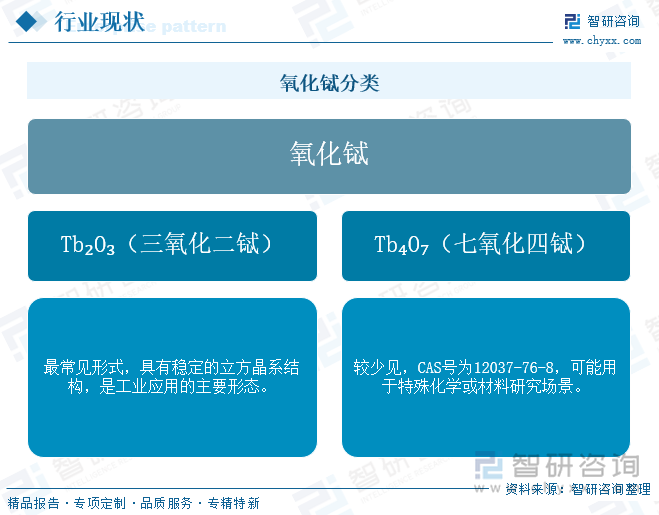
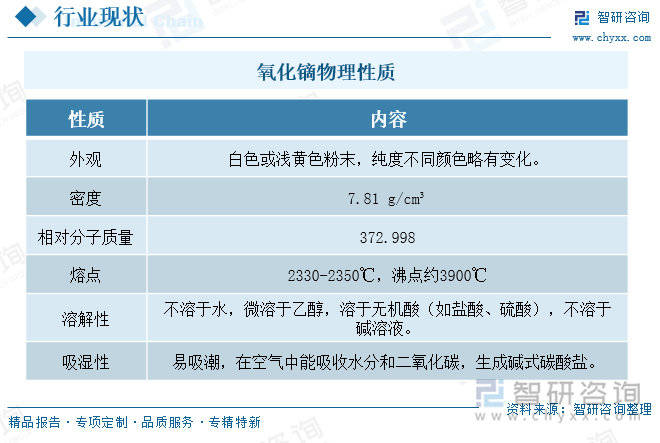
Core Viewpoint - China, as the world's richest country in rare earth resources, is leading in the terbium oxide industry in terms of resource reserves, production capacity, and technological development. The country is reshaping the global rare earth supply chain through policy regulation and market mechanisms, with terbium oxide being a key strategic resource whose price fluctuations are critical indicators of international geopolitical and industrial trends [1][8][17]. Industry Overview - Terbium oxide (Tb₂O₃) is a black-brown powder with unique optical and magnetic properties, relatively stable chemical characteristics, and is insoluble in water but soluble in acid [2]. - China's rare earth reserves are approximately 44 million tons, accounting for nearly half of the global proven reserves, with production reaching 270,000 tons in 2024, a year-on-year increase of 12.50% [6][8]. Industry Chain - The upstream of the terbium oxide industry includes rare earth mineral resources and various production equipment. The midstream involves the manufacturing of terbium oxide, while the downstream applications include fluorescent materials, magneto-optical materials, catalysts, electronic ceramics, and new energy materials [4]. Current Industry Status - In April 2025, China implemented export controls on seven types of medium and heavy rare earths, causing international market panic and leading to a spike in European terbium oxide prices to $3,000 per kilogram (approximately 2.181 million RMB per ton). By June 2025, the domestic price of terbium oxide reached 7.09 million RMB per ton, a year-on-year increase of 31.30% [1][10][12]. Key Enterprises' Performance - The Chinese terbium oxide industry is characterized by a competitive landscape dominated by state-owned enterprises, with significant advantages in production and market position. For instance, China Northern Rare Earth Group has a net profit increase of 727.3% in Q1 2025, while China Rare Earth Group has a production volume of 7,785.27 tons in 2024, a year-on-year increase of 107.27% [12][15]. Industry Development Trends 1. **Policy Regulation and Export Control**: The export control policy is expected to be a long-term strategic tool, significantly altering the global rare earth supply-demand structure. The average approval cycle for export licenses has been shortened by 30% [17]. 2. **Technological Innovation**: The industry is focusing on green transformation and high value-added production, with companies like Northern Rare Earth investing in zero wastewater discharge systems and achieving a 30% reduction in energy consumption per unit of output [19]. 3. **Market Demand Evolution**: The demand for terbium and dysprosium is expected to grow significantly due to high-end markets like robotics and new energy vehicles, although there are potential risks from alternative materials and geopolitical tensions [20].


研判2025!中国氧化镝行业产业链、价格及进出口分析:政策及技术革新重构市场,行业完成价格理性回归[图]
Chan Ye Xin Xi Wang· 2025-08-08 01:29
Industry Overview - The price of dysprosium oxide in China remained above 2 million yuan per ton from 2021 to 2023, driven by explosive growth in the global electric vehicle industry leading to supply-demand imbalances [1][7] - As a key additive in neodymium-iron-boron permanent magnets, the demand for dysprosium surged with the increase in electric vehicle production, while supply chain responses lagged, causing temporary supply shortages and irrational price increases [1][7] - By mid-2025, dysprosium prices fell to 1.615 million yuan per ton, a year-on-year decrease of 11.26%, due to multiple factors including increased global rare earth mining capacity and technological advancements reducing production costs [1][7] Industry Chain - The upstream of the dysprosium industry chain includes raw materials and production equipment, with raw materials primarily being rare earth mineral resources [4] - The midstream involves the production and manufacturing of dysprosium, while the downstream applications include magnetic materials, laser technology, electronics, new energy batteries, aerospace, and medical devices [4] Market Dynamics - Global rare earth reserves are approximately 90 million tons, with China holding 44 million tons, accounting for 48.9% of the total [6][7] - In 2024, China produced 270,000 tons of rare earths, representing 69.2% of global production, ensuring a stable supply for dysprosium production [6][7] Key Companies - China Rare Earth Group has an annual dysprosium production capacity of about 300 tons, with a product purity of 99.99% [11] - Guangsheng Nonferrous Metals, the only rare earth mining rights holder in Guangdong, produced 900 tons of dysprosium in 2023, expected to increase to 1,100 tons by 2025 [11] - Northern Rare Earth is a leading producer with a dysprosium output of 1,000 tons in 2023, projected to rise to 1,200 tons by 2025 [11] Industry Trends - The Chinese government is enhancing regulation of the rare earth industry, promoting integration and green transformation, with new policies aimed at protecting and rationally utilizing rare earth resources [17] - Technological innovations, such as the successful trial of the "physical vapor deposition combined with grain boundary diffusion method," have reduced dysprosium usage by 70% while improving magnetic properties [18][19] - The rapid development of global electric vehicles, wind power, and humanoid robots is creating new growth points for the dysprosium industry, with electric vehicles being a major demand driver [20]
杠杆资金重仓股曝光 寒武纪-U居首
Di Yi Cai Jing· 2025-08-08 01:12
Group 1 - A total of 1861 stocks received net financing purchases on the previous trading day (August 7) [1] - The stock with the highest net financing purchase was Cambrian Biologics, with a net purchase amount of 5.33 million [1] - Other notable stocks with significant net financing purchases include Northern Rare Earth, Shuo Bei De, and Dongshan Precision, with net purchases of 4.07 million, 2.95 million, and 2.57 million respectively [1] Group 2 - The stocks with the highest net selling amounts were Industrial Fulian, New Yi Sheng, and Zhong Ji Xu Chuang, with net selling amounts of 4.17 million, 2.92 million, and 2.70 million respectively [1]



市场热点快速轮动 沪指四连阳再创年内新高 外资机构继续看好中国资产 建议保持超配
Shang Hai Zheng Quan Bao· 2025-08-07 18:33
Market Overview - The A-share market experienced a low rebound on August 7, with the Shanghai Composite Index reaching a new high for the year, closing at 3639.67 points, up 0.16% [1] - The Shenzhen Component Index closed at 11157.94 points, down 0.18%, while the ChiNext Index closed at 2342.86 points, down 0.68% [1] - The total trading volume in the Shanghai and Shenzhen markets was 1.83 trillion yuan [1] Semiconductor Sector - The semiconductor and chip sectors showed strong performance, with stocks like Fuman Micro, Shuo Beid, and Ruina Intelligent hitting the daily limit of 20% [2] - The semiconductor cycle is currently in an upward trend, driven by strong AI demand and a recovery in the industrial sector [2] - The Ministry of Industry and Information Technology reported that the value added of China's electronic information manufacturing industry grew by 11.1% year-on-year in the first half of the year, outperforming the overall industrial and high-tech manufacturing growth rates [2] Rare Earth Permanent Magnet Sector - The rare earth permanent magnet sector saw significant gains, with the index rising over 4.5% in the afternoon session [3] - Stocks such as Zhenghai Magnetic Materials and Ashi Chuang achieved a 20% increase, while Northern Rare Earth saw a 6.01% rise, with a trading volume exceeding 14.8 billion yuan [3] - The price of light rare earths, particularly praseodymium and neodymium oxide, increased by 18.9% from June to July, indicating a strong market trend [3] Foreign Investment Outlook - Foreign institutions are optimistic about the performance of Chinese assets, with firms like Pictet Asset Management maintaining an overweight position on Chinese stocks [4] - The analysis suggests that China's assets are still underrepresented in global portfolios, with new growth drivers emerging in high-end manufacturing, digital economy, and green transformation [4] - The report recommends investors to strategically position themselves in sectors such as precious metals, resource stocks, and high-dividend sectors like utilities and transportation [4]