Gemdale(600383)

Search documents
金地撤销五大区域公司,头部房企集体迈向“扁平化时代”
Xin Lang Cai Jing· 2025-07-31 03:08
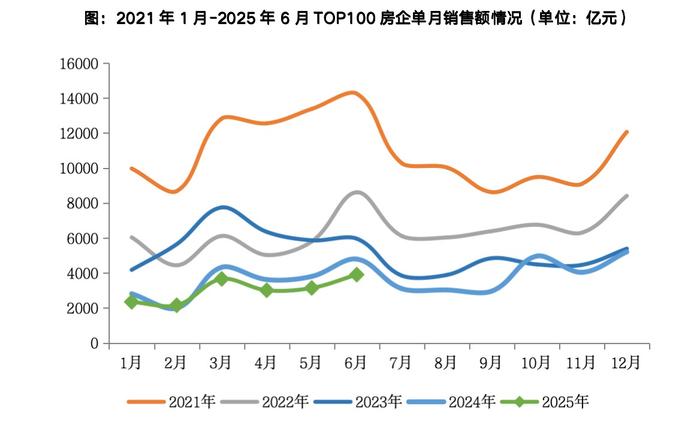
Core Viewpoint - The restructuring wave among real estate companies continues, with Gindal Group recently implementing a significant organizational change aimed at enhancing management efficiency and operational synergy through a flatter structure [1][9]. Company Summary - Gindal Group has transitioned from a three-tier management model ("headquarters-regional-city companies") to a 2.5-tier model ("headquarters-regional companies"), establishing four regional companies and ten district companies [1][2]. - The restructuring includes merging certain headquarters functions, such as combining the engineering and cost management centers into one, and establishing a new supply chain management center [2]. - Key executive roles have been redefined, with changes in responsibilities among senior vice presidents and the establishment of new leadership for the four regional companies [3][5]. - The new structure positions district companies as the primary operational entities, while regional companies serve a coordinating function, thereby streamlining decision-making and enhancing execution efficiency [4][6]. Industry Summary - The organizational changes at Gindal Group reflect a broader trend among over 30 major real estate companies adjusting their structures in response to market pressures, with many adopting similar flatter management models [1][9]. - The real estate sector is currently facing significant challenges, with Gindal Group reporting a 23.22% decline in revenue to 75.344 billion yuan and a net loss of 6.115 billion yuan in 2024 [7]. - The industry is shifting from a growth-focused model to one emphasizing quality and efficiency, necessitating organizational adjustments to improve operational effectiveness and reduce costs [9][12]. - Sales data indicates that the real estate market remains in a deep adjustment phase, with a notable decline in sales across major companies, although core cities are showing resilience [10][11].


又一家房企“瘦身”金地集团给组织架构动“大手术”
Xin Lang Cai Jing· 2025-07-31 01:33
Core Viewpoint - The organizational restructuring of Gindal Group is a significant move aimed at addressing ongoing losses and declining sales, transitioning from a three-tier management model to a more streamlined 2.5-tier system [1][2][4] Group 1: Organizational Changes - Gindal Group's restructuring began on July 23, consolidating five regional companies into four major regions: South China, Northern, Eastern, and Central-Western [1] - The number of city companies was reduced from 14-15 to 10, focusing on key areas such as Shenzhen, Guangzhou, and Beijing [1][2] - The new management structure emphasizes a flatter hierarchy, with headquarters directly managing regional companies and regional offices overseeing local operations [2][4] Group 2: Financial Performance - Gindal Group anticipates a net profit loss of between 3.4 billion to 4.2 billion yuan for the first half of 2025, a significant increase in losses compared to the previous year [3] - The decline in sales is attributed to a decrease in sales scale and a reduction in available project areas, with a 47.84% drop in signed area and a 52.52% decrease in signed amount year-on-year [3] - The company has faced challenges due to a shrinking market and reduced investment, leading to fewer new projects and declining production capacity [3] Group 3: Strategic Focus - The restructuring is part of Gindal Group's strategy to enhance management efficiency and focus resources on core cities, particularly those with population inflows and favorable policies [4] - The company successfully repaid approximately 20 billion yuan in public debt in 2024, stabilizing its financial position [4] - The adjustments reflect a broader trend in the real estate industry, where many companies are simplifying their structures and concentrating on core operations amid market contractions [4]
2025年7月政治局会议点评:落实城市工作会议精神,高质量开展城市更新
Shenwan Hongyuan Securities· 2025-07-30 12:13
Investment Rating - The report maintains an "Overweight" rating for the real estate and property management sectors, indicating a positive outlook for these industries [3][19]. Core Insights - The report emphasizes the need for sustained macroeconomic policy support, including more proactive fiscal policies and moderately loose monetary policies, to stabilize the economy and support urban renewal initiatives [3][6]. - Urban renewal is highlighted as a key focus, with the central government calling for high-quality implementation of urban renewal projects, particularly in core first- and second-tier cities [3][11]. - The report suggests that the current real estate market is transitioning from a focus on quantity to quality, aligning with the "good housing" development direction, which is expected to create significant opportunities for quality real estate companies [3][11]. Summary by Sections Macroeconomic Policy - The central government aims to enhance fiscal spending and maintain liquidity to lower financing costs for businesses and residents [3][6]. - The emphasis is on accelerating government bond issuance and improving fund utilization efficiency [3][6]. Urban Renewal - The report notes that urban renewal is being positioned as a critical measure to boost demand, particularly through the transformation of urban villages [3][11]. - The central government has set higher standards for urban renewal, indicating a shift towards improving existing urban environments rather than merely expanding [3][11]. Real Estate Market Dynamics - The report identifies a potential bottoming out of broad housing demand, with expectations for policy measures to further stimulate the market, including urban renewal and mortgage rate reductions [3][11]. - Quality real estate companies are expected to lead the recovery, with improvements in return on equity (ROE) driven by better inventory management rather than increased leverage [3][11]. Investment Recommendations - The report recommends focusing on high-quality real estate firms with strong product capabilities and inventory management, such as Jianfa International, Binjiang Group, and China Resources Land [3][11]. - It also highlights undervalued firms like Xincheng Holdings and China Overseas Development as potential investment opportunities [3][11].





【房地产】近期地产跑赢大市,优质龙头涨幅明显——光大地产板块及重点公司跟踪报告(何缅南)
光大证券研究· 2025-07-29 23:08
Group 1: Real Estate Development and Property Services Valuation - As of July 25, 2025, the real estate sector (Shenwan) has a price-to-book ratio (PB) of 0.78, ranking in the 90.45th percentile historically since 2024 [3] - The Hang Seng real estate and construction sector has a PB of 0.44, ranking in the 98.69th percentile historically since 2024 [3] - From July 1 to July 25, 2025, the real estate sector (Shenwan) increased by 7.8%, outperforming the CSI 300 index by 2.93 percentage points [3] - Key A-share real estate companies with the highest gains during this period include New Town Holdings (+12.2%), China Merchants Shekou (+9.3%), and Gemdale Corporation (+7.4%) [3] Group 2: Property Services Market Performance - From July 1 to July 25, 2025, the property services sector (Shenwan) rose by 3.7%, underperforming the CSI 300 index by 1.20 percentage points [4] - The Hang Seng property services and management index increased by 5.1%, also underperforming the Hang Seng index by 0.37 percentage points [4] - Key A-share property service companies with the highest gains include TeFa Service (+10.4%), World Union (+9.2%), and Ningbo Fuda (+5.9%) [4] Group 3: Public Fund Holdings in Real Estate - As of the end of Q2 2025, public funds held a total market value of approximately 48.4 billion yuan in real estate stocks, down from 54.8 billion yuan at the end of Q1 2025 [5] - This represents about 0.14% of net asset value and 0.67% of stock investment value, indicating a lower allocation compared to standard industry benchmarks by 0.56 percentage points [5] Group 4: Market Trends and Opportunities - In the first half of 2025, the sales amount of commodity residential properties in six major cities (excluding affordable housing) reached 913.3 billion yuan, reflecting a 6.0% increase [6] - The average transaction price of land in core cities increased by 22.8% to 12,009 yuan per square meter [6] - Notable real estate companies with strong sales performance include China Jinmao (36.8 billion yuan, +19.6% YoY) and Yuexiu Property (36.9 billion yuan, +10.8% YoY) [6]



金地集团,有大动作!
Zhong Guo Jing Ying Bao· 2025-07-29 21:04
Group 1 - The core point of the article is that Gindal Group (600383.SH) has undergone significant organizational restructuring to adapt to changing business needs and market conditions [4][5][6] - The restructuring involves merging departments at the headquarters level, including the Engineering Management Center and Cost Management Center into a new "Engineering and Cost Management Center," and establishing a Supply Chain Management Center [4][5] - The management structure has shifted from a three-tier model ("headquarters-regional-city companies") to a 2.5-tier model ("headquarters-regional companies") to enhance operational efficiency [4][5] Group 2 - The company has announced a projected net loss of between 3.4 billion to 4.2 billion yuan for the first half of 2025, primarily due to declining sales and a decrease in transferable area [6] - Gindal Group has resumed land acquisitions in early 2023, acquiring residential land in Hangzhou and Shanghai, indicating a strategic shift to invest in new projects as debt pressures ease [6] - As of the end of Q1 2025, Gindal Group reported cash holdings of approximately 19.38 billion yuan and a debt-to-asset ratio of 64.82% [6]

金地集团(600383)7月29日主力资金净流出1165.63万元
Sou Hu Cai Jing· 2025-07-29 13:28
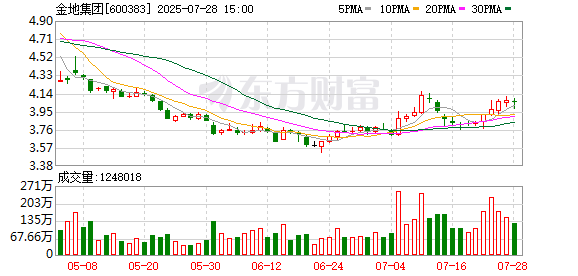
金融界消息 截至2025年7月29日收盘,金地集团(600383)报收于4.07元,上涨0.49%,换手率2.52%, 成交量113.78万手,成交金额4.59亿元。 通过天眼查大数据分析,金地(集团)股份有限公司共对外投资了186家企业,参与招投标项目952次,知 识产权方面有商标信息887条,专利信息57条,此外企业还拥有行政许可34个。 资金流向方面,今日主力资金净流出1165.63万元,占比成交额2.54%。其中,超大单净流入367.28万 元、占成交额0.8%,大单净流出1532.91万元、占成交额3.34%,中单净流出流出1435.95万元、占成交 额3.13%,小单净流入2601.58万元、占成交额5.67%。 来源:金融界 天眼查商业履历信息显示,金地(集团)股份有限公司,成立于1988年,位于深圳市,是一家以从事房地 产业为主的企业。企业注册资本451458.3572万人民币,实缴资本451458.3572万人民币。公司法定代表 人为徐家俊。 金地集团最新一期业绩显示,截至2025一季报,公司营业总收入59.66亿元、同比减少14.32%,归属净 利润65780.68万元,同比减少138.3 ...
上半年房地产行业完成81宗并购交易;景瑞控股清盘呈请聆讯再次延期 | 房产早参
Mei Ri Jing Ji Xin Wen· 2025-07-29 00:18
Group 1: Real Estate Industry Mergers and Acquisitions - In the first half of the year, the real estate industry completed 81 merger and acquisition transactions, an increase of 2 compared to the same period in 2024 [1] - The total transaction scale for 60 disclosed transactions was approximately 29.1 billion yuan, representing a year-on-year decline of 58%, indicating a significant contraction in overall M&A activity [1] - Major real estate companies are accelerating the divestiture of non-core assets, while asset management companies (AMCs) and local special bonds are entering the market to provide new solutions for distress and inventory reduction [1] Group 2: Land Recovery in Chongqing - Chongqing plans to recover 2,161 acres of idle land through the issuance of special bonds, with an estimated total recovery price of 3.39 billion yuan [2] - A total of 25 parcels of idle land are expected to be recovered, contributing to a cumulative total of 419 parcels and approximately 29,500 acres across 9 regions, with a total recovery amount of about 48.2 billion yuan [2] - This initiative aims to optimize land resource allocation and reduce ineffective land accumulation, signaling local governments' proactive approach to resource activation and market stabilization [2] Group 3: Gindal Group Organizational Restructuring - Gindal Group announced a new organizational structure, establishing four major regional companies and ten regional companies, shifting from a three-tier to a 2.5-tier management model [3] - This restructuring is expected to enhance management efficiency and focus resources on core markets and businesses, thereby strengthening competitiveness in key regions [3] - The move reflects Gindal's proactive response to market changes, which may help stabilize investor confidence in the company and the industry [3] Group 4: Jingrui Holdings Liquidation Hearing Postponement - Jingrui Holdings' liquidation hearing has been postponed to October 16, 2025, as per the Hong Kong High Court's order [4] - The company has committed to notifying shareholders and investors of any significant developments regarding the petition in accordance with listing rules [4] - This postponement may represent a final opportunity for the company to reach a restructuring agreement, potentially serving as a template for similar companies facing distress [4] Group 5: Dayuecheng Share Unlocking - Dayuecheng announced the unlocking of 283 million shares, accounting for 6.61% of the company's total share capital, with the unlocking date set for August 4, 2025 [5] - The unlocking is based on the approval from the China Securities Regulatory Commission, involving a total fundraising amount of 2.426 billion yuan [5] - This action may increase the tradable shares of Dayuecheng in the market, potentially affecting market liquidity and investor sentiment [5]

金地集团调整组织架构:总部“强管控” 城市公司大合并
Zhong Guo Jing Ying Bao· 2025-07-28 22:13
Core Viewpoint - The company, Gindal Group, has undergone a significant organizational restructuring aimed at streamlining operations and enhancing management efficiency in response to declining business volume and market conditions [2][6]. Organizational Restructuring - The restructuring includes merging the Engineering Management Center and Cost Management Center into a new "Engineering and Cost Management Center" and establishing a Supply Chain Management Center [2][3]. - The company has reduced its regional companies from five to four and consolidated its city companies into ten regional companies, transitioning from a three-tier management model to a "2.5-tier" model [2][5]. - The new structure emphasizes a more efficient and flat management approach, with the headquarters acting as the decision-making center and directly managing regional companies [5][6]. Management Changes - Key personnel changes include the reassignment of executives, such as the former chairman of the Southern Region, Du Hong, who has been appointed as the general manager of the Eastern Region [3][4]. - The company has retained the "Investment Management Working Group" and "Performance Management Working Group," while dissolving others [3]. Business Focus - The company aims to focus on core cities and strategically abandon less critical markets due to a decline in sales and project turnover [6]. - The strategic direction remains centered on real estate development, with aspirations for breakthroughs in this sector despite current operational challenges [6]. Financial Outlook - Gindal Group anticipates a net loss of between 3.4 billion to 4.2 billion yuan for the first half of 2025, primarily due to decreased sales volume and revenue [6]. - The company has resumed land acquisitions in key cities, driven by improved market conditions and reduced debt pressure, with cash reserves of approximately 19.38 billion yuan and a debt-to-asset ratio of 64.82% as of the end of Q1 2025 [7].
房地产行业周度观点更新:如何看待反内卷对地产的间接影响?-20250727
Changjiang Securities· 2025-07-27 12:11
丨证券研究报告丨 行业研究丨行业周报丨房地产 [Table_Title] 如何看待反内卷对地产的间接影响? ——房地产行业周度观点更新 报告要点 [Tablary] 地产行业属性与传统产能概念差别很大,直接出台相关反内卷政策的概率不高,但也会受到一 些间接影响。反内卷一定程度上将缓和物价下行压力,有助于降低实际利率,但可能对生产、 就业和收入等总量数据造成一定压力。关键还是需求端扩张性政策的配合,既提升居民就业和 收入预期,反内卷又降低实际利率,如此方能更有效地提振地产需求;但如果没有收入提升预 期,物价的提升反而会压制实际可支配收入,提振地产需求依赖总需求扩张引致的良性通胀, 而非供给侧优化之下的成本上涨。 分析师及联系人 [Table_Author] SAC:S0490520040001 SAC:S0490525060001 SFC:BUV416 刘义 侯兆熔 请阅读最后评级说明和重要声明 %% %% %% %% research.95579.com 1 [Table_Title 如何看待反内卷对地产的间接影响? 2] ——房地产行业周度观点更新 核心观点 止跌回稳的政策目标一定程度上对市场预期有所提振, ...
中国城市运行周期跟踪(2025.Q2):量价回落,波动加剧
GUOTAI HAITONG SECURITIES· 2025-07-25 08:28
Investment Rating - The report assigns an "Accumulate" rating for the real estate industry [5]. Core Insights - The overall market in Q2 2025 shows weak transaction volumes, stable prices lacking trends, and increasing inventory with heightened de-stocking pressure [3]. - Only 19% of the 27 cities analyzed exhibit signs of market bottoming, indicating a general trend of "volume contraction, price stagnation, and inventory pressure" [12]. - The new housing market is experiencing a downturn, with first-tier cities showing a significant slowdown in sales growth, while the second-hand housing market demonstrates relative resilience but with increasing regional disparities [12][13]. Summary by Sections 1. Transaction Decline and Lengthening De-stocking - The report highlights that the real estate cycle varies significantly across cities due to localized policies and differing reliance on land finance [8]. - A comprehensive scoring model based on seven core indicators is used to assess the real estate cycle of each city, categorizing them into four stages: bottoming, rising, topping, and declining [8][9]. 2. Price Trends: Q2 New and Second-hand Housing Prices Decline - In Q2 2025, new housing prices experienced a slight decline after a period of stabilization, with 85% of cities unable to sustain price increases for more than two months [17]. - Second-hand housing prices also fell, with 78% of cities still in a downward trend by June [17][19]. 3. Transaction Volume: Weak Recovery and Increased Volatility - First-tier cities maintained an upward trend in new housing transactions until June, where a decline of 12% was noted [22]. - Second-tier cities saw a 15% year-on-year drop in new housing transactions in Q2, reflecting greater inventory pressure and declining buyer confidence [22][27]. 4. Demand Entering a Tug-of-War Phase Leading to Rising Inventory Cycles - The de-stocking cycle for first-tier cities increased to 20 months by June 2025, indicating intensified market supply-demand conflicts [29]. - Second-tier cities faced even longer de-stocking cycles, reaching 23 months, highlighting structural issues such as declining population attraction and excess land supply [29]. 5. Company Profit Forecasts - The report includes profit forecasts for key companies, with several companies rated as "Accumulate" based on their projected earnings per share (EPS) and price-to-earnings (PE) ratios [32].