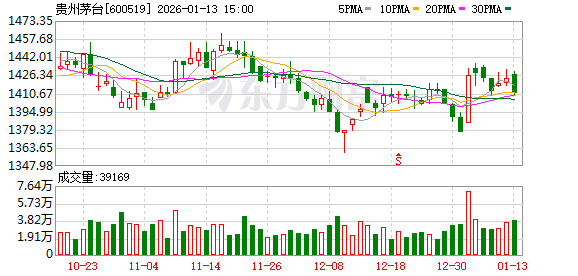
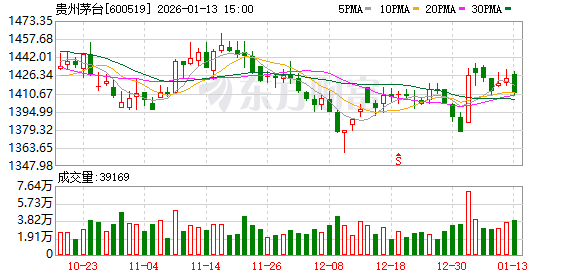
KWEICHOW MOUTAI(600519)

Search documents
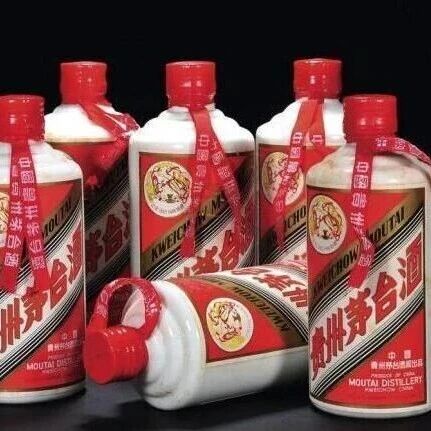
茅台重夺价格主导权:时隔八年 可动态调整的零售价来了
2 1 Shi Ji Jing Ji Bao Dao· 2026-01-13 14:28
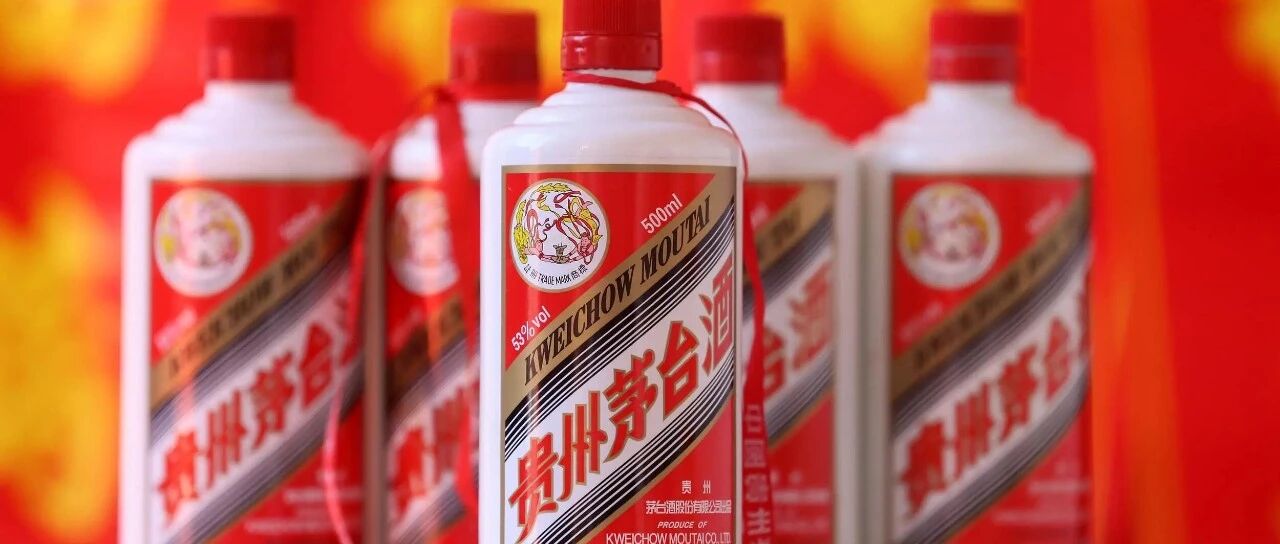
Core Viewpoint - The announcement from Kweichow Moutai regarding the market-oriented pricing mechanism indicates a significant shift in the pricing strategy, allowing for dynamic adjustments based on market conditions rather than adhering to a fixed guideline price [3][4][11]. Pricing Mechanism - Kweichow Moutai will implement a "market-oriented, relatively stable" dynamic pricing adjustment mechanism for its products, moving away from fixed guideline prices [3][4]. - The announcement details the retail prices of 15 Moutai products, including the flagship 53-degree 500ml Feitian Moutai, which will now reflect current market prices rather than a fixed guideline [3][4][11]. Historical Context - The fixed guideline price of 1499 yuan for the 53-degree 500ml Feitian Moutai has been in place for eight years, with the last increase occurring in December 2017 [5][7]. - Despite the official price being 1499 yuan, market prices have fluctuated significantly, at times exceeding 3000 yuan due to high demand and limited supply [9][10]. Changes in Pricing Strategy - The new dynamic pricing approach allows Moutai to regain control over its pricing, enabling adjustments based on market demand and supply conditions [4][11]. - The previous rigid pricing structure led to discrepancies where distributors could sell at higher prices while Moutai maintained a fixed retail price, resulting in lost profits for the company [10][11]. Distribution and Sales Model - Moutai's new pricing strategy will also affect its distribution model, with contracts for distributors now based on the dynamic retail price, allowing for adjustments based on various factors [15][18]. - The company is introducing a consignment model where distributors assist in sales without holding inventory, thus reducing their financial risk while still allowing Moutai to maintain pricing control [17][18]. Future Considerations - The announcement does not address how Moutai will respond to potential market downturns or price declines, which remains a concern for investors [18][19]. - Overall, Moutai's shift towards a more market-responsive pricing strategy represents a significant step towards aligning its pricing with actual market conditions, balancing the interests of various stakeholders [19].


随行就市!贵州茅台公布价格动态调整机制
Zhong Guo Ji Jin Bao· 2026-01-13 14:25
Core Viewpoint - Guizhou Moutai has announced a market-oriented operational plan for 2026, focusing on a dynamic pricing mechanism and a pyramid product structure to enhance consumer service and market orientation [2][4]. Group 1: Product System - The company will revert to a pyramid product structure, with the base consisting of the flagship 53% vol 500ml Moutai, supported by other sizes like 1000ml and 100ml to strengthen social consumption attributes [2]. - The mid-tier products will include premium and zodiac Moutai, aiming to enhance the premium Moutai brand and stimulate demand for zodiac Moutai as collectibles [2]. - The top-tier products will focus on aged and cultural series Moutai, adjusting supply to maintain and enhance the value of ultra-high-end products based on market demand [2]. Group 2: Operational Model - The sales model will transition from a traditional "self-sale + distribution" approach to a multi-dimensional marketing system that includes "self-sale + distribution + consignment + consignment" [3]. - The self-sale model will focus on direct sales through self-operated stores and the iMoutai platform, targeting both C-end and B-end consumers while eliminating the previous distribution model [3]. - The consignment model will not transfer ownership, leveraging online and offline retail, dining, and private domain channels to enhance regional coverage and channel reach [3]. Group 3: Channel Layout - The company will establish a five-channel layout comprising wholesale, offline retail, online retail, dining, and private domain, integrating online and offline operations to create a consumer-centric ecosystem [3]. Group 4: Pricing Mechanism - A market-oriented dynamic pricing mechanism will be implemented, allowing for adjustments based on market conditions while maintaining relative stability [3][4]. - The retail price in the self-operated system will serve as the basis for calculating channel profit margins, with sales contract prices and commissions determined based on various factors including product type and channel operating costs [4]. - This new pricing mechanism aims to address the significant price gap between factory prices and retail prices, which has led to issues such as speculative trading and excessive profits in the distribution channel [4][5]. Group 5: Recent Price Adjustments - Prior to the announcement of the operational plan, Guizhou Moutai reduced the contract prices of several products, with some reductions exceeding 1,000 yuan. For instance, the factory price of premium Moutai was lowered from 2,969 yuan to 1,859 yuan, and the retail guidance price from 3,299 yuan to 2,299 yuan [6][7]. - The price adjustments primarily targeted non-standard products and series wines, which have been underperforming, allowing distributors to restore positive price differentials and achieve reasonable profits [7].
贵州茅台,定了一件大事
财联社· 2026-01-13 14:21
Core Viewpoint - Guizhou Moutai (600519.SH) is initiating a market-oriented transformation of its marketing system in 2026, focusing on a dynamic pricing mechanism and several innovative measures across product structure, operational model, channel layout, and pricing strategy [1]. Product Structure - Guizhou Moutai is returning to a "pyramid" structure for its product lineup, clearly defining product positioning at different levels. The base will focus on Feitian Moutai (53 degrees, 500ml), supplemented by other specifications like kilogram Moutai and 100ml small Moutai. The mid-tier will concentrate on premium and zodiac Moutai, while the high-end will include aged and cultural Moutai, with a slight contraction to maintain the value of ultra-high-end products. Additionally, low-alcohol Feitian Moutai (43 degrees, 500ml) will support key consumption scenarios and target younger consumers [1]. Operational Model - The company will transition from a traditional "self-sale + distribution" model to a multi-dimensional collaboration model that includes "self-sale + distribution + consignment + consignment sales." The self-sale model will utilize self-operated stores and the iMoutai platform, while the distribution model will continue as before. The new consignment and consignment sales models will leverage various channels without transferring ownership, enhancing market coverage [3][4]. Channel Layout - Guizhou Moutai aims to establish a five-channel structure comprising wholesale, offline retail, online retail, dining, and private domain, promoting online and offline integration. The online channels will focus on improving operational efficiency and user reach, while offline channels will enhance consumer conversion and service experience. A dynamic evaluation mechanism will be implemented to optimize regional channel layouts [4]. Pricing Mechanism - The company will create a dynamic adjustment mechanism for retail prices that aligns with market conditions, which is already in effect on the iMoutai platform and self-operated stores. Recent price reductions have been noted for several products due to weak demand, such as the premium Moutai (53 degrees, 500ml) dropping from 3299 yuan to 2299 yuan, and the classic zodiac Moutai (53 degrees, 500ml) from 2499 yuan to 1899 yuan [4][6]. - The factory prices have also been adjusted downward in line with retail price changes, with the premium Moutai's factory price decreasing from 2969 yuan to 1859 yuan. The pricing for distribution channels will be based on self-sale retail prices, with dynamic adjustments based on product and channel conditions [6].
随行就市!贵州茅台公布价格动态调整机制
中国基金报· 2026-01-13 14:17
Core Viewpoint - Guizhou Moutai has announced a market-oriented operational plan for 2026, focusing on a dynamic pricing mechanism and a pyramid product structure to enhance consumer service and market responsiveness [2][5]. Product Structure - The company will revert to a "pyramid" product structure, with the base consisting of the flagship Feitian Moutai 53% vol 500ml, supported by other specifications like 1000ml and 100ml to enhance social consumption attributes [5]. - The mid-tier products will include premium and zodiac Moutai, aiming to strengthen the premium segment and stimulate demand for collectible zodiac editions [5]. - High-end products will focus on aged and cultural series, with a strategy to maintain and enhance their value by adjusting supply based on market demand [5]. Operational Model - The sales model will transition from a traditional "self-sale + distribution" approach to a multi-faceted system including self-sale, distribution, consignment, and consignment sales [6]. - The self-sale model will focus on direct sales through self-operated stores and the iMoutai platform, targeting both consumer and business segments [6]. - The distribution model will clarify sales volumes and designated sales areas, while the consignment model will enhance regional coverage without transferring ownership [6]. Channel Layout - The company will establish a five-channel layout comprising wholesale, offline retail, online retail, dining, and private domain sales, integrating online and offline strategies to create a consumer-centric ecosystem [6]. Pricing Mechanism - A dynamic pricing mechanism will be implemented, guided by market conditions, to create a stable retail price system based on self-sale prices [7]. - The pricing strategy aims to address the significant price gap between factory prices and retail prices, which has led to issues like speculation and excessive profits in the distribution channel [7]. - The new pricing mechanism is seen as a breakthrough in the liquor industry, promoting a win-win situation for manufacturers, distributors, and consumers [7]. Impact on Distributors - The company will optimize the profit structure for distributors, ensuring reasonable and stable earnings while eliminating non-rational profit models [8]. - Distributors will shift from a "sitting merchant" role to a "traveling merchant" role, focusing on service and delivery rather than merely profiting from price differences [8]. - High-value products will no longer have distribution tasks, reducing financial pressure on distributors and preventing losses from forced sales [8]. Recent Price Adjustments - Prior to the announcement of the 2026 operational plan, Guizhou Moutai reduced the contract prices for several products, with some reductions exceeding 1,000 yuan [9]. - For example, the factory price of premium Moutai was lowered from 2,969 yuan per bottle to 1,859 yuan, and the retail guidance price from 3,299 yuan to 2,299 yuan [9]. - This price adjustment primarily targets non-standard products and series wines, which have been underperforming in the market, allowing distributors to regain reasonable profit margins [9].
容百科技签下1200亿元巨单;佰维存储去年净利预增超4.2倍丨公告精选
2 1 Shi Ji Jing Ji Bao Dao· 2026-01-13 14:08
Group 1: Rongbai Technology and CATL Cooperation - Rongbai Technology signed a procurement cooperation agreement with CATL for lithium iron phosphate cathode materials, with a total sales amount exceeding 120 billion yuan [1] - The agreement will supply a total of 3.05 million tons of lithium iron phosphate cathode materials from Q1 2026 to 2031 [1] - The development of solar cells, energy storage technologies, and AI is expected to drive significant growth in the energy storage industry, indicating a large market space for lithium iron phosphate [1] Group 2: Baiwei Storage Profit Forecast - Baiwei Storage expects a net profit of 850 million to 1 billion yuan for 2025, representing a year-on-year increase of 427.19% to 520.22% [1] - The decline in storage prices is anticipated to reach a low point in Q1 2025, followed by a recovery starting in Q2 2025 as key projects are delivered [1] - The company is focusing on high-speed growth in the AI edge sector and enhancing advanced packaging capabilities [1] Group 3: TCL Technology Profit Forecast - TCL Technology forecasts a net profit of 4.21 billion to 4.55 billion yuan for 2025, an increase of 169% to 191% year-on-year [2] - The company is concentrating on three core businesses: semiconductor displays, new energy photovoltaics, and semiconductor materials [2] Group 4: Guizhou Moutai Retail Price Adjustment Mechanism - Guizhou Moutai is implementing a dynamic adjustment mechanism for retail prices to better align with market and consumer trends [3] - The new marketing system aims to be consumer-centric and driven by market demand [3] Group 5: Shanghai Pudong Development Bank Performance - Shanghai Pudong Development Bank reported a net profit of 50.017 billion yuan for 2025, a year-on-year increase of 10.52% [4] - The bank's non-performing loan balance decreased by 11.64 billion yuan, with a non-performing loan ratio of 1.26% [4] Group 6: *ST Wan Fang Financial Status - *ST Wan Fang anticipates a revenue of less than 300 million yuan for 2025, with both net profit and net profit after non-recurring items expected to be negative [8] - The company may face delisting due to financial criteria if these projections are realized [8] Group 7: Performance Forecasts of Other Companies - Haopeng Technology expects a net profit increase of 113.69% to 141.09% for 2025 [9] - Tengyuan Cobalt anticipates a net profit increase of 50.02% to 69.87% for 2025 [9] - Longcable Technology forecasts a net profit increase of 74.07% to 114.24% for 2025 [9] - Dongpeng Beverage expects a net profit increase of 30.46% to 37.97% for 2025 [9] - WoHua Pharmaceutical anticipates a net profit increase of 119.76% to 215.90% for 2025 [9] - Dazhu CNC expects a net profit increase of 161% to 194% for 2025 [9] - Changjiang Electric Power reported a net profit of 34.2 billion yuan for 2025, a year-on-year increase of 5.14% [9] - Chenguang Biotech expects a net profit increase of 272.14% to 330.62% for 2025 [9]





茅台主动调价!高端白酒迎来理性回归的新起点!
Sou Hu Cai Jing· 2026-01-13 14:06
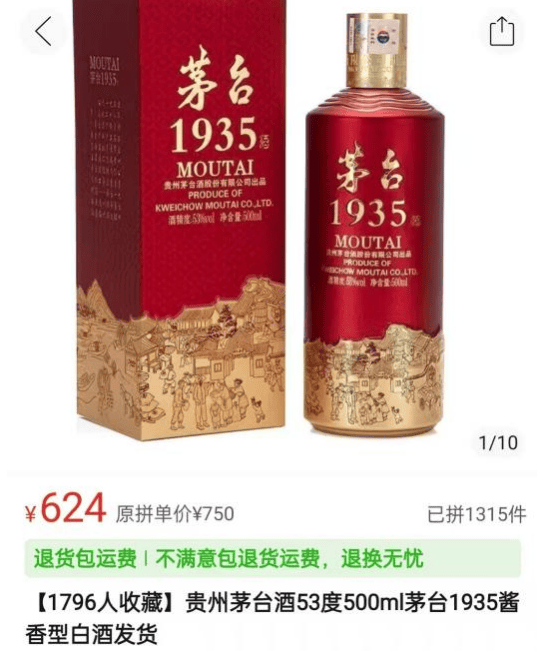
Group 1 - The core products of Moutai, including Moutai 15 years and Moutai 1935, have collectively seen price reductions, with Moutai 15 years dropping from 5399 yuan to 3409 yuan, a decrease of nearly 37% [2] - This price adjustment reflects Moutai's proactive response to market changes, indicating a shift towards a healthier and more rational industry [2] - The adjustment aims to alleviate channel inventory pressure and align products more closely with actual consumer demand, showcasing a positive attitude towards change [2] Group 2 - The price reduction is expected to have three positive impacts: a return to rational pricing, increased consumer willingness to purchase, and improved sales efficiency due to reduced channel pressure [3] - The industry is transitioning from a "high-price era" to a "value era," indicating a healthier restart for the white liquor market [4] - Consumers will find Moutai products more accessible, reflecting a broader trend towards value-oriented consumption in the industry [4]
2026年,白酒行业将进入“降价潮”?
Sou Hu Cai Jing· 2026-01-13 14:06
Group 1 - The core viewpoint is that the recent price adjustments by major liquor companies like Moutai and Wuliangye indicate a significant turning point in the liquor industry, which is currently undergoing deep adjustments [4] - Moutai has reduced the prices of several products, including Moutai 1935 from 798 yuan to 668 yuan and aged Guizhou Moutai (15) from 5399 yuan to 3409 yuan, reflecting a broader trend of price reductions in the industry [3] - Wuliangye plans to adjust its pricing strategy starting in 2026, maintaining a factory price of 1019 yuan while offering a discount of 119 yuan, effectively lowering the invoice price to 900 yuan [3] Group 2 - The liquor industry is facing a "price inversion" crisis, with 60% of liquor companies experiencing this issue, particularly in the 800-1500 yuan price range, leading to a cycle of losses for distributors [4] - The current market conditions, including high inventory and sluggish sales, necessitate proactive price adjustments by liquor companies to reshape the pricing structure and stimulate market activity [4][7] - The anticipated "price reduction wave" is not limited to the liquor industry but is expected to affect various sectors, including automotive and real estate, indicating a broader economic trend [5] Group 3 - Historical precedents show that proactive price adjustments in the liquor industry can lead to increased market activity and expanded market share, as seen during the adjustments from 2013 to 2015 [7] - The current challenges in the liquor industry, such as supply-demand imbalances and inventory pressures, are more complex than in previous years, making it essential for companies to embrace price reductions to rebuild the pricing system [7] - The price adjustments by Moutai and Wuliangye are likely to trigger a broader industry-wide price restructuring, potentially leading to the elimination of smaller, less distinctive liquor brands [7]

1月13日重要资讯一览
Zheng Quan Shi Bao Wang· 2026-01-13 13:59
Group 1 - New stock offering: Guoliang New Materials has an offering code of 920076, with an issue price of 10.76 yuan per share and a subscription limit of 812,000 shares [1] - The Ministry of Commerce announced the continuation of anti-subsidy measures on imported solar-grade polysilicon from the United States, effective January 14, 2026, for a period of five years [2] - The Ministry of Industry and Information Technology issued an action plan for the high-quality development of industrial internet platforms, aiming for over 450 influential platforms by 2028 and a connection of over 120 million industrial devices [3] Group 2 - The Ministry of Civil Affairs and eight other departments released measures to promote the silver economy, focusing on optimizing elderly care services and encouraging community-based operations [4] - Guangzhou's draft policy for integrated circuit industry development aims to support major projects through financial institutions and encourage venture capital participation [5] - Sichuan Province's action plan for a green manufacturing system aims to establish a comprehensive green manufacturing framework by 2030, with significant reductions in energy consumption and carbon emissions [6] Group 3 - Kweichow Moutai's board approved a market-oriented operation plan for 2026, establishing a dynamic adjustment mechanism for retail prices [7] - TCL Technology expects a net profit increase of 169% to 191% year-on-year for 2025 [9] - Baiwei Storage anticipates a net profit increase of 427.19% to 520.22% year-on-year for 2025 [10] - Morning Light Bio forecasts a net profit increase of 272.14% to 330.62% year-on-year for 2025 [11]


今日晚间重要公告抢先看——杭萧钢构称公司不存在“商业航天”业务 天龙集团称当前未因AI工具产生额外收入




Jin Rong Jie· 2026-01-13 13:54
Group 1 - Hangxiao Steel Structure announced that it does not have a "commercial aerospace" business, with its main operations focused on steel structure contracting and related services, and a recent project contributing less than 1% to its 2024 audited revenue [1] - Tianlong Group stated that it has not generated additional revenue from AI tools, which are currently used internally for advertising content creation, and that the overall business operations remain unaffected [1] - Wanxing Technology confirmed that there are no undisclosed significant matters affecting its operations, and its business environment remains stable [2] Group 2 - Yaxing Chemical announced the termination of a share issuance and cash purchase of assets due to market changes and disagreements on asset valuation [2] - Zhejiang Shuculture clarified that its subsidiaries do not engage in GEO business, which has been misreported by media [2] - Luxshare Precision terminated the acquisition of assets from Wintime Technology due to delivery restrictions, with a request for the return of 1.53 billion RMB [3] Group 3 - Jinyu Group reported that its subsidiaries' revenues from specific projects are minimal compared to its overall revenue, with a small contribution from recent contracts [4] - Tongyu Communication highlighted that its stock price has significantly outpaced its fundamentals, indicating potential risks of a price correction [4] - Dongfang Mingzhu noted that the listing process for its investment in Chaoguhuan has uncertainties but currently does not impact its performance [5] Group 4 - Luyin Investment warned of risks associated with its stock price surge, which has increased by 86.92% over the last ten trading days [5] - Puyuan Information stated that its AI software platform is in the early commercialization stage, with limited revenue impact expected [6] - Zhejiang Wenhu Intermediary reported that its GEO business has not yet generated revenue, reflecting uncertainties in market acceptance [6] Group 5 - Xinhua News confirmed that its GEO business lacks a mature profit model and has not generated income [7] - People's Daily stated that it does not engage in GEO business and has not been affected by market rumors [7] - China First Heavy Industries reported minimal involvement in controllable nuclear fusion projects, with no significant revenue generated [8] Group 6 - Xibu Mining announced an increase in copper resources at the Yulong Copper Mine, adding 131.42 million tons of copper metal resources [8] - Jiurui New Materials commenced trial production of a new photoinitiator project, expected to cater to mainstream markets [9] - Tongda Sea indicated that AI-related revenue is low and does not significantly impact overall business performance [10] Group 7 - Zhenai Meijia's stock price has deviated significantly from market indices, prompting caution for investors [11] - Guizhou Moutai approved a new marketing strategy to enhance its sales channels and adapt to consumer demands [12] - Shunhao Co. plans to increase its stake in a subsidiary, reflecting confidence in future business prospects [14] Group 8 - A number of companies, including TCL Technology and Dazhu CNC, forecast significant profit increases for 2025, driven by operational improvements and market demand [19][22] - Long Cable Technology expects a profit increase due to changes in its employee stock plan and market conditions [22] - Jiangsu Electric Power reported a profit increase attributed to higher sales and reduced financial costs [29]
“液体黄金”光环褪色?茅台1935合同价紧急下调130元
Sou Hu Cai Jing· 2026-01-13 13:39
Core Viewpoint - Guizhou Moutai's core product, Moutai 1935, has seen a significant price drop from 798 yuan to 668 yuan per bottle, a decrease of 130 yuan or over 16%, raising concerns about the brand's market position and growth potential [1] Group 1: Price Decline and Market Challenges - Moutai 1935, once viewed as a key growth driver, has experienced a price drop of over 60% since its launch in 2022, with current e-commerce prices falling below 630 yuan per bottle, representing a decline of more than 65.3% from its peak [1] - The price collapse is attributed to a supply-demand imbalance, with Moutai 1935 projected to generate approximately 12 billion yuan in sales for 2024, accounting for 50% of the total sales of other series wines, which are expected to be around 24.68 billion yuan [3] - Moutai 1935's inventory turnover days stand at 128 days, significantly exceeding the healthy industry benchmark of 60 days, indicating a disconnect between product positioning and market demand [4] Group 2: Strategic Adjustments and Channel Management - The company is shifting its strategy by reducing contract prices to address the declining financial attributes of Moutai 1935, aiming to reposition it as a consumer product rather than a financial asset [4] - The "cutting distribution" policy implemented by Guizhou Moutai aims to regain pricing power and increase direct sales, but it has led to internal conflicts between direct and distributor channels [5] - The company plans to eliminate the distribution model by the end of 2025, which may further complicate relationships with distributors who feel their contracts are being unfairly terminated [5] Group 3: Industry Context and Future Outlook - The broader white liquor industry is undergoing structural adjustments, shifting from a "channel-driven" to a "consumer-driven" model, with a notable decline in high-end liquor consumption [7] - A report indicates that the white liquor industry is in a deep adjustment phase, with production declining for eight consecutive years, and over 60% of related companies facing price inversion issues [7] - Guizhou Moutai is at a critical juncture, needing to address inventory issues, optimize product structure, and improve channel management to maintain its status in the market [7]