FYG,FUYAO GLASS(600660)

Search documents
福耀玻璃(03606) - 截至二零二五年十月三十一日止月份之股份发行人的证券变动月报表
2025-11-03 07:12
致:香港交易及結算所有限公司 公司名稱: 福耀玻璃工業集團股份有限公司 呈交日期: 2025年11月3日 I. 法定/註冊股本變動 股份發行人及根據《上市規則》第十九B章上市的香港預託證券發行人的證券變動月報表 截至月份: 2025年10月31日 狀態: 新提交 | 1. 股份分類 | 普通股 | 股份類別 | H | | 於香港聯交所上市 (註1) | | 是 | | | --- | --- | --- | --- | --- | --- | --- | --- | --- | | 證券代號 (如上市) | 03606 | 說明 | H股 | | | | | | | | | 法定/註冊股份數目 | | | 面值 | | 法定/註冊股本 | | | 上月底結存 | | | 606,757,200 | RMB | | 1 RMB | | 606,757,200 | | 增加 / 減少 (-) | | | 0 | | | RMB | | 0 | | 本月底結存 | | | 606,757,200 | RMB | | 1 RMB | | 606,757,200 | | 2. 股份分類 | 普通股 | 股份類別 | ...
外资公募绩优产品持仓曝光
Zheng Quan Shi Bao· 2025-11-03 00:03
Core Insights - The foreign public funds have achieved significant excess returns due to proactive industry positioning and stable investment strategies, with some funds reporting returns exceeding 50% year-to-date [1][2] Group 1: Fund Performance - BlackRock Advanced Manufacturing Fund has a year-to-date return of 66.44%, with a heavy concentration in the manufacturing sector, accounting for 92.52% of its stock investments [2] - The top ten holdings of the BlackRock fund include companies like CATL and Hikvision, with notable stock price increases such as 176.76% for Zhongji Xuchuang [2] - The Robeco Resource Select Fund has achieved a year-to-date return of 79.00%, diversifying its investments across materials, mining, and energy sectors [2] Group 2: Market Outlook - Fund managers maintain a positive outlook for the fourth quarter, expecting low interest rates and ample liquidity to support the A-share market's medium to long-term performance [1][3] - Concerns about geopolitical factors and overseas policy rhythms may cause short-term disruptions, but the overall sentiment remains optimistic for quality technology and resource assets [3][5] - The managers of the BlackRock fund believe that the current low-growth macro environment will anchor a low-interest-rate scenario, pushing investors towards riskier assets with positive cash flows [4] Group 3: Strategic Adjustments - The funds have maintained relatively high positions while making flexible adjustments based on market changes, focusing on sectors like electronics and power equipment [3] - The Allianz China Select Fund has a year-to-date return of 54.48%, with significant holdings in manufacturing and healthcare, reflecting confidence in China's technological innovation [3] - The Robeco fund has strategically included upstream industries related to the current technology innovation cycle, aiming for future gains [5][6]


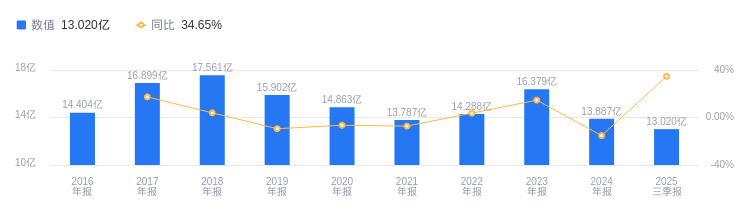
神通科技的前世今生:2025年三季度营收13.02亿行业排26,净利润1.13亿排名24
Xin Lang Cai Jing· 2025-10-30 23:15
Core Viewpoint - Shentong Technology, established in 2005 and listed in 2021, is a leading automotive parts company focusing on intelligent cockpit development and manufacturing, with a strong capability for synchronous development with vehicle manufacturers [1] Group 1: Business Performance - In Q3 2025, Shentong Technology reported revenue of 1.302 billion yuan, ranking 26th out of 41 in the industry, significantly lower than the top competitors Huayu Automotive (130.853 billion yuan) and Fuyao Glass (33.302 billion yuan), as well as below the industry average of 7.344 billion yuan [2] - The main business composition includes automotive parts sales of 774 million yuan (94.91%), mold sales of 36.79 million yuan (4.51%), and other sales of 4.755 million yuan (0.58%) [2] - The net profit for the same period was 113 million yuan, ranking 24th in the industry, again trailing behind Fuyao Glass (7.068 billion yuan) and Huayu Automotive (5.397 billion yuan), and below the industry average of 488 million yuan [2] Group 2: Financial Ratios - As of Q3 2025, Shentong Technology's debt-to-asset ratio was 44.10%, a decrease from 45.85% year-on-year but still above the industry average of 42.48% [3] - The gross profit margin for Q3 2025 was 23.58%, an increase from 20.10% year-on-year, and higher than the industry average of 22.52% [3] Group 3: Executive Compensation - The chairman, Fang Lifeng, received a salary of 977,100 yuan in 2024, a decrease of 73,700 yuan from 2023 [4] - The general manager, Zhu Chunyu, earned 2,002,100 yuan in 2024, down 236,700 yuan from the previous year [4] Group 4: Shareholder Information - As of September 30, 2025, the number of A-share shareholders decreased by 30% to 14,000, while the average number of circulating A-shares held per shareholder increased by 43.83% to 30,700 [5] - Notably, the top ten circulating shareholders saw a change, with Bosera Value Selection exiting the list [5] Group 5: Business Highlights and Forecast - Shentong Technology has accelerated its expansion into new energy vehicle clients, entering the supply chains of companies like NIO and Li Auto [5] - The company has achieved technical breakthroughs, including the development of polycarbonate (PC) windows and active oil-gas separators, holding multiple patents [5] - The company is exploring horizontal applications of technology in automotive-grade optical lenses and consumer electronics [5] - Revenue forecasts for 2025, 2026, and 2027 are projected at 1.637 billion, 1.940 billion, and 2.238 billion yuan, respectively, with corresponding EPS of 0.34, 0.40, and 0.47 yuan [5]


何以“受尊敬”?
经济观察报· 2025-10-30 11:15
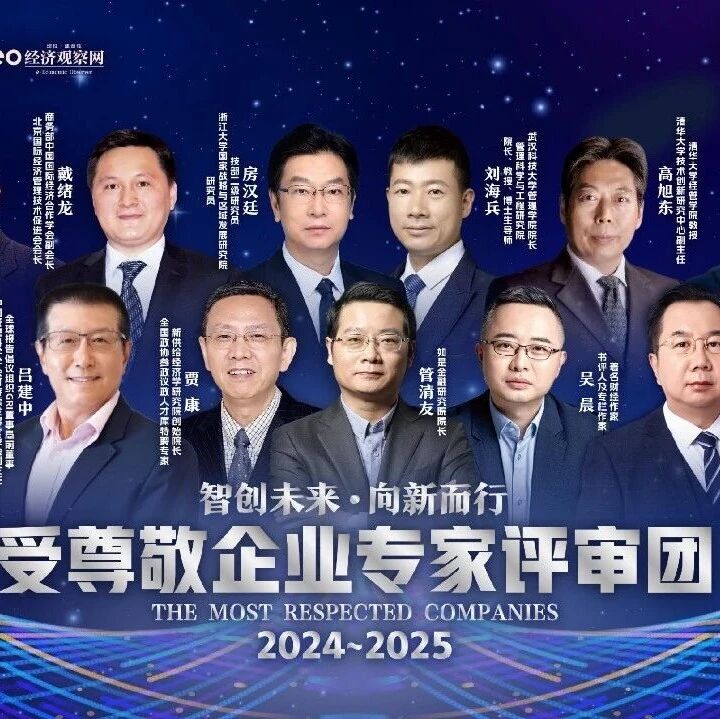
Core Viewpoint - The integration of corporate social responsibility with business models is essential for companies to gain respect, which in turn can enhance brand influence and market competitiveness, ensuring long-term sustainability [1][3]. Group 1: National Economic Development - The "14th Five-Year Plan" emphasizes focusing on the real economy, promoting intelligent, green, and integrated development, and aims to build a strong manufacturing, quality, aerospace, transportation, and network nation [2]. - The development of the real economy is fundamental to national growth, and companies play a crucial role in advancing commercial civilization and social progress [2]. Group 2: Characteristics of Respected Enterprises - Respected companies are distinguished not only by their successful business operations but also by their social responsibility, corporate culture, and brand value [3]. - The ongoing global business environment changes and increasing public expectations highlight the importance of earning respect over short-term profits for long-term survival [2][3]. Group 3: Expert Recommendations - BYD has been highly recommended by experts for its rapid global expansion and local production strategies, positioning itself among the top four global car manufacturers [9]. - Other companies like Keda Xunfei, Fuyao Glass, Haier Group, JD.com, Weichai Power, New Oriental, and Cambricon have also received expert recognition for their contributions and innovations [9][10][11]. - Experts noted that Keda Xunfei is leading in AI integration across various sectors, while Haier is recognized for its global outreach and commitment to sustainable practices [10][11]. Group 4: Public Perception of Respected Enterprises - The public identifies five key internal qualities for companies to be considered respected: establishing correct values, building a robust management system, continuous innovation, shaping a positive corporate citizen image, and providing high-quality products and services [15][16]. - Companies like Beijing Rural Commercial Bank, JD.com, and McDonald's exemplify these qualities through their commitment to social responsibility and brand value enhancement [16][17]. Group 5: Additional Notable Companies - Other respected companies include Moutai Group, Yili Group, and Nestle China, recognized for their high product quality and low carbon emissions [13]. - Traditional companies like Tongrentang and Li Ning have also been highlighted for their commitment to quality and innovation, contributing to their respected status [18].




300万创一代集体老去,企二代能否顶上?
3 6 Ke· 2025-10-29 12:10
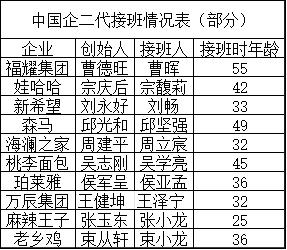
Core Viewpoint - The recent announcement of the succession at Fuyao Glass, with 55-year-old Cao Hui taking over as chairman from his father, Cao Dewang, highlights the ongoing generational transition in Chinese family businesses, raising questions about the ability of the second generation to lead effectively [1][2]. Group 1: Succession Trends in Chinese Family Businesses - A significant wave of succession is occurring in Chinese family businesses, with over 80% of private enterprises being family-owned and many reaching critical transition points [2][4]. - The All-China Federation of Industry and Commerce predicts that over 3 million private enterprises will face succession challenges in the coming years, with the rise of the 90s generation as successors [2][4]. - The average founding generation of China's top 100 family businesses was born between 1950 and 1960, indicating a pressing need for succession planning [2][4]. Group 2: Challenges and Strategies in Succession - Founders often prefer to pass control to their children due to deep-rooted cultural values and a desire to maintain family legacy, as well as concerns about external management [4][5]. - The lack of a well-established pool of professional managers in China leads to a preference for family members, as founders worry about the potential risks of hiring external managers [4][5]. - Many family businesses operate under a "personal rule" rather than a structured governance model, complicating the transition to professional management [5]. Group 3: Case Studies of Successful Succession - Cao Hui's journey within Fuyao Glass involved extensive hands-on experience, including six years in the workshop and six years in sales, before becoming the general manager in 2006 [9][10]. - Liu Yonghao's daughter, Liu Chang, and Zong Qinghou's daughter, Zong Fuli, also underwent rigorous training outside their family businesses before taking on leadership roles, demonstrating a trend of preparing successors through real-world experience [10][12]. - The success rate of family businesses transitioning to the second generation is only about 30%, highlighting the challenges faced by successors in maintaining competitiveness and managing internal dynamics [12][13]. Group 4: Importance of Early Planning and Trust - Only about 16% of family businesses have a clear succession plan, with less than 3% implementing it effectively, indicating a significant gap in preparedness [14]. - Founders are often reluctant to relinquish control, leading to rushed transitions that can pose risks to the business [14]. - Establishing clear ownership structures and governance frameworks is crucial to prevent disputes and ensure smooth transitions [16][17].
研判2025!中国特种玻璃行业政策、发展历程、市场规模、竞争格局及未来前景展望:下游应用需求持续扩张,特种玻璃规模将增长至1108亿元[图]
Chan Ye Xin Xi Wang· 2025-10-29 01:17
Core Insights - China is the largest producer and consumer of specialty glass globally, undergoing significant structural changes driven by the implementation of the "dual carbon" strategy and the upgrading of green building standards [1][9] - The market for specialty glass in China is projected to grow from CNY 59.9 billion in 2020 to CNY 102.6 billion in 2024, with a compound annual growth rate (CAGR) of 11.36% [1][10] - The demand for specialty glass is expected to remain strong, with projections indicating a market size of CNY 110.8 billion by 2025, fueled by rapid developments in downstream industries such as photovoltaic new energy and energy-efficient buildings [1][9] Industry Overview - Specialty glass is defined as glass that exhibits unique functions through various physical and chemical processes, serving as a critical material in sectors such as construction, transportation, energy, and aerospace [3][4] - The industry has evolved through three stages: initial exploration (1950s-1970s), rapid development (1980s-1990s), and current focus on industrial upgrading and brand building [4][5] Market Dynamics - The specialty glass market is transitioning from traditional ordinary glass to high-performance energy-saving products like Low-E glass and hollow glass, which are now mainstream [1][9] - The global specialty glass market was valued at USD 21.436 billion in 2023 and is expected to reach USD 27.534 billion by 2029, with a CAGR of 4.26% [8] Policy Environment - Recent government policies aim to enhance the development of the specialty glass industry, including initiatives to establish production bases for high-end glass products in strategic sectors [6] Industry Chain - The upstream of the specialty glass industry includes raw materials like quartz sand, soda ash, and limestone, while the downstream encompasses applications in various sectors [6][7] Competitive Landscape - The specialty glass market features a tiered competitive structure, with international leaders like Corning and AGC in the top tier, while domestic companies such as Fuyao Glass and Xinyi Glass form the second tier [10][11] Challenges - The industry faces challenges such as insufficient innovation capabilities, weak foundational research, and a lack of comprehensive standards and testing systems [13][14][15] Future Trends - Key trends in the specialty glass industry include high performance, large size, functional integration, and product series diversification to meet the evolving demands of various applications [16][17][18][20]





超六成汽车零部件公司业绩同比快增
Zheng Quan Ri Bao· 2025-10-28 23:54
Core Viewpoint - The automotive parts industry in A-shares is experiencing positive growth, with over 60% of the 129 listed companies reporting a year-on-year increase in net profit for the first three quarters of 2025, driven by the recovery of the global automotive market and the rise of new energy vehicles [1] Group 1: Industry Performance - 73 listed companies in the automotive parts sector achieved both revenue and net profit growth in the first three quarters of this year, with some companies like Wuhu Fushai Technology and Chengdu Xiling Power Technology reporting net profit growth exceeding 100% [1] - The demand for new energy vehicles is a key factor driving the positive performance of automotive parts companies, with Jiangsu Bojun Industrial Technology reporting steady growth in main business revenue due to increased orders in the new energy vehicle sector [2] - In September, new energy vehicle production and sales reached 1.617 million and 1.604 million units, respectively, marking year-on-year increases of 23.7% and 24.6% [2] Group 2: Technological Transformation - The intelligent transformation of the industry is contributing to new growth, with Zhejiang Shibao reporting a 35.44% year-on-year increase in revenue, benefiting from trends in electrification, intelligence, and globalization [3] Group 3: Expansion into Robotics - Automotive parts companies are increasingly focusing on emerging fields such as robotics, with Ningbo Fangzheng Automotive Mould signing a strategic cooperation agreement to develop deep-sea robot components [4] - Zhejiang Rongtai Electric Equipment has made significant investments in humanoid robotics, acquiring stakes in companies to establish a foundation in precision transmission and intelligent equipment [4] - Jin Guo Co. is exploring the application of its "Avatar Ni Microalloy Material" in emerging fields like embodied intelligent robots, with plans for mass production by the end of the year [4] Group 4: Industry Synergies - The production of automotive parts and robotics shares technological similarities, allowing for rapid technology transfer during product development [5] - The established supply chain management capabilities and customer resources of automotive parts companies provide a natural advantage for entering the robotics sector [6] - Expanding into robotics can reduce reliance on the automotive industry, mitigate cyclical risks, and enhance long-term growth potential [6]


已披露上市公司三季报显示 超六成汽车零部件公司业绩同比快增
Zheng Quan Ri Bao Zhi Sheng· 2025-10-28 17:08
Core Viewpoint - The automotive parts industry in A-shares is experiencing positive growth, driven by the recovery of the global automotive market and the increasing popularity of new energy vehicles, with over 60% of listed companies reporting a year-on-year increase in net profit for the first three quarters of 2025 [1] Group 1: Industry Performance - As of the latest reports, 129 listed companies in the automotive parts sector have disclosed their Q3 results, with 80 companies showing a year-on-year increase in net profit [1] - Companies such as Zhejiang Jingu Co., Ltd. and Fuyao Glass Industry Group Co., Ltd. reported both revenue and net profit growth in the first three quarters of this year, with 8 companies achieving a net profit growth rate exceeding 100% [1] - The demand for new energy vehicles is a key factor driving the positive performance of automotive parts companies, with significant increases in orders and revenue reported by companies like Jiangsu Bojun Industrial Technology Co., Ltd. [2] Group 2: Technological Transformation - The industry's shift towards intelligent transformation is contributing to new growth, as seen in Zhejiang Shibao Co., Ltd., which reported a 35.44% year-on-year increase in revenue, benefiting from trends in electrification and globalization [3] Group 3: Expansion into Robotics - Automotive parts companies are increasingly focusing on emerging fields such as robotics, with several companies entering strategic partnerships to develop robotic components for various applications [4] - Zhejiang Rongtai Electric Equipment Co., Ltd. has made significant investments in humanoid robotics, acquiring stakes in companies to enhance its capabilities in precision transmission and intelligent equipment [4] - The move into robotics is seen as a way to reduce dependence on the automotive sector and mitigate industry cycle risks, while also providing opportunities for growth and transformation [5]

深度 | 汽车玻璃行业专题-天幕之后,去向何方【国信汽车】
车中旭霞· 2025-10-27 14:38
Core Viewpoints - The automotive glass market is rapidly evolving, with a significant focus on panoramic roofs, which are expected to reach a penetration rate of 37% by 2030, representing a market space of 34 billion yuan [12][44]. - The development of automotive glass is driven by three main pain points: heat insulation, privacy, and interaction, leading to innovations in heat-insulating, dimmable, and display-grade glass [2][3][12]. Group 1: Heat Insulation - Heat-insulating glass is currently in the 1-N stage, with two main solutions: physical sunshades and chemical coatings. The latter, using silver ion LOW-E films, can block over 98% of UV rays and reduce interior temperatures by 7-8°C [4][50][63]. - The market for heat-insulating glass is expanding, with prices around 1500 yuan per vehicle, making it increasingly accessible even for lower-priced models [63][38]. Group 2: Dimmable Glass - Dimmable glass addresses privacy concerns and is in the 0-1 stage, with various technologies like PDLC, EC, and LC. PDLC is the most cost-effective and widely produced, while EC offers superior dimming capabilities [5][67][69]. - The market for dimmable glass is projected to grow significantly, with estimates reaching 14 billion yuan by 2030, driven by the adoption of high-cost-performance solutions like PDCLC [12][70]. Group 3: Display-Grade Glass - Display-grade glass is still in the early stages of mass production but holds great potential for future applications, integrating with vehicle screens and enhancing user interaction [6][40]. - Innovations in display-grade glass include transparent mini-LED and Micro LED technologies, which could transform the way information is presented within vehicles [6][40]. Group 4: Market Trends - The penetration rate of panoramic roofs in vehicles is increasing, with a notable rise in models priced above 100,000 yuan, where the configuration rate is significantly higher [24][27]. - The automotive glass market is expected to see a shift towards more integrated solutions, with companies like Fuyao Glass leading the way in technology and market share [12][44][63].

福耀玻璃系列四十二-Q3业绩稳健增长,管理层平稳过渡【国信汽车】
车中旭霞· 2025-10-27 14:38
Core Viewpoint - The company reported a year-on-year increase of 14% in net profit attributable to shareholders for Q3 2025 [3]. Financial Performance - In the first three quarters of 2025, the company achieved revenue of 33.3 billion yuan, up 18% year-on-year, and net profit attributable to shareholders of 7.1 billion yuan, up 29% year-on-year. In Q3 2025 alone, revenue was 11.9 billion yuan, a 19% increase year-on-year and a 3% increase quarter-on-quarter, with net profit of 2.3 billion yuan, a 14% increase year-on-year but a 19% decrease quarter-on-quarter [4][10]. - The gross margin for Q3 2025 was 37.9%, showing a year-on-year decrease of 0.88 percentage points and a quarter-on-quarter decrease of 0.59 percentage points. The net profit margin was 19.06%, down 0.8 percentage points year-on-year and 5.0 percentage points quarter-on-quarter [5][19]. - The company's core profit margin for the first three quarters of 2025 was 22.28%, an increase of 1.14 percentage points year-on-year [6]. Management and Governance - The company announced a leadership transition aimed at optimizing governance structure and promoting sustainable development. Founder Mr. Cao Dewang stepped down as chairman, with his son Mr. Cao Hui taking over the role. Mr. Cao Hui has been the vice chairman since 2015, ensuring a smooth transition [7][32]. Industry Trends - The automotive glass industry is expected to enter a new growth phase driven by the increasing integration of smart technologies. The average area of automotive glass per vehicle has exceeded 4 square meters, with significant potential for smart upgrades. Companies like Xiaomi, NIO, and BYD are pushing for the adoption of coated and adjustable glass [8]. - The company holds a competitive advantage due to its scale, high automation, vertical integration, and cost efficiency. In 2024, the company maintained a global market share of over 36%, outperforming domestic automotive production by 4 percentage points [9][14]. Product Development and Market Position - The company is actively expanding its production capacity in Fuzhou, Anhui, and North America, which is expected to initiate a new capacity cycle and enhance its market share [9][34]. - The price of automotive glass per square meter has increased from 174 yuan in 2020 to 229 yuan in 2024, with a compound annual growth rate (CAGR) of 7.0%. The company forecasts a CAGR of over 7% for the value of glass per vehicle from 2025 to 2027 [9]. Raw Material and Cost Management - The company benefits from a decline in the price of key raw materials, such as heavy soda ash, which has decreased to around 1,300 yuan per ton in Q3 2025, down from 1,600-2,200 yuan per ton in the previous year [24]. - The management expense ratio decreased by 0.7 percentage points year-on-year to 14.16% in Q3 2025, with fluctuations in sales, management, and R&D expenses [29]. Future Outlook - The company is well-positioned to benefit from the growing demand for high-value-added products, with a focus on smart and adjustable glass technologies. The market for automotive glass is expected to grow significantly, with the global automotive glass market projected to reach 124.6 billion yuan by 2026 [42]. - The company has invested heavily in R&D, with annual expenditures exceeding 4% of revenue, leading to significant advancements in core technologies and a growing proportion of high-value products in its sales [48].