HAIER SMART HOME(600690)

Search documents
金十图示:2025年07月22日(周二)富时中国A50指数成分股午盘收盘行情一览:银行、保险股延续跌势,酿酒、食品饮料板块集体走高
news flash· 2025-07-22 03:38
Market Overview - The FTSE China A50 Index components showed a mixed performance with banking and insurance stocks continuing to decline, while the liquor and food & beverage sectors experienced gains [1][6]. Banking Sector - Major banks like China Everbright Bank reported a market capitalization of 249.93 billion with a trading volume of 446 million, showing a decline of 0.09 (-1.59%) [3]. - China Pacific Insurance, China Ping An, and China Life Insurance had market capitalizations of 436.27 billion, 347.77 billion, and 1,028.70 billion respectively, with trading volumes of 991 million, 2.11 billion, and 462 million, reflecting declines of 0.51 (-1.39%), 0.70 (-1.22%), and 0.07 (-0.83%) [3]. Insurance Sector - The insurance sector continued to face downward pressure, with significant declines in major companies [3]. Liquor Industry - The liquor sector saw positive movement, with Kweichow Moutai, Shanxi Fenjiu, and Wuliangye reporting market capitalizations of 1,820.06 billion, 225.24 billion, and 482.06 billion respectively, and trading volumes of 2.14 billion, 1.36 billion, and 1.15 billion, with increases of 4.34 (+2.41%), 1.63 (+1.33%), and 5.86 (+0.41%) [3]. Semiconductor Sector - The semiconductor industry showed varied performance, with Northern Huachuang, Cambricon Technologies, and Haiguang Information having market capitalizations of 229.98 billion, 248.67 billion, and 316.92 billion respectively, and trading volumes of 1.33 billion, 2.71 billion, and 1.24 billion, with changes of -1.34 (-0.42%), +12.40 (+2.13%), and -0.32 (-0.23%) [3]. Oil Industry - The oil sector, including companies like Sinopec and PetroChina, reported market capitalizations of 725.05 billion and 1,643.53 billion respectively, with trading volumes of 758 million and 563 million, showing slight increases [3]. Coal Industry - The coal sector, represented by companies like Shenhua Group and Shaanxi Coal and Chemical Industry, had market capitalizations of 750.04 billion and 189.83 billion respectively, with minimal changes in stock prices [3]. Automotive Sector - The automotive sector, led by BYD, reported a market capitalization of 1,849.01 billion with a trading volume of 3.54 billion, showing a slight increase of 2.39 (+0.72%) [3]. Other Sectors - Various other sectors such as chemicals, pharmaceuticals, and logistics showed mixed results, with some companies experiencing gains while others faced declines [4][6].








“科技+”带火消费“新四样”
Ke Ji Ri Bao· 2025-07-21 23:19
Core Viewpoint - The integration of technology into various sectors is driving consumer growth in China, with significant advancements in healthcare, elderly care, smart home solutions, and immersive cultural tourism experiences [1][11]. Group 1: Internet Healthcare - The "Zijing AI Doctor" system, launched by Tsinghua University, features 42 AI doctors covering over 300 diseases, achieving a diagnostic accuracy of 93.06% for respiratory diseases [2]. - By the end of 2024, the number of internet healthcare users in China is expected to reach 418 million, accounting for 37.7% of internet users [2]. - The internet hospital market is projected to exceed 1.2 trillion yuan by 2030, representing 15% of total medical expenditure, with AI doctors involved in 80% of initial diagnoses [3]. Group 2: Smart Elderly Care - The aging population in China, with over 300 million individuals aged 60 and above, is creating opportunities for the silver economy, driven by technological innovations in elderly care [4]. - Sales of elderly care services increased by 65.5% in the first quarter of this year, while health monitoring devices saw a 41.6% rise in sales [5]. - The adoption of AI and IoT technologies is transforming elderly care from passive to active engagement, enhancing the quality of life for seniors [5]. Group 3: Smart Home Solutions - Haier's innovations in smart home appliances, such as AI-powered range hoods, are setting new standards in the industry, with over 113,000 patents filed globally [7]. - The market for digital smart home appliances is expanding, with exports of home appliances increasing by 6.1% in early 2025 [8]. - The trend towards full-home digitalization is expected to cover over 90% of new residential buildings in the next decade [8]. Group 4: Immersive Cultural Tourism - The digital Dunhuang platform allows users to experience ancient murals in high definition, showcasing the potential of technology in cultural tourism [10]. - The immersive tourism market is projected to generate significant revenue, with innovative experiences like AR and VR enhancing visitor engagement [11]. - The integration of technology in cultural tourism is expected to lead to highly customized experiences, aligning with consumer preferences [11].

家电安全使用年限和再生利用新标准公布 进一步激发“以旧换新”市场动能
Zheng Quan Ri Bao Wang· 2025-07-21 13:02
在全球资源与环境问题日益严峻的背景下,我国对循环经济、家用电器、标准化等领域保持高度重视, 且不断完善相关标准。 今年6月份,国家标准委网站披露,由我国牵头制定的国际标准IECTS63457-1:2025《家用和类似用途 电器——维修、翻新、再造及后续安全检测——第1部分:通用要求》正式发布并施行。这是全球首项 家用电器循环经济与材料效率领域安全国际标准,填补了国际标准在家用电器全生命周期标准体系中的 空白。 国家市场监督管理总局于6月份在官网发布对《关于推动建立家电强制报废制度的建议》答复显示,市 场监管总局、工业和信息化部将持续在标准制定、推动消费品以旧换新、加快节能降碳技术装备推广等 方面发力,促进家电产业转型升级。加快制修订典型家电产品的安全使用年限标准和家用电器能效标 准,组织各方广泛宣传家电产品安全使用年限标准,论证评估制定家电产品安全使用年限强制性标准的 必要性、可行性。持续完善家电产品拆解回收标准体系,为推动循环经济、减少环境污染和资源浪费提 供技术支撑。 我国激活庞大的家电存量市场势在必行。中国家用电器协会公布的数据显示,截至2023年,我国冰箱、 洗衣机、空调等主要品类家电保有量超30亿台 ...


金十图示:2025年07月21日(周一)富时中国A50指数成分股今日收盘行情一览:银行板块全天表现低迷,能源、汽车板块集体收涨
news flash· 2025-07-21 07:10
金十图示:2025年07月21日(周一)富时中国A50指数成分股今日收盘行情一览:银行板块全天表现低迷,能源、汽车板块集体 收涨 富时中国A50指数连续 -0.03(-0.53%) +0.04(+0.47%) -0.08(-0.68%) 光大银行 2522.95亿市值 6.05亿成交额 4.27 -0.03(-0.70%) 保险 中国太保 中国平安 中国人保 帆 3723.66亿市值 3526.82亿市值 10414.43亿市值 15.20亿成交额 26.71亿成交额 5.53亿成交额 36.66 57.19 8.42 -0.43(-1.16%) +0.12(+0.21%) +0.03(+0.36%) 酿酒行业 贵州茅台 山西汾酒 五粮液 18126.93亿市值 2199.47亿市值 4757.30亿市值 37.80亿成交额 23.04亿成交额 16.64亿成交额 180.29 1443.00 122.56 +6.00(+0.42%) -1.22(-0.99%) -0.81(-0.45%) 半导体 北方华创 寒武纪-U 海光信息 HYGON 2309.49亿市值 2434.80亿市值 3176.67亿市值 1 ...







金十图示:2025年07月21日(周一)富时中国A50指数成分股午盘收盘行情一览:盘面整体涨跌互现,银行、保险板块普跌,能源、汽车板块多数走高
news flash· 2025-07-21 03:35
Market Overview - The FTSE China A50 Index showed mixed performance with banks and insurance sectors declining, while energy and automotive sectors mostly advanced [1][6]. Banking Sector - Major banks like China Everbright Bank reported a market capitalization of 252.295 billion with a trading volume of 391 million, experiencing a slight decline of 0.03 (-0.70%) [3]. Insurance Sector - Key insurance companies such as China Pacific Insurance, Ping An Insurance, and China Life Insurance had market capitalizations of 369.27 billion, 349.31 billion, and 1,037.255 billion respectively, with trading volumes of 1.066 billion, 1.782 billion, and 0.345 billion. They experienced declines of 0.78 (-2.10%), 0.11 (-0.19%), and 0.04 (-0.48%) [3]. Alcohol Industry - Leading companies in the alcohol sector, including Kweichow Moutai, Shanxi Fenjiu, and Wuliangye, had market capitalizations of 1,811.450 billion, 218.056 billion, and 475.070 billion respectively, with trading volumes of 2.287 billion, 1.577 billion, and 0.913 billion. Kweichow Moutai saw a slight increase of 5.01 (+0.35%), while the others faced declines [3]. Semiconductor Sector - Notable semiconductor firms like North Huachuang, Cambricon Technologies, and Hygon reported market capitalizations of 231.057 billion, 244.680 billion, and 317.063 billion respectively, with trading volumes of 1.070 billion, 2.435 billion, and 1.138 billion. North Huachuang experienced a decline of 4.99 (-1.53%) [3]. Oil Industry - Major players in the oil sector, including Sinopec, PetroChina, and China Railway, had market capitalizations of 273.495 billion, 715.347 billion, and 1,634.377 billion respectively, with trading volumes of 0.732 billion, 0.426 billion, and 0.427 billion. Sinopec saw an increase of 0.08 (+1.37%) [3]. Coal Industry - Companies like Shenhua Energy and Shaanxi Coal and Chemical Industry had market capitalizations of 749.639 billion and 189.440 billion respectively, with trading volumes of 0.536 billion and 0.911 billion. Shenhua Energy reported an increase of 0.33 (+0.88%) [3]. Automotive Sector - BYD, a leading automotive manufacturer, had a market capitalization of 1,827.526 billion with a trading volume of 2.984 billion, experiencing an increase of 3.49 (+1.06%) [3]. Securities Sector - Major securities firms such as CITIC Securities and Guotai Junan reported market capitalizations of 425.350 billion and 347.129 billion respectively, with trading volumes of 2.668 billion and 1.636 billion. CITIC Securities saw an increase of 0.36 (+1.27%) [4]. Consumer Electronics - Companies like Hon Hai Precision Industry and Luxshare Precision reported market capitalizations of 534.617 billion and 276.157 billion respectively, with trading volumes of 1.553 billion and 2.572 billion. Hon Hai experienced a decline of 0.19 (-0.70%) [4]. Home Appliances - Leading home appliance firms such as Haier Smart Home and Gree Electric Appliances had market capitalizations of 266.739 billion and 243.580 billion respectively, with trading volumes of 0.713 billion and 0.309 billion. Haier reported a decline of 0.26 (-0.54%) [4]. Pharmaceutical Sector - Major pharmaceutical companies like Heng Rui Medicine and Muyuan Foods had market capitalizations of 255.221 billion and 384.958 billion respectively, with trading volumes of 1.833 billion and 1.230 billion. Heng Rui experienced a decline of 0.76 (-1.29%) [4].

2025H1净水机高增长,海尔净水量额第一且增幅最高
Zhong Guo Chan Ye Jing Ji Xin Xi Wang· 2025-07-21 02:53
Core Insights - The introduction of national subsidies for water purifiers in 2025 has led to explosive growth in the industry, with offline market sales increasing by 40% year-on-year in the first half of 2025 [1] - Haier Water Purification leads the market with an 18% share in sales and a 20.3% share in volume, achieving a remarkable sales growth of 68.2% compared to the previous year [1] Group 1: Market Trends - The demand for diverse water usage is evolving, with consumers seeking not only health benefits but also convenience and quality in their drinking water [3] - Haier has developed a comprehensive product matrix that includes various functions such as purification and softening, catering to different family scenarios and enhancing user experience [3] Group 2: Product Innovations - Haier's "Golden Mineral Spring" water purifier utilizes natural minerals from a specific geographic area to provide beneficial minerals for health, promoting the concept of "drinking is nurturing" [3] - The "Fresh Water" purifier offers a fresh and pure drinking experience, while the "Water Magic Cube" softener is designed for easy installation in various home types, making healthy soft water accessible to more households [3] Group 3: Service Excellence - Haier Water Purification addresses traditional service pain points by offering a one-stop solution from purchase to after-sales, ensuring a seamless user experience [5] - The company provides personalized installation plans based on water quality assessments and offers real-time monitoring through a smart app, enhancing customer convenience [5] - The new series of Haier's fresh water purifiers features an "8-year no filter change" capability and a "free replacement for exceeding standards" service, reducing user costs and concerns [5]
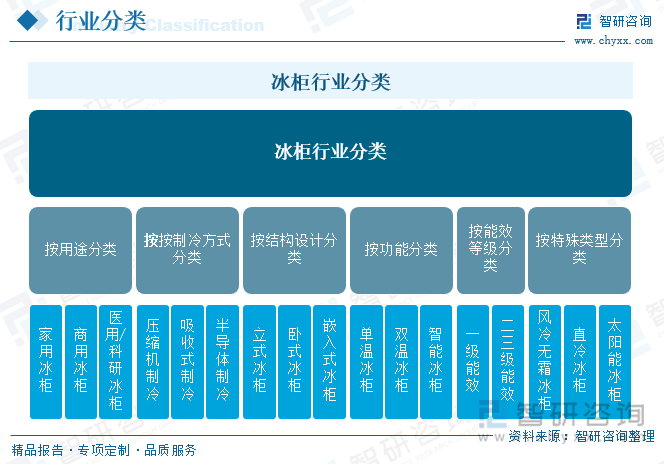
趋势研判!2025年中国冰柜行业产业链、发展历程、产销规模、竞争格局及行业发展趋势分析:冰柜市场呈现出蓬勃发展的态势,市场需求将持续增长[图]
Chan Ye Xin Xi Wang· 2025-07-21 01:28
Core Viewpoint - The Chinese freezer industry has experienced significant technological advancements since the introduction of freezer technology in the 1980s, leading to a robust market growth driven by rising consumer demand and supportive policies. China has become the world's largest producer and consumer of freezers, with production expected to exceed 30 million units by 2025 [1][3][6]. Industry Definition and Classification - Freezers, also known as freezing cabinets, are devices that maintain low temperatures (typically below -18°C) to extend the shelf life of items. They can be classified by usage (household, commercial, medical/research), cooling method (compressor, absorption, semiconductor), structure (upright, chest, built-in), functionality (single-temperature, dual-temperature, smart), and energy efficiency [2]. Current Industry Status - The Chinese freezer market is thriving, with a production forecast of 27.615 million units in 2024, an increase of 3.242 million units from 2023. The retail scale is projected to reach approximately 11 billion yuan, with sales volume around 8.46 million units [3][6]. Industry Value Chain - The upstream of the freezer industry includes raw materials (metal, plastic, glass, chemical materials) and core components (compressors, condensers/evaporators, control systems). The midstream involves research and manufacturing, while the downstream encompasses sales through various channels, serving households, supermarkets, restaurants, and medical institutions [9]. Industry Development History - The Chinese freezer industry has evolved from imitation to innovation, undergoing four stages: technology introduction, domestic rise, large-scale production, and intelligent development. The industry is now globally leading in technology, with ongoing advancements expected in cold chain logistics and medical applications [11]. Competitive Landscape - The Chinese freezer market features numerous leading manufacturers, including Aucma, Haier, Midea, and Meiling. The competition is characterized by brand segmentation and differentiated market strategies, with major players targeting high-end household and commercial cold chain markets, while smaller brands focus on specific commercial applications [13]. Industry Development Trends - The Chinese freezer industry is entering a phase of technological upgrades and market segmentation, driven by urbanization and evolving consumer preferences. There is an increasing demand for performance, design, and smart features in both household and commercial sectors. Innovation will be the key driver for future growth, with companies focusing on smart, energy-efficient, and customized solutions [15].


【海尔智家(600690.SH)】北方空调加速普及,海尔智家尤为受益——动态跟踪报告(洪吉然)
光大证券研究· 2025-07-19 13:43
Core Viewpoint - The air conditioning market in Northern China is experiencing significant growth, driven by rising temperatures and increased demand, with Haier solidifying its market position in the region [2][4][5]. Group 1: Market Performance - From July 7 to July 13, air conditioning sales in Northeast China surged, with sales revenue in Liaoning, Jilin, and Heilongjiang provinces increasing by 10, 25, and 6 times year-on-year respectively [2]. - In the first half of 2025, Haier's air conditioning products (including brands like Leader and Casarte) achieved a 16% market share in offline retail, ranking third overall, with market shares in Northeast, North China, and Northwest regions at 37%, 24%, and 21% respectively [3]. Group 2: Environmental Factors - The ownership of air conditioners per hundred households in Heilongjiang, Jilin, Liaoning, and Hebei is 24, 34, 80, and 160 units, showing increases of 75%, 86%, 64%, and 27% since 2018. In contrast, Guangdong, Chongqing, and Zhejiang have ownership rates of 232, 257, and 239 units, with growth rates of 15%, 23%, and 8% respectively [4]. - The summer of 2025 has seen unprecedented high temperatures in Northeast China, which, combined with global warming trends, is expected to lead to more frequent high-temperature events in the North, thereby accelerating the demand for air conditioning [4]. Group 3: Company Strategy - Haier's air conditioning division has strengthened its market position in Northern China, with a year-on-year increase in offline retail market share of 1.6% in Northeast and 2.7% in North China, while Midea's market share decreased by 6.0% and 3.8% respectively [5]. - Haier is focusing on high-efficiency, AI-controlled products and has adopted interactive live-streaming for marketing, directly engaging with end-users [7]. - The company is optimizing its supply chain with a new compressor factory in Zhengzhou, designed for an annual capacity of 15 million units, with the first phase expected to produce 3 million units by April 2024 [7].

中韩家电企业在欧洲市场展开攻防战:各自并购,也有合作开发
第一财经· 2025-07-19 13:31
Core Viewpoint - The article discusses the increasing presence and competitiveness of Chinese home appliance companies in the European market, highlighting their strategies and growth in sales, while also noting the response from South Korean companies like LG Electronics to this challenge [1][2][3]. Group 1: Market Dynamics - Chinese home appliance exports to Europe reached $15.57 billion from January to May 2025, marking a 12.3% year-on-year increase, with air conditioning exports growing approximately 20% due to rising temperatures in Europe [4][9]. - Haier's market share in the UK has reached 9%, positioning it among the top three brands, alongside Beko and Bosch [9]. - Midea's air conditioning sales in Europe increased by 35% in the first half of 2025, with a notable 68% growth in France [4][9]. Group 2: Competitive Strategies - LG Electronics plans to launch co-developed washing machines and refrigerators priced around $500 in Europe, moving from OEM to Joint Development Manufacturing (JDM) to enhance market share [2][4]. - LG Electronics has partnered with Chinese companies like Skyworth and Aucma to develop products, aiming to expand this model to other appliances like air conditioners [5][6]. - The article notes that LG Electronics is under pressure as its profits and appliance revenues have fallen below those of Midea, which reported a record revenue of 407.1 billion RMB in 2024 [7][8]. Group 3: Future Outlook - Chinese appliance companies are not only expanding in the low-cost segment but are also moving towards the mid-to-high-end market, creating a multi-tier brand matrix [8][10]. - The article predicts that the market share of Chinese companies in Europe will continue to rise as they focus on localizing production and enhancing brand value [10].
《2025/7/14-2025/7/18》家电周报:新一轮以旧换新国补资金本月有望到位,美的深化全球体育营销布局-20250719
Shenwan Hongyuan Securities· 2025-07-19 11:24
Investment Rating - The report maintains a positive outlook on the home appliance sector, indicating a "Buy" rating for key companies in the industry [3][4]. Core Insights - The home appliance sector outperformed the CSI 300 index, with the Shenwan home appliance index rising by 1.9% compared to a 1.1% increase in the CSI 300 index [3][4]. - The issuance of 123 billion yuan in ultra-long-term special bonds is expected to support the "old-for-new" consumption policy, with a total of 300 billion yuan allocated for this initiative [9][62]. - Midea Group has become the official sponsor of the 2025 Africa Cup of Nations, indicating a strategic investment in the African market, which is seen as having strong consumer potential [10][11]. Summary by Sections 1. Market Performance - The home appliance sector has shown resilience, with key companies like Yitian Smart (up 25.0%), Ecovacs (up 20.9%), and Roborock (up 9.7%) leading the gains, while Huaxiang Co. (-4.8%) and Hisense Visual (-2.4%) faced declines [3][6]. 2. Industry Dynamics - The issuance of 123 billion yuan in ultra-long-term special bonds aims to bolster consumer spending through the "old-for-new" policy, with 3 billion yuan allocated for this purpose [9][62]. - Midea's partnership with the African Football Confederation marks a significant step in expanding its investment in Africa, with plans for new manufacturing facilities in Egypt [10][11]. 3. Data Observations - In June, the average retail price of white goods increased, with air conditioners seeing a 10.1% rise in retail volume and a 14.6% increase in retail value [28][30]. - The average price of refrigerators rose by 2.7% to 7,137 yuan, despite a 2.4% decline in retail volume [31][34]. - The kitchen appliance segment also saw growth, with range hoods and gas stoves experiencing retail volume increases of 18.4% and 9.9%, respectively [36][37]. 4. Economic Environment - As of July 18, 2025, the exchange rate of the US dollar against the Chinese yuan has decreased by 0.54% since the beginning of the year [39][40]. - The sales area of commercial housing in June 2025 increased by 11.84% year-on-year, indicating a recovery in the real estate market [41][42].