CNOOC(600938)

Search documents
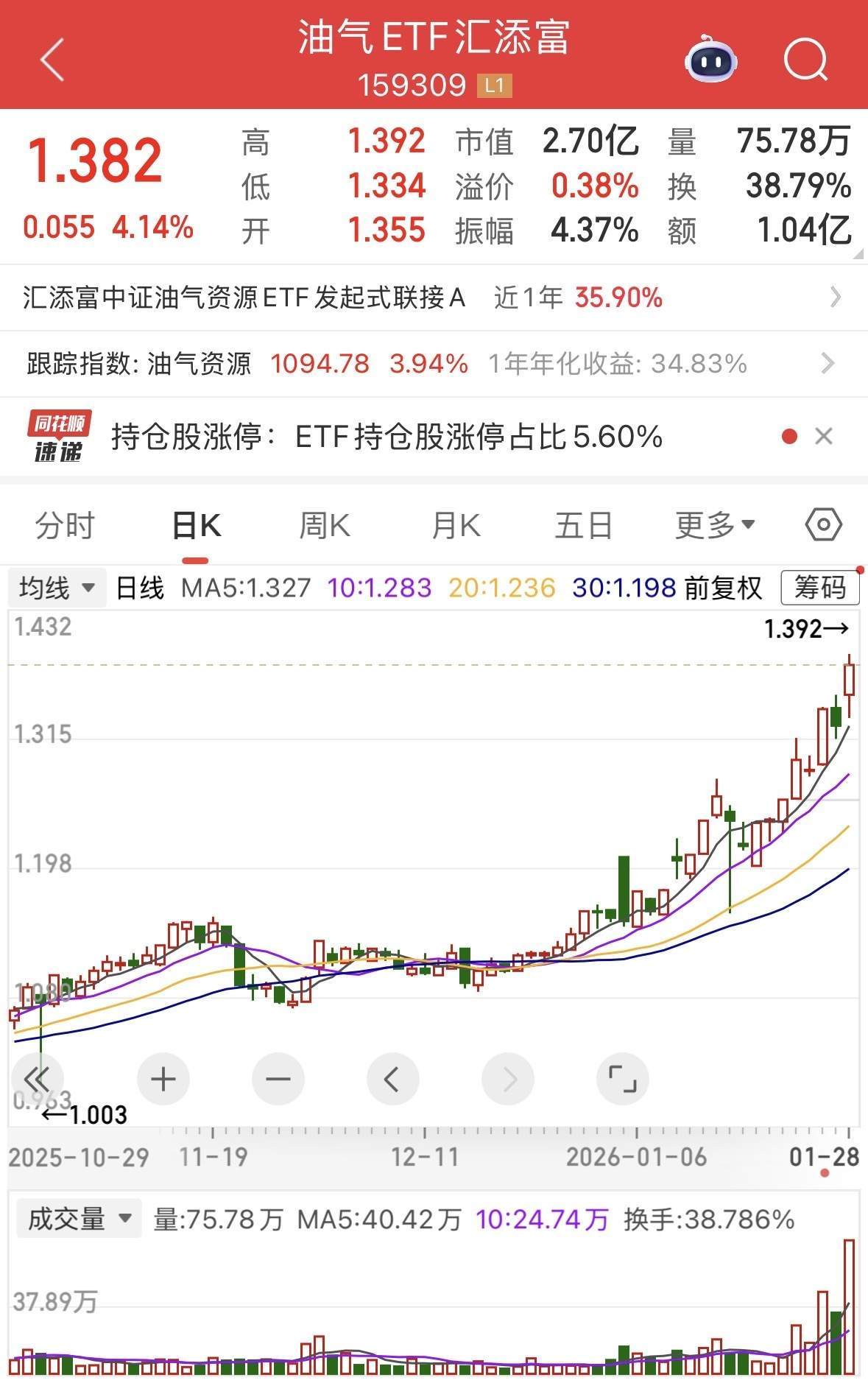
供需+美元三重利好共振,布油升至三个月高点!油气ETF汇添富(159309)飙涨超4%,创历史新高!连续10日揽金合超1.5亿
Sou Hu Cai Jing· 2026-01-28 13:16
Core Viewpoint - International oil prices have rebounded strongly, with Brent crude reaching a three-month high and WTI crude surpassing $62 per barrel, leading to increased activity in oil and gas stocks [1] Group 1: Market Performance - Oil and gas stocks saw significant gains, with PetroChina hitting the daily limit and CNOOC rising over 7%, setting new historical highs [1] - The oil and gas ETF, Huatai Securities (159309), surged over 4%, also reaching a historical high, with net subscriptions exceeding 90 million yuan during the day, following a total of over 150 million yuan in net inflows over the previous ten days [1] Group 2: Market Drivers - Multiple favorable factors are supporting the oil and gas market, including geopolitical tensions in Iran, a winter storm in the U.S. reducing daily oil production by up to 2 million barrels, and OPEC+ production cuts [5] - Demand-side factors include the initiation of global reserve accumulation, a Federal Reserve interest rate cut cycle boosting refined oil demand, and rising demand in Asia, Africa, and Latin America [5] - The U.S. dollar index hitting a four-year low further supports the rise in oil prices, which are priced in dollars [5] Group 3: Future Outlook - According to Huatai Securities research, geopolitical premiums have led to a rebound in oil prices during the off-season, with expectations for prices to bottom out and rise in Q2-Q3 of 2026 due to recovering demand and global reserve accumulation [5] - The oil and gas sector is viewed as a long-term investment opportunity, with the current geopolitical risks and short-term supply shocks creating favorable conditions for investment [5]



资源股强势大涨
Tebon Securities· 2026-01-28 12:23
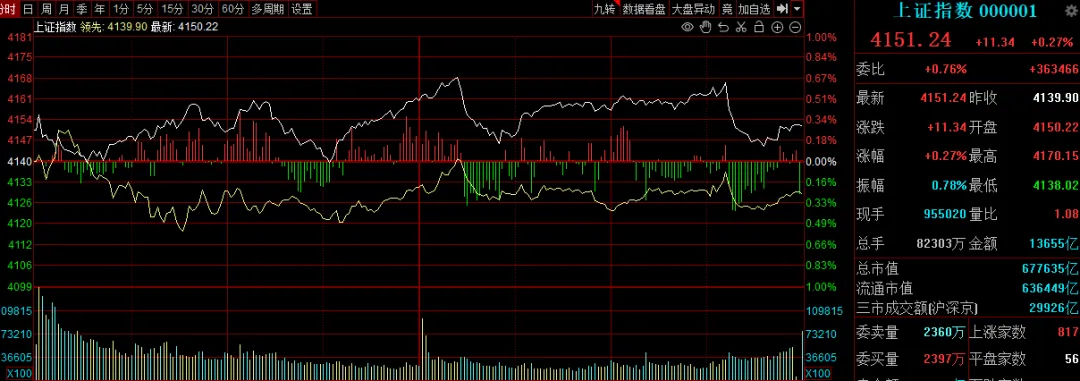
Market Overview - The A-share market experienced a volatile upward trend, with the Shanghai Composite Index closing at 4151.24 points, up 0.27%, while the Shenzhen Component Index rose slightly by 0.09% to 14342.89 points, and the ChiNext Index fell by 0.57% to 3323.56 points, indicating a cooling risk appetite for growth stocks [6][9] - Resource stocks led the market rally, with significant gains in sectors such as non-ferrous metals (up 6.02%), coal (up 3.29%), and oil & petrochemicals (up 3.26%), contributing to a 2.54% increase in the resource stock index, reaching a new high for the year [6][9] Sector Analysis - The report highlights a strong performance in resource stocks, particularly precious metals like gold and silver, which saw substantial price increases due to international market dynamics, including gold surpassing 5200 USD/ounce [6][9] - The report suggests a shift in investment focus from technology growth stocks to cyclical stocks, with an emphasis on sectors such as non-ferrous metals, oil & petrochemicals, and basic chemicals, which are expected to show high earnings growth [7][14] Commodity Market - The commodity index continued its strong upward trend, with the South China commodity index closing at 2866.28 points, up 1.49%, marking a new high for the year, driven by significant gains in aluminum and other commodities [9][11] - The report notes that aluminum prices surged by 5.75%, driven by economic recovery expectations and increased demand from downstream processing enterprises [15] Investment Themes - The report identifies key investment themes, including a focus on photovoltaic technology, commercial aerospace, and precious metals, as sectors likely to benefit from macroeconomic recovery and policy support [7][14] - The report emphasizes the importance of monitoring the performance of growth stocks and thematic stocks, which may face valuation pressures if annual report earnings do not meet expectations [7][14] Bond Market - The bond market showed slight increases, with the 2-year, 5-year, and 10-year treasury futures contracts experiencing minor gains, reflecting a stable liquidity environment supported by central bank operations [11][14] - The report indicates that the central bank's net injection of 140 billion yuan and the decline in short-term interest rates suggest a continued easing of monetary conditions [11][14]




今天,市场跳水三次……
Zhong Guo Ji Jin Bao· 2026-01-28 09:20
Market Overview - The market experienced fluctuations throughout the day, with the Shanghai Composite Index rising by 0.27%, the Shenzhen Component Index increasing by 0.09%, and the ChiNext Index declining by 0.57% [1] - A total of 1,739 stocks rose, with 84 hitting the daily limit up, while 3,640 stocks fell [2] Stock Performance - Among the rising stocks, 169 had gains exceeding 7%, 105 gained between 5-7%, and 252 rose between 3-5% [3] - Conversely, 2,912 stocks saw declines of 0-3%, 558 fell by 3-5%, and 58 dropped by more than 7% [3] - Resource stocks surged, particularly gold stocks, with Sichuan Gold achieving four consecutive limit-ups, and both Zhaojin Mining and Hunan Gold achieving three consecutive limit-ups [3] Sector Highlights - Oil and gas stocks collectively rose, with Tongyuan Petroleum and Zhongman Petroleum hitting the daily limit up, and China National Offshore Oil Corporation (CNOOC) increasing over 6% to reach a new high [4] - The non-ferrous metals sector strengthened, with silver stocks achieving seven consecutive limit-ups, and China Aluminum hitting the daily limit up, marking a 16-year high [5] - The coal sector also saw gains, with Shanxi Coking Coal and Shaanxi Black Cat both hitting the daily limit up [7] Declines - The pharmaceutical and medical stocks faced adjustments, with Bibet and Baipusai dropping over 10% [8] Trading Volume and Activity - The total trading volume reached approximately 29,922.93 billion, with a notable increase in trading activity for major ETFs, including the CSI 300 ETF from Huatai-PB, which exceeded 30 billion in trading volume [11]



A股三大指数盘中跳水三次 多只宽基尾盘放量!资源股全线爆发
Zhong Guo Ji Jin Bao· 2026-01-28 09:08
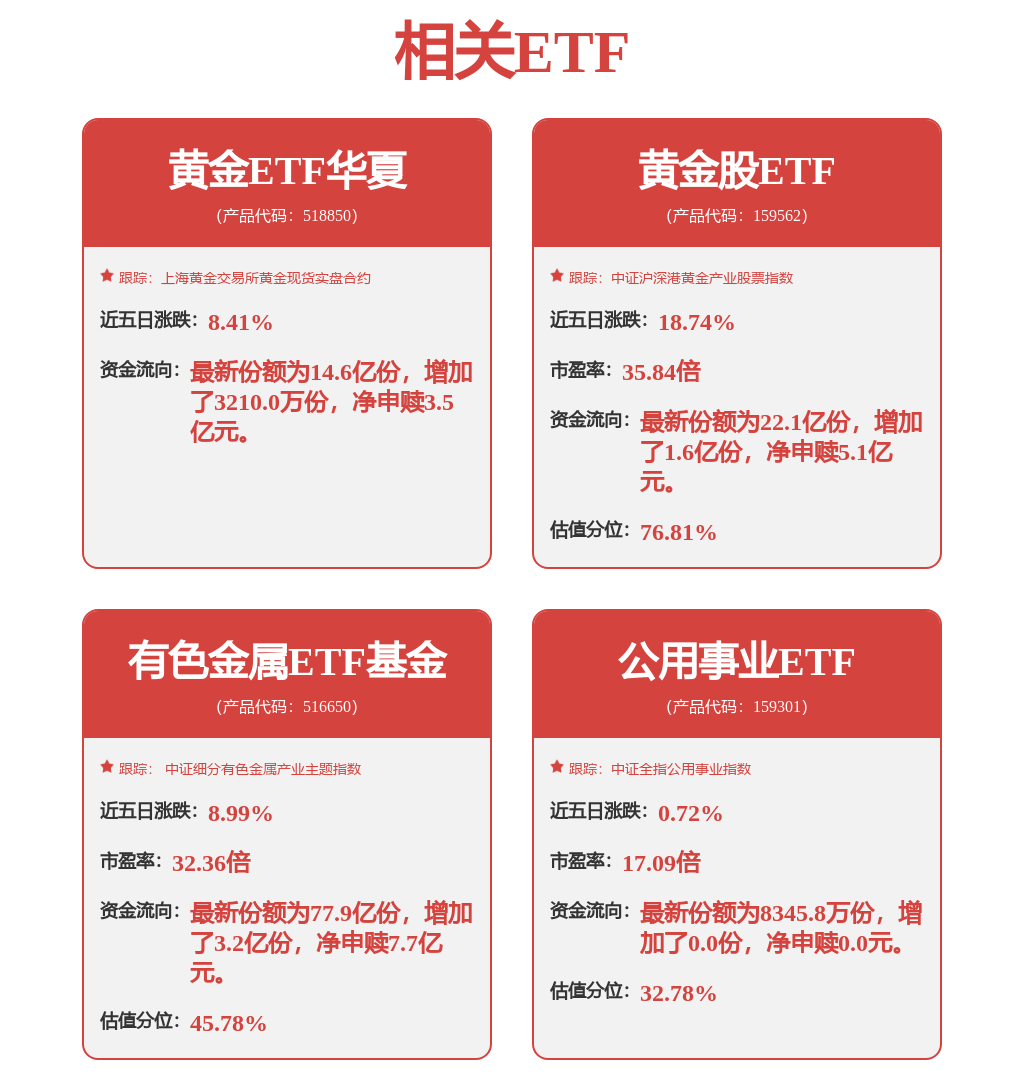
Market Overview - The market experienced fluctuations throughout the day, with the Shanghai Composite Index rising by 0.27%, the Shenzhen Component Index increasing by 0.09%, and the ChiNext Index declining by 0.57% [2] - A total of 1,739 stocks rose, 84 stocks hit the daily limit, and 3,640 stocks fell [3] Sector Performance - Resource stocks surged, with gold stocks leading the gains; Sichuan Gold achieved four consecutive limit-ups, while Zhaojin Mining and Hunan Gold recorded three consecutive limit-ups [4] - Oil and gas stocks collectively rose, with Tongyuan Petroleum and Zhongman Petroleum hitting the daily limit, and China National Offshore Oil Corporation increasing over 6% to reach a new high [5] - The non-ferrous metals sector strengthened, with Silver Nonferrous achieving seven consecutive limit-ups, and China Aluminum hitting the daily limit, marking a 16-year high [6] - The coal sector also saw gains, with Shanxi Coking Coal and Shaanxi Black Cat hitting the daily limit [7] Market Dynamics - The pharmaceutical and medical stocks adjusted, with Bibete and Baipusais falling over 10% [8] - The market experienced at least three significant drops during the day, suggesting an unseen force controlling market momentum [8] - Several broad-based ETFs saw increased trading volume, with the HuShen 300 ETF from Huatai-PineBridge exceeding 30 billion yuan in trading volume, and other ETFs like the HuShen 300 ETF from E Fund and the CSI 500 ETF also surpassing 20 billion yuan [8] Policy Insights - According to a report from CITIC Securities, past bull markets have seen overheating leading to cooling policies; the current bull market since September 24 has maintained a positive policy tone, with periodic long-term policies to regulate market entry [9] - Recent policies, such as the increase in risk factors for insurance funds and a 0.25 percentage point reduction in monetary policy tool rates, aim to cool the market without altering the overall positive trend [9] - The proactive cooling measures are intended to manage the bull market's pace, preventing irrational exuberance and fostering a gradual bull market, which is noted as the slowest bull market in A-share history [9] ETF Performance - Gold ETF (Hua Xia, product code: 518850) saw a 5-day increase of 8.41%, with a net subscription of 350 million yuan [11] - Gold Stocks ETF (product code: 159562) increased by 18.74% over five days, with a net subscription of 510 million yuan [12] - Non-ferrous Metals ETF (product code: 516650) rose by 8.99% in five days, with a net subscription of 770 million yuan [13] - Public Utilities ETF (product code: 159301) had a modest increase of 0.72% over five days, with no net subscription changes [14]


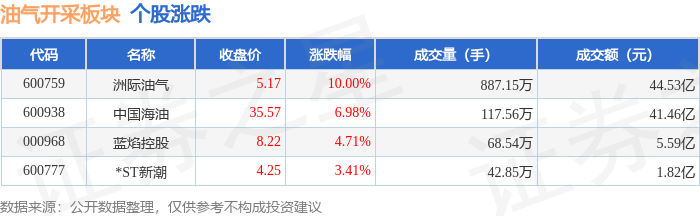
油气开采板块1月28日涨6.64%,洲际油气领涨,主力资金净流入4.45亿元
Zheng Xing Xing Ye Ri Bao· 2026-01-28 09:04
Group 1 - The oil and gas extraction sector increased by 6.64% compared to the previous trading day, with Intercontinental Oil leading the gains [1] - The Shanghai Composite Index closed at 4151.24, up 0.27%, while the Shenzhen Component Index closed at 14342.9, up 0.09% [1] - Major stocks in the oil and gas extraction sector showed significant price increases, with Intercontinental Oil rising by 10.00% to a closing price of 5.17 [1] Group 2 - The net inflow of main funds in the oil and gas extraction sector was 445 million yuan, while retail investors experienced a net outflow of 608 million yuan [1] - Among individual stocks, China National Offshore Oil Corporation had a main fund net inflow of 4.36 billion yuan, but also saw a retail net outflow of 5.70 billion yuan [2] - Intercontinental Oil had a main fund net inflow of 17.34 million yuan, while retail investors had a net outflow of 45.17 million yuan [2]


1月还剩两个交易日,最近你赚钱了没?就看有没有踩中这条主线
Mei Ri Jing Ji Xin Wen· 2026-01-28 08:58
Market Overview - The A-share market showed mixed performance on January 28, with the Shanghai Composite Index rising by 0.27% to close at 4151.24 points, while the Shenzhen Component increased by 0.09% to 14342.89 points, and the ChiNext Index fell by 0.57% to 3323.56 points [1] - The total trading volume in the Shanghai, Shenzhen, and Beijing markets reached 29.926 billion yuan, an increase of 709 million yuan compared to the previous day [1] Sector Performance - The number of stocks that rose exceeded 1700, with over 80 stocks hitting the daily limit up. The sectors that performed well included precious metals, jewelry, mining, non-ferrous metals, small metals, and coal [1] - Conversely, sectors such as photovoltaic equipment, medical devices, medical services, biopharmaceuticals, and aerospace saw declines [1] Gold and Non-Ferrous Metals - The gold and non-ferrous metals sectors experienced significant gains, driven by a surge in international gold prices, which reached a historical high of over $5200 per ounce [3] - The price of gold increased by more than $900 in less than a month, contributing to a wave of limit-up stocks in the gold and non-ferrous metals sectors [3] Storage Sector - The storage sector has been experiencing a price surge due to increased demand for high-performance storage chips from AI servers, leading to structural shortages in traditional consumer electronics and industrial control sectors [5] - Recent data from Goldman Sachs indicated that spot prices for DDR5 and DDR4 chips have increased by 76% and 172% respectively compared to December, boosting optimism in the industry [5] Company Earnings Forecasts - Among the gold concept stocks, five out of nine companies have forecasted profit increases for 2025, with Zijin Mining expecting a maximum net profit of 52 billion yuan, a year-on-year increase of 62% [6] - In the storage sector, 19 out of 34 companies that disclosed earnings forecasts reported profitability, with Bawei Storage projecting revenues of 10 to 12 billion yuan, a year-on-year growth of 49.36% to 79.23% [6] Market Trends - The recent performance of the A-share market indicates a shift in investor focus from traditional dividend stocks to sectors with growth potential, particularly those related to AI and technology [12] - Analysts suggest that the dividend strategy may underperform the market in 2025 due to a shift in market dynamics favoring growth rates over dividend yields [12][13]
今天,跳水三次!
Xin Lang Cai Jing· 2026-01-28 08:35
Market Overview - The market experienced fluctuations on January 28, with the Shanghai Composite Index rising by 0.27%, the Shenzhen Component Index increasing by 0.09%, and the ChiNext Index declining by 0.57% [2][12]. - A total of 1,739 stocks rose, 84 stocks hit the daily limit up, while 3,640 stocks fell [3][13]. Sector Performance - Resource stocks surged, with gold stocks leading the gains. Sichuan Gold achieved a four-day limit up, while Zhaojin Mining and Hunan Gold saw three consecutive limit ups [4][14]. - Oil and gas stocks collectively rose, with Tongyuan Petroleum and Zhongman Petroleum hitting the limit up, and China National Offshore Oil Corporation (CNOOC) increasing over 6% to reach a new high [5][16]. - The non-ferrous metals sector strengthened, with Silver Industry (Wei Quan) achieving seven consecutive limit ups, and China Aluminum hitting the limit up, marking a 16-year high [6][17]. - The coal sector also saw gains, with Shanxi Coking Coal and Shaanxi Black Cat hitting the limit up [7][18]. Declines - The pharmaceutical and medical stocks faced adjustments, with Bibete and Baipusais falling over 10% [8][19]. Trading Activity - Significant trading activity was noted, with the HuShen 300 ETF from Huatai-PB exceeding 30 billion yuan in trading volume, and other ETFs like the HuShen 300 ETF from E Fund and the CSI 500 ETF also surpassing 20 billion yuan [9][20]. - A report from CITIC Securities indicated that in previous bull markets, overheating trading conditions prompted cooling policies to prevent severe consequences, suggesting that the current proactive cooling measures are aimed at regulating market momentum without altering the overall positive policy stance [9][20].

在查办某严重违纪违法案件过程中,驻中国海油纪检监察组发现不法供应商与相关领导干部长期深度绑定
Xin Jing Bao· 2026-01-28 07:46
Core Viewpoint - The article discusses the ongoing efforts of the disciplinary inspection and supervision group at China National Offshore Oil Corporation (CNOOC) to enhance governance and accountability within the organization through regular one-on-one discussions with party members, emphasizing the importance of anti-corruption measures and compliance with central directives [1][2][3][4] Group 1 - The CNOOC disciplinary inspection group has conducted one-on-one interviews with party members for five consecutive years, marking the first such engagement since the comprehensive reform of the inspection system [1] - The focus of these discussions includes the implementation of Xi Jinping's directives and major decisions from the central government, encouraging party members to reflect on specific strategies for execution in their respective areas [1][2] - In 2023, CNOOC was included in the first round of inspections by the central government, prompting the inspection group to combine interview efforts with oversight of the central inspection rectification process [1][2] Group 2 - The 2025 interviews will focus on the implementation of the 14th Five-Year Plan and other significant political tasks, aiming to clarify responsibilities and promote high-quality development within the enterprise [2] - Prior to each interview, the inspection group prepares by identifying key issues in party governance related to each member's responsibilities, creating a checklist to guide discussions [2] - The group has identified issues such as high subcontracting ratios that pose risks to corporate development and potential corruption, urging reforms in the operational models of professional service companies [2] Group 3 - The inspection group emphasizes the importance of addressing the root causes of issues discussed during interviews, ensuring that both parties share insights and solutions [2][3] - Following each interview, the group holds meetings to analyze the issues raised, with members reporting on corrective actions taken in response to previous discussions [3] - The regularity of these interviews has fostered a culture of accountability and proactive engagement among party members, with many expressing a desire for continued dialogue [3] Group 4 - The CNOOC disciplinary inspection group is committed to implementing comprehensive reform requirements, enhancing the effectiveness of supervision over leadership and promoting responsible governance [4] - The group aims to create a culture of strict compliance and positive ethical standards within the organization [4]
高股息爆发,港股通红利ETF广发(520900)放量大涨3.37%,十大重仓股全部上涨,机构称红利资产迎配置窗口期
Xin Lang Ji Jin· 2026-01-28 07:45
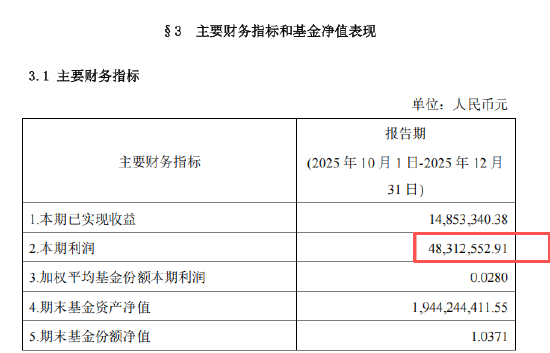
Core Viewpoint - The Hong Kong Stock Connect Dividend ETF (520900) has shown significant performance, with a notable increase in both share volume and profits, indicating strong investor interest in high-dividend assets amid a favorable economic environment [1][2][6]. Financial Performance - In Q4 2025, the Hong Kong Stock Connect Dividend ETF (520900) reported a profit of 48.31 million yuan, contributing to an annual profit of 228 million yuan for the year [2][4]. - The fund's share volume increased from 1.592 billion to 1.875 billion, marking a growth rate of 17.78% [2][4]. Market Trends - The demand for high-dividend assets is bolstered by the stable and continuous dividend policies of state-owned enterprises (SOEs), which are now key performance indicators for state-owned enterprises [6][13]. - The index tracking the ETF focuses on SOEs with stable dividend levels and high dividend yields, primarily in sectors like energy and telecommunications [7][9]. Sector Analysis - The top five sectors in the index include Oil & Petrochemicals (28.63%), Telecommunications (21.75%), Coal (11.80%), Transportation (10.47%), and Public Utilities (7.94%) [7]. - The top ten constituent stocks account for 66.88% of the index, featuring major players in the energy and telecommunications sectors [9][10]. Historical Performance - Since its inception, the index has achieved a cumulative return of 120.79%, outperforming the Hang Seng Index and the CSI Dividend Index [11][12]. - The dividend yield has increased significantly from 3%-4% in 2015 to 5%-9% in 2023-2025, reflecting the enhanced dividend capacity of SOEs [12]. Investment Outlook - Analysts suggest that the current market conditions may present a favorable window for investing in high-dividend assets, particularly through the Hong Kong Stock Connect Dividend ETF [13][14]. - The ETF provides a convenient entry point for investors looking to capitalize on stable returns and long-term value in the Hong Kong market [14].





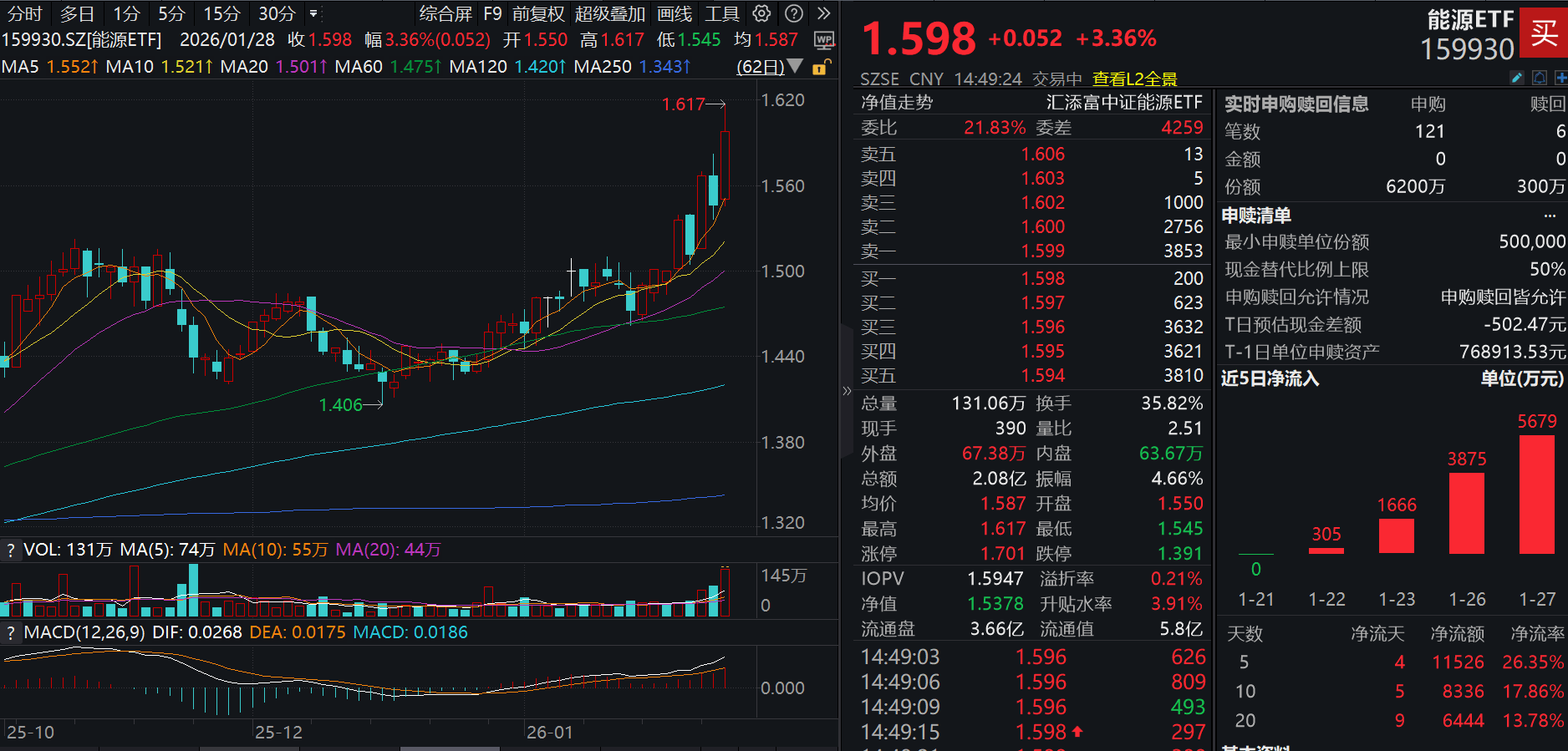
“三桶油”集体冲高,中国海油涨超7%再创新高,能源ETF(159930)飙升涨超3%,连续5日吸金超2亿元!机构:油价或已进入筑底反弹阶段!
Sou Hu Cai Jing· 2026-01-28 07:22
Core Viewpoint - The energy sector, particularly oil and coal, is experiencing significant upward momentum, with substantial capital inflows into energy ETFs, indicating strong investor interest and potential for growth [1][3]. Group 1: Market Performance - As of January 28, energy ETFs (159930) surged by 3.36%, attracting over 94 million yuan in capital, marking a total net inflow of over 200 million yuan over the past five days [1]. - Key stocks within the energy ETF saw varied performance, with China National Offshore Oil Corporation and Jereh Group both rising over 7%, while Shanxi Coking Coal and China Petroleum also posted gains [2][3]. Group 2: Component Stocks - The top ten component stocks of the energy ETF include: - China National Petroleum (3.16% increase, 15.06% weight) - China Shenhua Energy (1.43% increase, 14.26% weight) - China Petroleum & Chemical Corporation (0.16% increase, 12.09% weight) - Shaanxi Coal and Chemical Industry (2.76% increase, 10.82% weight) - Other notable stocks include Jereh Group and Shanxi Coking Coal, both showing significant gains [4]. Group 3: Oil Market Insights - According to Huatai Securities, geopolitical factors have led to a rebound in oil prices during the off-season, with Brent crude oil prices expected to average $65 per barrel by mid-2026, up from a previous estimate of $62 [5]. - The report suggests that energy companies with the ability to increase production and reduce costs may present attractive investment opportunities as oil prices stabilize [5]. Group 4: Coal Market Insights - According to Kaiyuan Securities, coal prices are at historical lows, providing room for a rebound, especially with supply-side policies constraining production and increased demand during the heating season [6]. - The report indicates that both thermal and coking coal prices have upward elasticity, with the coal sector poised for improvement as the market conditions shift [6].