CMS(600999)

Search documents
中资券商逐鹿港股IPO投行业务优势凸显
Zhong Guo Zheng Quan Bao· 2025-07-22 21:05
Core Insights - The Hong Kong IPO market is experiencing a surge in activity, with financing scale returning to the global forefront, driven primarily by Chinese securities firms [1][2] - Major Chinese securities firms, including CICC and CITIC Securities, have shown outstanding performance, collectively holding over 40% market share in the IPO space [1][2] - The first half of the year saw 51 companies successfully listed on the Hong Kong main board, a 27.5% increase from 40 companies in the same period last year, with IPO fundraising amounting to HKD 125.4 billion, a significant rise of 591.94% year-on-year [1] Company Performance - CICC led the underwriting projects with 18 deals, capturing a market share of 16.36%, followed by CITIC Securities with 11 deals (10.00%), Huatai Securities with 10 deals (9.09%), and招商证券 with 8 deals (7.27%) [2] - The top four Chinese securities firms account for a total market share of 42.72%, highlighting the "Matthew Effect" in the Hong Kong IPO market [2] Competitive Advantages - Chinese securities firms possess inherent advantages over foreign counterparts in client insight and maintenance, as they have established long-term relationships with A-share clients, allowing for better understanding of business models and regulatory preferences [2][3] - The integrated "domestic-Hong Kong" teams enable seamless coordination and efficient execution of A+H listing strategies, significantly enhancing the efficiency of H-share listings and refinancing [2] Future Strategies - CICC plans to continue enhancing its integrated domestic and international operations, focusing on key sectors such as TMT, consumer goods, advanced manufacturing, and biotechnology to capitalize on the ongoing A+H listing trend [3] - CITIC Securities is accelerating its international development, achieving record high international business revenue, and aims to enhance its core competencies in business capability, client market, and operational management [4] - GF Securities intends to strengthen resource accumulation in key sectors, enhance client development, and focus on digital transformation in investment banking [4]
券商资管系公募,排名来了!
中国基金报· 2025-07-22 16:05
Core Viewpoint - The article discusses the recent disclosure of public fund second-quarter reports by securities asset management firms, highlighting the growth in asset management scale and insights from fund managers [2][3]. Group 1: Asset Management Scale - As of the end of Q2 2025, four securities asset management firms have surpassed a public fund asset management scale of 100 billion yuan, with Dongfanghong Asset Management leading at 179.84 billion yuan, followed by Huatai Securities Asset Management at 165.11 billion yuan, and Zhongyin Securities at 130.31 billion yuan [4]. - Compared to the end of Q1 2025, the top securities asset management firms have generally experienced growth in public fund management scale, with Dongfanghong and Huatai Securities increasing by over 20 billion yuan each, and招商证券 growing by 3.3 billion yuan [4]. Group 2: Fund Manager Insights - The A-share market has been active in the first half of the year, with securities asset management fund managers generally reporting good performance and rising product net values [6]. - Jiang Qi, the fund manager of Dongfanghong Medical Upgrade Stock A, reported a net value increase of 44.55% in the first half of the year, reaching a new high since its inception [7]. - Jiang Qi maintains a high stock position of 90.37% and has increased allocations to innovative drugs in the Hong Kong and Sci-Tech Innovation Board markets, indicating a strong belief in the growth of the innovative drug sector [7]. - Zhou Yun, managing the Dongfanghong JD Big Data Mixed Fund, noted a net value increase of 6.55% in the first half of the year, emphasizing the long-term impact of low interest rates and the shift of household wealth towards equity assets [8]. - Jiang Cheng, Deputy General Manager of Zhongtai Asset Management, reported that his product's net value has increased over 108% in the past five years, while expressing a cautious outlook on individual stocks despite a generally optimistic macroeconomic view [9][10].








行业主题型基金2025年二季报点评:国防军工基金收益领先,科技通信赛道持续吸金
CMS· 2025-07-22 14:02
Report Title - Analysis of the Second Quarter Report of Industry-themed Funds in 2025 [1] Report Industry Investment Rating - Not Available Core Viewpoints of the Report - In the second quarter of 2025, most major industry-themed funds saw an increase in the number and scale. The total scale of technology and communication, and national defense and military industry funds rose significantly, while that of new energy (vehicles) and consumer industry funds shrank [3]. - Except for new energy (vehicles) and midstream manufacturing, other major industry-themed track funds recorded average positive returns. National defense and military industry funds had a relatively high increase, with an average increase of about 12.54% [3]. - In most tracks, active funds outperformed passive funds in terms of excess returns. However, in new energy (vehicles) and large manufacturing tracks, active funds underperformed passive funds [3]. - The trading activity of most major track ETFs decreased, except for the medical and biological, and national defense and military industry tracks, where the average daily trading volume increased by over 60% [3]. - The net capital flow status of major industry-themed track funds varied. The technology and communication track had a relatively large net capital inflow, while the new energy (vehicles) track had a relatively large net capital outflow [3]. Summary by Directory Quantity & Scale Changes - Most major industry-themed funds saw an increase in quantity and scale compared to the end of the previous quarter. The technology and communication industry had the largest increase in total fund scale, up about 7.8% or 26.61 billion yuan, and the national defense and military industry also had a significant increase, up 35.7% or 24.99 billion yuan. In contrast, the total scale of new energy (vehicles) and consumer industry funds shrank by over 900 million yuan each [3][11]. - In the second quarter of 2025, the pharmaceutical and biological industry had the most new funds in the industry fund category, with 7 new funds, and the large manufacturing and large technology theme funds had the most new funds in the theme fund category, with 6 new funds each [3]. - The new funds in the pharmaceutical and biological industry and large manufacturing theme were mostly passive management funds. The average fundraising scale of new industry funds in the second quarter was about 2.2 billion yuan, slightly lower than the previous quarter [16]. - A total of 15 major industry-themed funds expired in the second quarter of 2025, with 4 each in the large manufacturing and new energy (vehicles) theme tracks [25]. Performance - In the second quarter of 2025, the A-share market was volatile, and most major industry-themed track funds, except for new energy (vehicles) and midstream manufacturing, recorded average positive returns. National defense and military industry funds had a relatively high increase, with an average increase of about 12.54%, while midstream manufacturing and new energy (vehicles) industry funds declined, with average declines of 3.52% and 0.90% respectively [27]. - Active funds outperformed passive funds in terms of excess returns in most tracks. The active funds in the pharmaceutical and biological industry had an excess return of about 7.3% [29]. - In the consumer industry, the quarterly average return of consumer industry funds was about 1.56%. Active funds performed better, with an average return of about 3.0% [33][37]. - The pharmaceutical and biological industry continued its upward trend, with an average quarterly return of 9.61%. Active funds had stronger performance elasticity, with an average return of about 12.6% [42][44]. - In the technology and communication industry, the average quarterly return of technology and communication industry funds was about 1.51%. Active funds had little advantage, with an average return of about 1.54% [48][50]. - The midstream manufacturing industry showed significant internal differentiation, with an average quarterly return of about -3.52%. Passive funds had an average return of about -3.5% [55][57]. - The national defense and military industry had excellent performance, with an average quarterly return of about 12.54%. Active funds performed better, with an average return of about 13.3% [62][64]. - In the cyclical industry, the performance differentiation of sub - industries converged. The average quarterly return of cyclical industry funds was about 3.21%. Active funds performed better, with an average return of about 4.1% [71][74]. - The financial and real estate industry showed significant internal differences. The average quarterly return of financial and real estate funds was about 7.68%. Active funds had a larger increase, with an average return of about 10.3% [79][80]. - The new energy (vehicles) theme funds performed poorly, with a decline compared to the previous quarter. Active funds had an average return of about -1.1% [83]. - The large technology theme funds' performance declined. Active funds had an average return of about 3.0% [84]. - The large manufacturing theme funds' performance declined. Passive funds had an average return of about 2.6% [91]. - The ESG theme active funds performed well, with an average return of about 2.7%. Passive funds' performance recovered, with an average return of about 2.0% [95] Trading Situation & Capital Changes - In the second quarter of 2025, the total average daily trading volume of technology and communication ETFs remained at the highest level, and the trading was relatively active [96]. - The net capital flow status of major industry-themed track funds varied. The technology and communication track had a relatively large net capital inflow of 20.551 billion yuan, while the new energy (vehicles) track had a relatively large net capital outflow of -8.335 billion yuan [100]. - Except for the medical and biological, national defense and military industry, and large manufacturing tracks, the average daily trading volume of other major track ETFs decreased, and the trading activity declined overall. The average daily trading volume of medical and biological, and national defense and military industry track ETFs increased by over 60% [102]. - In terms of trading, sub - theme ETFs such as Hong Kong brokerage, Hong Kong Internet, semiconductor chips, and Hong Kong innovative drugs were relatively more active [106]. - In terms of capital flow, sub - theme products such as Hong Kong large technology, Hong Kong innovative drugs, semiconductors, and national defense and military industry had relatively large net capital inflows, while sub - themes such as large medicine, brokerage, biomedicine, large consumption, and new energy had relatively large net capital outflows [109] Position Changes - Compared with the end of the previous quarter, active funds in each industry-themed track made the following major changes to their top ten heavy - position stocks: significant increases in holdings of certain stocks and significant decreases in holdings of others in different industries such as consumer, pharmaceutical and biological, technology and communication, etc [114]
招商证券:Q2主被动基金持仓港股占比创历史新高 重点增配科技及金融
Zhi Tong Cai Jing· 2025-07-21 23:02
Group 1 - The core viewpoint is that both active and passive fund sizes have rebounded in Q2 2025, with a notable increase in active fund positions and a decrease in stock concentration [1][2] - Active equity funds are focusing on technology, large finance, and military medicine sectors, with a preference for small-cap growth stocks [2][3] - The active fund's total heavy holdings in Hong Kong stocks reached 325.9 billion yuan, increasing its proportion in total heavy holdings from 19.13% in Q1 2025 to 19.92%, marking a new high since Q2 2015 [4] Group 2 - The recovery in the A-share market since Q2 2025 has led to an increase in investor risk appetite, benefiting active fund performance and size [2] - Passive funds have also seen significant net subscriptions since early April 2025, driven by state-owned enterprises entering the market to stabilize it [2][3] - The banking sector has been a focus for active funds, with significant increases in holdings due to high dividend yields and market activity [3]
首尾规模相差超百倍,券商如何破局养老金融?
中国基金报· 2025-07-20 12:32
Core Viewpoint - The personal pension fund distribution by securities firms is facing significant challenges, with sales figures remaining low compared to banks, which offer a wider range of products and services [1][3][4]. Group 1: Current Market Situation - In the first half of this year, personal pension fund sales through securities firms were less than 5000 yuan, a stark contrast to zero sales last year [1]. - The sales scale of personal pension products among 18 securities firms varies dramatically, with a difference of over 100 times between the largest and smallest firms [3]. - Only six securities firms have surpassed 10 million yuan in sales, with the largest being CICC at 24.83 million yuan [3]. Group 2: Challenges Faced - Securities firms are limited in their ability to sell a full range of personal pension products compared to banks, which can offer savings, insurance, and various investment products [1][4]. - The requirement for securities firms to rely on banks for personal pension trading accounts complicates the business process [4]. - The average return of FOF products over two years is only 2.92%, which, combined with declining interest rates on savings and insurance products, has dampened public interest in personal pension products [5]. Group 3: Strategies for Improvement - Some securities firms are adopting a buy-side advisory approach to provide tailored pension planning solutions to clients [6][8]. - CICC and China Galaxy Securities are leveraging their strengths in wealth management and insurance sales to enhance their personal pension services [9][12]. - The introduction of independent third-party evaluation services for personal pension products is suggested to help clients navigate the complex product landscape [11]. Group 4: Future Outlook - The industry is shifting from a focus on account opening to a comprehensive competition in product strength and ecosystem services [12]. - The recent regulatory changes may allow securities firms to sell bank wealth management and insurance products, potentially addressing the current challenges in the personal pension market [11][12]. - The emphasis on transforming complex professional capabilities into simple solutions for clients is seen as crucial for the future of personal pension services [13].


非银金融行业周报:建议重视香港RWA业务发展对估值的正向催化作用-20250720
Shenwan Hongyuan Securities· 2025-07-20 06:45
Investment Rating - The report maintains a "Positive" outlook on the non-bank financial industry, indicating an expectation for the sector to outperform the overall market [1]. Core Insights - The report emphasizes the positive catalytic effect of the development of RWA (Real World Assets) business in Hong Kong on valuations, highlighting strategic collaborations and the potential for significant market expansion [4][7]. - It notes that the insurance sector is experiencing a favorable environment with a focus on undervalued companies and mid-year performance opportunities, recommending several key players [4][11]. - The brokerage sector is also highlighted, with a recommendation for firms benefiting from improved competitive dynamics and those with strong earnings elasticity [4][11]. Summary by Sections Market Review - The Shanghai Composite Index closed at 4,058.55 with a weekly change of +1.1%, while the non-bank index closed at 1,921.37 with a change of -1.2% [7]. - The brokerage, insurance, and diversified financial sectors reported respective changes of -1.1%, -1.4%, and -2.4% [7]. Non-Bank Industry Insights - The report discusses the strategic partnership between GCL-Poly and Taiping Asset Management in Hong Kong, focusing on RWA infrastructure development and digital asset investment [4]. - It highlights the significant growth potential in the tokenization of non-liquid assets, estimating a market size of $16 trillion by 2030 [4]. - The report also notes the performance of various insurance companies, with significant year-on-year growth in premium income for several key players [35][32]. Brokerage Sector Analysis - The report indicates that 30 out of 51 listed brokerages have reported positive earnings forecasts, with net profit growth exceeding 40% for those that disclosed results [4]. - The average daily trading volume in the Shanghai and Shenzhen markets reached 1.26 trillion yuan, reflecting a 52% year-on-year increase [22]. - The report recommends several brokerage firms based on their competitive positioning and earnings potential, including Guotai Junan and CITIC Securities [4][11].




招商证券电话会议纪要(20250713)
CMS· 2025-07-18 07:43
Investment Rating - The report maintains a "Recommended" rating for the industry, indicating a positive outlook for investment opportunities [2]. Core Insights - The report emphasizes that the macroeconomic policy in the second half of the year will focus on addressing price issues, which could significantly alter the pricing logic of domestic assets and impact market trends [5][6]. - The ongoing "involution" phenomenon in both supply and demand sides is contributing to downward price pressures, necessitating policy interventions from both sides to alleviate these pressures [3][4]. - The introduction of the Science and Technology Innovation Bond ETF is seen as a significant development, with a rapid expansion of the market for science and technology bonds, indicating strong support for technological innovation financing [10][11]. Summary by Sections Macroeconomic Analysis - The likelihood of achieving a 5% economic growth target for the year is high, but the need for additional policies to stimulate growth is decreasing [2]. - Price levels are under pressure, leading to negative growth in prices, which affects the normal circulation of the national economy [2][3]. Supply and Demand Dynamics - The report identifies that excessive working hours among employees are suppressing reasonable consumer demand, contributing to an oversupply situation [3]. - It suggests that addressing the "involution" requires measures on both supply and demand sides, including the orderly exit of inefficient production capacities [3][4]. Science and Technology Innovation Bonds - The launch of the Science and Technology Innovation Bond ETF is part of a broader policy initiative to support technological innovation, with significant growth in the issuance of science and technology bonds [10][11]. - The report highlights that the current market for science and technology bonds has expanded rapidly, with a total issuance exceeding 620 billion yuan as of early July [10][11]. Banking Sector Analysis - The report discusses the importance of evaluating bank asset quality, emphasizing the need for a comprehensive assessment of various indicators to gauge the health of banks [19][20]. - It introduces new metrics such as "broad non-performing asset ratio" and "excess provision profit multiple" to provide a more accurate picture of banks' asset quality [22][23]. Securities and Investment Strategy - The report notes that the securities market is entering a phase of stock competition, with a focus on long-term investment strategies and the importance of adapting to regulatory changes [26][27]. - It suggests that the brokerage sector is poised for growth, particularly in the context of ongoing market reforms and the increasing role of institutional investors [25][28].
电话会议纪要(20250713)
CMS· 2025-07-18 05:35
Macro - The likelihood of achieving a 5% economic growth target for the year is high, with a decreasing necessity and intensity for incremental policies in the second half of the year [1] - Continuous price pressure has negatively impacted the normal circulation of the national economy, leading to a focus on addressing price issues through unconventional macroeconomic policies [1][2] - The phenomenon of "involution" in both supply and demand sides has intensified downward price pressures, with low capacity utilization and excessive capital expenditure on the supply side, and long working hours suppressing consumer demand on the demand side [2][3] Strategy - The IPO process in Hong Kong involves both public offerings and international placements, with the former primarily targeting retail investors, leading to a liquidity "drain" effect due to the need for investors to freeze funds for subscriptions [6][8] - The introduction of the FINI system in 2023 has significantly reduced the liquidity pressure associated with IPOs by allowing for a pre-set funding compression mechanism, which can save approximately 71% of the funds that would have been frozen historically [8] - The launch of the first batch of Sci-Tech Bond ETFs on July 7, 2025, raised 29 billion yuan, marking a significant expansion in the Sci-Tech bond market, which has seen rapid growth due to supportive policies [9][10] - The current Sci-Tech bonds are predominantly issued by state-owned enterprises, with a significant portion allocated to the banking sector, indicating a strong focus on financing technology innovation [10][11] Non-Bank Financials - The securities industry is expected to benefit from a stable equity market and a recovering bond market, with significant growth in financing activities driven by state-owned banks [22][23] - The competitive landscape is shifting towards a focus on functionality and profitability, with a notable increase in the concentration of leading firms in the industry [24][25] - The capital market is stabilizing, with various funding sources supporting a potential upward breakout in equity markets, positioning brokerages as key players in this trend [26][27] Real Estate - The valuation of major real estate companies is believed to have entered an investment range, with a focus on the "demand bottom" and the dynamics of supply and demand relationships [28] - A potential decline in new housing prices is anticipated, with second-hand housing listings expected to decrease in the coming years, indicating a stabilization in the market [28] Fund Evaluation - The report highlights the regulatory framework surrounding performance benchmarks for mutual funds in the U.S., emphasizing the importance of appropriate benchmark selection for fund performance evaluation [29][30] - U.S. actively managed funds predominantly use single benchmarks, with a high correlation between fund performance and benchmark indices, contrasting with the more complex benchmark structures often seen in China [30][31]
港股稳定币概念股延续强势连涨三日,OSL集团(09618.HK)、京东(09618.HK)均涨超4%,阿里巴巴(09988.HK)涨超3%,众安在线(06060.HK)涨近3%,华兴资本控股(01911.HK)、耀才证券(01428.HK)、招商证券(06099.HK)均涨1.5%。
news flash· 2025-07-18 01:46
Group 1 - The concept stocks related to stablecoins in the Hong Kong market have continued to rise strongly for three consecutive days [1] - OSL Group (09618.HK) and JD.com (09618.HK) both increased by over 4% [1] - Alibaba (09988.HK) rose by over 3%, while ZhongAn Online (06060.HK) increased by nearly 3% [1] Group 2 - Huaxing Capital Holdings (01911.HK), Yao Cai Securities (01428.HK), and China Merchants Securities (06099.HK) all saw an increase of 1.5% [1]



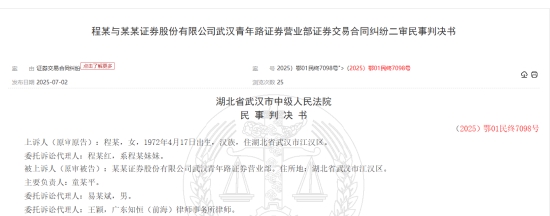
券商佣金也“杀熟”?十年老股民状告招商证券高额佣金案落槌
Xin Lang Zheng Quan· 2025-07-17 11:06
Core Viewpoint - The case highlights a dispute over high commission fees charged by a brokerage firm, with the court ruling in favor of the brokerage, stating that the fees were within regulatory limits and that the investor's claims of fraud were unfounded [1][3]. Summary by Sections Case Background - The plaintiff, a long-time investor, filed a lawsuit against a brokerage firm, alleging that the high commission fees were fraudulent. The court found that the brokerage's fees were compliant with regulatory standards [1][2]. Commission Fee Discrepancies - The plaintiff was charged a commission rate of 2.5‰ for several years, while new investors were charged a significantly lower rate of 0.6‰ starting in 2016. The plaintiff claimed this constituted price discrimination and fraud [2][3]. Court Rulings - The first-instance court ruled that the commission agreements were valid and that the fees charged were within the regulatory cap of 3‰. The court also noted that commission adjustments typically require investor initiation, which the plaintiff did not do until later [3][5]. - The appellate court upheld the initial ruling, stating that the brokerage acted within legal and contractual bounds, and dismissed the plaintiff's claims of excessive fees and fraud as lacking factual and legal basis [3][5]. Industry Context - The case reflects a broader issue in the securities industry where many investors remain unaware of lower commission rates available to new clients, leading to claims of being "taken advantage of" by their brokers [4][5]. - Similar cases have been reported, indicating that disputes over commission fees are not uncommon, with other investors also facing challenges in court regarding their brokerage fees [4][6].