
GAC GROUP(601238)

Search documents
广汽集团旗下华望汽车注资增至21亿,增幅40%
Sou Hu Cai Jing· 2025-10-29 08:56
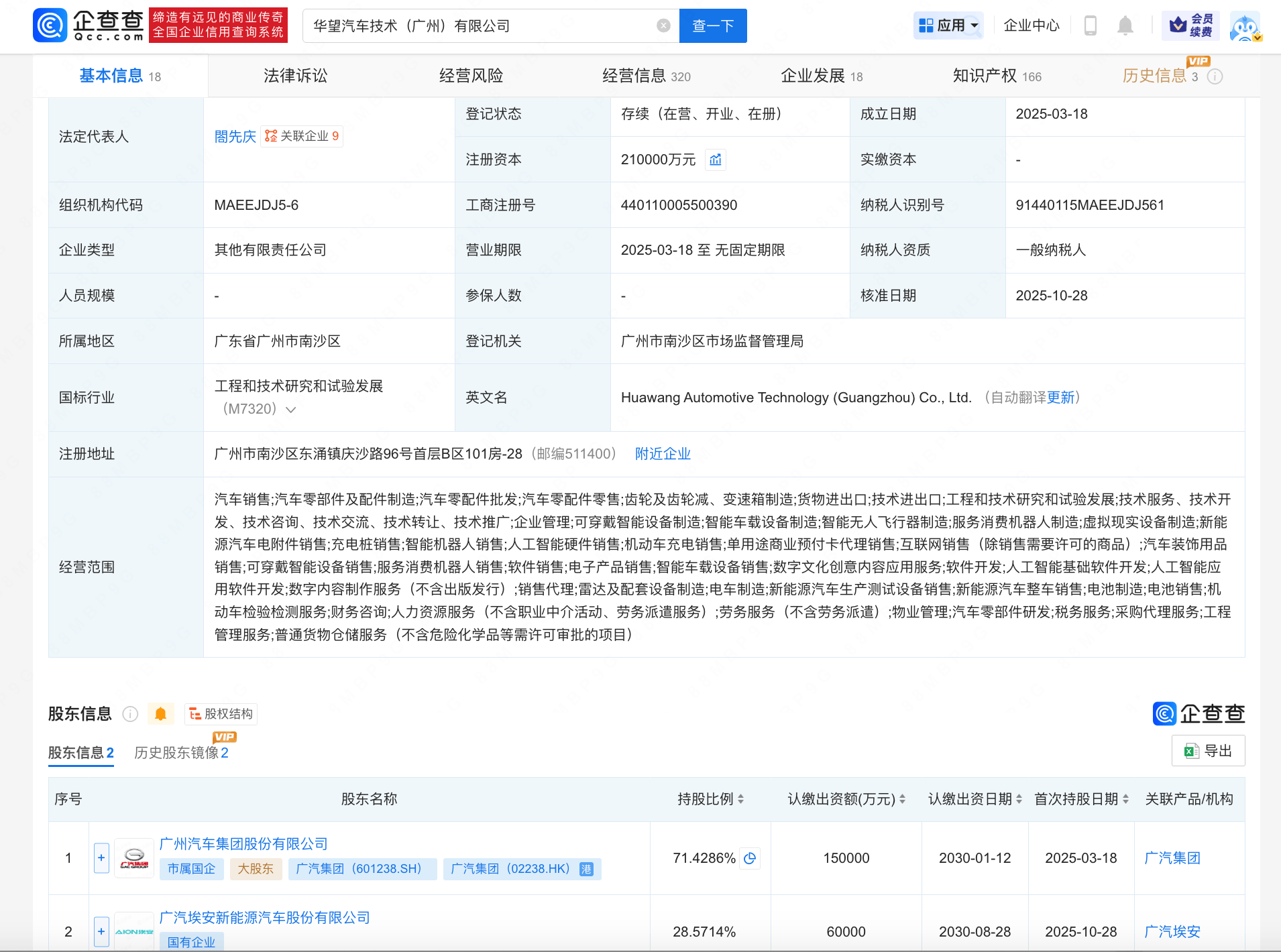
Core Insights - Huawang Automotive Technology (Guangzhou) Co., Ltd. has undergone a business change, with GAC Aion New Energy Automobile Co., Ltd. added as a shareholder, increasing the registered capital from 1.5 billion RMB to 2.1 billion RMB, a 40% increase [1][2]. Company Information - The company was established in March of this year, with He Xianqing as the legal representative. Its business scope includes automobile sales, manufacturing of auto parts and accessories, and wholesale of auto parts [1][2]. - The current shareholders are GAC Group (601238) and the newly added shareholder, GAC Aion New Energy Automobile Co., Ltd. [1][2]. Shareholder Structure - GAC Group holds a 71.43% stake, while GAC Aion New Energy Automobile Co., Ltd. holds a 28.57% stake in Huawang Automotive Technology [2].


乘用车板块10月29日涨1%,赛力斯领涨,主力资金净流入5.2亿元
Zheng Xing Xing Ye Ri Bao· 2025-10-29 08:34
Core Insights - The passenger car sector experienced a 1.0% increase on October 29, with Sairus leading the gains [1] - The Shanghai Composite Index closed at 4016.33, up 0.7%, while the Shenzhen Component Index closed at 13691.38, up 1.95% [1] Passenger Car Sector Performance - Sairus (601127) closed at 163.99, with a rise of 3.14% and a trading volume of 274,500 shares, totaling a transaction value of 4.454 billion [1] - Other notable performers include: - Byd (002594) at 104.52, up 0.77%, with a transaction value of 4.129 billion [1] - SAIC Motor (600104) at 16.69, up 0.79%, with a transaction value of 497 million [1] - The sector saw a net inflow of 520 million from institutional investors, while retail investors experienced a net outflow of approximately 88.93 million [1] Fund Flow Analysis - Sairus had a net inflow of 5.38 billion from institutional investors, while retail investors saw a net outflow of 2.95 billion [2] - Byd recorded a net inflow of 87.52 million from institutional investors, with retail investors contributing a net inflow of 13.29 million [2] - SAIC Motor had a net inflow of 22.24 million from institutional investors, while retail investors experienced a net outflow of 4.78 million [2]






这家车企新增1家股东,注册资本增40%
Sou Hu Cai Jing· 2025-10-29 08:32
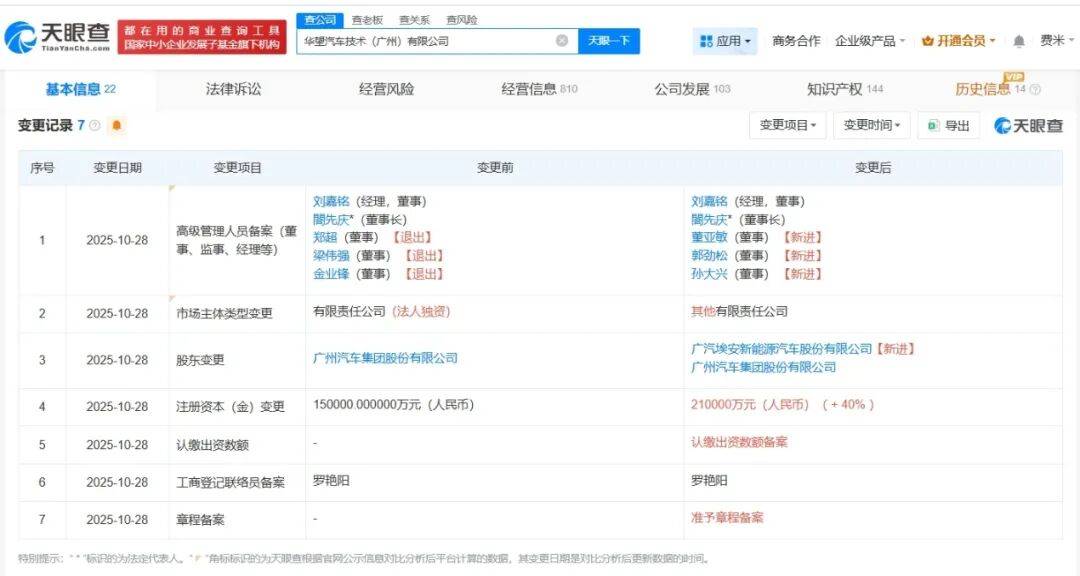
Core Viewpoint - Huawang Automotive Technology (Guangzhou) Co., Ltd. has added GAC Aion New Energy Automobile Co., Ltd. as a shareholder, increasing its registered capital from 1.5 billion RMB to 2.1 billion RMB, a 40% increase [1]. Group 1: Company Changes - The company underwent a business change recently, with GAC Aion New Energy Automobile Co., Ltd. becoming a new shareholder [1]. - The registered capital has increased from 1.5 billion RMB to 2.1 billion RMB, reflecting a 40% growth [1]. - Several senior management personnel changes have occurred alongside the capital increase [1]. Group 2: Company Overview - Huawang Automotive Technology (Guangzhou) Co., Ltd. was established in March of this year, with its legal representative being He Xianqing [1]. - The company's business scope includes automobile sales, manufacturing of automotive parts and components, and wholesale of automotive spare parts [1]. - The company is now jointly held by GAC Group and the newly added shareholder [1].
广汽集团旗下华望汽车增资至21亿,增幅40%
Zhong Guo Neng Yuan Wang· 2025-10-29 06:27
Core Insights - Recently, Huawang Automotive Technology (Guangzhou) Co., Ltd. underwent a business change, adding GAC Aion New Energy Automobile Co., Ltd. as a shareholder [1] - The registered capital increased from 1.5 billion RMB to 2.1 billion RMB, representing a 40% growth [1] - Several senior management changes also occurred during this business transformation [1] Company Overview - Huawang Automotive Technology was established in March of this year, with He Xianqing as the legal representative [1] - The company's business scope includes automobile sales, manufacturing of automotive parts and accessories, and wholesale of automotive spare parts [1] - The company is now jointly held by GAC Group and the newly added shareholder [1]
华望汽车技术(广州)有限公司增资至21亿,增幅40%
Xin Lang Cai Jing· 2025-10-29 06:15
Core Insights - On October 28, Huawang Automotive Technology (Guangzhou) Co., Ltd. underwent a business change, adding GAC Aion New Energy Automobile Co., Ltd. as a shareholder [1] - The registered capital increased from 1.5 billion RMB to 2.1 billion RMB, representing a 40% growth [1] - Several senior management changes occurred alongside the capital increase [1] Company Overview - Huawang Automotive Technology was established in March of this year and is led by legal representative He Xianqing [1] - The company's business scope includes automobile sales, manufacturing of automotive parts and accessories, and wholesale of automotive spare parts [1] - The company is now jointly held by GAC Group and the newly added shareholder [1]
新能源化势头猛 汽车产业链公司业绩向好
Shang Hai Zheng Quan Bao· 2025-10-28 19:32
Core Insights - The Chinese automotive industry is undergoing significant transformation, with traditional automakers like GAC Group and SAIC Group actively shifting towards self-owned brands to navigate the challenges posed by the industry's evolution towards electrification and intelligence [1][2]. Traditional Automakers: Steady Growth in Self-Owned Brands - GAC Group reported a revenue of 66.272 billion yuan for the first three quarters of 2025, a year-on-year decline of 10.49%, with a net loss of 4.312 billion yuan, marking a staggering year-on-year decline of 3691.33% [2]. - In Q3 2025, GAC Group's revenue was 24.106 billion yuan, down 14.63% year-on-year, with a net loss of 1.774 billion yuan, an increase in loss of 27.02% year-on-year [2]. - Despite these challenges, GAC Group's Q3 performance showed signs of recovery, with a quarter-on-quarter sales increase of 11.49% and revenue growth of 7% [2]. - SAIC Group has also seen a turnaround, achieving a cumulative vehicle sales of 3.193 million units in the first three quarters of 2025, a year-on-year increase of 20.5% [3]. New Energy Vehicle Industry: Performance Growth - The new energy vehicle sector has experienced robust growth, positively impacting upstream companies. CATL reported a revenue of 283.072 billion yuan for the first three quarters of 2025, a year-on-year increase of 9.28%, with a net profit of 49.034 billion yuan, up 36.2% [4]. - CATL's battery installation volume reached 210.67 GWh in the first three quarters, capturing a 42.75% market share in China [4]. - Guoxuan High-Tech achieved a revenue of 10.114 billion yuan in Q3, a year-on-year increase of 20.68%, with a battery installation volume of 26.27 GWh, reflecting an 84.7% year-on-year growth [4][5]. - Xiamen Tungsten's revenue for Q3 was 5.477 billion yuan, a year-on-year increase of 50.45%, with a net profit of 217 million yuan, up 61.82% [5][6].



【2025三季报点评/广汽集团】业绩表现略低预期,静待一体化改革效果显现
东吴汽车黄细里团队· 2025-10-28 14:26
Core Viewpoint - GAC Group's Q3 2025 performance slightly underperformed expectations, with ongoing cost reduction efforts and a focus on future growth through partnerships and reforms [5]. Financial Performance - Q3 2025 revenue was 24.32 billion yuan, showing a year-on-year decrease of 15% but a quarter-on-quarter increase of 7% [3]. - The net profit attributable to shareholders was -1.77 billion yuan, with a non-recurring net profit of -1.83 billion yuan [3]. - GAC's Q3 gross margin was -2.9%, indicating continued challenges in profitability despite a slight improvement in cost management [4]. Sales and Production - GAC Passenger Vehicles and GAC Aion's Q3 wholesale sales were 81,000 and 75,000 units, respectively, reflecting year-on-year declines of 8% and 26%, but quarter-on-quarter increases of 5% and 21% [4]. - The average selling price (ASP) for GAC's self-owned vehicles in Q3 was 157,000 yuan, with a year-on-year increase of 4% but a quarter-on-quarter decrease of 5% [4]. Investment and Future Outlook - Investment income for Q3 totaled 1.1 billion yuan, with a year-on-year increase of 187% but a decrease of 10% quarter-on-quarter [4]. - The company has adjusted its net profit forecasts for 2025, 2026, and 2027 to -4.2 billion, 800 million, and 2.2 billion yuan, respectively, reflecting a more cautious outlook [5]. - GAC's collaboration with Huawei is expected to yield new vehicle models by 2026, potentially boosting sales [5].
前三季度亏超43亿!广汽进入“战时状态”
Guo Ji Jin Rong Bao· 2025-10-28 12:40
Core Viewpoint - GAC Group is facing significant financial challenges, with a substantial increase in net losses in Q3 and a shift from profit to loss in the first three quarters of 2024, exceeding 4.3 billion yuan [1] Financial Performance - In Q3, GAC Group reported revenue of 24.106 billion yuan, a year-on-year decline of 14.62%, with a net loss attributable to shareholders of 1.774 billion yuan, widening by 27.08% compared to the same period in 2024 [1] - For the first three quarters, total revenue was 66.272 billion yuan, down 10.49% year-on-year, and net profit turned from a profit of 120 million yuan in 2024 to a loss of 4.312 billion yuan, a staggering decline of 3691.33% [1] - Vehicle sales for the first nine months of 2025 reached 1.1837 million units, a decrease of 11.34% year-on-year, attributed to a "price war" strategy [1] Brand Performance - GAC Toyota was the only brand to show growth, with sales of 543,200 units, a slight increase of 4.89% year-on-year, while GAC Honda experienced a decline of 27.58% with sales of 223,900 units [2] - GAC's self-owned brands, GAC Trumpchi and GAC Aion, also saw poor performance, with sales of 233,100 units and 181,400 units, down 15.84% and 19.99% respectively [2] R&D and Strategic Initiatives - Despite a net loss exceeding 4 billion yuan, GAC reduced R&D expenses by 2.79%, which may impact long-term competitiveness amid a highly competitive technological landscape [2] - GAC has entered a "wartime state," with initiatives to restructure its R&D process and reduce product development cycles from 26 months to 18-21 months, aiming for a cost reduction of over 10% [3] - External collaborations are key to GAC's transformation, including partnerships with Huawei for a high-end brand and with Didi for L4 autonomous driving vehicles, as well as electric vehicle initiatives with JD and CATL [3] Industry Context - The pressure from the "price war" in the automotive industry is expected to persist, making profit recovery a long-term challenge for traditional automakers [4]
泰国,正被中国家电企业“挤爆”
3 6 Ke· 2025-10-28 08:10
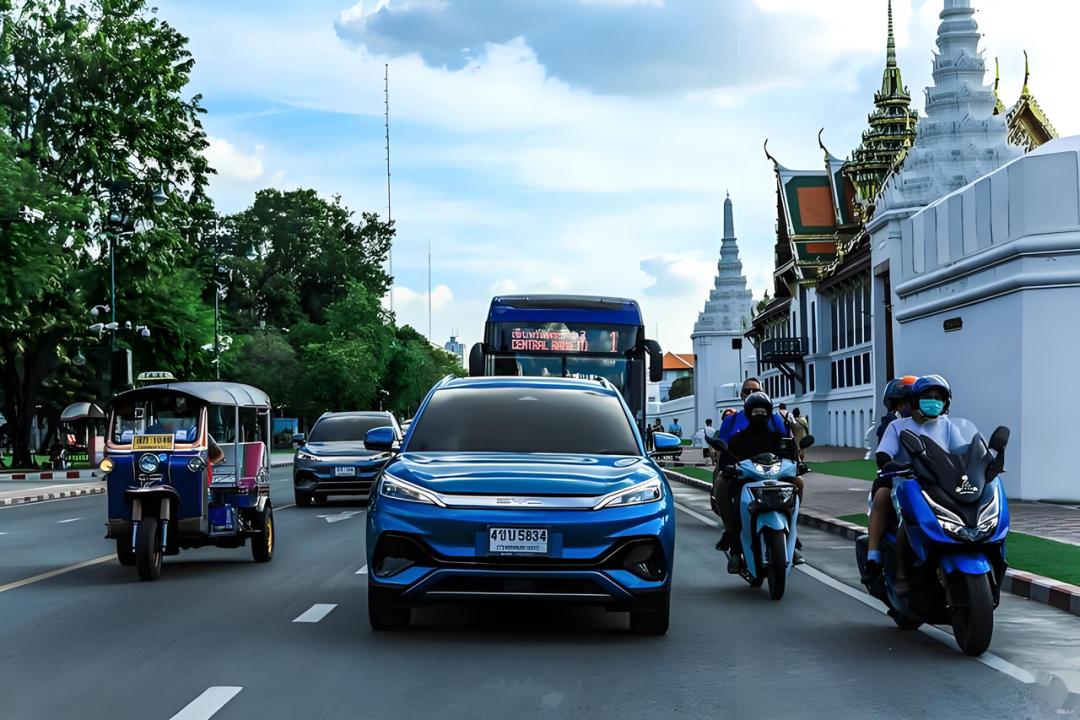
Group 1: Overview of Manufacturing Developments in Thailand - The Haier air conditioning industrial park in Chonburi, Thailand, officially commenced production on September 23, with an annual planned capacity of 6 million units [1] - Hisense's HHA smart manufacturing industrial park is set to be completed by 2030, with an expected annual production capacity of 2.6 million units [1] - The Thai Investment Promotion Committee approved a 3 billion THB investment for Oma's refrigerator production base, aiming for an annual output of 1.7 million units primarily for the European market [1] Group 2: Chinese Automotive Industry Expansion - Chinese automotive brands have significantly increased their presence in Thailand, with companies like BYD, Changan, and Foton embedding deeply into the local automotive supply chain [2] - In 2024, Thailand is projected to be the fourth largest export market for China's new energy vehicles, with exports expected to reach 178,000 units, a 35% increase year-on-year [2] - By the end of 2024, seven Chinese car manufacturers will have established operations in Thailand, achieving a full cycle from planning to production and sales [2] Group 3: Thailand's Strategic Advantages - Thailand's geographical location and political stability make it an attractive manufacturing hub, connecting to major Southeast Asian markets [4] - The rise of Laem Chabang Port as Southeast Asia's second-largest container port enhances Thailand's manufacturing competitiveness by facilitating international trade [4] - Labor costs in Thailand are lower than in China, with the minimum monthly wage in Thailand being approximately 77% of that in China, making it appealing for foreign investment [4] Group 4: Market Dynamics and Consumer Demand - Thailand's automotive production accounts for 45% of ASEAN's total, positioning it as a key player in the Southeast Asian automotive industry [6] - The local production model has allowed Chinese car manufacturers to rapidly capture market share, especially in the electric vehicle segment [6] - The demand for home appliances in Southeast Asia is growing, with a projected annual growth rate of 5%-10% in the region's appliance market [8][9] Group 5: Chinese Home Appliance Industry Trends - The influx of Japanese home appliance companies into Thailand has inspired Chinese firms to follow suit, capitalizing on the growing demand for appliances [8] - Thailand is now the largest white goods manufacturing country in Southeast Asia, benefiting from the restructuring of the global white goods manufacturing industry [9] - Trade agreements like RCEP and favorable local policies have further incentivized Chinese appliance manufacturers to establish production facilities in Thailand [12][14] Group 6: Evolution of Chinese Manufacturing Strategy - The evolution of Chinese manufacturing overseas can be categorized into three phases: product export, brand export, and capability export [15] - Chinese companies are increasingly focusing on localizing their operations, including R&D and marketing, to better meet local consumer needs [16] - The market share of Chinese brands in Thailand's appliance sector has grown significantly, with Chinese brands capturing two spots in the top five air conditioning brands by 2024 [17] Group 7: Long-term Implications of Manufacturing Shifts - The successful "Thailand model" in the automotive sector is likely to influence other industries, including consumer electronics and renewable energy equipment [18] - The ongoing migration of manufacturing capabilities from China to Southeast Asia is part of a broader trend of global supply chain restructuring [19] - Thailand is positioned as a critical hub for Chinese manufacturing expansion, with the potential for continued growth and investment in the region [19]



国企竞技广交会:场景化出海模式渐成主流
2 1 Shi Ji Jing Ji Bao Dao· 2025-10-27 15:33
Core Insights - China's globalization strategy is evolving amidst complex circumstances, with a focus on enhancing competitiveness in technology-intensive products such as communication devices, solar cells, and drones [1] - The 138th Canton Fair serves as a barometer for market conditions and a competitive platform for companies expanding overseas, showcasing innovations and resilience in foreign trade [1][2] Group 1: Product Innovation and Market Expansion - Wanli Tire introduced its high-end tire, Wanli e时代e01, at the Canton Fair, emphasizing product development focused on new materials and performance [1][2] - Guangzhou Light Industry Group showcased over 1,300 innovative products, with a new product rate exceeding 45%, highlighting their commitment to new technologies and market adaptation [2] - Foshan Lighting presented various innovative products, including smart lighting solutions, which received design innovation awards, reflecting a focus on health and comfort [2][3] Group 2: Integration of Technology - AI technology is increasingly integrated into Chinese manufacturing, enhancing product customization and customer service [3] - GAC Group, as the only Chinese automotive brand at the fair, demonstrated its latest models and energy solutions, showcasing a strategy of synergy between smart products and energy ecosystems [3] Group 3: Resilience and Global Strategy - Despite rising uncertainties in the external economic environment, Chinese companies are accelerating overseas investments and localizing supply chains to enhance resilience [6][8] - State-owned enterprises are leveraging their advantages in resource allocation and risk management to adapt to global market demands [6][8] - Wanli Tire is expanding its global strategy by planning additional overseas factories to boost competitiveness in the tire market [6][7] Group 4: Local Adaptation and Supply Chain Development - Guangzhou Control Group's Wanbao Refrigerator invests 3.5% of its revenue in R&D, establishing regional technical databases to ensure product adaptation to local markets [7] - Guangdong Xingfa Aluminum Industry is expanding its global manufacturing network, with new production facilities in Australia and Vietnam to enhance its industry position [7][8] - GAC Group achieved a 16.5% year-on-year increase in vehicle exports, with a focus on local operations and a comprehensive global network [8]