
GAC GROUP(601238)

Search documents
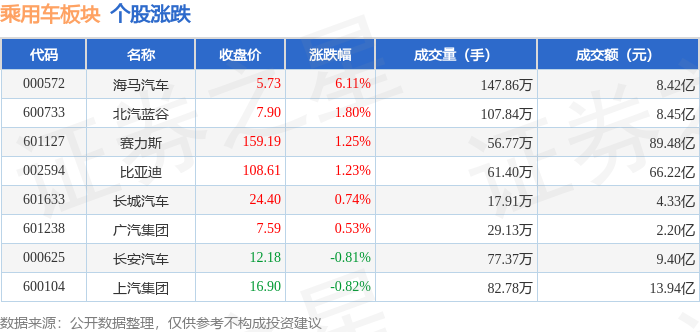
乘用车板块9月29日涨0.67%,海马汽车领涨,主力资金净流出8.12亿元
Zheng Xing Xing Ye Ri Bao· 2025-09-29 08:39
Core Insights - The passenger car sector experienced a 0.67% increase on September 29, with Haima Automobile leading the gains [1] - The Shanghai Composite Index closed at 3862.53, up 0.9%, while the Shenzhen Component Index closed at 13479.43, up 2.05% [1] Passenger Car Sector Performance - The following companies showed notable performance: - Haima Automobile (Code: 000572) closed at 5.73, up 6.11% with a trading volume of 1.4786 million shares and a transaction value of 8.42 billion [1] - BAIC Blue Valley (Code: 600733) closed at 7.90, up 1.80% with a trading volume of 1.0784 million shares and a transaction value of 8.45 billion [1] - BYD (Code: 002594) closed at 108.61, up 1.23% with a trading volume of 1.6140 million shares and a transaction value of 6.622 billion [1] - Great Wall Motors (Code: 601633) closed at 24.40, up 0.74% with a trading volume of 179,100 shares and a transaction value of 4.33 billion [1] Fund Flow Analysis - The passenger car sector saw a net outflow of 8.12 billion from main funds, while retail investors contributed a net inflow of 4.83 billion [1] - Specific fund flows for key companies include: - BYD had a main fund net inflow of 98.09 million, but a retail net outflow of 103 million [2] - Haima Automobile experienced a main fund net inflow of 2.22 million, with both retail and speculative funds showing net outflows [2] - Great Wall Motors had a main fund net inflow of 2.26 million, but a significant speculative fund outflow of 45.73 million [2]







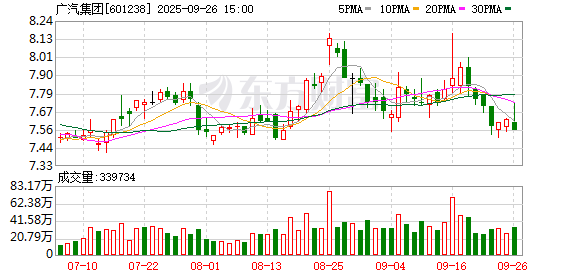
广汽集团(601238.SH):因湃暂无进入电动摩托车电池领域的计划
Ge Long Hui· 2025-09-29 08:20
Core Viewpoint - GAC Group is focused on building an energy ecosystem that integrates lithium mining, production of basic lithium battery materials, battery manufacturing, energy storage and charging services, battery leasing, and battery recycling and repurposing [1] Group 1 - The company has launched related energy storage products under the brand "Yinpai," which feature automotive-grade safety design [1] - Energy storage projects have been implemented in various locations including Nansha, Meizhou, and Hangzhou [1] - Currently, there are no plans for Yinpai to enter the electric motorcycle battery sector [1]
传祺向往S7推新:自研智驾与弹匣电池能否助力市场突围?
Jing Ji Guan Cha Wang· 2025-09-29 05:59
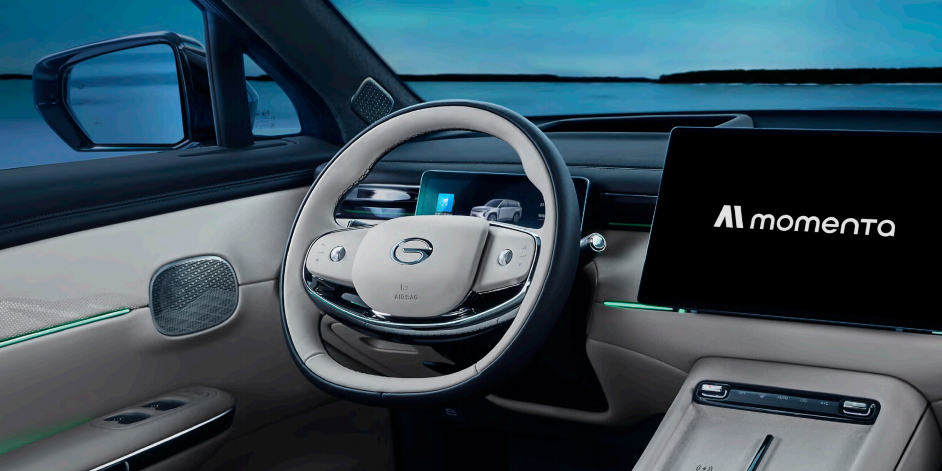
Core Viewpoint - The launch of the new GAC Trumpchi Xiangwang S7 model aims to enhance market competitiveness by lowering the price point and improving performance, targeting the mid-to-large plug-in hybrid SUV segment [2][4]. Pricing and Market Strategy - The new Xiangwang S7 is priced at 159,800 yuan and 179,800 yuan for the Pro+ and Pro+ LiDAR versions, respectively, significantly lowering the entry price from the previous model's 175,800 yuan [2]. - The new model features an improved electric range of 205 km, nearly doubling the previous entry-level version's range, while the price has decreased by nearly 20,000 yuan, indicating a strategic move to enhance cost-performance ratio [2][4]. Product Development and Technology - The Xiangwang series is a collaboration between GAC Trumpchi, Huawei, and CATL, aimed at elevating brand positioning and value [2]. - The S7 model utilizes GAC's self-developed end-to-end intelligent driving system, powered by NVIDIA OrinX chip with a computing power of 254 Tops, and includes 27 high-precision sensors [3][4]. - GAC Trumpchi has partnered with Momenta to develop a "one-stage end-to-end intelligent driving model," enabling advanced driving capabilities in complex urban environments [3]. Competitive Positioning - The decision to use a self-developed system instead of Huawei's technology is driven by cost reduction and the desire to maintain control over core technologies, allowing for competitive pricing in the 200,000 yuan segment [4]. - The S7 is equipped with GAC's self-developed cartridge battery, with a capacity of 36.3 kWh and a pure electric range of 205 km, which has been deployed in over 1.3 million vehicles [4]. Sales Performance - Despite initial market interest, the sales performance of the Xiangwang series has not met expectations, with only 1,231 units sold in July 2025 and a total of 7,268 units in the first half of the year [2][4]. - GAC Trumpchi aims to boost overall brand performance through the launch of new products and enhancements in technology [4].
2025年1-7月中国基本型乘用车(轿车)产量为683.7万辆 累计增长10%
Chan Ye Xin Xi Wang· 2025-09-29 02:09
Core Insights - The article discusses the growth of China's basic passenger car production, highlighting a production volume of 966,000 units in July 2025, representing an 8.4% year-on-year increase [1] - Cumulative production from January to July 2025 reached 6.837 million units, showing a 10% increase compared to the same period in the previous year [1] Industry Overview - The report by Zhiyan Consulting provides a deep assessment of the Chinese automotive industry from 2025 to 2031, focusing on market opportunities and investment forecasts [1] - Key players in the industry include BYD, SAIC Motor, Great Wall Motors, Changan Automobile, GAC Group, FAW Jiefang, Dongfeng Motor, and BAIC Blue Valley [1] Statistical Data - The production statistics for basic passenger cars in China from January to July 2025 indicate a steady growth trend, with a notable increase in both monthly and cumulative production figures [1] - The data is sourced from the National Bureau of Statistics and compiled by Zhiyan Consulting, emphasizing the reliability of the information presented [1]



一部logo史,半部辛酸泪,国产车的门面支棱起来了吗?
汽车商业评论· 2025-09-28 23:07
Core Viewpoint - The article discusses the evolution and significance of automotive brand logos in China, highlighting how logos have become essential for brand identity, market positioning, and consumer engagement in the competitive automotive industry [4][11][70]. Brand Logo Evolution - Over the past decade, more than twenty passenger car companies in China have updated their brand logos, with some brands changing multiple times within ten years [5][6]. - The period from 2014 to 2025 has seen significant logo redesigns among various brands, reflecting a trend towards simplification and modern aesthetics [6][7]. Importance of Logos - Logos are no longer mere decorative elements; they serve as the first step in implementing brand strategies and are crucial for consumer recognition and emotional connection [11][12]. - A well-designed logo should be visually appealing, easily recognizable, and strongly associated with the brand's identity [11][12]. Design Principles - Effective logo design is a systematic process that aligns with brand strategy, emphasizing simplicity, logic, and aesthetic appeal [12]. - The article outlines three key criteria for a good logo: beauty, high recognition, and strong association [11]. Case Studies of Logo Redesigns - **Changan**: The evolution of Changan's logo reflects the broader understanding of logo significance in the Chinese automotive industry, transitioning from a complex design to a more streamlined and modern aesthetic [15][16]. - **Avita**: Avita's logo embodies minimalist modernism, using simple lines to convey a sense of technology and sophistication [17]. - **Deep Blue**: The logo of Deep Blue is highly abstract, focusing on a triangular shape that symbolizes energy, though it requires consumer interpretation to connect with the brand [20]. Consumer Perception - The article emphasizes the importance of consumer perception in logo design, noting that logos must resonate with target audiences to be effective [44]. - It highlights the need for logos to be memorable and evoke positive associations, which can significantly impact brand loyalty and recognition [11][12]. Conclusion - The article concludes that the best logos are simple and versatile, capable of adapting to various contexts while maintaining their core identity [70]. - It encourages readers to engage in discussions about what constitutes a good logo and to participate in voting for the best logos among Chinese automotive brands [70].



广汽传祺向往S7 Pro+上市 搭载R6大模型剑指智能驾驶高地
Zhong Guo Jing Ying Bao· 2025-09-28 10:27
Core Insights - GAC Trumpchi officially launched the new Pro+ series of the Xiangwang S7 on September 26, with a price range of 159,800 to 179,800 yuan [2] - The new models feature significant upgrades in intelligent driving and cabin interaction, including standard variable-focus laser radar to enhance intelligent driving assistance capabilities [2][3] - The Xiangwang S7 Pro+ series is built on a new EV+ platform and is equipped with a 1.5T plug-in hybrid power system, offering improved efficiency and safety for users [2] Intelligent Driving Features - The Pro+ series will receive OTA upgrades within the year, incorporating Momenta's latest R6 flywheel model, enhancing its ability to handle complex road conditions and high-risk scenarios [2] - The vehicle is equipped with industry-leading variable-focus, medium-to-long-range laser radar, achieving centimeter-level detection accuracy and enhancing local clarity by four times [3] - The system can scan a 120° field of view and detect objects up to 200 meters away at a frequency of 10 times per second, with a focus speed of just 0.3 seconds for sudden risks [3] Intelligent Cabin Enhancements - The entire series is powered by the Qualcomm Snapdragon 8295P chip, boasting four times the computing power of the previous 8155 chip, providing a smoother user experience [2] - The new PAD-style vehicle interface supports system upgrades for up to 10 years, ensuring long-term usability [2] - A 27-inch large HUD display projects essential driving information clearly, reducing the need for drivers to frequently look down at the dashboard [2]
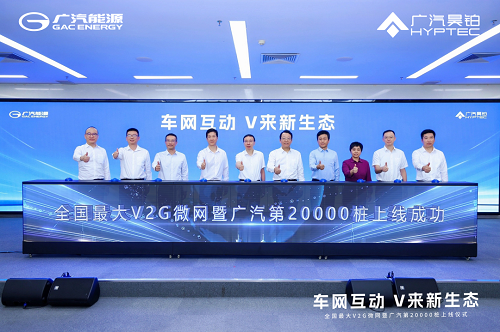
广汽集团落地全国最大V2G微网+第20000桩上线:补能生态与车网互动实现双重突破
Zhong Guo Qi Che Bao Wang· 2025-09-28 09:50
Core Insights - GAC Group launched its 20,000th self-operated charging pile, marking a significant milestone in the development of its energy network and vehicle-to-grid (V2G) technology, contributing to the construction of a new power system in Guangzhou and supporting the "dual carbon" goals [1][3] Group 1: Charging Network Development - GAC Group has established a comprehensive charging network across 31 provinces and 204 cities in China, achieving a significant milestone with the launch of 20,000 charging piles [3] - The company leads in the number of 1000V high-speed charging piles among automakers, utilizing its self-developed technology that allows for a 200 km range with just 5 minutes of charging [3] - The charging network has served over 7 million new energy users, positioning itself as a benchmark in the industry for scale, efficiency, and coverage [3] Group 2: Vertical Integration Strategy - GAC Group's energy strategy encompasses the entire lifecycle of energy, creating a vertically integrated supply chain from resource extraction to charging infrastructure [3] - The company invests in securing key resources like lithium and cobalt to strengthen its energy supply foundation [3] - GAC Group has developed core technologies in battery systems and electric drive systems to enhance vehicle energy efficiency [3] Group 3: V2G Technology Advancement - The newly launched V2G microgrid is the largest in China and the first to implement a 10kV medium-voltage grid connection, indicating a shift from technology validation to large-scale application in vehicle-grid interaction [5] Group 4: Diverse New Energy Brand Matrix - GAC Group has created a diversified new energy brand matrix, including GAC Aion for mainstream markets, GAC Haobo for high-end markets, and GAC Trumpchi for family scenarios, along with a high-end brand "Qijing" in collaboration with Huawei [4]
刘嘉铭上任“启境”品牌CEO 广汽集团再战新能源
Xi Niu Cai Jing· 2025-09-28 09:47
Group 1 - GAC Group has appointed Liu Jiaming as the CEO of the "Qijing" brand, responsible for brand strategy, product planning, market expansion, and operational management [2] - Liu Jiaming has over 25 years of experience in the automotive industry, with a background in GAC Toyota and GAC Group, covering sales, product planning, investment strategy, and technology management [2] - The "Qijing" brand aims to target young consumers, focusing on smart driving and intelligent cockpit capabilities, with plans to launch its first model in 2026 [3][6] Group 2 - GAC Group's total vehicle sales from January to August 2023 were 1.0105 million units, a year-on-year decrease of 12.32% [5] - The sales of GAC's new energy vehicles in August exceeded 24,000 units, down 23.46% year-on-year, with cumulative sales of 154,119 units from January to August, a decline of 17.31% [5] - GAC Group's revenue for the first half of 2023 was 42.166 billion yuan, a year-on-year decrease of 7.95%, with a net profit attributable to shareholders of -2.538 billion yuan, down 267.39% [5]
2030年新能源车渗透率或达70%,中外车企“双向奔赴”趋势正形成⋯⋯这场行业大会释放了这些信号!
Mei Ri Jing Ji Xin Wen· 2025-09-28 08:20
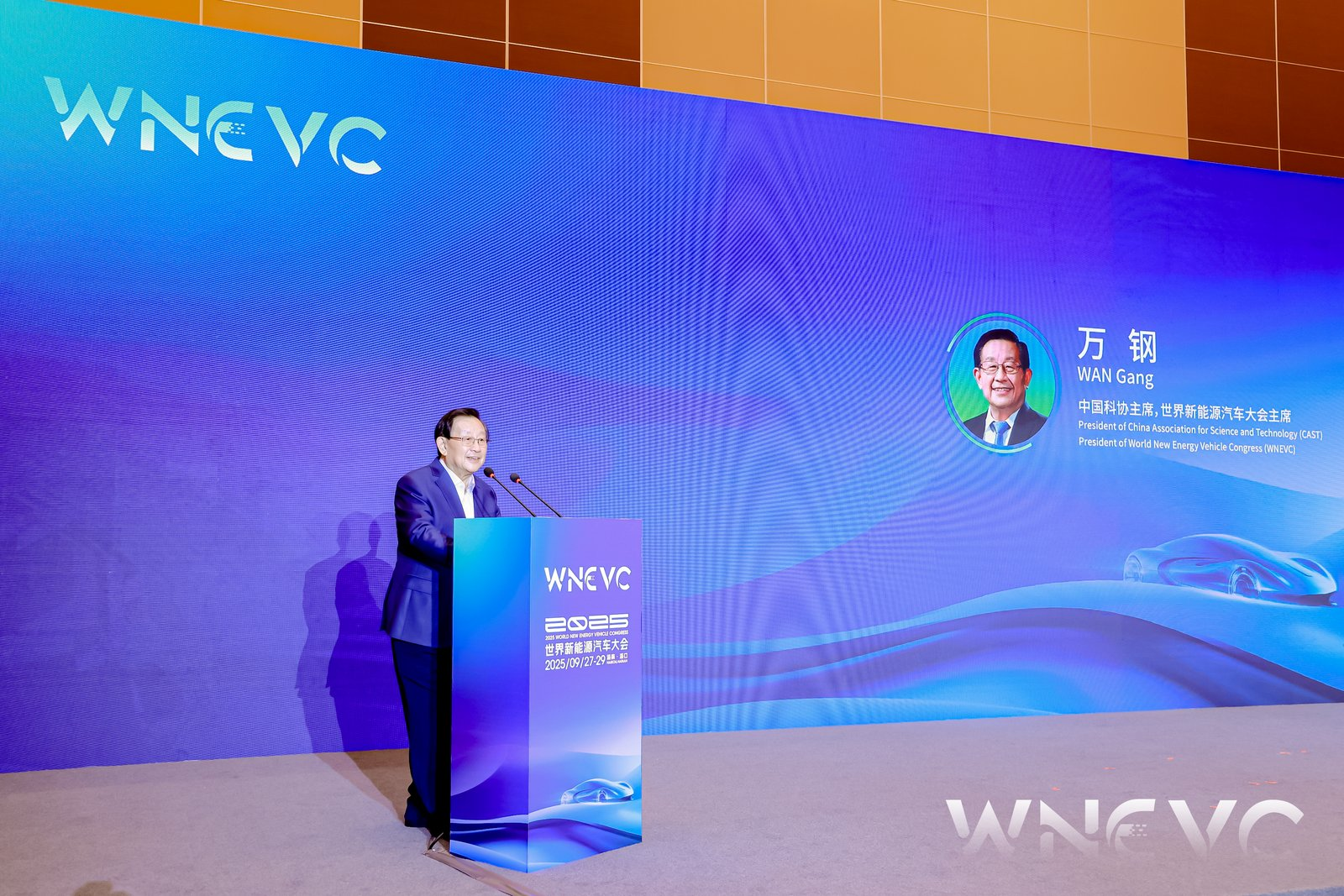
Group 1 - The global electric vehicle (EV) market is experiencing steady growth, with a focus on electrification, intelligence, and low-carbon transformation in the automotive industry [1][2] - The 2025 World New Energy Vehicle Conference showcased over 50 global EV companies and highlighted significant advancements in battery technology, autonomous driving, and automotive chips [2] - From January to August 2023, China's wholesale sales of new energy passenger vehicles reached approximately 8.931 million units, marking a year-on-year increase of 33.5% [2] Group 2 - By 2030, the penetration rate of new energy vehicles in China is expected to reach 70%, with a projected sales ratio of BEV (Battery Electric Vehicles), XEV (Plug-in Hybrid Electric Vehicles), and ICE (Internal Combustion Engine) at 4:4:2 [3][4][6] - The establishment of the World New Energy Vehicle Development Organization (WNEVDO) aims to promote international cooperation in technology, cost, and ecological aspects of the EV industry [6] Group 3 - The trend of mutual learning and cooperation between Chinese and foreign automotive companies is emerging, with China lifting restrictions on foreign investment in the EV sector [7] - Chinese automakers are deepening their localization strategies abroad, with companies like GAC planning significant investments in multiple countries to enhance local production capabilities [8] Group 4 - Foreign automakers are focusing on localization in China, with companies like Porsche and BMW adapting their product strategies to meet diverse market demands [9][11][12] - Toyota has established a comprehensive localized R&D system in China, which is crucial for responding quickly to market needs and ensuring environmentally friendly production of key components [12]
传祺向往S7全新Pro+售15.98万元起,Momenta R6年内上车
Zhong Guo Jing Ji Wang· 2025-09-28 08:19
Core Insights - GAC Trumpchi has launched the new Trumpchi Xiangwang S7 Pro+ series, starting at a price of 159,800 yuan, with lifetime warranty on the three electric components for the first owners [1] - The Xiangwang series has achieved a brand recognition rate of 65.7% within six months of its launch, with the S7 model being the highest-rated in user satisfaction for the brand [1] Group 1: Product Features - The Xiangwang S7 Pro+ series is equipped with the Qualcomm Snapdragon 8295P chip and features a new PAD-style vehicle interface, supporting system updates for up to 10 years [2] - The vehicle includes a unique variable-focus, mid-to-long-range laser radar for centimeter-level detection accuracy, along with 27 high-precision sensors powered by the NVIDIA Orin-X chip, offering a computing power of 254 TOPS [2] - The S7 is equipped with a 36.3 kWh battery, providing a pure electric range of 205 km, and utilizes a modular battery design that meets the new national standards set for 2026 [2] Group 2: Interior and Comfort - The S7 Pro+ series boasts the highest interior height in its class at 1.268 meters, with second-row seatbacks adjustable up to 137 degrees and unique electric stepless adjustment [2] - The interior features luxury-grade materials, including a 15mm thick slow-rebound memory foam layer in the seats, and a total interior area covered with soft-touch materials exceeding 23 square meters, complemented by a 2.6 square meter panoramic glass roof [2] Group 3: Manufacturing and Quality Assurance - GAC Trumpchi emphasizes its high manufacturing quality, adhering to design standards that exceed industry norms, supported by a testing team of over 300 members and more than 1,000 testing projects [3] - The production is based in China's first 919 aviation-quality smart factory, utilizing nine advanced manufacturing technologies and nine specialized precision processes to ensure durability and reliability [3] Group 4: Market Positioning - The S7 Pro+ series is competitively priced at 159,800 yuan, accompanied by a "5 years 100,000 km interest-free" financing policy and various high-value benefits [3] - The introduction of the Momenta R6 flying wheel model in the S7 Pro+ series is expected to enhance smart driving technology accessibility across a broader price range, increasing competitive pressure on other hybrid SUV brands in the same segment [3]