PING AN OF CHINA(601318)

Search documents
中国平安:发挥金融及科技优势 实现可持续高质量增长
Xin Hua Wang· 2025-12-06 02:43
Core Insights - The article highlights Ping An Group's commitment to sustainable development and innovation in the context of China's "dual carbon" goals and the 14th Five-Year Plan for green transformation [1][2] Group 1: Sustainable Development Initiatives - Ping An is transitioning from a focus on carbon reduction to becoming a practitioner and enabler of green practices, leveraging its financial and technological strengths for high-quality growth [1] - During the 14th Five-Year Plan, Ping An has served as the chief underwriter for major projects like the Baihetan Hydropower Station and provided risk coverage for the Huizhou Nuclear Power Station and Hainan Danzhou Offshore Wind Power Project, the latter being China's first zero-carbon offshore wind project [2] Group 2: Green Insurance and Financial Products - In the first half of 2025, Ping An's green insurance business saw a premium income of 35.836 billion yuan, marking a 51.8% year-on-year increase [2] - The company has developed an ancient tree insurance product, providing over 1 billion yuan in risk coverage and restoration funds for more than 55,000 ancient trees nationwide by the end of October this year [2] Group 3: Technological Innovations for Climate Resilience - Ping An's self-developed Eagle Eye system has completed 259,000 disaster warnings and sent 4.26 billion messages, aiding in risk reduction [3] - The Agricultural Disaster Model has provided comprehensive services to farmers, including pre-disaster warnings and post-disaster compensation, resulting in a reduction of agricultural losses by 780 million yuan [3] Group 4: Commitment to Low-Carbon Operations - Ping An has set a target for carbon neutrality in operations by 2030 and launched an AI-ESG system to quantify and visualize low-carbon behaviors among employees [3] - The company has introduced the first Sustainable Supply Chain Initiative in the industry, establishing clear "green thresholds" for partner companies [3] Group 5: Recognition and Ratings - Recently, Ping An's MSCI ESG rating was upgraded to the highest AAA level, maintaining its position as the top company in the Asia-Pacific region for the insurance and brokerage industry for four consecutive years [4]


A股有望迎来千亿级活水,险资股票风险因子下调
Sou Hu Cai Jing· 2025-12-06 01:33
经测算,考虑风险分散效应前静态释放最低资本为326亿元,若这部分资金全部增配沪深300股票,对应 股市资金(除以风险因子0.3)为1086亿元 文|《财经》研究员 丁艳 编辑 | 杨芮 袁满 12月5日,国家金融监督管理总局(下称"金融监管总局")表示,为有效防范风险,有效服务实体经 济,更好发挥保险资金耐心资本作用,发布《关于调整保险公司相关业务风险因子的通知》(下称《通 知》),下调保险公司相关股票投资风险因子。 5月7日,金融监管总局局长李云泽曾在国新办新闻发布会上表示,调整偿付能力监管规则,将股票投资 的风险因子进一步调降10%,鼓励保险公司加大入市力度,此次调整为该政策的具体落实。调降风险因 子10%,可以降低保险公司权益投资资本占用,释放资金空间。 据多位业内人士分析称,政策意在鼓励长线资金持续入市。据一位大型险企投资部门负责人表示,此次 监管降低符合有关条件标的风险因子,从而弱化此类持仓资产因市值波动对偿付能力充足率的直接影 响,其根本目的还是要鼓励险资长期稳定投资。 港股市场上,保险股亦于午后持续拉升。截至收盘,中国太平、中国平安分别上涨7.10%、6.71%,中 国人寿、中国太保均涨超5.3 ...

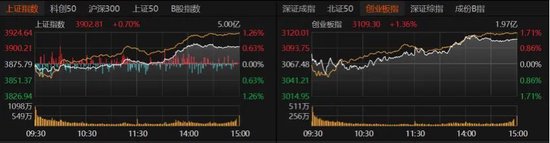
A股放量普涨上证指数重返3900点
Zhong Guo Zheng Quan Bao· 2025-12-05 20:23
● 本报记者 吴玉华 从盘面上看,炒股软件、保险、商业航天、光模块、铜产业等板块爆发,摩尔线程、银行、GPU等板块 调整。申万一级行业普遍上涨,非银金融、有色金属、机械设备行业涨幅居前,分别上涨3.50%、 2.84%、2.34%;仅有银行行业下跌0.58%,公用事业行业收平。 领涨的非银金融行业中,中银证券、瑞达期货涨停,中国太保、四川双马涨逾6%,中国平安、兴业证 券涨逾5%,中国人保、中国人寿、新华保险、东方财富等涨逾4%。 此外,12月5日为摩尔线程上市首个交易日,当日收涨425.46%,市值为2823亿元,全天最大涨幅超 500%,市值一度超过3200亿元。 12月5日,在非银金融板块的带动下,A股市场放量走强,截至收盘,上证指数、深证成指、创业板 指、北证50指数分别上涨0.70%、1.08%、1.36%、1.52%,科创50指数收平,上证指数重返3900点。 大小盘股携手上涨,大盘股集中的上证50指数、沪深300指数分别上涨0.93%、0.84%;小微盘股集中的中 证1000指数、中证2000指数、万得微盘股指数分别上涨1.29%、1.87%、1.58%。 市场成交明显放量,当日A股市场成交额为 ...




平安产险青岛分公司“双精准”革新:科技驱动下的创新实践
Qi Lu Wan Bao· 2025-12-05 15:57
Core Viewpoint - China Ping An's Qingdao Property Insurance Company has launched an innovative agricultural insurance model centered on digital mapping, marking a significant step towards high-quality development in agricultural insurance [1][2][3] Group 1: Innovation in Agricultural Insurance - The "Double Precision" operational model utilizes high-precision digital maps to ensure accurate underwriting and claims processes, addressing long-standing issues in traditional agricultural insurance such as data inaccuracies and unclear loss assessments [1][2] - The model transitions from an "experience-driven" approach to a "data-driven" one, employing satellite remote sensing, AI recognition, and meteorological big data for comprehensive monitoring of crop growth [1][2] Group 2: Enhancing Accessibility and Fairness - The "Ainongbao" app allows farmers to self-insure, verify standards, report claims, and check claim statuses, breaking down barriers that previously favored larger agricultural operators [2] - The initiative aims to ensure that agricultural policies benefit all operators, supporting the development of green insurance products and promoting sustainable agricultural transformation [2] Group 3: Recognition and Future Plans - The innovative practices have received high praise from authoritative bodies, including the Ministry of Agriculture and Rural Affairs and experts from Central University of Finance and Economics, highlighting their replicable and scalable value [2] - The company plans to continue enhancing its "insurance + technology + service" model to provide robust support for rural revitalization and contribute to financial services for agriculture [3]
靴子落地!金融监管总局:风险因子调降10%,保险投资再松绑,有哪些影响?
13个精算师· 2025-12-05 15:25
刚刚 持仓时间超过3年的市值超3千亿 ③有助 险企更注重长期投资 投资更稳、资金更多、时间更长 金融监管总局发文 ①将股票投资的 风险因子进一步调降10% 要求对沪深300等持仓超过3年 ② 沪深300和红利100 保险公司持仓市值超4.8千亿 1 金融监管总局:提上限、降因子 助力险企发挥"长期资本"的优势 | 序号 | 文件名称 时间 | | --- | --- | | 13 | 关于优化保险公司权益类资产配置监管有关事项的通知 2020/7/17 | | 123 | 关于优化保险公司偿付能力监管标准的通知 3 2023/9/10 | | గ్ | 关于调整保险资金权益类资产监管比例有关事项的通知 2025/4/8 | | | 峰 关于调整保险公司相关业务风险因子的通知 2025/12/5 | 近年来,为推动以保险资金为代表的中长期资金,加大对市场的投资力度,金融监管总 局等部门,先后出台多项措施。 先是,对权益类资产投资,实行差异化监管,而后,又下调风险因子、上调权益类投资 比例上限! 以金融监管总局为例,从2 020年至今,已经先后下发4个文件,详见上图。 今日,金融监管总局下发《关于调整保险公司相关 ...


A股有望迎来千亿资金,万亿巨头直线拉升
2 1 Shi Ji Jing Ji Bao Dao· 2025-12-05 14:31
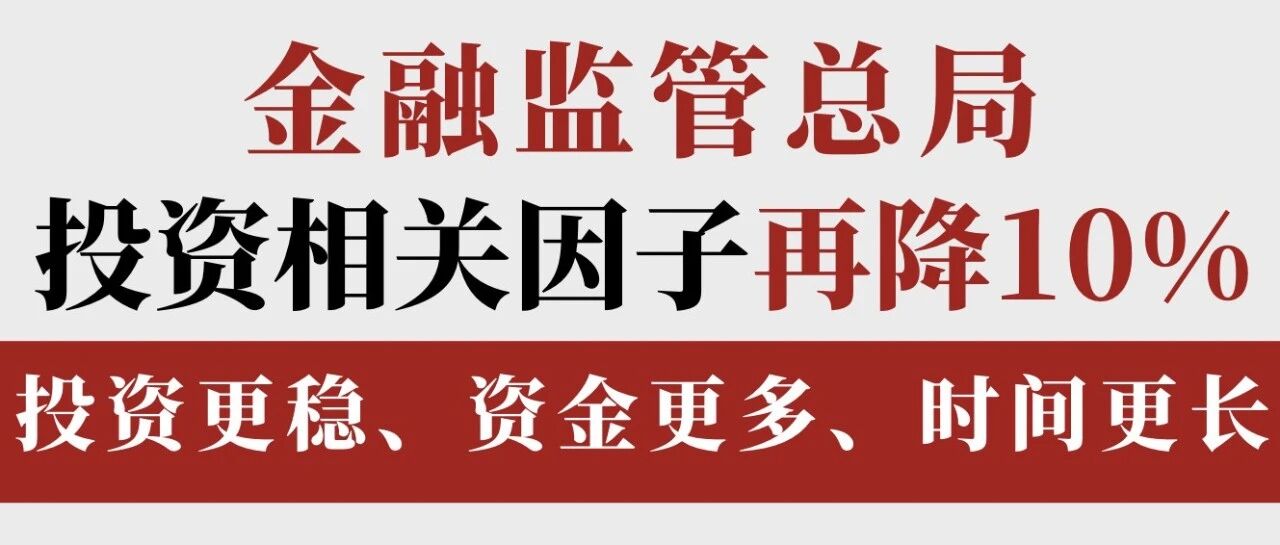
Core Viewpoint - The National Financial Regulatory Administration has announced a reduction in risk factors for insurance companies' stock investments and export credit insurance, signaling a policy shift towards "capital relaxation" and "long-term investment" [1][5]. Group 1: Policy Adjustments - The new notification aims to encourage insurance funds to act as "patient capital" and increase long-term market participation by lowering risk factors based on stock type and holding duration [1][5]. - The risk factor for stocks in the CSI 300 index and the CSI Low Volatility 100 index, held for over three years, has been reduced from 0.3 to 0.27, while the risk factor for Sci-Tech Innovation Board stocks held for over two years has been lowered from 0.4 to 0.36 [5][6]. - The adjustments also include a reduction in premium risk factors for export credit insurance and overseas investment insurance from 0.467 to 0.42 and reserve risk factors from 0.605 to 0.545 [5][9]. Group 2: Impact on Insurance Companies - The reduction in risk factors alleviates the solvency pressure on insurance companies and enhances capital efficiency, promoting long-term investments in the stock market [1][6]. - For example, a hypothetical investment of 10 billion yuan in the CSI 300 index would see a capital reserve requirement decrease from 3 billion yuan to 2.7 billion yuan due to the lowered risk factor [6]. - The policy encourages insurance companies to adopt a long-term investment strategy, which can lead to improved market stability and support for the real economy [7][9]. Group 3: Market Reactions - Following the announcement, insurance stocks in both A-shares and Hong Kong markets saw significant gains, with China Pacific Insurance rising over 6% and China Ping An increasing by more than 5% [10][11]. - The adjustments are expected to benefit large insurance companies more due to their greater resources, while smaller firms may face challenges in capitalizing on these policy changes [8]. Group 4: Support for Foreign Trade - The notification also aims to bolster support for foreign trade enterprises by adjusting risk factors in export credit insurance, which is crucial given the current global economic uncertainties [9]. - The regulatory body emphasizes the importance of these adjustments in fostering patient capital and supporting technological innovation [9].

A股有望迎来千亿资金,万亿巨头直线拉升
21世纪经济报道· 2025-12-05 14:26
作者丨林汉垚 编辑丨周炎炎 12月5日,国家金融监管总局发布的《关于调整保险公司相关业务风险因子的通知》(以下简 称《通知》)显示,在严守风险底线的前提下, 下调保险公司相关股票投资风险因子及出口 信用保险业务和中国出口信用保险公司海外投资保险业务的保费风险因子 。 这一举措,释放出"资本松绑"与"长钱长投"的政策信号。 国家金融监管总局有关司局负责人在答记者问时明确指出,更好发挥保险资金耐心资本作用, 有效服务实体经济。 天职国际保险咨询主管合伙人周瑾向21世纪经济报道记者表示,为了更好鼓励保险资金作 为"耐心资本"加大长期入市力度,在之前监管的提高投资比例上限、拉长考核周期以及指导国 有保险公司增量保费投资A股比例的基础上,此次《通知》从偿付能力规则的角度进一步给出 激励措施,根据股票的类型和保险公司持有的时长,降低相关的风险因子,减少资本占用。 此外,多位业内专家在接受采访时表示, 风险因子的下调不仅缓解了保险公司的偿付能力压 力,也提升了资本使用效率,有助于推动险资长期入市,培育稳定资金来源,最终实现金融与 实体经济的良性互动 。 另据财联社报道,中泰非银测算,《通知》对持仓时间分别根据过去六年/四年 ...

华夏幸福与平安冲突升级
Jing Ji Guan Cha Wang· 2025-12-05 14:13
Core Viewpoint - The announcement of pre-restructuring by Huaxia Happiness has led to significant backlash from its largest shareholder and core creditor, Ping An Group, highlighting a breakdown in communication and trust between the two parties [1][2][11]. Group 1: Company Actions and Responses - Huaxia Happiness announced that creditors applied for pre-restructuring, which was accepted by the court, but did not communicate adequately with Ping An beforehand, leading to Ping An's public complaints [1][2]. - The company stated that the pre-restructuring process is a necessary opportunity to resolve its debt risks and achieve recovery, emphasizing that it is not equivalent to formal restructuring and carries uncertainties [2][3]. - Huaxia Happiness has received a court notice confirming the acceptance of its pre-restructuring and the appointment of a temporary management team for the process [4][6]. Group 2: Financial Situation and Debt Restructuring - As of the third quarter of 2025, Huaxia Happiness reported a 72% year-on-year decline in revenue and a net loss of 9.8 billion yuan, with total liabilities leading to a debt-to-asset ratio of 96% [6]. - The company has been involved in a debt restructuring plan aiming to reduce its debt by 2.192 billion yuan through various asset sales and financial maneuvers, but has only completed 1.92669 billion yuan of agreements, leaving 245.69 million yuan unresolved [5][6]. - The cash repayment expectations have not been met, with only 5% of the planned 30% cash repayment achieved by the end of 2023, exacerbating the company's financial distress [5][6]. Group 3: Conflict with Ping An Group - The relationship between Huaxia Happiness and Ping An has deteriorated, primarily due to the pre-restructuring announcement, which Ping An claims was made without their consent or adequate discussion [1][11]. - Ping An, as the largest creditor, is concerned that the restructuring will lead to significant losses as most debts will be converted to equity, which is a departure from their previous agreements [7][11]. - The conflict escalated after Huaxia Happiness proceeded with the restructuring without reaching an agreement with Ping An, leading to a complete breakdown in their previously cooperative relationship [10][11].

午后发力!A股下周怎么走?
Xin Lang Cai Jing· 2025-12-05 14:05
受访人士表示,金融权重股带动A股上涨,市场本身存在技术性反弹需求,但增量资金入场意愿有限, 赚钱效应并不广泛。本周市场震荡,投资者对算力、存力、电力等AI(人工智能)基建类股票重拾信 心。预计A股将维持震荡格局,板块分化轮动,防御与高股息品种更具吸引力。 A股放量上涨 今日,沪指收涨0.7%报3902.81点,创业板指收涨1.36%报3109.3点,深证成指收涨1.08%。沪深300、上 证50、北证50收涨。 量能放大,日成交额增至1.74万亿元,上个交易日成交额为1.56万亿元。杠杆资金热度不减,截至12月4 日,沪深京两融余额增至2.48万亿元。 盘面上,非银行金融、通信设备、输变电设备、电子器件、虚拟机器人大涨,银行、半导体、石油天然 气、Chiplet概念、煤炭、航空机场收跌。 板块收涨居多,31个申万一级行业中,银行板块微跌;非银金融板块午后拉升,大涨3.5%,中银证 券、瑞达期货涨停;有色金属板块涨近3%,精艺股份、宁波韵升、西部材料、闽发铝业涨停。机械设 备、国防军工、电力设备、基础化工、计算机、汽车、通信等板块涨幅均超过1%。 炒股就看金麒麟分析师研报,权威,专业,及时,全面,助您挖掘潜力主 ...



A股三大指数翻红,CPO、半导体走强,摩尔线程上市首日大涨,港股震荡调整,有色板块上涨
Hua Er Jie Jian Wen· 2025-12-05 13:11
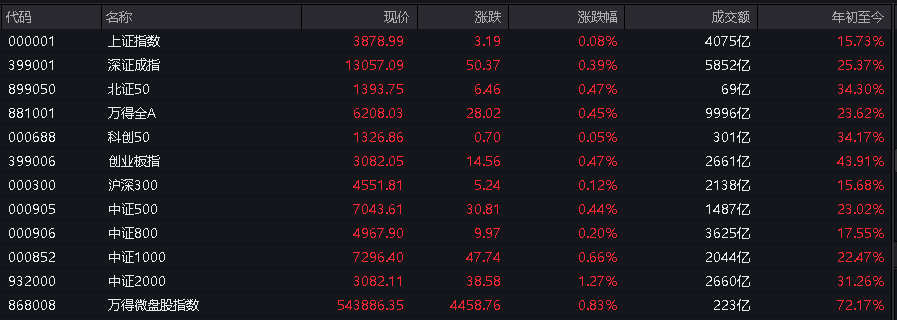
Market Overview - The three major A-share indices collectively turned positive, with sectors such as computing hardware, precious metals, Fujian, and commercial aerospace leading the gains, while banking, traditional Chinese medicine, real estate, and shipping ports lagged [1] - On December 5, the market saw a rebound after an initial dip, with the Shanghai Composite Index rising by 0.08% to close at 3878.99 points [1] Index Performance - The Shenzhen Component Index closed at 13057.09 points, up 0.39% [2] - The ChiNext Index closed at 3082.05 points, up 0.47% [3] - The CSI 300 Index closed at 4551.81 points, up 0.12% [4] - The STAR 50 Index closed at 1326.86 points, up 0.05% [4] - The CSI 500 Index closed at 7043.61 points, up 0.44% [4] - The CSI 1000 Index closed at 7296.40 points, up 0.66% [5] Sector Highlights - Computing hardware stocks showed strong performance, with Long光华芯 hitting the daily limit and reaching a new high, while Dongtianwei and Taichuang both rose over 10% [1] - The Fujian sector saw a resurgence, with Anji Food achieving four consecutive trading limits and several stocks hitting the daily limit [1] - The commercial aerospace concept continued its strong trend, with stocks like Super捷股份 and Aerospace Science and Technology hitting the daily limit [1] - The banking sector experienced a pullback, with Chongqing Bank dropping over 3% [1] Notable Stock Movements - On its first trading day, 摩尔线程's stock price surged over 500%, peaking at 688 yuan per share [1] - China Ping An's stock rose by 1.5% at one point, with Morgan Stanley adding it to its focus list and raising its target price for A-shares from 70 yuan to 85 yuan [7] Commodity Market - Domestic commodity futures showed mixed results at midday, with the shipping index (European line) rising by 3.54% and zinc increasing by 1.38%, while iron ore fell by 1.20% [9]