
PING AN OF CHINA(601318)

Search documents
金融监管总局再放大招 引导险企助力资本市场发展
Mei Ri Jing Ji Xin Wen· 2025-12-07 13:26
Core Viewpoint - The Financial Regulatory Administration has announced a reduction in risk factors for insurance companies' related businesses to enhance their capital efficiency and support the real economy [1][2]. Group 1: Adjustments to Risk Factors - The notification primarily focuses on two areas: adjusting risk factors for investments in stocks and for export credit insurance businesses, encouraging insurance companies to support foreign trade enterprises [2][3]. - The risk factor for stocks held for over three years in the CSI 300 index has been reduced from 0.3 to 0.27, while for stocks held over two years in the STAR Market, it has been lowered from 0.4 to 0.36 [2][3]. - The risk factor for export credit insurance premiums has been decreased from 0.467 to 0.42, and the reserve risk factor from 0.605 to 0.545 [2]. Group 2: Implications for Insurance Companies - The reduction in risk factors is intended to guide insurance funds into the equity market as long-term capital, thereby alleviating the solvency pressure on insurance companies [3][4]. - Insurance companies are expected to enhance their internal controls and accurately measure investment holding periods to improve long-term capital management capabilities [3][4]. - Following the announcement, insurance stocks saw significant gains, with China Pacific Insurance rising by 6.85% and Ping An Insurance by 5.88% [3]. Group 3: Historical Context and Future Outlook - This is not the first time the Financial Regulatory Administration has lowered risk factors; previous adjustments were made in September 2023 and May 2023 to encourage insurance companies to support the capital market [5][6]. - The adjustments are seen as a means to optimize capital allocation, allowing insurance companies to invest more in quality assets and enhance overall operational efficiency [6][7]. - The policy changes are expected to facilitate greater investment in strategic industries and high-tech enterprises, thereby promoting innovation and economic development [7].



金融行业周报:险资股票因子下调,看好券商板块盈利修复-20251207
Western Securities· 2025-12-07 12:26
Investment Rating - The report indicates a positive outlook for the insurance sector, with a recommendation to focus on strong insurance companies such as New China Life Insurance, China Ping An, China Life Insurance H, and China Taiping [2][17] Core Insights - The non-bank financial sector (Shenwan) index increased by 2.27%, outperforming the CSI 300 index by 0.99 percentage points, while the insurance sector saw a significant rise of 5.08% [1][9] - The insurance sector's growth is attributed to several factors, including a reduction in long-term stock holding risk factors, expected strong performance in dividend insurance products, and improved global liquidity due to anticipated interest rate cuts in the US [2][16] - The brokerage sector is expected to experience a valuation correction, with a current price-to-book (PB) ratio of 1.36x, indicating potential for recovery in profitability and valuation [2][19] - The banking sector has underperformed, with a decline of 1.18%, and is currently undervalued with a PB ratio of 0.55x, suggesting room for future valuation improvement [3][20] Summary by Sections Insurance Sector - The insurance index rose by 5.08%, significantly outperforming the CSI 300 index by 3.80 percentage points, driven by regulatory adjustments that lowered risk factors for long-term stock holdings [1][13] - The sector is expected to benefit from a favorable environment for dividend insurance products, with strong growth anticipated in the coming year [2][16] - Key recommendations include focusing on companies like New China Life Insurance and China Ping An, which are positioned for growth [17] Brokerage Sector - The brokerage index increased by 1.14%, with a current PB ratio of 1.36x, indicating a potential mismatch between profitability and valuation [2][19] - Regulatory changes are expected to enhance capital efficiency for leading brokerages, creating opportunities for investment in firms with strong fundamentals [2][18] - Recommended stocks include Guotai Junan, Huatai Securities, and Orient Securities, particularly those involved in mergers or restructuring [19] Banking Sector - The banking sector saw a decline of 1.18%, with a PB ratio of 0.55x, indicating that banks are currently undervalued [3][20] - Concerns about asset quality, particularly related to real estate and local government debt, have affected market perceptions, but there is potential for recovery as regulatory support continues [23][24] - Recommendations include focusing on high-quality city commercial banks in economically developed regions, such as Hangzhou Bank and Ningbo Bank [20][24]



非银金融行业周报:券商杠杆上限有望松绑,险企调降风险因子释放资金-20251207
KAIYUAN SECURITIES· 2025-12-07 10:43
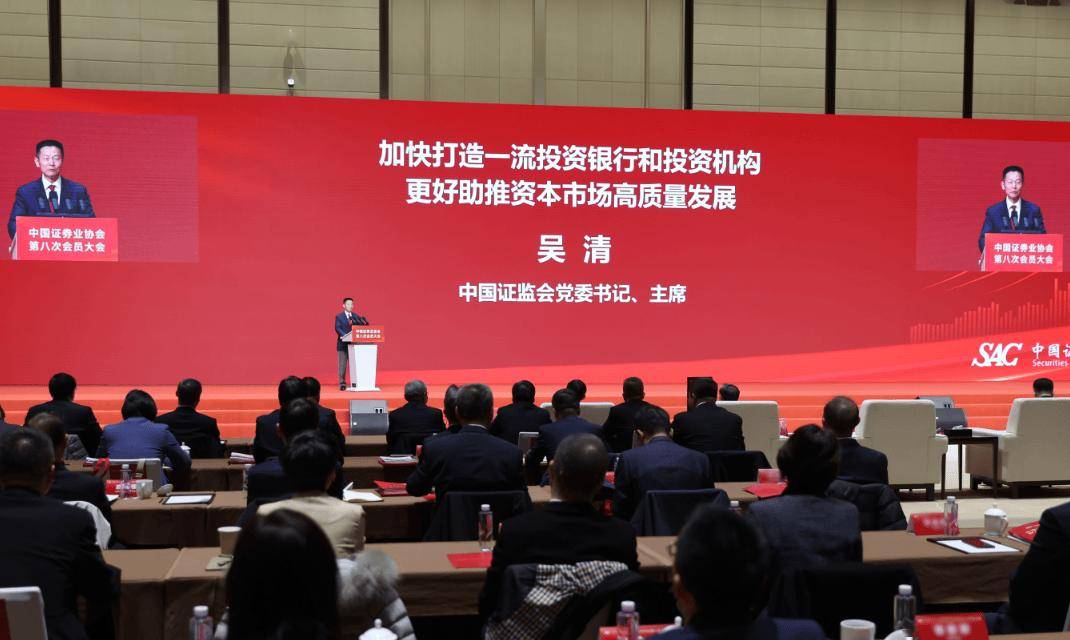
非银金融 2025 年 12 月 07 日 投资评级:看好(维持) 行业走势图 -29% -19% -10% 0% 10% 19% 29% 2024-12 2025-04 2025-08 非银金融 沪深300 数据来源:聚源 相关研究报告 《监管态度转向积极,看好券商板块 行情—吴清主席在中证协大会的致辞 学习》-2025.12.7 《大国崛起需建设金融强国,券商海 外业务迎发展良机—券商海外业务深 度研究》-2025.11.30 《公募 REITs 试点纳入商业不动产, 险企开门红向好 — 行 业 周 报 》 -2025.11.30 券商杠杆上限有望松绑,险企调降风险因子释放资金 ——行业周报 lukun@kysec.cn 证书编号:S0790524040002 周观点:券商杠杆上限有望松绑,险企调降风险因子释放资金 证监会主席吴清表态积极且超预期,保险投资端松绑政策符合预期。券商和保险 行业业务端景气延续,叠加政策端向好和全年相对滞涨,看好非银板块布局机会。 券商:监管表态积极,行业有望进入"政策宽松期",杠杆上限提升助力 ROE 12 月 6 日证监会主席吴清在中证协第八次会员大会上致辞,表态积极,核心 ...





非银金融行业跟踪周报:吴清提出拓宽券商资本空间,保险优化股票风险因子-20251207
Soochow Securities· 2025-12-07 08:57
Investment Rating - The report maintains an "Overweight" rating for the non-bank financial sector [1] Core Insights - The non-bank financial sector currently has a low average valuation, presenting a safety margin and potential for growth [2] - The insurance industry is expected to benefit from economic recovery and rising interest rates, with a significant increase in the sales of savings-type products [7] - The securities industry is undergoing transformation, which may lead to new business growth opportunities [7] Summary by Sections Non-Bank Financial Sector Performance - In the recent five trading days (December 1-5, 2025), only the insurance sector outperformed the CSI 300 index, with insurance up 5.13%, while the overall non-bank financial sector rose 2.33% [6][13] - Year-to-date, the insurance sector has increased by 20.28%, outperforming other sectors [14] Securities Sector - Trading volume has decreased month-on-month, with an average daily trading amount of 19,654 billion CNY in December, down 12.30% from the previous month but up 11.93% year-on-year [18] - The China Securities Regulatory Commission (CSRC) is considering measures to enhance the capital space for quality brokerages, aiming for high-quality development [23] - The average price-to-book (PB) ratio for the securities industry is projected at 1.3x for 2025 [24] Insurance Sector - The total assets of the insurance industry surpassed 40 trillion CNY, growing by 12.5% year-to-date [35] - Regulatory changes are aimed at optimizing long-term stock holding risk factors, encouraging insurance funds to adopt a long-term investment approach [27] - The insurance sector's valuation is currently at historical lows, with a P/EV ratio between 0.61 and 0.97 for 2025 [36] Multi-Financial Sector - The trust industry is experiencing a significant decline in profits, with total profits down by 45.5% year-on-year [39] - The futures market saw a year-on-year increase in trading volume and value, indicating a potential recovery in market activity [45] - The financial leasing sector is being guided to focus on its core business and enhance service capabilities [53] Industry Ranking and Recommendations - The recommended ranking for the industry is insurance > securities > other multi-financial sectors, with key companies including China Life, Ping An, and CITIC Securities highlighted for investment [54]



非银金融行业周报(2025/12/1-2025/12/5):券商板块信心提振,补涨逻辑有望逐步兑现-20251207
Shenwan Hongyuan Securities· 2025-12-07 08:24
Investment Rating - The report maintains a positive outlook on the brokerage sector, indicating a potential for gradual realization of the sector's rebound logic [3]. Core Insights - The recent speech by the chairman of the China Securities Association has shifted market expectations positively for the brokerage sector, with a strong certainty of an upward adjustment in the long-term ROE central [3]. - The report highlights three main investment themes: 1. The attractiveness of the equity market will benefit wealth management and asset management businesses of brokerages, with a specific recommendation for Dongfang Securities [3]. 2. Companies benefiting from an improved competitive landscape, with key recommendations including Guotai Junan, GF Securities, and CITIC Securities [3]. 3. Valuation mismatches in Huatai Securities A+H and strong international business competitiveness in China Galaxy and CICC [3]. Market Review - The Shanghai and Shenzhen 300 Index closed at 4,584.54, with a weekly change of +1.28%. The non-bank index closed at 1,975.96, with a weekly change of +2.27%. The brokerage, insurance, and diversified financial sectors reported changes of +1.14%, +5.08%, and +0.49%, respectively [6]. - The average daily trading volume for the Shanghai and Shenzhen markets was 16,962.89 billion, with a year-to-date increase of 61.08% compared to the previous year [17]. Non-Bank Industry Data - As of December 5, 2025, the 10-year government bond yield was 1.85%, with a weekly change of +1.14 basis points. The credit spread for corporate bonds was 0.54%, with a weekly change of +3.61 basis points [11]. - The insurance sector's original premium income for the first ten months of 2025 reached 5.48 trillion, reflecting a year-on-year growth of 8% [28]. Individual Stock Highlights - In the insurance sector, notable A-share performances included China Pacific Insurance (+8.23%), Ping An (+5.09%), and China Life (+4.32%) [8]. - In the brokerage sector, the top performers included Zhongyin Securities (+7.89%) and Xingye Securities (+6.35%) [8].

非银金融行业周报:券商板块信心提振,补涨逻辑有望逐步兑现-20251207
Shenwan Hongyuan Securities· 2025-12-07 07:15
行 业 及 产 业 行 业 研 究 / 行 业 点 相关研究 证 券 研 究 报 告 证券分析师 罗钻辉 A0230523090004 luozh@swsresearch.com 孙冀齐 A0230523110001 sunjq@swsresearch.com 金黎丹 A0230525060004 jinld@swsresearch.com 联系人 罗钻辉 A0230523090004 luozh@swsresearch.com 2025 年 12 月 07 日 券商板块信心提振,补涨逻辑有望 逐步兑现 看好 ——非银金融行业周报(2025/12/1-2025/12/5) 本期投资提示: 请务必仔细阅读正文之后的各项信息披露与声明 本研究报告仅通过邮件提供给 中庚基金 使用。1 评 非银金融 - ⚫ 券商:本周申万券商 II 指数收涨 1.14%,跑输沪深 300 指数 0.14pct。中证协第八次会员大会上吴清主 席讲话扭转市场对券商板块预期,证券业中长期 ROE 中枢上移确定性强。1)适度拓宽优质券商资本空间 与杠杆上限:会上,吴清主席提到" 在监管政策上,我们将着力强化分类监管、"扶优限劣"。对优质机 ...
《关于调整保险公司相关业务风险因子的通知》点评:险资入市再迎“强心针”,A股险企潜在股票增配空间达789亿元
Shenwan Hongyuan Securities· 2025-12-07 05:42
非银金融 行 业 研 究 / 行 业 点 评 相关研究 证 券 研 究 报 告 证券分析师 罗钻辉 A0230523090004 luozh@swsresearch.com 孙冀齐 A0230523110001 sunjq@swsresearch.com 联系人 孙冀齐 A0230523110001 sunjq@swsresearch.com 2025 年 12 月 07 日 险资入市再迎"强心针",A 股险企 潜在股票增配空间达 789 亿元 金管局再次调降险资股票投资风险因子,为险资入市注入新的"强心针"。周五 盘后,金管局发布《关于调整保险公司相关业务风险因子的通知》(简称"《通 知》"),明确:1)险资持仓时间超过三年的沪深 300 指数成分股、中证红利低 波动 100 指数成分股的风险因子从 0.3 下调至 0.27,持仓时间根据过去 6 年加 权平均持仓时间确定。2)险资持仓时间超过两年的科创板上市普通股的风险因 子从 0.4 下调至 0.36,持仓时间根据过去 4 年加权平均持仓时间确定。3)保险 公司出口信用保险业务和中国出口信用保险公司海外投资保险业务的保费风险 因子从 0.467 下调至 ...
吴清重磅发声!“松绑”券商资本空间和杠杆限制,行业杠杆率仅4.42倍,“十五五”将启,券商、保险双双大动作,杠杆牛一触即发?
Sou Hu Cai Jing· 2025-12-07 02:29
Core Viewpoint - The China Securities Regulatory Commission (CSRC) aims to create first-class investment banks and institutions by easing restrictions on quality institutions, optimizing risk control indicators, and enhancing capital utilization efficiency [1][5]. Group 1: Market Conditions and Broker Actions - The capital market has shown a slow bull trend this year, with the total market value of A-shares exceeding 100 trillion yuan, indicating reasonable growth in both quantity and quality [3]. - Several brokerages, including Guotai Junan and Haitong Securities, have made progress in capital replenishment this year, which is crucial for enhancing their competitive edge [3]. - The average leverage ratio for the brokerage industry is reported to be 4.42 times, significantly lower than that of U.S. investment banks [4]. Group 2: Impact of Regulatory Changes - The easing of capital space and leverage restrictions is viewed as a significant positive for brokerages and the A-share market, leading to a notable increase in brokerage stocks [5]. - Major brokerages like Huatai Securities and China Merchants Securities have raised their margin trading business limits, reflecting a trend of increasing leverage in the industry [3]. Group 3: Insurance Sector Developments - The insurance sector also experienced a surge, with major companies like China Pacific Insurance and Ping An Insurance seeing stock price increases, attributed to improved capital efficiency [6]. - The National Financial Regulatory Administration has announced a reduction in risk factors for insurance companies, further enhancing their ability to invest in equity assets [6]. Group 4: Future Strategic Directions - The upcoming "14th Five-Year Plan" emphasizes the need for a modernized industrial system and high-level technological self-reliance, with significant strategic deployments for the capital market [7][8]. - Key tasks include promoting direct financing through equity and bonds, fostering high-quality listed companies, and creating a more attractive long-term investment environment [8].

烟台监管分局同意平安产险烟台开发区支公司营业场所变更
Jin Tou Wang· 2025-12-06 14:08
中国平安 中国平安-R 中国平安 分时图 日K线 周K线 月K线 61.99 3.44 5.88% 6.11% 4.08% 2.03% 0.00% 2.03% 4.08% 6.11% 54.97 56.16 57.36 58.55 59.74 60.94 62.13 09:30 10:30 11:30/13:00 14:00 15:00 0 168万 337万 505万 2025年11月27日,国家金融监督管理总局烟台监管分局发布批复称,《关于变更中国平安(601318)财 产保险股份有限公司烟台开发区支公司营业场所的请示》(平保产鲁分发〔2025〕86号)收悉。经审核, 现批复如下: 一、同意中国平安财产保险股份有限公司烟台开发区支公司营业场所变更为:山东省烟台市经济技术开 发区长江路161号天马中心1号楼1303室。 二、中国平安财产保险股份有限公司应按照有关规定及时办理变更及许可证换领事宜。 ...
优化长期股票持仓风险因子要求,引导险资发挥耐心资本优势
Soochow Securities· 2025-12-06 13:09
Investment Rating - The industry investment rating is maintained as "Add" [1] Core Insights - Insurance funds' equity investments have significantly increased by 1.5 trillion yuan in the first three quarters of 2025, reaching a total of 5.59 trillion yuan, which is the highest proportion since 2014 at 15.5% [2] - The long-term outlook suggests that as the proportion of participating insurance and other floating income products increases, the risk appetite and equity allocation of insurance funds will also rise [2] - The valuation of the insurance sector remains low, with expected PEV ratios between 0.60-0.95 and PB ratios between 1.15-2.06 as of December 5, 2025, indicating significant upside potential [2] Summary by Sections Investment Strategy - The report emphasizes the need for insurance companies to enhance their long-term investment management capabilities, as guided by the new regulations from the China Banking and Insurance Regulatory Commission [5] - The new regulations aim to lower risk factors for long-term holdings, encouraging insurance companies to invest more in the stock market and support technology innovation [5][6] Market Conditions - The demand in the market remains strong, with expectations of continued optimization in liability costs due to the transformation of participating insurance products [2] - The ten-year government bond yield has risen to approximately 1.85%, which may alleviate pressure on the investment returns of fixed-income assets for insurance companies [2] Regulatory Changes - The new regulations include a reduction in risk factors for stocks held longer than three years, which is expected to encourage insurance companies to adopt a long-term holding strategy [5][6] - The adjustments in risk factors are designed to stabilize the market and promote the growth of patient capital [5]