PSBC(601658)

Search documents
万亿低空经济:银行争相布局
3 6 Ke· 2025-09-05 02:52
Core Viewpoint - The low-altitude economy is gaining significant attention from financial institutions, with banks actively embedding themselves into the industry chain to support its development, projected to reach a market size of 1.5 trillion yuan by 2025 and 3.5 trillion yuan by 2035 [1][19]. Group 1: Bank Involvement in Low-Altitude Economy - Multiple banks have begun to establish a presence in the low-altitude economy, which includes activities below 1,000 meters such as drone logistics, low-altitude tourism, and aircraft manufacturing [2][4]. - Banks are providing various financial support mechanisms, including credit loans, special bonds, and asset-backed plans, to facilitate funding for low-altitude manufacturing, infrastructure, and operations [4][5]. - State-owned banks are focusing on infrastructure projects, exemplified by Postal Savings Bank's rapid credit approval for a precision manufacturing company in the aerospace sector [4][5]. Group 2: Financial Products and Innovations - Policy banks are leveraging long-term funding and policy synergies, with Agricultural Development Bank approving 800 million yuan for a drone demonstration base [5][9]. - Joint-stock banks and city commercial banks emphasize service flexibility and product innovation, such as Everbright Bank's online financial products for low-altitude economy enterprises [5][11]. - Jiangsu Bank has introduced a "Low-Altitude Park Treasure" product to support the development of industrial parks in the low-altitude economy [7]. Group 3: Challenges and Opportunities - The low-altitude economy presents banks with new lending and investment opportunities, but also requires enhanced risk management capabilities due to its complexity [14][16]. - Banks are encouraged to develop innovative financing tools tailored to the characteristics of low-altitude enterprises, such as intellectual property pledges and future revenue rights [9][11]. - The evolving regulatory landscape poses challenges, as banks must navigate uncertainties while capitalizing on the growth potential of the low-altitude economy [17][18]. Group 4: Strategic Collaborations - Banks are advised to engage in partnerships with government industry funds and leading enterprises to create a multi-layered financing system [11][19]. - The integration of online and offline service models is crucial for improving efficiency and customer experience in the low-altitude economy [11][14]. - A focus on comprehensive financial support systems, including equity investments and credit services, is essential for meeting the funding needs of low-altitude startups [11][19].



个人消费贷款贴息政策十二问,涉及消费领域、贴息标准等-银行-金融界
Jin Rong Jie· 2025-09-05 01:46
Core Viewpoint - The China Postal Savings Bank is implementing a personal consumption loan interest subsidy policy to reduce consumer credit costs, stimulate consumption potential, and enhance market vitality, in line with the national policy outlined in the document 财金〔2025〕80号 [1] Group 1: Policy Implementation - The consumption loan interest subsidy policy is applicable from September 1, 2025, to August 31, 2026, for personal consumption loans issued by the Postal Savings Bank that are used for consumption [3] - The subsidy covers various consumption areas, including household vehicles, education, cultural tourism, home decoration, electronic products, and healthcare [2] - The annual subsidy rate is set at 1 percentage point, with a maximum limit of 50% of the loan contract interest rate [4] Group 2: Subsidy Limits and Process - Each borrower can receive a total subsidy cap of 3,000 yuan, corresponding to a cumulative consumption amount of 300,000 yuan, with a specific cap of 1,000 yuan for loans under 50,000 yuan [6] - The subsidy amount will be directly deducted from the interest charged on the loan at the time of interest settlement [5] - Customers can apply for the subsidy through the regular loan process, and if the system cannot identify the consumption, they can provide proof for manual review [7] Group 3: Authorization and Communication - Starting from September 1, 2025, customers must sign a fiscal subsidy authorization when applying for loans to allow the bank to identify consumption transactions [8] - Customers can check the details of the subsidy through SMS or the bank's mobile app without any additional steps [10] - The subsidy process can be conducted through the bank's mobile app or physical branches, and no additional fees will be charged for the subsidy [11][12]
银行利润 “省”出来
Shang Hai Zheng Quan Bao· 2025-09-04 23:39
Core Viewpoint - The banking industry is focusing on cost reduction and efficiency improvement through structural adjustments, personnel optimization, and digital transformation to achieve higher quality outcomes [1][2][7]. Group 1: Cost Reduction Strategies - Many banks have improved profits by optimizing costs, with half of the 42 A-share listed banks reporting a year-on-year decline in cost-to-income ratios [2][3]. - In the first half of the year, banks reduced deposit interest rates and cut labor costs, leading to a stabilization and recovery of profits [3]. - Among the 42 A-share listed banks, 26 reported a decrease in cost-to-income ratios, with notable declines from Xi'an Bank and Postal Savings Bank [3]. Group 2: Specific Cost Management Actions - Banks are managing deposit structures to lower interest expenses, with 40 banks reporting a year-on-year decrease in interest expenses, and 33 of them seeing reductions exceeding 5% [3]. - For example, Zhejiang Commercial Bank reported a 10.95% decrease in interest expenses, while Postal Savings Bank cut management expenses significantly [3][4]. - Shanghai Pudong Development Bank reduced annual rental costs by 9.444 million yuan through property management [5]. Group 3: Future Improvement Paths - The industry recognizes that true cost reduction and efficiency improvement require a focus on restructuring business models, optimizing human resources, and embracing digital transformation [7]. - Banks are encouraged to prioritize low-capital, low-cyclical business segments to enhance profitability [7]. - Digital transformation is seen as essential for process reengineering and efficiency enhancement, allowing banks to focus on complex business operations [7].


黄金大涨背后,银行布局加快了
Sou Hu Cai Jing· 2025-09-04 22:06
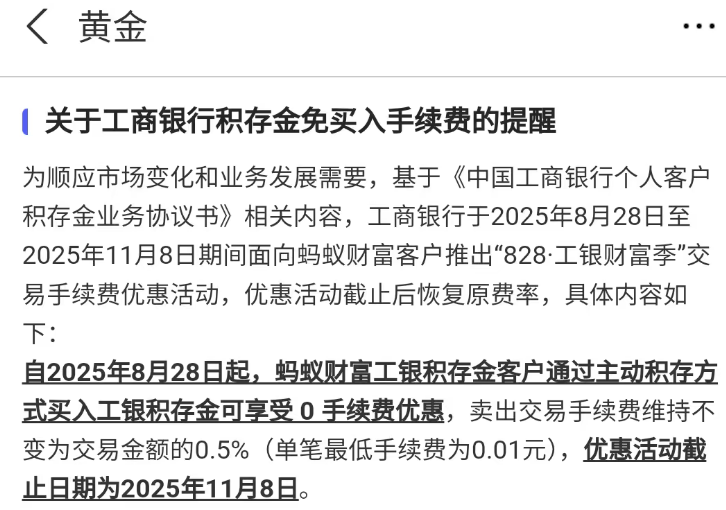
Core Viewpoint - The international gold price has reached a new high, surpassing $3600 per ounce, driven by increased market risk aversion and a significant year-to-date increase of over 36% in gold prices [1][10]. Retail Gold Business Expansion - Banks are actively expanding their retail gold business in response to rising consumer demand, with products like investment gold bars and accumulation gold being promoted to capture market share [1][3]. - Industrial and Commercial Bank of China launched a marketing campaign during the Qixi Festival, offering zero-fee accumulation gold purchases through platforms like Alipay and Tencent Finance [1]. - The retail gold business is seen as enhancing customer loyalty and service capabilities, with products like accumulation gold meeting asset allocation and preservation needs, thereby increasing transaction frequency and cross-selling opportunities in wealth management and insurance [3]. Performance Metrics - Postal Savings Bank reported a significant increase in gold accumulation trading amounting to 5.569 billion yuan, a year-on-year growth of 238.78%, and gold sales of 1.424 billion yuan, up 69.16% [4]. - The appeal of retail gold among younger consumers is growing, with nearly 100 million views on social media platforms discussing bank gold bars [4]. Gold Repurchase Services - Banks are enhancing their gold repurchase systems, with Industrial and Commercial Bank establishing 133 new gold repurchase service outlets to improve service coverage and volume [5]. Institutional Gold Business - The institutional gold business is also crucial, offering services such as gold leasing, price hedging, and the sale of precious metal products to corporate clients [6]. - The Shanghai Gold Exchange has approved 13 market makers for interbank gold inquiry trading, with Postal Savings Bank becoming a trial market maker [6]. Insurance Capital Involvement - The entry of insurance capital into the gold market is expected to drive banks' intermediary income through services like transaction execution and asset custody [9][10]. - China Bank reported a 37% increase in precious metal income in the first half of the year, while Industrial Bank led in interbank gold trading volume with over 3 trillion yuan [9][10].


银行利润,“省”出来
Shang Hai Zheng Quan Bao· 2025-09-04 19:12
Core Insights - The banking sector is focusing on cost reduction and efficiency improvement, with many banks relying on meticulous cost management to enhance profits [3][4] - A significant number of banks have reported a decrease in their cost-to-income ratios, indicating successful cost control measures [4][5] - Future improvements in cost reduction and efficiency will require a comprehensive approach involving business structure adjustments, human resource optimization, and digital transformation [3][7] Cost Reduction Strategies - Many banks have achieved profit stabilization by lowering deposit interest rates and reducing labor costs, leading to a dual reduction in costs [4][5] - Among 42 A-share listed banks, 26 reported a year-on-year decrease in cost-to-income ratios, with notable reductions from Xi'an Bank and Postal Savings Bank [4] - Interest expenses have decreased for 40 banks, with 33 banks experiencing declines exceeding 5%, and the highest reduction in interest expenses exceeding 47 billion yuan [4][5] Operational Efficiency - Banks are enhancing deposit structure management to drive down interest expenses, with Zhejiang Commercial Bank reporting a 10.95% decrease in interest expenses [5] - Labor cost control is a key focus, with banks reducing employee numbers and salaries to improve efficiency [5][6] - For example, Shanghai Pudong Development Bank reduced its operational and management expenses by 7.75 million yuan, while also decreasing its workforce [5][6] Quality of Efficiency Improvement - Industry experts emphasize that true cost reduction and efficiency improvement should not merely involve cutting budgets but should focus on restructuring business models and optimizing human resources [7] - Banks are encouraged to prioritize low-capital, low-cyclical business segments to enhance profitability [7] - Embracing digital transformation is seen as essential for releasing efficiency and improving operational processes [7]

A股震荡调整 大金融板块昨日尾盘拉升
Shang Hai Zheng Quan Bao· 2025-09-04 19:12
Market Overview - The A-share market experienced a decline on September 4, with the Shanghai Composite Index falling by 1.25% to 3765.88 points, the Shenzhen Component Index down 2.83% to 12118.70 points, and the ChiNext Index dropping 4.25% to 2776.25 points. The total trading volume across the Shanghai and Shenzhen markets reached 2.58 trillion yuan, an increase of 186.2 billion yuan from the previous trading day [2]. New Energy Sector - The new energy sector showed strong activity, particularly in photovoltaic, lithium battery, and energy storage segments, with notable individual stock performances such as Tianhong Lithium Battery hitting a 30% limit up and Shuneng Electric rising over 10%. The demand for energy storage has surged this year, leading to a significant increase in orders for domestic energy storage cell manufacturers [2]. - According to CITIC Securities, the battery manufacturers and leading integrators are expected to be the first to gain incremental profits, with the domestic energy storage business projected to break free from its previous unprofitable status by 2025. The energy storage industry is anticipated to reach a fundamental turning point due to high demand in the European and American markets, optimized supply, and price recovery [3]. Financial Sector - Financial stocks, including banks and brokerages, rebounded in the afternoon session, with Agricultural Bank of China rising over 5% and Postal Savings Bank of China nearly 3%, both reaching historical highs. The overall performance of the banking sector in the first half of 2025 is expected to meet expectations, with profit and revenue growth improving due to various financial policies stabilizing interest margins and alleviating liability pressures [4]. - The brokerage sector also saw gains, with Pacific Securities hitting the limit up and Huayin Securities rising nearly 6%. Historical data indicates a strong correlation between brokerage performance and market conditions, suggesting that the recent increase in A-share trading volume and price could attract active capital to this sector [4]. Technology Sector - The AI computing sector experienced a collective pullback, with several high-profile tech stocks declining significantly. Companies like Xinyi Technology and Tianfu Communication saw drops exceeding 10%. The trading volume in the electronics and communications sector reached approximately 25% of the total market, indicating a high level of trading congestion in these areas [5]. - The market is advised to explore other promising sectors beyond AI, as the rapid increase in trading volume may lead to short-term volatility without affecting mid-term market performance [5].






邮储银行9月4日大宗交易成交191.70万元
Zheng Quan Shi Bao Wang· 2025-09-04 14:50
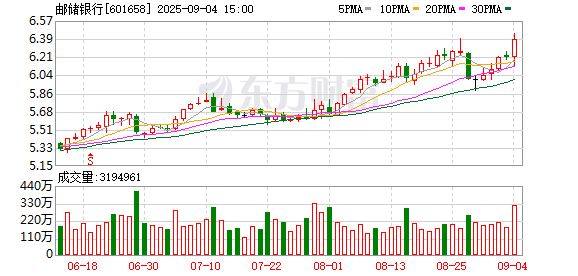
Group 1 - Postal Savings Bank executed a block trade on September 4, with a transaction volume of 300,000 shares and a transaction amount of 1.917 million yuan, at a price of 6.39 yuan per share [2] - The buyer of the block trade was Huatai Securities Co., Ltd. Taizhou Xinghua Yingwu Middle Road Securities Business Department, while the seller was Huatai Securities Co., Ltd. Headquarters [2] - In the last three months, the stock has seen a total of 9 block trades, with a cumulative transaction amount of 58.6836 million yuan [3] Group 2 - On September 4, Postal Savings Bank's closing price was 6.39 yuan, reflecting a 2.90% increase, with a daily turnover rate of 0.48% and a total transaction amount of 2.005 billion yuan [3] - The stock experienced a net inflow of 179 million yuan from main funds throughout the day, and over the past five days, the stock has risen by 6.50% with a total net inflow of 333 million yuan [3] - The latest margin financing balance for the stock is 827 million yuan, which has decreased by 88.4071 million yuan over the past five days, representing a decline of 9.65% [3]
“把脉”A股42家上市银行中期资产质量:对公贷款不良率持续向好,零售贷款仍处风险暴露期
Mei Ri Jing Ji Xin Wen· 2025-09-04 14:35
Group 1: Overall Asset Quality - As of August 31, 2023, the asset quality of 42 listed banks in A-shares shows a stable improvement, with some banks experiencing a slight increase in non-performing loan (NPL) ratios compared to the end of the previous year [1] - The overall NPL ratio for commercial banks was 1.49% at the end of Q2 2023, improving by 0.02 percentage points from the end of Q1 [3] - The provision coverage ratio for state-owned banks and rural commercial banks increased to 249.16% and 161.87%, respectively, while the ratios for joint-stock banks and city commercial banks decreased [4] Group 2: Non-Performing Loan Trends - The NPL ratio for corporate loans is improving, while the NPL ratio for retail loans is on the rise, indicating a structural change in asset quality [5][6] - For example, Industrial and Commercial Bank of China (ICBC) reported a decrease in corporate loan NPL ratio from 1.58% to 1.47%, while the personal loan NPL ratio increased from 1.15% to 1.35% [5] - The rise in retail loan NPLs is attributed to factors such as market conditions, increased flexible employment, and changes in industry environments affecting borrower income [6] Group 3: Real Estate Loan Performance - The real estate sector remains a significant source of NPLs, with some banks reporting an increase in real estate loan NPL ratios, while others have seen improvements [7][8] - For instance, Qingnong Commercial Bank's real estate NPL ratio rose to 21.32%, an increase of 14.15 percentage points from the end of the previous year [7] - The overall decline in real estate sales and the high leverage of real estate companies are fundamental reasons for the rising NPL ratios in this sector [8]





上半年19家大中型银行按揭贷款扫描:“提前还房贷”现象缓解 14家房贷余额上升
Xin Lang Cai Jing· 2025-09-04 13:58
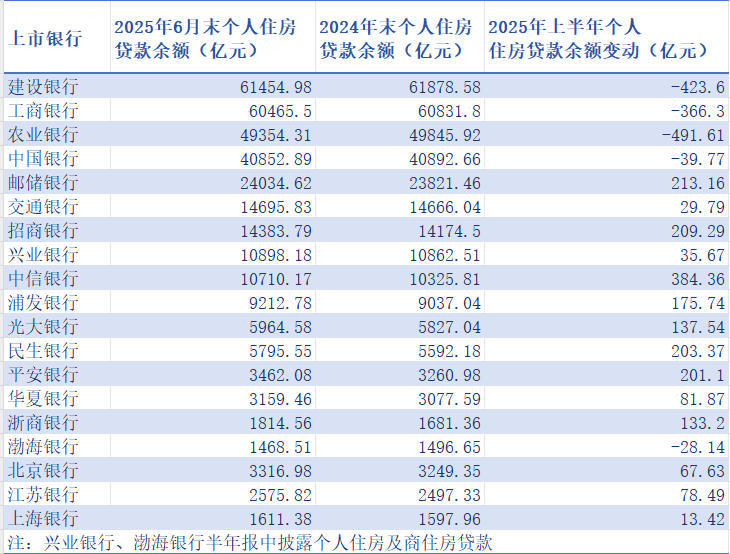
Core Insights - The phenomenon of early mortgage repayment among residents has shown signs of alleviation in the first half of this year [1] - Among 19 listed banks, 5 saw a decrease in personal housing loan balances compared to the end of last year, a significant improvement from 14 banks in the same period last year [1] - The asset quality of personal housing loans has shown mixed results, with 10 out of 14 banks reporting an increase in non-performing loan (NPL) ratios [1][4] Group 1: Loan Balances - The total personal housing loan balance of the six major state-owned banks decreased by over 107.8 billion yuan in the first half of this year, a significant reduction compared to 325.47 billion yuan in the same period last year [3] - The four major banks (ICBC, ABC, BOC, and CCB) collectively reduced their personal housing loans by 132.13 billion yuan, a decrease less than the 347.4 billion yuan drop in the previous year [3] - Among the 10 national joint-stock banks, CITIC Bank led with an increase of 38.436 billion yuan in personal housing loans, while other banks like China Merchants Bank and Minsheng Bank also saw increases exceeding 20 billion yuan [3] Group 2: Asset Quality - In the first half of 2025, the NPL ratios for major state-owned banks increased, with ICBC reporting the highest at 0.86%, while other banks had similar ratios [6] - Among the 11 banks that disclosed personal housing loan asset quality, 9 reported an increase in NPLs, contrasting with the collective increase seen in 2024 [4][6] - Two joint-stock banks, China Merchants Bank and Industrial Bank, achieved a dual decrease in their mortgage loan NPL ratios [6] Group 3: Market Trends - The growth in second-hand housing loans has been significant, with a reported increase of over 20% compared to the previous year, contributing positively to overall loan growth [4] - The overall loan acceptance and issuance volumes for housing loans have significantly improved compared to the same period last year, indicating a more favorable market environment [4]


险资最新重仓股出炉!这一行业受青睐
Zhong Guo Zheng Quan Bao - Zhong Zheng Wang· 2025-09-04 12:17
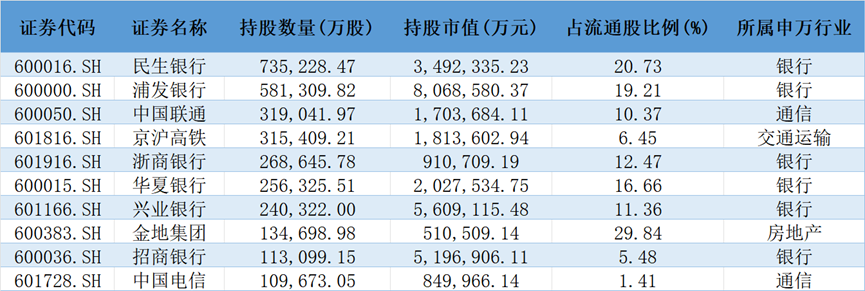
Group 1 - The core viewpoint of the articles indicates that insurance capital (险资) is increasingly favoring bank stocks, with significant holdings in various sectors, particularly banking, transportation, and telecommunications [1][3][5]. - As of the end of Q2 2025, insurance capital held a total of 730 stocks, with a combined holding of 61.919 billion shares valued at 628.985 billion yuan, showing an increase in both quantity and market value compared to Q1 [3][5]. - Among the top ten heavy holdings of insurance capital, six are bank stocks, including Minsheng Bank, Pudong Development Bank, and Zhejiang Bank, highlighting a strong preference for the banking sector [3][4]. Group 2 - Insurance capital is expected to continue optimizing its equity investment structure, focusing on high-dividend stocks and new productive forces in the upcoming quarters [2][8]. - In Q2, insurance capital increased its holdings in several key stocks, including CITIC Bank, Beijing-Shanghai High-Speed Railway, and China Telecom, with significant increases in share quantities [6][7]. - The insurance sector is actively seeking investment opportunities in high-dividend and innovative sectors, with a focus on technology innovation, advanced manufacturing, and new consumption [8].