CSCEC(601668)

Search documents
2025年中国铁路工程建设行业产业链、相关政策、投资规模、投产新线、重点企业及行业发展趋势研判:中国铁路工程建设已从规模扩张转向高质量发展[图]
Chan Ye Xin Xi Wang· 2025-07-04 01:29
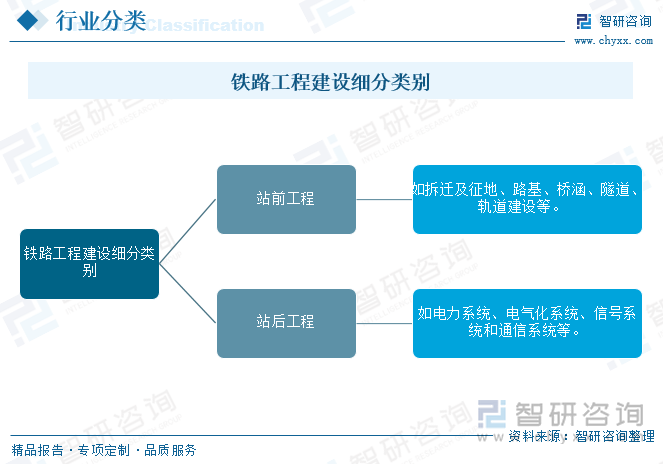
Core Viewpoint - The railway construction industry in China is experiencing rapid growth, with significant investments and new line constructions planned for the coming years, positioning it as a crucial component of national infrastructure and economic development [1][5][24]. Group 1: Industry Definition and Categories - The railway industry encompasses railway construction and operation, which can be further divided into railway engineering construction, transportation services, vehicle and equipment manufacturing, and maintenance [3][5]. - Railway engineering construction includes both pre-station and post-station projects, covering various aspects such as land acquisition, track laying, and electrical systems [3][5]. Group 2: Current Development Status - In 2024, China's railway investment is projected to reach 850.6 billion yuan, an increase of 86.1 billion yuan from 2023, with 3,113 kilometers of new lines expected to be put into operation, including 2,457 kilometers of high-speed rail [5][7]. - By 2025, the government aims to complete railway infrastructure investments of 590 billion yuan and put into operation 2,600 kilometers of new lines, focusing on achieving carbon peak and carbon neutrality [5][7]. Group 3: Industry Chain - The upstream of the railway construction industry involves sectors such as steel, cement, and machinery manufacturing, while the midstream includes engineering construction and integration services [9]. - The downstream consists of railway operation and logistics services [9]. Group 4: Development Environment and Policies - The railway construction industry is supported by various national policies aimed at investment management, technical standards, market reforms, and green development [11][12]. - Recent policies emphasize the importance of standardized management, information sharing, and sustainable operational responsibilities for railway projects [12]. Group 5: Competitive Landscape - The railway construction industry in China is characterized by a concentrated competitive landscape, with leading companies like China Railway Construction Corporation and China Railway Group dominating the market [13][16]. - These major players possess significant experience and advanced technology, allowing them to secure a large number of railway projects [13][16]. Group 6: Key Enterprises - China Railway Construction Corporation is recognized as one of the largest and most capable construction groups globally, offering a comprehensive range of services across various sectors [16][19]. - China Railway Group has a broad business scope, including design, construction, and manufacturing, and is known for its advanced technologies in bridge and tunnel construction [21][22]. Group 7: Future Development Trends - The railway construction industry in China is shifting towards high-quality development, focusing on smart, green, and international standards, with plans for further optimization of the railway network [24]. - The industry is expected to play a vital role in supporting China's modernization efforts and has significant market potential for future growth [24].







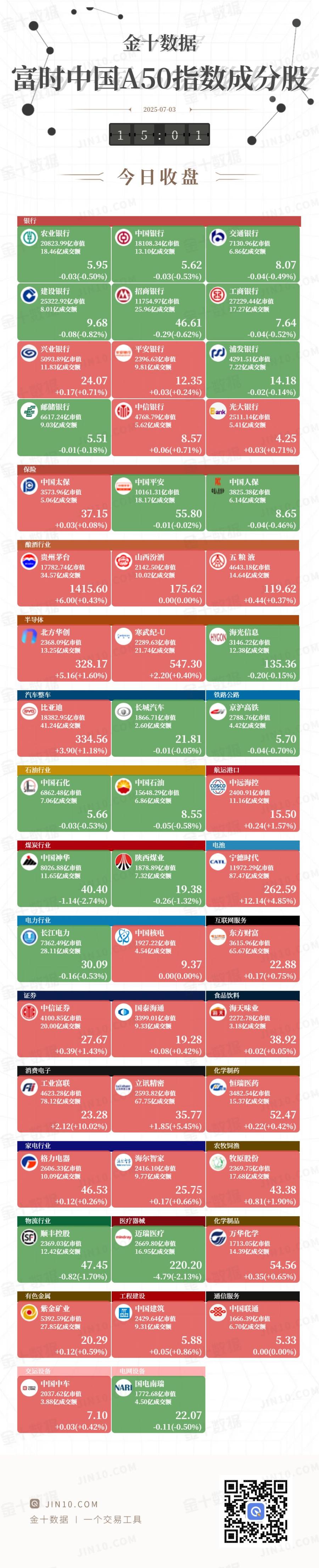
金十图示:2025年07月03日(周四)富时中国A50指数成分股今日收盘行情一览:证券、消费电子、家电等板块收高,石油、煤炭等板块收低,银行、保险等板块涨跌不一
news flash· 2025-07-03 07:05
富时中国A50指数连续 金十图示:2025年07月03日(周四)富时中国A50指数成分股今日收盘行情一览:证券、消费电子、家电等板块收高,石油、煤 炭等板块收低,银行、保险等板块涨跌不一 -0.01(-0.18%) +0.06(+0.71%) +0.03(+0.71%) 保险 中国太保 中国平安 12,000 中国人保 电机 3825.38亿市值 3573.96亿市值 10161.31亿市值 5.06亿成交额 18.17亿成交额 6.14亿成交额 55.80 37.15 8.65 +0.03(+0.08%) -0.01(-0.02%) -0.04(-0.46%) 酸酒行业 贵州茅台 五粮液 山内对酒 17782.74亿市值 2142.50亿市值 4643.18亿市值 34.57亿成交额 10.02亿成交额 14.64亿成交额 1415.60 175.62 119.62 +6.00(+0.43%) 0.00(0.00%) +0.44(+0.37%) 术学体 北方华创 寒武纪-U 海光信息 HYGON 2368.09亿市值 2289.63亿市值 3146.22亿市值 13.25亿成交额 21.74亿成交额 12. ...






在威尼斯,中国建筑师诠释和合之美
Ren Min Ri Bao Hai Wai Ban· 2025-07-03 04:09
Group 1 - The 19th Venice International Architecture Biennale features the Chinese Pavilion, organized by the Ministry of Culture and Tourism, with the theme "Co-Exist" [4] - The exhibition includes 10 works that explore themes such as Liangzhu civilization, Dunhuang caves, Beijing's central axis, and future cities, reflecting the integration of traditional Chinese wisdom into modern architectural practices [4][6] - The works aim to illustrate how Chinese architects draw from the "Tianren He Yi" worldview to address contemporary challenges in material innovation, urban development, and landscape reconstruction [4] Group 2 - "Liangzhu Twelve Laws," created by a team from the China Academy of Art, interprets the concept of "wisdom" through a poetic representation of the "Ritual and Music Civilization" as a foundational principle of Chinese culture [6][7] - The installation features 12 sound devices corresponding to the twelve months and hours, linking the Liangzhu archaeological site with surrounding communities and promoting a cultural ecological circle [6][7] - The project is part of a broader initiative by the China Academy of Art to explore cross-disciplinary themes and engage in global cultural exchanges [6][7] Group 3 - "Cang Qiong," an installation by Wang Zigeng, embodies the Chinese philosophy of harmony between humans and nature, utilizing green protective nets and traditional bamboo weaving techniques [8][9] - The work employs a rotating structure to create dynamic narratives that reflect the cyclical nature of life, drawing inspiration from traditional Chinese architectural forms [8][9] - The installation incorporates recycled construction materials, emphasizing sustainability and the cultural significance of construction sites in China [9][10] Group 4 - "Dunhuang: Gong Yi," created by architects Zhang Jiyuan and Bu Xiaojun, reflects the historical significance of the Dunhuang Mogao Caves as a site of cultural convergence along the Silk Road [10][11] - The installation presents a three-dimensional star map that symbolizes the intersection of various civilizations, including Indian, Persian, and Greek influences [11][12] - The work emphasizes that true cultural integration involves the organic reconfiguration of cultural genes over time, rather than mere stylistic amalgamation [12]

从重启回购,看中国建筑兴业(0830.HK)的价值捍卫与估值修复逻辑
Ge Long Hui· 2025-07-03 01:33
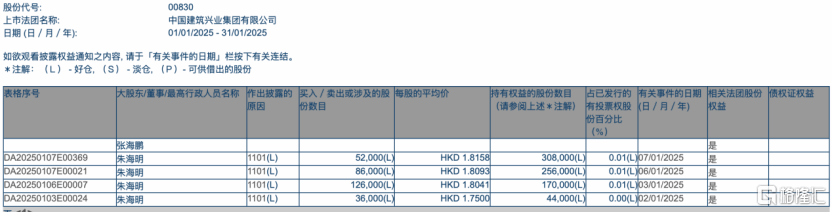
Group 1: Market Trends - Since Q2 2025, the Hong Kong stock market has experienced a resurgence in share buybacks, with 127 companies participating in April, marking a monthly high since Q4 2024, totaling HKD 13 billion [1] - In May, despite a decrease in the number of companies to 91, the total buyback amount increased to HKD 17 billion, setting a new monthly record since February [1] - By mid-June, over 50 Hong Kong companies had already executed buybacks, indicating a continued trend [1] Group 2: Company-Specific Actions - China State Construction International's recent buyback is significant as it marks the first share repurchase since its acquisition by China State Construction International, with the last buyback occurring over a decade ago in 2011 [2] - The buyback reflects management's belief that the company's valuation is relatively low and demonstrates strong confidence in future growth prospects [2] - The company has seen its CEO, Zhu Haiming, increase his shareholding by 300,000 shares, indicating confidence in the company's future [2] Group 3: Financial Performance and Shareholder Returns - The company has maintained a stable record of paying dividends twice a year since 2021, with a total dividend yield of 6.81% for the year, which is attractive in the current low-interest-rate environment [4] - The dual strategy of buybacks and dividends showcases the company's cash flow management capabilities and provides a safety net for its stock price [4] Group 4: Business Strengths and Opportunities - As a leader in the high-end curtain wall market in Hong Kong and Macau, the company has secured several landmark projects, establishing a solid foundation for stable growth [5] - The company is well-positioned to benefit from significant construction opportunities arising from government initiatives in Hong Kong and Macau [6][7] - The company is actively pursuing BIPV projects, with a strategic partnership signed to promote projects worth at least HKD 10 billion, contributing to its growth and sustainability goals [7][9] Group 5: Policy and Market Dynamics - The company's BIPV initiatives align with national and regional policies aimed at promoting green building practices, which are expected to drive future growth [9][10] - The implementation of the EU's carbon border adjustment mechanism (CBAM) in 2026 is anticipated to create additional demand for BIPV technologies, enhancing the company's competitive edge [9][10] Group 6: Investment Outlook - The company's strong order backlog and robust dividend returns provide a dual safety net for investors, while its BIPV technology positions it for significant growth in the context of global carbon neutrality efforts [11] - The combination of stable current performance and potential for explosive growth in the BIPV sector makes the company a compelling investment opportunity [11]
中证中游制造产业指数报3275.43点,前十大权重包含立讯精密等
Jin Rong Jie· 2025-07-02 11:10
Group 1 - The core index of the China Securities Industry Chain Index series includes the upstream resource index, midstream manufacturing index, and downstream consumption and service index, providing diversified investment targets for investors [2] - The China Securities Midstream Manufacturing Index has seen a 4.59% increase over the past month, a 0.87% decrease over the past three months, and a 2.73% decline year-to-date [2] - The top ten weighted stocks in the China Securities Midstream Manufacturing Index include CATL (7.5%), Luxshare Precision (1.95%), SMIC (1.94%), BOE Technology Group (1.66%), Northern Huachuang (1.59%), Haiguang Information (1.43%), NewEase (1.41%), Zhongji Xuchuang (1.4%), Huichuan Technology (1.38%), and China State Construction (1.37%) [2] Group 2 - The holdings of the China Securities Midstream Manufacturing Index are distributed with 50.48% on the Shanghai Stock Exchange and 49.52% on the Shenzhen Stock Exchange [2] - The industry composition of the index holdings shows that industrials account for 44.37%, information technology for 37.46%, materials for 8.34%, communication services for 5.70%, and consumer discretionary for 4.15% [2] - The index sample is adjusted biannually, with adjustments implemented on the next trading day after the second Friday of June and December, and can be temporarily adjusted under special circumstances [3]





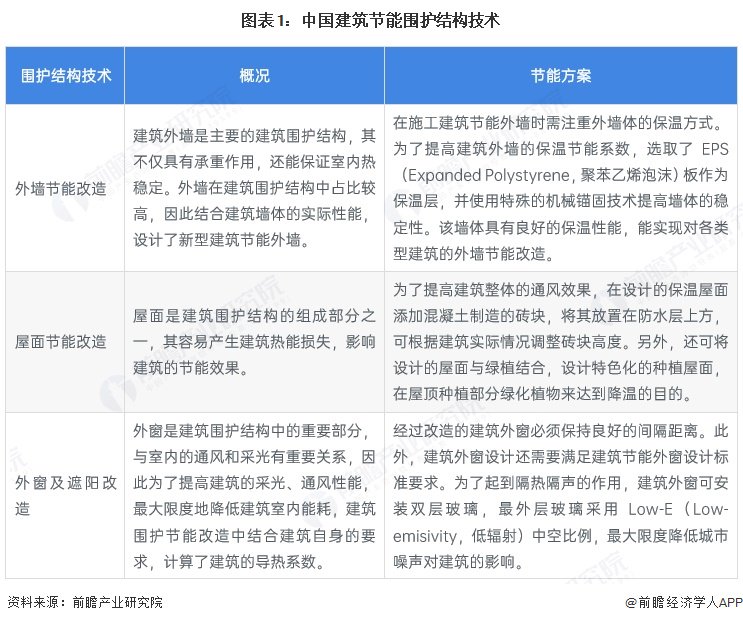
2025年中国建筑节能行业技术现状 建筑维护结构和风平衡管理是主要技术路线【组图】
Qian Zhan Wang· 2025-07-02 07:47
Core Viewpoint - The article discusses the advancements and trends in China's building energy-saving technologies, focusing on the insulation of external walls, roofs, and windows, which can reduce energy consumption by over 30% and help meet national energy-saving standards [1][2]. Group 1: Building Energy-Saving Technologies - The building energy-saving technology emphasizes three main areas: external wall insulation, roof modifications, and window upgrades [1]. - External wall energy-saving modifications utilize materials like EPS (Expanded Polystyrene) boards to enhance insulation performance [2]. - Roof energy-saving improvements include the addition of concrete blocks for ventilation and the integration of green roofs to lower temperatures [2]. - Upgraded windows feature low-emissivity (Low-E) glass and double glazing to improve thermal insulation and reduce indoor energy consumption [2]. Group 2: Patent Applications and Trends - As of May 2025, China has filed 9,069 patent applications related to building energy-saving technologies, with a peak of 1,397 applications in 2023 [7]. - Leading patent applicants in the building energy-saving sector include Chengde Green Building with 143 patents, China Building with 124, and Zhuobao Technology with 121 [9]. - The most popular patent category is E04B (buildings), accounting for 24.1% of applications, followed by F24F (air conditioning and ventilation) at 9.7% [10][12]. Group 3: Airflow Management in Public Buildings - Effective airflow management is crucial for the energy-efficient operation of public buildings, focusing on indoor and outdoor air movement [4][5]. - Various ventilation modes are employed based on seasonal conditions, such as natural ventilation in transitional seasons and mechanical ventilation in winter [5]. - Airflow management strategies primarily target building airtightness and the design of HVAC systems [5].




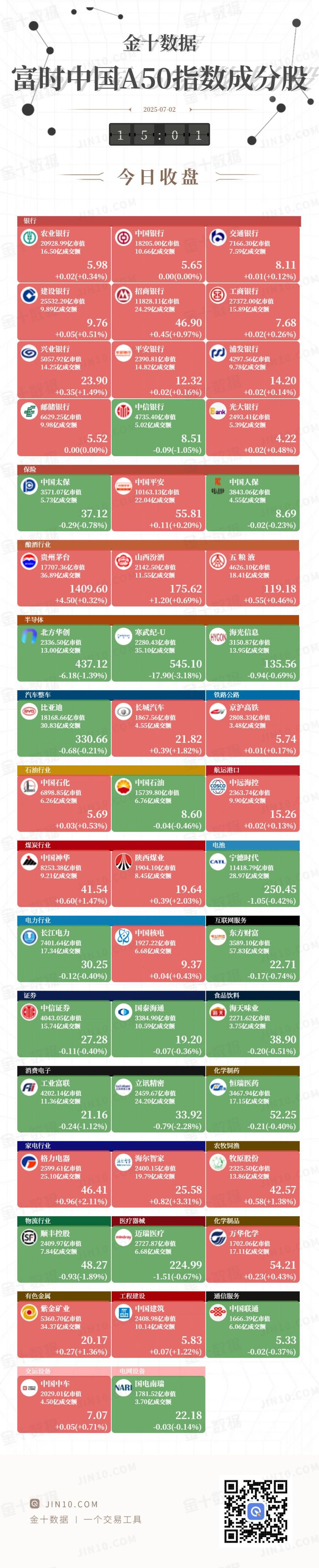
金十图示:2025年07月02日(周三)富时中国A50指数成分股今日收盘行情一览:家电、白酒、有色金属等板块收高,证券、消费电子、物流等板块收低
news flash· 2025-07-02 07:05
Market Overview - The FTSE China A50 Index components showed mixed performance with sectors like home appliances, liquor, and non-ferrous metals rising, while sectors such as securities, consumer electronics, and logistics declined [1]. Sector Performance Home Appliances - Gree Electric Appliances had a market capitalization of 259.96 billion, with a trading volume of 25.10 billion and an increase of 0.96 (+2.11%) [3]. - Haier Smart Home reported a market cap of 240.01 billion, with a trading volume of 19.79 billion and an increase of 0.82 (+3.31%) [3]. Liquor Industry - Kweichow Moutai had a market capitalization of 1,770.74 billion, with a trading volume of 36.89 billion and an increase of 4.50 (+0.32%) [3]. - Wuliangye Yibin reported a market cap of 214.25 billion, with a trading volume of 11.55 billion and an increase of 1.20 (+0.69%) [3]. Non-Ferrous Metals - The sector showed positive performance, contributing to the overall rise in the index [1]. Securities - CITIC Securities had a market capitalization of 404.30 billion, with a trading volume of 10.59 billion and a decrease of 0.11 (-0.40%) [4]. - Guotai Junan Securities reported a market cap of 338.49 billion, with a trading volume of 15.74 billion and a decrease of 0.07 (-0.36%) [4]. Consumer Electronics - Industrial Fulian had a market cap of 420.21 billion, with a trading volume of 24.20 billion and a decrease of 0.24 (-1.12%) [4]. - Luxshare Precision reported a market cap of 245.97 billion, with a trading volume of 17.15 billion and a decrease of 0.79 (-2.28%) [4]. Logistics - SF Holding had a market capitalization of 272.79 billion, with a trading volume of 17.11 billion and a decrease of 1.51 (-0.67%) [4]. Energy Sector - China Shenhua Energy had a market cap of 190.41 billion, with a trading volume of 8.45 billion and an increase of 0.60 (+1.47%) [3]. - China Petroleum & Chemical Corporation reported a market cap of 1,573.98 billion, with a trading volume of 6.26 billion and a decrease of 0.04 (-0.46%) [3].



金工定期报告20250701:预期高股息组合跟踪
Soochow Securities· 2025-07-01 09:03
Quantitative Models and Construction Methods 1. Model Name: Expected High Dividend Portfolio - **Model Construction Idea**: The model uses a two-stage process to construct the expected dividend yield indicator. The first stage calculates the dividend yield based on annual report profit distribution data, while the second stage predicts and calculates the dividend yield using historical dividend data and fundamental indicators. Additionally, two short-term factors—reversal factor and profitability factor—are used to assist in stock selection. The portfolio is optimized within the CSI 300 constituents[4][9] - **Model Construction Process**: 1. Exclude suspended and limit-up stocks from the CSI 300 constituents to form the initial stock pool[14] 2. Remove the top 20% of stocks with the highest short-term momentum (21-day cumulative returns)[14] 3. Exclude stocks with declining profitability (quarterly net profit growth rate < 0)[14] 4. Rank the remaining stocks by expected dividend yield and select the top 30 stocks to construct an equal-weighted portfolio[10] - **Model Evaluation**: The model demonstrates a systematic approach to identifying high-dividend stocks, leveraging both historical data and fundamental analysis for robust stock selection[4][9] --- Model Backtesting Results 1. Expected High Dividend Portfolio - **Cumulative Return**: 358.90% relative to the CSI 300 Total Return Index from February 2, 2009, to August 31, 2017[12] - **Cumulative Excess Return**: 107.44% over the same period[12] - **Annualized Excess Return**: 8.87%[12] - **Maximum Drawdown of Rolling One-Year Excess Return**: 12.26%[12] - **Monthly Excess Win Rate**: 60.19%[12] --- Quantitative Factors and Construction Methods 1. Factor Name: Expected Dividend Yield Factor - **Factor Construction Idea**: This factor predicts dividend yield by combining historical dividend data with fundamental indicators. It is used to identify stocks with high expected dividend yields[4][15] - **Factor Construction Process**: 1. Calculate dividend yield based on annual report profit distribution data[4][9] 2. Predict and calculate dividend yield using historical dividend data and fundamental indicators[4][9] - **Factor Evaluation**: The factor effectively integrates historical and fundamental data to predict dividend yields, providing a solid foundation for high-dividend stock selection[4][15] 2. Factor Name: Reversal Factor - **Factor Construction Idea**: This factor identifies stocks with short-term price reversals, which may impact dividend yield predictions[4][15] - **Factor Construction Process**: Measure short-term momentum using 21-day cumulative returns and exclude the top 20% of stocks with the highest momentum[14] - **Factor Evaluation**: The factor helps mitigate the impact of short-term price surges, ensuring a focus on stable dividend yield predictions[4][15] 3. Factor Name: Profitability Factor - **Factor Construction Idea**: This factor screens out stocks with declining profitability, ensuring the selection of fundamentally strong companies[4][15] - **Factor Construction Process**: Exclude stocks with quarterly net profit growth rates less than 0[14] - **Factor Evaluation**: The factor ensures the portfolio is composed of financially sound companies, enhancing the reliability of dividend yield predictions[4][15] --- Factor Backtesting Results 1. Expected Dividend Yield Factor - **June 2025 Average Return**: 1.84%[15] - **Excess Return Relative to CSI 300**: -0.83%[15] - **Excess Return Relative to CSI Dividend Index**: 2.40%[15] 2. Reversal Factor - **Impact**: Excluded the top 20% of stocks with the highest short-term momentum, ensuring stability in the portfolio's dividend yield predictions[14] 3. Profitability Factor - **Impact**: Excluded stocks with declining profitability, maintaining a focus on fundamentally strong companies[14]




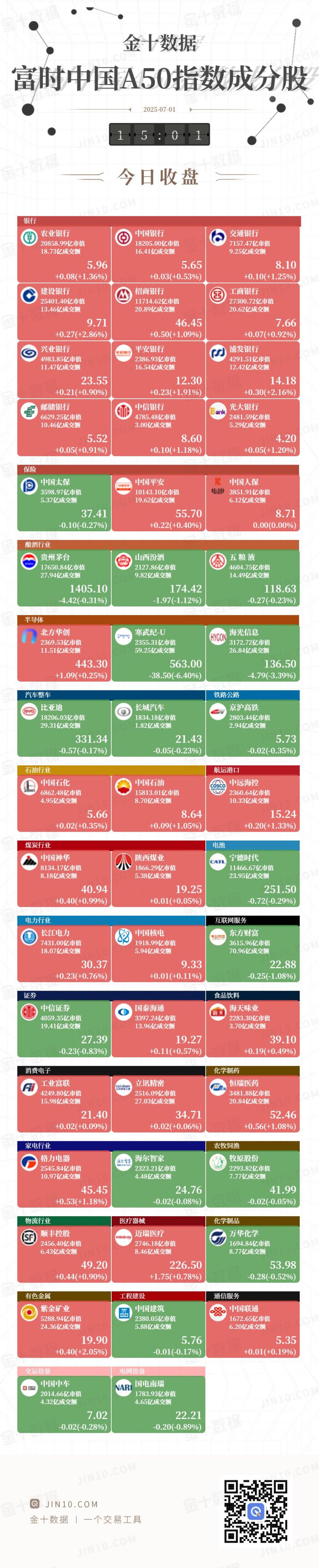
金十图示:2025年07月01日(周二)富时中国A50指数成分股今日收盘行情一览:银行、石油、有色金属板块收高,白酒、汽车板块收低,寒武纪跌超6%
news flash· 2025-07-01 07:10
+0.05(+0.91%) +0.10(+1.18%) +0.05(+1.20%) 保险 中国太保 中国平安 中国人保 01 3851.91亿市值 3598.97亿市值 10143.10亿市值 5.37亿成交额 19.62亿成交额 6.12亿成交额 55.70 8.71 37.41 -0.10(-0.27%) +0.22(+0.40%) 0.00(0.00%) 酸酒行业 贵州茅台 山西汾酒 五粮液 17650.84亿市值 2127.86亿市值 4604.75亿市值 27.94亿成交额 9.82亿成交额 14.49亿成交额 174.42 118.63 1405.10 -0.27(-0.23%) -4.42(-0.31%) -1.97(-1.12%) 半导体 北方华创 寒武纪-U 海光信息 HYGON 2369.53亿市值 3172.72亿市值 2355.31亿市值 11.51亿成交额 59.25亿成交额 26.84亿成交额 443.30 136.50 563.00 +1.09(+0.25%) -38.50(-6.40%) -4.79(-3.39%) 汽车整车 铁路公路 长城汽车 比亚迪 京沪高铁 2803.44 ...

深度剖析建筑行业发展:机遇、挑战与转型之路
Huan Qiu Wang· 2025-07-01 01:48
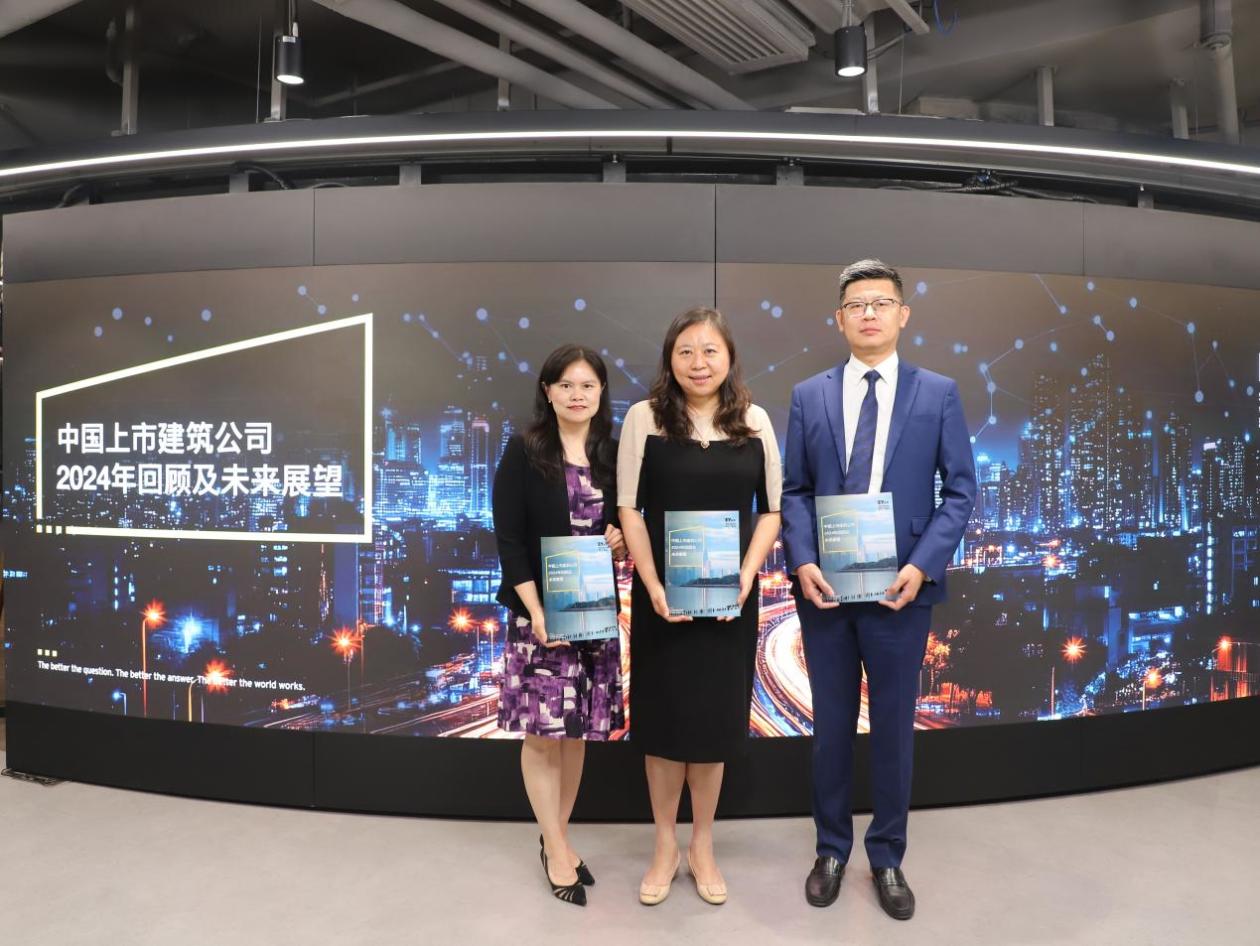
报告显示,2024年30家上市公司的新签合同额合计人民币184,411.76亿元,同比下降3.44%(数据来源:安永《中国上市建筑公司2024年回顾及未来展望》 报告)。在这一背景下,境外业务占比及变化情况备受瞩目。 安永大中华区政府与基础设施事业部主管合伙人兼安永北京主管合伙人杨淑娟在接受环球网记者采访时表示,尽管2024年整体新签合同额有所回落,但部分 领军企业的境外业务占比却逆势上扬。以中国建筑为例,其境外新签合同额同比增长19%,这一强劲增长无疑为行业注入了新的活力,彰显了中国建筑企业 在国际舞台上的竞争力。 杨淑娟介绍,2024年建筑企业境外业务占比小幅提升,如中国建筑境外新签合同额同比增长19%。企业"走出去"时,需关注政治、法律、财税、金融、供应 链及运营等风险。全球地缘政治风险加剧,企业要构建"穿越周期的新生存法则",重视风险管控与合规管理。 中国建筑企业出海已取得一定成效,但面临诸多挑战。为此,杨淑娟认为,企业应聚焦核心业务、创新项目模式、明晰战略方向、深耕重点区域、优化协同 发展体系以及赋能海外机构。当前国际市场机遇与挑战并存。一方面,全球经济复苏乏力、地缘政治风险持续存在;另一方面,"一 ...