
CHINA TELECOM(601728)

Search documents
通信行业周观点:AI高景气延续,海内外算力链齐发力-20250826
Changjiang Securities· 2025-08-26 05:13
Investment Rating - The report maintains a "Positive" investment rating for the communication industry [13]. Core Insights - The communication sector has seen a significant increase, with a 10.43% rise in the 34th week of 2025, ranking first among major industries. Year-to-date, the sector has risen by 44.59%, also ranking first [2][7]. - Key developments include DeepSeek's launch of the V3.1 model, a major cloud computing deal between Meta and Google worth over $10 billion, and NVIDIA's introduction of Spectrum-XGS technology, all contributing to sustained high demand in AI and computing power [2][11]. Summary by Sections Market Performance - In the 34th week of 2025, the communication sector rose by 10.43%, leading among major industries. Since the beginning of the year, it has increased by 44.59% [2][7]. - Notable stock performances include Shengke Communication (+43.9%), ZTE Corporation (+32.2%), and Ruijie Networks (+32.2%) for gains, while Nanjing Panda (-10.0%), Kesi Technology (-8.9%), and Dingtong Technology (-3.9%) faced declines [7]. Technological Developments - DeepSeek's V3.1 model enhances tool usage and inference capabilities, introducing a "mixed inference" architecture and supporting the UE8M0 FP8 format, which significantly reduces memory usage and improves local inference efficiency [8]. - Meta's six-year cloud computing partnership with Google, valued at over $10 billion, marks one of the largest contracts for Google Cloud, enhancing its service offerings [9]. - NVIDIA's Spectrum-XGS technology aims to connect distributed data centers into a unified AI factory, improving communication performance significantly [10]. Investment Recommendations - Recommended stocks include: - Operators: China Mobile, China Telecom, China Unicom - Optical Modules: Zhongji Xuchuang, Xinyi Sheng, Tianfu Communication - Liquid Cooling: Yingweike - Fiber Optics: Fenghuo Communication, Hengtong Optic-Electric, Zhongtian Technology - Domestic Computing: Runze Technology, Guanghuan New Network, Aofei Data - AI Applications: Heertai, Tuobang Co., Yiyuan Communication - Satellite Applications: Haige Communication, Huace Navigation [11].






为什么总有私人号码给你打电话,让你免费升级话费套餐?
3 6 Ke· 2025-08-26 03:04
Core Viewpoint - The article highlights the ongoing issue of deceptive marketing practices by telecom operators in China, where consumers are misled into upgrading their service plans under the guise of "free upgrades," resulting in increased monthly charges [1][3][7]. Group 1: Telecom Operators' Response - The three major telecom operators in China have announced a unified approach to combat misleading marketing calls by using official numbers for promotions, aiming to help consumers identify legitimate marketing channels [1][2]. - Despite the operators' statements, complaints related to telecom service plans continue to rise, with over 65,000 complaints recorded on consumer platforms regarding issues with service charges and plan changes [2]. Group 2: Nature of Deceptive Practices - Consumers often receive calls claiming to offer lower-cost plans, but these calls frequently result in higher charges due to hidden fees or changes in service plans that are not clearly communicated [3][4]. - A common tactic involves presenting a plan that appears cheaper but actually increases the total monthly cost when additional services are included, effectively manipulating consumer perceptions [3][4]. Group 3: Structure of Marketing Practices - The telecom industry is structured into three main components: the company headquarters, retail stores, and third-party channel partners, with the latter often responsible for aggressive marketing tactics [4][5]. - External call agents, who are under pressure to meet sales targets, typically lack comprehensive knowledge of the plans they are selling, focusing solely on pushing sales rather than providing accurate information [5][6]. Group 4: Consumer Experience and Challenges - Consumers face significant challenges in canceling or downgrading plans, as the process is often complicated and time-consuming, leading to frustration and increased costs [3][6]. - The system is designed in such a way that external agents can only increase service plans, while retail staff have limited authority to reduce plans, creating a barrier for consumers seeking to lower their expenses [6][7]. Group 5: Implications for the Industry - The article suggests that the telecom operators are aware of these deceptive practices but continue to allow them to persist, effectively placing the burden of accountability on consumers [7][8]. - The ongoing issue of unsolicited marketing calls indicates that these practices are likely to continue, as the operators gamble on consumers' ability to recognize and report such tactics [8].
英伟达产品安全存疑,利好国产算力链全方位闭环
Tebon Securities· 2025-08-26 02:49
Investment Strategy - Concerns over Nvidia's security may accelerate the replacement of domestic chips, creating a vacuum in the supply of computing chips in China. Recent advancements in domestic computing cards are expected to drive rapid development in the related industry chain. Nvidia's H20 computing chip has been reported to have serious security issues, which could negatively impact its future orders in the Chinese market. In 2024, over 50% of the data center accelerator cards in China are expected to be inference cards, with domestic computing cards projected to account for over 40% by the first half of 2025. The domestic accelerated computing server market is expected to grow by 97.3% year-on-year in 2024 and by 52.9% in 2025 [10][12][13] - The release of DeepSeek-V3.1 is expected to enhance the usability of domestic computing cards in large model applications. The V3.1 version supports UE8M0 FP8 precision, which significantly reduces storage and improves computational throughput compared to traditional FP16 and FP32 formats. This advancement is anticipated to lead to a qualitative leap in the application of domestic computing cards [11][14] - The demand for computing infrastructure from operators and cloud vendors is clear, with capital expenditures expected to increase in the second half of the year. The three major operators reported good growth in computing-related business revenues, with China Telecom's cloud service revenue at 57.3 billion yuan, China Unicom's at 37.6 billion yuan, and China Mobile's at 56.1 billion yuan. Capital expenditures for the first half of 2025 are projected to be 494 billion yuan for China Telecom, 348 billion yuan for China Unicom, and 928 billion yuan for China Mobile, accounting for 59.1%, 63.3%, and 61.4% of their annual expenditures respectively [12][13][18] Industry News - The successful launch of the low-orbit satellite internet 09 group marks a significant step in China's satellite internet development, with the country entering a high-density launch phase. This mission was the 590th flight of the Long March series of rockets, and it is expected to enhance the satellite internet network [15][16] - The budget for the 2025 rocket launch service procurement project by Shanghai Yuanxin Satellite Technology Co., Ltd. is approximately 1.336 billion yuan, with a focus on launching 94 satellites across seven missions. This indicates a growing emphasis on satellite internet and commercial space development in China [16][17] - Capital expenditures by the three major operators in the first half of 2025 were the lowest in recent years, totaling 112.8 billion yuan, a decrease of 16.5% year-on-year. However, there is an expectation of increased investment in AI and computing infrastructure in the second half of the year, which could significantly boost the domestic computing chain [18][19] Weekly Review and Focus - The communication sector saw a significant increase of 10.47% this week, outperforming major indices. The IDC and optical module sectors continued to lead gains, with increases of 14.59% and 14.41% respectively. The overall performance of the communication sector suggests strong investment opportunities in domestic computing chains and satellite internet [19][20]

中国电信8月25日获融资买入9856.45万元,融资余额8.37亿元
Xin Lang Cai Jing· 2025-08-26 02:00
Group 1 - The core viewpoint of the news highlights the trading performance and financial metrics of China Telecom, indicating a positive trend in financing activities and stock performance on August 25 [1] - On August 25, China Telecom's stock rose by 0.92% with a trading volume of 1.368 billion yuan, and the net financing purchase amounted to 10.71 million yuan [1] - As of August 25, the total financing and securities lending balance for China Telecom reached 842 million yuan, with a financing balance of 837 million yuan, representing 0.14% of the market capitalization [1] Group 2 - China Telecom, established on September 10, 2002, primarily engages in telecommunications and related services, with a revenue composition of 39.56% from mobile communication services, 27.78% from industrial digital services, and 23.80% from fixed-line and smart home services [2] - For the first half of 2025, China Telecom reported a revenue of 269.42 billion yuan, reflecting a year-on-year growth of 1.30%, and a net profit attributable to shareholders of 23.02 billion yuan, up by 5.53% [2] - The company has distributed a total of 78.61 billion yuan in dividends since its A-share listing, with 63.05 billion yuan distributed over the past three years [3]
中国电信发布中期业绩基础业务稳健增长 战略新兴业务快速发展
Zhong Guo Chan Ye Jing Ji Xin Xi Wang· 2025-08-25 23:55
Core Insights - China Telecom reported a revenue of 271.5 billion yuan for the first half of 2025, reflecting a year-on-year growth of 1.3% [1] - The company is transitioning its strategy from "cloud transformation" to "intelligent cloud transformation," focusing on high-quality development and embracing artificial intelligence [1][4] Financial Performance - Service revenue reached 249.1 billion yuan, up 1.2% year-on-year, with EBITDA at 80.6 billion yuan, a 4.9% increase [1] - Net profit for the period was 23 billion yuan, marking a 5.5% growth, with basic earnings per share at 0.25 yuan [1] - Capital expenditure totaled 34.2 billion yuan, while free cash flow increased by 13.9% to 13.1 billion yuan [1] Business Segments - Mobile communication service revenue was 106.6 billion yuan, growing 1.3% year-on-year, while fixed-line and smart home service revenue reached 64.1 billion yuan, up 0.2% [1] - The number of mobile users stood at 433 million, and broadband users reached 199 million, with mobile ARPU at 46.0 yuan and broadband ARPU at 48.3 yuan [1] - Revenue from digital industry services was 74.9 billion yuan, with AIDC revenue growing by 7.4% [1] Strategic Initiatives - China Telecom is focusing on building an intelligent cloud system centered around its core technology "Xirang," providing integrated intelligent cloud services [3] - The company aims to enhance its AI capabilities across 21 key areas, developing over 160 AI applications to improve efficiency and reduce costs [3][5] - The strategic shift emphasizes customer-centricity, technological innovation, and the integration of digital infrastructure [4][5] Shareholder Returns - The company announced an interim dividend of 0.1812 yuan per share, an increase of 8.4% year-on-year, reflecting its commitment to enhancing shareholder value [2]
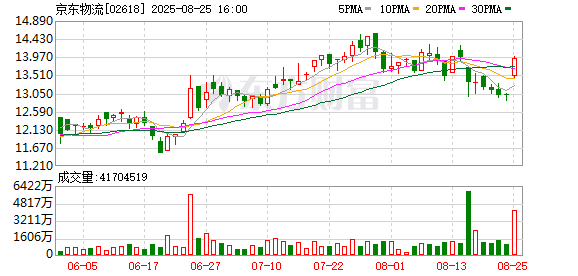
京东物流被纳入恒指成分股 分析人士称有望获得增量资金青睐
Zheng Quan Ri Bao· 2025-08-25 13:16
Core Insights - The Hang Seng Index Company announced an increase in the number of constituent stocks from 85 to 88, with the inclusion of China Telecom, JD Logistics, and Pop Mart International Group, effective September 8, 2025 [2] Group 1: Index Changes - The adjustment aligns with market expectations, reflecting the diversity and representativeness of the Hang Seng Index across different industries [2] - The three newly added stocks represent significant sectors: Pop Mart is a leading cultural product IP in China, China Telecom showcases the robust development of state-owned enterprises, and JD Logistics is recognized as an innovator in the logistics industry [2] Group 2: Market Impact - The adjustment is expected to influence substantial capital flows, with approximately $30.35 billion in ETFs tracking the Hang Seng Index needing to rebalance their portfolios [2] - Analysts suggest that the newly included stocks are likely to attract incremental capital, reinforcing the long-term investment value of Hong Kong stocks as a "global value trap," evidenced by the continuous inflow of southbound funds [2]



聚焦2025中国算力大会 | 中国电信以澎湃算力 护航AI等新科技向新而行
Sou Hu Cai Jing· 2025-08-25 11:53
Core Insights - The importance of computing power is increasingly recognized as a strategic resource in the digital age, with significant growth in China's computing power industry highlighted at the 2025 China Computing Power Conference [2][3] Industry Developments - During the 14th Five-Year Plan period, computing power infrastructure has been defined as a crucial foundation for building a digital China, with policies promoting the development of the computing power industry being implemented [3] - China's total computing power scale has seen an average annual growth rate of 30% over the past five years, with 10.43 million computing power standard racks and an intelligent computing power scale of 748 EFLOPS as of March this year [3] - The construction of a nationwide integrated computing power network is accelerating, allowing different regions to enjoy convenient computing services, with the total computing power scale of the eight major hub nodes in the "East Data West Computing" initiative reaching 215.5 EFLOPS, of which intelligent computing accounts for 80.8% [3] Company Initiatives - China Telecom is actively promoting the application of computing power services across various industries, enhancing digital infrastructure and application innovation [4] - In Guangxi, China Telecom is integrating 5G technology with port operations to drive the smart construction of the Beibu Gulf Port [4] - In Hunan, China Telecom collaborates with Zhuzhou Shangchi Electric to develop GPU intelligent computing capabilities for industrial applications, while also providing tailored computing and cloud network solutions for enterprises in the Changsha Malanshan Video Cultural and Creative Industry Park [4] - The company is investing over 2 billion yuan to establish the Poyang Lake Intelligent Computing Center in Jiangxi, which aims to be a core computing power engine for high-quality development along the Yangtze River Economic Belt [5] - In Hubei, China Telecom is leveraging advanced liquid cooling technology to create a central intelligent computing center, with a total computing power scale exceeding 600 PFLOPS, significantly enhancing regional computing resources [5]

5G专网开始进入快速增长通道,但当年高低入局的云厂商如今开始低调退出
3 6 Ke· 2025-08-25 11:12
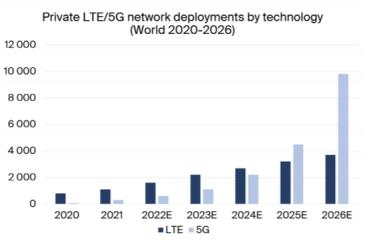
Core Insights - The 5G private network market is expected to grow at a compound annual growth rate (CAGR) of approximately 41% from 2025 to 2028, reaching over $5 billion by the end of 2028 [1] - Despite challenges and a significant shift in the supplier landscape, the value of 5G private networks remains evident, with a focus on scaling advantages as the market continues to consolidate [1] Industry Growth - In China, 5G private network revenue has entered a rapid growth phase, with China Mobile reporting a revenue of 8.7 billion yuan in 2024, a year-on-year increase of 61%, and 6.1 billion yuan in the first half of 2025, up 57.8% year-on-year [2] - China Unicom also reported a year-on-year growth of 60% in 5G private network revenue in the first half of 2025, although total revenue figures were not disclosed [2] - The rapid growth of 5G private networks is highlighted, but they currently do not constitute a significant revenue driver, accounting for only 5.16% of China Mobile's enterprise market revenue in the first half of 2025 [2] Market Dynamics - The 5G private network market is undergoing a reshuffle, with major internet companies like AWS, Microsoft Azure, and Google Cloud withdrawing from the space due to various challenges, including spectrum resource limitations and market size not meeting expectations [4][6] - AWS has confirmed the cessation of its 5G private network service, citing obstacles to service development, while still maintaining its integrated private wireless plan [5] - Microsoft Azure announced that its core 5G private network service will be discontinued by September 30, 2025, urging customers to transition to partner solutions [5] Infrastructure and Deployment - As of June this year, there are over 18,500 "5G + Industrial Internet" projects in China, with 58,000 5G virtual private networks covering key application scenarios such as industry, ports, healthcare, and energy [3] - The deployment of 5G private networks is primarily through virtual private networks, with a trend of replication across various sectors following initial demonstration effects [3] Future Outlook - Research institutions are adjusting their forecasts for the 5G private network market, with previous optimistic predictions being tempered by current market realities [7][9] - The SNS Telecom & IT report emphasizes the significant impact of 5G private networks in specific sectors, with efficiency improvements ranging from 20% to 90% in manufacturing and logistics processes [12] - The report also highlights the importance of spectrum policies in accelerating the adoption of 5G private networks, with various countries implementing shared and local spectrum access frameworks [13][14]

相关部门近期将会发放卫星互联网牌照,专家:迈出商业运营第一步
Xin Lang Cai Jing· 2025-08-25 08:26
Group 1 - The issuance of satellite internet licenses in China is imminent, marking a significant step towards commercial operations in the satellite internet sector [1][5][6] - The rapid acceleration in satellite launches by China SatNet, with five batches of low Earth orbit satellites successfully launched between July 27 and August 17, indicates a shift towards a more aggressive deployment strategy [1][2][3] - The long-term plan includes the deployment of 13,000 satellites for the GW constellation and 15,000 for the Qianfan constellation, highlighting the ambitious scale of China's satellite internet initiative [1][3] Group 2 - The need to comply with the International Telecommunication Union (ITU) regulations is driving the accelerated launch schedule, as China SatNet must launch 10% of its planned satellites by September 2029 to avoid project cancellation [3][5] - The first generation of satellites, consisting of over 100 satellites, is expected to be completed this year to meet urgent communication needs, while the second generation's technology is still under development [3][6] - Major telecommunications operators in China, including China Telecom and China Mobile, are preparing to expand their satellite internet services, with China Telecom already having launched satellite communication services [5][6] Group 3 - Current satellite internet services in China rely on high-throughput satellites, such as APSTAR 6D and Zhongxing 26, which provide connectivity for specific industries rather than general consumers [9] - The transition to low Earth orbit satellite internet services is anticipated to take an additional 2-3 years before it can meet widespread consumer demand [6][8]
恒生指数季检结果公布:泡泡玛特、中国电信、京东物流纳入指数
Mei Ri Jing Ji Xin Wen· 2025-08-25 08:02
Group 1: Index Adjustments - The Hang Seng Index Company announced its semi-annual index adjustment results, affecting major indices including the Hang Seng Index, the Hang Seng China Enterprises Index, and the Hang Seng Tech Index [1] - China Telecom, JD Logistics, and Pop Mart were included in the Hang Seng Index, with respective weights of 1.44%, 0.51%, and 0.22%, increasing the total number of constituent stocks to 88 [1] - The Hang Seng China Enterprises Index included Pop Mart with a weight of 2.10%, while J&T Express was removed, which had a weight of 0.71%, keeping the total number of constituents at 50 [1] - No adjustments were made to the Hang Seng Tech Index, maintaining its count at 30 constituents [1] - The adjustments will take effect on September 8, 2025, with the adjustment list for the Stock Connect to be published on September 5 [1] Group 2: ETF Market Developments - Huaxia Fund's Hong Kong stock ETFs surpassed 100 billion yuan in total scale, becoming the first fund manager in the market to achieve this milestone [2] - Huaxia Fund's Hong Kong stock ETFs not only have the largest scale but also the most comprehensive layout, with 14 funds covering broad-based, technology, healthcare, dividend, and consumer sectors [2] Group 3: Related Securities - Core broad-based Hong Kong stock: Hang Seng ETF (159920) [3] - AI and platform economy: Hang Seng Tech Index ETF (513180) [3] - Focus on the development of Chinese enterprises in Hong Kong: Hang Seng China Enterprises ETF (159850) [3]