YONGHUI SUPERSTORES(601933)

Search documents
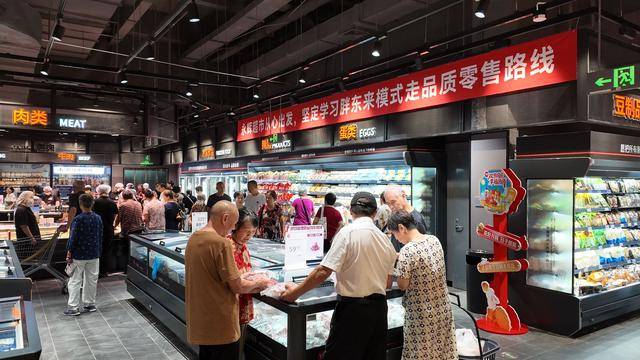
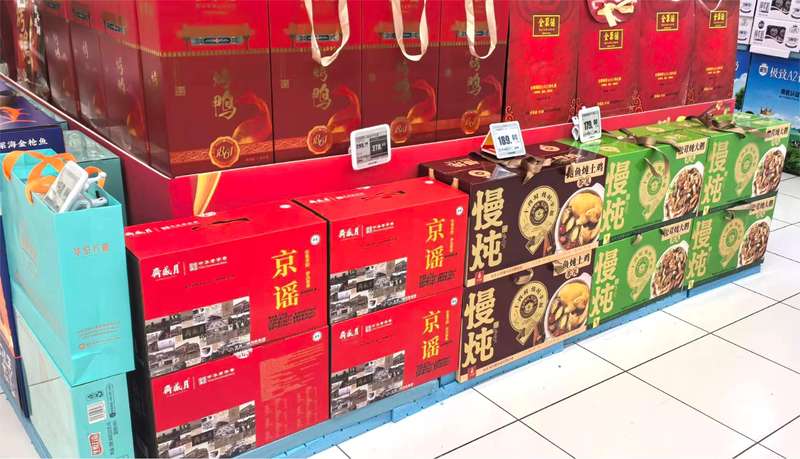
高端食材热销、熟食拓新 双节前食品采购更加精细化、多元化
Xin Jing Bao· 2025-09-30 09:54
Core Insights - The upcoming National Day and Mid-Autumn Festival are driving consumer interest in health-conscious and high-quality food products, with a notable shift towards premium offerings and local specialties [1][11]. Group 1: Egg Consumption - The demand for egg gift boxes has surged, with a 6.79% increase in egg price index in Beijing due to the festive season [2]. - Consumers are increasingly opting for supermarket private labels, such as "Bountiful Countryside," indicating a shift in brand loyalty [2]. - Egg brands are facing logistical challenges due to increased order volumes, leading to potential delivery delays [2]. Group 2: Meat and Prepared Foods - Pork consumption is experiencing a spike, with sales increasing by 20-30% during the festive period, as consumers stock up on various meat products [3][11]. - New product offerings in the prepared food sector, such as gourmet gift boxes featuring traditional and innovative dishes, are attracting consumer interest [4][6]. - The trend towards high-quality, ready-to-eat meals is evident, with brands like Tianfuhao introducing new products to meet evolving consumer preferences [6]. Group 3: Seafood Market - The seafood market is bustling, with a 30% increase in orders for crab gift boxes as consumers prepare for the holiday season [7]. - High-end seafood products, including Boston lobsters and sea cucumbers, are gaining traction, reflecting a growing consumer preference for premium ingredients [8]. - The supply chain for seafood is being optimized to ensure availability during the festive period, with significant daily trading volumes reported [7][8]. Group 4: Health and Wellness Trends - There is a marked increase in consumer interest in health-oriented products, with a focus on low-sugar and low-salt options, as well as traditional health supplements [10][11]. - The trend towards "face and substance" is evident, with consumers seeking aesthetically pleasing and high-quality gift boxes that reflect both personal and cultural values [10][11]. - Local specialties are becoming a significant part of festive shopping, with a wide range of regional products available to consumers [11].


大闸蟹卖爆了!电商销量增长超4倍,最快12小时到餐桌?
Bei Jing Shang Bao· 2025-09-29 13:20
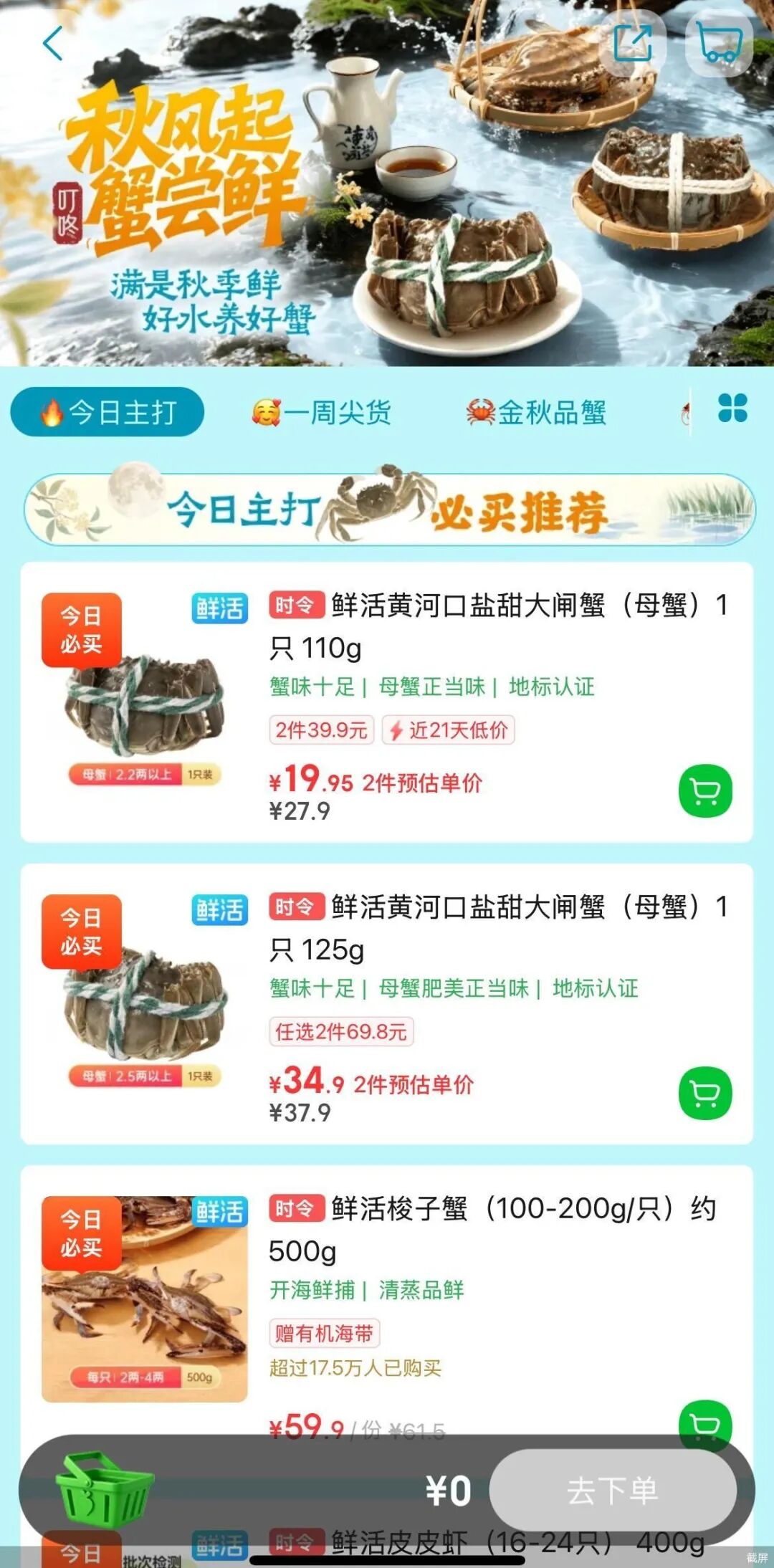
Group 1 - The core focus of the article is on the surge in sales of hairy crabs on e-commerce platforms during the upcoming Mid-Autumn Festival and National Day holidays, with some platforms expecting sales to increase by 4-5 times compared to pre-holiday levels [2][6] - E-commerce platforms have launched special sections for hairy crab sales, offering promotions such as crab cards and gift boxes to attract consumers [2][6] - The sales of crab cards on platforms like "What Worth Buying" have seen a year-on-year increase of 37.13%, with specific products like the Yangcheng Lake crab gift box becoming popular choices for gifting [6] Group 2 - Logistics companies are enhancing their fresh food delivery capabilities, with SF Express launching an intelligent express transfer center specifically for hairy crabs, increasing capacity by 100% compared to 2024 [7] - JD Supermarket has established a strategic partnership to create a crab base, aiming for an annual production of over 500,000 pounds of crabs [6][7] - The unique consumption patterns in September are attributed to the upcoming holidays, with increased demand for gifting and seasonal purchases, leading to an overall 20% increase in inventory for fresh e-commerce platforms [7][8] Group 3 - Travel-related products have seen a significant increase in sales, with smart luggage sales on JD platform growing over 10 times year-on-year, particularly in regions like Guangdong, Shanghai, and Beijing [8] - Women's clothing, especially autumn apparel, has become a major focus for purchases, with a year-on-year GMV increase of 96.58% for categories like trench coats and knitwear [8] - The demand for outdoor gear and travel convenience items, such as clothing and skincare storage bags, has also risen, with a 31.05% increase in popularity [8]


四年半亏损近百亿,三个月被监管两次警示 永辉超市忙“自救”
Jing Ji Guan Cha Wang· 2025-09-29 10:03
Core Viewpoint - Yonghui Supermarket is facing significant operational challenges, including regulatory warnings for stock reduction practices and ongoing financial losses, raising concerns about its ability to successfully navigate the retail sector's difficulties and implement effective reforms [1][2][4]. Regulatory Issues - Yonghui Supermarket received a warning from the Sichuan Securities Regulatory Bureau for failing to timely disclose a reduction in its stake in Hongqi Chain, which decreased from 11% to 10% [1][2]. - The company had previously faced similar warnings for early reduction activities, indicating a pattern of regulatory non-compliance [3]. Financial Performance - Since 2021, Yonghui Supermarket has experienced a decline in revenue and has recorded substantial losses, with a cumulative net loss of approximately 97.42 billion yuan over four and a half years [4][6]. - In the first half of 2025, the company reported a revenue of 29.948 billion yuan, a decrease of 20.73% year-on-year, and a net loss of 2.41 billion yuan, which is an increase in losses compared to the previous year [4][6]. Operational Challenges - The company has been closing underperforming stores, with 227 stores shut down in the first half of 2025 alone, contributing to its financial struggles [5][6]. - Yonghui Supermarket's revenue has consistently declined over the past few years, with significant drops in 2024 and 2025 due to strategic shifts and operational challenges in the retail sector [6][8]. Reform Efforts - In response to its financial difficulties, Yonghui Supermarket initiated a comprehensive reform strategy, including inviting the founder of Pinduoduo, Yu Donglai, to assist in store renovations [7][8]. - Initial results from the reform efforts showed promising increases in customer traffic and sales at newly renovated stores, but the implementation of employee welfare standards has faced criticism [7][8]. Industry Context - The retail sector is undergoing significant changes, with many traditional supermarket brands, including Yonghui, initiating their own reform strategies to adapt to market pressures [9]. - A survey indicated that 75% of surveyed supermarket companies have attempted reforms, with many reporting varying degrees of sales growth [9].
永辉超市收警示函 减持红旗连锁1360万股未及时信披
Zhong Guo Jing Ji Wang· 2025-09-29 09:39
Core Viewpoint - The China Securities Regulatory Commission (CSRC) issued a warning letter to Yonghui Supermarket Co., Ltd. for failing to timely disclose changes in shareholding after reducing its stake in Hongqi Chain Co., Ltd. from 11% to 10% [1][5][6] Group 1: Company Actions - Yonghui Supermarket acquired over 5% of Hongqi Chain shares in 2017 through a transfer agreement [1][5] - From April 21 to April 24, 2025, Yonghui Supermarket reduced its holdings by 13.6 million shares, resulting in a decrease in ownership from 11% to 10% [1][5] - The company did not disclose the change in shareholding until July 21, 2025, violating the regulations [1][6] Group 2: Regulatory Framework - According to the "Measures for the Administration of the Acquisition of Listed Companies," investors must report changes in shareholding when reaching or crossing the 5% threshold within three days [3][4] - The CSRC can impose administrative measures, including issuing warning letters, for non-compliance with disclosure obligations [4][6] - Yonghui Supermarket's actions were recorded in the securities and futures market integrity database as part of the regulatory measures [1][6]

永辉超市阳澄湖大闸蟹上市,计划供应约100万只
Bei Jing Shang Bao· 2025-09-29 09:29
北京商报讯(记者 赵述评)近日,永辉超市在江苏苏州阳澄湖举行溯源开湖仪式。永辉超市今年通过 包塘方式,锁定上千亩优质蟹塘,计划供应约100万只阳澄湖大闸蟹。据悉,永辉已与阳澄湖大闸蟹协 会副会长单位达成深度合作,获得直接授权,确保货源真实可靠。 针对不同配送距离,永辉建立了分级时效体系。以上海、杭州、南京等为核心的短链路城市,最快12小 时内即可实现"朝捕夕达"。北京、重庆、福州等城市的中长链路区域能在24小时内完成产地仓至门店的 全链直达。 永辉品蟹季主推的阳澄湖大闸蟹,以其"青背、白肚、金爪、黄毛"的典型特征而闻名。该品种大闸蟹是 是以长江水系中华绒螯蟹原种为基础群体,经五代选育并通过国家审定"持证上岗"。为保障每一只上市 大闸蟹的品质,永辉超市在产地塘口、分拣仓、销地仓设置了三道品控关口,实施严格的检测程序,确 保只有肥满度、鲜活度达标的优质蟹才能进入销售渠道。 在生态养殖方面,永辉合作的养殖基地采用生态放养标准。一些养殖水域除大闸蟹外,还同步放养花白 鲢以净化水质,投放螺、蚬、虾及杂鱼作为大闸蟹的天然饵料。 ...
娃哈哈上海工厂改卖“沪小娃”;西贝创始人贾国龙清空多个社交账号丨消费早参
Mei Ri Jing Ji Xin Wen· 2025-09-28 23:22
Group 1 - A child suffered severe burns due to an explosion of a Bear Electric health pot, raising concerns about product safety and brand reputation for Bear Electric [1] - Bear Electric has expressed its commitment to assist the affected family and is awaiting investigation results to determine the cause of the incident [1] - The incident may lead to increased consumer scrutiny regarding the safety of small household appliances, potentially impacting investment preferences in the home appliance sector [1] Group 2 - Wahaha's subsidiary has lost the rights to use the Wahaha brand, prompting the launch of a new brand "Hu Xiao Wa" for bottled water [2] - The situation highlights the operational risks faced by brand-dependent companies, particularly in the consumer goods sector [2] - Investors may become more focused on the autonomy of core assets and the sustainability of brand strategies in light of this event [2] Group 3 - The founder of Xibei Catering, Jia Guolong, has cleared multiple social media accounts, raising questions about the company's strategic direction [3] - Jia mentioned that Xibei's annual revenue has reached 6.2 billion yuan, indicating the company's scale [3] - The market may favor consumer companies with institutional brand management capabilities and mature management teams, which could enhance valuation stability [3] Group 4 - Yonghui Supermarket received a warning letter from the Sichuan Securities Regulatory Bureau for failing to timely disclose a reduction in its stake in Hongqi Chain [4] - The incident reflects governance and compliance shortcomings within Yonghui Supermarket [4] - The capital market is likely to place greater emphasis on corporate governance and compliance, favoring companies with robust governance structures for long-term investment [4]
永辉超市违规减持收警示函 半年关店227家调改93家
Chang Jiang Shang Bao· 2025-09-28 23:00
Core Viewpoint - Yonghui Supermarket has faced regulatory scrutiny due to internal governance issues and violations related to stock disclosures, leading to a warning from the China Securities Regulatory Commission [1][3][5]. Financial Performance - Over the past four and a half years, Yonghui Supermarket has accumulated a net loss of 9.742 billion yuan [2][10]. - In 2024, the company reported a revenue of 67.574 billion yuan, a year-on-year decrease of 14.07%, and a net loss of 1.465 billion yuan, down 10.26% year-on-year [8]. - For the first half of 2025, Yonghui Supermarket's revenue was 29.948 billion yuan, a decline of 20.73%, with a net loss of 241 million yuan, a significant drop of 187.38% year-on-year [8][10]. Governance and Regulatory Issues - Yonghui Supermarket received a warning letter from the Sichuan Regulatory Bureau for failing to timely disclose changes in shareholding after reducing its stake in Chengdu Hongqi Chain Co., Ltd. [1][3]. - This incident marks the second regulatory concern for Yonghui Supermarket in 2025, following a previous warning regarding internal governance issues, including the absence of a CEO and an inadequate decision-making mechanism [5]. Strategic Adjustments - In 2025, the company initiated a deep transformation of its overall strategy and operations, which is expected to cause short-term pain as it adjusts its business model [9]. - During the first half of 2025, Yonghui Supermarket adjusted and opened 93 stores, bringing the total number of adjusted stores to 124 by June 30, 2025 [9][10]. - The company closed 227 long-term loss-making stores during the same period, incurring costs related to lease compensation, personnel compensation, and asset write-offs [9]. Operational Changes - Yonghui Supermarket has implemented significant changes to its product supply chain, aiming to establish a "quality retail" mindset and improve supplier relationships [9]. - The company has introduced a new product mix in its stores, with over 30% of new products in many locations, and some stores reaching a 50% new product introduction rate [10].
永辉超市被出具警示函,因减持红旗连锁1360万股未及时披露
Xin Lang Cai Jing· 2025-09-28 03:37
Core Viewpoint - Yonghui Supermarket has received a warning letter from the Sichuan Securities Regulatory Bureau due to non-compliance with disclosure regulations regarding shareholding changes in Hongqi Chain [1][2] Group 1: Regulatory Issues - Yonghui Supermarket was warned for failing to timely disclose a reduction in its shareholding in Hongqi Chain from 11% to 10% during a specified period in April 2025 [1] - The company acknowledged the violation and committed to enhancing training on relevant laws and regulations to maintain market order [1][2] - The company had previously reported its status as a major shareholder of Hongqi Chain and the actions taken to rectify the situation, including repurchasing shares and paying the price difference to Hongqi Chain [2] Group 2: Management Changes - The company announced that due to the absence of a CEO, the board authorized a reform leadership group to assume CEO responsibilities until a new CEO is appointed [4] - On September 18, the board approved the appointment of Wang Shoucheng as the new CEO [4] Group 3: Financial Performance - Yonghui Supermarket reported a revenue of 29.948 billion yuan for the first half of 2025, a year-on-year decline of 20.73%, and a net loss attributable to shareholders of 241 million yuan [4] - The company has experienced continuous losses over the past four years, totaling 9.5 billion yuan [4] - The decline in revenue was attributed to the closure of 227 unprofitable stores, despite significant revenue increases from adjusted stores [4][5]
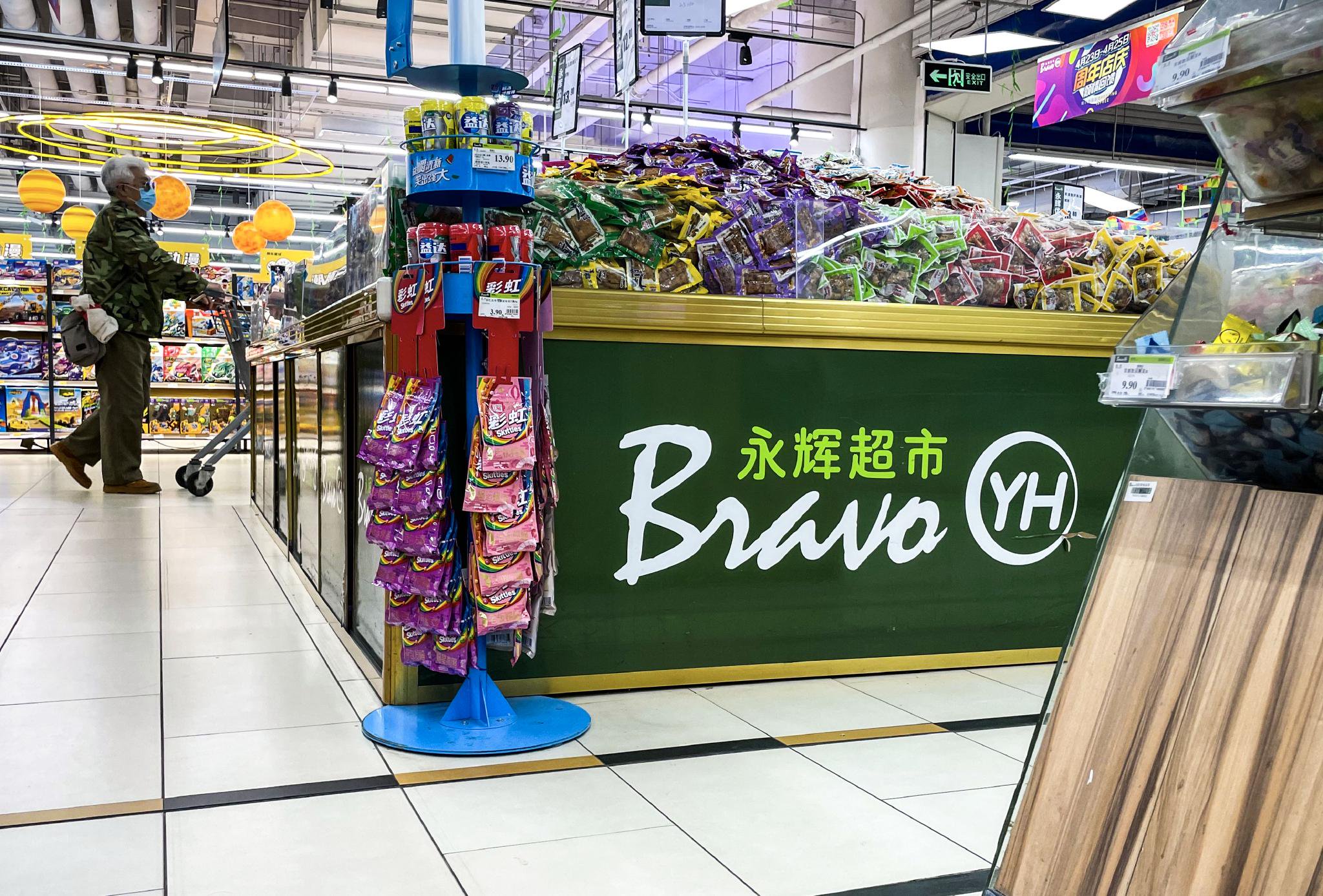
年内两度违规!永辉超市收警示函
Guo Ji Jin Rong Bao· 2025-09-27 06:49
Core Viewpoint - Yonghui Supermarket received a warning letter from the Sichuan Securities Regulatory Bureau for failing to timely disclose changes in shareholding after reducing its stake in Hongqi Chain [1][2] Group 1: Regulatory Actions - The warning letter indicates that Yonghui Supermarket reduced its stake in Hongqi Chain from 11% to 10% by selling 13.6 million shares between April 21 and April 24, 2025, without timely disclosure [1] - The Sichuan Securities Regulatory Bureau determined that this action violated the regulations outlined in the "Measures for the Administration of the Acquisition of Listed Companies" [1] - This is the second warning issued to Yonghui Supermarket in 2025 regarding its share reduction in Hongqi Chain, with a previous warning issued in June for similar issues [3] Group 2: Company Response - Yonghui Supermarket emphasized its commitment to addressing the issue, planning to enhance legal and regulatory training for its personnel to improve compliance and information disclosure practices [2] - The company stated that the regulatory measures would not affect its normal business operations and that it would strictly adhere to information disclosure obligations in the future [2]
深圳永辉调改即将收官!“胖改”门店覆盖全城
Sou Hu Cai Jing· 2025-09-26 16:45
Core Insights - Yonghui Supermarket has adopted the "Pang Donglai model" in Shenzhen, enhancing store layouts and customer experiences, with the first modified store opening in November 2024 and a total of eight stores planned for the city by September 2025 [1][6] Group 1: Store Modifications - The modifications include improvements in store layout, management models, and customer experience, with a focus on attracting younger consumers [1][3] - Yonghui's stores have been redesigned to cater to the preferences of local white-collar workers and young families, featuring wider aisles, lower shelf heights, and a more youthful aesthetic [3][5] - The product mix has shifted towards fresh and imported goods, with a supply chain strategy that combines local sourcing and global selection, emphasizing quality and health [3][5] Group 2: Quality and Safety Standards - New food safety standards have been implemented, including strict pricing rules for perishable items to ensure freshness and quality [5] - The stores now offer over 150 private label products, with a focus on popular items like craft beer, which has seen significant sales since launch [5][6] Group 3: Future Outlook - The upcoming store in Nanshan will feature local specialties and seasonal products, such as mooncakes for the Mid-Autumn Festival [6] - Yonghui plans to continue optimizing its store layouts and product offerings to align with local consumer demands, while also expanding its presence in premium shopping areas [6]