
CNNP(601985)

Search documents
中国核电(601985):核心聚焦核电,核电归母净利润同增3%
Soochow Securities· 2025-10-31 02:04
Investment Rating - The report maintains a "Buy" rating for China Nuclear Power (601985) [1] Core Insights - The focus remains on nuclear power, with net profit attributable to the parent company increasing by 3% year-on-year [7] - For the first three quarters of 2025, the company achieved total revenue of 61.635 billion yuan, a year-on-year increase of 8.16%, while net profit attributable to the parent company decreased by 10.42% [7] - The report highlights that revenue from new energy increased by 21.09%, but net profit declined by 67.96% due to factors such as market dilution from previous REITs and capital increases [7] - Nuclear power revenue grew by 5.56%, with net profit attributable to the parent company increasing by 2.81% despite rising costs [7] Financial Performance Summary - The company forecasts total revenue for 2023 at 74.957 billion yuan, with a projected growth rate of 5.15% [1] - The net profit attributable to the parent company is expected to be 10.624 billion yuan in 2023, reflecting a year-on-year growth of 17.91% [1] - The report projects earnings per share (EPS) to be 0.52 yuan for 2023, with a price-to-earnings (P/E) ratio of 18.41 [1] - For 2025, the forecasted net profit attributable to the parent company is 10.044 billion yuan, with a P/E ratio of 19.47 [1] Operational Highlights - The company’s cash flow from operating activities for the first three quarters of 2025 was 30.266 billion yuan, a decrease of 7.85% year-on-year [7] - The installed capacity of renewable energy increased by 38.67% year-on-year, with wind power and solar power capacities growing by 33.97% and 40.93%, respectively [7] - The report notes that the company plans to commission 1, 2, and 4 nuclear power units in 2025, 2026, and 2027, respectively, entering an accelerated production phase [7]

电改加速深化,预期有望趋稳 | 投研报告
Zhong Guo Neng Yuan Wang· 2025-10-31 01:25
Core Insights - The overall performance of the dividend style sector has been poor from early 2025 to October 28, 2025, while electricity demand has maintained steady growth, with a total electricity consumption of 7.77 trillion kilowatt-hours, representing a year-on-year increase of 4.8% [2][3] - During the 14th Five-Year Plan period, a "wide electricity volume, tight electricity supply" pattern is expected, with comprehensive electricity prices likely to stabilize [2][3] Electricity Sector - Coal prices have bottomed out and are expected to stabilize electricity prices; from the end of 2023 to mid-2025, coal prices have been declining, but began to rebound in July 2025, with the average clearing price in Jiangsu's electricity market reaching 395.60 yuan per megawatt-hour, an increase of 82.80 yuan per megawatt-hour month-on-month [3] - Hydropower remains stable with long-term investment value in a low-interest-rate environment; the net interest margin for hydropower has expanded by 69 basis points compared to the previous year [3] - Nuclear power's marketization ratio is gradually increasing, with a marketable electricity volume cap of 31.2 billion kilowatt-hours in 2026, a 14.3% increase from 2025; fluctuations in natural uranium prices have a minimal impact on operators [3] - Green electricity policies have seen uncertainty resolved, with market reforms entering a deeper phase; the wind power tax subsidy has decreased, indicating a policy bottom [4] Power Grid Equipment - The State Grid's investment in transmission and transformation equipment has seen significant growth, with a cumulative bidding amount of 68.188 billion yuan from January to September 2025, a year-on-year increase of 22.9% [6] - The export of primary equipment has also maintained high growth, with liquid medium transformers, high-voltage switches, and energy meters showing significant year-on-year increases in export amounts [6] Investment Opportunities - Beneficial stocks include: - Thermal Power: Huaneng International, Huadian International, China Resources Power, Datang Power, and others [7] - Hydropower: Yangtze Power, Huaneng Hydropower, and others [7] - Nuclear Power: China National Nuclear Power, China General Nuclear Power, and others [7] - Green Power: Longyuan Power, China Power, and others [7] - Power Grid Equipment: Pinggao Electric, XJ Electric, and others [7]

公用事业行业央企ESG评价体系:绿色安全+能源转型是核心社会责任担当是基石:公用事业行业央企ESG评价体系
Shenwan Hongyuan Securities· 2025-10-30 11:23
Investment Rating - The report assigns a "Buy" rating for several key companies in the public utility sector, including China Resources Power, Guodian Power, and Inner Mongolia Huadian [28]. Core Insights - The public utility sector is crucial for achieving national "dual carbon" goals, with a strong emphasis on environmental and social issues in the ESG evaluation framework [5][4]. - The ESG evaluation system for public utilities includes four categories of positive indicators and one category of negative indicators, focusing on objective assessment metrics [8][23]. - Recent policies from various government departments emphasize the need for green transformation, pollution prevention, and social welfare in the public utility sector [5][4]. Summary by Sections 1. ESG Policy in Public Utilities - The public utility sector is a major contributor to energy consumption and carbon emissions, making its green transformation essential for national goals [5]. - Key policies include the "14th Five-Year" energy conservation and emission reduction plan, which outlines specific requirements for green transformation and public service stability [5][4]. 2. ESG Evaluation System Construction - The ESG evaluation system consists of four positive categories: General Indicators, Environmental Indicators, Social Indicators, and Governance Indicators, with a total of 18 primary indicators and 35 secondary indicators [8][23]. - The negative category focuses on violations and penalties, with specific metrics for environmental, social, and governance aspects [23]. 3. General Indicators - General indicators assess the authenticity and standardization of ESG reports, including the basis for report preparation, third-party verification, and the publication of ESG-specific reports [10][9]. 4. Environmental Indicators - Environmental indicators are based on energy conservation, low carbon, and circular economy principles, with a total of four primary indicators focusing on emissions management, ecological compliance, resource utilization, and climate strategy [11][12]. 5. Social Indicators - Social indicators highlight the public utility sector's role in community development and social stability, with six primary indicators covering community contributions, employee development, innovation, supply chain responsibility, product safety, and core operational responsibilities [15][16][17]. 6. Governance Indicators - Governance indicators aim to enhance corporate governance and decision-making, with five primary indicators focusing on party leadership, industry reform, compliance risk management, governance structure, and information transparency [19][20][21]. 7. Negative Indicators - The negative indicators focus on compliance issues, with penalties for violations in environmental, social, and governance areas, deducting points for each violation [23][25].



公用事业行业央企ESG评价体系:绿色安全+能源转型是核心,社会责任担当是基石
Shenwan Hongyuan Securities· 2025-10-30 08:48
Investment Rating - The report maintains a positive outlook on the public utility sector's central enterprises with a focus on the ESG evaluation system [1]. Core Insights - The establishment of the ESG evaluation system for public utilities is based on a balanced emphasis on environmental and social issues, crucial for achieving national carbon neutrality goals [3][9]. - The evaluation system consists of four categories of positive indicators and one category of negative indicators, with a total of 18 primary indicators and 35 secondary indicators [12][28]. - Key policies guiding the sector include promoting renewable energy, enhancing energy efficiency, and ensuring equitable public services [9][11]. Summary by Sections 1. ESG Policy: Balancing Environmental and Social Issues - The public utility sector is a major contributor to energy consumption and carbon emissions, making its green transition vital for national carbon goals [3][9]. - Recent policies emphasize the development of clean energy and pollution control, with specific directives from various government bodies [9][11]. 2. Constructing the ESG Evaluation System: Multi-Dimensional Assessment - The ESG evaluation system is structured with four positive categories: General Indicators, Environmental Indicators, Social Indicators, and Governance Indicators, along with one negative category for violations [12][28]. - Each category has specific indicators designed to objectively assess the performance of enterprises in the public utility sector [12][28]. 3. General Indicators - General indicators assess the authenticity and standardization of ESG reports, including the basis for report preparation, third-party verification, and the publication of ESG-specific reports [12][14]. 4. Environmental Indicators - Environmental indicators focus on energy efficiency and circular economy principles, with metrics for emissions management, ecological compliance, resource utilization, and climate strategy [15][17]. 5. Social Indicators - Social indicators highlight the sector's role in public service, with metrics for community contributions, employee development, innovation, supply chain responsibility, and customer rights [19][21]. 6. Governance Indicators - Governance indicators aim to enhance corporate governance standards, focusing on party leadership, industry reform, compliance risk management, governance structure, and information transparency [23][26]. 7. Negative Indicators - The negative category includes penalties for violations, with specific metrics for environmental, social, and governance infractions, where each violation results in a deduction of points [28][31]. 8. Valuation of Key Companies - The report includes a valuation table for key companies in the public utility sector, indicating ratings and projected earnings per share (EPS) for the years 2025 to 2027 [34].
中国核电前三季度实现归母净利润80.02亿元 多元布局擘画发展蓝图
Zheng Quan Ri Bao Wang· 2025-10-30 07:49
Core Viewpoint - China Nuclear Power Co., Ltd. (China Nuclear Power) reported steady growth in its Q3 2025 results, achieving operating revenue of 61.635 billion yuan and a net profit of 8.002 billion yuan despite a challenging market environment [1] Group 1: Financial Performance - In the first three quarters of 2025, China Nuclear Power achieved an operating revenue of 61.635 billion yuan and a net profit attributable to shareholders of 8.002 billion yuan [1] - The total power generation from controlled nuclear power units reached 151.008 billion kWh, representing a year-on-year increase of 11.33% [1] - The cumulative on-grid electricity volume was 141.283 billion kWh, with a year-on-year growth of 11.44%, indicating steady improvement in power generation efficiency [1] Group 2: Operational Efficiency - The company has effectively managed challenges such as periodic unit maintenance, ensuring that nuclear power units quickly return to full-load operation after planned maintenance [1] - Key equipment operation and maintenance levels have continuously improved, with core power station operational efficiency remaining among the industry's best [1] Group 3: Project Development - Ongoing projects are progressing steadily, with the construction of the nuclear island for the Zhejiang Jin Qimen Nuclear Power Unit 1 fully underway [2] - The Zhangzhou Nuclear Power Unit 2 has successfully entered the fuel loading and testing phase, expected to commence operations in Q4 2025, providing substantial support for future performance growth [1] Group 4: Renewable Energy Initiatives - The company is actively expanding its footprint in the renewable energy sector, particularly in solar and wind power, to support the achievement of carbon neutrality goals [2] - In the first three quarters, the cumulative power generation from controlled renewable energy units reached 33.356 billion kWh, with a year-on-year increase of 34.77% [2] - The cumulative on-grid electricity from renewable sources was 32.812 billion kWh, reflecting a year-on-year growth of 34.82% [2] Group 5: Strategic Investments - In July, China Nuclear Power participated in the capital increase of China Fusion Energy Co., Ltd., investing 1 billion yuan for a 6.65% stake, contributing to a total capital injection of approximately 11.5 billion yuan [2] - This investment aligns with the national nuclear energy development strategy and positions the company to capture future energy technology advancements, laying the foundation for long-term stable economic returns [2]
中国核电(601985):拟推进新一期REITs发行方案期待新机组投产贡献增量
Shenwan Hongyuan Securities· 2025-10-30 07:09
Investment Rating - The report maintains a "Buy" rating for the company [6] Core Views - The company aims to promote a new phase of REITs issuance, expecting new units to contribute to incremental growth [1] - The company reported a total revenue of 61.635 billion yuan for the first three quarters of 2025, representing an 8.16% year-on-year increase, while the net profit attributable to the parent company was 8.002 billion yuan, down 10.42% year-on-year [6] - The company has a significant number of nuclear power units under construction, with 19 units and a capacity of 21.859 million kilowatts, which is 87% of the operational capacity [6] Financial Data and Earnings Forecast - Total revenue forecast for 2025 is 87.532 billion yuan, with a year-on-year growth rate of 13.3% [5] - The net profit attributable to the parent company is projected to be 10.041 billion yuan in 2025, reflecting a 14.4% year-on-year increase [5] - Earnings per share (EPS) is expected to be 0.49 yuan in 2025, with a price-to-earnings (PE) ratio of 19 [5] - The company’s gross profit margin is forecasted to be 41.5% in 2025 [5] Operational Highlights - The company has 26 operational nuclear units with a total installed capacity of 25 million kilowatts, achieving a power generation of 151.008 billion kilowatt-hours in the first nine months of 2025, up 11.33% year-on-year [6] - The company plans to issue approximately 2.536 billion yuan in REITs to enhance the liquidity of its renewable energy assets [6] - The company’s renewable energy segment saw a significant increase in power generation, with a total of 33.356 billion kilowatt-hours, up 34.77% year-on-year [6]
电改加速深化,预期有望趋稳
KAIYUAN SECURITIES· 2025-10-30 06:47
Core Insights - The report indicates that the electricity industry is expected to stabilize as the power supply-demand structure shifts to a "wide electricity volume, tight power" scenario during the 14th Five-Year Plan period [3][28] - The overall performance of the dividend style sector has been poor, with electricity demand showing steady growth [3][12] Industry Review - The dividend style sector has underperformed, with the public utility sector and electricity industry lagging behind the CSI 300 index [12] - From Q1 to Q3 of 2025, China's total electricity consumption reached 7.77 trillion kWh, a year-on-year increase of 4.8% [3][18] - The supply-demand structure is expected to remain tight, with comprehensive electricity prices likely to stabilize [28] Electricity Sector - Coal prices have bottomed out and are expected to stabilize electricity prices; from July 2025, coal prices began to rebound, with the Jiangsu electricity market clearing price reaching 395.60 yuan/MWh, an increase of 82.80 yuan/MWh [4][42] - Hydropower remains stable with long-term investment value in a low-interest-rate environment; the net interest margin for hydropower has widened by 69 basis points compared to the previous year [4] - Nuclear power's marketization ratio is gradually increasing, with minimal impact from fluctuations in natural uranium prices [4] - Green electricity policies are becoming clearer, with market reforms entering a deeper phase [5] Grid Equipment - Investment in domestic grid equipment has shown a significant increase, with cumulative bidding amounts reaching 681.88 billion yuan, a year-on-year increase of 22.9% [6] - The export value of primary equipment has also maintained high growth, with liquid medium transformers and high-voltage switches seeing substantial increases [6] Beneficiary Targets - Beneficiary stocks include: - Thermal Power: Huaneng International, Huadian International, China Resources Power, Datang Power, and others [7] - Hydropower: Yangtze Power, Huaneng Hydropower, and others [7] - Nuclear Power: China National Nuclear Power, China General Nuclear Power, and others [7] - Green Power: Longyuan Power, China Power, and others [7] - Grid Equipment: Pinggao Electric, XJ Electric, and others [7]
中国核电领跑全球!盖茨称中国核电投资已达其他国家总和的两倍,将成核电规则制定者
Sou Hu Cai Jing· 2025-10-30 04:45
Core Viewpoint - Nuclear power is a major source of electricity globally, recognized for its efficiency, low economic cost, and significant reduction in greenhouse gas emissions, despite past incidents like Chernobyl and Fukushima [1] Investment and Development - The United States currently leads in nuclear energy production, but China is expected to surpass it soon due to a large number of nuclear reactors under construction, making it the largest in the world [3] - Bill Gates highlighted that China's investment in nuclear fusion is twice that of all other countries combined, showcasing China's rapid rise in the nuclear power industry [5][6] - From 2024 to the present, China's investment in fusion facilities ranges from $6.5 billion to $13 billion, significantly exceeding other nations' investments [6] Technological Advancements - China's advancements in nuclear technology include the EAST facility achieving a world record of 101 seconds of plasma operation at 120 million degrees Celsius, laying a crucial foundation for commercial nuclear fusion [8] - In the fission sector, China has developed a series of reactor models such as "Hualong One" and "Guohe One," with a total of 102 operational and approved reactors by the end of 2024, surpassing the U.S. in nuclear capacity [9] Energy Demand and Future Outlook - The demand for stable, clean, and affordable electricity is increasing due to the growth of industries like artificial intelligence and electric vehicles, which are heavily reliant on robust power supply [11][13] - Nuclear power is uniquely positioned to provide large-scale, zero-carbon, and continuous electricity, making it attractive for tech giants like Google and Microsoft [13] Global Energy Dynamics - Gates expressed concerns about the U.S. lagging in next-generation nuclear technology, which could lead to a loss of influence in the global energy landscape [14][16] - China's rise in nuclear power enhances its position in the global clean energy framework, potentially allowing it to set industry standards in the future [16][17] - The shift in global energy dynamics reflects a need for pragmatic actions rather than zero-sum thinking, emphasizing the importance of collaboration in achieving energy security and carbon neutrality [19]

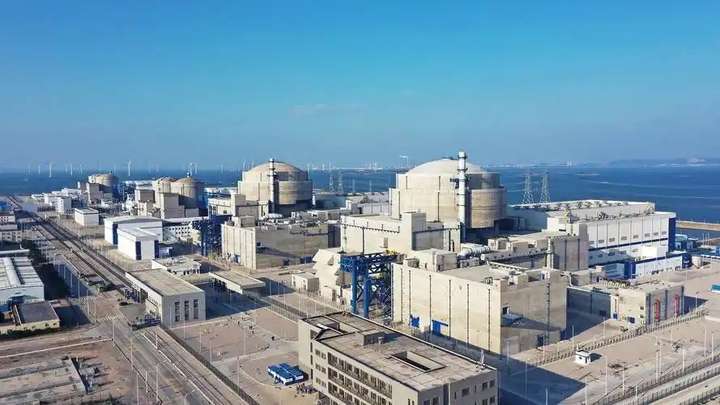
中国核电发布2025年三季报:三化战略深入推进,核电主业稳中提质
Quan Jing Wang· 2025-10-30 04:43
Core Viewpoint - China Nuclear Power Co., Ltd. (China Nuclear Power) demonstrates steady progress in its operations amid a complex energy market, emphasizing safety and clean development while advancing its "intensive, standardized, and intelligent" strategy to support its core nuclear power business and achieve annual targets [1][9]. Group 1: Financial Performance - In the first three quarters of 2025, the company achieved operating revenue of 61.635 billion yuan, a year-on-year increase of 8.16%, with nuclear power business revenue growing by 5.56% [2]. - The total profit reached 19.847 billion yuan, remaining stable compared to the previous year, while net profit attributable to shareholders was 8.002 billion yuan, reflecting a 2.81% increase in the nuclear power segment [4]. - The company's total assets amounted to 720.7 billion yuan, a 9.24% increase from the beginning of the year, with fixed assets and construction in progress accounting for over 75% of the asset structure [4][5]. Group 2: Operational Efficiency - The company operates 26 nuclear power units with a total installed capacity of 46.859 million kilowatts, maintaining a leading position in the industry regarding operational quality and efficiency [3]. - The "intensive, standardized, and intelligent" strategy has been integrated into the nuclear power operation system, enhancing resource management, operational standards, and digital capabilities [2][6]. Group 3: Strategic Development - The company is expanding its business into five major areas: nuclear power generation, multi-purpose nuclear energy utilization, nuclear technology services, non-nuclear clean energy, and strategic emerging clean technologies [2][6]. - The nuclear power generation segment continues to solidify its core business, with a 12.01% increase in power generation in the first half of 2025 and an average utilization of approximately 4,000 hours [7]. - The non-nuclear clean energy segment has over 33 million kilowatts of installed capacity, with a 35.76% increase in power generation, although it is still in the growth phase and not yet a major profit contributor [8]. Group 4: Cash Flow and Capital Management - The company reported a net cash inflow from operating activities of 30.266 billion yuan, despite a 7.85% year-on-year decline, indicating strong sales collection and cost control [5]. - The company has actively released low-efficiency asset returns, with over 480 million yuan recovered from the sale of a 5% stake in China Nuclear Su Neng, reflecting robust capital turnover capabilities [5]. Group 5: Future Outlook - China Nuclear Power aims to transition from an energy supplier to an energy ecosystem builder, focusing on a clean energy mix that includes nuclear, wind, and solar power [9]. - The company plans to continue advancing its strategic initiatives while enhancing the operational quality and asset profitability of its nuclear power business [9].
中国核电(601985):拟推进新一期REITs发行方案,期待新机组投产贡献增量
Shenwan Hongyuan Securities· 2025-10-30 03:46
Investment Rating - The report maintains a "Buy" rating for China Nuclear Power (601985) [2][7] Core Views - The company reported a total revenue of 61.635 billion yuan for the first three quarters of 2025, representing a year-on-year growth of 8.16%, while the net profit attributable to shareholders decreased by 10.42% [7] - The company plans to promote a new issuance of equity-type REITs to revitalize its renewable energy assets and address funding needs [7] - The company has a significant number of nuclear units under construction, with 19 units and a capacity of 21.859 million kilowatts, which is 87% of its operational capacity [7] - The forecast for net profit attributable to shareholders for 2025-2027 is 10.041 billion, 10.496 billion, and 12.036 billion yuan respectively, with corresponding PE ratios of 19, 19, and 16 [7] Financial Data and Profit Forecast - Total revenue for 2025 is estimated at 87.532 billion yuan, with a year-on-year growth rate of 13.3% [6] - The net profit attributable to shareholders for 2025 is projected to be 10.041 billion yuan, reflecting a year-on-year increase of 14.4% [6] - The company’s gross margin is expected to be 41.5% in 2025, with a return on equity (ROE) of 8.6% [6]