
WuXi AppTec(603259)

Search documents
国泰海通医药2026年1月月报:景气延续,持续重点推荐创新药械产业链-20260104
GUOTAI HAITONG SECURITIES· 2026-01-04 05:37
Investment Rating - The report maintains an "Overweight" rating for the innovative pharmaceutical and medical device industry chain [4][8]. Core Viewpoints - The report continues to recommend the innovative pharmaceutical and medical device industry chain, highlighting a selection of A-share and H-share stocks with an "Overweight" rating [2][8][11]. - The performance of the pharmaceutical sector in December 2025 was weaker than the broader market, with the SW Pharmaceutical Biotechnology index declining by 4.1% compared to a 2.1% increase in the Shanghai Composite Index [18][30]. - The report notes that the premium level of the pharmaceutical sector relative to the entire A-share market is currently at a normal level, with a relative premium rate of 63.2% as of December 31, 2025 [29][32]. Summary by Sections A-Share Recommendations - The report lists the following A-share stocks with an "Overweight" rating: - 恒瑞医药 (Hengrui Medicine) - 科伦药业 (Kelun Pharmaceutical) - 华东医药 (East China Pharmaceutical) - 恩华药业 (Enhua Pharmaceutical) - 特宝生物 (Tebao Biological) - 京新药业 (Jingxin Pharmaceutical) - 益方生物 (Yifang Biological) - 药明康德 (WuXi AppTec) - 泰格医药 (Tigermed) - 乐普医疗 (Lepu Medical) - 联影医疗 (United Imaging) - 微电生理 (Microelectrophysiology) [8][9]. H-Share Recommendations - The report maintains an "Overweight" rating for the following H-share stocks: - 翰森制药 (Hansoh Pharmaceutical) - 三生制药 (3SBio) - 科伦博泰生物 (Kelun-Botai Biological) - 康方生物 (CanSino Biologics) - 映恩生物 (InnoCare Pharma) - 百济神州 (BeiGene) [11][12]. Performance Analysis - The report indicates that the 国泰海通医药 monthly portfolio outperformed the pharmaceutical index in December 2025, with an average decline of 1.8% compared to a 3.9% decline in the overall pharmaceutical index [14][15]. - The report highlights the best-performing stocks in December 2025, with 泰格医药 (Tigermed) increasing by 11.2%, 特宝生物 (Tebao Biological) by 7.5%, and 惠泰医疗 (Huitai Medical) by 3.9% [15][18].



医药股深夜放大招:38巨头百亿回购血本,6家狂烧超5亿直接销户
Sou Hu Cai Jing· 2026-01-02 21:40
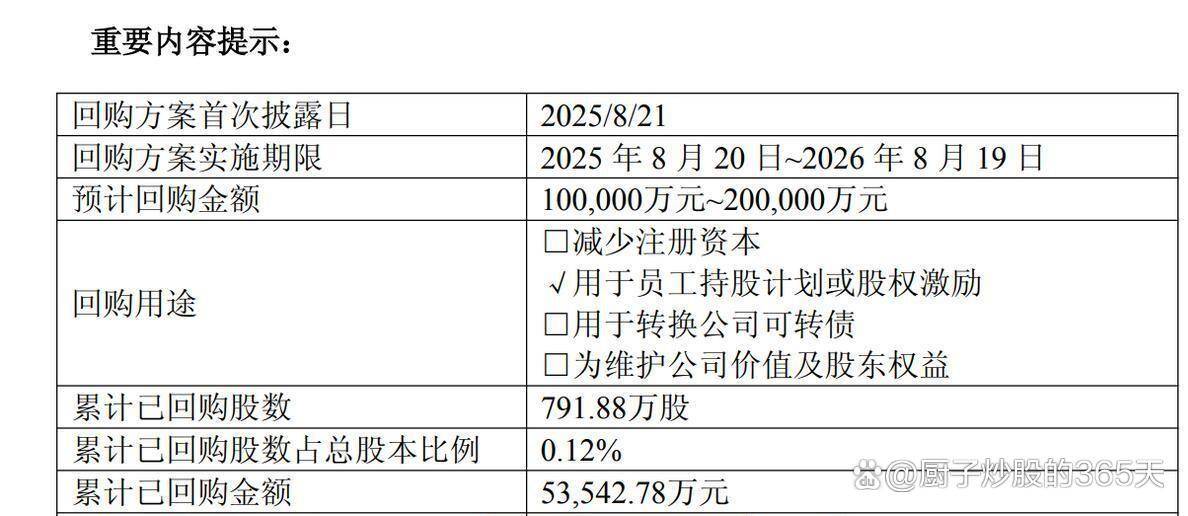
Core Viewpoint - In 2025, the pharmaceutical sector in the A-share market is actively engaging in stock buybacks, with many companies opting to destroy the repurchased shares, contrasting with the more subdued actions in the liquor sector [1][10]. Group 1: Buyback Activities - A total of 38 leading pharmaceutical companies participated in stock buybacks, with 6 companies spending over 500 million yuan, and the largest spending 1 billion yuan [1][3]. - WuXi AppTec, a major player in the pharmaceutical outsourcing industry, announced a buyback plan of 1 billion yuan, completing 497 million yuan by April 2025 [2][5]. - Hengrui Medicine, a leader in innovative drugs, announced a buyback plan of 2 billion yuan, having already repurchased 535 million yuan worth of shares by August 2025 [3][6]. - Other notable companies include Jingxin Pharmaceutical, which planned to spend 700 million yuan and has already spent 609 million yuan, and several others like New Harmony, Jiuzan Medical, and Nengte Technology, each spending over 500 million yuan [3][9]. Group 2: Purpose and Impact of Buybacks - The primary purpose of these buybacks is to cancel the repurchased shares, effectively reducing the total share capital and increasing the value of remaining shares for shareholders [4][10]. - This strategy is viewed as a strong signal of management's confidence in the company's future, especially during periods of low market sentiment [5][10]. - The buyback actions are seen as a more tangible commitment to shareholder value compared to merely announcing intentions to stabilize stock prices [4][10]. Group 3: Financial Health and Market Position - The companies engaging in these buybacks, such as WuXi AppTec and Hengrui Medicine, possess strong market positions and cash flows, allowing them to undertake such financial maneuvers [6][10]. - The buyback trend is not as prevalent in the liquor sector, indicating a potential difference in financial strategies and market confidence between the two industries [6][10]. - The buyback prices set by companies reflect a calculated approach, ensuring that they are responsible with shareholder funds [8][10].


CXO板块项目需求正在复苏,哪些公司值得买?| A股2026投资策略⑩
Xin Lang Cai Jing· 2026-01-01 10:53
Core Insights - The CXO sector in A/H shares shows signs of fundamental recovery ahead of expectations in 2025 after three years of valuation downgrades [1] - The recovery is uneven, with the clinical CRO segment still facing challenges, indicating a divergence in industry recovery [1][7] Group 1: Financial Performance - WuXi AppTec (药明康德) reported a revenue of 32.857 billion yuan in the first three quarters of 2025, a year-on-year increase of 18.61%, and a net profit of 12.076 billion yuan, up 84.84% [1] - The company had a backlog of orders amounting to 59.880 billion yuan as of September 2025, reflecting a 37.2% year-on-year growth [1] - The average price of clinical research services in China has decreased by approximately 30% since 2022, impacting gross and net profit margins [2] Group 2: Order Fulfillment and Business Model - The business model of CXO leads to a natural lag in order fulfillment, with revenue recognition often taking multiple quarters or years [2] - WuXi AppTec's backlog at the end of 2024 was 49.310 billion yuan, 1.26 times its revenue for that year, indicating visible future revenue growth potential [2] - The order-to-revenue ratio is crucial for assessing conversion efficiency, with a healthy range identified between 1.2 to 1.3 times [3] Group 3: Market Dynamics and Challenges - The global pharmaceutical R&D investment continues to grow, but structural fluctuations are evident, particularly among innovative drug startups [1] - The clinical CRO segment is heavily influenced by funding constraints and project strategy adjustments, leading to a situation where project numbers increase but individual project outputs decline [8] - The international expansion of clinical CROs raises higher standards for organizational capability and compliance, making short-term recovery challenging [8] Group 4: Emerging Opportunities - The global expansion of GLP-1 and related indications has led to unexpected order increases in upstream peptide and related processes, maintaining high demand in 2025 [9] - Core stock Novartis Bio (诺泰生物) achieved a revenue of 1.527 billion yuan in the first three quarters of 2025, with a net profit of 445 million yuan, reflecting a year-on-year growth of 21.95% and 26.92% respectively [9] - The market for cell and gene therapy (CGT) is still growing, but profitability remains elusive, with significant investments required before becoming a core profit driver [10][11]
2025年中国健康服务行业发展历程、政策、发展现状、重点企业及趋势研判:健康服务业态日趋多元,精准化与个性化服务成为未来发展核心方向[图]
Chan Ye Xin Xi Wang· 2026-01-01 03:22
Core Insights - The health service industry aims to create a favorable organizational environment by providing safe, effective, convenient, and affordable basic medical and public health services to meet various health needs of residents. The demand for health-related products and services is rapidly increasing due to social progress and changes in lifestyle [1][7]. Industry Overview - The health service industry encompasses medical services, health management, health insurance, and related services, involving pharmaceuticals, medical devices, health products, and fitness products [4]. - The industry has experienced rapid growth in China, with the market size increasing from 6.37 trillion yuan in 2018 to an expected 9.55 trillion yuan by 2024, representing a compound annual growth rate of 6.98%. The "Healthy China 2030" plan projects the total market size to reach 16 trillion yuan by 2030, indicating significant growth potential [1][8]. Development History - The development of China's health service industry can be divided into four stages: 1. 1949-1990: Health check-ups were primarily hospital services focused on disease detection rather than prevention. 2. 1991-2000: Independent health check-up service institutions began to emerge in cities like Beijing. 3. 2001-2010: The introduction of Western health service concepts and rapid market demand growth led to the fast development of health service institutions. 4. 2011-present: Increased focus on medical information technology and service upgrades has improved the capabilities of health service institutions [4][5]. Relevant Policies - Recent government policies aim to optimize resource allocation, enhance preventive interventions, and improve service accessibility, which helps control the rapid growth of medical costs and reduce the disease burden on families and society. For instance, the National Health Commission issued a notice in February 2025 to address public health concerns and improve service efficiency [6]. Industry Structure and Key Companies - The operational models of health service institutions in China are diverse, including: 1. Hospital-based models leveraging brand and client resources. 2. Independent medical models with self-owned brands and facilities. 3. Health management models centered on health check-ups. 4. Comprehensive information platform models connecting online and offline services [8]. - Major companies in the health service industry include: - Meinian Health Industry Holdings Co., Ltd. - Tongce Medical Co., Ltd. - Ruici Medical Service Holdings Co., Ltd. - Ciming Health Checkup Management Group Co., Ltd. - Aikang Guobin Health Checkup Management Group Co., Ltd. [2][3][9]. Trends in Health Services - The future of health services will focus on personalized and precise care, moving from a "one-size-fits-all" approach to individualized health management based on personal data [11]. - Service delivery will become decentralized, extending beyond traditional healthcare facilities to community and home settings, enhancing accessibility and convenience [12]. - Payment models will evolve from fee-for-service to value-based care, with insurance companies and service providers collaborating to create innovative health products [13].





A股医药板块的“火热”与“寒意”
Xin Lang Cai Jing· 2025-12-31 16:01
Core Viewpoint - The A-share pharmaceutical sector in 2025 exhibits structural differentiation, with innovative drugs and CXO sectors thriving due to overseas demand and business development, while traditional Chinese medicine, medical devices, and pharmaceutical commerce face performance pressures [3][20]. Summary by Category Overall Market Performance - The A-share pharmaceutical and biotechnology sector saw an overall increase of 25.64% from January 1 to December 30, 2025, despite a slight decline in revenue and a stabilization in profits, with total revenue of 18,544.52 billion yuan, down 1.42% year-on-year, and net profit of 1,407.32 billion yuan, down 1.65% year-on-year [4][21]. Innovative Drug Sector - The innovative drug sector was a standout performer in 2025, with the chemical pharmaceutical segment rising by 32.58% and the medical services segment by 32.91% [4][21]. - Companies like BeiGene (百济神州) reported significant growth, achieving revenue of 27.595 billion yuan, a 44.2% increase year-on-year, surpassing the total revenue of 27.21 billion yuan for 2024 [4][22]. Business Development (BD) Trends - The business development landscape for innovative drug companies is evolving, with significant partnerships such as the 11.4 billion USD deal between Innovent Biologics and Takeda, and a 12.5 billion USD collaboration between Hengrui Medicine and GlaxoSmithKline [5][22][24]. - The total value of business development transactions reached approximately 94.158 billion USD in the first three quarters of 2025, significantly exceeding the total for 2024 [25]. CXO Sector Performance - The CXO sector, driven by the demand for innovative drug research, achieved a 32.91% increase in 2025, with total revenue of 1,365.72 billion yuan, up 3.63% year-on-year, and net profit of 209.12 billion yuan, up 36.47% year-on-year [10][27]. - Leading companies like WuXi AppTec (药明康德) and Kanglong Chemical (康龙化成) returned to growth, with WuXi AppTec reporting a revenue increase of 18.61% and net profit growth of 84.84% [28][31]. Traditional Chinese Medicine and Medical Devices - The traditional Chinese medicine sector experienced a modest increase of 6.75% in 2025, with total revenue of 2,590.69 billion yuan, down 4.33% year-on-year, and net profit of 294.99 billion yuan, down 1.53% year-on-year [36]. - The medical device sector reported a revenue of 1,792.10 billion yuan, down 2.24% year-on-year, with notable performance differences among sub-sectors, where companies like Mindray Medical (迈瑞医疗) showed strong overseas revenue growth [33][34].


2026年第1期:1月1日-1月31日:“申万宏源十大金股组合”
Shenwan Hongyuan Securities· 2025-12-31 14:23
Group 1 - The report indicates that the "Shenwan Hongyuan Gold Stock Portfolio" reflects the market outlook and style judgment for the upcoming month, showcasing the research team's capabilities and competitiveness in the market [1][11] - The previous portfolio showed a slight increase of 0.14% from December 1 to December 31, 2025, with the A-share portfolio averaging a 0.80% increase, while the Shanghai Composite Index and CSI 300 Index rose by 2.06% and 2.28%, respectively [6][15] - Since the first release of the gold stock portfolio on March 28, 2017, the cumulative increase has reached 401.73%, with the A-share portfolio up by 293.13%, outperforming the Shanghai Composite Index and CSI 300 Index by 271.65 and 260.01 percentage points, respectively [6][15] Group 2 - The strategy judgment for the current period maintains that the conditions supporting the spring market remain unchanged, with liquidity in the stock market being loose and upcoming events likely to boost risk appetite [14] - The report suggests focusing on cyclical Alpha and thematic rotation opportunities, particularly in basic chemicals and non-ferrous metals, as well as sectors like AI, commercial aerospace, and high-dividend strategies [14] - The top recommended stocks include "Iron Triangle" stocks: Hualu Hengsheng, Lingyi Technology, and CIMC Enric (Hong Kong), along with other stocks such as Xingfa Group, TBEA, Chifeng Gold, WuXi AppTec, China National Glass, Ping An Insurance (Hong Kong), and Alibaba-W (Hong Kong) [6][17][18] Group 3 - The report highlights the performance of the top ten gold stocks, with Hualu Hengsheng benefiting from favorable policies in the domestic chemical industry, and Lingyi Technology experiencing high growth in AI and robotics [17][20] - CIMC Enric is positioned to benefit from the shipbuilding cycle and clean energy equipment orders, while Xingfa Group has a solid base in phosphate and specialty chemicals [18][20] - Other notable stocks include WuXi AppTec, which is seeing strong global demand in the CXO industry, and Alibaba-W, which is accelerating its integration from data centers to application layers in AI [18][22]


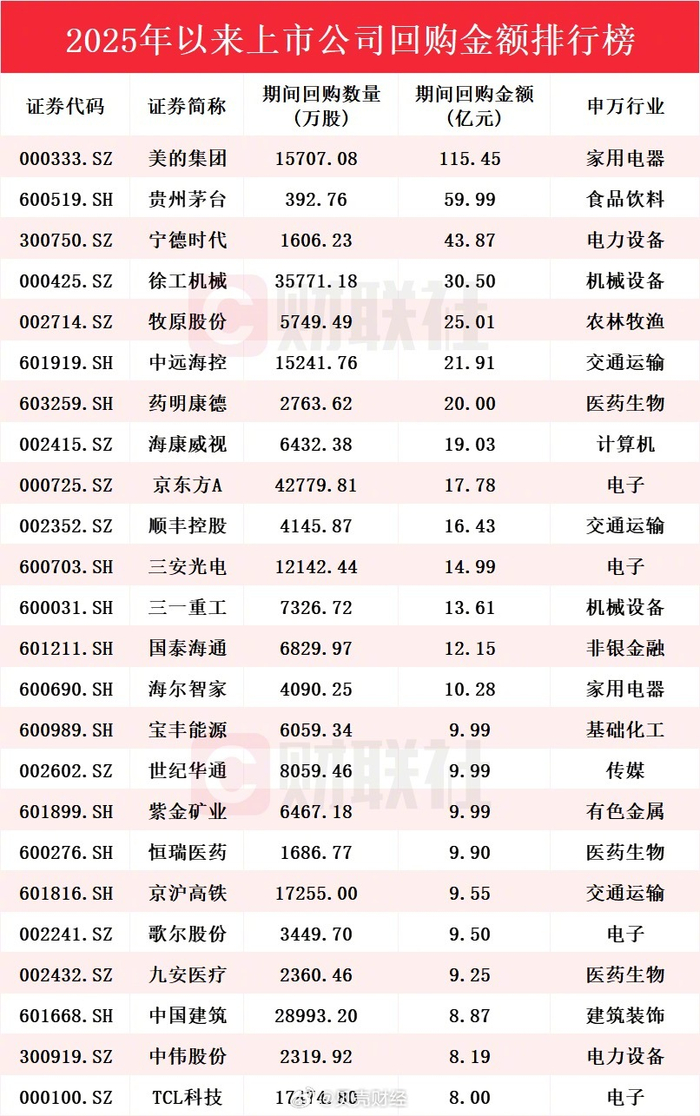
年内1494家A股公司回购1392亿元,美的集团115亿元居首
Bei Ke Cai Jing· 2025-12-31 14:23
Group 1 - As of the report date, 1494 A-share companies have implemented share buybacks in 2025, with a total amount exceeding 1392.84 billion yuan [1] - Among these, 14 companies have repurchased more than 1 billion yuan, with Midea Group leading at 115.45 billion yuan [1] - Other notable companies include Kweichow Moutai with 59.99 billion yuan and CATL with 43.87 billion yuan in buybacks [1] Group 2 - The top companies by buyback amount include: - Midea Group: 15,707.08 thousand shares, 115.45 billion yuan [1] - Kweichow Moutai: 392.76 thousand shares, 59.99 billion yuan [1] - CATL: 1,606.23 thousand shares, 43.87 billion yuan [1] - XCMG Machinery: 35,771.18 thousand shares, 30.50 billion yuan [1] - Muyuan Foods: 5,749.49 thousand shares, 25.01 billion yuan [1]






需求景气度回升,行业上行趋势明确:医药行业年度策略系列——CXO/上游
Huafu Securities· 2025-12-31 11:28
Group 1: Core Insights - The report maintains a strong market rating for the pharmaceutical industry, indicating a clear upward trend driven by recovering demand and improved performance in the CXO sector [1][2] - The CXO sector has shown significant stock price increases, with some companies experiencing nearly 100% growth since the beginning of 2025, driven by the innovative drug market and a recovery in orders [3][6] Group 2: CXO Sector Analysis - The CXO sector's overall revenue increased by 11.8% year-on-year in the first three quarters of 2025, with a notable profit increase of 58.1% [13] - External demand for CXO services has rebounded, with significant order growth from leading CDMO companies, indicating a clear recovery trend [22][31] - Internal demand for CXO services has lagged behind external demand, but there are signs of strong growth in domestic innovative drug projects and increased investment in the domestic market [3][22] Group 3: Life Sciences Upstream - The life sciences upstream sector has seen a 37.7% increase in stock prices year-to-date, outperforming the pharmaceutical and biotechnology index by 18% [3] - Revenue for the upstream sector increased by 8.8% year-on-year in the first three quarters of 2025, with net profit rising by 27.7% [3] Group 4: Investment Recommendations - The report suggests a strategic investment focus on companies such as WuXi AppTec, WuXi Biologics, and Tigermed, while also highlighting more flexible investment options like Zhaoyan New Drug and Nossan [3]


医药生物行业资金流出榜:药明康德、迈瑞医疗等净流出资金居前
Zheng Quan Shi Bao Wang· 2025-12-31 09:19
Market Overview - The Shanghai Composite Index rose by 0.09% on December 31, with 15 industries experiencing gains, led by defense and military industry at 2.13% and media at 1.54% [1] - The communication and agriculture, forestry, animal husbandry, and fishery sectors saw the largest declines, down 1.35% and 1.10% respectively [1] - The pharmaceutical and biotechnology sector fell by 0.45% [1] Capital Flow Analysis - The main capital outflow from the two markets totaled 32.27 billion yuan, with 9 industries seeing net inflows [1] - The defense and military industry had the highest net inflow of 6.06 billion yuan, followed by the media sector with 4.45 billion yuan [1] - A total of 22 industries experienced net capital outflows, with the electronics sector leading at 11.20 billion yuan, followed by the power equipment sector at 7.25 billion yuan [1] Pharmaceutical and Biotechnology Sector - The pharmaceutical and biotechnology sector saw a net outflow of 3.54 billion yuan, with 178 of the 478 stocks in the sector rising and 276 falling, including one stock hitting the daily limit down [2] - The top three stocks with net inflows in this sector were Meinian Health (84.95 million yuan), Huaren Health (75.69 million yuan), and Xingqi Eye Medicine (64.86 million yuan) [2] - The stocks with the largest net outflows included WuXi AppTec (468.14 million yuan), Mindray Medical (321.35 million yuan), and Hefei China (276.65 million yuan) [3]

解密主力资金出逃股 连续5日净流出670股


Zheng Quan Shi Bao Wang· 2025-12-31 09:18
Core Viewpoint - The report highlights a significant outflow of main capital from various stocks in the Shanghai and Shenzhen markets, indicating potential investment risks and market sentiment shifts. Group 1: Main Capital Outflow Statistics - A total of 670 stocks experienced a net outflow of main capital for five consecutive days or more as of December 31 [1] - The stock with the longest continuous outflow is Zhifei Biological, with 24 days of net outflow, followed by Wanfu Biological with 23 days [1] - The largest total outflow amount was from Moer Thread-U, with a cumulative net outflow of 5.142 billion yuan over 14 days [1] Group 2: Individual Stock Performance - Moer Thread-U had a net outflow of 5.142 billion yuan, with a decline of 37.53% in cumulative stock price [1] - Yingweike followed with a net outflow of 2.781 billion yuan over 6 days, showing a price increase of 2.94% [1] - Other notable stocks include Zhongtung High-tech with a net outflow of 1.580 billion yuan and a price increase of 1.50%, and Hengtong Optic-Electric with a net outflow of 1.406 billion yuan and a price decline of 5.39% [1] Group 3: Outflow Proportions and Trends - Guanghui Energy had the highest proportion of net outflow relative to trading volume, with a recent decline of 2.19% [1] - The report includes a detailed table of stocks with their respective net outflow amounts, percentages, and cumulative price changes, indicating a broader trend of capital withdrawal from the market [1]