WST(688122)

Search documents
美联储降息预期升温!小金属大涨,厦门钨业等4股涨停!有色ETF华宝(159876)猛拉3.24%续创新高!
Xin Lang Cai Jing· 2026-01-11 11:34
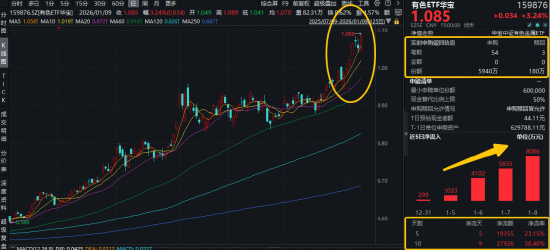
Core Viewpoint - The non-ferrous metal sector continues to surge, with a net inflow of 17.5 billion yuan on January 9, ranking third among 31 first-level industries in the Shenwan classification [1][8] - The popular ETF, Huabao Non-Ferrous ETF (159876), saw its price rise over 3.5% during the day, closing up 3.24%, reaching a new historical high [1][8] - The ETF's trading volume exceeded its listing high, indicating a potential buying signal for investors [1][8] Fund Inflows and Performance - Huabao Non-Ferrous ETF experienced a net subscription of 57.6 million units, with a total net inflow of 194 million yuan over the past five days, and 279 million yuan over the last ten days [1][8] - The trading volume for the ETF reached 88.1 million yuan, showing a slight increase compared to previous periods [1][8] Market Trends and Analysis - The U.S. non-farm payroll report released on January 9 indicates potential for further interest rate cuts by the Federal Reserve, which could lead to a super cycle for industrial metals like copper and aluminum [2][8] - Recent price increases in various minor metals, particularly tungsten, are attributed to supply constraints and rising global demand for strategic resources [2][8] - Analysts predict that under conditions of loose liquidity and frequent supply disruptions, prices for copper, aluminum, gold, and battery metals are likely to continue rising through 2026 [2][8] Sector Highlights - Leading stocks in the non-ferrous metal sector, such as Yunnan Zinc Industry and Xiamen Tungsten Industry, have shown significant gains, with some stocks reaching their daily limit [3][10] - The Huabao Non-Ferrous ETF covers a wide range of industries, including precious metals, strategic metals, and industrial metals, allowing for better exposure to the sector's performance [4][8]


西部超导材料科技股份有限公司关于召开2026年第一次临时股东会的通知
Shang Hai Zheng Quan Bao· 2026-01-09 19:28
Group 1 - The company, Western Superconducting Technologies Co., Ltd., is convening its first extraordinary shareholders' meeting of 2026 on January 26, 2026 [2][5] - The meeting will be held at 14:30 in the company's conference room [5] - Shareholders can vote through both on-site and online methods, with online voting available from 9:15 to 15:00 on the day of the meeting [3][5] Group 2 - The company will utilize the Shanghai Stock Exchange's online voting system for the meeting [5][6] - Specific resolutions to be discussed include special resolutions and those requiring separate counting for minority investors [6] - Shareholders must register to attend the meeting, with registration available from January 23, 2026 [10][12] Group 3 - The company will provide a reminder service for small and medium investors to ensure participation [7] - Voting rights can be exercised through multiple accounts, but only the first vote will be counted if repeated [8] - All voting must be completed before submission [9]
西部超导:公司将于2026年1月26日召开2026年第一次临时股东会
Zheng Quan Ri Bao· 2026-01-09 13:12
Group 1 - The company, Western Superconducting Technologies Co., Ltd., announced that it will hold its first extraordinary general meeting of shareholders in 2026 on January 26 [2]
非农即将发布!美联储降息预期或升温!有色ETF华宝(159876)大涨3.24%续创新高!厦门钨业等4股涨停
Xin Lang Ji Jin· 2026-01-09 11:31
Group 1 - The non-ferrous metal sector experienced significant inflows, with a net capital inflow of 17.5 billion yuan on January 9, ranking third among 31 Shenwan first-level industries [1] - The popular ETF, Huabao Non-ferrous ETF (159876), saw its price rise over 3.5% during the day, closing up 3.24%, reaching a new historical high [1] - The ETF recorded a net subscription of 57.6 million units, with a total net inflow of 279 million yuan over the past 10 days [1] Group 2 - Several small metal varieties have seen significant price increases, particularly tungsten, driven by supply constraints and growing demand for strategic resources [2] - Analysts predict a "super cycle" for industrial metals like copper and aluminum, supported by loose liquidity and strong structural demand [2][3] - The Huabao Non-ferrous ETF covers a wide range of sectors including copper, aluminum, gold, rare earths, and lithium, allowing for better exposure to the entire sector's performance [4]
航空装备板块1月9日涨3.29%,华秦科技领涨,主力资金净流入2.43亿元
Zheng Xing Xing Ye Ri Bao· 2026-01-09 09:01
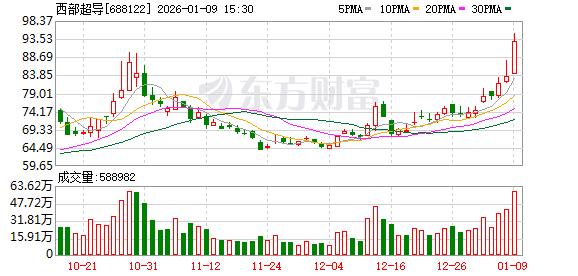
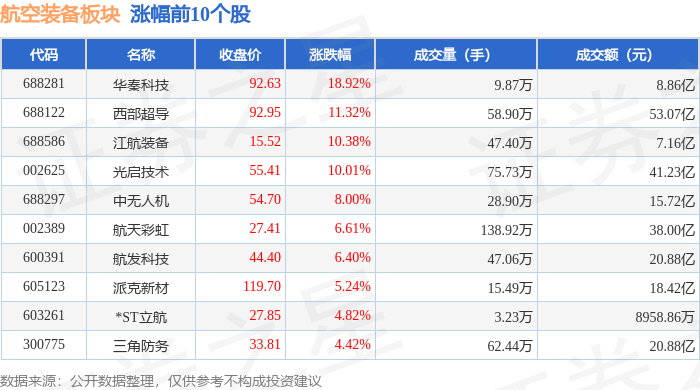
Group 1 - The aviation equipment sector experienced a significant increase of 3.29% on January 9, with Huayin Technology leading the gains [1] - The Shanghai Composite Index closed at 4120.43, up 0.92%, while the Shenzhen Component Index closed at 14120.15, up 1.15% [1] - Key stocks in the aviation equipment sector showed notable price increases, with Huayin Technology rising by 18.92% to a closing price of 92.63, and Xibu Superconductor increasing by 11.32% to 92.95 [1] Group 2 - The aviation equipment sector saw a net inflow of 243 million yuan from institutional investors, while retail investors contributed a net inflow of 907 million yuan [2] - Major stocks like Guangqi Technology and Aerospace Rainbow had mixed fund flows, with Guangqi Technology experiencing a net inflow of 639 million yuan from institutional investors [3] - The overall trading volume in the aviation equipment sector was substantial, with significant transactions recorded for stocks like Xibu Superconductor and Aerospace Rainbow [1][2]




西部超导(688122) - 关于召开2026年第一次临时股东会的通知
2026-01-09 08:15
证券代码:688122 证券简称:西部超导 公告编号:2026-005 西部超导材料科技股份有限公司 关于召开2026年第一次临时股东会的通知 本公司董事会及全体董事保证公告内容不存在任何虚假记载、误导性陈述或 者重大遗漏,并对其内容的真实性、准确性和完整性依法承担法律责任。 重要内容提示: 一、 召开会议的基本情况 (一) 股东会类型和届次 2026年第一次临时股东会 (二) 股东会召集人:董事会 (三) 投票方式:本次股东会所采用的表决方式是现场投票和网络投票相结合 的方式 (四) 现场会议召开的日期、时间和地点 召开日期时间:2026 年 1 月 26 日 14 点 30 分 召开地点:西部超导材料科技股份有限公司 103 会议室 (五) 网络投票的系统、起止日期和投票时间。 网络投票系统:上海证券交易所股东会网络投票系统 网络投票起止时间:自2026 年 1 月 26 日 至2026 年 1 月 26 日 采用上海证券交易所网络投票系统,通过交易系统投票平台的投票时间为股 东会召开当日的交易时间段,即 9:15-9:25,9:30-11:30,13:00-15:00;通过 股东会召开日期:2026年1 ...
云南锗业、厦门钨业双双涨停,有色金属ETF基金(516650)涨超3.1%
Xin Lang Cai Jing· 2026-01-09 03:09
Core Viewpoint - The non-ferrous metal index has shown strong growth, with significant inflows into the non-ferrous metal ETF fund, indicating a positive market sentiment and robust demand in the sector [1]. Group 1: Market Performance - As of January 9, 2026, the non-ferrous metal ETF fund (516650) increased by 3.15%, with key holdings such as Yunnan Tin and Xiamen Tungsten hitting the daily limit, and Western Superconducting rising by 9.86% [1]. - The non-ferrous metal ETF fund has experienced continuous net inflows over the past 11 days, totaling 6.446 billion yuan, reaching a new high in both share count (4.716 billion shares) and total scale (9.418 billion yuan) as of January 8, 2026 [1]. Group 2: Industry Outlook - In 2025, various companies accelerated the development of strategic mineral resources to implement the "Non-ferrous Metal Industry Stabilization and Growth Work Plan," leading to an expansion in the asset scale of non-ferrous metal enterprises by the end of September 2025 [1]. - According to a credit analysis by United Credit, the overall credit risk in the non-ferrous metal industry is expected to remain stable in 2026, although structural pressures are prominent [1]. - Upstream resource-based enterprises are likely to maintain stable credit quality supported by prices, while downstream smelting and processing companies will face challenges such as low processing fees and high debt rollover pressure, indicating relatively higher credit risk [1].

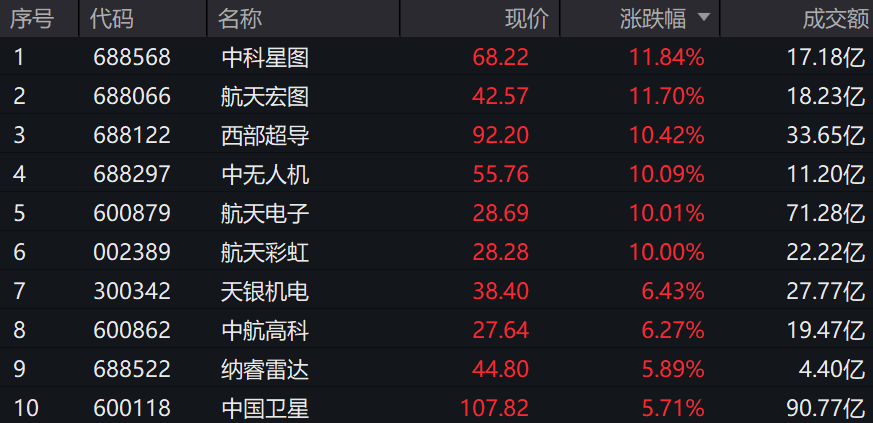
广州低空经济规划落地,同类规模最大的通用航空ETF(159378)涨超4%,成分股航天电子、航天彩虹涨停
Sou Hu Cai Jing· 2026-01-09 03:01
Group 1 - The core viewpoint of the news highlights the significant growth in the general aviation sector, driven by policy, technology, and market forces, particularly focusing on the low-altitude economy and drone technology [3] - The Guangzhou Municipal Government has issued a plan to accelerate the development of advanced manufacturing, emphasizing the growth of the low-altitude economy and the establishment of a civil unmanned aerial vehicle testing zone [2][3] - The General Aviation ETF (159378) has seen a notable increase of 4.21%, with key stocks such as Aerospace Electronics and Aerospace Rainbow reaching their daily limit up [1][2] Group 2 - The General Aviation ETF (159378) is the largest of its kind, focusing on low-altitude economy and drone applications, benefiting from the rapid development of integrated air-space-ground systems [3] - The ETF's performance is linked to the dual boost from "new combat capabilities" and "new production capabilities," indicating a strong market potential [3] - The ETF was established on January 2, 2025, making it the first and largest ETF tracking the national general aviation industry index [3]


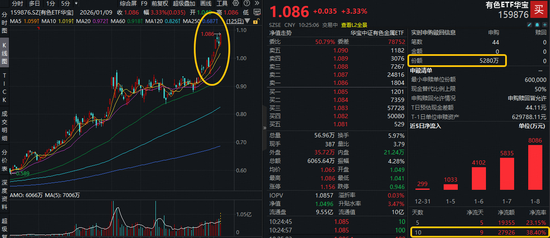
创纪录新高!有色ETF华宝(159876)猛拉3%,获资金净申购5280万份!今日!美国12月非农就业报告将发布!
Xin Lang Cai Jing· 2026-01-09 02:34
Group 1 - The core viewpoint of the news is that the precious and industrial metals sector is experiencing a significant bullish trend, driven by increased investment and favorable market conditions [1][3][4] - The Huabao ETF (159876) saw a price increase of 3.33%, reaching a historical high, with a net subscription of 52.8 million units and a total inflow of 279 million yuan over the past 10 days [1][8] - Key stocks in the sector, particularly those related to commercial aerospace, have shown strong performance, with Yunnan Zhenye hitting the daily limit, and other companies like Xiamen Tungsten and Chihong Zn & Ge also experiencing significant gains [1][8] Group 2 - The People's Bank of China has increased its gold reserves for the 14th consecutive month, indicating a stable foundation for a gold bull market that is expected to extend to related non-ferrous and strategic metals [3][10] - Analysts predict that the U.S. Federal Reserve's dovish monetary policy will likely lead to gradual interest rate cuts, creating a favorable environment for the non-ferrous metals market [3][10] - The ongoing U.S. rate-cutting cycle and liquidity easing are expected to benefit non-ferrous metal prices, with supply constraints and increased demand from traditional and emerging sectors, such as AI and energy storage, contributing to a potential price surge [3][10] Group 3 - The Huabao ETF and its linked funds cover a wide range of metals, including copper, aluminum, gold, rare earths, and lithium, allowing investors to capture the overall sector's beta performance across different economic cycles [4][11] - The current market conditions suggest that the industrial metal supercycle may have already begun, particularly for metals like copper and aluminum [3][10] - The demand for non-ferrous metals is expected to rise significantly due to the resilience of traditional industries and the emergence of new sectors, indicating a potential upward shift in price levels [3][10]

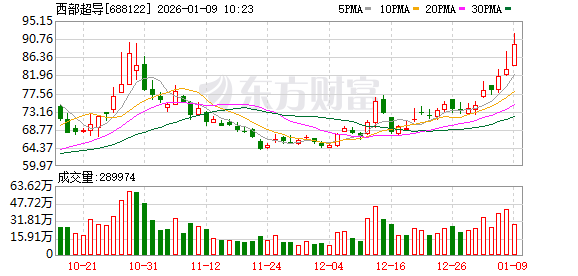
西部超导盘中创历史新高
Zheng Quan Shi Bao Wang· 2026-01-09 02:23
Group 1 - The stock price of Western Superconducting has reached a historical high, increasing by 8.56% to 90.65 yuan, with a trading volume of 17.14 million shares and a transaction amount of 1.49 billion yuan, resulting in a turnover rate of 2.64% [2] - The total market capitalization of the company in A-shares is now 58.89 billion yuan, with the same amount for the circulating market capitalization [2] - The defense and military industry, to which the company belongs, has an overall increase of 1.77%, with 97 stocks rising, including Huayin Technology, Ligong Navigation, and Galaxy Electronics, which have increased by 14.75%, 12.86%, and 10.02% respectively [2] Group 2 - The latest margin trading data shows that the company's margin balance is 1.99 billion yuan, with a financing balance of 1.96 billion yuan, which has increased by 122 million yuan over the past 10 days, representing a growth of 6.63% [2] - According to the company's third-quarter report, it achieved an operating income of 3.99 billion yuan in the first three quarters, a year-on-year increase of 23.30%, and a net profit of 650 million yuan, a year-on-year increase of 7.62%, with basic earnings per share of 1.0000 yuan and a weighted average return on equity of 9.46% [2]