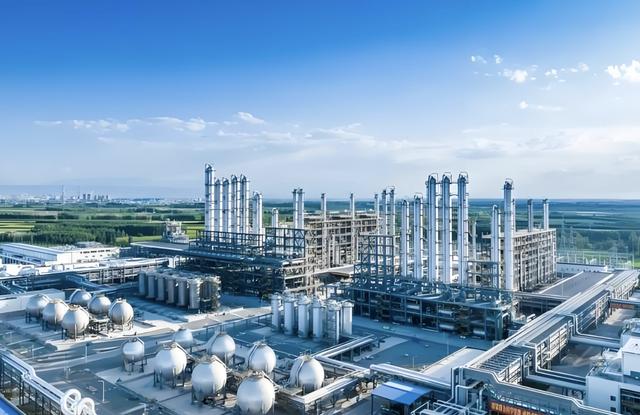
Daqo Energy(688303)

Search documents
大全能源涨2.04%,成交额2.55亿元,主力资金净流出833.82万元
Xin Lang Zheng Quan· 2025-09-24 03:24
Core Viewpoint - Daqo Energy's stock price has shown volatility, with a year-to-date increase of 15.87% but a recent decline of 8.80% over the past five trading days, indicating potential market fluctuations and investor sentiment shifts [1] Company Overview - Daqo Energy, established on February 22, 2011, and listed on July 22, 2021, is located in Shihezi City, Xinjiang, and specializes in the research, manufacturing, and sales of high-purity polysilicon [1] - The company's main business revenue composition is 97.95% from high-purity polysilicon and 2.05% from by-products and others [1] Financial Performance - For the first half of 2025, Daqo Energy reported a revenue of 1.47 billion yuan, a significant year-on-year decrease of 67.93%, and a net profit attributable to shareholders of -1.15 billion yuan, down 71.10% year-on-year [2] - Cumulatively, the company has distributed 9.743 billion yuan in dividends since its A-share listing, with 8.588 billion yuan distributed over the past three years [3] Shareholder Information - As of June 30, 2025, Daqo Energy had 35,100 shareholders, a decrease of 2.64% from the previous period, with an average of 15,763 circulating shares per shareholder, an increase of 2.71% [2] - The largest circulating shareholder is the Huaxia SSE Sci-Tech Innovation Board 50 ETF, holding 35.5622 million shares, a decrease of 727,900 shares from the previous period [3]
上游现减产预期,多晶硅成交价重心继续上移
Xuan Gu Bao· 2025-09-23 23:17
Industry Insights - The price of multi-crystalline silicon N-type raw materials is quoted at 50.3-55 CNY/kg, while granular silicon is priced at 49-50 CNY/kg, with an overall multi-crystalline silicon price index at 52.44 CNY/kg, indicating a slight upward shift in transaction prices [1] - The market for multi-crystalline silicon is experiencing polarization, with resources priced at 52 CNY/kg and below being more popular, leading to some crystal pulling enterprises facing supply shortages [1] - In September, multi-crystalline silicon production saw mixed changes, with an overall expected slight decline. In October, a reduction in production is anticipated in the Sichuan region due to the approaching dry season [1] - The photovoltaic industry is advancing its "anti-involution" strategy, with significant effects from price control measures, suggesting that industry chain prices may gradually cover full costs [1] - Strict new energy consumption standards for multi-crystalline silicon are expected to accelerate the elimination of outdated production capacity [1] - The photovoltaic sector is likely to achieve supply-side improvements through a combination of top-level support, market-driven elimination, and technological iteration, with policies related to capacity and product quality expected to be implemented soon [1] Company Developments - TBEA (特变电工) claims that its multi-crystalline silicon cost and quality are among the best in China, with cash costs around 30,000 CNY/ton and comprehensive costs approximately 35,000 CNY/ton by July 2025 [2] - Daqo New Energy (大全能源), a leading domestic high-purity multi-crystalline silicon producer, has established partnerships with major photovoltaic companies such as Longi Green Energy, JA Solar, Trina Solar, and TCL Zhonghuan, with a production guidance of 110,000 to 140,000 tons for the entire year of 2025 [2]

今日沪指跌1.23% 计算机行业跌幅最大
Zheng Quan Shi Bao Wang· 2025-09-23 04:24
Market Overview - The Shanghai Composite Index fell by 1.23% today, with a trading volume of 1,083.14 million shares and a transaction value of 17,135.39 billion yuan, an increase of 26.47% compared to the previous trading day [1]. Industry Performance - Among the industries, the banking sector had the highest increase, up by 2.15%, with Nanjing Bank leading at a rise of 4.30% [1]. - The computer, social services, and comprehensive sectors experienced the largest declines, down by 3.74%, 3.73%, and 3.57% respectively [1][2]. Detailed Industry Data - **Banking**: +2.15%, transaction value 315.69 billion yuan, up 126.85% from the previous day, led by Nanjing Bank (+4.30%) [1]. - **Coal**: -0.02%, transaction value 103.20 billion yuan, up 34.02%, led by Antai Group (-5.22%) [1]. - **Utilities**: -0.28%, transaction value 229.25 billion yuan, up 23.66%, led by Jingyuntong (-5.99%) [1]. - **Oil & Petrochemicals**: -0.50%, transaction value 60.02 billion yuan, up 20.24%, led by Yueyang Xingchang (-4.60%) [1]. - **Transportation**: -0.91%, transaction value 224.70 billion yuan, up 20.14%, led by Jushen Co. (-9.87%) [1]. - **Food & Beverage**: -1.10%, transaction value 205.01 billion yuan, up 31.81%, led by Ziyan Food (-5.40%) [1]. - **Construction & Decoration**: -1.12%, transaction value 252.99 billion yuan, up 18.05%, led by Yabo Co. (-6.56%) [1]. - **Household Appliances**: -1.30%, transaction value 315.39 billion yuan, up 10.99%, led by Greer (-8.21%) [1]. - **Power Equipment**: -1.48%, transaction value 1,861.78 billion yuan, up 44.25%, led by Daqian Energy (-7.29%) [1]. - **Automotive**: -1.52%, transaction value 1,037.23 billion yuan, up 20.58%, led by Shanghai Wumao (-9.93%) [1]. - **Textiles & Apparel**: -1.58%, transaction value 128.03 billion yuan, up 15.04%, led by Sanfu Outdoor (-5.97%) [1]. - **Agriculture, Forestry, Animal Husbandry, and Fishery**: -1.65%, transaction value 121.46 billion yuan, up 11.51%, led by Aonong Biological (-6.99%) [1]. - **Non-Bank Financials**: -1.72%, transaction value 431.67 billion yuan, up 55.06%, led by Yalian Development (-5.63%) [1]. - **Environmental Protection**: -1.75%, transaction value 151.27 billion yuan, up 35.24%, led by Henghe Co. (-10.64%) [1]. - **Construction Materials**: -2.28%, transaction value 116.54 billion yuan, up 18.34%, led by Gongyuan Co. (-6.75%) [1]. - **Nonferrous Metals**: -2.36%, transaction value 761.40 billion yuan, up 20.71%, led by Tengyuan Cobalt (-6.04%) [1]. - **Media**: -2.36%, transaction value 390.38 billion yuan, up 24.71%, led by Jinyi Film (-8.95%) [1]. - **Beauty & Personal Care**: -2.50%, transaction value 30.26 billion yuan, up 30.69%, led by Huaye Fragrance (-4.78%) [1]. - **Defense & Military**: -2.52%, transaction value 384.06 billion yuan, up 22.18%, led by ST Sicor (-11.43%) [1]. - **Telecommunications**: -2.54%, transaction value 1,124.99 billion yuan, up 29.44%, led by Dekeli (-14.18%) [1]. - **Electronics**: -2.56%, transaction value 3,735.81 billion yuan, up 19.69%, led by Zhixin Electronics (-10.74%) [1]. - **Machinery Equipment**: -2.65%, transaction value 1,391.63 billion yuan, up 24.55%, led by Huizhong Co. (-10.29%) [1]. - **Basic Chemicals**: -2.66%, transaction value 645.44 billion yuan, up 13.75%, led by Dingjide (-7.52%) [1]. - **Steel**: -2.78%, transaction value 68.00 billion yuan, down 2.07%, led by Shougang Co. (-5.26%) [1]. - **Light Industry Manufacturing**: -2.80%, transaction value 174.20 billion yuan, up 4.62%, led by Haotaitai (-10.01%) [1]. - **Pharmaceuticals & Biotechnology**: -3.02%, transaction value 805.28 billion yuan, up 33.02%, led by Kangle Weishi (-12.10%) [1]. - **Real Estate**: -3.17%, transaction value 252.56 billion yuan, up 13.91%, led by Electronic City (-9.86%) [1]. - **Commerce & Retail**: -3.57%, transaction value 38.87 billion yuan, up 81.17%, led by Nanjing Business Travel [2]. - **Social Services**: -3.73%, transaction value 151.27 billion yuan, up 0.36%, led by Yunnan Tourism (-10.01%) [2]. - **Computers**: -3.74%, transaction value 1,426.22 billion yuan, up 34.17%, led by ST Chuangyi (-19.97%) [2].


大全能源(688303):财务稳健资金储备充裕,战略性减产缓解市场供给压力
Shanxi Securities· 2025-09-23 01:56
Investment Rating - The report maintains a "Buy-B" rating for the company, indicating a positive outlook for its stock performance in the coming months [4][7]. Core Views - The company has implemented a strategic production reduction to alleviate market supply pressure, which is supported by a strong financial position with ample cash reserves [5][7]. - The company reported a significant decline in revenue and net profit for the first half of 2025, with a revenue of 1.47 billion yuan, down 67.9% year-on-year, and a net profit loss of 1.15 billion yuan [4][5]. - The company is expected to produce between 270,000 to 300,000 tons of polysilicon in Q3 2025, with an annual production forecast of 1.1 to 1.3 million tons [5]. Financial Performance Summary - For the first half of 2025, the company achieved a revenue of 1.47 billion yuan, a decrease of 67.9% year-on-year, and a net profit loss of 1.15 billion yuan [4]. - In Q2 2025, the company recorded a revenue of 560 million yuan, down 64.9% year-on-year and 38.0% quarter-on-quarter, with a net profit loss of 590 million yuan [4][5]. - The company’s polysilicon production in Q2 2025 was 26,000 tons, a decrease of 60.0% year-on-year, while sales volume was 18,000 tons, down 57.9% year-on-year [5]. - The company’s cash reserves as of June 30, 2025, totaled 12.09 billion yuan, with no interest-bearing debt, indicating a robust financial position [5]. Future Projections - The company’s earnings per share (EPS) are projected to be -0.44 yuan in 2025, 0.50 yuan in 2026, and 0.95 yuan in 2027, reflecting a recovery trend [7]. - The price-to-earnings (P/E) ratios are expected to be -67.3 in 2025, 59.2 in 2026, and 30.9 in 2027, indicating a potential improvement in valuation as earnings recover [7].
光伏设备板块震荡下探,国晟科技接近跌停


Xin Lang Cai Jing· 2025-09-22 01:50
Group 1 - The photovoltaic equipment sector is experiencing a downward trend, with Guosheng Technology nearing a limit down [1] - Other companies such as Ankai High-Tech, Daqo Energy, Aotaiwei, JA Solar, and Tongwei Co. have also seen significant declines [1]
电力设备与新能源:25H1总结:周期向上,内部分化
HTSC· 2025-09-21 11:14
Investment Rating - The report maintains an "Overweight" rating for the power equipment and new energy sector [6] Core Insights - The industry cycle is on an upward trend, with internal differentiation observed across various segments [18] - The demand for new energy vehicles (NEVs) has significantly increased, with domestic sales reaching 6.935 million units in 25H1, a year-on-year increase of 40% [29] - The domestic energy storage market is experiencing robust growth, with new installations reaching 56.1 GWh in 25H1, up 68% year-on-year [3] - The photovoltaic (PV) sector is driven by a surge in installations, with domestic PV installations increasing by 168% year-on-year in Q2 [4] - Wind power installations also saw substantial growth, with new installations of 51.4 GW in 25H1, a 99% increase year-on-year [5] Summary by Sections New Energy Vehicles - Domestic NEV sales reached 6.935 million units in 25H1, up 40% year-on-year, with battery installations at 299.7 GWh, a 47% increase [29][30] - The average battery capacity for domestic NEVs increased to 51.5 kWh, up 9.8% year-on-year [29] - The report highlights the importance of companies with cost and technology advantages in the supply chain [2] Energy Storage - New energy storage installations in China reached 56.1 GWh in 25H1, a 68% increase year-on-year, driven by policy incentives [3] - The bidding scale for energy storage projects reached 176.6 GWh, up 181% year-on-year, indicating strong market demand [3] - The report anticipates that domestic energy storage installations could exceed 150 GWh by the end of 25 [3] Photovoltaics - The domestic PV sector saw a significant increase in installations, with Q2 25H1 showing a 168% year-on-year growth [4] - The report notes that the PV industry is benefiting from price recovery and increased shipment volumes, leading to improved profitability [4] - It emphasizes the importance of monitoring the supply-demand dynamics to reshape the industry landscape [4] Wind Power - Wind power installations in China reached 51.4 GW in 25H1, marking a 99% increase year-on-year, with a bidding scale of 71.9 GW, up 9% [5] - The report indicates that the wind turbine prices have stabilized and are expected to recover due to changes in bidding rules [5] - The outlook for the wind power sector remains positive, particularly for offshore wind projects [5] Industrial Control - The industrial control sector is experiencing upward momentum, with revenue growth of 17.3% year-on-year in 25Q2 [12] - The report highlights the potential for growth in the AIDC (Automatic Identification and Data Capture) industry, driven by increased investment in data centers [12] - Companies with strong product iteration barriers and deep customer relationships are recommended for investment [12]





光伏“反内卷”值得期待,多管齐下行业迎布局机遇
GUOTAI HAITONG SECURITIES· 2025-09-19 11:26
Investment Rating - The report recommends a positive outlook for the photovoltaic (PV) industry, highlighting that the current position is worth close attention as the industry is expected to experience a turnaround due to various favorable factors [2][3]. Core Viewpoints - The report emphasizes that the "anti-involution" measures being implemented by the government are expected to have a very positive impact on the PV sector, leading to a reversal of the current difficulties faced by the industry [2][3]. - The PV industry is currently at a historical low, with significant potential for improvement as policies and performance indicators begin to shift positively [2][3]. Summary by Sections 1. Photovoltaic as a Key Industry for "Anti-Involution" - The government is intensifying efforts to prevent "involution" in the PV sector, which has been characterized by irrational competition and price wars [7][12]. - The report notes that from the beginning of 2025, prices across the PV industry chain have been under pressure, with a continuous decline observed for 10 weeks, indicating a need for stabilization [7][12]. 2. Multi-faceted Approach for Industry Recovery - The industry is expected to benefit from supply-side adjustments, including capacity consolidation and self-regulation to alleviate excess supply [21][22]. - Policy measures are being introduced to regulate industry standards and improve legal frameworks, which will help curb unfair pricing practices [21][22]. - Demand-side mechanisms, such as the introduction of stable electricity pricing, are anticipated to stabilize market expectations [21][22]. 3. Photovoltaic Sector at Historical Low, Worth Attention - The report highlights that the market capitalization of public funds in the PV equipment sector has dropped to 23.94 billion yuan, representing only 2.1% of the circulating market, indicating a significant retreat to levels seen in 2018 [2][3]. - The report suggests that as policy and performance inflection points approach, the valuation of the PV industry is likely to improve, making it a focal point for investors [2][3]. 4. Recommended Stocks - The report provides a list of recommended stocks across various segments of the PV industry, including polysilicon, energy storage, leading companies in each segment, and integrated module manufacturers [2][3].



多晶硅能耗指标收紧,产能出清在即:光伏行业点评
Shenwan Hongyuan Securities· 2025-09-19 11:26
Investment Rating - The report assigns an "Overweight" rating to the photovoltaic industry, indicating that it is expected to outperform the overall market [8]. Core Insights - The National Standard Committee has proposed stricter energy consumption standards for polysilicon production, reducing the third-level energy consumption standard from ≤10.5 kgce/kg to ≤6.4 kgce/kg, which will lead to the forced shutdown or consolidation of high-energy-consuming capacity [3]. - The new standards are expected to accelerate the elimination of outdated production capacity, particularly affecting facilities established before 2020 that utilize the improved Siemens process [3]. - The report highlights a technological differentiation in production routes, with granular silicon showing significant advantages over rod silicon in terms of energy consumption standards [3]. - The implementation of the new standards is anticipated to keep polysilicon prices robust, as companies will need to increase prices to achieve breakeven under low operating rates [3]. Summary by Sections New Standards and Their Implications - The new energy consumption standards for polysilicon are significantly stricter, with specific limits set for different production methods [3]. - The transition period for companies to comply with the new standards is 12 months, with the official implementation expected in October 2026 [3]. Investment Recommendations - The report suggests focusing on companies like GCL-Poly Energy, Tongwei Co., and Daqo New Energy, as they are well-positioned to adapt to the new standards [3]. - Additionally, companies that upgrade their high-energy-consuming capacities to meet the new standards, such as Shuangliang Eco-Energy, are also recommended for investment [3]. Market Dynamics - The report notes that the market is considering the establishment of large-scale funds for polysilicon storage, indicating a potential shift in market dynamics [3].

光伏行业点评:多晶硅能耗指标收紧,产能出清在即
Shenwan Hongyuan Securities· 2025-09-19 11:12
Investment Rating - The report rates the photovoltaic industry as "Overweight" indicating a positive outlook for the sector [3]. Core Insights - The National Standard Committee has proposed stricter energy consumption limits for polysilicon production, reducing the third-level energy consumption standard from ≤10.5 kgce/kg to ≤6.4 kgce/kg, which will lead to the forced shutdown or consolidation of high-energy-consuming capacity [3]. - The new standards are expected to accelerate the elimination of outdated production capacity, particularly affecting facilities established before 2020 that utilize the improved Siemens process [3]. - The report highlights a differentiation in technical routes, with granular silicon showing significant advantages over rod silicon in terms of energy consumption standards [3]. - A 12-month transition period is provided for companies to comply with the new standards, which are expected to be officially released in December 2025 and enforced from October 2026 [3]. - Following the implementation of the new standards, polysilicon prices are anticipated to remain strong, with potential price increases needed for companies to achieve breakeven at low operating rates [3]. Summary by Sections New Standards - The new energy consumption standards for polysilicon are significantly stricter, with rod silicon standards set at ≤5, 5.5, and 6.4 kgce/kg, and granular silicon standards at 3.6, 4.0, and 5.0 kgce/kg [3]. - The average energy consumption for polysilicon in 2024 is projected to be around 55 kWh, which is above the new first-level energy consumption standard [3]. Market Implications - The report suggests that leading companies like Tongwei Co., Ltd. have already reduced their polysilicon energy consumption to around 46 kWh, below the new first-level standard [3]. - The report recommends focusing on companies such as GCL-Poly Energy Holdings, Tongwei Co., Ltd., and Daqo New Energy Corp., as well as polysilicon equipment manufacturers like Shuangliang Eco-Energy [3]. Company Valuations - The report includes a valuation table for key companies in the power equipment sector, indicating their market capitalization and projected net profits for 2025 to 2027 [4].
再亏11.7亿,光伏巨头大全能源,减产“过冬”
3 6 Ke· 2025-09-17 02:44
Core Viewpoint - The solar industry is facing a downturn, and Daqo New Energy has opted for a conservative approach by significantly reducing production to stabilize prices during this challenging period [1][3]. Group 1: Production and Financial Performance - Daqo New Energy implemented a production reduction strategy, resulting in a multi-crystalline silicon output of 50,821 tons in the first half of the year, a year-on-year decrease of approximately 60% [1][3]. - The company's revenue for the first half of the year was 1.47 billion yuan, a decline of 67.93% year-on-year, while net profit was -1.174 billion yuan, down 71.1% year-on-year, indicating that the production cuts did not significantly improve operational conditions [3][5]. - Despite the production cuts, the average price of multi-crystalline silicon fell to 36,800 yuan per ton, a year-on-year decrease of 28.8% [3][6]. Group 2: Industry Context and Challenges - Daqo New Energy is one of the four major players in the domestic silicon material sector, with a production capacity of 305,000 tons per year, holding an 8.52% market share in the first half of the year [4]. - The overall industry is experiencing oversupply, with major companies reducing production, leading to historical lows in operating rates for multi-crystalline silicon, industrial silicon, and silicon wafers [3][4]. - The company's production reduction strategy, while aimed at alleviating industry pressure, has resulted in a low capacity utilization rate of approximately one-third, which has severely impacted profitability [5][6]. Group 3: Cost and Profitability Issues - The unit cost of multi-crystalline silicon reached 55.07 yuan per kilogram, a year-on-year increase of 19.80%, leading to a loss of approximately 24 yuan for every kilogram sold [6]. - The gross margin for high-purity multi-crystalline silicon was -36.41%, a significant decline from the previous year's 2.2% [5][6]. - Daqo New Energy's overall gross margin and net margin for the first half of the year were -34.05% and -78%, respectively, highlighting the adverse effects of reduced production on financial performance [5][6]. Group 4: Future Outlook and Strategic Considerations - The company hinted at the possibility of resuming production, projecting a multi-crystalline silicon output of 27,000 to 30,000 tons in the third quarter, which would represent an increase from the second quarter [6][10]. - Daqo New Energy's low debt levels, with a total debt of 3.413 billion yuan and an asset-liability ratio of only 8.04%, position it favorably compared to industry peers [7][10]. - The company faces challenges in adapting to the evolving market, particularly with the rise of granular silicon technology, which may impact its competitive position [8][9].