TRINA(688599)

Search documents
光伏设备板块快速拉升
Di Yi Cai Jing· 2025-11-03 06:39
Core Viewpoint - The stock prices of several companies in the renewable energy sector, including Arctech, Hongyuan Green Energy, and Guosheng Technology, have seen significant increases, indicating a positive market trend in this industry [1] Group 1: Company Performance - Arctech's stock rose by over 10%, reflecting strong investor interest and confidence in the company's future prospects [1] - Hongyuan Green Energy and Guosheng Technology previously reached their upper trading limits, showcasing robust market performance [1] - Other companies such as Trina Solar, DKE, Daqo Energy, Sungrow Power, and JinkoSolar also experienced stock price increases, indicating a broader positive trend across the sector [1]





涨超3.0%,光伏ETF基金(516180)创近1年规模新高
Sou Hu Cai Jing· 2025-11-03 06:08
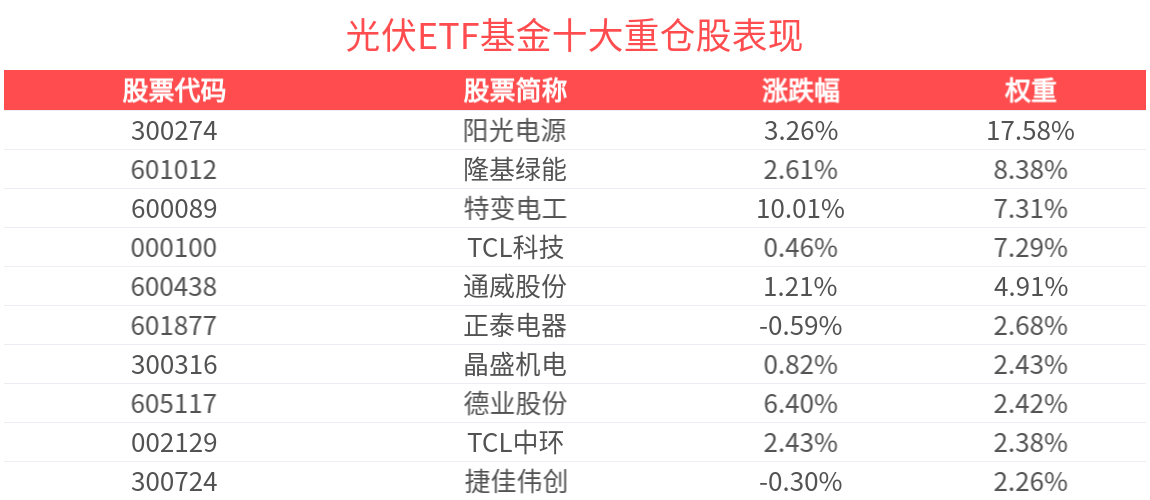
Core Insights - The Zhongzheng Photovoltaic Industry Index (931151) has seen a strong increase of 2.70% as of November 3, 2025, with significant gains in constituent stocks such as Tebian Electric (600089) and Hongyuan Green Energy (603185), both rising by 10.01% [1] - The Photovoltaic ETF Fund (516180) has also risen by 2.94%, with a recent price of 0.84 yuan, and has accumulated a 6.54% increase over the past week [1] - The index reflects the overall performance of listed companies involved in the photovoltaic industry chain, selecting up to 50 representative stocks [1] Company Performance - The top ten weighted stocks in the Zhongzheng Photovoltaic Industry Index as of October 31, 2025, account for 60.74% of the index, with significant players including Sunshine Power (300274) and Longi Green Energy (601012) [2] - The performance of key stocks includes: - Sunshine Power (300274): up 3.26%, weight 17.58% - Longi Green Energy (601012): up 2.61%, weight 8.38% - Tebian Electric (600089): up 10.01%, weight 7.31% - TCL Technology (000100): up 0.46%, weight 7.29% - Tongwei Co. (600438): up 1.21%, weight 4.91% - Zhengtai Electric (601877): down 0.59%, weight 2.68% - Jingcheng Machinery (300316): up 0.82%, weight 2.43% - Deyang Co. (605117): up 6.40%, weight 2.42% - TCL Zhonghuan (002129): up 2.43%, weight 2.38% - Jiejia Weichuang (300724): down 0.30%, weight 2.26% [4]



储能系列报告(14):数据中心配储有望迎来大发展
CMS· 2025-11-03 03:05
Investment Rating - The investment rating for the industry is "Strongly Recommended" for several key companies, including 阳光电源 (Sungrow Power Supply), 天合光能 (Trina Solar), 科华数据 (Kehua Data), and 盛弘股份 (Sungrow Power Supply) [2][3]. Core Insights - The data center sector is becoming a significant electricity consumer, with an estimated electricity consumption of 142 TWh in 2024, projected to rise to 323 TWh by 2030, accounting for over 8% of total electricity consumption in the U.S. [7][8]. - The integration of energy storage systems in data centers is expected to alleviate grid connection issues, which have become a major bottleneck for the industry, particularly in Texas where connection wait times can reach 11 years [7][9]. - By 2030, the demand for energy storage driven by data centers in the U.S. is estimated to be between 122-245 GWh [7][18]. Industry Overview - The industry consists of 305 listed companies with a total market capitalization of 750.24 billion [3]. - The electricity consumption of data centers has been stable around 3900 TWh over the past decade, with a slight increase expected in 2024 [8]. Key Companies - 阳光电源 (Sungrow Power Supply) is a leading player in the energy storage sector, with significant R&D investments and a strong market presence in various regions [28]. - 天合光能 (Trina Solar) has been actively involved in the energy storage business, targeting a shipment goal of 8 GWh in 2025 [30]. - 科华数据 (Kehua Data) focuses on energy storage solutions and has been recognized as a top supplier in the industry [31]. - 盛弘股份 (Sungrow Power Supply) is noted for its innovative energy storage inverter technology, enhancing system performance and efficiency [34].


天合光能20251102
2025-11-03 02:35
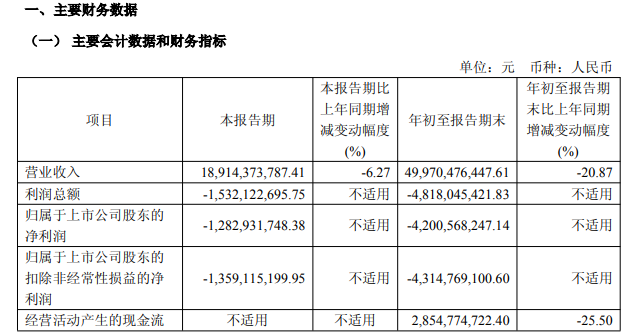
Summary of Tianhe Solar's Conference Call Company Overview - **Company**: Tianhe Solar - **Industry**: Solar Energy and Energy Storage Key Financial Performance - **Q3 2025 Net Profit**: Loss of 1.283 billion CNY, but improved from Q2 2025 [2][4] - **Total Revenue for Q3 2025**: 18.914 billion CNY [4] - **Total Revenue for the First Three Quarters of 2025**: 49.97 billion CNY, with a net loss of 4.2 billion CNY [4] Business Segment Performance - **Module Business**: - Shipment volume of approximately 18 GW with a loss of about 0.06 CNY per watt [2][5] - Expected shipment target for 2025: 70-75 GW [2][8] - **Energy Storage Business**: - Q3 2025 shipment exceeded 1 GWh with a small profit [2][5] - Annual shipment target for 2025: over 8 GWh, expected to double to 15-16 GWh in 2026 [2][3][6] - Anticipated overseas market share: 60%-70% [2][3] - **Distributed Systems**: - Achieved nearly 300 million CNY in profit in Q3 2025, with operational scale close to 20 GW [2][5] - Net profit per watt approximately 0.02 CNY [2][5] - **Support Structure Business**: - Q3 shipment of 2.2 GW, with over 70% being tracking supports and achieving profitability [2][5] Market Outlook - **Global Solar Market Demand**: Expected to remain stable or grow slightly in 2026, with significant growth in the Middle East and Asia-Pacific regions [4][15] - **Energy Storage Market Growth**: Anticipated industry growth rate of around 30% in 2026 due to increasing demand [2][6] - **India Market**: - Zero anti-dumping tax rate, significantly better than competitors facing 23%-30% [4][26] - Expected shipment in India to exceed 20 GW in H1 2025, with market share projected to rise from 7-8% to over 10% [4][26][27] Strategic Initiatives - **Response to Policy Changes**: - The cancellation of mandatory storage policies in China is expected to benefit competitive companies like Tianhe Solar [6][7] - Focus on high-value customer acquisition and signing overseas orders [6][7] - **Cost Management**: - Achieved a 20%-25% reduction in overall costs through supply chain management and operational efficiency [23] - **R&D Focus**: - Emphasis on developing proprietary energy storage systems, with a dedicated team for PCS product management [10][12] Risks and Challenges - **Profitability Concerns**: - Current profitability in the Chinese energy storage market is low, but expected to improve with scale and structural adjustments [12][13] - **Debt Levels**: - Industry debt levels are high, averaging over 75%, but opportunities for debt-to-equity conversions exist [25][24] Conclusion - Tianhe Solar is navigating a challenging financial landscape with strategic initiatives aimed at improving profitability and market share, particularly in the energy storage and international markets. The company is well-positioned to leverage favorable policy changes and growing demand in key regions like India and Europe.
中华人民共和国工业和信息化部公告
中国能源报· 2025-11-03 02:07
Core Viewpoint - The Ministry of Industry and Information Technology of China has announced the list of 129 companies that meet the current standards for the photovoltaic manufacturing industry, as per the regulations established in 2024 [1][2]. Group 1: Announcement Details - The announcement is identified as the 31st notice of 2025, published on October 29, 2025 [1][2]. - The list includes companies that have undergone a thorough evaluation process, including self-assessment reports, local reviews, expert evaluations, on-site verifications, local rechecks, and online public notices [2]. Group 2: Company Listings - The list comprises companies from various provinces, including: - Anhui: Tongwei Solar (Hefei) Co., Ltd. (modules), Hefei Zhongnan Optoelectronics Co., Ltd. (modules), and others [3][4]. - Guangdong: Dongguan Nanfang Glass Photovoltaic Technology Co., Ltd. (modules), Guangdong Aisuo Technology Co., Ltd. (batteries), and others [3][4]. - Jiangsu: Suzhou GCL-Poly Energy Technology Co., Ltd. (silicon wafers), and many others [4][5]. - Zhejiang: Zhejiang Jinko Solar Co., Ltd. (modules), and others [8][9]. Group 3: Company Changes - The announcement also includes changes in company names and types, such as: - Anhui Huasheng New Energy Technology Co., Ltd. changed to Anhui Huasheng New Energy Technology Co., Ltd. (modules) [10]. - Xi'an Longi Silicon Materials Co., Ltd. changed to Longi Green Energy Technology Co., Ltd. (silicon wafers) [10]. - Zhejiang Hongxi Photovoltaic Technology Co., Ltd. changed to Zhejiang Hongxi Energy Co., Ltd. (batteries) [10].


新型钙钛矿光伏器件光电转换率再创新高,光伏50ETF(516880)逆势涨超2%,天合光能涨超6%
2 1 Shi Ji Jing Ji Bao Dao· 2025-11-03 01:56
Core Insights - The photovoltaic sector is showing resilience with the CSI Photovoltaic Industry Index rising by 1.94%, driven by significant gains in key stocks such as Arctech, Trina Solar, and Hongyuan Green Energy [1] - New advancements in perovskite photovoltaic devices have achieved a record conversion efficiency of 25.19%, maintaining over 95% performance after 1000 hours of operation [1] - The introduction of "anti-involution" policies by the government is expected to enhance competition and promote sustainable development in the photovoltaic industry [2] Group 1: Market Performance - The CSI Photovoltaic Industry Index increased by 1.94%, with Arctech rising over 7%, Trina Solar over 6%, and Hongyuan Green Energy nearly 6% [1] - The Photovoltaic 50 ETF (516880) rose by 2.03%, with a trading volume of nearly 10 million yuan within the first five minutes of opening [1] - As of October 31, the Photovoltaic 50 ETF had a circulating share of 2.314 billion and a market size of 1.941 billion yuan [1] Group 2: Technological Advancements - A research team from Nanjing University of Technology developed a perovskite photovoltaic device with a conversion efficiency of 25.19% using "all-vacuum thermal evaporation" technology [1] - The device's performance remained above 95% after continuous operation for over 1000 hours, indicating significant technological progress [1] Group 3: Industry Outlook - Since June 2025, the government has implemented "anti-involution" policies to regulate competition in the photovoltaic sector, shifting from chaotic price competition to sustainable development [2] - The market share of N-type monocrystalline silicon technology is expected to exceed 96.9%, with three major technological routes (TOPCon, HJT, BC) driving efficiency improvements and cost reductions [2] - The installed capacity of photovoltaic systems in China is projected to grow by approximately 45% in 2024 compared to the previous year, marking a nearly 20-fold increase since 2015 [2]



三季报里的行业密码:分化中显韧性,新业务成亮点
Shang Hai Zheng Quan Bao· 2025-10-31 18:21
Core Viewpoint - The power equipment industry is experiencing steady growth in revenue and profit, driven by high domestic grid investment and surging overseas demand, with new growth areas like supercapacitors and energy storage emerging as key focus points [2] Group 1: Industry Performance - The majority of power equipment companies reported steady growth in revenue and profit, with notable examples including State Grid and Southern Grid conducting multiple rounds of equipment tenders [2][3] - The China Electricity Council reported that grid investment reached 437.8 billion yuan in the first three quarters, a year-on-year increase of 9.9% [2] - The cumulative tender amount for transmission and transformation equipment by State Grid reached 68.188 billion yuan, up 22.9% year-on-year [2] Group 2: Company Highlights - Pinggao Electric reported a revenue of 8.436 billion yuan for the first three quarters, a year-on-year increase of 6.98%, with net profit rising 14.62% [3] - Siyuan Electric achieved a revenue of 5.33 billion yuan in Q3, a 25.68% increase year-on-year, and a net profit of 899 million yuan, up 48.73% [3] - Siyuan Electric's overseas revenue reached 2.86 billion yuan in the first half, a staggering 89% increase, with overseas orders growing faster than average [3] Group 3: Emerging Business Areas - Energy storage and supercapacitors are becoming significant growth drivers for power equipment companies, with Sunshine Power predicting a domestic energy storage installation of around 130 GWh this year [5] - Siyuan Electric's energy storage bid volume is expected to reach 2.4 GWh in 2024, placing it among the top ten in the country [5] - Guodian NARI has been deeply involved in the energy storage sector, contributing to the commissioning of new energy storage plants [5] Group 4: Future Outlook - Industry experts anticipate sustained high growth in the power sector, driven by policies promoting renewable energy and the need for stable grid infrastructure [7] - Wanlian Securities suggests continued investment in new power system facilities, emphasizing smart grids and new energy storage as key areas to watch [7]





天合光能前三季度亏损42亿元
Guo Ji Jin Rong Bao· 2025-10-31 11:36
Core Viewpoint - Trina Solar's performance continues to decline in the first three quarters of 2025, with significant drops in both revenue and net profit [2][4]. Financial Performance - In the first three quarters of 2025, Trina Solar achieved revenue of 49.97 billion yuan, a year-on-year decrease of 20.87% [2][4]. - The net profit attributable to shareholders was -4.20 billion yuan, indicating a substantial loss [2][4]. - For the third quarter alone, revenue was 18.91 billion yuan, down 6.27% year-on-year, with a net loss of 1.28 billion yuan [2][4]. Cash Flow and Debt - The net cash flow from operating activities for the first three quarters was 2.85 billion yuan, a decline of 25.5% year-on-year, but still positive [4]. - The net cash outflow from investing activities was 3.93 billion yuan, a reduction of 60.6% compared to the previous year [4]. - The company's debt ratio has reached 77.99% [4]. Market Position and Challenges - Trina Solar's position in the top tier of the photovoltaic module industry is facing challenges due to severe overcapacity and aggressive price competition [5]. - The company's financial pressure has increased due to significant expansion from 2022 to 2023, leading to heightened debt levels [5]. - The industry is transitioning from "scale expansion" to "value upgrading," with intense competition and widespread losses across the sector [5]. Technological Developments - The shift towards N-type battery technology (such as TOPCon) is accelerating, posing a challenge to Trina Solar, which has seen its growth momentum slow down [5]. - Competitors like JA Solar are experiencing strong performance, threatening Trina Solar's market position [5]. - Future competitiveness will depend on the company's ability to upgrade technology, control costs, and adjust market strategies [5].
上游报喜下游“失血”,光伏主链企业三季度业绩分化
第一财经· 2025-10-31 11:06
Core Viewpoint - The photovoltaic industry chain is experiencing a divergence, with upstream companies reporting improved profits while downstream components continue to face losses [3][6]. Upstream Performance - Leading upstream companies such as Tongwei Co., GCL-Poly Energy, and Daqo New Energy have shown improved quarterly profits in Q3 2025, with Daqo New Energy achieving a net profit of 73.48 million yuan for the first time since Q2 2024 [3][4]. - Tongwei Co. holds the highest global market share in high-purity silicon, reporting a reduced net loss of 315 million yuan in Q3, down from 2.363 billion yuan in Q2, marking an over 80% reduction in losses [3][4]. - GCL-Poly Energy reported an increase in the average selling price of granular silicon to 42.12 yuan/kg in Q3, up from 35.71 yuan/kg in Q1 and 32.93 yuan/kg in Q2 [3]. Market Trends - The improvement in upstream performance reflects a market recovery trend and the initial effects of the photovoltaic "anti-involution" strategy, with a reported reduction of approximately 12,000 tons in domestic polysilicon inventory in the first three quarters of the year [4][5]. - Polysilicon prices have strengthened due to reduced supply, with average prices for N-type and granular silicon rising to 53,200 yuan/ton and 50,500 yuan/ton by the end of September, representing increases of 55% and 51% respectively since June [5]. Downstream Challenges - Downstream component manufacturers are struggling with rising costs and weakened terminal demand, failing to achieve profitability in Q3 2025 [6][7]. - Major companies in the component sector, including JinkoSolar, LONGi Green Energy, Trina Solar, and JA Solar, reported significant net losses in Q3, with losses ranging from 8.34 billion yuan to 12.83 billion yuan [6][7]. - Cumulatively, these companies have incurred losses exceeding 30 billion yuan in the first three quarters, with Trina Solar leading with a loss of 4.201 billion yuan [6][7]. Future Outlook - The industry outlook for Q4 remains cautious, with expectations of demand decline and some companies reporting lower-than-expected orders [7]. - LONGi Green Energy's chairman expressed confidence in achieving breakeven in Q4 by increasing the revenue share of BC products and scenario-based products [7].