
Guoguang Electric (688776)

Search documents
一周解一惑系列:聚变磁约束结构仿星器VS托卡马克
Minsheng Securities· 2025-06-16 08:43
Investment Rating - The report maintains a cautious recommendation for the industry, focusing on controllable nuclear fusion-related stocks such as Lianchuang Optoelectronics and Guoguang Electric [4][5]. Core Insights - Magnetic confinement is currently the best method for achieving controllable nuclear fusion, with significant challenges in maintaining the extreme conditions required for fusion reactions [1][9]. - The main magnetic confinement devices are Tokamak and Stellarator, with Tokamak being more widely used but facing inherent instabilities due to plasma current [2][14]. - Advanced Stellarators have stringent standards for modular coil systems, magnetic surface quality, and stability under high pressure, which enhance plasma confinement and reduce transport losses [3][36]. - The Wendelstein 7-X (W7-X) Stellarator set a new world record for nuclear fusion triple product, demonstrating its potential in the race towards commercial fusion power [3][41]. Summary by Sections 1. Tokamak vs. Stellarator - Magnetic confinement is the best approach for controllable nuclear fusion, requiring extreme temperatures and conditions [1][9]. - The main magnetic confinement devices include Tokamak and Stellarator, with Tokamak facing stability issues due to plasma current [2][14]. 2. Development of Stellarators - The W7-X Stellarator achieved a new record in nuclear fusion triple product, showcasing its capabilities compared to Tokamak devices [3][41]. - The development of advanced Stellarators focuses on optimizing magnetic field configurations to improve plasma confinement [3][36]. 3. Investment Opportunities - The report suggests focusing on companies involved in controllable nuclear fusion, specifically Lianchuang Optoelectronics and Guoguang Electric, which are making strides in superconducting technology and nuclear fusion applications [4][54][56].


可控核聚变新阶段,迈向终极能源第一步
Soochow Securities· 2025-06-13 07:48
Investment Rating - The report suggests a positive investment outlook for the controlled nuclear fusion industry, driven by policy and capital support, with significant potential for growth and commercialization in the coming years [4][30]. Core Insights - Controlled nuclear fusion is viewed as the ultimate energy solution due to its high energy density, abundant fuel supply, and superior safety [4][9]. - The current phase of controlled nuclear fusion is characterized by a dual drive of policy and capital, with numerous projects underway globally, particularly in China and the US, aiming for commercial viability by the 2030s to 2040s [4][30]. - Various technological pathways are emerging, including magnetic confinement (tokamak), inertial confinement (NIF), and magnetic inertial confinement, with significant advancements expected in the next few years [4][30]. Summary by Sections Part 1: What is Controlled Nuclear Fusion? - Controlled nuclear fusion involves the merging of lighter atomic nuclei to form a heavier nucleus, releasing significant energy, primarily using deuterium and tritium as fuel [9][10]. Part 2: Why is Now a New Phase for Controlled Nuclear Fusion? - The industry is experiencing a surge in support from governments worldwide, with China implementing multiple policies to foster development, including financial backing and international collaboration [30][33]. - The number of active fusion companies has increased significantly, with around 50 globally, 80% of which are private enterprises, indicating a robust investment landscape [40][41]. Part 3: Device Architecture Breakdown and Industry Cost Map - The report outlines the cost structure of fusion devices, with initial experimental tokamak investments around 15 billion yuan, and highlights the significant capital required for development [4][30]. Part 4: Competitive Cost of Fusion Power - The report estimates the cost of electricity from fusion devices, with projected costs of 0.31 and 0.27 yuan/kWh for low-temperature superconducting and linear magnetic inertial fusion devices, respectively, indicating competitive pricing compared to traditional energy sources [4][30]. Part 5: Investment Recommendations - The report recommends focusing on key suppliers in the fusion supply chain, including companies like Western Superconducting, Lianchuang Optoelectronics, and Antai Technology, as they are positioned to benefit from the anticipated growth in the fusion sector [4][30].


可控核聚变概念下跌0.80%,主力资金净流出43股
Zheng Quan Shi Bao Wang· 2025-06-11 14:08
Market Performance - The controllable nuclear fusion concept declined by 0.80%, ranking among the top declines in the concept sector, with notable declines in stocks such as Baile Electric, Shun Sodium, and Xue Ren [1] - In contrast, 23 stocks within the sector experienced price increases, with Pan-Asia Micro-Transparent, Xuguang Electronics, and Chujian New Materials leading the gains at 6.13%, 5.12%, and 3.62% respectively [1] Capital Flow - The controllable nuclear fusion concept saw a net outflow of 1.297 billion yuan, with 43 stocks experiencing net outflows, and 8 stocks seeing outflows exceeding 50 million yuan [2] - Baile Electric led the net outflow with 414.37 million yuan, followed by Xue Ren, Yongding, and Shun Sodium with net outflows of 136.02 million yuan, 120.57 million yuan, and 87.58 million yuan respectively [2] Top Gainers and Losers - The top gainers in the controllable nuclear fusion concept included stocks like Xiamen Tungsten, Xuguang Electronics, and Guoguang Electric, with net inflows of 82.02 million yuan, 33.49 million yuan, and 28.84 million yuan respectively [2][4] - The stocks with the largest declines included Baile Electric at -9.87%, Xue Ren at -6.96%, and Shun Sodium at -8.93% [2][3]


4月用电需求分析全球第三座重水除氚设施启动建设
Hua Yuan Zheng Quan· 2025-06-09 14:14
Investment Rating - Investment rating: Positive (maintained) [3] Core Viewpoints - The report highlights that electricity demand in April showed improvement in several provinces, with six provinces experiencing a growth rate exceeding 7%. However, Xinjiang reported negative growth. The overall electricity demand growth rate for April was 4.7%, down from 7.0% in the same month last year, indicating a potential impact from external demand [4][10][16]. - The report emphasizes the importance of coal price declines for short-term flexibility in thermal power and suggests mid-term focus on asset integration opportunities within state-owned power groups, as well as investment value in hydropower and wind power operators [4][19]. - Key recommendations include major hydropower companies such as Guotou Electric Power, Huaneng Hydropower, Yangtze Power, and Chuan Investment Energy, along with wind power stocks like Longyuan Power (H), Xintian Green Energy, Datang New Energy, and CGN New Energy. Quality thermal power companies recommended include Wan Energy Power, Shanghai Electric Power, China Resources Power, Huadian International, and Sheneng Co [4][19][20]. Summary by Sections Electricity Demand Analysis - In April, electricity demand growth improved in multiple provinces, particularly in Hunan (6.6 percentage points), Hubei (5.3 percentage points), and Anhui (5.1 percentage points). Conversely, provinces like Hainan (-6.9 percentage points), Guangdong (-1.6 percentage points), and Xinjiang (-1.6 percentage points) saw deteriorating growth rates [4][16]. - The report notes that the overall electricity consumption in April reached 772.1 billion kWh, with a year-on-year growth rate of 4.68%, while the cumulative growth rate for January to April was 3.08% [14][17]. Sector Performance - The report identifies that the industrial sector contributed significantly to electricity demand, with a growth rate of 3.2% in April. However, several non-key sectors experienced negative growth, potentially due to external demand influences [10][12]. - The report also highlights that the electricity consumption in the information transmission and charging industries has been a positive contributor, while sectors related to photovoltaic equipment production showed negative growth, indicating a less optimistic outlook for new photovoltaic projects [12][13]. Nuclear Fusion Developments - The report discusses the construction of the third heavy water tritium removal facility in Romania, which is expected to position the country as a key player in tritium production and export in Europe. Tritium is identified as a critical fuel for nuclear fusion reactors like ITER [5][21]. - It is noted that the demand for tritium is expected to rise significantly with the completion of various global fusion engineering experimental reactors, with estimates suggesting that ITER alone will consume approximately 12.3 kg of tritium over its operational lifetime [22][24]. Investment Opportunities - The report suggests that companies with relevant technological reserves in tritium breeding, extraction, and analysis are likely to benefit from increased investments in nuclear fusion projects. Companies such as Guoguang Electric are highlighted as potential beneficiaries [30].




国防军工行业资金流出榜:海格通信等8股净流出资金超5000万元
Zheng Quan Shi Bao Wang· 2025-06-04 08:56
Market Overview - The Shanghai Composite Index rose by 0.42% on June 4, with 28 out of 31 sectors experiencing gains, led by the beauty and personal care sector with a 2.63% increase, followed by the comprehensive sector at 2.53% [1] - The transportation, defense, and public utilities sectors saw declines, with decreases of 0.58%, 0.24%, and 0.12% respectively [1] Capital Flow Analysis - The net inflow of capital in the two markets was 1.074 billion yuan, with 17 sectors receiving net inflows [1] - The electronics sector had the highest net inflow of 3.070 billion yuan, increasing by 1.17%, followed by the non-bank financial sector with a net inflow of 1.588 billion yuan and a daily increase of 0.99% [1] - Conversely, 14 sectors experienced net outflows, with the automotive sector leading at a net outflow of 1.787 billion yuan, followed closely by the defense sector with a net outflow of 1.740 billion yuan [1] Defense Industry Performance - The defense industry declined by 0.24% with a net outflow of 1.740 billion yuan, comprising 139 stocks, of which 55 rose and 79 fell [2] - Among the stocks with net inflows, 35 saw positive capital flow, with the top three being Guoguang Electric with 45.7192 million yuan, followed by Ganhuakegong with 43.3232 million yuan, and Aerospace Rainbow with 37.7146 million yuan [2] - The stocks with the highest net outflows included Haige Communication with a net outflow of 214.9181 million yuan, followed by Sichuang Electronics with 122.2263 million yuan, and Taihao Technology with 101.6526 million yuan [3] Defense Industry Capital Inflow and Outflow - **Top Inflow Stocks**: - Guoguang Electric: -0.98% change, 3.15% turnover rate, 45.7192 million yuan inflow [2] - Ganhuakegong: 6.77% change, 11.31% turnover rate, 43.3232 million yuan inflow [2] - Aerospace Rainbow: 1.83% change, 10.54% turnover rate, 37.7146 million yuan inflow [2] - **Top Outflow Stocks**: - Haige Communication: -2.19% change, 10.40% turnover rate, -214.9181 million yuan outflow [3] - Sichuang Electronics: -4.81% change, 16.98% turnover rate, -122.2263 million yuan outflow [3] - Taihao Technology: -2.29% change, 4.60% turnover rate, -101.6526 million yuan outflow [3]


新兴产业行业研究周报:中国可控核聚变技术持续取得重大突破,重点关注核聚变产业链!
Tianfeng Securities· 2025-06-02 10:23
Investment Rating - Industry rating is maintained at "Outperform" [1] Core Insights - The report highlights significant breakthroughs in China's controllable nuclear fusion technology, with the "Chinese Circulation No. 3" achieving a plasma current of one million amperes and ion temperature reaching 100 million degrees, marking a new high in fusion parameters [3][6] - The advancements in nuclear fusion technology position China as a leader in the field, paving the way for future commercialization and potential growth opportunities for related upstream and downstream enterprises [3] Summary by Sections Industry Overview - The report discusses the continuous progress in controllable nuclear fusion technology in China, with key projects like the "Xuanlong-50U" achieving critical engineering breakthroughs [3][4] - The comprehensive parameters of fusion triple product have reached the order of 10^20, indicating significant advancements in the field [3] Key Companies to Watch - Recommended companies include: - Lianchuang Optoelectronics, a leading supplier of high-temperature superconducting magnets, which are crucial for compact tokamak devices [4] - Yongding Co., a major supplier of high-temperature superconducting strips [4] - Guoguang Electric, which provides various components for controllable nuclear fusion devices [4]
技术突破!核聚变新题材《核工业西南院》供应商挖掘
Ge Long Hui· 2025-05-30 10:39
Group 1: Market Overview - The market has seen an increase, surpassing 4200, driven by a court ruling invalidating tariffs imposed by the US, which has boosted global risk appetite [1] - The strongest sectors today include autonomous driving and stablecoins, indicating a shift in investor focus [1] Group 2: Nuclear Fusion Research - The Southwestern Institute of Physics has achieved a new operational record for fusion devices in China, highlighting advancements in nuclear fusion research [2][1] - This development raises questions about the potential for this niche sector to gain traction and attract investment [2] Group 3: Company Involvement in Nuclear Fusion - Yongding Co., Ltd. has achieved leading performance in wire rod length and low-temperature strong magnetic field applications, with products used in superconducting induction heating and fusion magnets, maintaining close cooperation with the Southwestern Institute of Physics [6] - Chenguang Medical has ongoing technical communication with the Southwestern Institute regarding the supply of superconducting magnets, contingent on specific procurement needs [7] - Qiaoyuan Co. has established a reputation in the medical sector and maintains relationships with military research institutions, including the Southwestern Institute [8] - Lansi Heavy Industry is involved in the development of nuclear fusion-related products and has successfully applied a new type of heat exchanger in a fusion engineering project [9][10] - Guoguang Electric has received a provincial science and technology award for a project in collaboration with the Southwestern Institute focused on high-sensitivity leak detection technology for fusion components [10] - Antai Technology is at the forefront of research and manufacturing in fusion filter components, collaborating with the Southwestern Institute [11] - Hekang New Energy provides operational and maintenance services for high-voltage water-cooled variable frequency systems used by the Southwestern Institute [11] - Jingye Intelligent is exploring cooperation in remote operation and maintenance technology for fusion reactors with the Southwestern Institute [12] - Yingjie Electric serves various research institutions, including the Southwestern Institute, providing power supplies for scientific research and experimental testing [13]


美国拟为卫星通信释放大量频谱资源,卫星互联网“军备竞赛”升级,卫星ETF(159206)冲击四连涨!
Sou Hu Cai Jing· 2025-05-29 02:25
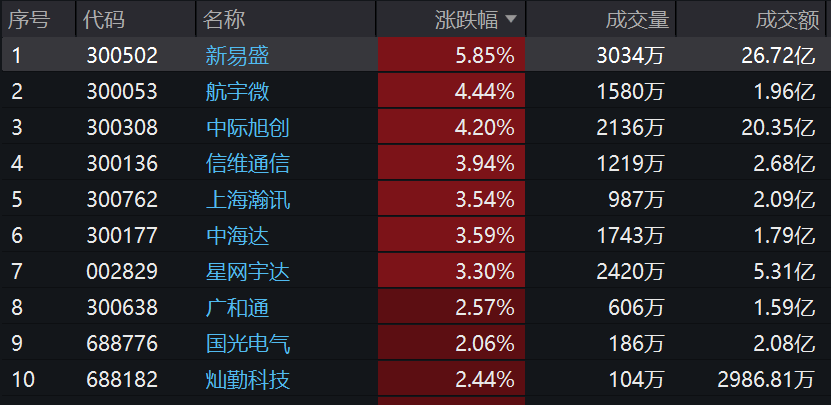
Core Viewpoint - The satellite ETF (159206) is experiencing significant activity, driven by the recent announcement from the FCC to expand satellite communication frequency spectrum, which is expected to enhance the satellite communication industry and stimulate competition [1][2][3]. Group 1: Market Activity - As of May 29, the satellite ETF (159206) rose by 1.52% in early trading, with key component stocks such as Xinyisheng increasing by over 5% [1]. - The top-performing stocks within the ETF include: - Xinyisheng: +5.85%, trading volume of 30.34 million, market cap of 26.72 billion - Hangyuwei: +4.44%, trading volume of 15.80 million, market cap of 1.96 billion - Zhongji Xuchuang: +4.20%, trading volume of 21.36 million, market cap of 20.35 billion - Xinyu Communication: +3.94%, trading volume of 12.19 million, market cap of 2.68 billion - Shanghai Huanxun: +3.54%, trading volume of 9.87 million, market cap of 2.09 billion [2]. Group 2: Industry Developments - The FCC plans to release over 20,000 MHz of frequency resources to support the development of low Earth orbit (LEO) satellites and next-generation satellite broadband services, addressing the spectrum shortage faced by the commercial space and satellite internet sectors [3]. - Recent advancements in ground communication technology have achieved a record communication speed of 2100 Mbps in the X-band, marking a 75% increase in microwave communication code rate [3]. - The satellite internet sector is rapidly evolving, with regular satellite launches increasing communication capacity and reducing latency, paving the way for applications like direct satellite connections for mobile broadband and intelligent driving systems [3]. Group 3: Future Outlook - The satellite communication industry is positioned as a foundational technology for the development of 6G, vehicle networking, and the Internet of Things (IoT) [3]. - The Chinese satellite industry is expected to enter a phase of mass satellite deployment by 2025, with both state-owned and private enterprises collaborating on low-cost satellite manufacturing [3].




可控核聚变“掘金”热持续,产业链初具雏形 商业化之路还要走多久?
Mei Ri Jing Ji Xin Wen· 2025-05-27 13:54
Core Viewpoint - The A-share controllable nuclear fusion sector has seen significant growth, driven by accelerated commercialization of nuclear energy, with the potential for limitless energy generation if controllable nuclear fusion is realized [1] Industry Overview - Controllable nuclear fusion is based on the fundamental principles of stellar energy release, offering a clean, efficient, and sustainable energy source with minimal radioactive waste [1] - The primary fuels for nuclear fusion are tritium and deuterium, with 1 liter of seawater capable of extracting 0.035 grams of deuterium, releasing energy equivalent to burning 300 liters of gasoline, and the global supply of deuterium from seawater could last for over a hundred billion years [1] Technological Pathways - Global fusion research primarily focuses on two main technological pathways: magnetic confinement fusion and inertial confinement fusion, with ITER being the most representative project for magnetic confinement and the National Ignition Facility (NIF) for inertial confinement [1] - Magnetic confinement fusion is considered the most effective approach for developing fusion energy due to its longer energy confinement time, higher technological maturity, and stronger engineering feasibility [1] Domestic Industry Chain - The domestic controllable nuclear fusion industry chain is taking shape, with upstream companies providing raw materials such as superconducting materials and tungsten-based materials [2] - Key players in the upstream include Western Superconducting (SH688122), Shanghai Superconductor, and Antai Technology (SZ000969), among others [2] - Midstream equipment manufacturers include Western Superconducting and Guoguang Electric (SH688776), which supply components for magnetic confinement systems [2] Application and Commercialization - Downstream application firms include China National Nuclear Power Co. and China General Nuclear Power Group, responsible for the operation and construction of nuclear power plants [3] - The commercialization of controllable nuclear fusion is progressing, with various companies involved, although many have not disclosed the revenue contribution from related businesses [3] - Guoguang Electric's products are key components for the ITER project, while Western Superconducting is the only domestic producer of superconducting materials for ITER and is also involved in the CFETR project [3] Future Prospects - The timeline for the commercialization of controllable nuclear fusion is projected around 2030, with significant advancements expected by 2035 [5] - The BEST project in Hefei aims to enhance the economic viability of nuclear fusion energy and is expected to complete by 2027, potentially becoming the world's first compact fusion energy experimental device [5][6] - Achieving commercial viability requires meeting specific criteria, including maintaining plasma conditions and achieving a fusion gain greater than one [6]


国光电气(688776):混合堆链主企业 深度受益于可控核聚变加速发展
Xin Lang Cai Jing· 2025-05-27 08:32
Core Viewpoint - The company is experiencing a short-term decline in performance due to industry fluctuations but is optimistic about medium to long-term recovery in performance [1][2] Financial Performance - In 2024, the company achieved operating revenue of 537 million yuan, a decrease of 28.01%, and a net profit attributable to shareholders of 47 million yuan, down 47.93% [1] - For Q1 2025, the company reported revenue of 10.5 million yuan, with a year-on-year decline of 34.07% and a quarter-on-quarter increase of 27.45%, while net profit attributable to shareholders was only 0.02 million yuan, reflecting a year-on-year decline of 92.65% [1] - The company's overall profit decline exceeded 40% for the year, primarily due to declines in its microwave devices and nuclear industry segments [1] Profitability Analysis - The company's gross profit margin for the year was 33.20%, an increase of 3.19 percentage points, while the net profit margin was 8.77%, a decrease of 3.35 percentage points [1] - The increase in the expense ratio was noted, with the period expense ratio at 17.79%, up 4.44 percentage points, including a sales expense ratio of 3.06% and a management expense ratio of 10.80% [1] Business Segment Insights - The decline in net profit is attributed to delayed order deliveries and reduced gross margins in microwave devices, with a gross margin decrease of 1.51% and a revenue decrease of 5.3% in 2024 [2] - The nuclear industry segment saw a significant revenue decline of 45.43% year-on-year, but the gross margin increased by 4.4%, indicating potential for profit improvement if order volumes increase [3] Strategic Initiatives - The company is expanding its microwave and nuclear fusion industries, enhancing its industry chain through a dual-driven strategy of "research institute + company" [4] - The establishment of a joint venture, Xianjue Energy Technology, aims to accelerate the commercialization of fusion energy applications and strengthen intellectual property barriers [4] - The company is actively pursuing nuclear power qualifications and expanding into specialized gas preparation systems to capture more market share [5] Employee Incentives - The company announced a stock incentive plan for core personnel, granting 1 million restricted stock units, which represents 0.92% of the total share capital [6] - The performance targets for the stock incentive plan are set at net profits of 160 million yuan, 230 million yuan, and 320 million yuan for the years 2024 to 2026 [6] Profit Forecast - The company is expected to see a recovery in its nuclear industry segment due to the expansion of domestic controllable nuclear fusion projects, with projected net profits of 132 million yuan, 194 million yuan, and 271 million yuan for 2025-2027 [7]