VANKE(000002)

Search documents
万科贷款超2600亿,机构称债务风险对银行体系影响有限
Di Yi Cai Jing· 2025-12-02 11:04
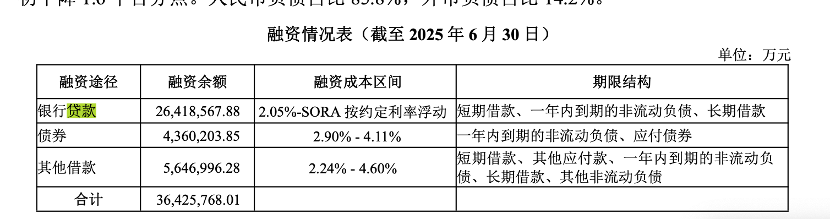
Core Viewpoint - Vanke is facing significant liquidity pressure and potential default risks, leading to concerns about its impact on major partner banks, despite analysts suggesting limited systemic risk to the banking sector [1][10]. Group 1: Debt and Financial Position - Vanke will hold a creditor meeting on December 10 to discuss the extension of a 2 billion yuan medium-term note, "22 Vanke MTN004," amid ongoing concerns about its debt issues [1]. - As of mid-2025, Vanke's interest-bearing debt reached 364.2 billion yuan, with over 260 billion yuan in bank loans, indicating a high concentration of borrowing from large financial institutions [1][10]. - The company's short-term debt pressure is significant, with 42.7% of its interest-bearing debt, amounting to 151.3 billion yuan, due within one year, while cash reserves have decreased by 25.5% to 65.68 billion yuan [2][10]. Group 2: Financing Channels and Costs - Vanke's financing structure includes 264.19 billion yuan in bank loans, 43.6 billion yuan in bonds, and 56.47 billion yuan in other borrowings, with a total interest-bearing debt of 364.26 billion yuan [2][4]. - The financing costs for bank loans range from 2.05% to SORA, while bonds have a cost range of 2.90% to 4.11% [4]. - Since 2023, Vanke has shifted its financing model from credit loans to secured loans, with 40 loan guarantee announcements made to meet operational needs [6]. Group 3: Impact on Banks and Market Sentiment - Concerns about Vanke's potential default have raised questions about which banks might be affected, with major lenders including Industrial and Commercial Bank of China, China Merchants Bank, and Bank of China [5][10]. - Despite the risks, analysts believe the overall impact on the banking system is manageable, as Vanke's bank loans account for only 1.9% of total loans to real estate companies [10][12]. - Recent market reactions have shown significant volatility in Vanke's bonds, with several experiencing sharp declines, indicating a shift towards pricing based on high default probability [11][12].


万科首试债务展期:拟展期12个月
Xin Lang Cai Jing· 2025-12-02 10:22
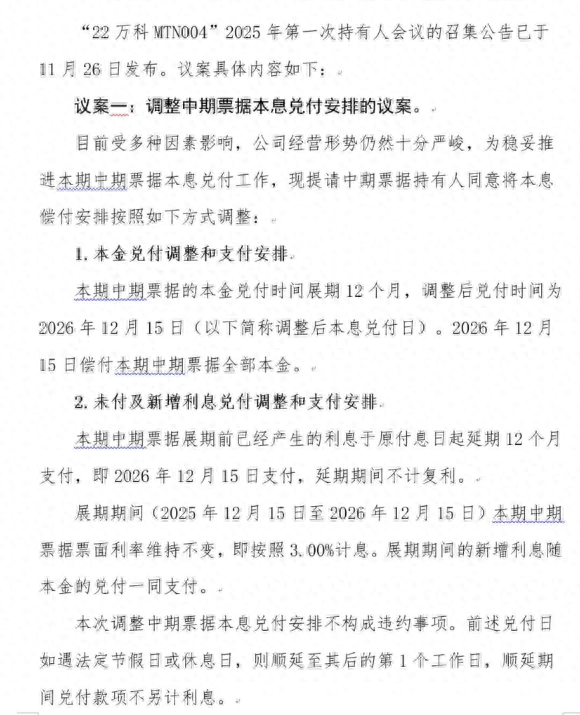
Core Viewpoint - Vanke is facing significant liquidity challenges, prompting the company to seek a 12-month extension on its bond repayment, marking its first attempt to extend a bond maturity in its history [4][9][19]. Debt Extension - Vanke plans to extend the maturity of its 20 billion yuan bond "22 Vanke MTN004" from December 15, 2025, to December 15, 2026, while maintaining the current interest rate [4][9][19]. - The bond extension is seen as a signal of Vanke's increasing debt pressure, with the outcome of the bondholder meeting on December 10 being critical for the company's short-term fate [9][23]. Share Pledges and Financial Support - Vanke's major shareholder, Shenzhen Metro Group, has provided approximately 308 billion yuan in loans to Vanke this year, with a recent loan of up to 16.66 billion yuan aimed at repaying bond principal and interest [6][21]. - A new framework agreement requires Vanke to provide collateral for future loans, indicating a tightening of financial support from its major shareholder [7][22]. Asset Disposal and Financial Performance - Vanke has sold all its shares in Beike, ending an eight-year partnership, as part of its strategy to improve cash flow and reduce debt [13][25]. - The company reported a revenue of 1613.88 billion yuan for the first three quarters of the year, a 26.61% decrease year-on-year, with a net loss of 280.16 billion yuan [14][27]. Market Position and Strategy - Despite the challenges, Vanke continues to cautiously acquire land, recently securing residential land in Hangzhou and Wuhan, while maintaining a focus on core business operations [29][30]. - The company is expected to face a debt peak in the coming years, with over 120 billion yuan in domestic debt due in 2026 [11][25].
万科首试债务展期:拟展期12个月
YOUNG财经 漾财经· 2025-12-02 10:00
Core Viewpoint - Vanke is facing significant liquidity challenges amid a declining real estate market, prompting the company to seek debt extension and engage in asset disposal to improve cash flow [5][8][10]. Debt Extension - Vanke is attempting to extend the maturity of its 20 billion yuan bond "22 Vanke MTN004" by 12 months, moving the repayment date from December 15, 2025, to December 15, 2026, while keeping the interest rate unchanged [4][9]. - This is Vanke's first attempt to extend a public market bond, indicating heightened debt pressure and potential risks of default if the extension is not approved [9][10]. Share Pledge and Shareholder Support - Vanke's major shareholder, Shenzhen Metro Group, has provided substantial financial support, including a recent loan of up to 16.66 billion yuan, bringing total loans from the group to approximately 308 billion yuan this year [6][7]. - A new framework agreement requires Vanke to provide collateral for future loans, indicating a shift in the lending relationship and necessitating asset pledges [7][8]. Asset Disposal - Vanke has sold all its shares in Beike, ending an eight-year partnership, as part of its strategy to improve liquidity [13][14]. - The company is actively working on asset disposals, having completed significant transactions in 2023, and plans to continue optimizing its asset structure [14]. Financial Performance - For the first three quarters of 2023, Vanke reported a revenue of 161.39 billion yuan, a 26.61% decrease year-on-year, and a net loss of 28.02 billion yuan, reflecting ongoing challenges in the real estate sector [15]. - The company's debt levels remain high, with total liabilities of 362.93 billion yuan and an asset-liability ratio of 73.5% [15]. Market Strategy - Despite the financial difficulties, Vanke is cautiously pursuing new land acquisitions, focusing on maintaining its core business while minimizing risks [16][17]. - The company has recently acquired new projects in collaboration with partners, demonstrating a strategic approach to land investment [16].
万科企业(02202) - 截至2025年11月30日之月报表
2025-12-02 09:55
股份發行人及根據《上市規則》第十九B章上市的香港預託證券發行人的證券變動月報表 截至月份: 2025年11月30日 狀態: 新提交 致:香港交易及結算所有限公司 本月底法定/註冊股本總額: RMB 11,930,709,471 FF301 第 1 頁 共 10 頁 v 1.1.1 FF301 公司名稱: 萬科企業股份有限公司 呈交日期: 2025年12月2日 I. 法定/註冊股本變動 | 1. 股份分類 | 普通股 | 股份類別 | H | | 於香港聯交所上市 (註1) | | 是 | | | --- | --- | --- | --- | --- | --- | --- | --- | --- | | 證券代號 (如上市) | 02202 | 說明 | | | | | | | | | | 法定/註冊股份數目 | | | 面值 | | 法定/註冊股本 | | | 上月底結存 | | | 2,206,512,938 | RMB | | 1 RMB | | 2,206,512,938 | | 增加 / 減少 (-) | | | 0 | | | RMB | | 0 | | 本月底結存 | | | 2,206,51 ...
极为离谱的万科展期
Xin Lang Cai Jing· 2025-12-02 08:29
炒股就看金麒麟分析师研报,权威,专业,及时,全面,助您挖掘潜力主题机会! 来源:HB投资笔记 12月1日,万众期待的万科展期方案出炉。和之前网传10%、10%、80%方案完全不同,原定于12月15日 到期的20亿元中期票据"22万科MTN004"的展期方案简单粗暴:本金及利息展期一年,票面利率维持3% 不变。 万科的"金身"终于还是破了,而且破得比所有人预想的都要难看。 对的,展期首付比例为零。 这是一个极具破坏意义的信号。从2021年开始,在房地产债展期的漫长历史中,有一个不成文的惯例, 即在首次展期时,通常都会拿出一笔"诚意金",或多或少,兑付10%甚至20%的本金,最差也要兑付利 息,以换取投资人的谅解和时间。 这不仅仅是诚意问题,更是偿债能力的试金石。从过去三年的地产债违约历史来看,展期债的最终偿债 来源,大头往往就是这首次展期时的兑付款。对于绝大多数债权人而言,那笔首付可能是他们唯一能落 袋为安的真金白银。 万科此次"一分钱不付",直接击穿了市场的心理底线。 这意味着什么?意味着这家曾经被视为行业标杆、被无数金融机构奉为"优等生"的企业,其流动性枯竭 程度远超外界想象。在没有股东的支持的情况下,连2 ...
永煤冲击难再现,债市难以复刻2020年末行情
Hua Er Jie Jian Wen· 2025-12-02 07:25
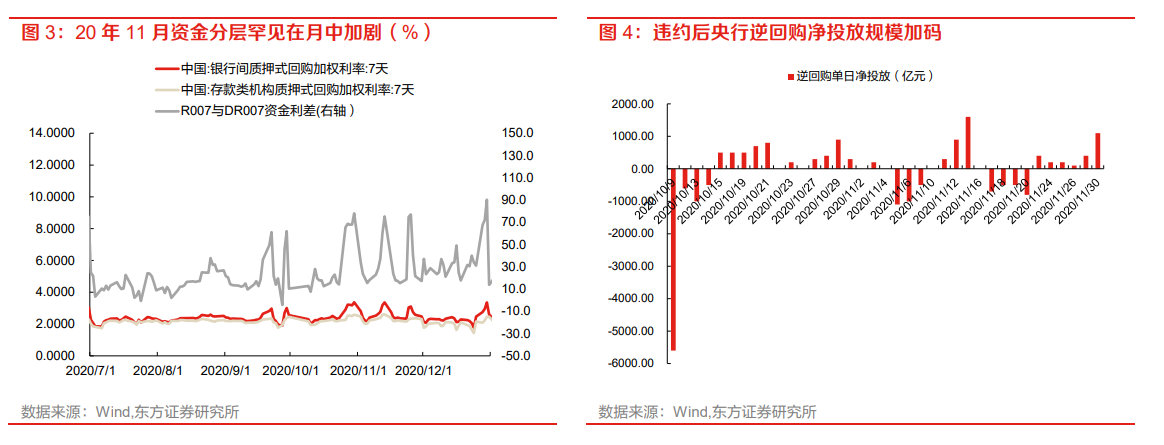
Core Viewpoint - The recent extension of Vanke's debt has drawn comparisons to the 2020 Yongmei default event, raising concerns about a potential repeat of significant adjustments in the bond market. However, Dongfang Securities argues that the current situation differs fundamentally from that of late 2020, suggesting that Vanke's extension will have a limited impact on market fundamentals and is unlikely to trigger systemic risks [1][2]. Group 1: Comparison with Yongmei Default - The market's tendency to draw parallels between Vanke's extension and the Yongmei default lacks a solid foundation, as the latter caused a collapse of "faith" in AAA-rated provincial state-owned enterprises, leading to a severe emotional shock and subsequent negative feedback from fund redemptions [2][3]. - The Yongmei default resulted in a rapid increase in yields for AAA and AA+ rated medium-term notes, with one-year yields rising by 14.4 and 17.4 basis points respectively during the week of the default, and reaching maximum increases of 28 and 54 basis points for the month [3]. - The central bank's swift response to the Yongmei event, including significant liquidity injections, helped stabilize the market quickly, contrasting with the current situation where the risk spread is minimal and does not necessitate similar interventions [8][9]. Group 2: Current Market Conditions - The weakening trend in the real estate sector is already a market consensus, and while Vanke's extension may have surprised some investors, it has not shattered any prevailing "faith," resulting in lower panic levels compared to the Yongmei event [9]. - The current credit risk diffusion is limited, and the negative feedback pressure on the funding and bond markets is manageable, meaning there is no need for large-scale central bank interventions [9][10]. - Looking ahead to December, the funding pressure is expected to remain controllable, with a decrease in the issuance scale of interest rate bonds and seasonal fluctuations in the funding market anticipated [10].
China Vanke Seeks One Year Delay to Pay Bond
Bloomberg Television· 2025-12-02 07:15
What this tells us. We had this obviously expectations, but now it's finally happened. And what do we understand.You know, you definitely show bankers under severe liquidity strains now. And I think the plan we are seeing about a one year delay is actually worse than a lot of investors expectation. And that could also have another you know, it's over ¥3 billion coming due in late December.So right now, investor are expecting that you know, we'll probably see the same treatment. And you know overall Vancouve ...
China Vanke Seeks One Year Delay to Pay Bond
Youtube· 2025-12-02 07:15
Core Insights - The liquidity strains faced by bankers are severe, with a one-year delay in payments being worse than investor expectations, particularly with over ¥3 billion due in late December [1][2] - Vancouver is facing over $30 billion in payments due by the end of next June, raising concerns about potential contagion effects similar to those seen with Evergrande [2][4] - The failure of Banker, a state-backed developer, raises questions about the safety of state-backed developers and could shift homebuyer confidence [4][5] Company and Industry Analysis - The sales of state-owned developers have decreased by 9% this year, while private developers have seen a 29% decline, indicating a significant impact on the market [5] - The situation with Banker, which has ties to Shenzhen Metro, a state-owned entity, may serve as a tipping point for the market, potentially affecting perceptions of state-backed developers [6][10] - Bondholders are closely monitoring the situation, with offshore bondholders holding over $1.3 billion in notes, indicating a heightened level of scrutiny and concern [8][9] - The Chinese government has intervened by instructing data providers to withhold key home sales data, likely to manage the narrative around homebuyer confidence [11][12] - Predictions indicate a 30% year-over-year decline in November home sales data, with expectations of continued steep declines into December, reflecting the ongoing challenges in the market [14][15]
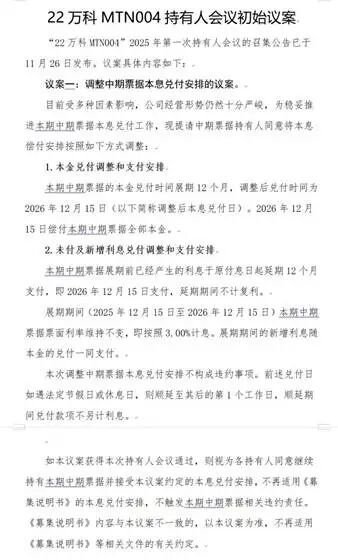
本金、利息全部展期一年,万科20亿债券展期初始方案出炉
Guan Cha Zhe Wang· 2025-12-02 05:55
Core Viewpoint - The company is facing severe operational challenges and has announced a one-year extension for the repayment of its "22 Vanke MTN004" bond due to various influencing factors [1] Group 1: Bond Extension Details - The original repayment date for the "22 Vanke MTN004" bond, with a principal amount of 2 billion and an annual interest rate of 3%, was set for December 15, 2025 [1] - The new repayment date has been extended to December 15, 2026, with interest accrued before the extension to be paid on the same date without compound interest [1][4] - The bondholders' meeting to discuss the extension will take place on December 10, 2025, with a final version of the proposal to be disclosed by December 5, 2025 [1][4] Group 2: Market Reactions and Comparisons - Many bondholders have shown a high acceptance of the extension plan but expressed dissatisfaction regarding the arrangement for unpaid and new interest, with some demanding at least the current interest to be paid [2] - The comparison with the "18 Ocean Group 01" bond extension highlights a significant difference in repayment structure, where Ocean Group offered a combination of principal installments and a one-time interest payment, contrasting with Vanke's all-extension approach [3][4] Group 3: Industry Implications - The handling of Vanke's debt situation is critical for the real estate industry, as improper management could negatively impact market sentiment and the capital market [5] - The one-year extension is seen as a positive signal, indicating Vanke's capability to manage its debt, which may provide psychological support to the market [6] - Continuous efforts in debt resolution and operational improvement are necessary for Vanke to navigate the upcoming peak repayment period and the complex market environment [6]